2027 Best Online Associate Degrees in General Studies for Working Adults

Co-Founder and Chief Data Scientist
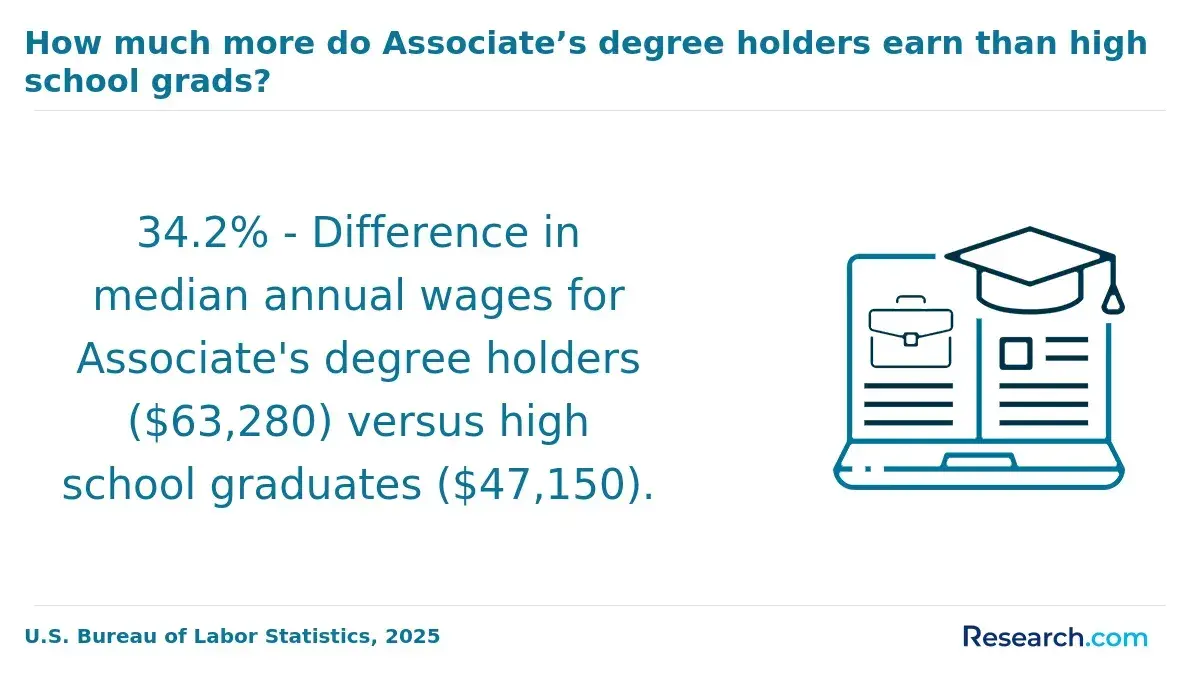
Choosing an online associate degree in general studies is often a practical way to finish college credits without locking into one narrow major. It matters because the U. S. Bureau of Labor Statistics reported 2024 median weekly earnings of $1,099 for workers with an associate degree, compared with $930 for workers whose highest credential was a high school diploma. This guide is for working adults who need flexibility, affordability, and transfer value. You will learn how programs work, which schools stand out, what they cost, and how to choose one wisely.
Key Things You Should Know
- An online associate degree in general studies usually requires about 60 credits and can often be completed in two years full time or closer to three years part time while working.
- The best programs for adults are regionally accredited, transfer-friendly, and transparent about credit for prior learning, tuition, fees, and online student support.
- According to BLS 2024 education data, associate degree holders had median weekly earnings of $1,099, but career results depend heavily on experience, location, industry, and whether students continue into a bachelor's program.
What is an online associate degree in general studies and how does it work for adults?
An online associate degree in general studies is a broad undergraduate credential that combines general education courses with electives across areas such as communication, social science, humanities, math, business, technology, and natural science. Schools may call it an Associate of Arts in General Studies, Associate of Science in General Studies, Associate of Applied Science in General Studies, liberal studies, interdisciplinary studies, or professional studies.
For working adults, the main value is flexibility. Instead of requiring a highly sequenced major with many prerequisites, general studies programs often let students apply previous college credits, military training, workplace learning, or standardized exams toward the degree. That can be especially helpful for adults who started college years ago, changed careers, or need a recognized credential for advancement.
The degree usually works in one of three ways, and the right option depends on your next step. The table below summarizes the most common associate formats and how adults should interpret them before applying.
| Degree type | Typical focus | Best fit for working adults | Important caution |
| Associate of Arts | Liberal arts, communication, social science, humanities, and transfer preparation | Students planning to move into a bachelor's program in areas such as business, psychology, education, communication, or public service | Check whether credits transfer as major requirements or only as electives |
| Associate of Science | Math, science, technology, and analytical coursework | Students considering future bachelor's programs in health science, information systems, data, or technical fields | Some science-heavy bachelor's programs may require specific lab or prerequisite courses |
| Associate of Applied Science | Career-oriented coursework with fewer transfer-oriented general education credits | Students who want a workplace credential more than a direct transfer pathway | Applied credits may not transfer smoothly into all bachelor's programs |
Most online general studies programs use asynchronous coursework, meaning you can review lectures, complete readings, and submit assignments around your job schedule. Some courses may still have weekly deadlines, live discussions, proctored exams, group projects, or required advising appointments, so "online" does not always mean self-paced.
Before enrolling, adults should ask whether the program is designed as a terminal associate degree, a transfer degree, or a customized pathway to a bachelor's degree. That distinction affects course selection, cost, timeline, and long-term return on investment.
How can an online general studies associate degree help working adults advance or change careers?
An online general studies associate degree can help working adults in two main ways: it can document college-level skills for employers, and it can create a cleaner pathway into a bachelor's program. It is often strongest for adults who already have work experience but lack a completed college credential.
Employers may view the degree as evidence of persistence, writing ability, quantitative reasoning, digital communication, and basic professional preparation. Those skills are useful in roles such as administrative support, customer service leadership, sales support, operations coordination, public service, nonprofit administration, and entry-level business support.
The degree can be especially useful when your goal is advancement within your current organization. For example, a worker with several years of supervisory experience but no college credential may use the associate degree to qualify for internal postings that list "associate degree preferred" or "some college required." However, it is not a substitute for specialized credentials in fields such as nursing, engineering technology, accounting licensure, or K-12 teaching.
Adults should think about this degree as a decision point, not just a finish line. Use the following steps to connect the program to a career goal before you commit tuition money.
- Choose a target outcome first, such as promotion, transfer to a bachelor's degree, career change, or personal degree completion.
- Collect job postings in your region and note whether employers ask for an associate degree, bachelor's degree, certifications, software skills, or industry experience.
- Ask admissions or advising staff which electives best support your goal, such as business, computer applications, health science, communication, or data literacy.
- Confirm whether completed credits will transfer into a bachelor's program if you may continue later.
- Compare the total cost against your expected benefit, including employer tuition assistance, reduced time to completion, and potential future transfer savings.
AI and automation also make program planning more important. General studies students should not rely only on broad coursework; they should use electives to build durable workplace skills such as writing, spreadsheet analysis, presentation, project coordination, customer communication, and ethical use of digital tools. If your long-term goal is management, a more specialized business administration degree online may offer a clearer route than a broad general studies plan.
The degree is less ideal for adults who already know they need a specialized credential. If your target job requires a license, clinical training, technical certification, or a specific bachelor's major, start with that requirement and work backward. A general studies associate can still help, but only if the required prerequisite courses are included.
Which accredited schools offer the best online associate degrees in general studies for adults?
The best online associate degrees in general studies for adults are not always the schools with the most advertising or the lowest posted tuition. A stronger shortlist includes accredited institutions with adult-focused advising, generous transfer policies, clear online delivery, and a curriculum that can support either immediate workforce goals or bachelor's transfer.
Because colleges use different degree names, this comparison includes general studies, liberal studies, and interdisciplinary studies programs that serve a similar purpose. Always verify program availability, tuition, state authorization, and transfer rules directly with the school before applying.
| School | Common online credential | Accreditation type to verify | Why it may fit working adults | Best for |
| University of Maryland Global Campus | Associate of Arts in General Studies | Regional institutional accreditation | Designed for adult learners, military-connected students, transfer students, and students planning to continue into bachelor's programs | Adults who want a direct general studies pathway with broad transfer use |
| Southern New Hampshire University | Associate of Arts in Liberal Arts | Regional institutional accreditation | Flexible online format, frequent start dates, and broad general education coursework | Students who want a liberal arts-style degree with room to explore future majors |
| Liberty University | Associate of Arts in Interdisciplinary Studies | Regional institutional accreditation | Online delivery, transfer credit options, and an interdisciplinary structure that can combine multiple academic interests | Adults seeking a customizable program with faith-based institutional context |
| Columbia College | Associate in General Studies | Regional institutional accreditation | Online and evening-friendly options, adult student support, and a broad curriculum structure | Students who want a traditional nonprofit college with flexible delivery |
| Thomas Edison State University | Associate in Arts or liberal studies-related pathway | Regional institutional accreditation | Known for serving adults, transfer students, credit for prior learning, and degree completion planning | Adults with many previous credits who need a completion-focused option |
| Purdue Global | Professional studies or multidisciplinary associate-level options | Regional institutional accreditation | Adult-focused online courses and career-oriented academic planning | Students who want a workforce-oriented online institution connected to a public university system |
This list should be treated as a comparison starting point rather than a universal ranking. A program that is "best" for one adult may be a poor fit for another if credits do not transfer, the schedule conflicts with work, or the electives do not support the student's next degree.
If you are still deciding between general studies and a broader interdisciplinary major, comparing affordable online interdisciplinary studies degrees can help you see how flexible programs differ in cost, structure, and transfer value.
When comparing schools, ask direct questions that reveal whether the program is truly adult-friendly. The most useful questions are practical rather than promotional.
- How many of my previous credits will apply to the associate degree, and will they count as requirements or electives?
- Does the school accept ACE-recommended military, workplace, or exam-based credit?
- Are courses fully asynchronous, or are there required live sessions?
- Can I pause enrollment for a term without losing my degree plan or financial aid eligibility?
- Does the associate degree transfer into a specific bachelor's program at the same institution or partner schools?
- What are the total program costs after fees, books, technology charges, and transfer credit evaluation?
What should working adults look for in accreditation and institutional quality for online general studies programs?
Accreditation is one of the most important quality checks for an online associate degree. In the United States, adults should prioritize institutional accreditation recognized by the U.S. Department of Education or the Council for Higher Education Accreditation. Regional institutional accreditation is widely accepted for transfer and financial aid purposes, though the current federal terminology focuses on institutional accrediting agencies rather than the older regional-versus-national distinction.
For general studies, programmatic accreditation is usually not required because the degree is not tied to a licensed profession. That makes institutional quality even more important. If you later transfer into a specialized bachelor's program, the receiving program may have its own accreditation expectations, especially in fields such as nursing, social work, teacher education, engineering technology, or business.
Adults should look beyond the accreditation badge and evaluate whether the institution is built to support online learners. The table below shows quality factors that matter most when comparing online general studies programs.
| Quality factor | What to look for | Why it matters |
| Institutional accreditation | Accreditation listed by a recognized agency and confirmed through official databases | Supports federal aid eligibility, transfer credibility, and employer recognition |
| Transfer policy | Clear maximum transfer credits, course equivalency tools, and written degree audits | Prevents adults from retaking courses unnecessarily |
| Credit for prior learning | Policies for military training, professional certifications, exams, portfolios, or workplace learning | Can reduce both time and cost for experienced adults |
| Online student support | Remote tutoring, library access, technical help, career services, and advising outside standard business hours | Working adults often need help outside a traditional campus schedule |
| Outcome transparency | Retention, graduation, transfer, and debt information when available | Helps students compare value rather than relying on marketing claims |
Common mistakes can make a low-cost online program expensive in the long run. Before you enroll, watch for these red flags and use a better alternative.
- Choosing a school before checking accreditation; instead, verify institutional accreditation through recognized official sources before submitting an application.
- Assuming all credits transfer automatically; instead, request a written transfer evaluation and ask how each course applies to the degree plan.
- Focusing only on tuition per credit; instead, compare total cost, including fees, books, technology requirements, and the number of credits you must complete at the school.
- Selecting random electives; instead, use electives to build a pathway toward a bachelor's major, promotion, or specific skill area.
- Ignoring state authorization; instead, confirm the institution can enroll online students in your state and that any internship or field requirement is feasible where you live.
The safest approach is to keep written records. Save the catalog page, transfer evaluation, degree audit, tuition estimate, and advisor emails before you register. If policies change later, those documents can help you advocate for the plan you were given.
How do online general studies associate programs compare to on-campus options for flexibility and support?
Online and on-campus general studies associate programs can lead to the same credential, but the student experience can be very different. Working adults usually choose online study for schedule control, while campus students may prefer face-to-face structure, in-person tutoring, labs, or a clearer routine.
The table below compares common differences that affect adults balancing school with work, family, military service, or caregiving responsibilities.
| Feature | Online general studies program | On-campus general studies program | Best choice when |
| Schedule | Often asynchronous with weekly deadlines | Class meetings at set times and locations | Online is stronger for variable work shifts; campus is stronger if you need routine |
| Commute | No regular commute required | Travel time and transportation costs may apply | Online helps students far from campus or without reliable transportation |
| Support | Remote advising, tutoring, library, and tech support | In-person access to offices, study spaces, and student services | Campus may help if you learn better with face-to-face interaction |
| Course availability | May offer frequent starts and accelerated terms | May follow a traditional semester schedule | Online can be faster if the school offers year-round starts |
| Networking | Discussion boards, virtual groups, and online career services | In-person classmates, faculty, clubs, and local employers | Campus may be better for local networking; online may suit career changers already employed |
Online learning is not automatically easier. It often requires more self-management because you must track deadlines, solve technology issues, and communicate proactively with instructors. Adults who have been away from school for years should look for programs with an orientation course, writing support, and easy access to advisors.
A good decision rule is simple: choose online if time and location are your biggest barriers, and choose campus if accountability, in-person learning, or hands-on support are your biggest needs. Hybrid programs can offer a middle ground, but they are only practical if campus visits fit your schedule.
To test whether an online format will work, adults can take these steps before enrolling in a full term.
- Ask to see a sample online course shell or orientation module.
- Confirm the weekly workload per course, especially for accelerated terms.
- Check whether exams require proctoring, webcams, testing centers, or scheduled time blocks.
- Make sure required software works on your computer and internet connection.
- Start with one or two courses if you are returning to school after a long break.
What courses and concentrations are typically included in an online general studies associate curriculum?
An online associate degree in general studies usually includes general education requirements plus open or guided electives. The goal is to build a broad academic foundation while giving students room to shape the degree around transfer, career advancement, or personal interests.
Most programs require courses in several core areas. The table below shows common curriculum categories and how each can support adult learners.
| Curriculum area | Common courses | Why it matters for adults |
| Written and oral communication | English composition, public speaking, professional communication | Supports workplace writing, presentations, email, reports, and customer communication |
| Quantitative reasoning | College algebra, statistics, quantitative literacy, applied math | Builds confidence with budgets, spreadsheets, reports, and data-informed decisions |
| Social and behavioral science | Psychology, sociology, political science, economics | Helps students understand organizations, communities, customers, and public systems |
| Humanities | History, literature, ethics, philosophy, arts | Strengthens critical thinking, cultural awareness, and analytical reading |
| Natural science | Biology, environmental science, astronomy, physical science | Provides scientific literacy and may support future health or STEM-related pathways |
| Technology and applied electives | Computer applications, information systems, cybersecurity basics, business software | Helps adults update practical digital skills for modern workplaces |
Concentrations are not always available, but many schools allow students to cluster electives. Choosing electives intentionally is one of the biggest ways to improve the value of a general studies degree.
- Business or management electives can support administrative, operations, sales, or supervisory goals.
- Information technology electives can help students build digital confidence and prepare for future technical certificates or bachelor's study.
- Health science electives can help students explore healthcare administration, wellness, public health, or future clinical prerequisites.
- Communication electives can support customer success, training, nonprofit work, marketing support, or public-facing roles.
- Social science electives can support pathways in human services, criminal justice, public administration, or psychology-related bachelor's programs.
Students interested in health and wellness should be careful with course planning. A broad associate degree may help with foundational credits, but becoming a registered dietitian or entering many nutrition careers requires more specialized study; comparing a nutritionist degree online can clarify whether a general studies pathway is enough for your goal.
A strong curriculum plan should answer two questions: what credits will help you finish the associate degree, and what credits will still matter after graduation? If an elective does not support transfer, advancement, or a skill you can use, ask your advisor for a better option.
What are the typical admission requirements for online associate programs in general studies?
Admission requirements for online associate degrees in general studies are usually more accessible than bachelor's or selective professional programs. Many community colleges and adult-serving universities use open or broad-access admissions, but students still need to submit documentation and meet placement or advising requirements.
The most common requirements are straightforward. Adults should prepare these items early so admission, transfer evaluation, and financial aid do not delay enrollment.
- High school diploma, GED, HiSET, or other approved high school equivalency documentation.
- Official transcripts from any colleges previously attended, even if the credits are old or grades were low.
- Application form and, in some cases, a small application fee.
- Proof of identity, residency, military status, or state eligibility when tuition rates depend on those categories.
- Placement information for math and English, which may come from prior college credit, high school records, standardized tests, or school-specific assessments.
- Technology readiness, including reliable internet access, a computer, and the ability to use the learning management system.
Standardized entrance exams such as the SAT or ACT are usually not required for associate-level general studies programs, especially for adults. However, some schools may use placement results to determine whether you start in college-level math and English or need a developmental support course.
Transfer students should pay special attention to transcript rules. Even if you do not want to use old credits, schools commonly require transcripts from all prior institutions. Failing to disclose previous enrollment can delay admission, financial aid, or graduation clearance.
Adults with low previous grades should not assume they are disqualified. Many associate programs provide fresh-start policies, academic renewal options, probationary admission, or advising plans. The key is to speak honestly with admissions and ask how old coursework affects GPA, transfer credit, and financial aid eligibility.
How long does it take to earn an online associate degree in general studies while working full time?
Most associate degrees require about 60 semester credits. A traditional full-time student taking 15 credits per semester can finish in about two academic years, but working adults often move at a slower and more sustainable pace.
The table below shows realistic timelines based on course load. It is more useful to choose a pace you can maintain than to start too aggressively and withdraw later.
| Enrollment pace | Typical credits per term | Approximate completion time | Best fit |
| Full time | 12 to 15 credits | About 2 years | Adults with flexible work schedules, strong support at home, or a need to finish quickly |
| Part time | 6 to 9 credits | About 2.5 to 4 years | Full-time workers, parents, caregivers, and students returning after time away |
| Accelerated online | One or two courses per short term, repeated year-round | Varies by school and transfer credits | Students who can handle compressed deadlines and steady weekly study time |
| Degree completion pathway | Depends on accepted transfer or prior learning credits | Potentially shorter than a new 60-credit program | Adults with previous college, military, professional, or exam-based credit |
A practical workload estimate is to plan several hours per week for each course, with more time for writing-heavy or math-heavy classes. Accelerated eight-week courses can be convenient, but they compress the same learning into a shorter period. Taking two accelerated courses while working full time can feel like a full-time commitment during busy weeks.
Transfer credit can change the timeline dramatically. If you bring in 15 to 30 accepted credits, you may be closer to graduation than you think. Before enrolling, request an official or preliminary degree audit so you know how many credits remain and which requirements are still unmet.
Adults should also build a schedule around high-risk weeks. If your job has seasonal overtime, inventory periods, travel demands, or tax-season workloads, avoid stacking difficult courses during those terms. A slower plan that you complete is usually better than an aggressive plan that leads to dropped classes and additional cost.
How much do online general studies associate degrees cost, and what financial aid can adults use?
The cost of an online general studies associate degree depends on institution type, residency status, transfer credits, fees, books, and how many courses you must complete after enrollment. Public community colleges are often the lowest-cost option, while private nonprofit and online universities may offer convenience, frequent starts, or adult-focused services at a higher per-credit price.
College Board's 2024 pricing data reported average published tuition and fees of about $4,050 for in-district students at public two-year colleges for the 2024-25 academic year. That figure is useful as a benchmark, but it does not include every online fee, book, technology cost, or the price difference for out-of-district and out-of-state students.
- Public in-district community college tuition is often the lowest-cost route, especially when online students qualify for local rates.
- Public out-of-district or out-of-state tuition can be significantly higher, so residency rules matter.
- Private nonprofit and private for-profit online tuition may offer convenience but should be compared by total degree cost, not just monthly payment options.
- Books, digital course materials, exam proctoring, graduation fees, and technology fees can add to the final cost.
- Transfer credit and credit for prior learning can reduce cost if accepted credits replace required courses.
Financial aid can make a major difference for eligible adults. The maximum Federal Pell Grant for the 2024-25 award year was $7,395, and Pell funding does not have to be repaid if the student remains eligible. Adults should complete the FAFSA even if they assume their income is too high, because the same form may be used for federal loans, state grants, institutional aid, and some employer reimbursement programs.
Adults can use several funding sources, but each has rules. Compare them carefully before borrowing.
- Federal Pell Grants can help eligible undergraduates who have not already earned a bachelor's degree.
- Federal student loans may be available, but borrowing should be limited to what is necessary after grants, employer aid, and payment plans.
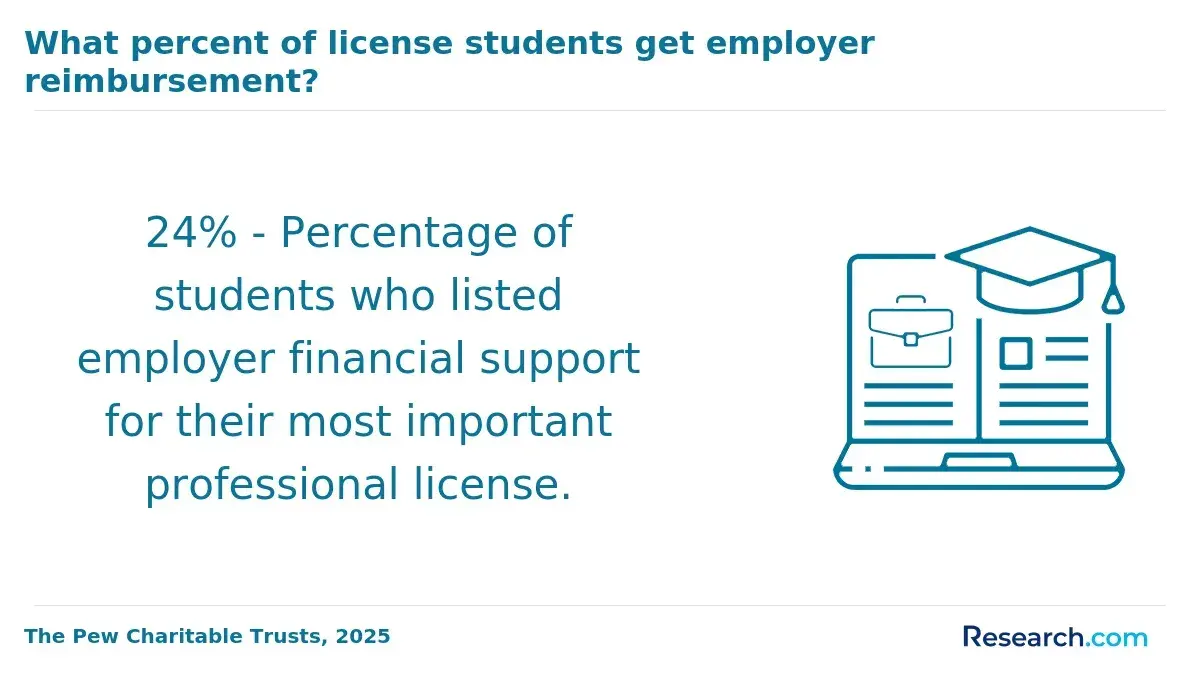
- Employer tuition assistance or reimbursement can lower out-of-pocket cost, though some employers require specific grades or continued employment.
- Military education benefits may apply for active-duty service members, veterans, spouses, or dependents, depending on eligibility.
- State grants and promise programs may cover community college costs for eligible residents.
- Scholarships for adult learners, returning students, single parents, or career changers can reduce reliance on loans.
The smartest cost comparison is total remaining cost to graduation. A school with higher tuition may be cheaper for you if it accepts many more transfer credits, while a low-tuition school may cost more if it requires you to retake courses. Ask every school for a written estimate based on your transcripts before making a final decision.
What jobs, salaries, and transfer pathways are available after an online associate in general studies?
An online associate degree in general studies can support entry-level and advancement-oriented roles, especially when combined with work experience. It is not a direct pipeline into one occupation, so outcomes depend on how you use electives, internships, prior experience, and future transfer planning.
BLS 2024 education data provides a broad salary context: workers whose highest education was an associate degree had median weekly earnings of $1,099. This does not mean every graduate will earn that amount, but it shows why completing a credential can matter in a labor market where employers often screen for education level.
The table below connects common pathways to practical next steps. Use it to decide whether the associate degree is enough or whether you should plan for a bachelor's degree, certificate, or specialized training.
| Pathway | Possible roles or goals | How general studies can help | What may be needed next |
| Administrative and office support | Administrative assistant, office coordinator, records assistant, operations support | Builds communication, software, writing, and general business skills | Experience with spreadsheets, databases, scheduling systems, or industry-specific software |
| Customer service and sales support | Customer service lead, account support, sales coordinator, client services assistant | Signals college-level communication and problem-solving ability | Product knowledge, CRM software skills, and performance-based experience |
| Public service and nonprofit support | Program assistant, community outreach aide, case support assistant | Provides social science, writing, and civic knowledge foundations | Bachelor's degree may be needed for advancement into analyst, social service, or management roles |
| Business transfer pathway | Future bachelor's in business, management, human resources, or marketing | Can cover lower-division general education and electives | Careful course alignment with the bachelor's major requirements |
| Health or human services exploration | Healthcare office support, wellness program assistant, human services support | Allows exploration of health science, psychology, sociology, or communication | Specialized prerequisites, certifications, clinical training, or a focused bachelor's degree may be required |
Transfer planning is often the highest-value use of this degree. Many bachelor's programs require about 120 credits, and a well-planned associate degree can cover the first half. The key phrase is "well-planned": credits should match the receiving institution's general education and major requirements.
Before transferring, adults should take these steps to avoid losing time and money.
- Identify two or three bachelor's programs before finishing the associate degree.
- Ask whether the associate degree transfers as a completed block or course by course.
- Confirm grade minimums for transfer credits, especially in math, science, and major prerequisites.
- Check whether online, evening, or part-time bachelor's options are available after transfer.
- Compare expected bachelor's costs, not just associate degree costs, if your career goal requires more education.
If your long-term goal is strong salary growth, compare the associate degree with bachelor's pathways before stopping. Some of the bachelor degrees that pay well require specific prerequisites, so choosing the right associate electives early can prevent transfer delays.
The degree is most worthwhile for adults who need an affordable, flexible credential, have previous credits to consolidate, or want a transfer base without committing to a narrow major too soon. It is less worthwhile if your target career requires a specialized associate degree, license, apprenticeship, or technical certification that general studies does not provide.
Other Things You Should Know About General Studies
Yes, students can personalize their general studies associate degree by selecting elective courses that align with their career aspirations and personal interests, allowing them to gain knowledge in specific areas while maintaining a broad educational foundation.
Many employers focus on whether the institution is accredited and whether the degree is relevant to the role. The transcript usually does not need to state that courses were completed online, but you should choose a reputable accredited school.
Many programs accept up to 45–60 transfer credits into a 60-credit associate degree, plus prior learning or military credit if approved by the college. Credits must usually come from regionally accredited institutions and meet minimum grade requirements, often a C or better.
It can be a good temporary choice if you use electives strategically and meet with an advisor. If you already know your target career requires a specific major or license, choose the required pathway instead of using general studies as a default.
References
- Online Associate Degree Benefits Students Ready to Advance https://www.tuw.edu/school-news/online-associate-degree-benefits/
- European Online University Accreditation Explained - MIA Digital University https://miauniversity.com/european-online-university-accreditation/
- How long does it take to get an associate degree? | University of Phoenix https://www.phoenix.edu/blog/how-long-does-it-take-to-get-an-associate-degree.html
- What Are the Best General Studies Careers? https://mycollegeguide.org/general-studies-careers/
- General Studies Associate Degree | Urban College of Boston https://urbancollege.edu/programs/general-studies-associate-degree
- Montreat College | Associate Degree in North Carolina https://www.montreat.edu/online/associate-general-studies/
- The Higher Education Accreditation Guide for Small and Mid-Sized Schools https://corecampus.com/higher-education-accreditation-guide/
- General Studies Degree Jobs: 10 Careers + Salaries (2026) | Extern https://www.extern.com/post/general-studies-degree-jobs-career-guide
- General Studies Associate Degree | Northern State University in South Dakota https://northern.edu/degrees/general-studies-associate-degree-online
- How Much Does an Associate Degree Cost? | SoFi https://www.sofi.com/learn/content/associates-degree-cost/