2027 BCBA Career Paths in K-12 Education

Co-Founder and Chief Data Scientist
If you already have a degree outside education but want to work in K-12 behavior support, the main question is not simply whether schools need BCBAs. They do. The harder question is which training path, certification route, fieldwork setting, and school role will actually qualify you for the work you want to do.
A Board Certified Behavior Analyst can support students, teachers, families, and districts by using applied behavior analysis to understand why challenging behavior occurs and how to teach safer, more effective replacement skills. In schools, that work often connects directly to special education services, classroom support, IEP teams, and districtwide behavior systems.
This guide explains what BCBAs do in K-12 education, how certification works, which degrees and online programs can lead to eligibility, what programs cost, and what careers and salary ranges school-based BCBAs can expect. It is designed for career changers, educators, psychology graduates, paraprofessionals, and working professionals comparing practical routes into school-based applied behavior analysis.
Key Things You Should Know
- BCBAs in 2026 increasingly support K-12 students with autism and behavioral challenges, with 38% of school districts nationwide expanding ABA services per recent education reports.
- Certification requirements now integrate updated supervision hours and continuing education focused on inclusive practices, reflecting rising demand for specialized behavioral interventions in public schools.
- The median BCBA salary in K-12 education rose to approximately $68,000 in 2025, influenced by federal IDEA funding and growing recognition of ABA's role in individualized education programs (IEPs).
What is a BCBA in K-12 education?
A BCBA in K-12 education is a Board Certified Behavior Analyst who applies applied behavior analysis in school settings. The goal is not to “control” students. The goal is to identify the function of behavior, teach meaningful replacement skills, reduce barriers to learning, and help educators use consistent, evidence-based supports.
School-based BCBAs commonly work with students with autism spectrum disorder, emotional disturbances, developmental disabilities, communication challenges, trauma-related needs, or persistent classroom behavior concerns. They may support students in general education classrooms, special education classrooms, private schools, charter schools, therapeutic schools, or district-level programs.
What BCBAs do in schools
- Conduct Functional Behavior Assessments to understand why a behavior is occurring.
- Develop Behavior Intervention Plans that are realistic for classrooms and aligned with student needs.
- Train teachers, paraprofessionals, and related service providers in behavior support strategies.
- Collect and analyze behavior data to determine whether an intervention is working.
- Collaborate with families, administrators, school psychologists, special educators, and outside providers.
- Support IEP teams when behavior affects access to instruction or participation in school.
For example, a BCBA may help a teacher reduce a student’s classroom disruptions by identifying that the behavior helps the student escape difficult writing tasks. The BCBA might then recommend teaching the student how to request help or a brief break, while also adjusting task difficulty and reinforcing independent work.
Demand for school-based BCBAs has rapidly increased, with positions rising by 200-300% over the past decade according to the Journal of Positive Behavior Interventions via Sunray ABA. That growth reflects several factors: more schools are using evidence-based behavior systems, inclusive education requires stronger classroom supports, and districts need professionals who can connect behavior intervention with legal and educational requirements.
The role is a strong fit for professionals who are comfortable with data, coaching adults, working across disciplines, and making decisions based on observed behavior rather than assumptions. Those who want to move beyond entry-level practice can also compare advanced online BCBA options, including BCBA doctoral programs online, to understand longer-term credential and leadership pathways.
How do you become a BCBA?
To become a BCBA, you generally need a qualifying graduate degree, behavior-analytic coursework that meets BACB requirements, supervised fieldwork, and a passing score on the BCBA exam. For K-12 careers, you should also plan for state licensure rules, school district hiring requirements, and any education-related credentials that may apply in your location.
Candidates need a master's degree or higher in behavior analysis, education, psychology, or a related field that meets BACB coursework requirements. Accredited programs, whether campus-based or online, help ensure that coursework is structured around the certification standards candidates must satisfy. After completing the education requirement, candidates must accumulate 1,500 hours of supervised fieldwork or 2,000 hours through a practicum option, guided by a board-certified BCBA overseeing client work.
The BCBA exam is a computer-based test covering ethical standards, behavior assessment, intervention design, measurement, data analysis, and professional practice. Many candidates use exam preparation courses or structured study schedules because the test expects more than memorization; it requires applying concepts to practice scenarios.
Core steps to becoming a BCBA
- Earn a graduate degree with coursework that meets BACB requirements.
- Complete 1,500-2,000 hours of supervised experience.
- Document supervised work carefully according to BACB standards.
- Apply for and pass the BCBA certification exam.
- Maintain certification with continuing education every two years.
- Check state licensure and school employment requirements before applying for K-12 roles.
Over 12% of BCBAs work primarily in education, which shows that schools are a meaningful employment setting rather than a niche option. For career changers, the most efficient route may be a graduate certificate if they already hold a qualifying master’s degree, or a master’s program in applied behavior analysis if they need both the degree and the coursework.
Before enrolling, compare the program’s fieldwork support, exam preparation, schedule flexibility, and school-based placement options. If compensation is part of your decision, reviewing the BCBA salary outlook can help you estimate the return on your time and tuition investment.
What are BCBA certification requirements?
BCBA certification requirements center on three areas: graduate education, supervised experience, and examination. Candidates must hold a master's degree in behavior analysis, education, psychology, or a related field from an accredited institution; complete either 1,500 hours of supervised independent fieldwork or 2,000 hours of supervised practicum experience meeting BACB standards; and pass the BCBA certification exam administered by the Behavior Analyst Certification Board.
For K-12 educators, the best preparation is not only meeting the minimum certification checklist. It is choosing coursework and fieldwork that build school-ready skills: Functional Behavior Assessments, Behavior Intervention Plans, classroom data collection, IEP collaboration, educator coaching, crisis prevention, and ethical decision-making with minors and families.
Certification requirement checklist
| Requirement | What to verify before enrolling or applying |
| Graduate degree | Confirm the institution is properly accredited and that the degree area fits BACB eligibility rules. |
| Coursework | Make sure required behavior-analytic content is included, not just general psychology or education courses. |
| Supervised experience | Ask whether the program helps secure supervision and whether school-based placements are available. |
| BCBA exam | Review exam preparation support, graduate outcomes, and whether the curriculum is aligned with current standards. |
| Ongoing certification | Plan for continuing education every two years after certification. |
Graduates seeking to become a BCBA in K-12 education should try to complete supervised hours in schools, educational agencies, or child-focused service settings where behavior plans are implemented across real instructional environments. This kind of experience is especially valuable because school work requires consultation, documentation, and collaboration in addition to direct behavior analysis.
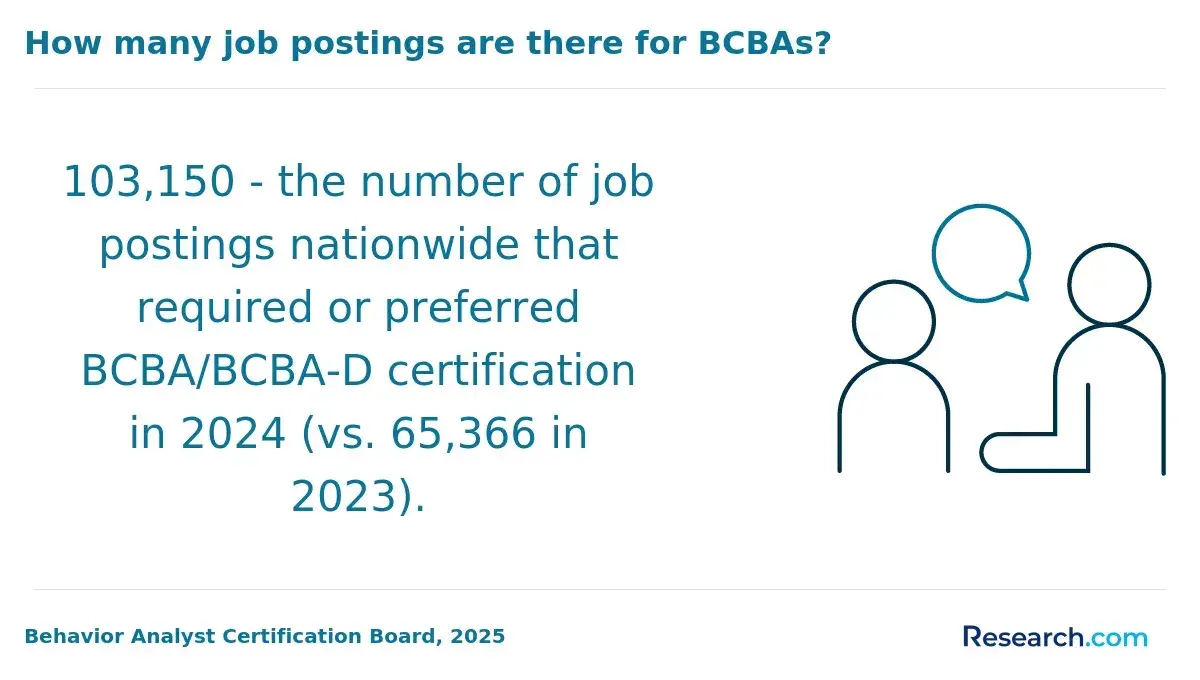
University of Cincinnati Online (2025) reported a 58% rise in BCBA job postings from 2023 to 2024, highlighting growth in educational environments. That growth makes careful program selection more important: candidates who meet certification requirements but lack school-based experience may still need additional training before they are competitive for district roles.
Professionals trying to shorten the timeline should still avoid programs that leave gaps in coursework or supervision. Efficient study options, such as the fastest BCBA program, should be evaluated on eligibility, supervision quality, and fit for K-12 practice—not speed alone.
Degrees that can lead to BCBA certification are usually at the master’s level or higher and are commonly in behavior analysis, applied behavior analysis, psychology, education, special education, or human services. The degree alone is not enough. Candidates must also complete required behavior-analytic coursework and supervised fieldwork.
The Behavior Analyst Certification Board requires an accredited master's degree plus specific coursework and 1500 hours of supervised experience in applied behavior analysis. Approved coursework covers behavior analytic principles, experimental design, data collection, assessment, intervention, ethics, and professional practice.
Common degree routes for future school-based BCBAs
| Degree background | How it can fit a K-12 BCBA path | Possible extra step |
| Applied behavior analysis or behavior analysis | Often the most direct academic route because coursework is built around ABA practice. | Confirm fieldwork and exam eligibility details. |
| Special education | Strong fit for school roles because it connects behavior support with IEPs and classroom practice. | May need additional BACB-aligned ABA coursework. |
| Psychology | Useful foundation in behavior, development, research, and assessment. | May need a graduate certificate or ABA course sequence. |
| Education | Helpful for candidates who want district, classroom consultation, or instructional support roles. | May need behavior analysis coursework and supervised ABA fieldwork. |
| Human services | Can support child, family, and community-focused practice. | Must verify that the degree and coursework meet eligibility requirements. |
Degrees specifically in Applied Behavior Analysis or Behavior Analysis can simplify planning because they are often designed around certification preparation. However, many people pursuing BCBA degrees for K-12 education careers start in special education or psychology and then complete additional ABA coursework and supervised fieldwork.
Students who already have a related graduate degree often pursue post-master's or graduate certificates in applied behavior analysis. Others choose an integrated graduate program, such as an applied behavior analysis masters degree online, to complete the degree and required coursework in one structured path.
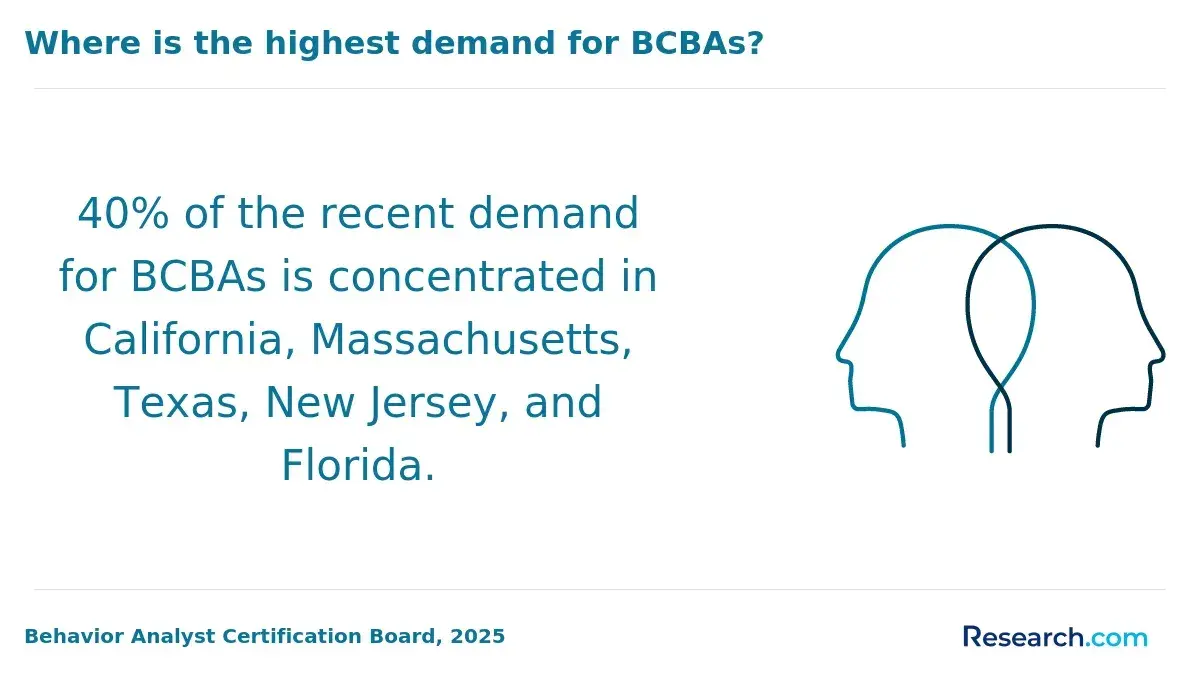
Before committing, verify institutional accreditation, coursework alignment, fieldwork support, and whether the program prepares candidates for school-based realities. Demand for BCBAs in K-12 settings is growing rapidly, with job market projections of 8-10% annual growth through 2026 due to increased autism diagnoses and ABA adoption in schools.
A BCBA program curriculum teaches candidates how to assess behavior, design interventions, measure progress, and practice ethically. For K-12-focused students, the strongest programs connect those concepts to classrooms, IEP teams, teacher consultation, and student support systems.
Core coursework usually emphasizes Functional Behavior Assessments, Behavior Intervention Plans, reinforcement principles, measurement, data analysis, experimental design, ethics, and intervention evaluation. Students learn how to identify the function of behavior, select replacement skills, choose reinforcement strategies, and adjust plans based on data rather than opinion.
Typical BCBA curriculum areas
| Curriculum area | Why it matters in K-12 schools |
| Functional Behavior Assessments | Helps teams identify why challenging behavior occurs before choosing an intervention. |
| Behavior Intervention Plans | Translates assessment findings into practical classroom strategies and support plans. |
| Measurement and data analysis | Shows whether behavior is improving and whether the intervention should continue or change. |
| Ethics and professional conduct | Guides consent, confidentiality, documentation, cultural responsiveness, and appropriate scope of practice. |
| Single-subject research designs | Helps practitioners evaluate intervention effects with individual students or small groups. |
| Collaboration and consultation | Prepares BCBAs to coach teachers, paraprofessionals, families, and multidisciplinary teams. |
| Skill acquisition and verbal behavior | Supports instruction in communication, academic readiness, social behavior, and independence. |
| Crisis management and prevention | Helps schools reduce risk while prioritizing dignity, safety, and proactive support. |
Many curricula include supervised fieldwork so candidates can apply classroom-based data collection, intervention planning, and staff training under supervision. This applied experience is especially important because schools are complex environments; an intervention must work not only in theory but also within schedules, staffing limits, legal requirements, and classroom routines.
Job growth for BCBAs is projected between 30-35%, significantly higher than the 2% expected for special education teachers. Prospective students should use that outlook as motivation to prepare well, not as a reason to choose the quickest program without checking quality. Strong curricula should prepare graduates for board certification, ethical school practice, and data-driven decision-making with diverse learners.
Yes. There are online BCBA programs that can prepare candidates for K-12 work, especially when the curriculum includes school-based examples, supervised fieldwork planning, and training in collaboration with educators. Online study can be a practical option for teachers, paraprofessionals, counselors, psychology graduates, and working adults who cannot relocate or attend daytime classes.
The key issue is not whether a program is online. The key issue is whether it meets certification requirements and provides a realistic path to supervised experience. A convenient online course sequence is not enough if the candidate cannot secure qualified supervision or apply skills with appropriate clients.
What to look for in an online BCBA program
- Coursework aligned with BACB course sequence standards.
- Clear guidance on supervised fieldwork requirements and documentation.
- Hands-on, school-based practicum or fieldwork options when possible.
- Faculty with applied behavior analysis and K-12 experience.
- Training in Functional Behavior Assessments, Behavior Intervention Plans, classroom data systems, and educator consultation.
- Content related to special education law, IEP development, and multidisciplinary collaboration.
- Exam preparation and advising for certification timelines.
Many programs provide virtual coursework while students complete supervised experience locally. Some may have partnerships with school districts or allow candidates to use an approved employment setting for fieldwork. Before enrolling, ask direct questions about who provides supervision, what happens if a placement falls through, and whether your current job can count toward required experience.
School districts increasingly prefer to hire BCBAs as permanent education team members rather than relying on contractors. That trend can make K-12-focused preparation valuable, especially for candidates who can show they understand school systems, teacher workload, inclusive practice, and student-centered intervention planning.
BCBA programs typically take 1 to 3 years to complete, depending on whether students attend full-time, part-time, online, or in a hybrid format. Working professionals often choose part-time study because it allows them to continue earning income while completing coursework and supervised fieldwork, but that flexibility can extend the timeline.
Accredited programs usually meet the Behavior Analyst Certification Board's coursework standards, requiring about 270 classroom hours covering behavior assessment, intervention methods, ethics, and research. The total cost depends on whether the student is completing a certificate, a full master’s degree, or a doctoral pathway, and whether supervision is included or paid separately.
Typical cost and time considerations
| Program factor | What students should expect |
| Program length | Most programs take 1 to 3 years, depending on enrollment pace and format. |
| Traditional university tuition | Traditional university programs range from $10,000 to $25,000 in tuition. |
| Online certificate tuition | Online certificate programs generally cost between $7,000 and $15,000. |
| Graduate degree cost | Master's or doctoral programs integrating BCBA coursework may exceed $30,000 depending on the school and residency status. |
| Coursework volume | Programs typically require about 270 classroom hours. |
| Additional expenses | Textbooks, required supervision hours, and exam fees totaling around $245 for the BCBA exam application may apply. |
Supervision is one of the most important budget items to clarify. Some programs help arrange supervised fieldwork, while others expect students to secure it through employment or outside supervisors. If supervision is separate from tuition, the real cost of the pathway may be higher than the advertised program price.
As the demand for BCBA services grows, especially with upcoming continuing education requirements for Registered Behavior Technicians in 2026, more schools may introduce specialized BCBA tracks focused on paraprofessional training in educational settings. This may affect program content and duration.
When comparing programs, look beyond tuition. Evaluate total financial investment, eligibility alignment, supervision access, exam preparation, schedule fit, and whether the program gives you experience relevant to K-12 employment.
BCBAs in K-12 schools can work in direct student support, teacher consultation, special education services, district behavior teams, autism programs, crisis prevention, or systems-level roles such as PBIS coaching and MTSS coordination. The role is broader than one-on-one intervention and often requires influencing adult practice across classrooms and campuses.
Many BCBAs support IEP teams, develop Behavior Intervention Plans, conduct Functional Behavior Assessments, train teachers and paraprofessionals, and monitor student progress through data. Others focus on districtwide systems that help prevent behavior problems before they escalate.
Common K-12 BCBA career paths
| Role | Typical work |
| School-based BCBA | Supports students, teachers, and IEP teams through assessment, intervention planning, and progress monitoring. |
| District behavior specialist | Consults across multiple schools and helps standardize behavior support practices. |
| Autism program consultant | Supports students with autism and trains staff in communication, skill acquisition, and behavior intervention strategies. |
| PBIS coach | Helps schools implement positive behavior systems and use data to improve school climate. |
| MTSS coordinator | Supports tiered behavior interventions and helps align universal, targeted, and intensive supports. |
| Special education consultant | Works with special education teams on behavior-related goals, services, and classroom supports. |
BCBAs increasingly contribute to multi-tiered systems of support, with over 40% of school districts integrating applied behavior analysis using MTSS frameworks. This includes tier 1 universal supports, tier 2 targeted interventions, and more intensive individualized supports for students with significant needs.
Key responsibilities of BCBAs in schools include designing preventative behavioral supports for general education students, providing direct therapy to students with autism and developmental disorders, consulting on curriculum modifications, training paraprofessionals and educators, and coordinating with families and community providers to support continuity of care.
The strongest candidates are not only technically competent in applied behavior analysis. They can communicate clearly with non-ABA professionals, respect teacher expertise, explain data without jargon, and adapt interventions to busy school environments.
BCBA salary in K-12 education depends on location, district budget, union or contract structure, years of experience, degree level, and whether the role is school-based, districtwide, or supervisory. School-based positions may also offer benefits that are not always reflected in base salary, such as predictable schedules, academic calendars, retirement plans, and health benefits.
BCBA professionals working in K-12 education generally earn significantly higher salaries than their counterparts in home-care settings. School-based BCBAs make 15-20% more, reflecting the benefits of job stability, consistent hours, and comprehensive benefits tied to academic calendars. RCM Technologies, 2025, reported that school-based BCBAs earn 15-20% higher salaries than home-care counterparts.
Typical annual salaries for school-based BCBAs range from $65,000 to $90,000, with experienced professionals or those in high-demand districts earning more. Candidates should treat this as a typical range rather than a guarantee, because local hiring markets and district pay scales vary widely.
Salary and outlook factors
- Annual salaries typically range from $65,000 to $90,000 in public school settings.
- School-based BCBAs earn 15-20% higher salaries than home-care counterparts.
- Demand is growing as schools expand behavioral services and inclusive education supports.
- Experience with IEP teams, Functional Behavior Assessments, and staff training can strengthen employability.
- Additional certifications in special education law can boost salary and job prospects.
The job outlook is supported by increased awareness of behavioral disorders, special education requirements, and the need for evidence-based interventions across classrooms. Many districts are moving from reactive behavior support toward prevention, early intervention, and data-based decision-making.
For job seekers, the best strategy is to combine BCBA certification with school-specific competence. Understanding district policies, special education procedures, classroom realities, and family collaboration can make a candidate more valuable than certification alone.
How to choose an accredited BCBA program?
Choosing a BCBA program requires checking two different forms of quality assurance: institutional accreditation and BACB-related eligibility. Institutional accreditation matters for degree legitimacy and financial aid. BACB coursework alignment matters for certification eligibility. A program may look convenient or affordable, but if it does not meet the required coursework and fieldwork expectations, certification can be delayed.
Start by confirming that the institution is properly accredited and that the program clearly explains how its coursework supports BCBA exam eligibility. If the program describes a verified course sequence or BACB-aligned coursework, ask for the specific details in writing and compare them with current requirements.
Program selection checklist
- Confirm institutional accreditation and BACB-related coursework alignment.
- Choose a delivery format that fits your schedule: online, in-person, or hybrid.
- Ask how supervised fieldwork is arranged, documented, and supported.
- Prioritize programs with school-based practicum or fieldwork options if you want K-12 employment.
- Review faculty expertise, especially experience in applied behavior analysis and education settings.
- Compare tuition, supervision costs, fees, and financial aid.
- Ask about BCBA exam pass rates, graduate outcomes, and employer partnerships.
- Check whether the curriculum includes special education collaboration, IEP-related practice, and classroom-based data collection.
Working professionals may prefer asynchronous or evening courses, while students who want structured supervision and close faculty interaction may prefer in-person or hybrid options. Neither format is automatically better; the right choice depends on your schedule, learning style, access to supervised fieldwork, and career goal.
Supervision is often the deciding factor. Reputable programs provide clear guidance on qualified BCBA supervisors and may help students secure placements aligned with school-based careers. Programs that leave supervision entirely to the student can still work, but only if the student already has access to an appropriate employment or practicum setting.
Graduate outcomes such as BCBA exam pass rates and employment stats in educational environments can help show whether a program prepares students effectively. Given that U.S. job demand for behavior analysts in education is projected to grow by over 30% according to the BACB/Lightcast Report, choosing a program with strong school connections can improve your chances of moving from certification eligibility to actual K-12 employment.
Other Things You Should Know About Applied Behavior Analysis
In 2027, BCBAs can explore various career paths in K-12 education such as behavior intervention specialists, consultants for special education teams, program developers for behavior plans, and trainers for teachers and staff on behavior management techniques. Collaboration with educators and adaption of ABA strategies is key.
In 2027, BCBAs in K-12 settings frequently use interventions such as Functional Behavior Assessments (FBAs), positive reinforcement strategies, token economies, and behavior intervention plans (BIPs) to address student behaviors. These interventions aim to promote positive behaviors and address problematic ones in educational environments.
The Behavior Analyst Certification Board, or BACB, oversees BCBA certification, including exam eligibility and renewal. In K-12 schools, IDEA and state education agencies govern special education compliance, while district policies set local service procedures, documentation rules, and staff collaboration expectations.
To become a BCBA in a K-12 school setting in 2027, candidates must hold a master's degree in behavior analysis or a related field, complete verified coursework, accumulate supervised fieldwork hours, and pass the BCBA exam administered by the Behavior Analyst Certification Board (BACB).
- What is a BCBA? Your Guide to the BCBA Certification and Exam https://www.thechicagoschool.edu/insight/career-development/bcba-guide-bcba-certification-exam/
- Can You Be a BCBA with a Bachelor's Degree? | Blossom ABA https://blossomabatherapy.com/blog/bcba-with-a-bachelors-degree
- BCBA Job Outlook in 2026 Explained | Divine Steps ABA https://www.divinestepstherapy.com/blog/bcba-job-outlook
- BCBA Career Options: Exploring Diverse Career Paths for BCBAs https://www.abaresourcecenter.com/post/bcba-career-options
- BCBA Programs & Schools | Sunray ABA https://www.sunrayaba.com/post/bcba-programs-schools
- Board Certified Behavior Analysis (BCBA) - Long Branch Public School District https://www.longbranch.k12.nj.us/new-departments/academic-disciplines/special-education/board-certified-behavior-analysis-bcba
- BCBA Career Path To Take For A Rewarding Future https://kidsclubaba.com/bcba-career-path-to-take-for-a-rewarding-future/
- 25+ Affordable ABA/BCBA Online Programs (Masters & Certs) https://abamastersprograms.org/affordable-online-aba-masters-programs/
- Years of College Do You Need to Be a BCBA | Level Ahead ABA https://www.levelaheadaba.com/blog/how-many-years-of-college-do-you-need-to-be-a-bcba
- BCBA Career Path To Take https://www.astroaba.com/blog/bcba-career-path-to-take