2027 Best Careers After a Communication Degree

Co-Founder and Chief Data Scientist
A communication degree can lead to many careers, but the best choice depends on whether you want to write, manage campaigns, analyze audiences, lead teams, or represent organizations. The U. S. Bureau of Labor Statistics reports that media and communication occupations had a median annual wage of $70,300 in May 2024, above the $49,500 median for all occupations. This guide helps students, career changers, and working professionals compare roles, salaries, outlook, credentials, costs, and program options so they can choose a path with clearer career value.
Key Things You Should Know
- Communication graduates can pursue careers in public relations, marketing communications, technical writing, corporate communications, journalism, content strategy, event planning, social media, and communication management.
- The strongest salary upside usually comes from roles that combine communication with analytics, management, product knowledge, technical writing, or revenue-focused strategy; BLS May 2024 median pay was $159,660 for advertising, promotions, and marketing managers.
- Most communication careers do not require state licensure, but internships, portfolios, accreditation, digital analytics skills, AI-aware content workflows, and optional certifications can strongly affect employability and advancement.
What careers can you pursue with a communication degree?
A communication degree studies how people create, interpret, distribute, and respond to messages across organizations, media, cultures, and digital platforms. That makes it useful in careers where the core work is explaining complex ideas, shaping public perception, coordinating stakeholders, persuading audiences, or managing information flow.
The best career after a communication degree is not one universal job. It is the role that matches your preferred work style: writing, public speaking, research, social media, brand strategy, employee communication, client service, crisis response, or project coordination. For students who want communication-heavy leadership roles across operations, a bachelor project management path can also pair well with communication training.
The table below compares common communication degree careers by what you would do day to day and what type of student or graduate may fit each path best.
| Career path | Typical responsibilities | Best fit for | Common entry point |
| Public relations specialist | Write press releases, pitch media, prepare spokespersons, monitor public sentiment, and support crisis communication. | Students who like writing, persuasion, relationship-building, and fast-moving news cycles. | PR assistant, communications coordinator, media relations assistant. |
| Marketing communications specialist | Create campaigns, manage brand messages, coordinate email, web, advertising, and social content. | Students interested in business, consumer behavior, analytics, and creative strategy. | Marketing coordinator, content marketing assistant, campaign associate. |
| Technical writer | Turn complex technical information into manuals, help articles, process documents, and product documentation. | Students who write clearly, enjoy structure, and can learn specialized products or systems. | Documentation assistant, junior technical writer, knowledge base writer. |
| Corporate communications specialist | Prepare internal announcements, executive messages, employee newsletters, change communication, and stakeholder updates. | Students who like organizational behavior, leadership communication, and professional writing. | Internal communications assistant, corporate communications coordinator. |
| Social media manager | Plan content calendars, manage communities, analyze performance, respond to trends, and protect brand reputation. | Students comfortable with digital platforms, audience analytics, short-form writing, and rapid feedback. | Social media coordinator, digital content assistant. |
| Journalist or reporter | Research stories, interview sources, verify facts, write or produce news content, and meet deadlines. | Students drawn to public-interest reporting, investigation, interviewing, and accuracy under pressure. | Reporter, production assistant, editorial fellow. |
| Event or meeting planner | Coordinate vendors, schedules, budgets, guest communication, logistics, and post-event evaluation. | Students who are organized, calm under pressure, and strong with client-facing communication. | Event assistant, meeting coordinator, venue coordinator. |
| Communication manager | Lead communication strategy, supervise staff, approve messaging, advise executives, and measure outcomes. | Experienced professionals who can connect communication work to organizational goals. | Usually reached after several years in PR, marketing, internal communication, or media. |
Students should treat this list as a career map, not a fixed menu. Many communication graduates move between roles as they build a portfolio, learn analytics tools, specialize in an industry, or earn graduate credentials.
What are the highest-paying communication jobs?
The highest-paying communication jobs usually sit at the intersection of communication, business impact, leadership, and specialized knowledge. Salary data is best read by occupation rather than by degree title because employers hire communication graduates into several BLS categories.
The table below uses U.S. Bureau of Labor Statistics May 2024 median annual wage data where available. These figures describe national occupational medians, not guaranteed earnings for new graduates.
| Occupation | May 2024 median annual wage | Why communication graduates compete for the role | Salary-growth lever |
| Advertising, promotions, and marketing managers | $159,660 | They build campaigns, position brands, supervise messaging, and translate customer research into strategy. | Campaign performance, team leadership, analytics, and revenue responsibility. |
| Public relations and fundraising managers | $138,520 | They manage reputation, donor messaging, media strategy, executive communication, and public-facing campaigns. | Crisis experience, executive advising, fundraising results, and industry contacts. |
| Technical writers | $91,670 | They explain products, systems, software, or policies in language users can understand. | Subject-matter depth, UX writing, API documentation, compliance writing, or software familiarity. |
| Editors | $75,260 | They improve clarity, accuracy, structure, style, and audience fit across publications and digital content. | Specialized editorial niches, managing teams, and content strategy ownership. |
| Writers and authors | $72,270 | They create persuasive, informative, or narrative content for publications, brands, nonprofits, or agencies. | Portfolio strength, niche expertise, content strategy, and client or employer type. |
| Public relations specialists | $69,780 | They draft messages, coordinate media outreach, support campaigns, and monitor reputation. | Media relationships, crisis communication, analytics, and promotion into management. |
For new graduates, the smartest salary strategy is often to enter a role with strong learning potential rather than chase the highest title immediately. Marketing communications, technical writing, PR, and corporate communications can all lead to higher-paying management roles when paired with measurable results.
To improve earning potential, focus your early career on evidence that employers can verify. The most useful proof usually includes the following:
- A portfolio with writing samples, campaign briefs, press materials, social analytics, or technical documentation.
- Internship or freelance work tied to a real organization, publication, agency, nonprofit, or campus department.
- Experience with analytics tools, content management systems, customer relationship management platforms, social listening tools, or AI-assisted editing workflows.
- A clear specialty, such as healthcare communication, technology documentation, investor relations, nonprofit fundraising, sports media, or employee communication.
What is the job outlook for communication degree careers?
The job outlook for communication degree careers is mixed, which is why specialization matters. Demand is stronger in roles connected to marketing strategy, public relations, technical documentation, and events, while some traditional newsroom and editing roles face pressure from changing business models and automation.
The table below summarizes selected BLS 2024-2034 employment projections for occupations that commonly hire communication graduates. Use the figures to compare direction and relative opportunity, not to predict a specific outcome in one city or employer.
| Occupation | Projected employment change, 2024-2034 | What it means for communication graduates |
| Meeting, convention, and event planners | 7% | Event roles may offer stronger opportunity for graduates who like logistics, client communication, and in-person coordination. |
| Advertising, promotions, and marketing managers | 6% | Growth favors candidates who can connect messaging to measurable business outcomes. |
| Public relations and fundraising managers | 5% | Organizations still need reputation management, donor communication, crisis planning, and stakeholder engagement. |
| Writers and authors | 5% | Opportunities are better for writers with audience strategy, subject expertise, and digital publishing skills. |
| Public relations specialists | 4% | Entry-level competition can be significant, so internships and media or analytics samples are important. |
| Technical writers | 4% | Technical communication remains useful where products, software, safety, compliance, or user education are complex. |
| Editors | -2% | Traditional editing roles may be competitive; candidates can improve prospects by adding content strategy and analytics skills. |
| News analysts, reporters, and journalists | -3% | Journalism remains meaningful but can require geographic flexibility, multimedia skills, and realistic salary expectations. |
AI is changing communication work, but it is not eliminating the need for judgment. Employers increasingly expect graduates to use generative AI responsibly for drafting, summarizing, ideation, and workflow support while still verifying facts, protecting confidential information, adapting tone, and making ethical decisions.
Which communication degree careers require certification or licensure?
Most communication degree careers do not require state licensure. A graduate can usually apply for roles in PR, marketing communications, social media, corporate communication, journalism, and content writing without a government-issued license, although employers may still expect internships, samples, and software skills.
Certification becomes more important when you want to signal professional credibility, move into management, or specialize in a regulated or technical environment. The table below distinguishes between credentials that are usually optional and paths where licensure may matter.
| Career area | Credential status | Examples | Decision note |
| Public relations | Optional certification | Accredited in Public Relations, often pursued after professional experience. | Useful for mid-career advancement, agency leadership, or reputation management roles. |
| Marketing communications | Optional certification | Digital marketing, analytics, content marketing, or platform-specific credentials. | Helpful when the role involves campaign performance, paid media, SEO, or automation tools. |
| Event planning | Optional certification | Certified Meeting Professional and related event credentials. | Most valuable for planners handling larger budgets, conventions, venues, or corporate events. |
| Technical communication | Optional certification | Technical writing, UX writing, software documentation, or product documentation credentials. | May help if your degree did not include technical or digital documentation coursework. |
| Teaching, speech-language pathology, or counseling-adjacent roles | Licensure may be required | State teacher licensure, speech-language pathology licensure, or graduate-level clinical requirements. | A general communication degree alone is usually not enough; requirements vary by state and profession. |
| Broadcast technical roles | May require specialized credentials | Engineering, equipment, or federal communications credentials depending on duties. | Applies more to technical broadcast operations than to general media or journalism roles. |
Before paying for a certification, ask whether the credential is recognized by employers in your target job postings. A lower-cost analytics or writing credential may be more useful for an entry-level applicant than an advanced credential designed for experienced professionals.
What courses are in a communication degree program?
Communication programs vary by school, but most combine theory, writing, research, media production, public speaking, and applied professional practice. A strong curriculum should help you understand audiences and produce work that can be evaluated in a portfolio.
The table below shows common communication courses and how each one connects to career preparation.
| Course area | What students learn | Career value |
| Public speaking | How to organize, deliver, and adapt presentations for different audiences. | Supports roles involving client presentations, leadership briefings, training, sales support, or advocacy. |
| Interpersonal communication | How people build relationships, manage conflict, listen, and interpret nonverbal cues. | Useful in HR communication, management, customer success, nonprofit work, and team leadership. |
| Organizational communication | How information moves through workplaces, cultures, teams, and leadership structures. | Directly relevant to corporate communication, change management, and internal communication. |
| Media writing | How to write news stories, releases, captions, scripts, web copy, and audience-specific messages. | Builds samples for PR, journalism, content marketing, and social media roles. |
| Communication research methods | How to design surveys, analyze audiences, interpret data, and evaluate message effectiveness. | Helps graduates move beyond "good writing" into evidence-based strategy. |
| Public relations | How to plan campaigns, work with media, manage reputation, and handle public issues. | Prepares students for agency, nonprofit, government, and corporate PR positions. |
| Digital media and analytics | How to create platform-specific content and evaluate engagement, reach, conversion, or sentiment. | Important for social media, marketing communications, and content strategy roles. |
| Communication ethics and law | How to handle privacy, accuracy, intellectual property, persuasion, disclosure, and public responsibility. | Essential for journalism, PR, crisis communication, and AI-assisted content work. |
| Internship or capstone | How to apply communication skills in a real or simulated professional setting. | Often provides the strongest portfolio evidence for first jobs. |
When comparing programs, look beyond course titles. A course is more valuable when it produces portfolio-ready work, includes feedback from instructors or industry partners, and teaches current tools used in communication workplaces.
How do online and campus communication programs compare?
Online and campus communication programs can lead to similar academic credentials when they are properly accredited, but they create different learning experiences. The better option depends on your schedule, need for networking, preferred learning style, internship access, and career goals.
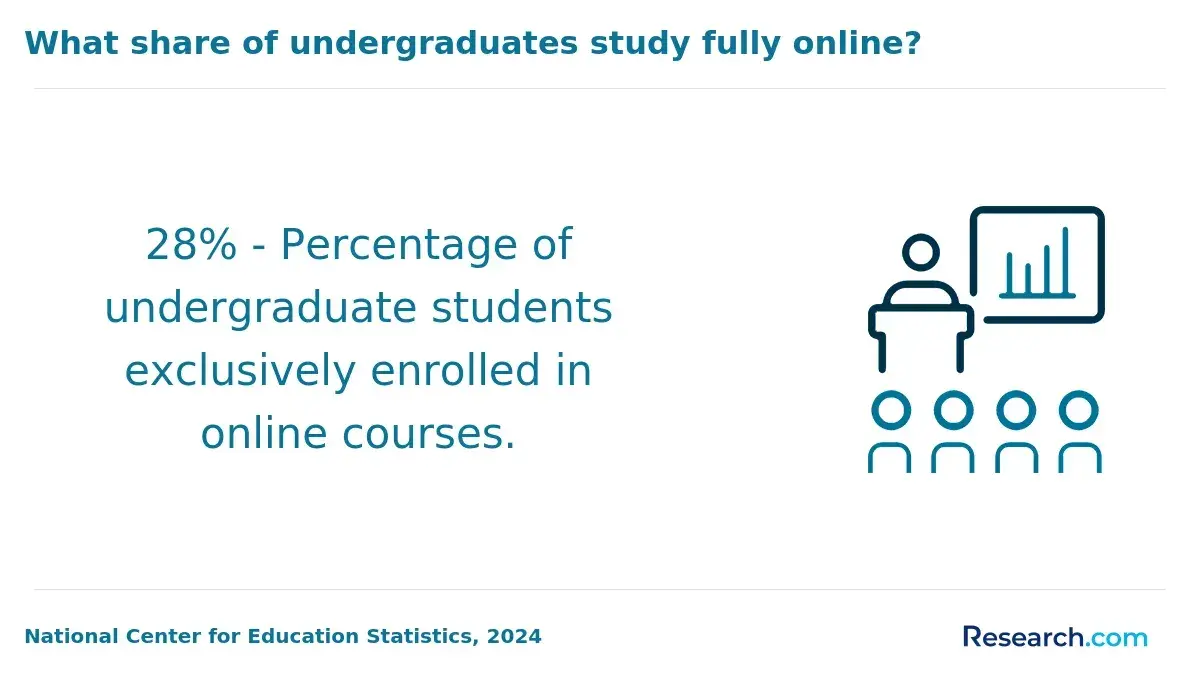
Online programs often fit working adults, caregivers, military students, and learners who need geographic flexibility. Campus programs may be better for students who want live media labs, debate teams, student newspapers, broadcast studios, residential networking, or easier access to local internships. If you are comparing communication with operational or industry-specific paths, even an accelerated construction management degree can show how online formats differ when a field requires more technical or site-based preparation.
The table below compares the major trade-offs that matter before enrolling.
| Factor | Online communication program | Campus communication program |
| Schedule | Often more flexible, especially with asynchronous courses. | More fixed meeting times and location-based commitments. |
| Networking | Requires intentional effort through virtual events, LinkedIn, alumni groups, and internships. | Often easier through student media, clubs, faculty office hours, and local employers. |
| Portfolio development | Can be strong if courses include applied projects and digital publishing. | Can be strong if students use campus media, PR clubs, or production facilities. |
| Internships | May require the student to identify local or remote placements. | May benefit from school relationships with nearby agencies, companies, nonprofits, or media outlets. |
| Best fit | Self-directed learners who need flexibility and can build professional connections independently. | Students who want face-to-face collaboration, campus activities, and structured networking. |
Do not assume online means easier or campus means better. The stronger choice is the program that gives you accredited coursework, real feedback, employer-relevant projects, internship options, and a cost structure you can manage.
What admission requirements do communication programs usually have?
Admission requirements depend on degree level and school selectivity. Associate and bachelor's programs usually focus on high school completion, transcripts, placement readiness, and sometimes essays or recommendation letters, while master's programs may ask for a bachelor's degree, resume, statement of purpose, writing sample, and minimum GPA.
Applicants should prepare early because communication programs may evaluate both academic readiness and writing ability. Common requirements include the following:
- Official high school or college transcripts showing completed coursework and GPA.
- A completed application with personal information, intended major, and enrollment term.
- Application fee or approved fee waiver.
- Personal statement, essay, or short responses explaining academic and career goals.
- Letters of recommendation, especially for selective undergraduate programs or graduate admission.
- Writing sample, portfolio, resume, or professional experience summary for some advanced or applied programs.
- English proficiency documentation for applicants whose prior education was not in English.
- Transfer credit evaluation for students bringing prior college coursework.
Test policies vary widely. Many undergraduate programs are test-optional, but students should still check whether SAT or ACT scores affect scholarships, honors admission, or placement. Graduate programs in communication often do not require the GRE, but a strong writing sample can matter more than a test score.
A common mistake is applying only to the school with the most recognizable name. A better approach is to compare admission fit, total cost, transfer policy, internship support, faculty expertise, and whether the curriculum matches the role you actually want.
How long does a communication degree take and what does it cost?
A communication degree can take from two years to six or more years depending on the credential, transfer credits, enrollment intensity, and whether the student studies full time or part time. Cost also varies sharply by institution type, residency, format, fees, and living expenses.
For cost context, the College Board's 2024 pricing data reported average published tuition and fees of $11,610 for in-state students at public four-year institutions and $43,350 at private nonprofit four-year institutions for the 2024-25 academic year. That difference matters because communication salaries vary by role, so students should avoid taking on high debt without a clear career plan.
The table below summarizes typical timelines and cost considerations by degree level.
| Credential | Typical full-time timeline | Who it fits | Cost considerations |
| Associate degree in communication | About 2 years | Students seeking transfer credit, lower upfront cost, or entry-level administrative and media support roles. | Often most affordable at community colleges, especially before transferring to a four-year institution. |
| Bachelor's degree in communication | About 4 years | Students targeting PR, marketing communications, journalism, social media, corporate communication, or graduate study. | Costs depend heavily on residency, transfer credits, housing, and whether the student attends public, private nonprofit, or private for-profit institutions. |
| Master's degree in communication | About 1 to 2 years full time | Working professionals seeking advancement into strategy, management, research, higher education, or specialized communication roles. | ROI is strongest when the degree connects directly to promotion, employer reimbursement, or a specialized career move. |
| Graduate certificate | Often less than 1 year | Professionals who need targeted skills in digital communication, PR, health communication, analytics, or organizational communication. | Can be a lower-cost alternative to a full master's degree, but may not carry the same hiring signal. |
Before enrolling, estimate the full cost rather than tuition alone. Include required fees, books, software, commuting, housing, lost work time, loan interest, and whether credits will transfer if you change schools.
A practical ROI check can help you avoid overpaying. Use these steps before committing:
- Choose two or three target job titles and review current postings in your preferred region.
- Identify the required degree level, preferred experience, software tools, and portfolio expectations.
- Compare program cost against realistic entry-level and mid-career salary ranges for those occupations.
- Ask the school for internship placement examples, career outcome data, transfer policies, and employer partnerships.
- Prioritize programs that let you graduate with strong samples and manageable debt rather than the most expensive brand name.
How do you choose an accredited communication program?
Accreditation is one of the most important quality checks because it affects financial aid eligibility, credit transfer, graduate school admission, and employer confidence. In the U.S., students should first confirm institutional accreditation from an accreditor recognized by the U.S. Department of Education or the Council for Higher Education Accreditation.
Programmatic accreditation is less universal in communication than in fields like nursing or education, so students should not reject a strong communication program solely because it lacks a specialized communication accreditor. Instead, evaluate whether the program has rigorous coursework, experienced faculty, applied projects, internship pathways, and transparent student support. Students considering graduate study can compare options such as an online communications masters when they need flexibility and a clearer advancement plan.
Use this checklist to compare accredited programs in a structured way:
- Verify institutional accreditation on the school's official accreditation page and through recognized accreditation databases.
- Review the curriculum for writing, research, digital media, ethics, analytics, and applied communication projects.
- Ask whether internships, practicums, student media, agency simulations, or capstones are required or strongly supported.
- Look for faculty experience in your target area, such as PR, journalism, organizational communication, health communication, media production, or digital strategy.
- Compare total cost, not just tuition, and ask how scholarships, transfer credits, employer tuition benefits, or prior learning credits are handled.
- Request career support details, including resume help, portfolio review, alumni connections, employer events, and job-search coaching.
- Check whether online students receive the same advising, library access, career services, and internship support as campus students.
Red flags include vague accreditation claims, pressure to enroll immediately, unclear tuition and fee information, limited faculty details, no portfolio-building opportunities, weak transfer policies, or career claims that sound guaranteed. A trustworthy program should make it easy to understand what you will study, what it costs, and how it supports career preparation.
What skills do communication graduates need for career advancement?
Communication graduates advance when they move from simply producing messages to solving organizational problems. That means building credibility in strategy, analytics, leadership, ethics, and business context, not just writing or speaking well.
Employers increasingly value communicators who can use digital tools and AI without losing human judgment. A graduate who can draft quickly, verify carefully, adapt tone, analyze performance, protect confidential information, and advise leaders is more competitive than someone who only creates content. Those who want to lead agencies, launch consulting practices, or manage brand growth may eventually compare communication graduate study with an MBA in entrepreneurship online to decide whether business training better fits their goals.
The most valuable advancement skills fall into several categories. Build them deliberately through coursework, internships, freelance projects, volunteer work, or employer-sponsored training:
- Strategic writing: Ability to write for executives, customers, employees, journalists, donors, regulators, and technical users with the right tone and level of detail.
- Audience research: Ability to use surveys, interviews, analytics, social listening, and customer data to understand what people need and how they respond.
- Digital analytics: Ability to interpret engagement, conversion, sentiment, reach, retention, and campaign performance without overclaiming what the data proves.
- AI literacy: Ability to use generative AI for brainstorming, drafting, summarizing, and editing while checking accuracy, bias, privacy, and originality.
- Visual and multimedia communication: Ability to work with video, graphics, slide decks, podcasts, social formats, and accessible digital content.
- Crisis communication: Ability to respond quickly, coordinate stakeholders, protect trust, and communicate accurately under pressure.
- Project coordination: Ability to manage timelines, approvals, budgets, vendors, and cross-functional teams.
- Business fluency: Ability to connect communication work to revenue, reputation, retention, fundraising, policy, safety, or customer experience.
- Ethical judgment: Ability to handle disclosure, privacy, misinformation, copyrighted material, representation, and public accountability.
A common career mistake is staying too general for too long. Broad communication ability is useful at entry level, but advancement usually comes from becoming known for a specialty: crisis PR, technical documentation, healthcare communication, internal change communication, content strategy, fundraising communication, or analytics-driven marketing communication.
Other Things You Should Know About Communication
In 2027, communication degree graduates can explore diverse career paths, including digital marketing specialist, public relations manager, content strategist, and corporate communications director. The rise of digital media and communication technologies has expanded these fields, making them more lucrative and dynamic for degree holders.
Communication graduates in 2027 should master digital literacy, effective public speaking, and content creation. Proficiency in data analysis and social media management is crucial, often required by employers seeking adaptable candidates. These skills enhance job readiness in evolving industries, boosting career potential.
Certifications in digital marketing, public relations, and project management can enhance a communication degree in 2027. These certifications provide specialized skills that are highly valued in the marketplace and can significantly increase job prospects and salary potential for communication graduates.
Most communication careers do not require a state license. Public relations, corporate communications, and social media roles usually need a bachelor’s degree and a strong portfolio, while licensed requirements mainly apply to related fields such as journalism broadcasting in some states or speech-language pathology, which requires ASHA certification and state licensure.
References
- Program Certification & Accreditation https://www.commissionpred.org/the-professional-bond/program-certification-accreditation/
- Top 6 Communication Skills for Career Growth and Organizational Impact https://www.callutheran.edu/programs/articles/top-communication-skills-career-growth-organizational-impact/
- CPRA Accreditation https://www.cpra.org.au/events-programs/accreditation/
- What is the best-paid job in communications? - Sup de Pub https://www.supdepub.com/en/guide/what-is-the-best-paid-job-in-communications/
- Accredited Programs https://globalalliancepr.org/accreditation/
- Admissions Requirements for Master's in Communication Programs (Campus, Online) https://www.mastersincommunications.com/faqs/admissions-requirements
- What do you study in communication studies? - INSEEC https://www.inseec.com/en/guides/orientation-guide/what-do-you-study-in-communication-studies/
- Cost of Communications Degree: Tuition, Fees & Is it Worth it? | SoFi https://www.sofi.com/cost-of-communications-degree/
- Accrediting Council on Education in Journalism and Mass Communications - (ACEJMC) https://www.chea.org/accrediting-council-education-journalism-and-mass-communications
- Bachelor’s Degree Program / Media University https://www.media-university.de/en/application-form/admission-requirements/bachelors-degree-program/