2027 BCBA Career Change at 30, 40, or 50: Is It Worth It

Co-Founder and Chief Data Scientist
Changing careers to become a Board Certified Behavior Analyst is a serious decision, especially if you are starting at 30, 40, or 50 while managing work, family, debt, or an unrelated degree. The path can be worthwhile, but it is not a quick credential. You need graduate-level coursework, supervised fieldwork, exam preparation, and in some states, additional licensure steps before you can practice independently.
This guide explains what a BCBA does, whether age affects your chances, what certification requires, how online programs work, how long the process may take, what costs to expect, and how to judge salary and job outlook realistically. It is written for career changers who want a practical answer to one question: is becoming a BCBA later in life a feasible and financially sound move?
Key Things You Should Know
- Becoming a BCBA at 30, 40, or 50 remains viable with flexible education paths and increasing demand; the field expects a 20% growth rate through 2030, outperforming many professions.
- Career changers benefit from strong job stability and an average BCBA salary of $70,000-$80,000 in 2025, with higher earnings in specialized or supervisory roles.
- Time investment varies by age and background; candidates with prior experience or degrees in psychology can complete certification faster, making later-life transitions more feasible.
What is a BCBA and why pursue it later in life?
A Board Certified Behavior Analyst, or BCBA, is a professional who uses applied behavior analysis to assess behavior, design intervention plans, track progress, and adjust treatment based on data. BCBAs often work with children with autism, individuals with developmental disabilities, schools, clinics, families, and service agencies. The work is highly structured, but it also requires patience, communication, ethical judgment, and strong problem-solving skills.
Pursuing BCBA certification later in life can make sense if you want work that combines human service, clinical reasoning, and measurable outcomes. Many adults enter the field after experience in education, psychology, social work, healthcare, counseling, childcare, or disability services. Those backgrounds can be useful because BCBAs do not work in isolation; they explain plans to families, collaborate with teachers or clinicians, train staff, and make decisions that affect real people.
Career change is also common. With 59% of U.S. professionals actively seeking new employment, many mid-career adults are reassessing whether their current work still fits their goals. For some, becoming a BCBA offers a more purposeful path, a clearer professional credential, and a route into clinical or supervisory roles. Median BCBA salaries often exceeding $70,000 annually can also make the field financially attractive, although pay depends heavily on location, setting, experience, and responsibilities.
The main trade-off is the certification process. You should expect graduate-level ABA coursework, supervised fieldwork, and a certification exam. If you already have a related graduate degree, your route may be shorter. If you need a master’s degree, the investment is larger. Online and part-time options can help, but they do not remove the need for consistent fieldwork and supervision.
Before you commit, answer these questions honestly:
- Do I want direct responsibility for assessment, treatment planning, data review, and ethical decision-making?
- Can I fit graduate coursework into my current work and family schedule?
- Do I have access to supervised fieldwork in my area or through my employer?
- Will the expected salary in my region justify tuition, fees, and any income disruption?
- Does my state require additional licensure beyond BACB certification?
If flexibility is a priority, compare online options carefully. The best online ABA certificate programs can help you identify lower-cost routes, but you still need to verify that each program aligns with current certification and state practice requirements.
Can you become a BCBA at 30, 40, or 50?
Yes. You can become a BCBA at 30, 40, or 50 if you meet the education, supervised fieldwork, and exam requirements set by the Behavior Analyst Certification Board. Age by itself is not a certification barrier. The more important question is whether you can build a realistic plan for school, supervision, finances, and the type of BCBA role you want after certification.
Starting later can even be an advantage. Adults who have worked in classrooms, clinics, case management, healthcare, parenting support, or leadership roles may bring stronger communication skills and better professional judgment than younger candidates. Those strengths matter because BCBAs often coach caregivers, supervise technicians, document decisions, and handle sensitive behavioral concerns.
The challenge is capacity. A 30-year-old may be balancing early family and career growth. A 40-year-old may have mortgage, childcare, or management responsibilities. A 50-year-old may be weighing tuition against retirement planning and the number of years they expect to work in the field. None of these concerns makes the path impossible, but each one affects program choice and timeline.
Career-change data shows that 49% of career changers are aged 25 to 34, while only 11% are 45 or older. That does not mean older adults cannot succeed. It means fewer people make the leap later, often because the financial and scheduling stakes are higher. A good plan reduces that risk.
Use these steps to make the transition more practical:
- Choose an ABA program with a schedule you can actually sustain, not just the shortest advertised timeline.
- Confirm early how supervised fieldwork will be arranged and documented.
- Ask employers whether your current role can count toward fieldwork if you already work in education, autism services, disability support, or behavioral health.
- Look for agencies that value career changers and provide structured supervision.
- Check state requirements before enrolling, especially if you may move or work across state lines.
If you are comparing degree pathways, this behavioral analysis degree resource can help you review programs designed for certification candidates.
What are BCBA certification requirements?
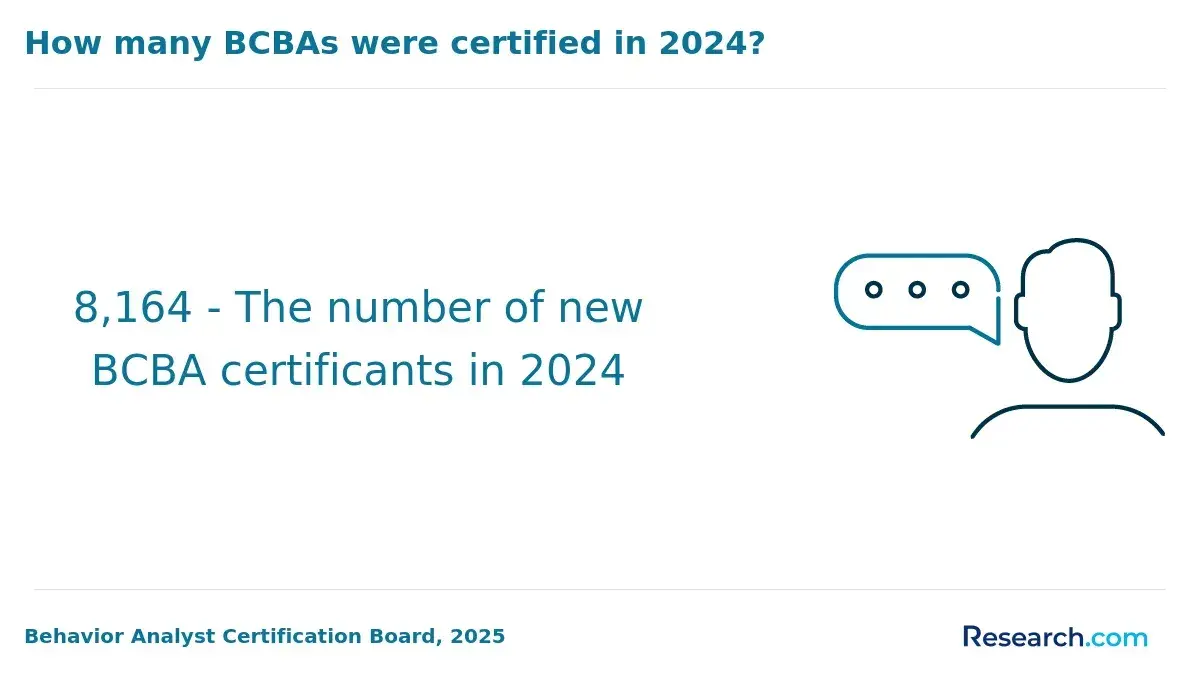
BCBA certification is a multi-step process. In general, candidates need an eligible graduate degree, approved behavior-analytic coursework, supervised fieldwork, and a passing score on the BACB certification exam. Some states also regulate behavior analysts through separate licensure rules, so certification and legal permission to practice are not always the same thing.
The academic requirement begins with a master's degree in behavior analysis, education, psychology, or a related field from an accredited institution. Candidates also complete verified graduate coursework of approximately 270 classroom hours in areas such as behavior assessment, intervention, ethics, research methods, measurement, and behavior-change procedures.
Supervised practical experience is the next major requirement. Candidates typically complete between 1,500 and 2,000 hours of fieldwork through a practicum, intensive practicum, or supervised experience pathway. This stage is where many career changers underestimate the commitment. Fieldwork requires steady access to clients or behavior-analytic work, qualified supervision, documentation, and regular feedback.
After coursework and fieldwork, candidates sit for the BACB certification exam. The exam evaluates applied behavior analysis concepts, assessment, intervention design, data interpretation, supervision, and ethics. Passing usually requires dedicated study, not just completion of coursework.
For career changers, the most common bottlenecks are not motivation but logistics: finding supervision, paying for school, and maintaining enough weekly hours to finish fieldwork on a reasonable timeline. An accelerated BCBA program online may shorten coursework, but it does not eliminate the need for supervised experience or exam preparation.
Job prospects remain strong, with growth expected to exceed 20% in the coming years according to the Bureau of Labor Statistics via crossrivertherapy.com. Still, candidates should treat certification as a professional investment and verify that their chosen pathway meets both BACB and state requirements before enrolling.
BCBA candidates need graduate-level education. The most direct route is a master's degree or higher in behavior analysis, although degrees in education, psychology, or a related field may also qualify if the required behavior-analytic coursework is completed. An MA or MS in ABA is often the clearest path because the curriculum is usually built around certification preparation.
The coursework requirement includes at least 270 verified classroom hours. These courses typically cover ethics, behavioral assessment, intervention strategies, research design, measurement, data analysis, supervision, and foundational principles of applied behavior analysis. Some students complete the coursework inside a full master's program. Others with a prior graduate degree may complete a separate verified course sequence if eligible.
Education alone is not enough. Candidates must also complete between 1,500 and 2,000 hours of supervised fieldwork under a current BCBA's supervision. This fieldwork is where students learn to conduct assessments, review data, write or support intervention plans, communicate with stakeholders, and apply ethical decision-making in real settings.
After the education and fieldwork components, applicants must pass the BCBA exam. The board certified behavior analyst education requirements are designed to ensure that candidates can do more than understand theory; they must be able to apply ABA principles responsibly with clients and teams.
For working adults, an online masters in behavior analysis can be a practical option because it may allow students to keep their jobs while completing coursework. However, online coursework should be evaluated alongside fieldwork access, faculty support, and exam preparation. Considering that about 23% of employees aged 30-34 seek career shifts due to lack of support, mentorship and advising should be treated as core program features, not extras.
The best online BCBA program is not simply the cheapest or fastest option. It is the program that fits your certification pathway, schedule, budget, fieldwork needs, and state practice requirements. For adults changing careers at 30, 40, or 50, the right program should make it possible to complete coursework without losing momentum in work or family life.
Accredited online BCBA programs combine graduate ABA coursework with guidance on supervised fieldwork. Priority should be given to programs that meet Behavior Analyst Certification Board standards and clearly explain how students satisfy certification requirements. Florida Institute of Technology, Simmons University, and Ball State University are examples of institutions offering fully online courses with practicum or fieldwork experiences that may be completed near students' locations.
Many online programs use asynchronous classes, which can be useful if you work full time or care for family members. Some also include live sessions, advising, exam preparation, or supervision support. Simmons University's part-time track may fit students over 30 who want a gradual career shift. Ball State University is known for placement support and clinical partnerships, which matters because 32% of mid-career changers report lacking enough support.
Program length and cost vary. Many programs range from 1 to 2 years, with tuition between $15,000 and $30,000. Financial aid, employer tuition reimbursement, and payment plans can reduce the immediate burden, but you should compare total cost rather than tuition alone. Ask about technology fees, supervision fees, practicum requirements, exam prep, and whether additional coursework may be needed.
When comparing online BCBA programs, focus on these factors:
- Certification alignment: Does the coursework meet BACB eligibility requirements for your intended pathway?
- Fieldwork support: Does the school help students locate supervision, or are you responsible for finding it?
- Schedule fit: Are courses asynchronous, synchronous, part time, accelerated, or cohort-based?
- State compatibility: Will the program support licensure or practice requirements in the state where you plan to work?
- Student support: Are faculty accessible, and does the program offer exam preparation, advising, or career services?
- Outcomes: Can the school provide useful information about alumni roles, satisfaction, and exam preparation support?
For career changers, the safest choice is usually a program with clear certification guidance, strong fieldwork infrastructure, and enough flexibility to finish without burnout.
BCBA certification generally requires 1.5 to 3 years, depending on your prior education, program format, fieldwork access, and weekly availability. The timeline includes graduate-level coursework, supervised fieldwork, application steps, exam preparation, and the certification exam.
If you already have a qualifying graduate degree and only need the Verified Course Sequence, your academic portion may be shorter. If you need to earn a master's degree and complete the VCS, the process typically takes 2 to 3 years. Accelerated and online options can shorten coursework to about 18 months for students who can handle a heavier pace and arrange supervision efficiently.
Supervised fieldwork often determines the real timeline. Candidates need between 1,500 and 2,000 hours, and those hours may overlap with coursework. Students working full time in a qualifying behavior-analytic setting may progress faster because they can accumulate fieldwork consistently. Students who must change jobs, find a placement, or complete hours around unrelated employment may take longer.
For adults changing careers at 30, 40, or 50, the best timeline is the one you can complete without creating unsustainable financial or personal strain. Career changers are common-28% of employees aged 50-64 have changed careers multiple times. That experience can help with discipline and persistence, but the schedule still needs to be realistic.
A practical timeline plan should include:
- How many courses you can take each term while maintaining your current responsibilities.
- Where your supervised fieldwork hours will come from.
- Whether you need to change jobs to access appropriate fieldwork.
- How you will document hours and meet supervision requirements consistently.
- When you will begin structured exam preparation.
Do not choose a program based only on the advertised completion time. A slower program with reliable supervision may be more efficient than a faster program that leaves you to solve fieldwork on your own.
The cost of bcba programs typically ranges from $5,000 to $15,000 for full certification coursework, not including every possible expense. Online programs may charge around $7,000 for coursework alone, while university-based or more comprehensive tracks can exceed $12,000. If you also need a master's degree, the total investment can be higher depending on the institution and program structure.
Supervision can be a major added cost. Required supervision hours often cost between $50 and $100 per hour, depending on the supervisor and location. Some students receive supervision through their employer, while others pay privately. Before enrolling, ask whether supervision is included, coordinated, discounted, or entirely separate.
The Behavior Analyst Certification Board exam fee is approximately $245. Exam preparation materials, review courses, or bootcamps can add $500 to $1,000. These costs are optional in some cases, but many candidates use them because the exam is high stakes and retaking it adds time and expense.
Common BCBA-related costs include:
- Graduate tuition or certificate coursework
- University fees and technology fees
- Textbooks and course materials
- Supervision fees, if not covered by an employer or placement
- BACB application and exam costs
- Exam preparation materials or review courses
- Possible state licensure fees, depending on where you practice
Financial aid, scholarships, and employer tuition reimbursement programs may be limited but are worth exploring. If you currently work for a school district, autism services provider, clinic, or behavioral health organization, ask whether they support BCBA training in exchange for continued employment.
With the median U.S. worker tenure at 3.9 years, investing in BCBA certification can be a strategic career move if the role fits your long-term goals. Compare the upfront cost with expected local salary, job stability, and the number of years you plan to work after certification. For adults starting later, return on investment should be calculated carefully, not assumed.
BCBA salaries vary by experience, location, employer type, caseload, supervisory duties, and specialization. Entry-level BCBAs typically earn between $55,000 and $65,000 annually. Those with five or more years of experience often earn $75,000-$95,000. Specialized clinical, leadership, or supervisory roles may exceed $100,000 per year.
Work setting makes a difference. Private practices, larger healthcare organizations, and urban school districts may offer higher pay than rural agencies or nonprofit providers. BCBAs who supervise teams, manage programs, train staff, or oversee multiple cases may earn more than those in narrowly defined direct-service roles.
Geography also matters. States with higher living costs, such as California and New York, generally offer salaries 15-20% above the national average. Midwest and Southern states may offer lower salaries, but living expenses may also be lower. A higher salary is not automatically better if housing, commuting, taxes, and childcare costs rise with it.
BCBAs in healthcare or research settings usually earn more than those in some educational roles, especially when they hold management or supervisory responsibilities. However, school-based roles may offer different advantages, such as predictable schedules or public-sector benefits. Career changers should compare total compensation, not salary alone.
Financial security remains a top concern for 57% of those contemplating career changes. If you are considering BCBA certification in your 30s, 40s, or 50s, review local job postings before enrolling. Look at required experience, advertised pay, supervision expectations, travel requirements, benefits, and whether employers prefer candidates with experience in autism services, schools, clinics, or staff supervision.
Overall, beginners can expect salaries in the mid-$50,000s, while experienced BCBAs in higher-paying roles may earn over $100,000. The best estimate for your situation will come from your local labor market, not national averages alone.
The BCBA job outlook remains strong through 2026, supported by demand in healthcare, schools, autism services, developmental disability services, behavioral therapy, and related settings. Employers continue to need professionals who can assess behavior, design evidence-based interventions, supervise staff, and document outcomes.
The Bureau of Labor Statistics projects that behavior analyst roles will grow faster than the average for all occupations, reflecting increased services for autism spectrum disorder, developmental disabilities, and mental health. This demand can benefit adults entering the field at 30, 40, or 50 because certification provides a clear professional credential in a growing service area.
Career longevity is also relevant for older career changers. Workers aged 65 and older typically hold BCBA positions for over a decade, demonstrating that late-career transitions can be viable. For example, a 50-year-old entering the field today may still have at least 10 years of career longevity if the work fits their health, goals, and financial plans.
BCBAs can work in several roles, including:
- Clinical behavior analyst
- School-based behavior consultant
- Autism services supervisor
- Program coordinator or clinical manager
- Organizational behavior management specialist
- Consultant for families, agencies, or educational teams
Applicants with backgrounds in psychology, education, social work, healthcare, or special education may be able to connect prior experience to BCBA roles more easily. However, newcomers from unrelated fields can still compete if they complete strong fieldwork, build relevant experience, and choose employers that provide mentorship.
The strongest opportunities are not evenly distributed. Some regions have high demand, while others may be more saturated. Prospective students should review local job postings, speak with ABA providers, check school district needs, and ask programs where graduates are hired. National job growth for BCBAs ranks among the highest in therapeutic professions, but your local market should guide your final decision.
How to choose an accredited BCBA program?
Choosing an accredited BCBA program starts with eligibility. Do not rely only on marketing language. Confirm that the program’s coursework aligns with Behavior Analyst Certification Board requirements and that the institution is properly accredited. If a program does not support your path to the BCBA exam, your time and money may be at risk.
Next, evaluate format. Fully online, hybrid, part-time, and full-time options can all work, but the best choice depends on your schedule and support system. A working parent may need asynchronous coursework and a slower pace. Someone already employed in an ABA setting may prefer a faster program that allows fieldwork to overlap with coursework. Weekend-only or evening classes may help, but only if supervision is also manageable.
Fieldwork support is one of the most important factors. Ask whether the program helps arrange supervised experience or expects you to find your own placement. Review the supervisee-supervisor ratio, the qualifications of supervisors, the documentation process, and whether remote supervision is available when appropriate. Strong supervision improves skill development, ethical practice, and exam readiness.
Cost and duration should be compared together. Programs lasting 12-18 months may appeal to career changers who want to move quickly, but a shorter timeline can increase workload. Check for financial aid, scholarships, payment plans, and employer reimbursement. The average American changes jobs about 12 times (Goodwin University), so a credential with portability and clear professional value can be useful, but only if the program is legitimate and affordable.
Faculty quality also matters. Look for programs taught by active BCBAs or experienced ABA scholars who understand current practice demands. Strong programs should offer advising, career guidance, exam preparation, and access to alumni or employer networks.
Before enrolling, ask these questions:
- Does the program meet current BACB coursework requirements for my intended certification pathway?
- Is the institution accredited, and can the school clearly explain its accreditation status?
- How are supervised fieldwork hours obtained, tracked, and verified?
- Will the program meet requirements in the state where I plan to practice?
- What is the total cost, including fees, supervision, materials, and exam preparation?
- What support is available if I am changing careers from an unrelated field?
- What do graduates typically do after completing the program?
The right BCBA program should give you more than coursework. It should provide a credible path to certification, realistic fieldwork planning, academic support, and enough flexibility to complete the process without undermining your current responsibilities.
Other Things You Should Know About Applied Behavior Analysis
BCBA candidates complete either 2,000 supervised fieldwork hours or 1,500 concentrated supervised fieldwork hours under a qualified supervisor. The Behavior Analyst Certification Board requires documented experience in defined activities, verified supervision, and completion before eligibility to sit for the BCBA examination.
Transitioning into a BCBA role later in life may present challenges such as adjusting to a rigorous academic schedule, balancing family commitments with studies, and adapting to potentially lower starting salaries. However, individuals often bring valuable life experience that can be beneficial in understanding diverse client needs.
There are no age-related prerequisites for becoming a BCBA in 2027. Professionals at any age can pursue a BCBA career, provided they meet the educational qualifications and have relevant supervised experience as stipulated by the Behavior Analyst Certification Board (BACB).
A master’s degree in behavior analysis or a related field is required for a BCBA career, regardless of age at change. Candidates must also complete 1,500 hours of supervised fieldwork and pass the BCBA exam administered by the Behavior Analyst Certification Board.
- What is a BCBA? Your Guide to the BCBA Certification and Exam https://www.thechicagoschool.edu/insight/career-development/bcba-guide-bcba-certification-exam/
- Applied Behavior Analysis Master’s—100 % Online https://www.baypath.edu/academics/graduate-programs/applied-behavior-analysis-ms/
- Transitioning from an RBT to a BCBA: A Comprehensive Guide | Magnolia Behavior Therapy https://magnoliabehaviortherapy.com/transitioning-from-an-rbt-to-a-bcba-a-comprehensive-guide/
- Can an RBT Become a BCBA? https://www.newpatternsaba.com/blog/can-an-rbt-become-a-bcba
- A Day in The Life of a BCBA | Behavioral Innovations https://behavioral-innovations.com/blog/day-in-the-life-bcba/
- How to Pass the BCBA Exam: Tips & Preparation https://www.crossrivertherapy.com/behavioral-analysts/pass-exam
- BCBA Programs & Schools | Sunray ABA https://www.sunrayaba.com/post/bcba-programs-schools
- How Long Does It Take to Become a BCBA? https://bluegemsaba.com/how-long-does-it-take-to-become-a-bcba/
- 40+ Best Online ABA Masters Programs [for 2025] https://abamastersprograms.org/online-aba-masters-programs/
- ABA Certification Explained: RBT, BCaBA, BCBA, BCBA-D https://onlinecounselingprograms.com/mental-health-careers/how-to-become-behavior-analyst-bcba/aba-certification-explained/