2027 What Classes Are Usually Included in a BCBA Master's Program

Co-Founder and Chief Data Scientist
Choosing a BCBA master’s program is easier when you know what the degree is supposed to teach, how it connects to certification, and what trade-offs affect cost, time, and career options. Applied behavior analysis programs can look similar on the surface, but they differ in course sequencing, fieldwork support, online flexibility, faculty expertise, and how clearly they prepare students for Behavior Analyst Certification Board requirements.
This guide explains the common classes in a BCBA master’s program, certification and admission requirements, typical program length, curriculum structure, online options, costs, career paths, salary expectations, and how to evaluate accreditation and program quality. It is written for prospective graduate students, career changers, teachers, psychology graduates, and working professionals who want a practical way to compare programs before enrolling.
Key Things You Should Know
- Core classes in a BCBA master's program typically include behavior assessment, intervention strategies, ethics, and research methods aligned with the Behavior Analyst Certification Board's task list.
- Programs integrate supervised fieldwork that meets BACB requirements; as of 2025, 75% of accredited campuses require at least 1000 hours of practicum experience.
- Students learn to apply behavior analysis principles to diverse populations, emphasizing evidence-based techniques for developmental, educational, and clinical settings.
What classes are included in a BCBA master's program?
A BCBA master’s program usually centers on graduate coursework in applied behavior analysis, behavior assessment, intervention design, ethics, research methods, and supervision. The goal is not only to introduce behavior-analytic theory but also to train students to make data-based decisions in real clinical, educational, and community settings.
Most programs align their coursework with Behavior Analyst Certification Board standards, so students should expect a structured sequence rather than a collection of unrelated psychology or education courses. Core classes typically build from basic principles to assessment, intervention, implementation, and professional practice.
The Measurement and Data Analysis course is especially important because it represents about 12% of the BCBA exam and addresses roughly twelve key competencies vital for verifiable decision-making (ABA Masters Programs, 2025). In this type of course, students learn how to define behavior, select measurement systems, graph behavioral data, interpret trends, and adjust interventions based on evidence rather than opinion.
Common courses in BCBA graduate programs
- Concepts and Principles of Behavior Analysis: Covers foundational behavior-analytic concepts, including reinforcement, punishment, stimulus control, motivating operations, and operant conditioning.
- Measurement and Data Analysis: Trains students to collect, display, analyze, and interpret behavioral data accurately.
- Experimental Analysis of Behavior: Introduces experimental design, single-subject research methods, and the logic behind behavior-analytic evidence.
- Behavioral Assessment: Focuses on functional behavior assessments, functional analysis, preference assessments, and identifying variables that maintain behavior.
- Behavioral Interventions: Teaches students to design evidence-based plans for skill acquisition and behavior reduction across populations such as children with autism or adults with developmental disabilities.
- Ethics and Professional Conduct: Examines client rights, scope of competence, documentation, confidentiality, consent, supervision, and professional decision-making.
- Supervision and Management: Prepares students to supervise behavior analytic services, train staff, evaluate performance, and mentor others responsibly.
Some programs also include electives or seminars in verbal behavior, organizational behavior management, autism intervention, advanced research methods, or consultation. These options can matter if you already know your intended work setting. For example, a student planning to work in schools may benefit from coursework in consultation and classroom intervention, while someone interested in workplace performance may look for organizational behavior management.
Students comparing flexible and lower-cost options may want to review a BCBA school online to identify programs that fit their schedule, budget, and certification goals.
What are BCBA certification requirements?
BCBA certification requirements combine graduate education, behavior-analytic coursework, supervised fieldwork, and successful completion of the BCBA exam. For 2026, BCBA course requirements in the United States include completing a verified graduate-level course sequence aligned with BACB standards and the 6th edition BCBA Task List. The coursework covers areas such as ethics, research methods, behavior assessment, intervention, measurement, and professional conduct.
In practical terms, a master’s degree alone is not enough. Students must make sure the program’s coursework is acceptable for BCBA eligibility and that they have a clear plan for completing supervised fieldwork hours with a qualified supervisor.
Typical certification components
- Graduate degree: Candidates generally need a qualifying graduate degree that meets BACB eligibility rules.
- Verified coursework: Programs must cover required behavior-analytic content, including concepts and principles, measurement, research design, assessment, intervention, ethics, and supervision.
- Supervised fieldwork: Candidates must complete 1,500 to 2,000 supervised fieldwork hours under a qualified BCBA supervisor.
- BCBA exam: After meeting education and fieldwork requirements, candidates must apply and sit for the certification exam.
Master’s program prerequisites for BCBA certification also emphasize ethics throughout foundational and advanced coursework. According to ABA masters programs, these programs embed ethical considerations and professional conduct to support sound decision-making and protection of client rights.
Typical coursework includes:
- Concepts and principles of behavior analysis
- Measurement and data collection procedures
- Experimental design and research methodology
- Behavioral assessment methods such as functional behavior assessments
- Intervention strategies including skill acquisition and behavior reduction techniques
- Ethics and professional conduct standards
Because certification rules can affect whether you qualify for the exam, prospective students should verify requirements directly with the program and the BACB before enrolling. It is also important to confirm whether the school helps students locate supervisors, document fieldwork correctly, and stay on track for eligibility.
How long does a BCBA master's program take?
A BCBA master’s program typically takes between 1.5 and 2 years to complete for students who follow a full-time plan. Part-time students, working professionals, or students who need more time to complete fieldwork may take up to three years. The exact timeline depends on course load, practicum availability, fieldwork scheduling, and whether the program is offered in accelerated, traditional, online, or hybrid format.
Many programs are designed around Behavior Analyst Certification Board coursework requirements, which affects the order in which classes are taken. For example, students often begin with measurement, principles of behavior, and assessment before moving into advanced intervention, ethics, and supervision.
What affects completion time?
- Enrollment status: Full-time students usually finish faster, while part-time students may need additional semesters.
- Course sequencing: Some classes must be taken in order, so missing a prerequisite can delay graduation.
- Fieldwork access: Students who start supervised experience early may progress more efficiently.
- Work schedule: Students employed full time may need to reduce course loads or extend fieldwork over a longer period.
- Program format: Online and accelerated programs can add flexibility, but they still require careful planning for supervised practice.
In the first year, students often focus on foundational skills such as behavioral assessment, measurement, and data interpretation. Coursework may emphasize evaluating data sufficiency, with students completing 45 to 60 practicum hours per course to build proficiency in data collection and clinical analysis.
The second year commonly moves into advanced intervention, ethics, supervision, and applied practice. Practicum or supervised fieldwork may continue throughout the program so students can connect classroom concepts to real client, school, or organizational settings.
Before enrolling, ask whether the program integrates fieldwork into the degree or expects students to arrange supervision independently. Students looking for quicker completion options can compare this masters degree in applied behavior analysis resource to understand how program design can affect timeline.
Admission requirements for BCBA master’s programs usually include a bachelor’s degree from an accredited institution, official transcripts, recommendation letters, a personal statement, and evidence of academic readiness for graduate work. Many programs prefer applicants with backgrounds in psychology, education, human services, social work, special education, or related fields, but some accept students from other majors if they can show strong preparation and relevant experience.
A minimum GPA of around 3.0 is often required. Some schools request GRE scores, although this requirement may be waived based on professional experience, prior academic performance, or institutional policy.
Common application materials
- Bachelor’s degree: Usually from an accredited college or university.
- Transcripts: Used to evaluate GPA, prerequisite coursework, and academic preparation.
- Letters of recommendation: Often from professors, supervisors, or professionals who can speak to graduate-level potential.
- Personal statement: Explains why the applicant wants to study applied behavior analysis and pursue BCBA certification.
- Resume or CV: Highlights work, volunteer, teaching, clinical, or human services experience.
- GRE scores: Required by some programs but waived by others.
- English proficiency scores: International applicants may need TOEFL or IELTS results.
Prerequisites for BCBA master’s programs may include introductory psychology, behavior analysis, research methods, or statistics. Statistics is especially useful because ABA coursework relies heavily on measurement, graphing, and data interpretation.
Relevant work or volunteer experience can strengthen an application, particularly in autism services, special education, behavioral health, residential programs, or school support roles. Some programs may also require background checks or compliance steps before students can begin fieldwork.
Prospective students can compare the best applied behavior analysis programs online to see how admission expectations vary by institution, format, and student profile.
The curriculum structure of a BCBA master’s degree usually moves from foundational behavior-analytic concepts to applied assessment, intervention, ethics, research, and supervision. Strong programs do more than list required courses; they sequence them so students learn how to define behavior, measure it, analyze why it occurs, design interventions, monitor outcomes, and practice within ethical and professional boundaries.
BCBA master’s degree programs focus on core content required by the Behavior Analyst Certification Board, including behavior-analytic principles, ethics, assessment, intervention strategies, data collection, and research methodology. Experimental design and single-case research are central because BCBAs often evaluate whether an intervention is working for an individual client, student, or setting rather than relying only on group-level averages.
Visual analysis and single-case design skills, typically integrated over 2-4 weeks within ABAI-accredited programs, meet BACB standards and prepare students for clinical and educational practice.
Typical curriculum sequence
| Curriculum area | What students learn | Why it matters |
| Foundations | Core concepts, principles, terminology, and behavior-change theory | Creates the framework for all later assessment and intervention work |
| Measurement and research | Data collection, graphing, visual analysis, experimental design, and single-case methods | Supports objective decision-making and evaluation of treatment effects |
| Assessment | Functional behavior assessment, functional analysis, preference assessment, and skills assessment | Helps identify why behavior occurs and what intervention is appropriate |
| Intervention | Skill acquisition, behavior reduction, generalization, maintenance, and treatment planning | Prepares students to design effective, individualized behavior-change programs |
| Ethics and supervision | Professional conduct, client rights, documentation, staff training, and supervisory responsibilities | Reduces risk and prepares students for responsible practice |
Common coursework covers:
- Behavioral assessment and functional analysis
- Intervention techniques for diverse populations
- Ethics and professional conduct
- Research methods including single-case designs
- Theory and application of behavior change strategies
Programs also balance coursework with supervised practical experience or fieldwork, which is critical for BCBA certification eligibility. Some programs focus on pediatric populations, while others emphasize adult services, schools, autism intervention, disability services, or organizational settings.
Students should confirm that the curriculum aligns with current BACB expectations and should not rely only on older references to the latest BACB 5th edition task list when evaluating certification exam readiness. The safest approach is to ask the program directly how its curriculum maps to current eligibility requirements.
Yes. Online BCBA master’s programs are widely available and can be a practical option for students who need to continue working, live far from campus, or need a more flexible schedule. These programs typically deliver core applied behavior analysis coursework remotely, including concepts and principles, assessment, intervention, ethics, supervision, and research methods.
Online learning can be effective when the program is well structured, faculty are accessible, and fieldwork expectations are clear. Ball State University’s online MA in ABA reported an 80% graduation rate within the expected program length for the 2022-23 cohort and averaged 23 months to degree completion (William James College, 2025). This type of outcome data can help students compare whether an online program has the organization and student support needed for timely completion.
Online formats to compare
- Asynchronous online: Students complete weekly coursework on their own schedule. This format offers maximum flexibility but requires strong time management.
- Synchronous online: Students attend live virtual classes at set times. This may improve interaction but can be harder for students with changing work schedules.
- Hybrid: Students complete most coursework online with some in-person meetings, intensives, or campus requirements.
Before enrolling, students should evaluate accreditation status, ABAI Verified Course Sequence recognition where applicable, and BACB compliance. It is also important to ask how supervised fieldwork is handled. Some online programs help students identify local supervisors, while others expect students to arrange supervision independently.
Key features to review include:
- Remote delivery of key applied behavior analysis courses
- Flexible scheduling options including asynchronous and hybrid formats
- Emphasis on BACB standards and program accreditation
- Local practicum supervision partnerships
- Faculty experience in applied behavior analysis, supervision, and research
- Clear advising for certification eligibility and fieldwork documentation
A strong online BCBA master’s program can provide training comparable to an in-person program, but flexibility should not be the only deciding factor. Students should prioritize eligibility alignment, faculty access, fieldwork support, and graduate outcomes.
BCBA master’s programs generally cost between $30,000 and $70,000, depending on the institution, number of credits, tuition rate, residency status, program format, and required fees. Public universities often charge about $500 per credit hour for in-state students, while private institutions typically exceed $1,000 per credit hour. Total credit requirements commonly fall between 30 and 45 credits.
Tuition is only part of the total cost. Students should also budget for technology fees, registration fees, textbooks, materials, background checks, exam-related expenses, and clinical supervision costs. Additional fees for technology, registration, and clinical supervision can add $2,000 to $5,000. Textbooks and materials may cost several hundred dollars annually.
Cost factors to compare
| Cost factor | Why it matters |
| Tuition per credit | The largest expense and the easiest figure to compare across schools |
| Total credits | A lower tuition rate may not save money if the program requires more credits |
| Fees | Technology, registration, and clinical supervision fees can increase the total cost |
| Program length | Longer enrollment can increase living costs, fees, and opportunity costs |
| Fieldwork support | Programs that help with supervision may reduce logistical difficulty, even if tuition is higher |
| Financial aid | Federal loans, scholarships, and employer tuition reimbursement can reduce out-of-pocket cost |
The length of the program can also affect the final price. For example, National University’s MS in ABA requires about 27 months to complete, which meets BCBA exam eligibility after clinical hour requirements are fulfilled. Part-time or extended enrollment may increase total expenses because students remain enrolled longer.
When comparing programs, calculate the full cost of attendance rather than relying only on advertised tuition. Ask for a written estimate that includes tuition, mandatory fees, books, fieldwork or supervision costs, and any campus or residency requirements. Also confirm whether the program participates in federal financial aid and whether your employer offers tuition reimbursement.
A BCBA master’s degree can prepare graduates for careers in clinical services, schools, autism intervention, developmental disability services, behavioral health, early intervention, residential programs, and organizational behavior management. The common thread across these roles is the use of behavior-analytic assessment, intervention, data analysis, and supervision to improve measurable outcomes.
Many graduates become behavior analysts in schools or clinics, where they design and monitor intervention plans for students or clients with autism, developmental disabilities, challenging behavior, or skill deficits. Others work in healthcare, community agencies, adult services, government programs, or private practice.
Common roles for BCBA-prepared professionals
- Clinical behavior analyst: Designs individualized therapy and intervention plans, monitors data, and adjusts treatment based on client progress.
- School consultant: Partners with teachers, administrators, and families to improve classroom behavior, learning, and support plans.
- Program coordinator: Manages residential, day treatment, or community-based programs for individuals with developmental disabilities.
- Behavioral health analyst: Creates behavior support or treatment plans in hospitals, outpatient clinics, or integrated care settings.
- Autism services supervisor: Oversees intervention teams, trains staff, and monitors treatment quality for clients with autism spectrum disorder.
- Organizational behavior management specialist: Applies behavior principles to improve employee performance, safety, productivity, or workplace systems.
Some BCBA programs include specialized autism coursework to support faster preparation for autism-focused roles. For example, Ball State University’s 30-credit online MA in ABA includes training that can support work with autism spectrum disorder, a common service area for behavior analysts.
Professionals with BCBA certification may work in government agencies, early intervention services, schools, clinics, hospitals, nonprofit agencies, or private practice. Salaries typically range from $60,000 to over $90,000 annually, depending on experience and work setting. Students should also check state licensure requirements because some states regulate behavior analysis practice separately from national certification.
The average BCBA salary in the United States ranges from $60,000 to $90,000 annually, with pay varying by experience, location, employer type, job responsibilities, and specialization. Entry-level professionals may earn toward the lower end, while experienced BCBAs with advanced supervisory responsibilities or specialized expertise can surpass $100,000.
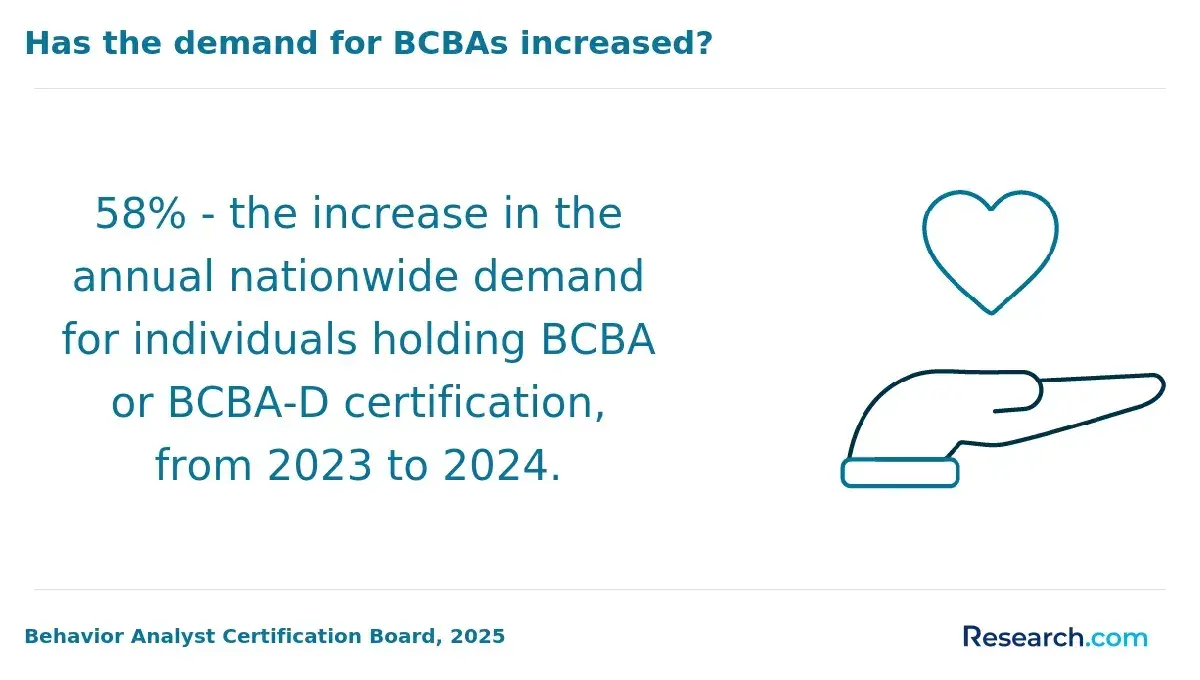
Employment growth in behavioral health is projected at around 20% through 2030, reflecting rising demand for BCBA-certified professionals in healthcare, education, autism services, and related support settings. Job prospects are often strongest for candidates who complete verified coursework, document supervised fieldwork carefully, and understand state licensure or employer credential requirements.
Factors that influence salary and opportunity
- Geographic location: Urban areas and regions with high behavioral service demand may offer stronger compensation.
- Work setting: Hospitals, schools, clinics, private practices, government agencies, and residential programs may use different pay structures.
- Experience level: Supervisory experience, case complexity, and years in practice can affect compensation.
- Credentials: BCBA certification, state licensure where required, and additional specialization can improve competitiveness.
- Fieldwork quality: Strong supervised practice can make graduates more prepared for independent responsibilities.
Northeastern University’s MS in ABA program aligns with Pathway 2 coursework for BCBA eligibility, offering coursework combined with supervised fieldwork hours toward the required 1,500 hours for certification. This kind of structure can help students connect coursework with practice while working toward eligibility.
Students who want to enter the job market efficiently should look for programs that provide verified coursework, transparent fieldwork guidance, exam preparation resources, and advising on licensure or certification steps. Salary potential is strongest when the degree, certification pathway, and target work setting are aligned from the start.
How to choose an accredited BCBA program?
To choose an accredited BCBA program, start by confirming that the university is properly accredited and that the program’s coursework meets current BACB eligibility expectations. A strong program should provide the required 270 hours of specific coursework and cover behavior assessment, intervention, ethics, experimental methods, measurement, and supervision.
Students should be careful with the word “accredited.” Institutional accreditation, program-level recognition, ABAI-related status, verified coursework, and BACB eligibility are related but not identical. Before enrolling, ask the school to explain exactly how its degree and course sequence support BCBA exam eligibility.
Questions to ask before applying
- Is the institution regionally accredited or otherwise appropriately accredited?
- Does the program meet the 270-hour content requirement for BCBA eligibility?
- How does the curriculum map to current BACB requirements?
- Are practicum or supervised fieldwork hours included, supported, or arranged separately?
- Who supervises fieldwork, and are supervisors qualified under BACB rules?
- Do faculty hold current BCBA certification or relevant doctoral degrees?
- What exam preparation, advising, and documentation support does the program provide?
- What are the program’s completion outcomes and graduate employment patterns?
- Is the program respected by employers in your target work environment?
Programs hosted by regionally accredited universities tend to offer credentials that are more widely recognized by employers and other institutions. Faculty qualifications also matter. Instructors with current BCBA certification, doctoral training, active research, or substantial applied experience can provide stronger preparation for both the exam and professional practice.
Online and hybrid formats can meet high standards, but students should evaluate them with the same rigor as campus-based programs. Typical master’s degree durations range from one to two years depending on full-time or part-time enrollment, but speed should not outweigh certification alignment, supervision quality, and affordability.
Finally, review career support and alumni outcomes. Graduates with appropriate coursework and BCBA certification often pursue supervisory roles in schools, hospitals, clinics, and other high-demand settings. A good program should be able to explain how it helps students move from admission to coursework, fieldwork, certification eligibility, and employment.
Other Things You Should Know About Applied Behavior Analysis
The Behavior Analyst Certification Board (BACB) sets the coursework standards for BCBA eligibility. Candidates must complete an approved graduate program or verified course sequence, including required graduate-level classes in behavior analysis, ethics, research methods, and supervised fieldwork.
No, a master's degree is a fundamental requirement for BCBA certification. The Behavior Analyst Certification Board mandates that candidates hold at least a master's level degree in behavior analysis or a related field along with supervised practical experience and passing a certification exam.
Supervision is a critical component of BCBA certification training, involving direct oversight from a qualified BCBA supervisor. Candidates must complete a required number of supervised hours practicing behavior analysis with clients. This supervision ensures that trainees develop practical skills and adhere to ethical standards in real-world applications.
BCBA professionals adhere to the Behavior Analyst Certification Board's Professional and Ethical Compliance Code. This code outlines standards for client dignity, confidentiality, informed consent, and evidence-based interventions. Ethical practice ensures that behavior analysts prioritize client welfare and maintain professional integrity.
- ABA Certification Explained: RBT, BCaBA, BCBA, BCBA-D https://onlinecounselingprograms.com/mental-health-careers/how-to-become-behavior-analyst-bcba/aba-certification-explained/
- 25+ Affordable ABA/BCBA Online Programs (Masters & Certs) https://abamastersprograms.org/affordable-online-aba-masters-programs/
- M.S.Ed. Applied Behavior Analysis (ABA) https://www.duq.edu/academics/colleges-and-schools/education/programs-and-degrees/graduate-programs/aba/index.php
- BCBA Jobs and Salary: Demand for Behavior Analysts Continues to Grow, New Report Finds https://www.abamatrix.com/bcba-jobs-and-salary-demand-for-behavior-analysts-continues-to-grow-new-report-finds/
- BCBA Programs & Schools | Sunray ABA https://www.sunrayaba.com/post/bcba-programs-schools
- What is a BCBA? Your Guide to the BCBA Certification and Exam https://www.thechicagoschool.edu/insight/career-development/bcba-guide-bcba-certification-exam/
- What Is A Board Certified Behavioral Analyst (BCBA)? https://www.psychology.org/resources/bcba-meaning-career-overview/
- BCBA Salary by State | Flywheel Centers https://flywheelcenters.com/bcba-salary-breakdown/
- Association for Behavior Analysis International Accreditation Board https://accreditation.abainternational.org/accredited-programs.aspx
- 20 Best Schools Offering Master's in ABA Programs https://www.appliedbehavioranalysisedu.org/20-best-schools-offering-aba-masters-programs/