2027 Where BCBAs Work: Career Settings Explained

Co-Founder and Chief Data Scientist
Choosing a BCBA job is not just a question of who is hiring. The setting you choose affects your daily schedule, caseload, supervision responsibilities, documentation load, income potential, and long-term career path. A school-based BCBA may spend much of the week coaching teachers and supporting IEP teams, while a clinic-based BCBA may supervise technicians, design treatment plans, and manage insurance-driven documentation. Private practice, telehealth, residential care, hospitals, and organizational behavior management each come with different trade-offs.
This guide explains where Board Certified Behavior Analysts work, what each setting typically requires, and how to evaluate career fit. It is designed for students planning a BCBA pathway, current behavior technicians considering advancement, and certified professionals comparing job options. You will learn how education and certification connect to employment settings, what BCBAs do in schools and clinics, how private practice differs from agency work, and what salary and job outlook data can realistically tell you.
Key Things You Should Know
- About 60% of BCBAs in 2026 work in clinical or home settings, providing services primarily to children with autism spectrum disorder.
- Educational settings employ roughly 25% of BCBAs, focusing on behavior intervention and support in schools across the U.S.
- Emerging roles in corporate and telehealth sectors reflect a diversification of career opportunities for BCBAs, with telehealth growing by 30% since 2024.
What Is a BCBA and Where Do They Work?
A Board Certified Behavior Analyst, or BCBA, is a graduate-level behavior analysis professional who assesses behavior, designs intervention plans, supervises implementation, and uses data to evaluate whether those interventions are working. BCBAs commonly support people with autism spectrum disorder, developmental disabilities, communication challenges, learning needs, and other behavioral concerns, but their work is not limited to one diagnosis or one age group.
In practical terms, a BCBA helps answer three questions: why a behavior is happening, what skill or replacement behavior should be taught, and how caregivers, educators, technicians, or staff can implement the plan consistently. The role requires technical knowledge, ethical decision-making, collaboration, and strong communication with families and other professionals.
BCBA career opportunities in the United States span several major work environments:
- Clinical settings: Private therapy clinics and ABA centers often focus on autism, developmental disabilities, early intervention, communication, social skills, and adaptive behavior.
- School systems: BCBAs support students with behavioral and learning needs, consult with teachers, and help integrate behavior plans into Individualized Education Programs.
- Residential facilities: These settings serve individuals who need long-term or intensive support, often involving complex behavior plans and multidisciplinary care.
- Early intervention programs: BCBAs work with toddlers and young children, often coaching parents and caregivers in everyday routines.
- Corporate environments: Some BCBAs apply behavior analysis to organizational behavior management, performance improvement, staff training, and workplace systems.
- Research institutions: BCBAs may contribute to studies on behavior, learning, intervention effectiveness, and service delivery models.
The demand for board certified behavior analysts significantly exceeds supply. Approximately 76% of employers report challenges filling BCBA roles, which can give qualified candidates stronger job security and more geographic flexibility. However, high demand does not mean every job is the right fit. Caseload size, supervision expectations, travel, documentation requirements, and organizational support can vary sharply by employer.
Most BCBA roles require collaboration. In schools, BCBAs often work with teachers, school psychologists, administrators, paraprofessionals, and families. In clinics, they may supervise registered behavior technicians and coordinate with speech-language pathologists, occupational therapists, physicians, and caregivers. In private practice or consulting, they may need stronger business, billing, and referral-development skills.
Students comparing pathways can review affordable online BCBA program options to understand how graduate education can align with high-demand applied behavior analysis settings.
What Education Is Required to Become a BCBA?
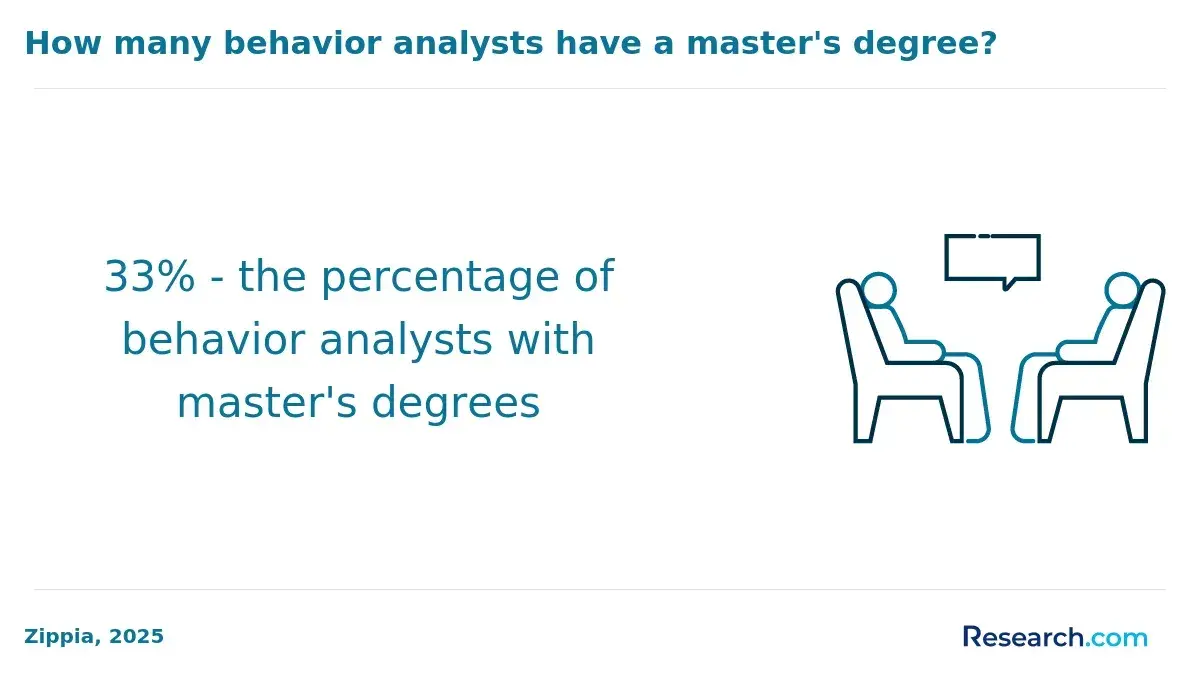
To become a board certified behavior analyst in 2026, candidates must meet education, coursework, supervised fieldwork, and examination requirements set by the Behavior Analyst Certification Board. At minimum, candidates need a master's degree in behavior analysis, education, psychology, or a related field. The degree pathway must include behavior-analysis coursework that meets current BACB requirements, including topics such as ethics, assessment, intervention, measurement, research design, and supervision.
There is more than one academic route. Some students enroll in a master's program specifically in applied behavior analysis. Others complete a related graduate degree and add a BACB-aligned course sequence if the degree alone does not cover the required content. Because certification rules can change, applicants should verify requirements directly with the BACB and confirm that a program’s coursework matches the certification pathway they intend to use.
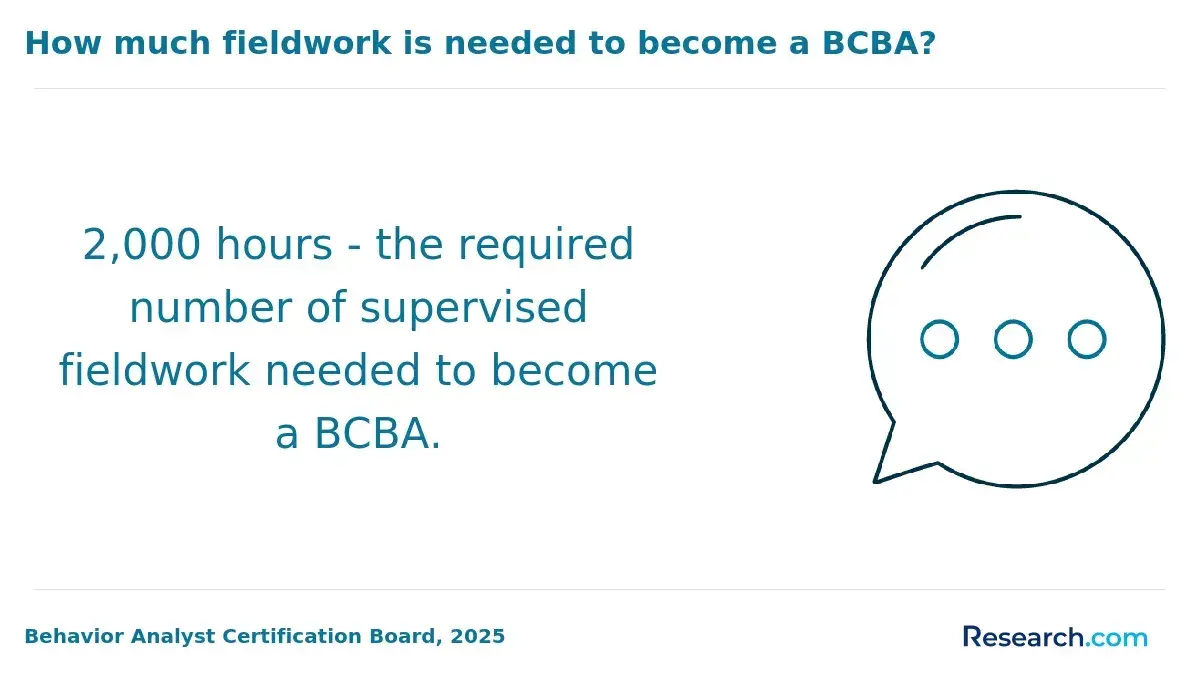
Candidates are also required to complete 1,500 to 2,000 hours of supervised practical experience overseen by a qualified BCBA. These hours are not a formality. Supervised experience is where future BCBAs learn to conduct assessments, write measurable goals, analyze data, provide feedback, train staff or caregivers, and make ethical clinical decisions in real service settings.
After completing the required education and fieldwork, candidates must pass the BCBA certification exam. The exam covers behavior analytic concepts, assessment, intervention, ethics, measurement, supervision, and professional practice. Strong programs help students connect coursework to fieldwork instead of treating the exam as a separate final hurdle.
Clinical and center-based services employing BCBAs are experiencing 15-18% annual growth, with salaries averaging $75,000 to $85,000 plus about 4.5% annual increases (Kids Club ABA, 2024). These figures show why preparation matters: employers are hiring, but they also expect BCBAs to be ready for complex caseloads, supervision duties, and data-based decision-making.
Prospective students should compare schools that offer BCBA certification pathways by curriculum, fieldwork support, faculty expertise, cost, flexibility, and certification exam preparation.
How Do You Get BCBA Certification?
BCBA certification requires a sequence of steps: complete an eligible graduate degree and behavior-analysis coursework, finish supervised fieldwork, apply for exam eligibility, pass the BCBA exam, and maintain certification through continuing education. The process is structured because BCBAs are responsible for assessment, intervention design, supervision, and ethical service delivery.
- Complete the required graduate education. Candidates generally need a master's degree or higher that fits the BACB’s accepted pathway. Coursework should cover core behavior analysis content and align with current certification rules.
- Complete supervised fieldwork. Candidates usually complete between 1,500 and 2,000 hours under the direction of a qualified BCBA supervisor. The quality of supervision matters as much as the number of hours, because fieldwork shapes clinical judgment and professional habits.
- Document eligibility carefully. Candidates should keep accurate records of coursework, supervision, fieldwork activities, and supervisor approvals. Missing or incomplete documentation can delay exam approval.
- Pass the BCBA certification exam. The exam assesses core behavior analysis knowledge, including assessment, measurement, intervention, ethics, and supervision. Many candidates use structured study plans or exam-prep programs because the exam is comprehensive.
- Maintain certification. BCBAs must complete approved continuing education units every two years to remain current and maintain certification.
Some professionals first become Board Certified Assistant Behavior Analysts, or BCaBAs, which requires a bachelor's degree and fewer supervised hours, before later pursuing full BCBA certification. This can be a useful route for people who want earlier entry into behavior analysis while planning for graduate study.
Students who want a faster academic route can compare online ABA master's programs that may help them complete required coursework efficiently while balancing work and fieldwork obligations.
Educational settings especially value BCBA-certified professionals, with school systems seeing a +34% increase in positions since 2018 and annual growth rates of 20-23%. Salaries in these roles typically range from $70,000 to $80,000, showing the career value of certification for professionals interested in school-based practice.
The main BCBA career settings are clinics, schools, home-based services, telehealth, hospitals, residential programs, private practice, research, and organizational behavior management. Each setting uses applied behavior analysis, but the day-to-day work can look very different.
| Setting | Typical focus | Best fit for BCBAs who want | Common trade-offs |
| Clinics and ABA centers | Assessment, treatment planning, technician supervision, parent training, and intensive intervention | Structured clinical work, team collaboration, and frequent data review | Productivity expectations, insurance documentation, and high supervision demands |
| Schools | Functional behavior assessment, behavior intervention plans, teacher consultation, and IEP support | Educational collaboration and work tied to student learning environments | Large caseloads, school calendars, and system-level constraints |
| Home-based services | Interventions embedded in family routines and natural environments | Direct caregiver coaching and individualized support | Travel, variable schedules, and less control over the environment |
| Telehealth | Remote consultation, caregiver training, supervision, and treatment monitoring | Flexible delivery models and broader geographic reach | Technology barriers and limits on hands-on support |
| Residential and hospital settings | Complex behavior support, crisis planning, staff training, and interdisciplinary care | Work with higher-need populations and intensive teams | Higher acuity, documentation demands, and possible nontraditional hours |
| Corporate and organizational behavior management | Performance systems, staff training, safety, productivity, and workplace behavior | Applying behavior science beyond clinical services | Less traditional ABA structure and a need for business communication skills |
Clinics often focus on intensive behavioral therapy for individuals with autism or developmental disabilities. In schools, BCBAs collaborate with educators to support students and improve classroom functioning. Home-based services require flexibility because interventions must fit family routines, cultural context, and everyday environments.
Telehealth has become one of the fastest-growing settings. It has grown over 156% since 2020. Telehealth BCBAs experience annual growth rates of 25-30% and salaries ranging from $72,000 to $82,000, making it an attractive option for professionals who want remote service delivery or broader client access.
Hospitals, residential centers, and corporate roles require more specialized skills. A hospital or residential BCBA may need experience with severe behavior, staff training, and multidisciplinary treatment planning. A BCBA in organizational behavior management may need to translate behavior analytic principles into business language and measurable workplace outcomes.
Students can strengthen their preparation through online ABA master's programs that support varied schedules and help them build skills for different applied behavior analysis roles.
BCBAs in schools help students access learning by assessing behavior, designing supports, coaching staff, and monitoring progress. Their work usually connects behavior analysis with special education, classroom management, social-emotional learning, and legally required student supports such as Individualized Education Programs.
A school-based BCBA may conduct functional behavior assessments to identify why a behavior occurs, such as escape from difficult work, access to attention, sensory reinforcement, or difficulty communicating needs. The BCBA then helps develop a behavior intervention plan that teaches replacement skills, adjusts environmental triggers, and gives teachers practical strategies they can use during the school day.
Common school-based BCBA responsibilities include:
- Conducting functional behavior assessments and reviewing behavioral data
- Writing or contributing to behavior intervention plans
- Supporting IEP teams with measurable behavioral goals and progress monitoring
- Training teachers, paraprofessionals, and related service providers
- Coaching staff on reinforcement, prompting, de-escalation, and data collection
- Consulting with families so school and home strategies are consistent when appropriate
- Helping students build communication, social, academic readiness, and self-management skills
BCBAs may work directly with students in one-on-one or small-group settings, but many school roles are consultative. The goal is not only to reduce challenging behavior but also to help school staff implement sustainable supports. For example, a BCBA might help a student with autism use a communication system to request breaks or help a classroom team support a student with attention difficulties during independent work.
School roles can be rewarding for BCBAs who enjoy collaboration and system-level impact. They can also be challenging because schools operate under staffing limits, bell schedules, district policies, and special education timelines. Effective school-based BCBAs must translate technical behavior analytic concepts into clear strategies that teachers can use without disrupting instruction.
- Interventions may address classroom disruption, aggression, elopement, noncompliance, skill deficits, and developmental disabilities.
- Plans should account for environmental, cultural, developmental, and classroom-specific factors.
- Adult services sectors show the highest job growth (28-32%) and salary ranges ($80,000-$90,000), reflecting strong demand and varied compensation (Kids Club ABA, 2024).
BCBA jobs in clinics usually focus on assessment, treatment planning, staff supervision, caregiver training, and data-based program adjustment. Many clinics serve children with autism spectrum disorder or developmental disabilities, though clinic models vary by population, service intensity, and funding source.
In a clinic, the BCBA often functions as the clinical lead for a caseload. They may conduct intake assessments, complete functional behavior assessments, write skill-acquisition and behavior-reduction programs, supervise behavior technicians, review data, meet with families, and coordinate with other professionals. Collaboration with speech therapists, occupational therapists, educators, physicians, and caregivers is common when clients have complex needs.
Clinic-based responsibilities commonly include:
- Designing individualized treatment plans based on assessment results
- Supervising behavioral technicians and providing performance feedback
- Training parents and caregivers to support generalization outside the clinic
- Monitoring progress through consistent data collection and analysis
- Updating goals, procedures, and interventions when data show a need for change
- Completing insurance documentation and treatment authorization materials
- Maintaining ethical, clinical, and organizational standards
Clinic roles can offer a highly structured environment, consistent access to materials, and close collaboration with other ABA professionals. They can also involve heavy supervision duties and documentation tied to funding requirements. Some clinics provide intensive therapy, often 20-40 hours weekly, while others use a consultation or focused-treatment model.
BCBAs who thrive in clinics are usually comfortable leading teams, coaching staff in real time, explaining treatment decisions to families, and using data to make frequent program adjustments. Strong clinical judgment is especially important because treatment quality depends not only on the written plan but also on how consistently and ethically it is implemented.
Organizational behavior management within clinical settings is growing between 19-22% annually, with salaries ranging from $85,000 to $110,000, reflecting high demand and competitive pay (Kids Club ABA, 2024). For clinic-based BCBAs, this growth highlights the value of leadership, staff-training, and systems-improvement skills in addition to direct clinical expertise.
BCBAs in private practice may work from a small clinic, clients’ homes, schools, community locations, telehealth platforms, or a consulting office. Private practice gives BCBAs more control over services, scheduling, client selection, and business direction, but it also adds responsibility for operations, billing, compliance, marketing, and referral relationships.
Many private-practice BCBAs provide direct or consultative services for clients with developmental disabilities. Their services may include assessment, individualized treatment planning, caregiver training, school consultation, staff training, and ongoing progress review. Some operate small clinics, while others work as independent consultants supporting families, schools, agencies, or interdisciplinary teams.
An emerging area of growth for private practice BCBAs is mental health facilities. Reports indicate a +27% increase in BCBA roles within these settings, with 38% of professionals extending their scope beyond autism-specific services. This includes behavior-analytic interventions for clients facing mood disorders, anxiety, and trauma-related challenges, reflecting the expanding function of BCBAs in clinical mental health.
Private practice can also include corporate wellness, educational consulting, advocacy, organizational behavior management, and staff performance training. Telehealth platforms are increasingly important because they allow BCBAs to provide caregiver coaching, consultation, supervision, and progress monitoring across geographic boundaries.
Key considerations for entering private practice include:
- Billing and payment systems: BCBAs may need to manage private pay, insurance relationships, authorizations, invoicing, and claims processes.
- Ethical scope of practice: Services should match the BCBA’s training, competence, and applicable legal or payer requirements.
- Supervision quality: If the practice employs technicians or trainees, supervision must meet professional and BACB standards.
- Referral networks: Sustainable private practice often depends on relationships with physicians, schools, therapists, agencies, and community organizations.
- Documentation and compliance: Independent practice requires strong recordkeeping, privacy practices, treatment documentation, and risk management.
- Continuing professional development: Private practitioners must keep current with evidence-based practice, ethics, supervision, and service delivery standards.
Private practice is best suited for BCBAs who want autonomy and are prepared for business responsibilities. It may not be ideal for someone who wants built-in administrative support, a steady salary, or a fully established referral stream from day one.
The BCBA salary range typically falls between $55,000 and $95,000 annually, depending on experience, location, workplace setting, specialization, and supervisory responsibility. Entry-level BCBAs usually earn between $55,000 and $65,000, especially in education, nonprofit, or lower-cost regions. More experienced BCBAs in healthcare, private clinics, supervisory roles, or specialized practice areas may earn from $85,000 to $95,000.
Salary should be evaluated with workload, benefits, caseload, schedule, and support—not just the annual number. A higher-paying position may involve more billable-hour pressure, travel, evening availability, or supervision duties. A school or public-sector role may offer a lower salary but stronger benefits, a predictable calendar, or better retirement options.
Government jobs requiring BCBA credentials are expanding rapidly, with a 58% increase in openings from 2023 to 2024 across public services, according to University of Cincinnati Online. These roles can be attractive because public-sector positions may provide competitive pay, benefits, and stability.
Key factors shaping BCBA compensation include:
- Location: Higher salaries are common in urban centers and states with elevated living costs like California and New York.
- Work setting: Healthcare, private clinics, government agencies, and supervisory roles may pay more than some school or community-based positions.
- Experience: BCBAs with stronger assessment, supervision, parent-training, and leadership skills often qualify for higher-paying roles.
- Specialization: Expertise in severe behavior, early intervention, organizational behavior management, telehealth, or clinical leadership can improve earning potential.
- Certification and credentials: Additional credentials, documented competence, and relevant experience can support advancement.
For career planning, compare total compensation. Review health insurance, paid time off, retirement contributions, continuing education support, mileage reimbursement, supervision expectations, productivity requirements, and administrative workload. A job with a slightly lower salary may be the better long-term choice if it offers strong supervision, manageable caseloads, and professional growth.
The job outlook for BCBAs is strong, with demand expanding across traditional and emerging settings. Specialized job platforms reported a 30-35% annual increase in BCBA-specific postings from 2022 to 2024 (Sunray ABA, 2024). Growth is being driven by autism services, school-based behavioral support, telehealth, residential programs, public services, and broader applications of behavior analysis.
BCBA roles are becoming more diverse and include:
- Telehealth and remote ABA service delivery that improves access for underserved communities
- Behavioral consultation in corporations focused on employee productivity, safety, training, and wellness
- Autism-focused early intervention in schools and clinics supported by sustained demand
- Residential treatment centers serving individuals with complex behavioral needs
- Government and public-service roles that require behavioral expertise
Strong demand does not remove the need for careful job evaluation. Candidates should ask about caseload size, billable-hour expectations, supervision structure, technician turnover, documentation systems, travel requirements, crisis procedures, and opportunities for mentorship. These factors often determine whether a BCBA role is sustainable.
Employers increasingly value BCBAs who are flexible with service models and comfortable using technology for data collection, treatment monitoring, telehealth, and team communication. Interdisciplinary collaboration is also becoming more important as BCBAs work alongside educators, healthcare providers, therapists, administrators, and caregivers.
Salary ranges vary by environment, and private practice or corporate roles may offer higher income potential than some public-sector positions. However, public-sector, school, and agency roles may offer stronger benefits, predictable schedules, or clearer advancement ladders. The best outlook belongs to BCBAs who combine solid assessment and intervention skills with supervision, communication, ethical decision-making, and data-based leadership.
Ongoing professional development and credential maintenance remain essential. BCBAs who keep their skills current and adapt to new service models will be better positioned for advancement and long-term job security.
How to Choose a BCBA Program?
Choosing a BCBA program should start with one question: will this program help you meet current certification requirements and prepare you for the setting where you want to work? A program may be convenient or affordable, but it still needs the right coursework, fieldwork support, faculty expertise, and career alignment.
Prospective students should verify that the curriculum aligns with BACB requirements for the certification pathway they plan to use. Look for coursework in behavior assessment, intervention design, ethics, measurement, research methods, supervision, and data analysis. Do not rely only on marketing language; confirm requirements with the program and review current BACB guidance.
Supervised fieldwork support is one of the most important selection factors. Some programs help students secure placements or connect with partner agencies, while others expect students to find supervision independently. Ask how fieldwork is arranged, who provides supervision, what settings are available, and whether working students can complete hours at their current workplace.
Delivery format also matters. Online programs may work well for working professionals who need flexibility. On-campus programs may provide more direct mentorship, peer interaction, and local practicum connections. Hybrid programs can offer a balance. The best format depends on your schedule, learning style, access to fieldwork, and need for academic support.
Use the following checklist when comparing programs:
- Certification alignment: Does the coursework match current BACB requirements?
- Fieldwork access: Does the program help students secure supervised experience?
- Faculty expertise: Do instructors have relevant BCBA, clinical, school, research, or organizational experience?
- Career focus: Does the program support your target setting, such as autism services, schools, early intervention, residential care, or organizational behavior management?
- Student support: Are advising, exam preparation, writing support, and supervision guidance available?
- Cost and aid: What is the total cost, and what financial aid, employer tuition assistance, or payment options are available?
- Outcomes: Does the program report job placement, exam preparation resources, or employer partnerships?
Job placement support can make a meaningful difference. For example, Kids Club ABA reported a 94% job placement rate within three months post-certification, highlighting the value of programs and employer networks that provide resume support, interview coaching, supervision pathways, and hiring connections.
Finally, match the program to your long-term goals. A student aiming for school consultation may need different practicum experiences than someone planning for clinic leadership, private practice, telehealth, or organizational behavior management. The strongest BCBA program is the one that meets certification requirements while building the practical skills needed for the work setting you actually want.
Other Things You Should Know About Applied Behavior Analysis
By 2026, BCBAs are expected to find increasing opportunities in corporate environments focusing on organizational behavior management, as well as in digital health companies developing behavior analytics software. These settings offer avenues for BCBAs to apply their expertise beyond traditional roles, addressing diverse behavioral challenges.
Yes, BCBAs serve diverse populations including adults with developmental disabilities, individuals with mental health challenges, elderly clients, and people seeking behavior interventions in areas like education, health, and business. The principles of applied behavior analysis are adaptable, allowing BCBAs to provide effective services in many different sectors beyond autism therapy.
BCBAs in healthcare settings must hold active BCBA certification from the Behavior Analyst Certification Board and follow state licensure laws where they practice. Many states require a separate behavior analyst license, and employers often also require current CPR, background checks, and HIPAA training for patient-facing roles.
Applied behavior analysis requires adherence to a strict code of ethics that governs client dignity, informed consent, and confidentiality. Ethical considerations include avoiding reinforcement of harmful behaviors and recognizing cultural competence as essential to effective intervention. BCBAs must continuously evaluate their practices to ensure they promote client welfare and respect individual differences.
- The Rate of Job Growth for BCBAs (In 2023) https://www.crossrivertherapy.com/behavioral-analysts/job-growth
- BCBA Salary by State | Flywheel Centers https://flywheelcenters.com/bcba-salary-breakdown/
- How do I Choose a Qualified ABA Therapy Provider? https://www.hopebridge.com/blog/how-do-i-choose-a-qualified-aba-therapy-provider/
- What Does a Behavior Analyst Do? - How to Become a BCBA | UMass Global https://www.umassglobal.edu/blog-news/what-does-a-behavior-analyst-do
- Do BCBAs Work in Schools? - Bluesprig Autism https://www.bluesprigautism.com/blog/do-bcbas-work-in-schools/
- What Jobs Can a BCBA Do - What are the Roles? https://www.biermanautism.com/resources/blog/what-jobs-can-a-bcba-do/
- The Growing Demand for ABA: Career Opportunities in a Rapidly Expanding Field https://www.abaresourcecenter.com/post/the-growing-demand-for-aba-career-opportunities
- 8 Key considerations when choosing an ABA service provider for your child with autism — Lake Ridge Community Support Services https://www.lrcss.com/blog/how-to-choose-an-aba-provider
- Choosing the Right ABA Therapy Programs | Level Ahead ABA https://www.levelaheadaba.com/choosing-aba-therapy-programs
- Board Certified Behavior Analyst (BCBA) / Board Certified Assistant Behavior Analyst (BCaBA) Job Summary https://centerforpediatrictherapies.com/careers/board-certified-behavior-analyst-bcba-job-summary/