2027 BCBA Career Paths in Organizational Behavior Management

Co-Founder and Chief Data Scientist
Moving into organizational behavior management (OBM) as a Board Certified Behavior Analyst (BCBA) is not the same as entering a traditional clinical ABA career. The credential is the same, but the work setting, clients, supervision opportunities, and career strategy can look very different. Professionals coming from education, psychology, human resources, operations, healthcare, consulting, or business often want to know whether they can qualify for BCBA certification without starting over academically—and how to choose a program that supports workplace-focused behavior analysis.
This guide explains how BCBA preparation connects to OBM careers, what degree and supervised experience requirements matter, how online and in-person programs differ, and what to look for before enrolling. It also outlines common OBM roles, salary expectations, and practical program-selection criteria so prospective students can make a credentialing decision that supports long-term career mobility.
Key Things You Should Know
- BCBA professionals in organizational behavior management (OBM) are increasingly sought in industries like healthcare and tech, with a 12% job growth projected through 2028 according to the BLS.
- Advanced credentials and experience in OBM-specific interventions significantly enhance career advancement and earning potential, with median salaries above $75,000 reported in 2025 surveys.
- Continuing education in data analytics and systems thinking is critical for BCBAs entering OBM roles, reflecting industry demands for evidence-based, scalable behavior solutions.
What is BCBA in Organizational Behavior Management?
A BCBA in organizational behavior management applies behavior analysis to workplace and organizational problems. Instead of focusing primarily on clinical behavior-change programs, OBM practitioners use behavioral principles to improve employee performance, safety, training, service quality, productivity, and systems-level outcomes.
It is important to understand that OBM is not a separate BCBA credential. The BCBA is the certification; OBM is a specialization or practice area. A BCBA working in OBM may consult with corporations, healthcare systems, government agencies, schools, nonprofits, manufacturing teams, or behavioral health organizations that need measurable improvements in how people and systems perform.
Common OBM projects include reducing workplace errors, improving customer service behaviors, strengthening sales team follow-through, increasing training transfer, designing performance feedback systems, and creating incentive structures that reinforce useful workplace behaviors. The work is data-driven: practitioners define target behaviors, collect baseline data, implement interventions, and evaluate whether outcomes actually improve.
This career path differs from clinical ABA in several ways. OBM practitioners often work with managers, executives, HR teams, and operations leaders rather than individual therapy clients. They need strong skills in consultation, business communication, systems analysis, and stakeholder management in addition to core behavior analytic competence.
The field has gained attention as organizations look for practical ways to improve performance without relying only on intuition, generic training, or one-time motivational programs. The demand for BCBAs specializing in OBM is rising quickly, with projections estimating over 75,000 positions in the US by 2025, a 22% increase in just one year. Candidates exploring this route may want to compare flexible and cost-conscious options, including affordable online ABA master's programs, while confirming that the curriculum and supervised experience options support OBM goals.
How do you become a BCBA?
To become a BCBA, you must complete graduate-level education, behavior-analytic coursework, supervised fieldwork, and the BCBA certification exam. For an OBM-focused career, the sequence is the same as for clinical ABA, but your program selection, supervision plan, and fieldwork sites should be aligned with organizational applications whenever possible.
- Earn an eligible graduate degree. Candidates generally need a master's degree or higher in behavior analysis, education, psychology, or a related field from an accredited institution. The degree should include coursework that satisfies Behavior Analyst Certification Board (BACB) requirements.
- Complete verified behavior analysis coursework. Coursework typically covers measurement, experimental design, behavior-change procedures, assessment, ethics, supervision, and professional practice. OBM-focused students should look for electives or practica in performance management, behavioral systems analysis, leadership, and consultation.
- Secure qualified supervised experience. Supervised fieldwork is where many OBM candidates need to plan carefully. Clinical placements are more common than OBM placements, so students should ask programs early about workplace-based supervision, corporate consulting opportunities, or supervisors with OBM expertise.
- Apply for and pass the BCBA exam. After meeting education and experience requirements, candidates must pass the BCBA certification exam, which assesses core behavior analytic knowledge, ethics, assessment, intervention, and professional responsibilities.
- Maintain certification. Certification is not a one-time event. BCBAs must complete continuing education and follow professional and ethical standards to remain certified.
The supervised experience routes described for candidates include:
- Supervised Fieldwork: 1,500 hours completed over a minimum of 12 months under a qualified BCBA supervisor.
- Concentrated Supervised Fieldwork: 750 hours within 6 months, intended for accelerated progression.
For OBM candidates, the biggest mistake is assuming any BCBA program will automatically prepare them for organizational work. A general ABA program may satisfy certification coursework but offer limited exposure to workplace consulting, employee performance systems, or business-facing projects. Before enrolling, ask whether the program has OBM faculty, OBM practicum options, alumni in organizational roles, and coursework that goes beyond clinical case examples.
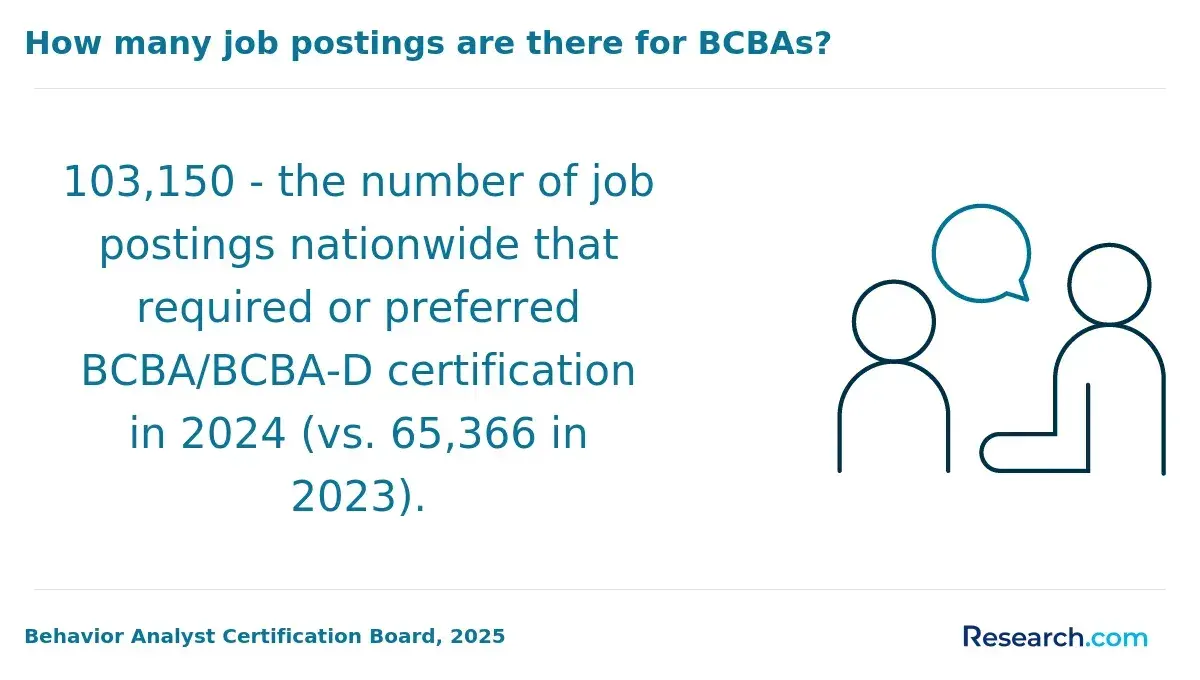
Demand for BCBAs is increasing, with a 58% rise in job postings seeking these credentials. While many roles remain in autism services and clinical settings, BCBAs can also build careers in corporate training, performance management, human resources, safety, quality improvement, and operations consulting. Students comparing pathways can review ABA masters programs to identify options that match both certification requirements and OBM career goals.
What degree is needed for BCBA certification?
The minimum degree requirement for BCBA certification is a master's degree in behavior analysis, education, psychology, or a related field. A doctoral degree can also meet the education level requirement, but it is not mandatory for BCBA certification. What matters is not only the degree title but whether the program includes graduate coursework aligned with BACB requirements.
Students do not necessarily need a master's degree labeled “applied behavior analysis.” Degrees in education, special education, psychology, or related areas may qualify when paired with the required behavior analytic coursework. However, OBM-focused students should be especially careful: a degree can satisfy certification requirements while still offering little preparation for organizational consulting or business performance work.
A strong degree plan for BCBA certification should include training in learning principles, measurement, research methods, ethics, assessment, intervention, and supervision. For OBM, the most useful programs also include content in organizational assessment, performance management, behavioral systems analysis, employee training, leadership, and data-based decision-making.
The specialization landscape is still heavily weighted toward clinical practice. About 82% of BCBA certificants specialize in autism, while only 18% focus on organizational behavior management (OBM) or corporate sectors like performance management. That smaller OBM share can create both a challenge and an opportunity: students may need to search harder for relevant supervision and coursework, but specialized OBM competence can help differentiate them in corporate and consulting markets.
When evaluating degree options, ask three questions before applying:
- Does the degree satisfy BCBA education and coursework expectations? Confirm this directly with the program and current BACB guidance.
- Does the program support OBM practice? Look for OBM coursework, faculty publications, consulting projects, or alumni working in organizational roles.
- Can you complete supervised experience in an OBM-relevant setting? Coursework alone is not enough if your career goal is workplace performance consulting.
For candidates coming from business, HR, operations, or industrial-organizational psychology, a BCBA-eligible graduate pathway can add a rigorous behavior analytic foundation to existing organizational knowledge. For candidates coming from clinical or education backgrounds, OBM coursework can broaden career options beyond direct service roles.
Top BCBA programs for organizational behavior management combine rigorous behavior analysis training with direct application to workplace systems. The best fit is not always the most famous program; it is the program that meets certification coursework needs, offers OBM-specific learning, and gives students access to relevant supervision or applied projects.
Institutions such as Western Michigan University and the Florida Institute of Technology are commonly associated with OBM-oriented training. Programs with OBM tracks may include coursework in performance management, behavioral systems analysis, organizational assessment, consultation, safety, training design, and data-based management. These topics help students translate ABA principles into business and organizational settings.
When comparing programs, prioritize evidence of real OBM preparation. A program that mentions OBM in marketing language but offers no OBM faculty, no applied projects, and no supervision pathway may not be enough for a candidate pursuing organizational consulting. Stronger programs typically provide clearer connections between coursework, fieldwork, faculty expertise, and career outcomes.
Key criteria to review include:
- Certification alignment: Confirm that coursework supports BCBA eligibility and that the institution meets appropriate accreditation expectations.
- OBM depth: Look for dedicated OBM courses, not only one lecture or module inside a general ABA class.
- Supervised experience options: Ask whether students can complete fieldwork in business, healthcare administration, organizational consulting, training, safety, or quality improvement settings.
- Faculty expertise: Review whether faculty have OBM research, consulting, or applied organizational experience.
- Career support: Programs with industry ties, alumni networks, or consulting partnerships may provide stronger access to OBM opportunities.
OBM roles are expanding rapidly-growing 14% annually from 2022-2023, making practical experience especially valuable. Students should also consider certificate or continuing education options if they are already in a BCBA-eligible program but need more organizational specialization. Prospective students comparing distance-learning options can review best online ABA certificate programs as part of a broader plan to build OBM-specific competence.
A BCBA OBM curriculum covers the same core behavior analytic foundations required for certification, then applies those principles to organizations, teams, and workplace systems. The goal is to prepare practitioners to solve performance problems with observable behavior, measurable outcomes, and interventions that fit the work environment.
Core BCBA coursework typically includes behavior principles, measurement, experimental design, assessment, behavior-change procedures, ethics, supervision, and professional practice. In an OBM-focused curriculum, these topics are connected to issues such as productivity, quality control, safety, employee engagement, leadership behavior, training effectiveness, and organizational culture.
Common OBM curriculum areas include:
- Performance management: Designing feedback, reinforcement, goal-setting, coaching, and accountability systems that improve workplace behavior.
- Behavioral systems analysis: Examining how processes, roles, incentives, and environmental conditions influence performance across teams or departments.
- Organizational assessment: Identifying performance gaps, selecting useful metrics, and distinguishing behavior problems from process or resource problems.
- Training and instructional design: Building training programs that produce on-the-job behavior change rather than simple knowledge completion.
- Data analysis and evaluation: Using visual analysis, single-case designs, and performance data to determine whether interventions are working.
- Leadership and consultation: Communicating recommendations to managers, coaching supervisors, and building stakeholder support for change.
- Ethics in organizations: Managing confidentiality, consent, data use, conflicts of interest, and transparent communication with workplace stakeholders.
OBM students should expect to work with examples that differ from clinical case studies. Instead of focusing only on individual treatment plans, they may analyze absenteeism, employee safety behaviors, call-center performance, sales follow-up, production errors, staff training completion, or manager feedback practices.
The strongest curricula emphasize implementation. It is not enough to know reinforcement theory; OBM practitioners must design systems that managers can maintain, employees understand, and organizations can evaluate. That requires practical skill in communicating with non-behavior analysts and translating technical concepts into business language.
Graduates with these competencies often move into advanced leadership roles. Average salaries for BCBAs in OBM leadership positions exceed $120,000, about 30% higher than traditional therapy roles. While individual outcomes vary by location, experience, employer, and role scope, the salary difference reflects how organizations may value behavior analytic expertise tied to operational efficiency and workforce performance.
BCBA admission requirements can refer to two related but different checkpoints: admission into a graduate program and eligibility for BCBA certification. Prospective students should evaluate both before enrolling. A university may admit you to a program, but you still need to confirm that the coursework and fieldwork plan support certification goals.
Applicants in 2026 must possess at least a master's degree in behavior analysis, education, psychology, or a related field from a regionally accredited institution. The graduate program must include verified coursework aligned with BACB's task list requirements. For students who have not yet earned a master's degree, the practical first step is to apply to a graduate program that can meet both degree and coursework expectations.
Typical graduate program admissions materials may include transcripts, a statement of purpose, resume or CV, recommendation letters, and evidence of academic readiness for graduate study. OBM-focused applicants should use the statement of purpose to explain their interest in organizational applications, such as performance improvement, HR systems, workplace safety, operations, or training.
Supervised practical experience is also central to certification planning. The requirement set described for applicants includes two pathways: 2,000 hours of supervised fieldwork or 1,500 hours under a qualified BCBA supervisor through experience application. Because supervised experience rules can be detailed and time-sensitive, candidates should verify current BACB requirements and ask programs how they help students locate qualified supervisors.
The BCBA exam measures knowledge of behavior analytic principles and ethics, and passing it is required to earn certification. For OBM candidates, exam preparation should not replace applied experience. The strongest applicants and graduates can show both certification readiness and evidence that they understand organizations as systems.
Key requirements and planning questions include:
- Graduate degree fit: Does the program lead to or build on a qualifying master's degree?
- Coursework alignment: Does the curriculum include BACB-aligned behavior analytic coursework?
- Supervision access: Can you obtain supervised fieldwork with a qualified BCBA supervisor?
- OBM relevance: Are there workplace-focused projects, electives, or supervisors?
- Exam readiness: Does the program provide adequate preparation for the BCBA certification exam?
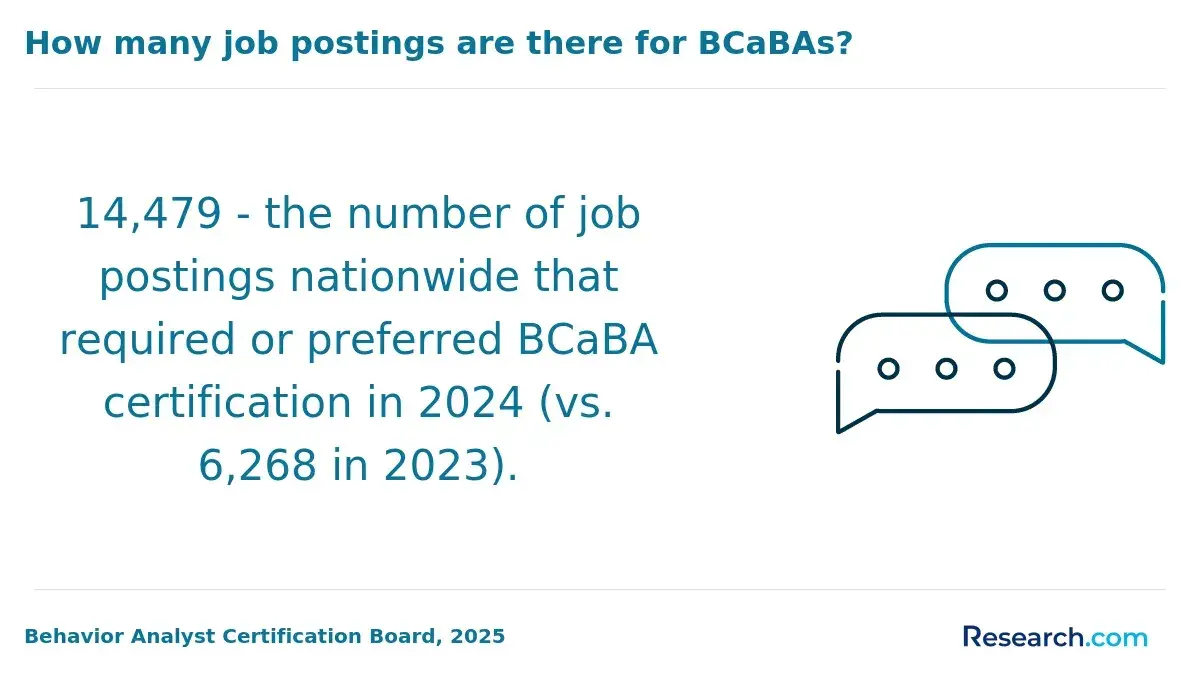
Demand for BCBAs is growing rapidly, particularly a predicted 25% increase in organizational behavior management roles in technology firms from 2024 to 2025. Applicants who plan early for both certification and OBM specialization are better positioned to avoid delays, unnecessary coursework, and poorly matched fieldwork placements.
Yes, there are online BCBA programs that can support OBM-focused career goals, but students need to distinguish between online coursework and complete career preparation. Many programs allow students to complete the academic portion remotely, while supervised fieldwork must still meet professional requirements and provide meaningful applied experience.
Online programs can be a strong option for working professionals, career changers, and students who do not live near a university with OBM faculty. They may offer asynchronous classes, evening formats, virtual advising, and access to faculty outside the student's region. For OBM candidates, online learning can also make it easier to stay employed in a relevant workplace while completing coursework.
The main benefits of online BCBA OBM pathways include:
- Flexibility: Students can often balance graduate coursework with full-time work, family responsibilities, or an existing role in HR, training, operations, or behavioral health.
- Broader faculty access: Online delivery may connect students with OBM instructors and supervisors who are not available locally.
- Workplace application: Students employed in organizations may be able to connect assignments and projects to real performance problems.
- Geographic reach: Online programs can serve students outside major urban centers or far from campuses with ABA departments.
The trade-off is that online students must be more proactive about supervision. A program may provide coursework but expect students to arrange fieldwork locally. Before enrolling, ask whether the program helps identify supervisors, whether OBM fieldwork is possible, and how remote supervision is structured. If your only available placement is clinical and your career goal is OBM, you may still qualify for certification but graduate with less relevant experience.
Students should also confirm that the program's coursework supports BACB requirements and that the institution is appropriately accredited. Online format alone does not determine quality. Faculty qualifications, advising, supervision support, exam preparation, and OBM-specific content matter more than whether classes are remote or campus-based.
Over 40% of experienced BCBAs move into director-level OBM positions within five years after certification, highlighting the value of specialization for professionals who want leadership responsibility. An online program can be a practical pathway, but only if it is paired with a deliberate fieldwork and career strategy.
BCBA careers in organizational behavior management focus on improving how people perform within systems. These roles can exist inside companies, healthcare organizations, schools, human service agencies, manufacturing environments, consulting firms, and government or nonprofit organizations. The common thread is the use of behavior analytic methods to improve measurable workplace outcomes.
Common OBM career paths include:
- OBM consultant: Works with organizations to assess performance problems, design interventions, coach leaders, and evaluate results.
- Performance management specialist: Builds feedback, reinforcement, goal-setting, and measurement systems for employees or teams.
- Training and development leader: Designs training that produces observable on-the-job behavior change and tracks whether skills transfer to work performance.
- Human resources or talent optimization professional: Applies behavior analysis to employee engagement, retention, onboarding, performance reviews, and manager coaching.
- Safety and quality improvement specialist: Uses behavioral strategies to reduce errors, strengthen compliance, and improve workplace safety practices.
- Healthcare operations or behavioral health leader: Improves staff performance, treatment integrity, documentation, supervision systems, and patient-related processes.
- Organizational researcher or analyst: Uses performance data to evaluate interventions, identify barriers, and guide organizational decision-making.
Recent trends reveal a 15% increase in remote OBM positions within corporate consulting due to telehealth growth, creating more flexible options for BCBAs who can consult, coach, analyze data, and train teams virtually. Remote work does not eliminate the need for strong organizational insight; it often increases the importance of clear communication, reliable measurement systems, and stakeholder alignment.
Employers hiring for OBM-oriented roles may look for skills that go beyond BCBA certification. Useful competencies include data collection, performance diagnostics, intervention design, coaching, leadership communication, change management, business writing, software-based performance tracking, and the ability to translate behavior analytic concepts for nontechnical audiences.
The best career fit depends on whether you prefer external consulting, internal leadership, training, systems improvement, research, or operations. Candidates who already have experience in HR, education administration, healthcare management, safety, or business operations may be able to combine that background with BCBA training to pursue more specialized organizational roles. For broader education and career resources in applied behavior analysis and related fields, readers can consult research.com.
BCBA salary depends on setting, location, experience, specialization, employer type, and leadership responsibility. OBM roles can pay more than some traditional direct-service roles when they involve consulting, management, operations, or enterprise-level performance improvement, but individual outcomes vary widely.
The salary ranges commonly cited for BCBAs are:
- Entry-level salary: $60,000 - $70,000
- Mid-career salary: $75,000 - $95,000
- Experienced BCBA salary: $100,000+
For OBM-focused professionals, compensation is often influenced by the business value of the work. A BCBA who can reduce safety incidents, improve staff productivity, strengthen training outcomes, or improve quality metrics may qualify for roles with broader organizational responsibility. Leadership positions, consulting work, and director-level roles may offer higher earning potential than entry-level clinical positions.
Job prospects in OBM are notably strong. The U.S. Bureau of Labor Statistics projects a 22% growth rate for behavior analysts in non-traditional OBM roles by 2029, far exceeding the average 3% growth rate for all occupations. This growth is connected to employer interest in data-driven methods for improving employee performance, training, human resources, and operational outcomes.
Salary and job outlook also vary by specialization. BCBAs in healthcare, education, autism services, corporate consulting, and organizational leadership may experience different pay structures and advancement timelines. Candidates who add skills in quantitative analysis, organizational psychology, leadership coaching, and business operations may be more competitive for OBM roles.
When evaluating salary claims, students should look beyond averages. A realistic career plan should account for local job markets, availability of OBM roles, whether the position is internal or consulting-based, and how much supervised experience the candidate has in organizational settings. Certification can open doors, but specialized experience often determines which doors are realistic.
How to choose accredited BCBA programs?
Choosing an accredited BCBA program requires more than checking whether a university offers ABA courses. Students should confirm institutional accreditation, BCBA coursework alignment, supervision support, faculty qualifications, and fit with their intended career path. For OBM candidates, the program must also provide enough organizational content to support workplace-focused practice.
Start by confirming whether the program's coursework is recognized for BCBA eligibility through the appropriate BACB-related pathway. Programs listed on the official BACB Verified Course Sequence (VCS) registry can make it easier to document coursework alignment, but students should still verify current requirements directly before enrolling because certification standards can change.
For students targeting OBM careers, accreditation and coursework alignment are only the baseline. BCBAs with OBM specialization have a 20% higher job placement rate in corporate settings compared to generalists, which makes specialization a meaningful selection factor. Look for coursework in performance management, behavioral systems analysis, organizational consultation, leadership, workplace culture, and data-based decision-making.
Use the following checklist when comparing programs:
- Institutional credibility: Is the university properly accredited, and is the degree recognized by employers and certification bodies?
- BCBA coursework alignment: Does the program clearly explain how its coursework supports BCBA eligibility?
- OBM specialization: Are there dedicated OBM courses, faculty, research labs, certificates, or applied projects?
- Supervised fieldwork support: Does the program help students find qualified BCBA supervisors, including supervisors with organizational experience?
- Format: Does online, hybrid, or on-campus delivery fit your schedule, learning style, and supervision options?
- Cost and duration: Can you complete the program without taking on unnecessary coursework or unsustainable debt?
- Faculty and advising: Are advisors knowledgeable about both certification rules and OBM career planning?
- Career outcomes: Do alumni move into roles similar to the ones you want, such as consulting, HR, safety, training, or operations leadership?
Online and hybrid programs can be just as useful as campus-based options when they meet coursework expectations and provide strong advising. However, students should not choose a program based on convenience alone. If the program cannot help you plan supervised fieldwork or lacks OBM content, it may slow your transition into organizational practice.
The safest approach is to contact programs with specific questions before applying. Ask for documentation of coursework alignment, examples of OBM electives, details on supervision support, faculty experience, and graduate outcomes. A strong program should be able to explain not only how it prepares students for certification, but also how it supports the type of BCBA career the student is actually pursuing.
Other Things You Should Know About Applied Behavior Analysis
By 2027, in addition to the BCBA certification, obtaining certifications such as Certified Professional in Learning and Performance (CPLP) or a Six Sigma Green Belt can enhance a BCBA's career in organizational behavior management, providing specialized skills in workplace performance and process improvement.
In 2027, BCBAs in organizational behavior management (OBM) often work in corporate environments, healthcare systems, educational institutions, and consulting firms. Their roles focus on improving employee performance, enhancing organizational efficiency, and fostering workplace safety and well-being by analyzing and modifying behavior-based variables.
BCBAs in organizational behavior management are hired by hospitals, school districts, manufacturing firms, government agencies, and consulting companies. These employers use OBM to improve staff performance, safety, supervision, and productivity through behavior-based systems and data-driven management.
BCBAs aiming for 2027 OBM roles require specialized training in behavioral systems analysis and performance management. They should complete additional courses or certifications in these areas and stay updated with continual education units (CEUs) as mandated by the Behavior Analyst Certification Board (BACB).
- What is the OBM Specialist Certificate? | ABA Technologies https://www.abatechnologies.com/blog/what-is-the-obm-specialist-certificate
- Applied Behavior Analysis Master’s—100 % Online https://www.baypath.edu/academics/graduate-programs/applied-behavior-analysis-ms/
- Board-Certified Behavior Analyst (BCBA) Salary Guide â Trusted Health https://www.trustedhealth.com/allied-career-guide/behavior-analyst/salary-guide
- The Best ABA Programs for BCBA Certification https://www.abaresourcecenter.com/post/best-aba-programs-for-bcba-certification
- OBM Jobs https://www.moralismachina.com/blog/obm-jobs
- Is Becoming a BCBA a Good Career in 2026? Salary, Growth, and What to Expect https://mindfulsproutsaba.com/blog/is-becoming-a-bcba-a-good-career-in-2026-salary-growth-and-what-to-expect/
- Exploring the Roadmap to a Rewarding BCBA Career - apricott ABA https://www.apricott.com/resources/bcba-career-path-to-take
- BCBA Certification Requirements - Bluebell ABA https://bluebellaba.com/blog/bcba-without-masters-degree/
- BCBA Programs & Schools | Sunray ABA https://www.sunrayaba.com/post/bcba-programs-schools
- Exploring New Career Options for BCBAs https://brightpathwaysaba.com/exploring-new-career-options-for-bcbas/