2027 BCBA Pathway for Pediatric Professionals

Co-Founder and Chief Data Scientist
For pediatric professionals who already work with children but do not hold a behavior analysis degree, the BCBA route can feel difficult to decode. The decision is not simply “find a master’s program.” You also need the right graduate coursework, supervised fieldwork that meets Behavior Analyst Certification Board (BACB) rules, exam readiness, and, in many states, licensure planning.
This guide explains how the BCBA pathway works for professionals moving into pediatric applied behavior analysis (ABA), including education requirements, online and in-person program options, supervised experience, exam preparation, salary expectations, and key program-selection criteria. It is designed for working professionals in education, psychology, healthcare, early intervention, autism services, and related child-focused roles who want a clear route into BCBA-level practice.
Key Things You Should Know
- To achieve BCBA certification in 2026, candidates must complete a verified sequence from a BACB-approved program, including 1,500 hours of supervised experience in pediatric applied behavior analysis.
- The Behavior Analyst Certification Board updated eligibility criteria in 2024, emphasizing advanced coursework and competence in evidence-based pediatric interventions.
- Employment projections estimate a 20% growth in pediatric applied behavior analysis jobs through 2030, reflecting increased demand for BCBA-certified professionals in early intervention services.
What is a BCBA pathway for pediatric professionals?
A BCBA pathway for pediatric professionals is the structured route to becoming a Board Certified Behavior Analyst who can design, supervise, and evaluate behavior-analytic services for children. In pediatric practice, this often means working with children with autism spectrum disorder, developmental delays, communication needs, challenging behavior, or skill-acquisition goals across clinics, schools, homes, and early intervention settings.
The pathway generally combines graduate education, BACB-aligned coursework, supervised fieldwork, and the BCBA certification exam. For professionals coming from unrelated or adjacent undergraduate fields, the most important first step is choosing a program that clearly meets current BACB education requirements and can support appropriate supervised experience.
Key requirements typically include:
- A master's degree or higher in psychology, education, behavior analysis, or a related field
- Completion of BACB-approved coursework that includes behavior assessment, ethics, measurement, intervention, and research design
- Supervised experience totaling 1,500 to 2,000 hours, with pediatric applicants often seeking child-focused placements
- A passing score on the BCBA credentialing examination
Some candidates complete standard supervised fieldwork, while others pursue a concentrated supervised experience model with more intensive supervision and fewer total hours. Experienced professionals should not assume prior work automatically qualifies; documentation, supervisor credentials, client population, and activity type all matter under BACB standards.
For working adults, online BCBA programs may offer a more manageable path if they provide verified coursework, clear supervision guidance, and enough flexibility to continue working while completing fieldwork.
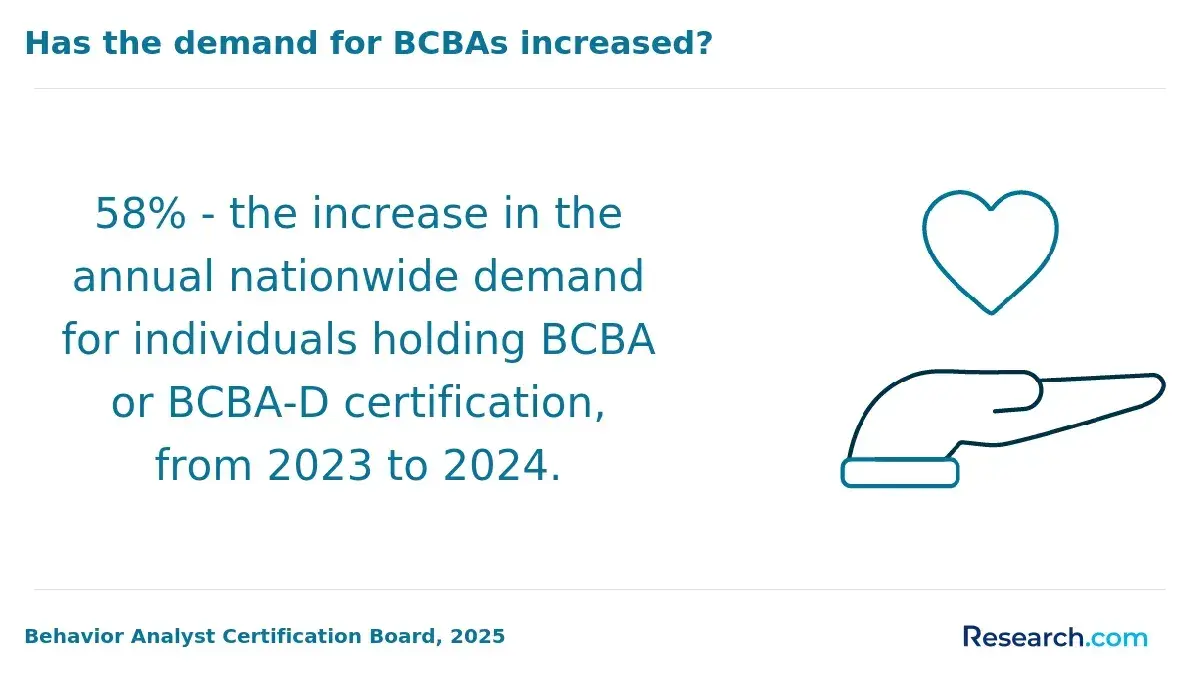
More than 48,000 individuals currently hold BCBA credentials, making the certification a common leadership standard in pediatric ABA. The credential is not just an academic milestone; it signals preparation to make data-based clinical decisions and supervise services responsibly.
How do you become a BCBA in the US?
To become a BCBA in the US, candidates must complete graduate-level education, BACB-aligned coursework, supervised fieldwork, and the BCBA certification exam. Pediatric professionals should also check state licensure rules early, because certification and legal authorization to practice are not always the same thing.
The usual process follows four major steps:
- Earn an eligible graduate degree. Candidates need a master's degree or higher in behavior analysis, psychology, education, or a related field from an accredited institution.
- Complete a verified course sequence. BACB-approved coursework covers behavioral assessment, ethics, intervention planning, measurement, research methods, and supervision-related content.
- Accumulate supervised fieldwork. Candidates complete between 1,500 to 2,000 hours under a qualified BCBA, depending on the supervision model. Pediatric candidates should prioritize placements involving children, families, schools, developmental disabilities, or autism services when possible.
- Pass the BCBA exam. The exam measures whether candidates can apply behavior-analytic principles, make ethical decisions, and interpret assessment and intervention data.
Demand remains strong. Nearly 65,300 job postings for BCBAs closely matched the number of certified clinicians, showing how closely workforce demand tracks the available supply of credentialed professionals.
Before enrolling, compare programs by more than tuition. Ask whether the program’s coursework aligns with BACB standards, whether faculty are BCBAs, whether students receive fieldwork documentation support, and whether the curriculum prepares candidates for pediatric practice. Lists of BCBA-accredited programs can help identify universities with tracks designed around certification requirements.
State licensure is a separate checkpoint. Some states require additional applications, fees, exams, background checks, or continuing education. If you plan to practice in schools, clinics, or telehealth across state lines, confirm the rules for each state where services will be delivered.
What education is required for BCBA certification?
BCBA certification requires graduate-level preparation that meets BACB coursework standards. In the United States, this typically means completing a master's degree with a Verified Course Sequence (VCS) approved by the Behavior Analyst Certification Board. The coursework includes at least 270 graduate-level classroom hours in behavior-analytic content.
Required study areas usually include core principles of applied behavior analysis, ethics, assessment, intervention, experimental design, measurement, and data collection methods. For pediatric professionals, the strongest programs connect these concepts to real child-service settings, such as early intervention, autism treatment, school consultation, parent training, and functional communication.
There are several education formats to consider:
- Master's in applied behavior analysis: Often the most direct route because the degree and certification coursework are built together.
- Master's in psychology, education, or special education with a VCS: Useful for professionals who want ABA training connected to a broader discipline.
- Post-master's certificate: A shorter option for applicants who already hold an eligible graduate degree but still need BACB coursework.
Because eligibility rules can change, applicants should confirm that any program they consider still meets current BACB standards at the time they enroll and when they expect to apply for the exam. Prospective students can compare flexible options through applied behavior analysis master's programs that fit their schedules and professional goals.
Education alone is not enough. Candidates must also complete supervised practical training, which may include either 1,000 hours of supervised independent fieldwork or 1,500 hours of practicum overseen by a qualified BCBA. This experience is where candidates learn to translate coursework into assessment, intervention planning, data review, caregiver training, and ethical decision-making.
After completing education and fieldwork, candidates must pass the BCBA certification exam. Maintaining certification also requires continuing education every two years, which helps practitioners stay aligned with current research, ethics expectations, and clinical standards.
In pediatric settings, a BCBA uses behavior-analytic assessment and intervention to help children build skills, reduce unsafe or disruptive behavior, and participate more successfully at home, in school, and in the community. The role is clinical, supervisory, collaborative, and data-driven.
A pediatric BCBA does not simply “work on behavior.” The work usually begins with assessment: identifying why behavior occurs, what skills are missing, which environments affect learning, and what supports caregivers and staff can implement consistently. From there, the BCBA develops an individualized intervention plan and monitors whether the plan is producing measurable improvement.
Common responsibilities include:
- Conducting functional behavior assessments and skill assessments
- Creating behavior intervention plans tailored to each child’s needs
- Designing goals for communication, social interaction, adaptive behavior, play, academics, or daily living skills
- Training parents, caregivers, teachers, registered behavior technicians, and other professionals
- Reviewing data and modifying interventions when progress stalls
- Collaborating with speech-language pathologists, occupational therapists, physicians, psychologists, school teams, and family members
For example, a BCBA may help a nonverbal child use an alternative communication system such as picture exchange, or may design a plan to reduce aggression by teaching the child a safer way to request a break, attention, or help. Interventions may use methods such as discrete trial training, natural environment teaching, reinforcement-based skill building, and caregiver coaching.
The demand for pediatric BCBAs is visible in state-level hiring trends. Oregon experienced a 291% increase in job postings from 2022 to 2023. Professionals preparing for this work can build relevant assessment, intervention, and supervision skills through an applied behavior analysis master's degree online, particularly if the program supports pediatric fieldwork.
Strong pediatric BCBAs combine technical ABA knowledge with practical judgment. They must communicate clearly with families, respect cultural and developmental differences, use data responsibly, and avoid one-size-fits-all interventions.
Accredited BCBA pathways are available through universities that offer BACB-aligned graduate coursework, often through a Verified Course Sequence. Examples include Arizona State University, University of North Texas, Ball State University, and Simmons University. These programs are commonly considered by students who want a structured route toward BCBA exam eligibility.
Most BCBA pathways combine graduate-level behavior-analytic coursework with supervised experience requirements. Coursework often includes at least 270 hours, while supervised experience commonly includes 1,500 hours in settings such as autism intervention centers, schools, early childhood clinics, hospitals, or community-based programs.
When comparing accredited options, pediatric professionals should focus on more than the program name. The best fit is usually the program that matches your career setting, schedule, state requirements, and access to supervision.
- Coursework alignment: Confirm that the curriculum meets BACB requirements for the exam pathway you plan to use.
- Pediatric training opportunities: Look for placements or partnerships involving children, autism services, schools, developmental disabilities, or early intervention.
- Fieldwork support: Ask whether the program helps students locate qualified supervisors or only provides coursework.
- Delivery format: Online and hybrid formats can work well for employed students, but fieldwork still requires careful local planning.
- Licensure compatibility: Check whether the program supports the state where you intend to practice.
The demand for BCBAs has risen, while salaries have stabilized near $82,000 annually according to Kids First Services. A program with strong practicum partnerships may improve readiness for pediatric employment because students graduate with more relevant assessment, treatment-planning, and caregiver-training experience.
Cost, length, faculty access, exam preparation, and alumni outcomes also matter. A lower-cost program may be a good choice if it has verified coursework and strong supervision support; a more expensive program may be worth considering if it offers high-quality pediatric placements, faculty mentorship, and clear certification guidance.
Yes. Many online BCBA programs are designed for working professionals who need to complete graduate coursework without leaving full-time employment. These programs commonly use asynchronous courses, evening requirements, part-time pacing, or hybrid models that combine online instruction with local fieldwork.
Online study can be a strong option for teachers, behavior technicians, therapists, case managers, and healthcare professionals who already work with children. The main advantage is flexibility. The main risk is assuming that online coursework automatically solves the supervision requirement. It does not. Students still need properly documented fieldwork under a qualified supervisor.
Before enrolling in an online BCBA program, ask these questions:
- Does the program include a Verified Course Sequence or otherwise meet BACB coursework rules?
- Can students complete the program part time while working?
- Does the university help arrange supervised fieldwork, or must students find supervision independently?
- Are faculty members experienced in pediatric applied behavior analysis?
- Does the curriculum address autism services, school consultation, caregiver training, ethics, and supervision?
- Will the program meet requirements for the state where the student wants to practice?
Common benefits of online BCBA programs include:
- Flexible scheduling adaptable to different work hours
- Measured pacing that allows students to balance coursework and fieldwork
- Specialized pediatric applied behavior analysis content in some programs
- Support for BACB certification exam eligibility
Demand for BCBAs is surging, with job postings requiring certification growing 821% since 2017, according to Kids First Services. Online programs can help expand access to the field, especially for professionals in areas without nearby campus-based ABA graduate programs. However, students should treat supervision planning as seriously as admission and tuition planning.
The BCBA certification process is the final credentialing sequence after a candidate completes the required degree, coursework, and supervised fieldwork. The exam is administered by the Behavior Analyst Certification Board and is designed to assess whether candidates can apply behavior-analytic knowledge ethically and effectively.
Before applying for the exam, candidates must document that they hold a master's degree in behavior analysis, education, or psychology from a BACB-accredited or verified program, complete the required behavior-analytic coursework, and finish supervised fieldwork. Documentation matters. Incomplete records, missing supervisor signatures, or fieldwork that does not meet BACB rules can delay eligibility.
Supervised fieldwork requires between 1,500 and 2,000 hours, depending on the pathway selected. This experience must be overseen by a qualified BCBA and must meet standards for supervision frequency, client-related work, unrestricted activities, and documentation. Pediatric candidates often complete fieldwork in clinics, schools, home-based ABA programs, early intervention settings, or multidisciplinary child-service agencies.
The BCBA exam includes 150 multiple-choice questions. It covers core areas such as ethics, measurement, assessment, behavior-change procedures, intervention evaluation, supervision, and professional practice. Candidates must meet the BACB's passing standard.
Nearly 30 states have formed professional associations linked to regulatory licensing boards for BCBAs. As a result, BCBA certification is often an important step toward state licensure, but candidates should still confirm local rules. Some states require separate applications or additional conditions before independent practice.
Effective preparation usually includes reviewing the BACB task list, taking practice exams, studying ethics scenarios, and connecting exam content to fieldwork cases. The goal is not memorization alone; BCBAs must be able to interpret data, choose interventions, supervise others, and make defensible clinical decisions.
BCBA salaries in pediatric settings are generally competitive because demand is high and the credential is tied to clinical supervision, assessment, and treatment planning. According to the Behavior Analyst Certification Board (BACB) 2025 report, average annual salaries in the U.S. range from $65,000 to $85,000.
Entry-level pediatric BCBAs typically start near $60,000. Experienced clinicians, supervisors, clinical directors, consultants, or professionals in high-demand markets can earn over $100,000. Actual pay depends on region, employer type, caseload expectations, reimbursement environment, licensure status, and leadership responsibilities.
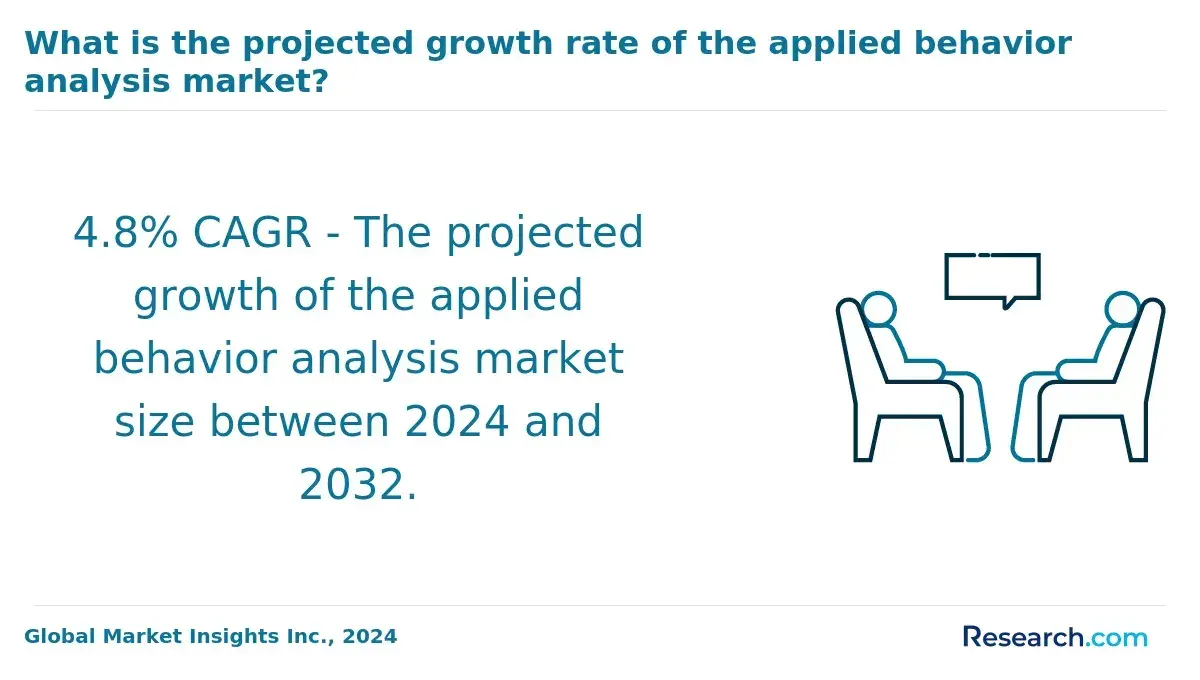
The job outlook is strong. Increasing autism spectrum disorder diagnoses and broader insurance coverage for aba therapy have increased demand for qualified behavior analysts. The U.S. Bureau of Labor Statistics forecasts growth above 20% through 2030 for behavior analysts, much faster than average.
Program growth also reflects rising demand. According to Kids First Services, aba program offerings expanded 113% between 2016 and 2020, with degree completions rising 250%. More graduates may increase competition in some markets, but it can also improve service access and create more specialized roles.
To improve salary potential and long-term career mobility, pediatric BCBAs can focus on:
- Building strong assessment, supervision, and caregiver-training skills
- Gaining experience across clinics, schools, homes, and telehealth settings
- Moving into leadership roles such as clinical supervisor or program director
- Staying current on insurance reimbursement policies and documentation standards
- Considering advanced credentials such as BCBA-D or pediatric specialty certifications
BCBA career prospects are strongest for professionals who combine certification with reliable clinical judgment, ethical practice, supervision competence, and the ability to work effectively with families and interdisciplinary teams.
BCBA programs usually take between 18 and 24 months to complete after prerequisite coursework requirements are met. Full-time students may finish in about 18 months, while part-time students often take two years or more. The timeline also depends on how quickly the student completes supervised fieldwork hours.
Tuition varies widely by institution, degree type, delivery format, and residency status. Costs typically range from $8,000 to over $20,000. Additional expenses may include supervision fees, textbooks, technology fees, study materials, application fees, and exam-related costs, which can add roughly $1,000 to $2,000.
Traditional master's degrees with BCBA coursework and integrated fieldwork may cost around $15,000 to $25,000 over two years. Post-master's BCBA certificates are usually shorter and may cost less, but they are only appropriate for students who already hold a relevant graduate degree that fits certification requirements.
Online programs can reduce commuting and relocation costs, but they are not automatically the least expensive option. Students should compare total cost, not only tuition. Supervision arrangements, practicum support, state authorization, and exam-prep resources can change the real value of a program.
Prospective students should also plan around upcoming eligibility changes. Significant changes begin January 1, 2027, when the BCBA Board will reduce eligibility pathways from four to two, eliminating Pathways 3 and 4. This change affects how students structure education and supervision hours, so applicants should confirm that their intended program aligns with the new standards, including approved supervision hours and the Board Certified Behavior Analyst Task List.
A practical budgeting approach is to estimate tuition, fees, supervision costs, exam costs, unpaid fieldwork time, and any reduction in work hours. For working professionals, a slightly longer part-time route may be more financially realistic than an accelerated full-time schedule.
How to choose the best BCBA program for pediatrics?
The best BCBA program for pediatrics is the one that meets certification standards, supports pediatric supervised experience, fits your schedule and budget, and prepares you for the state where you plan to practice. Accreditation should be the first filter, not an afterthought.
Accreditation by the Association for Behavior Analysis International (ABAI) or the Association of Professional Behavior Analysts (APBA) is especially important for long-term planning. By 2032, only Pathway 1 programs with this accreditation will qualify candidates for BCBA certification. Choosing a program aligned with that direction can reduce the risk of eligibility problems later.
When evaluating programs, prioritize the following factors:
- Accreditation and BACB alignment: Confirm that the program supports the certification pathway you intend to use.
- Pediatric focus: Look for coursework and practicum experiences involving children with autism spectrum disorder, developmental delays, communication needs, or school-based behavioral concerns.
- Fieldwork access: Ask whether the program has partnerships with clinics, schools, early intervention agencies, or local providers.
- Faculty expertise: Prefer programs where instructors are active in pediatric applied behavior analysis research, supervision, or clinical practice.
- Format and pacing: Online programs can work well for employed students, while in-person programs may offer more direct mentorship and local clinical networking.
- Outcome transparency: Review BCBA exam pass rates, pediatric job placement, alumni feedback, and student support services when available.
- State licensure fit: Verify whether the program prepares graduates for the licensing rules in the state where they intend to work.
Common mistakes include choosing the cheapest program without checking supervision support, assuming any psychology or education master's degree will qualify, overlooking upcoming eligibility changes, or waiting until graduation to investigate licensure. Pediatric ABA is highly regulated and documentation-heavy, so the right program should make requirements clear from the start.
For most working pediatric professionals, the strongest choice is a program that combines verified coursework, flexible scheduling, qualified faculty, pediatric fieldwork opportunities, and clear guidance from admission through exam application.
Other Things You Should Know About Applied Behavior Analysis
BCBA fieldwork requires at least 20 percent of supervised hours to include direct supervision, with supervision provided by a qualified BCBA or BCBA-D. For pediatric professionals, those hours must be documented through BACB-approved fieldwork records and meet the current experience standards before exam eligibility.
Yes, BCBAs must adhere to the Behavior Analyst Certification Board's (BACB) Professional and Ethical Compliance Code. These guidelines ensure the responsible delivery of services, informed consent, confidentiality, and prioritizing client welfare. Ethical standards also emphasize ongoing supervision, avoiding conflicts of interest, and maintaining competency through continuing education.
Applied behavior analysis can be effectively combined with other therapeutic approaches such as speech therapy, occupational therapy, and special education. Coordinated care allows for a more comprehensive treatment plan addressing multiple developmental areas. Collaboration among professionals is essential to create consistent strategies and optimize outcomes for pediatric clients.
- Is Becoming a BCBA a Good Career in 2026? Salary, Growth, and What to Expect https://mindfulsproutsaba.com/blog/is-becoming-a-bcba-a-good-career-in-2026-salary-growth-and-what-to-expect/
- How to Pass the BCBA Exam: Tips & Preparation https://www.crossrivertherapy.com/behavioral-analysts/pass-exam
- BCBA Exam Guide https://bluegemsaba.com/bcba-exam-guide/
- Choosing the Right BCBA Career Path | Advanced Autism Services https://www.advancedautism.com/post/bcba-career-path-to-take
- The Ultimate Guide to Becoming a BCBA - Blog https://www.powerbackpediatrics.com/blog-posts/the-ultimate-guide-to-becoming-a-bcba
- Board-Certified Behavior Analyst (BCBA) Salary Guide â Trusted Health https://www.trustedhealth.com/allied-career-guide/behavior-analyst/salary-guide
- What is a BCBA? | Gateway Pediatric Therapy https://gatewaypediatrictherapy.com/what-is-a-bcba/
- 25+ Affordable ABA/BCBA Online Programs (Masters & Certs) https://abamastersprograms.org/affordable-online-aba-masters-programs/
- BCBA Work Settings Explained: Where Behavior Analysts Work https://championsaba.com/bcba-work-settings/
- Online ABA Certificate Program | Applied Behavior Analysis at PCOM https://www.pcom.edu/academics/programs-and-degrees/applied-behavior-analysis/aba-certificate/