2027 Online Sociology Degrees With the Best FAFSA-Friendly Options

Co-Founder and Chief Data Scientist
Choosing an online sociology degree is really a cost, credibility, and career-fit decision. College Board's latest tuition report lists average published in-state tuition and fees at public four-year colleges at $11,610, so FAFSA access can materially change what students pay out of pocket.
This guide is for transfer students, working adults, first-time undergraduates, and career changers who want an accredited online sociology path. You will learn how FAFSA aid works, which program features matter, and how to compare schools before enrolling.
Key Things You Should Know
- FAFSA-friendly usually means the school participates in federal Title IV aid, the online sociology program leads to an eligible degree, and the student meets aid rules such as citizenship or eligible noncitizen status, enrollment level, and satisfactory academic progress.
- The maximum Federal Pell Grant for the 2025-26 award year is $7,395, but the amount you receive depends on your Student Aid Index, cost of attendance, enrollment intensity, and remaining lifetime eligibility.
- The strongest online sociology options are regionally accredited, transfer-friendly bachelor's programs with transparent tuition, online student support, methods/statistics coursework, and career-aligned electives in areas such as social services, criminology, data analysis, public policy, or health and community systems.
What are the best FAFSA-friendly online sociology degrees?
The best FAFSA-friendly online sociology degrees are not simply the cheapest programs. They are accredited bachelor's programs that accept federal aid, publish clear online tuition, evaluate transfer credits fairly, and provide enough academic support for students who are balancing school with work or family responsibilities.
If you are building an initial shortlist, compare each sociology bachelor degree online by financial aid eligibility, accreditation, curriculum depth, and how well the program's electives match your career goal.
The table below summarizes the most useful program types for different students. Use it to decide what "best" means for your situation before looking at rankings or advertisements.
| Program type | Best fit | Key advantage | Trade-off to check |
| Public online bachelor's program | Students seeking lower tuition, especially in-state or tuition-discounted online rates | Often strong FAFSA fit and established transfer systems | Some online programs charge separate e-learning fees or have limited start dates |
| Online degree-completion program | Transfer students with an associate degree or substantial prior credits | Can shorten the path to graduation if credits apply cleanly | Major prerequisites, residency credit rules, and upper-division requirements may still add time |
| Private nonprofit online program | Students who value frequent start dates, adult learner support, or flexible pacing | May offer strong advising and asynchronous course options | Sticker tuition may be higher, so compare net price after grants and scholarships |
| Low-cost pathway from community college to university | First-time students trying to reduce borrowing | General education credits can be completed at a lower cost before transfer | Requires careful advising so sociology prerequisites and transfer agreements align |
The smartest choice is usually the program with the lowest total cost to completion, not the lowest per-credit price. A slightly higher per-credit program may be better if it accepts more transfer credits, offers year-round courses, and prevents you from paying for classes that do not apply to the degree.
Before you apply, use this short decision process to avoid costly mismatches:
- Confirm the institution participates in federal student aid and that the online sociology degree is an eligible program.
- Check regional institutional accreditation using the school's accreditation page and the accreditor's public directory.
- Ask for a written transfer credit estimate before committing if you have prior college credit.
- Compare total cost of attendance, not just tuition, including technology fees, books, proctoring fees, and residency requirements.
- Review the curriculum for research methods, statistics, writing, and applied electives that match your target field.
How do online sociology programs use FAFSA aid?
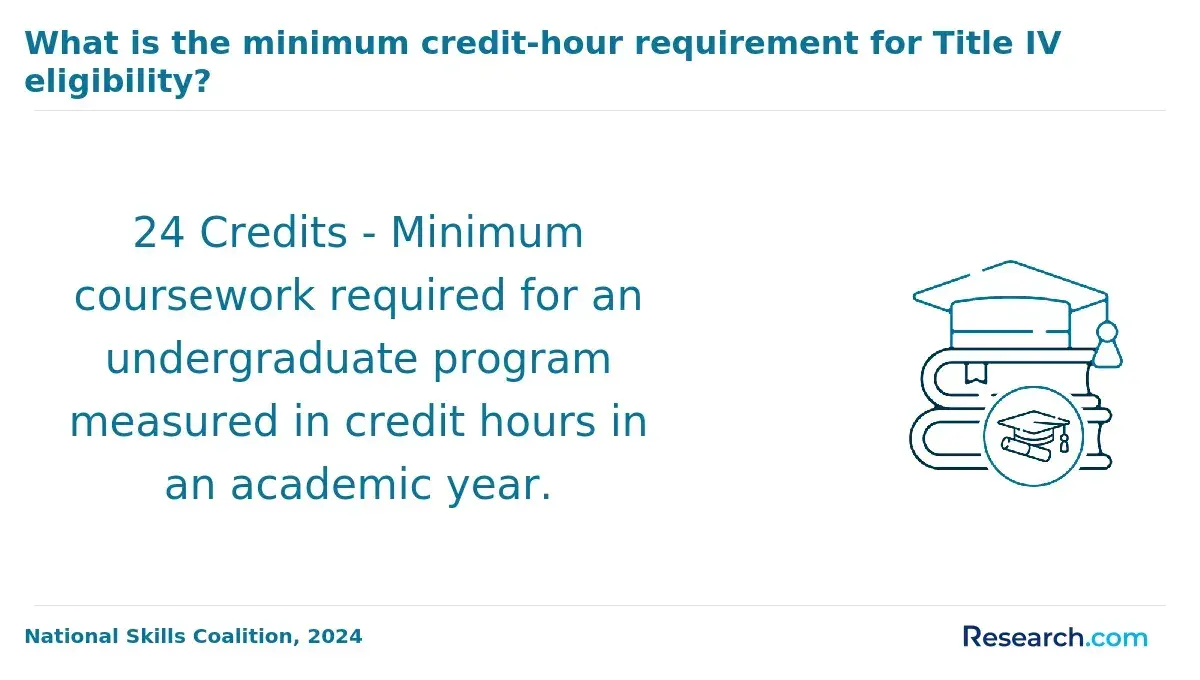
FAFSA aid is the federal financial aid process used to determine eligibility for grants, work-study, and federal student loans. For an online sociology degree, FAFSA aid can be used only when the institution is eligible for Title IV federal aid and the student is enrolled in an aid-eligible program.
The most important FAFSA-friendly funding sources are listed below. These are not automatically awarded in the same amount to every student, so you should treat the financial aid offer as school-specific rather than universal.
- Federal Pell Grant: Need-based grant aid that generally does not need to be repaid if you remain eligible and complete enrollment requirements.
- Federal Supplemental Educational Opportunity Grant: Campus-based grant aid for students with exceptional financial need, available only at participating schools with limited funds.
- Federal Direct Subsidized Loan: Need-based undergraduate loan where the federal government generally pays interest during eligible in-school periods.
- Federal Direct Unsubsidized Loan: Undergraduate loan not based on financial need, with interest accruing after disbursement.
- Federal Work-Study: Part-time employment funding available through participating schools, sometimes with remote or community-based options.
Federal Student Aid lists the maximum Pell Grant at $7,395 for the 2025-26 award year. That figure is useful as a ceiling, not a guarantee, because your actual amount depends on your Student Aid Index, school cost of attendance, enrollment intensity, and lifetime Pell usage.
Online students should pay close attention to enrollment intensity. Dropping from full-time to part-time may help you manage work and family obligations, but it can also change your grant amount, loan eligibility, completion timeline, and satisfactory academic progress status.
Common FAFSA mistakes can delay aid or increase borrowing. Avoid these problems before the bill is due:
- Submitting the FAFSA but forgetting to add every school you are seriously considering.
- Assuming an online program is aid-eligible just because the university itself accepts FAFSA.
- Ignoring state grant deadlines, which may be earlier than institutional deadlines.
- Accepting the full loan amount without calculating what you actually need after grants, scholarships, and payment plans.
- Withdrawing from courses without asking how it affects return-of-funds rules and future aid eligibility.
Which accredited schools offer online sociology degrees?
Many regionally accredited U.S. universities offer online sociology degrees or closely related online sociology completion options. Availability, tuition, residency rules, and online course rotation can change, so always verify the current catalog and financial aid eligibility before applying.
The table below provides examples of accredited institutions that have offered online sociology bachelor's options. It is not a guarantee of admission, cost, or aid eligibility; it is a practical starting point for comparison.
| School | Example online sociology credential | Institutional accreditor | Why it may fit FAFSA-focused students |
| Arizona State University | Online BA in Sociology | Higher Learning Commission | Large online course catalog, multiple start dates, and established online student services |
| University of Florida | Online BA in Sociology | Southern Association of Colleges and Schools Commission on Colleges | Public university option with a fully online undergraduate division |
| Oregon State University | Online BA or BS in Sociology | Northwest Commission on Colleges and Universities | Offers online delivery through a long-running Ecampus model |
| University of Central Florida | Online BA in Sociology | Southern Association of Colleges and Schools Commission on Colleges | May appeal to transfer students seeking a public university pathway |
| Fort Hays State University | Online BA or BS in Sociology | Higher Learning Commission | Often considered by students comparing lower-cost public online options |
| Penn State World Campus | Online BA in Sociology | Middle States Commission on Higher Education | Recognized public university system with online advising and career resources |
| Southern New Hampshire University | Online BA in Sociology | New England Commission of Higher Education | Private nonprofit option with frequent online terms and adult learner support |
| National University | Online BA in Sociology | WASC Senior College and University Commission | Flexible course scheduling may fit working adults who need accelerated terms |
When comparing schools, do not assume that a famous university name automatically creates the best return on investment. For sociology, the better question is whether the program gives you affordable completion, strong writing and research training, internship access, and electives connected to realistic jobs or graduate study.
Ask each admissions or financial aid office these questions before you enroll:
- Is the online sociology degree itself eligible for federal financial aid?
- What is the total estimated cost for my remaining credits after transfer evaluation?
- Are online students charged different tuition or required fees than campus students?
- How often are required upper-division sociology courses offered online?
- Can online students access internships, research opportunities, career coaching, tutoring, and library support?
What accreditation should an online sociology degree have?
An online sociology degree should come from an institution accredited by an agency recognized by the U.S. Department of Education or the Council for Higher Education Accreditation. In practice, most students should look for regional institutional accreditation because it is widely accepted for transfer credit, graduate admissions, and employer tuition assistance.
Sociology bachelor's programs usually do not have a required specialized programmatic accreditor in the way nursing, social work, counseling, or teaching programs may. That makes institutional accreditation especially important. It tells you that the college has been reviewed for academic quality, governance, financial stability, student support, and integrity.
Use this checklist to evaluate accreditation and legitimacy before you submit a deposit:
- Confirm the exact institution name in the accreditor's public database, not only on the school's marketing page.
- Check whether the accreditation status is current and whether there are sanctions, probation notices, or teach-out warnings.
- Verify that the credential is a bachelor's degree in sociology or a clearly related major, not a noncredit certificate marketed like a degree.
- Ask whether credits are semester-based or quarter-based and how they transfer to other regionally accredited institutions.
- Be cautious if a school pressures you to enroll immediately, avoids written cost estimates, or claims accreditation from an unfamiliar organization without public verification.
Accreditation also affects graduate study. If you later want a master's in social work, public policy, counseling, sociology, criminal justice, or psychology, admissions committees typically expect a recognized bachelor's degree and may review your statistics, research methods, and writing preparation closely.
How do online and campus sociology programs compare?
Online and campus sociology programs can cover the same academic content, but the student experience is different. Online programs are often best for students who need flexibility, while campus programs may be better for students who want in-person research, clubs, faculty interaction, or local internships built into the weekly schedule.
The table below compares the major differences that affect cost, learning style, and career preparation. Use it to decide whether online convenience is worth the trade-offs for your situation.
| Factor | Online sociology degree | Campus sociology degree | Decision point |
| Schedule | Often asynchronous or evening-friendly | Usually tied to fixed class meeting times | Online is stronger for working adults; campus may help students who need more structure |
| Cost | May reduce commuting, housing, and relocation costs | May include more campus fees and living costs | Compare total cost of attendance, not only tuition |
| Interaction | Discussion boards, video meetings, email, and virtual advising | Face-to-face classes, office hours, and campus events | Campus can be better if you learn through live discussion and immediate feedback |
| Internships | May require students to find local placements with remote support | May have established local partnerships | Ask how online students secure supervised experience if your career goal needs it |
| Research experience | Possible through online projects, data analysis, or faculty-led remote work | Often easier to access labs, community projects, and faculty research teams | Graduate-school-focused students should ask about research opportunities early |
According to NCES data released in 2024, distance education remains a major part of U.S. higher education rather than a temporary alternative. For students, that means more legitimate online options are available, but it also makes it more important to separate accredited degree programs from low-value credentials.
Choose online if you need flexibility, have strong time-management habits, and can communicate proactively with instructors. Choose campus if you want a traditional college environment, easier access to local field experiences, or a schedule that keeps you accountable.
What courses are included in an online sociology degree?
An online sociology degree studies how social groups, institutions, inequality, culture, family, work, crime, health, media, and public policy shape human behavior. Strong programs combine theory with practical skills in research design, statistics, writing, data interpretation, and ethical analysis.
Most bachelor's programs include general education, sociology core courses, electives, and a capstone or senior seminar. Typical courses include the following:
- Introduction to Sociology and major sociological perspectives
- Social theory, including classical and contemporary theorists
- Research methods for designing surveys, interviews, observations, and mixed-methods projects
- Statistics or social data analysis for interpreting quantitative evidence
- Race, class, gender, and social inequality
- Family, education, religion, work, health, aging, or urban sociology
- Deviance, criminology, juvenile delinquency, or law and society
- Social change, globalization, public policy, or community development
- Senior capstone, applied project, internship, or research seminar
Electives matter because sociology is broad. A student interested in digital culture, consumer behavior, and audience analysis might pair sociology with communication or a social media marketing university pathway, while a student interested in social services may choose electives in family systems, inequality, substance use, or community organizations.
Look for coursework that produces evidence of your skills. Research papers, data dashboards, survey projects, literature reviews, policy briefs, and internship reflections can become portfolio pieces for jobs or graduate applications.
What are the admission requirements for online sociology programs?
Admission requirements for online sociology programs vary by school and by whether you are applying as a first-year student, transfer student, or returning adult learner. Most bachelor's programs do not require prior sociology coursework, but transfer-friendly programs may expect completed general education credits.
Common admissions materials usually include the items below. Requirements can change, so check the program's current admissions page before ordering transcripts or paying fees.
- Online application and application fee or fee waiver
- Official high school transcript, GED documentation, or homeschool completion record for first-year applicants
- Official college transcripts from every institution attended for transfer applicants
- Minimum GPA requirement, which may differ for university admission and major admission
- Personal statement, resume, or employment history for some adult learner programs
- English proficiency documentation for applicants whose prior education was not in English
- FAFSA submission if you want federal, state, or institutional need-based aid
Many institutions have test-optional or test-free admissions policies for undergraduate applicants, but this varies. Do not assume that skipping standardized tests speeds up admission if the school still requires placement testing for math, writing, or transfer evaluation.
Transfer students should be especially careful. A program that accepts 90 transfer credits on paper may apply fewer credits to the sociology major if earlier courses do not match required categories. Ask for a degree audit that separates accepted credits from credits that actually reduce your remaining time and cost.
How long does an online sociology degree take to finish?
A traditional bachelor's degree in sociology typically requires about 120 semester credits. Full-time first-year students often finish in four academic years, while transfer students and part-time online students may finish faster or slower depending on accepted credits, course load, and course availability.
The table below shows common completion timelines. Use it to estimate your path, but confirm your own plan with an advisor because prerequisites and course rotations can change the schedule.
| Student profile | Typical remaining credits | Common timeline | What can speed it up or slow it down |
| First-time full-time student | About 120 credits | About four years | Year-round enrollment can help; changing majors can add time |
| Associate degree transfer student | About 60 credits | About two years full time | Articulation agreements can help; missing prerequisites can add terms |
| Adult learner with mixed credits | Varies widely | Often two to four years | Credit evaluation, prior learning credit, and part-time pacing matter |
| Part-time online student | Varies widely | Often four or more years if starting from scratch | Taking one course at a time preserves flexibility but lengthens aid planning |
| Accelerated term student | Varies by transfer credit | Can be shorter with continuous enrollment | Fast terms require strong time management and may not fit heavy work schedules |
The main timeline risk in online programs is not academic difficulty alone; it is course sequencing. If a required methods course or capstone is offered only in certain terms, missing it can delay graduation even if you have enough total credits.
To build a realistic completion plan, ask for a term-by-term map before enrollment. The map should show remaining general education courses, sociology core courses, electives, upper-division credits, capstone timing, and the minimum grade required in major courses.
What careers can you get with a sociology degree?
A sociology degree can lead to roles in social services, research support, human resources, nonprofit administration, criminal justice, public policy, education support, community outreach, and market or user research. It is also a common foundation for graduate study in social work, law, public administration, counseling, sociology, public health, or psychology.
The table below connects sociology skills to realistic career directions. Some roles are entry-level with a bachelor's degree, while others may require graduate education, licensure, or specialized experience.
| Career direction | Common responsibilities | Why sociology helps | Additional preparation to consider |
| Community outreach or nonprofit program coordinator | Coordinate services, manage community events, track client or program needs | Training in inequality, institutions, and community systems supports practical service work | Internships, grant writing, case documentation, and bilingual skills |
| Research assistant or data support analyst | Collect survey data, clean datasets, summarize findings, support reports | Methods and statistics courses build evidence-based reasoning | Excel, SPSS, R, Python basics, visualization tools, and research ethics training |
| Human resources or employee relations assistant | Support hiring, onboarding, workplace policies, and employee communication | Sociology develops understanding of organizations, culture, diversity, and group behavior | HR internships, employment law basics, and SHRM-aligned coursework |
| Probation, reentry, or victim services support | Assist clients, document cases, coordinate referrals, support compliance or advocacy | Criminology and social inequality courses explain systems affecting behavior and opportunity | Background checks, local agency requirements, trauma-informed practice, and report writing |
| Market, user, or consumer insights support | Analyze behavior patterns, conduct interviews, summarize audience trends | Sociology connects individual choices to social context and group patterns | Survey tools, qualitative interviewing, analytics platforms, and portfolio projects |
If you want direct clinical counseling roles, a sociology bachelor's degree is usually not enough by itself. Students interested in substance use services may compare sociology with an online addiction counseling degree, because licensing requirements are state-specific and often require supervised practice, approved coursework, and exams.
The best career strategy is to pair the major with applied experience. Sociology students who graduate with an internship, research project, data skills, and a clear field focus are typically better positioned than students who complete only broad survey courses.
What are sociology degree salaries and job outlook?
Sociology degree salaries vary widely because the major leads to many different occupations. A bachelor's degree may qualify you for entry-level roles, but higher-paying research, clinical, academic, or leadership roles often require a master's degree, doctorate, licensure, or several years of experience.
The table below uses recent U.S. labor market data to place sociology-related options in context. Treat these figures as occupational medians, not promises for sociology graduates.
| Occupation | Typical education or preparation | Recent U.S. median pay context | Outlook note |
| Sociologist | Usually master's degree or PhD for independent research roles | BLS reported a May 2024 median annual wage of about $101,690 | Small occupation; openings are limited and competition can be meaningful |
| Social and community service manager | Bachelor's degree plus relevant nonprofit or agency experience; some roles prefer a master's | BLS May 2024 median annual wage was about $78,240 | Demand is tied to public budgets, healthcare systems, and nonprofit funding |
| Market research analyst | Bachelor's degree with statistics, research, and analytics skills | BLS May 2024 median annual wage was about $76,950 | Data and consumer insight skills can make sociology graduates more competitive |
| Human resources specialist | Bachelor's degree and HR, business, or organizational experience | BLS May 2024 median annual wage was about $72,910 | Technology is changing recruiting workflows, but communication and judgment remain important |
| Probation officer or correctional treatment specialist | Bachelor's degree, background screening, and agency training | BLS May 2024 median annual wage was about $64,520 | Hiring depends strongly on state and local government budgets |
Current labor market trends make skill selection especially important. Employers are increasingly using data systems, case management platforms, applicant tracking tools, and AI-assisted research workflows, so sociology students should build practical ability in data interpretation, ethical technology use, writing, and communication.
Students considering advanced psychology or clinical practice should understand that sociology and psychology are related but not interchangeable. If your long-term plan involves psychologist licensure, compare sociology with psychology prerequisites and graduate pathways such as PsyD programs before choosing electives.
To evaluate return on investment, compare expected total borrowing with the occupations you are actually targeting. A sociology degree can be worthwhile when it is affordable, accredited, completed efficiently, and paired with a career plan; it is a weaker investment if you borrow heavily without building applied skills or understanding the education required for your target role.
Other Things You Should Know About Sociology
Yes, sociology can be a useful pre-law major because it develops reading, writing, research, argument analysis, and understanding of institutions. Law schools generally do not require a specific undergraduate major, so GPA, LSAT or admissions test policy, writing ability, and rigorous coursework usually matter more than the major name.
Most sociology bachelor's degrees are not classified as STEM programs, although some include strong quantitative research and statistics training. If STEM designation affects scholarships, visas, or employer preferences, confirm the program's official classification with the university.
An internship is strongly recommended if your program offers one or allows elective credit for field experience. It helps connect classroom concepts to real workplaces and can clarify whether you prefer social services, research, HR, policy, or nonprofit roles.
A FAFSA-friendly online sociology degree in 2027 typically accepts federal financial aid, offers low tuition costs, and provides additional scholarships or grants. These programs are designed to maximize affordability and reduce student debt, making them accessible to a wider range of students.
References
- Sociology degrees & courses https://universitycompare.com/courses/degrees/sociology
- Careers & Income Opportunities https://www.frc.edu/sociology/careers-income-opportunities
- 2025 Most Affordable Online Sociology Degrees https://www.onlineu.com/most-affordable-colleges/sociology-degrees