2027 Online Sociology Degrees for Students Who Want Broad Social Systems Preparation

Co-Founder and Chief Data Scientist
Choosing an online sociology degree is really a decision about how you want to study people, institutions, inequality, culture, and social change-and whether that training supports your next career step. The field remains relevant because organizations increasingly need people who can interpret social data and community needs; the BLS projects sociologist employment to grow 3% from 2024 to 2034. This guide is for students comparing flexible degree options, costs, accreditation, courses, and career outcomes so they can choose a program with clearer expectations and fewer surprises.
Key Things You Should Know
- Most online sociology bachelor's degrees require about 120 credits and typically take four years full time, but transfer-friendly programs can shorten the timeline for students with prior college credit.
- College Board's 2024 pricing data shows average published tuition and fees of $11,610 for in-state public four-year colleges and $43,350 for private nonprofit four-year colleges, making total cost comparison essential.
- BLS May 2024 wage data shows sociology-related career outcomes vary widely, from community and social service roles to research and management roles, so students should match the degree to a realistic job target rather than assume one standard salary.
What is an online sociology degree?
An online sociology degree is a college program that teaches students how societies work, how groups make decisions, how institutions shape opportunity, and how data can be used to understand social behavior. Most online programs are offered as a Bachelor of Arts or Bachelor of Science in Sociology, although associate, master's, and certificate options also exist.
The degree is broad by design. Instead of preparing students for one narrow licensed occupation, sociology builds transferable skills in research, writing, data interpretation, cultural analysis, interviewing, and policy awareness. That makes it useful for students interested in social services, public administration, criminal justice, nonprofit work, human resources, community research, market research, advocacy, and graduate study.
Students comparing social science majors should pay attention to how applied the curriculum is. Sociology is often more theory- and research-focused than human services, social work, or counseling. If your goal is direct client support in community agencies, a bachelor in human services may feel more practice-oriented, while sociology may be stronger for students who want broad preparation in systems, institutions, and social research.
The table below summarizes common sociology degree levels and when each one tends to make sense. Use it to identify whether you need a general undergraduate credential, graduate-level research preparation, or a different professional path.
| Degree level | Typical focus | Best fit | Important limitation |
| Associate degree | General education, introductory sociology, social problems, basic research concepts | Students planning to transfer into a bachelor's program or test interest at lower cost | Often not enough for many analyst, management, or graduate-school pathways |
| Bachelor's degree | Social theory, research methods, statistics, inequality, institutions, electives | Students seeking entry-level social science, public service, nonprofit, HR, or research-support roles | Clinical counseling, social work licensure, and psychology licensure usually require different graduate pathways |
| Master's degree | Advanced theory, quantitative or qualitative methods, applied research, policy analysis | Students targeting research, evaluation, policy, teaching at some colleges, or leadership roles | May not replace a specialized professional degree for licensed practice |
| Doctoral degree | Original research, advanced statistics or qualitative methods, teaching, publication | Students pursuing university faculty, senior research, or specialized policy research careers | Longer timeline and uncertain academic job market require careful ROI planning |
Online sociology programs are a strong fit for self-directed students who can read heavily, write clearly, participate in discussion boards, and manage deadlines without being on campus every week. They may be a weaker fit for students who need extensive in-person mentoring, lab-style research supervision, or a program tied directly to a state license.
Are online sociology degrees accredited?
Yes, reputable online sociology degrees can be accredited, but the key credential to verify is institutional accreditation. In the United States, institutional accreditation means a recognized accreditor has reviewed the college or university as a whole, including governance, student support, academic quality, faculty qualifications, and financial stability.
Sociology itself usually does not require a specialized programmatic accreditor the way nursing, social work, teacher education, or psychology training sometimes does. That means students should not reject a sociology program simply because it lacks a sociology-specific accreditation label. Instead, verify that the institution is accredited by an agency recognized by the U.S. Department of Education or the Council for Higher Education Accreditation.
Accreditation matters because it can affect federal financial aid eligibility, transfer credit, graduate school admissions, and employer confidence. It is especially important if you plan to move from sociology into a licensed profession later. For example, students who are actually aiming for school psychology should compare NASP approved online school psychology programs, because that career path has different professional expectations than a general sociology degree.
Before enrolling, students should verify these accreditation and legitimacy signals directly with the school and accreditor. This quick checklist helps reduce the risk of choosing a program that looks flexible but creates problems later.
- Confirm the college's institutional accreditation on an official accreditor or federal database, not only on the school's marketing page.
- Ask whether online students receive the same transcript and diploma wording as campus students.
- Check whether credits transfer to public universities or graduate programs you may want to attend later.
- Review whether the program has qualified sociology faculty, not only general social science instructors.
- Avoid schools that pressure you to enroll immediately, hide tuition details, or make unrealistic job guarantees.
The biggest mistake is assuming that "online" is the risk. The real risk is enrolling in a poorly supported or improperly accredited institution. A well-run online sociology degree from an accredited school can be academically legitimate, while a weak campus program can still be a poor investment.
How do online and campus sociology programs compare?
Online and campus sociology programs usually cover the same core subject matter, but the learning experience can be very different. The better choice depends on your schedule, learning style, need for campus resources, and career goals.
The comparison below highlights the main trade-offs. It is especially useful if you are deciding between a local campus program and a fully online or hybrid sociology degree.
| Factor | Online sociology degree | Campus sociology degree | Best choice when |
| Schedule | Often asynchronous or evening-friendly | Usually fixed class times | Online works better for working adults, parents, military students, and commuters |
| Class interaction | Discussion boards, video meetings, group projects, digital feedback | In-person seminars, office visits, campus events | Campus works better if you learn best through live discussion and informal faculty contact |
| Research experience | May include remote projects, data analysis, surveys, or local field assignments | May offer easier access to faculty research labs or campus-based institutes | Campus may help if you want intensive research mentorship before graduate school |
| Internships | Often completed locally with approved agencies | May be connected to campus partnerships | Either can work if the department actively supports placements |
| Cost structure | May reduce commuting and relocation costs | May include more campus fees, housing, or transportation costs | Online may be cheaper overall, but only after comparing total cost |
| Student support | Online advising, tutoring, library access, career services | In-person advising, clubs, faculty events, campus career fairs | Choose the format with support you will actually use |
Online learning has also become more career-relevant as employers use digital collaboration tools across many fields. Students who want flexibility after graduation may want to compare sociology with other online degrees for remote jobs, especially if they are interested in research, data, HR, communications, or policy work that can sometimes be performed remotely.
A good online sociology program is not just a set of recorded lectures. Look for structured discussions, clear weekly deadlines, accessible faculty, writing support, library database access, and courses that require applied research or analysis. If the program has little interaction or feedback, it may be flexible but not academically strong.
Campus programs can be stronger for students who want a traditional college experience, face-to-face mentoring, or easier participation in student organizations. Online programs can be stronger for students who need schedule control and already have local work, family, or community obligations. Neither format is automatically better; the right format is the one that supports completion and career preparation.
What courses are in an online sociology major?
An online sociology major usually combines general education, core sociology courses, research training, statistics, electives, and a capstone or senior seminar. The best programs teach students not only to discuss society, but also to evaluate evidence, write persuasively, and connect social theory to real-world problems.
The table below shows common courses and why they matter. Exact course titles vary, but reputable programs usually cover these competency areas.
| Course area | What students study | Why it matters |
| Introduction to Sociology | Social institutions, culture, groups, identity, stratification, social change | Builds the vocabulary needed for advanced sociology courses |
| Social Theory | Classical and contemporary theories about power, institutions, inequality, and social order | Helps students explain why social patterns occur instead of only describing them |
| Research Methods | Survey design, interviews, observation, ethics, sampling, research questions | Prepares students to evaluate studies and design basic social research projects |
| Statistics for Social Science | Descriptive statistics, probability, correlation, regression basics, data interpretation | Supports evidence-based decision-making and graduate school readiness |
| Social Inequality | Class, race, gender, education, health, housing, mobility, structural barriers | Develops systems-level understanding for public service, nonprofit, and policy roles |
| Criminology or Deviance | Crime, social control, law, punishment, community context | Useful for students considering criminal justice, corrections, advocacy, or policy work |
| Family, Education, Health, or Work | Specialized institutions and life-course patterns | Allows students to connect sociology to a target career field |
| Capstone or Senior Seminar | Independent research, literature review, applied project, or portfolio | Gives students a concrete work sample for jobs or graduate applications |
Students should also look for courses that build practical technical skills. AI and automation are changing entry-level research and administrative work, but they also increase the value of people who can ask better research questions, spot bias in data, interpret social context, and communicate findings responsibly.
When comparing curricula, prioritize programs that include these applied learning opportunities. They can make a broad major more marketable.
- A required research methods sequence with both quantitative and qualitative exposure.
- Assignments using real datasets, survey tools, coding software, GIS, or statistical software when available.
- Writing-intensive courses that produce policy memos, literature reviews, reports, or research briefs.
- Electives aligned with your goal, such as health sociology, organizations, criminology, education, demography, or urban sociology.
- A capstone, internship, practicum, or portfolio that gives you evidence of what you can do.
A common mistake is choosing the easiest-looking curriculum. For career value, the stronger choice is usually the program that requires more writing, research, and analysis-even if it looks more demanding at first.
What are the admission requirements for sociology programs?
Admission requirements for online sociology programs depend on degree level and school selectivity. Bachelor's programs are usually more accessible than graduate programs, especially at public universities and transfer-focused institutions.
For a bachelor's degree, admissions teams commonly review academic readiness and whether the applicant can succeed in an online format. Requirements often include the following items.
- High school diploma, GED, or equivalent credential for first-year applicants.
- Official high school and college transcripts, including transfer records if applicable.
- Minimum GPA requirement, which varies by institution and may be higher for transfer students or upper-division admission.
- Application form and fee, though some online programs waive fees during certain terms.
- Personal statement or short essay for some selective programs.
- English proficiency documentation for applicants whose prior education was not in English.
Transfer students should pay close attention to credit evaluation policies. A program that accepts more previous credits can reduce both time and cost, but only if those credits apply to degree requirements rather than simply counting as electives.
Graduate sociology programs usually ask for more evidence of research readiness. Applicants may need a bachelor's degree, transcripts, statement of purpose, letters of recommendation, writing sample, resume, and prerequisite coursework in social science methods or statistics. Some programs no longer require standardized tests, but policies vary.
Students can improve their admissions and transfer position by taking a practical sequence before applying. These steps are especially helpful for working adults returning to school.
- Request unofficial transcript reviews from multiple programs before committing.
- Ask which previous credits will satisfy major, general education, and elective requirements.
- Complete introductory sociology, statistics, and writing courses early if you are starting at a community college.
- Prepare a short explanation of your goals so advisors can recommend the right concentration or electives.
- Confirm technology requirements, proctoring rules, and whether any campus visits are required.
The main red flag is an admissions process that feels too vague. Flexible admission can be student-friendly, but a reputable program should still explain placement, transfer credit, academic expectations, and support services clearly.
How long does an online sociology degree take?
An online sociology degree usually takes the same amount of academic credit as a campus degree, but the calendar can be more flexible. A standard bachelor's degree is about 120 credits. Full-time students entering with no transfer credit often finish in about four years, while part-time students may take longer.
The table below compares common timelines. Use it to estimate how enrollment intensity, transfer credit, and degree level affect completion time.
| Program type | Common credit load | Typical completion time | Who it fits |
| Associate degree in sociology or liberal arts | About 60 credits | Two years full time | Students planning to transfer or reduce the cost of the first half of college |
| Bachelor's degree, first-year entry | About 120 credits | Four years full time | Students beginning college with little or no prior credit |
| Bachelor's degree completion program | Varies by accepted transfer credit | Often one to three years | Students with an associate degree or substantial prior college credit |
| Master's degree in sociology | Often 30 to 36 graduate credits | One to three years depending on format | Students seeking research, policy, or advanced academic preparation |
| Doctoral study | Varies widely | Often several years beyond the master's level | Students pursuing advanced research or academic careers |
Accelerated online terms can help students finish faster, but they are not automatically easier. A seven- or eight-week course may cover the same material as a traditional semester course, which means reading and writing deadlines arrive quickly.
If finishing quickly is important, focus on strategies that reduce wasted credits rather than simply taking more classes at once. These actions can shorten the path without creating unnecessary academic risk.
- Choose a program with generous but transparent transfer credit policies.
- Ask whether prior learning, military training, or standardized exams can satisfy elective credit.
- Follow a degree map so every course counts toward graduation.
- Take statistics and research methods in the recommended order to avoid prerequisite delays.
- Use summer or shorter terms only if your work and family schedule can support the workload.
A common mistake is overloading the first term to "catch up." For online students, a sustainable pace often leads to faster completion because it reduces withdrawals, failed courses, and stop-outs.
How much do online sociology degrees cost?
The cost of an online sociology degree depends on tuition, fees, transfer credits, enrollment status, residency rules, books, technology costs, and how long it takes to graduate. The listed tuition rate is only the starting point; the real comparison is total cost to completion.
College Board's 2024-25 published pricing gives useful context for four-year colleges in the United States. These figures are not sociology-specific, but they help students understand the broader tuition environment when comparing online programs.
- $11,610 average published tuition and fees for in-state students at public four-year colleges
- $30,780 average published tuition and fees for out-of-state students at public four-year colleges
- $43,350 average published tuition and fees for private nonprofit four-year colleges
Online students should also consider financing costs. For federal Direct undergraduate loans first disbursed during the 2024-25 award year, the fixed interest rate was 6.53%. That rate matters because borrowing more than necessary can make a low-salary entry-level path harder to manage after graduation.
The table below explains the major cost factors that can change the total price of an online sociology degree. Use it to compare programs beyond the advertised per-credit rate.
| Cost factor | Why it matters | What to ask |
| Per-credit tuition | Determines the baseline cost of each course | Is tuition different for online, out-of-state, or part-time students? |
| Mandatory fees | Technology, student services, proctoring, and graduation fees can add up | Which fees are required every term? |
| Transfer credit | Accepted credits can reduce both cost and time | How many credits will apply directly to the sociology major and graduation requirements? |
| Books and materials | Some courses rely on textbooks, databases, or software | Does the program use open educational resources or inclusive-access materials? |
| Residency rules | Public universities may charge different rates based on residency | Do online students receive in-state, out-of-state, or special online tuition? |
| Completion pace | Extra terms can increase fees and delay earnings | What is the recommended course sequence for working adults? |
To reduce cost, start by maximizing credits that count toward the degree. Community college transfer, prior learning assessment, employer tuition assistance, military benefits, scholarships, and careful course planning can all lower the final bill. However, do not choose the cheapest option without checking accreditation, advising quality, and graduation requirements.
The cost question should always be tied to your career plan. A sociology degree can be worthwhile when it supports a realistic path into research support, public service, nonprofit work, HR, policy, or graduate education. It may be a weaker investment if you expect it to qualify you for licensed clinical practice without additional education.
What jobs can you get with a sociology degree?
A sociology degree can lead to many entry-level and mid-career paths, but job titles vary because the major is broad. Employers may not always post "sociology graduate" in job descriptions; instead, they look for skills such as research, writing, case documentation, community outreach, data interpretation, interviewing, program coordination, and cultural competence.
The table below connects sociology training to common career directions. It also notes where additional education, certification, or licensure may be needed.
| Career direction | Common responsibilities | How sociology helps | Additional preparation to consider |
| Community outreach coordinator | Build partnerships, plan events, communicate with residents, document community needs | Understanding of groups, inequality, institutions, and community dynamics | Internship experience, bilingual skills, grant writing, nonprofit experience |
| Case management assistant | Screen clients, maintain records, connect people to resources, support service plans | Knowledge of social systems and barriers affecting families and communities | Human services coursework, agency experience, state-specific requirements if applicable |
| Research assistant | Collect data, clean datasets, review literature, support surveys or interviews | Research methods, statistics, ethics, and social analysis | Statistical software, Excel, survey tools, writing samples |
| Human resources specialist | Recruit, onboard employees, support workplace policies, analyze organizational issues | Understanding of organizations, diversity, group behavior, and conflict | HR internships, employment law basics, professional certification later in career |
| Market research analyst | Study consumer behavior, survey audiences, interpret trends, prepare reports | Survey methods, population analysis, social behavior, data interpretation | Analytics tools, business electives, portfolio projects |
| Probation or correctional treatment role | Monitor clients, write reports, connect individuals to programs, coordinate with courts | Criminology, deviance, inequality, social institutions | Agency-specific training, background checks, state or county requirements |
| Policy or program analyst assistant | Review programs, summarize evidence, track outcomes, prepare briefs | Systems thinking, research methods, inequality analysis, writing | Statistics, public policy electives, internship or capstone portfolio |
Students should be realistic about licensed helping professions. Sociology can be excellent preparation for graduate study, but it is not the same as a Bachelor of Social Work, Master of Social Work, counseling degree, or psychology licensure pathway. If your long-term goal is advanced counseling education, compare sociology with options such as an online PhD counseling pathway after confirming licensure expectations in your state.
To make a sociology degree more career-ready, pair the major with applied experience. Employers often respond best when students can show what they have done, not only what they studied.
- Complete an internship with a nonprofit, government agency, research center, school program, HR department, or advocacy organization.
- Build a portfolio with research briefs, survey projects, policy memos, data visualizations, and writing samples.
- Take electives that match a target field, such as criminology for justice roles or organizations for HR roles.
- Learn practical tools such as Excel, basic statistics software, survey platforms, database searching, and presentation software.
- Use career services early to translate sociology coursework into employer-friendly language on your resume.
The most common mistake is waiting until senior year to think about employment. Because sociology is flexible, students get better results when they choose a direction early and use electives, internships, and projects to support that direction.
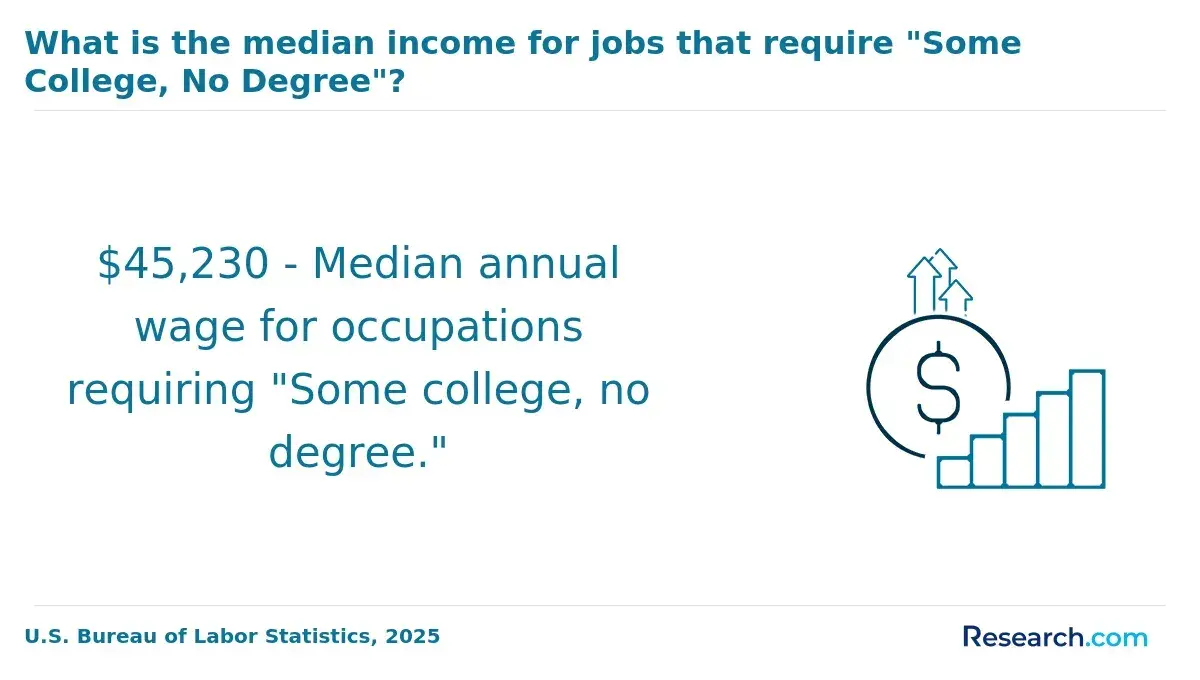
What is the salary outlook for sociology careers?
The salary outlook for sociology graduates depends heavily on occupation, location, experience, industry, graduate education, and technical skills. A sociology degree does not lead to one automatic salary band, so the most useful approach is to compare roles that commonly use sociology-related skills.
The BLS May 2024 wage data below provides a national snapshot for selected occupations connected to sociology training. These figures are occupational medians, not promises for individual graduates.
| Occupation | Median annual wage | How it connects to sociology |
| Sociologists | $101,770 | Advanced research, theory, data analysis, teaching, or policy work; many roles require graduate education |
| Social and community service managers | $78,240 | Program leadership, community needs assessment, nonprofit or public agency management |
| Market research analysts | $76,950 | Survey design, audience research, behavioral analysis, data interpretation |
| Human resources specialists | $72,910 | Organizational behavior, hiring, workplace policy, employee relations |
| Probation officers and correctional treatment specialists | $64,520 | Criminology, social control, rehabilitation, court or correctional systems |
| Social workers | $61,330 | Related social service work, though licensed roles usually require social work education and state credentials |
The strongest salary paths often combine sociology with specialized skills. Data analysis, grant writing, program evaluation, public policy, HR knowledge, GIS, survey design, or graduate education can move a student beyond general entry-level roles.
Job growth also varies by occupation. BLS projections for 2024 to 2034 show faster demand in some adjacent roles, such as social and community service managers, than in some narrower academic or research roles. For students, that means it may be smart to prepare for a family of roles rather than betting on one exact job title.
Salary data has limits. National medians do not account for local cost of living, public-sector pay scales, union rules, nonprofit budgets, remote work availability, or graduate degree requirements. Use salary data as a planning tool, then compare it with local job postings and the total cost of your degree.
How do you choose a reputable online sociology program?
Choosing a reputable online sociology program means looking beyond convenience. The best program is accredited, affordable for your situation, academically rigorous, transfer-friendly, and connected to the career or graduate path you actually want.
Use the following steps to compare programs in a disciplined way. This process helps prevent common mistakes such as focusing only on rankings, tuition, or speed.
- Verify institutional accreditation before reviewing anything else.
- Calculate total cost to completion, including tuition, fees, books, transfer credit, and expected borrowing.
- Compare the curriculum for required methods, statistics, theory, writing, and capstone coursework.
- Ask how online students access advising, tutoring, library databases, career services, disability accommodations, and faculty office hours.
- Review internship, practicum, research, or portfolio opportunities that can support employment or graduate applications.
- Check whether the program offers concentrations or electives aligned with your goals, such as criminology, health, family, organizations, inequality, or public policy.
- Ask for outcomes information, but treat it carefully; employment results can depend on student location, prior work experience, and graduate study plans.
- Confirm whether the program is fully online, hybrid, or online with required campus visits.
The table below summarizes red flags and better alternatives. It is designed to help you identify programs that may look attractive at first but create problems after enrollment.
| Red flag | Why it is risky | Better sign |
| Accreditation is hard to verify | Credits, aid, and graduate options may be limited | Accreditation is listed clearly and confirmed by an external database |
| Only tuition per credit is shown | Fees and extra terms may raise the final cost | The school provides a full cost estimate for online students |
| No required research methods or statistics | The degree may be too shallow for research, policy, or graduate preparation | The curriculum includes theory, methods, statistics, and a capstone |
| Little access to faculty | Students may struggle with writing, research, and graduate school preparation | Faculty profiles, office hours, and advising access are transparent |
| No career or internship support for online students | Students may graduate with limited experience or portfolio evidence | Online students can use career services, internship coordination, and alumni resources |
| Guaranteed job or salary claims | Outcomes depend on many factors and should not be promised | The program discusses realistic pathways and encourages local labor-market research |
Before you enroll, ask admissions and academic advisors direct questions. Good programs should answer these clearly and in writing when possible.
- How many of my transfer credits will apply to major requirements, not just electives?
- Will my diploma or transcript identify the program as online?
- What percentage of sociology courses are taught by full-time faculty or faculty with sociology expertise?
- What research tools, datasets, or software do students use?
- Are internships optional, required, or available only in certain locations?
- What support exists for students applying to graduate school?
- What happens if I need to pause enrollment for a term?
A reputable program should make you feel informed rather than rushed. If a school cannot explain accreditation, cost, curriculum, transfer credit, and student support clearly, keep comparing options.
Other Things You Should Know About Sociology
Yes, sociology can be a good pre-law major because it develops reading, writing, argument analysis, research, and understanding of institutions. Law schools do not require one specific undergraduate major, so GPA, LSAT or admissions test policy, writing ability, and strong recommendations often matter more than the major name.
Yes, many online sociology programs offer virtual internships. These opportunities allow students to gain practical experience by working on projects remotely. This flexibility is a key advantage for those balancing other responsibilities or unable to relocate for in-person internships.
Neither is automatically better. A BA often includes more humanities or language requirements, while a BS may include more statistics, research, or science-related coursework. Choose based on curriculum, career goals, and graduate school plans rather than the degree label alone.
References
- Careers & Income Opportunities https://www.frc.edu/sociology/careers-income-opportunities
- Best Sociology Degree Jobs: 12+ Career Paths for 2026 | Extern https://www.extern.com/post/sociology-degree-jobs-career-guide
- Bachelor of Arts inSociology Online or On Campus https://www.albany.edu/sociology/programs/ba-sociology
- Athabasca University https://www.athabascau.ca/programs/summary/bachelor-of-arts-in-sociology.html
- Admission Requirements https://www.ualberta.ca/en/sociology/graduate-programs/admission-requirements.html
- 2025 Most Affordable Online Sociology Degrees https://www.onlineu.com/most-affordable-colleges/sociology-degrees