2027 What Can You Do With a Sociology Degree

Co-Founder and Chief Data Scientist
Choosing a sociology degree often comes down to one question: Will it lead to practical career options? The answer depends on how you use it. The U.S. Bureau of Labor Statistics' latest data available in 2024 reports a $101,770 median annual wage for sociologists and 7% projected job growth through 2033, but many graduates work in broader roles.
This guide helps prospective students, career changers, and parents compare jobs, salaries, degree levels, online options, costs, and smart next steps.
Key Things You Should Know
- A sociology degree can lead to careers in research, social services, human resources, policy, criminal justice, community programs, education support, and business analytics, but some counseling and clinical roles require graduate study or licensure.
- BLS data published in 2024 shows sociologists had a $101,770 median annual wage, while related roles vary widely, from social service occupations to market research and management positions.
- Program choice matters: accreditation, internship access, transfer credit, cost, data methods training, and alignment with your target career are stronger decision factors than major name alone.
What careers and jobs can you pursue with a sociology degree?
A sociology degree studies how people, groups, institutions, culture, inequality, policy, and social change interact. That makes it useful for careers where employers need people who can understand behavior, analyze data, communicate clearly, and work with diverse communities.
The best career fit depends on whether you want direct service, research, policy, business, or graduate-level professional practice. The table below summarizes common pathways and what sociology graduates typically bring to each one.
| Career path | Common job titles | How sociology applies | Typical preparation beyond the degree |
| Social and community services | Case manager, community outreach coordinator, program assistant, nonprofit advocate | Understanding inequality, family systems, poverty, housing, health access, and community needs | Internships, volunteer experience, trauma-informed training, sometimes a master's degree |
| Research and data | Research assistant, survey analyst, policy research associate, evaluation specialist | Survey design, statistics, qualitative interviews, demographic analysis, and evidence interpretation | Strong statistics coursework, software skills, portfolio projects, sometimes graduate study |
| Business and human resources | HR coordinator, diversity and inclusion associate, employee relations assistant, market research analyst | Group behavior, organizational culture, communication, workforce trends, and consumer behavior | Excel, HR systems, analytics tools, business writing, SHRM-aligned coursework for HR roles |
| Criminal justice and public safety | Probation assistant, victim advocate, reentry program coordinator, crime analyst assistant | Social causes of crime, institutions, rehabilitation, community supervision, and policy impact | Background checks, field placement, agency training, state-specific requirements |
| Public policy and government | Legislative aide, policy assistant, public health program coordinator, urban planning aide | Population trends, social problems, policy evaluation, and community impact analysis | Writing samples, internships, GIS or statistics skills, graduate study for higher-level analyst roles |
| Education and student support | Admissions counselor, student services coordinator, academic support specialist | Youth development, educational inequality, family background, and institutional systems | Campus experience, advising skills, master's degree for many advancement roles |
Sociology is strongest when paired with applied experience. Students who graduate with internships, research projects, data tools, or a clear specialization usually have an easier time translating the major into a job title employers recognize.
Before choosing a path, compare what you want to do day to day. Direct-service roles involve client interaction, documentation, and agency coordination. Research roles require comfort with data, writing, and methods. Business roles reward communication, analytics, and project management. If you want to diagnose or treat mental health conditions, sociology alone is usually not the right terminal credential.
What is the typical salary and earning potential for sociology graduates?
Sociology graduates do not all enter one occupation, so salary depends heavily on role, region, employer, degree level, and experience. The most useful way to think about earnings is to compare sociology-related occupations rather than assume one "sociology degree salary."
The table below uses BLS wage data published in 2024 for selected U.S. occupations that commonly connect to sociology training. These are occupation-level medians, not guaranteed outcomes for sociology majors.
| Occupation | Median annual wage | Why sociology graduates may fit |
| Sociologists | $101,770 | Advanced research, teaching, policy analysis, and social science methods roles often require graduate education |
| Market research analysts | $74,680 | Survey methods, consumer behavior, statistics, and trend analysis can transfer well to business research |
| Human resources specialists | $67,650 | Coursework in organizations, diversity, conflict, and group behavior can support entry-level HR work |
| Probation officers and correctional treatment specialists | $61,800 | Criminology, deviance, inequality, and rehabilitation coursework may align with agency roles |
| Social workers | $58,380 | Sociology can be a foundation, but licensed social work roles usually require a BSW or MSW |
| Social and human service assistants | $41,410 | Entry-level direct-service work may be accessible with an associate or bachelor's degree plus field experience |
The key takeaway is that the highest-paying sociology-related paths usually require specialized skills. Quantitative research, policy analysis, HR analytics, program evaluation, and management responsibilities tend to improve earning potential more than the degree title by itself.
Students should also be realistic about entry-level pay. Many nonprofit and public-service roles are mission-driven but may start below business or analytics roles. If salary is a major priority, build a portfolio around statistics, research software, grant writing, database work, or project management before graduation.
What is the job outlook and demand for sociology-related careers?
Demand for sociology-related careers is shaped by public policy needs, aging populations, workforce changes, community health challenges, and employer demand for data-informed decision-making. The field is broad, so job outlook is stronger in some related occupations than in others.
The table below summarizes selected BLS employment projections through 2033, published in 2024. Use these projections as directional signals, not as promises of local job availability.
| Occupation | Projected growth | What it means for sociology students |
| Sociologists | 7% | Growth is faster than the all-occupation average, but the occupation is relatively small and often graduate-level |
| Social workers | 7% | Demand is supported by healthcare, behavioral health, family services, and community programs, but licensure often matters |
| Social and community service managers | 8% | Leadership roles may be available after experience in nonprofits, public agencies, or community programs |
| Market research analysts | 8% | Students with statistics, survey, and data visualization skills may find stronger business-side options |
| Human resources specialists | 8% | Organizational behavior and communication skills can support HR entry, especially when paired with HR technology skills |
Technology is changing the work, not eliminating the need for social analysis. AI tools can speed up literature reviews, transcription, coding, and survey cleaning, but employers still need people who can ask the right questions, interpret bias, protect confidentiality, and explain social context. Sociology students who learn responsible data use and basic analytics tools are better positioned than students who avoid technology altogether.
Location also matters. Government agencies, universities, hospitals, research firms, advocacy organizations, and large employers may cluster in metropolitan areas. Students in rural areas or smaller cities may need to consider remote research work, regional government roles, online graduate study, or relocation for specialized positions.
What types of sociology degrees are available, from associate to doctoral levels?
Sociology degrees are available at every academic level, but they do not serve the same purpose. An associate degree can support transfer or entry-level support roles, while doctoral study is usually for research-intensive, academic, or high-level policy careers.
The table below compares degree levels so you can match the credential to your goal before investing time and money.
| Degree level | Typical length | Best fit | Common outcomes |
| Associate degree in sociology | About 2 years | Students seeking an affordable transfer pathway or entry-level human services exposure | Transfer to a bachelor's program, support roles, community service assistant positions |
| Bachelor's degree in sociology | About 4 years | Students seeking broad career flexibility in social services, HR, research support, policy, or nonprofit work | Case management support, outreach, HR, research assistant, public agency, and business roles |
| Master's degree in sociology | About 1 to 2 years | Students who want advanced research, program evaluation, policy, teaching at some institutions, or doctoral preparation | Research analyst, program evaluator, policy associate, community college teaching in some cases |
| Doctoral degree in sociology | Often 5 or more years | Students pursuing academic research, university teaching, advanced social science research, or high-level policy roles | Professor, principal investigator, senior researcher, policy scholar, research director |
Sociology also overlaps with adjacent fields, but the credential requirements can be very different. For example, students interested in school-based psychological assessment should compare sociology graduate options with NASP-approved online school psychology programs, because school psychology has distinct accreditation, practicum, internship, and credentialing expectations.
A common mistake is choosing a sociology degree because it sounds broadly interesting without mapping it to a job category. Breadth is an advantage only when you intentionally add a concentration, internship, minor, or graduate pathway that connects to your intended work.
What courses and skills are taught in a sociology major curriculum?
A sociology curriculum usually combines theory, research methods, statistics, writing, and topic-based courses. The best programs help students move from "studying society" to producing evidence, evaluating claims, and communicating findings to people who make decisions.
Most sociology majors include a mix of core and elective courses. The following list shows the course areas that matter most for career readiness.
- Social theory: Students learn major frameworks for understanding institutions, power, inequality, social order, conflict, and change.
- Research methods: Students learn how to design studies, conduct interviews, build surveys, evaluate evidence, and understand ethical research with human subjects.
- Statistics and data analysis: Students learn to interpret quantitative evidence, test relationships, identify limitations, and present findings clearly.
- Social inequality and stratification: Courses examine class, race, gender, migration, education, healthcare, work, and other systems that shape opportunity.
- Criminology and deviance: Students study crime, punishment, policing, courts, corrections, social control, and rehabilitation from a social perspective.
- Organizations and work: Courses cover bureaucracy, leadership, workplace culture, labor markets, and institutional behavior.
- Family, community, and population studies: Students analyze family structures, demographic change, community networks, aging, and social support systems.
Skills matter as much as course titles. Employers often respond well when sociology graduates can show evidence of writing ability, data literacy, interviewing skills, cultural competence, ethical judgment, and project coordination.
To make the major more employable, students should consider pairing sociology with one applied area. Useful combinations include sociology plus statistics, public health, criminal justice, social work prerequisites, human resources, geographic information systems, nonprofit management, psychology, political science, or computer-assisted data analysis.
How do online sociology programs compare with on-campus options for students?
Online sociology programs can be a strong option for working adults, transfer students, caregivers, military-affiliated students, and learners who need flexibility. On-campus programs may be better for students who want face-to-face mentoring, campus research labs, local internships, or a traditional college experience.
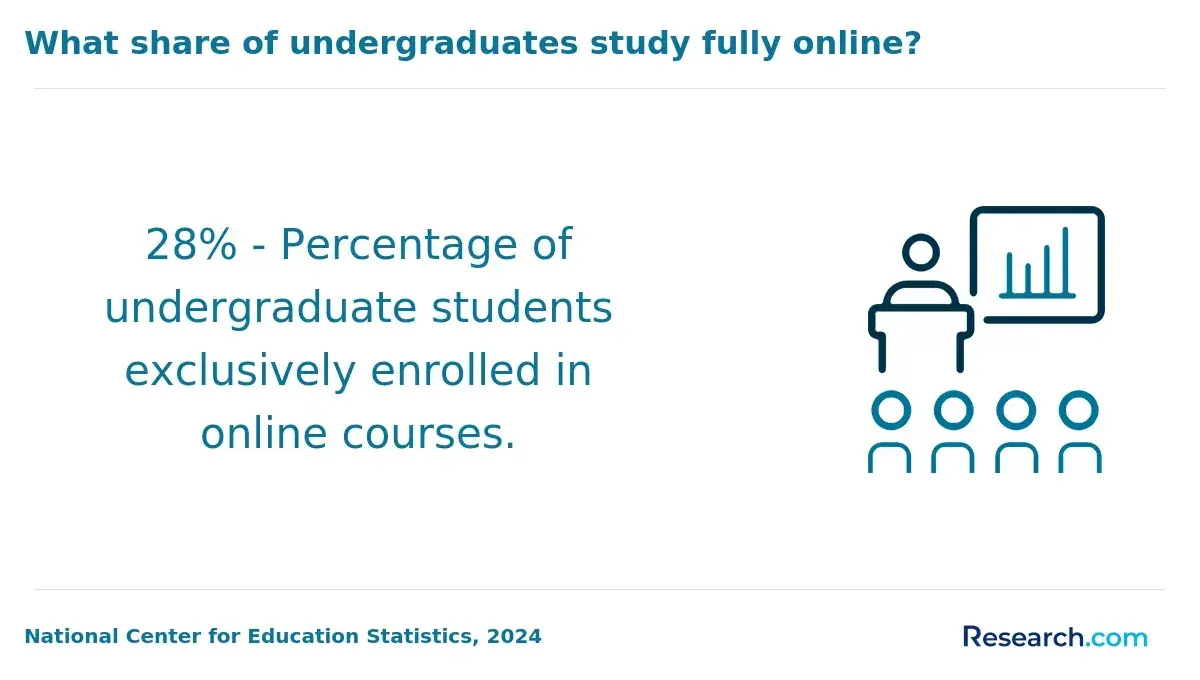
Distance education is now mainstream in U.S. higher education. NCES data released in 2024 shows that more than half of undergraduate students take at least one distance education course, which means online coursework is no longer unusual; the more important question is whether the program is rigorous, supported, and aligned with your goals.
The table below compares online and on-campus sociology formats by decision factor.
| Factor | Online sociology program | On-campus sociology program |
| Flexibility | Often better for work, caregiving, military schedules, and students outside commuting distance | Better for students who want scheduled in-person classes and campus structure |
| Internships | May allow local placements, but students must confirm placement support before enrolling | May have established relationships with nearby agencies, labs, and community partners |
| Research access | Can be strong if faculty offer virtual research assistantships or data projects | Often easier to join faculty-led research teams, labs, or honors projects |
| Peer interaction | Depends on discussion design, group projects, and synchronous options | More natural for students who learn through in-person discussion and campus activities |
| Cost control | May reduce commuting or housing costs, but tuition and fees vary widely | May offer campus jobs, local networking, and traditional student services |
Online is not automatically easier. Good online sociology programs still require extensive reading, writing, research design, discussion, and data analysis. Students should check whether online courses are asynchronous, synchronous, accelerated, or self-paced, because each format demands a different level of time management.
If your goal is direct clinical counseling rather than sociology research or social services, compare sociology with mental health counseling online masters options, since counseling programs are built around supervised clinical training and state licensure preparation.
What are the admission requirements for undergraduate and graduate sociology programs?
Admission requirements vary by school and degree level, but most sociology programs look for evidence that students can handle reading-heavy coursework, analytical writing, social science concepts, and research methods. Graduate programs usually place more emphasis on academic fit, faculty interests, and research preparation.
The table below outlines common requirements so you can anticipate what documents and preparation may be needed.
| Program level | Common admission requirements | What applicants should strengthen |
| Associate degree | High school diploma or equivalent, placement assessment, application, transcripts | Transfer planning, general education course selection, academic advising |
| Bachelor's degree | High school transcripts, GPA review, application, essays at selective schools, transfer transcripts if applicable | Writing readiness, math placement for statistics, transfer credit evaluation |
| Master's degree | Bachelor's degree, transcripts, statement of purpose, letters of recommendation, writing sample, sometimes research methods prerequisites | Research interests, statistics preparation, faculty fit, applied experience |
| Doctoral degree | Bachelor's or master's degree, strong academic record, research statement, writing sample, recommendations, faculty match | Research agenda, methods training, evidence of independent scholarship |
Test requirements have become more flexible at many institutions, but applicants should not assume tests are waived everywhere. Graduate programs may also ask for a writing sample because sociology is writing-intensive and requires careful argumentation using evidence.
Transfer students should pay close attention to course equivalencies. If affordability and speed are priorities, comparing sociology transfer routes with a 2-year psychology degree online can help clarify whether a broader behavioral science pathway, an associate-to-bachelor's route, or a psychology-focused plan better matches your goals.
Applicants can strengthen their profile through a few practical steps before applying. These actions are especially useful for students planning to pursue research, policy, or graduate school.
- Complete an introductory statistics course before upper-division sociology research methods if your school allows it.
- Save strong writing samples from social science, history, policy, or English courses.
- Seek volunteer or internship experience with nonprofits, schools, agencies, advocacy groups, or research projects.
- Ask admissions advisors how transfer credits apply to the major, not just to total elective credits.
- For graduate study, identify faculty whose research areas match your interests before submitting applications.
How long does it take to complete a sociology degree, and what does it cost?
The timeline and cost of a sociology degree depend on degree level, enrollment status, transfer credits, residency, institution type, and whether the student studies online or on campus. The fastest route is not always the best route if it sacrifices internships, research experience, or preparation for graduate school.
College Board's 2024 pricing data places average published tuition and fees for in-state students at public four-year colleges at $11,610 for the 2024-25 academic year. That figure does not include housing, food, books, transportation, or personal expenses, so students should compare total cost of attendance rather than tuition alone.
The table below summarizes typical timelines and major cost considerations by degree level.
| Degree level | Typical completion time | Cost factors to compare | Ways to reduce cost |
| Associate degree | About 2 years full time | Community college tuition, books, transferability of credits, commuting | Use transfer agreements, choose general education courses carefully, meet with advisors early |
| Bachelor's degree | About 4 years full time, less with transfer credit | Tuition, fees, housing, online fees, internship travel, summer courses | Start at community college, apply for grants, use prior learning credit where accepted, avoid excess electives |
| Master's degree | About 1 to 2 years full time | Graduate tuition, assistantships, research fees, opportunity cost of reduced work hours | Seek assistantships, employer tuition support, public university options, part-time formats |
| Doctoral degree | Often 5 or more years | Funding package, stipend, fees, health insurance, time outside full-time employment | Prioritize funded offers, compare assistantship duties, examine completion rates |
Part-time study can make monthly costs easier to manage, but it may extend the timeline and delay earnings from a higher credential. Accelerated study can shorten time, but heavy course loads may be difficult for students working full time or completing internships.
Students should avoid three common cost mistakes. First, do not compare tuition without checking fees and living expenses. Second, do not assume every credit will transfer into the major. Third, do not borrow for a degree level that is not necessary for the target role unless the long-term career plan clearly supports it.
How can you choose an accredited, reputable sociology program in the United States?
Accreditation is the baseline quality check for sociology programs in the United States. Students should look for institutional accreditation from an agency recognized by the U.S. Department of Education or the Council for Higher Education Accreditation. Sociology itself does not usually require a separate programmatic accreditation in the way nursing, counseling, or teacher education often does.
Once accreditation is confirmed, reputation should be judged by fit and outcomes rather than brand name alone. A reputable sociology program should help students build evidence of skills through research, writing, fieldwork, internships, and faculty mentorship.
Use the following steps to compare programs before enrolling.
- Verify institutional accreditation through official accreditation directories, not only the school's marketing pages.
- Review the sociology curriculum to confirm it includes research methods, statistics, theory, and applied electives relevant to your goals.
- Ask whether internships, field placements, or research assistantships are available to online and transfer students.
- Compare the total cost of attendance, transfer credit policies, graduation requirements, and course rotation schedules.
- Look for evidence of career support, including resume help, alumni outcomes, graduate school advising, and employer partnerships.
- Ask how often required courses are offered, because limited course availability can delay graduation.
- Check whether faculty expertise matches your interests in areas such as criminology, family, health, inequality, work, education, migration, or policy.
Red flags include unclear accreditation, unusually aggressive enrollment pressure, vague career promises, limited access to faculty, no research methods requirement, no internship guidance, and poor transparency about fees. Rankings can be useful as one input, but they should not replace questions about curriculum, cost, support, and career alignment.
For online programs, also ask about student identity verification, library access, advising availability, technology support, and whether the diploma or transcript distinguishes online delivery. In most cases, the delivery format matters less than accreditation, rigor, support, and the student's ability to complete strong projects.
Do sociology careers require additional certifications, licenses, or graduate study?
Many sociology-related careers do not require a license, but some adjacent professions do. The important distinction is whether the role involves research, administration, support services, or independent clinical practice. Sociology can prepare students for many support and analysis roles, but it is not automatically a license-eligible clinical degree.
The table below explains when additional credentials may be needed.
| Career goal | Is sociology alone usually enough? | Additional requirement to investigate |
| Research assistant or policy analyst | Often for entry-level roles, especially with strong methods skills | Master's degree may be preferred for advanced research or leadership roles |
| Human resources | Often for entry-level HR coordinator roles | Professional HR certifications may help after work experience, depending on employer expectations |
| Case management or human services | Often for non-licensed support roles | Agency training, background checks, mandated reporting, or state-specific rules |
| Licensed social work | No | BSW or MSW from a CSWE-accredited program plus state licensure requirements |
| Professional counseling | No | License-eligible counseling master's degree, supervised hours, and state exams |
| Marriage and family therapy | No | License-eligible MFT graduate program, supervised clinical hours, and state board requirements |
| College teaching | Sometimes for adjunct roles with a master's; usually no for tenure-track university roles | Doctoral degree is commonly expected for full-time university faculty roles |
If you are drawn to relationship counseling or family therapy, compare sociology with online marriage and family therapy programs, because MFT programs are designed around clinical supervision and licensure pathways that sociology programs usually do not provide.
Students can make smarter credential decisions by starting with the job description, not the major. Search postings in your target state and city, note required degrees and licenses, and then choose the program that matches those requirements. This is especially important for counseling, school-based services, social work, and government roles where rules vary by state or agency.
A practical path for many students is to use sociology as a flexible undergraduate foundation, add internships and methods skills, work for a few years, and then pursue graduate study only if the desired role clearly requires it. That approach can reduce unnecessary debt and help students choose a graduate program with more confidence.
Other Things You Should Know About Sociology
Yes, sociology can be a good pre-law major because it builds reading, writing, research, argumentation, and understanding of institutions. Law schools do not require a specific undergraduate major, so GPA, LSAT, or other admissions requirements, writing ability, and relevant experience matter more than the major name.
Yes, in 2027, sociology graduates can work in business, leveraging skills in data analysis, critical thinking, and understanding social dynamics. Common roles include market research analyst, human resources specialist, and corporate social responsibility manager, where they apply insights into human behavior and societal trends to drive business decisions.
Strong minors include statistics, data science, public health, criminal justice, psychology, political science, business, human resources, nonprofit management, urban studies, and communications. The best minor is the one that adds job-specific skills to your intended career path.
References
- Careers & Income Opportunities https://www.frc.edu/sociology/careers-income-opportunities
- Applied Sociology Careers and Pay https://sociologyatwork.org/2025/07/05/applied-sociology-careers-pay/
- Best College for Undergrad Sociology for Me https://talk.collegeconfidential.com/t/best-college-for-undergrad-sociology-for-me/1911539
- Admission Requirements https://www.ualberta.ca/en/sociology/graduate-programs/admission-requirements.html
- Careers and Salaries for Sociology Majors https://www.mtsac.edu/sociology/careersandsalariesinsociology.html
- Sociology Careers https://www.affordablecollegesonline.org/college-resource-center/careers-for-sociology-majors/
- Online Sociology Degrees Programs https://www.academicinfo.net/soc.html
- 10 Job Opportunities for Sociology Majors (and How to Land One) | The Muse https://www.themuse.com/advice/sociology-degree-major-jobs-careers