2027 Cheapest Online Computer Science Master's Degrees That Pay Well: Tuition, Duration, and Earnings

Co-Founder and Chief Data Scientist
Choosing an online computer science master’s degree is mainly a return-on-investment decision: how much you will pay, how long you will study, and whether the credential can help you move into better-paid technical or leadership roles. For working professionals, the most affordable option is not always the program with the lowest posted tuition. Fees, transfer policies, prerequisite courses, financial aid, employer tuition assistance, and completion time can all change the real cost.
This guide explains how to compare the cheapest online computer science master’s degrees that can still support strong career outcomes. It covers tuition ranges, common fees, credit requirements, accelerated formats, financial aid, salary expectations, high-paying roles, and hiring industries. Data shows that 65% of online CS graduates secure mid- to high-level tech positions within six months post-graduation, but outcomes still depend on experience, specialization, portfolio strength, location, and employer demand.
Key Things to Know About the Cheapest Online Computer Science Master's Degrees That Pay Well
- Online computer science master's degrees often have tuition rates under $15,000, making advanced education more accessible without sacrificing quality or accreditation.
- Many programs offer accelerated durations of 12 to 18 months, allowing students to enter the workforce or advance careers swiftly.
- Graduates with these degrees typically see median salaries exceeding $90,000, reflecting strong demand and ROI in technology-driven job markets.
How Much Does an Online Computer Science Master's Degree Cost?
An online computer science master’s degree often costs less than an on-campus graduate program, but total prices still vary widely. Graduate tuition generally ranges from $15,000 to $40,000 for the entire program at many institutions. The best value is usually a program that combines reasonable tuition, strong course availability, recognized accreditation, and a curriculum aligned with the jobs you want after graduation.
When comparing affordable online computer science master’s programs 2024, look beyond the advertised per-credit rate. A program with lower tuition can become more expensive if it requires many prerequisite courses, charges repeated term fees, or has limited course availability that delays graduation. Some students also compare shorter options such as 1 year master's programs online because finishing sooner can reduce living costs, fees, and time away from higher-paying opportunities.
Residency status can make a major difference. Public universities often charge in-state students significantly less than out-of-state students, sometimes half or less than the nonresident rate. Private universities usually apply the same tuition regardless of residency, and costs can sometimes exceed $30,000. However, private programs may offer specialized tracks, smaller cohorts, or stronger advising, so the right choice depends on both price and career fit.
If affordability is your top priority, compare net cost rather than sticker price. Ask each school for a full cost estimate that includes tuition, fees, books, required software, and any prerequisite coursework. Students still exploring undergraduate options may also want to review the cheapest online computer science degree pathways before committing to graduate study.
What Fees Are Included in the Total Cost of an Online Computer Science Master's Program?
The total cost of an online computer science master’s program includes more than tuition. Fees can change the real price of a degree, especially when a school charges them every term or per credit. Before enrolling, request a written breakdown from the program and confirm whether fees are mandatory, optional, one-time, or recurring.
- Technology fees: These support online learning platforms, technical support, cloud-based tools, and sometimes required software access. They may be charged per course, per term, or per credit.
- Course or per-credit fees: Some programs add instructional, lab, or course-specific fees on top of tuition. These can raise the total cost even when the advertised tuition rate appears affordable.
- Administrative fees: Online students may still pay for registration, academic records, student services, advising, and enrollment processing.
- Library and resource fees: These fees provide access to digital journals, databases, research tools, and academic support resources used in graduate-level computer science coursework.
- Graduation fees: Schools may charge a final fee for diploma processing, degree audits, transcript updates, or commencement participation.
Hidden costs are easier to spot when you compare programs using the same categories. Ask whether textbooks are included, whether students must buy specific hardware, whether proctored exams carry fees, and whether cloud computing credits or development tools are covered by the university. If you are trying to build skills at a lower cost before or alongside graduate study, the best online certificate programs may help you target specific technical competencies without committing to a full degree immediately.
How Long Does It Take to Complete an Online Computer Science Master's Degree?
The average completion time for full-time online graduate programs is around two years. Some students finish faster through accelerated formats, while part-time students may take longer because they are balancing coursework with full-time employment, caregiving, or other obligations. Completion time matters because every extra term can add fees and delay the career benefit of the degree.
- Enrollment status: Full-time students generally complete their degrees between 1.5 and 2 years. Part-time learners often extend their studies to three years or beyond, which can be more manageable but may increase total fees and slow career advancement.
- Accelerated tracks: Some schools allow students to graduate in as little as 12 to 18 months by taking heavier course loads or shorter terms. These formats can reduce time to completion but require strong time management and consistent weekly availability.
- Course scheduling and availability: Required courses may not be offered every term. If a core class is only available once a year, missing it can delay graduation. Review the program calendar before enrolling.
- Research or capstone requirements: A thesis, capstone, or applied project can strengthen your portfolio, but it may add time if you need faculty approval, employer data access, or additional revisions.
One graduate described finishing an online computer science master’s degree in about two and a half years while managing work, family, and thesis requirements. “Balancing intensive classes with a full-time job was exhausting at times, and I had to adjust my expectations during thesis work,” he said. His experience reflects a common trade-off: a slower pace can protect income and reduce burnout, while a faster pace may shorten the path to new job opportunities.
How Many Credits Are Required for an Online Computer Science Master's Degree?
Typical credit requirements for online computer science master’s programs range from 30 to 36 credits. The exact requirement affects tuition, workload, graduation timeline, and how quickly you can apply the degree to a job search or promotion plan. A lower-credit program is not automatically better; what matters is whether it covers the technical depth employers expect for your target roles.
- Program specialization: Tracks in artificial intelligence, cybersecurity, data science, or software engineering may require specific advanced courses. Specialized pathways can improve career alignment, but they may limit elective flexibility.
- Core and elective balance: Core courses build graduate-level foundations, while electives let you tailor the degree to your goals. Choose electives based on job postings and skill gaps, not only personal interest.
- Capstone or thesis: Many programs include a research thesis or applied capstone. This requirement can add credits, but it may also produce a portfolio project that helps demonstrate advanced skills to employers.
- Prerequisite courses: Applicants without a computer science background may need leveling courses before starting the graduate curriculum. These courses can add cost and time, so ask whether they count toward the degree.
Students comparing graduate program costs should calculate the price per required credit and the price of any prerequisites. This is especially important for career changers, who may need additional programming, discrete math, data structures, or systems coursework before entering advanced classes. For broader budgeting context across online degrees, readers researching how much does it cost to get a business degree online can compare how different fields structure tuition and fees.
Do Accelerated Online Computer Science Master's Programs Cost More?
Accelerated online computer science master’s programs do not always cost more in total, but they can feel more expensive because students pay for more credits in a shorter period. The key is to compare total program cost, not just term-by-term bills. A faster format may reduce the number of terms and fees, but it can also create a heavier workload that affects your ability to work full time.
- Credit load per term: Accelerated students often take more credits at once. If tuition is charged per credit, the total tuition may be similar to a traditional format, but each billing period will be larger.
- Program duration: Shorter programs can lower total costs when they reduce recurring fees or allow students to move into higher-paying roles sooner. However, the workload may be difficult for students with demanding jobs.
- Institutional pricing models: Some universities charge the same per-credit rate for accelerated and standard tracks. Others may add program-specific fees for intensive advising, compressed course delivery, or expanded support.
- Technology and support fees: Online programs may charge for learning platforms, technical assistance, software, or digital resources. In accelerated formats, these fees may be billed more frequently or grouped into larger charges.
- Financial aid availability: Aid eligibility may depend on enrollment intensity, academic calendar, and program structure. Confirm whether scholarships, employer reimbursement, and federal aid apply to the accelerated option.
An accelerated program is most suitable for students who already have strong technical foundations, predictable weekly study time, and a clear career goal. It may be a poor fit if you need extensive prerequisites, are changing fields, or cannot reduce work or personal commitments during difficult terms.
What Financial Aid Is Available for Online Computer Science Master's Degrees?
Financial aid can significantly reduce the out-of-pocket cost of an online computer science master’s degree. Recent studies show that around 85% of graduate students rely on some form of financial support. The strongest funding strategy usually combines several sources instead of relying on one loan or scholarship.
- Federal student loans: These loans are backed by the government and often provide flexible repayment options. Eligibility usually requires enrollment in an accredited program and proof of citizenship or legal residency.
- Scholarships and fellowships: These awards may be based on merit, financial need, academic background, professional goals, or representation in computing fields. They do not require repayment, but deadlines can be early.
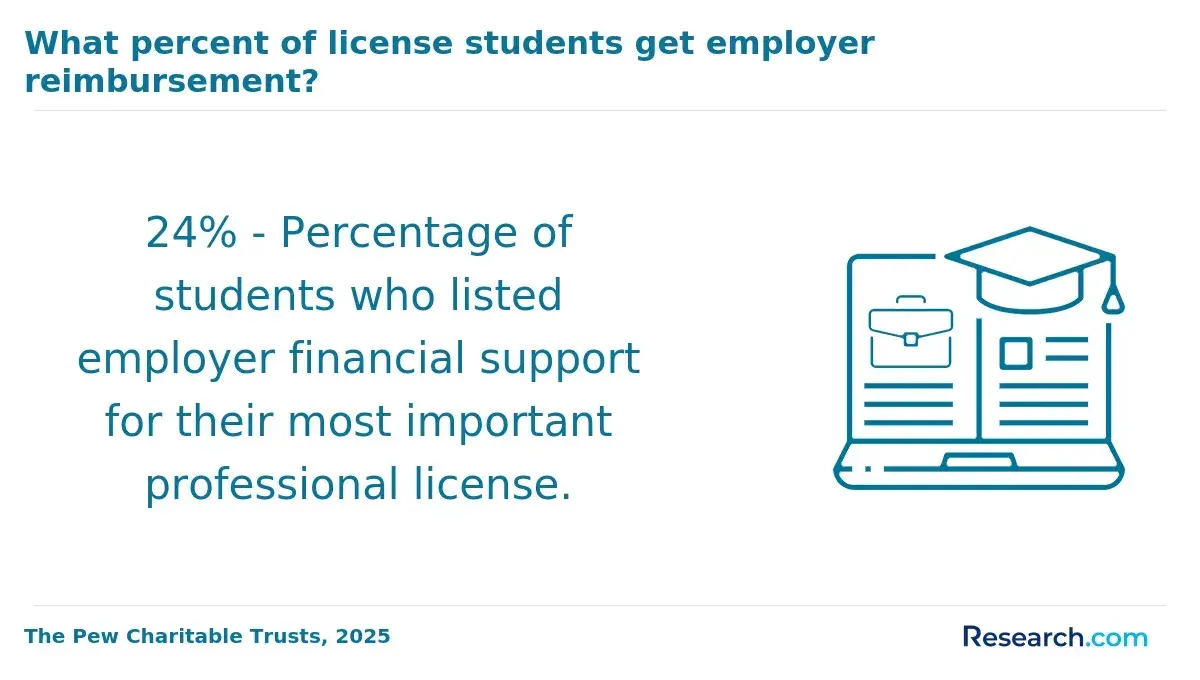
- Employer tuition assistance: Many working professionals use employer reimbursement or tuition assistance benefits. Review your company’s rules carefully, including grade requirements, annual caps, repayment obligations, and whether the degree must relate to your current role.
- Private loans: Private lenders may help cover remaining costs when federal aid and other funding are not enough. These loans often depend on creditworthiness or a cosigner and may have less flexible repayment terms.
Before borrowing, estimate your monthly repayment and compare it with realistic salary outcomes for your target role. Also confirm that the program’s accreditation and enrollment status meet aid requirements. One graduate described the process this way: “It was overwhelming at first, balancing work and determining eligibility for each type of support.” She used employer tuition assistance, scholarships, and manageable federal loans, adding, “Combining different sources was not just helpful financially but gave me confidence that I could sustain my studies without sacrificing income.”
How Much Can You Earn With an Online Computer Science Master's Degree?
An online computer science master’s degree can support higher earnings, but salary outcomes are not guaranteed. Pay depends on your prior experience, specialization, technical portfolio, employer, location, interview performance, and the role you pursue. The degree is most valuable when it helps you qualify for advanced technical work, leadership responsibility, or specialized roles that require deeper computing expertise.
Graduates with an online computer science master’s degree in the US typically see income ranges that expand with experience and career advancement. Early-stage salaries often fall within the mid to high five-figure range, while median earnings for holders of this degree approach $100,000 annually according to recent data. The average salary for online computer science master’s graduates in the US should be treated as a planning benchmark, not a promise.
To improve your earning potential, choose courses that map to high-demand skills such as scalable software systems, data engineering, machine learning, cybersecurity, cloud infrastructure, or distributed computing. For comparison across fields, an online master's in social work shows how graduate degrees can lead to very different career paths and compensation patterns depending on the profession.
What Are the Highest-Paying Jobs for Online Computer Science Master's Graduates?
The highest-paying jobs for online computer science master’s graduates are usually roles that combine advanced technical depth with business impact. A master’s degree can help, but employers also look for evidence of practical skill: production code, systems design experience, cloud deployment, security work, machine learning projects, leadership experience, or domain knowledge.
- Data Scientist: Data scientists analyze complex data sets, build models, and translate findings into business decisions. Median salaries typically range from $95,000 to $130,000 annually, varying by experience and location.
- Software Development Engineer: These professionals design, build, test, and maintain software applications and platforms. They earn between $90,000 and $140,000 per year, with higher pay often tied to strong engineering judgment and system design skills.
- Machine Learning Engineer: Machine learning engineers build and deploy AI models, data pipelines, and algorithmic systems. They command salaries of $100,000 to over $150,000 due to strong demand for AI skills.
- IT Manager or Director: These leaders manage technology teams, budgets, infrastructure, and organizational strategy. IT managers earn from $110,000 to $160,000 annually, reflecting the responsibility of leadership roles.
- Cybersecurity Analyst or Engineer: Cybersecurity professionals protect networks, systems, applications, and data. They earn between $85,000 and $130,000 as data protection concerns grow.
When evaluating the top computer science master’s degree careers with highest salary growth, pay attention to specialization. A general degree may be flexible, but a focused plan in AI, cybersecurity, data systems, or software architecture can make your job search more targeted. Students considering alternative technology-adjacent pathways may also compare a fast track construction management degree as another route into management roles shaped by digital tools and technical systems.
What Industries Hire Online Computer Science Master's Graduates?
Online computer science master’s graduates are hired across industries because nearly every sector depends on software, data, security, automation, and digital infrastructure. Employment in computer and information technology occupations is projected to grow 15% from 2021 to 2031 according to the U.S. Bureau of Labor Statistics, which points to broad demand for advanced computing skills.
- Technology: Technology companies hire graduates for software engineering, data science, cloud computing, platform engineering, cybersecurity, and systems architecture roles.
- Finance: Banks, fintech companies, insurance firms, and investment organizations use advanced computing for risk modeling, fraud detection, trading systems, cybersecurity, and customer analytics.
- Healthcare: Healthcare organizations need expertise in electronic health records, medical imaging, health data analysis, bioinformatics, privacy, and secure software systems.
- Manufacturing: Manufacturers rely on automation, robotics, industrial data systems, IoT platforms, and systems integration. Graduates may work as automation engineers, systems analysts, or software specialists.
- Retail and e-commerce: Retailers and e-commerce companies use computer science talent for recommendation systems, logistics platforms, payment security, customer analytics, and inventory optimization.
The best industry for you depends on more than salary. Consider how much domain knowledge is required, whether the sector supports remote work, how quickly technologies change, and whether the role emphasizes engineering, analytics, security, research, or management.
Is an Online Computer Science Master's Degree a Smart Financial Investment?
An online computer science master’s degree can be a smart financial investment when the total cost is reasonable and the curriculum supports a clear career goal. Online programs often have lower total tuition fees, frequently between $10,000 and $30,000, and typically last 1.5 to 2 years. This can help students limit debt, continue working while enrolled, and apply new skills before graduation.
The financial case is strongest for students who already work in technology or have enough foundational preparation to move quickly into advanced roles. Advanced skills in computer science are in high demand, with median salaries for master’s degree holders exceeding those with only bachelor’s degrees by over 25%. Even so, the degree should be evaluated against your current salary, expected borrowing, employer support, and realistic job options after graduation.
Before enrolling, calculate a practical return on investment. Add tuition, fees, books, software, prerequisites, and interest on loans. Then compare that cost with the salary increase you reasonably expect, not the highest salary advertised by a program. Also review graduation rates, career services, alumni outcomes, course availability, and whether the program is respected by employers in your target field.
What Graduates Say About Their Cheapest Online Computer Science Master's Degrees That Pay Well
- Benny: "I was initially worried about the tuition cost for an online computer science master's degree, but I found it quite reasonable compared to traditional programs. The flexibility to study around my work schedule allowed me to complete the degree in just under two years. Since graduating, my salary has increased significantly, giving me much better financial stability than before."
- Greyson: "The duration of the online computer science program perfectly suited my busy lifestyle, letting me pace my studies without feeling overwhelmed. Even though the tuition was a bit more than I expected, the investment paid off quickly as I landed a higher-paying role soon after graduation. Looking back, the balance between cost, time, and earning potential made the entire experience very worthwhile."
- Cesar: "Choosing an online computer science master's was a strategic move for me; the affordable tuition made advanced education accessible without burdening me with debt. The program's flexibility enabled me to keep working full-time, which helped maintain financial security during my studies. Today, I can confidently say this degree has opened doors to lucrative career opportunities I hadn't imagined possible."
Other Things You Should Know About Computer Science Degrees
In 2027, affordable online Computer Science master’s programs generally last 1 to 2 years. Tuition ranges from $10,000 to $20,000. Graduates can expect median starting salaries around $85,000 annually, offering a strong return on investment compared to the tuition costs, especially for those seeking tech roles.
Graduates of affordable online computer science master's degrees in 2027 can expect varying salary outcomes based on expertise and job market conditions, typically ranging from $70,000 to $120,000 annually, depending on location and specialization within the field.
Financial aid for online computer science master’s degrees in 2027 includes federal student loans, state grants, and scholarships from universities and private organizations. Eligibility typically requires enrollment in an accredited program, and deadlines for applications vary by the institution.
References
- How much can you make with an online master’s in computer science? | Fortune Education https://fortune.com/education/articles/how-much-can-you-make-with-an-online-masters-degree-in-computer-science/
- Affordable Master's in Computer Science Degrees | ComputerScience.org https://www.computerscience.org/degrees/affordable-online-masters-computer-science/
- Earn an Online Computer Science Degree | OEDb.org https://www.oedb.org/rankings/online-computer-science-programs/
- Which Computer Science jobs pay the most? https://onlinesoe.tufts.edu/news-events/news/which-computer-science-jobs-pay-most
- 30 Most Affordable Online Master's Degrees in Computer Science (Updated) - Computer Science Degree Hub https://www.computersciencedegreehub.com/best/affordable-online-computer-science-masters/
- How Long Does It Take to Get a Master's in Computer Science? https://www.snhu.edu/about-us/newsroom/stem/how-long-to-get-a-masters-in-computer-science
- Online Master’s Degrees That Pay: Top Fields for Solid Salaries https://www.onlinemastersdegrees.org/features/top-earning-masters-degrees/
- Best Accelerated Online Computer Science Degree Programs of 2025 - Intelligent https://www.intelligent.com/best-online-computer-science-degree-programs/accelerated/
- Is a Master’s in Computer Science Worth It? | MCS@Rice https://csweb.rice.edu/academics/graduate-programs/online-mcs/blog/is-a-master-of-computer-science-worth-it
- Enhance Your Pay Potential With a Master's in Computer Science https://online.nsu.edu/degrees/technology/masters-computer-science/general/pay-masters-computer-science/