2027 Burn Unit vs Surgical ICU Nursing: Daily Work, Schedules, and Career Fit
Audited and Verified:
Our Editorial and Data Verification Process
Research.com uses government datasets, official education statistics and primary institutional information to support its career and degree guides. Our review process checks factual accuracy, occupational definitions, source dates and the requirements associated with the credentials discussed.
How This Article Was Fact-Checked
Our editorial team verifies salary estimates, employment projections, education requirements and program information against original data providers and official organizations. Salary figures are checked against the relevant occupational definitions and reporting periods. Information about licensure, accreditation and required in-person training is reviewed separately.
Fact-checked and verified on:

Co-Founder and Chief Data Scientist
Burn units and surgical ICUs both care for patients with serious injuries or complications, but they organize a nurse's day around different problems. Burn nursing combines intensive care with wound management, rehabilitation, and often lengthy relationships with patients and families. Surgical ICU nursing centers on unstable patients before or after surgery and rapid changes in organ function. If you are a nursing student, new graduate, or RN considering a specialty move, this comparison will help you assess the work, schedules, preparation, and questions to ask before accepting a position.
Key Things You Should Know
- Burn units may provide both ICU-level care and longer-term wound recovery; surgical ICUs concentrate on critically ill surgical patients. Ask whether the specific burn job is ICU, step-down, or mixed-acuity.
- Both specialties generally require an active RN license and employer-supervised orientation. Many inpatient positions use 12-hour shifts, but call, rotations, staffing, and patient assignments vary by hospital.
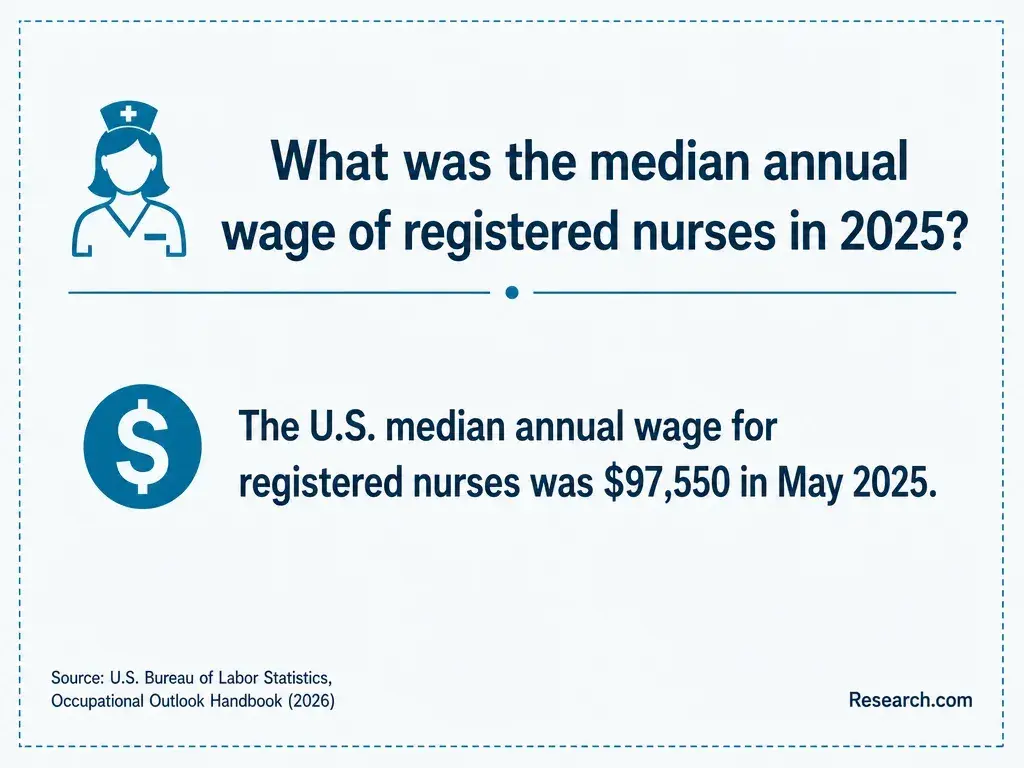
- Neither specialty has a reliable national wage figure. The U.S. Bureau of Labor Statistics reported a $93,600 median annual wage for registered nurses in May 2024; use a local offer, not that occupation-wide figure, to compare jobs.
What is the difference between burn unit and surgical ICU nursing?
Burn unit nursing focuses on patients with burn injuries, which may involve wounds, fluid shifts, infection risk, pain, mobility limitations, and psychological recovery. A burn center may have separate intensive care and lower-acuity beds or a unit that cares for patients across phases of recovery. Some burn patients need ventilation and invasive monitoring; others are medically stable but still require complex dressings and rehabilitation.
Surgical ICU (SICU) nursing focuses on critically ill patients with surgical conditions, including postoperative complications, major trauma, or organ failure. The case mix depends on the hospital: one SICU may see transplant and vascular surgery patients, while another mainly treats trauma.
The distinction is therefore not "wounds versus critical care." Both units may use ICU skills. The more useful comparison is sustained injury-and-recovery care versus a broader mix of acute surgical crises. Before choosing a job, ask which patients the unit actually admits and whether its beds are designated ICU, step-down, or both. If your eventual goal is organizational leadership rather than either bedside specialty, online DNP executive and organizational pathways address a different career decision; they are not required for these RN positions.
What does a burn unit nurse do during a typical shift?
A burn nurse begins by reviewing injury history, current stability, planned procedures, pain-control orders, wound-care plans, and rehabilitation goals. Throughout the shift, the nurse assesses the patient, administers medications and fluids as ordered, monitors for complications, documents wound and treatment findings according to unit policy, and coordinates with the burn team. Depending on acuity and assigned responsibilities, care may also involve ventilators, invasive lines, graft or donor sites, nutrition, and mobility support.
Wound care can be a substantial, physically demanding part of the day. Dressing changes may require careful preparation, several team members, and close attention to comfort and infection prevention. Burn nurses also spend time explaining procedures and supporting patients whose recovery may be prolonged or emotionally difficult. The mix changes sharply between an ICU-level burn bed and a rehabilitation-focused assignment.
These skills are learned through supervised unit training, not a doctorate. Even shortest online nursing practice doctorates would not replace burn-unit orientation or observed wound-care competence.
What does a surgical ICU nurse do during a typical shift?
A SICU nurse takes report on the patient's operation or injury, current organ support, monitoring trends, medications, and immediate risks. The shift involves repeated assessment, medication administration, documentation, communication with the surgical and critical-care teams, and prompt escalation when a patient's condition changes. Depending on the assignment, nurses may care for patients receiving mechanical ventilation, vasoactive medications, or other intensive therapies under facility policies and orders.
Work can change quickly when a patient arrives from the operating room, needs an urgent intervention, or develops a complication. Family updates, coordination with respiratory therapy and pharmacy, and preparation for procedures are also routine. Unlike a burn assignment that may span a long recovery, a SICU nurse may care for a rapidly changing sequence of postoperative patients.
This is distinct from outpatient psychiatric advanced practice. PMHNP certificate admissions and timelines matter only if an experienced nurse later pursues that separate, formally prepared role - not for SICU onboarding.
Both are commonly staffed around the clock, including nights, weekends, and holidays. Twelve-hour shifts are common in hospital nursing, but eight-hour shifts, rotating days and nights, overtime, and on-call expectations depend on the employer. Do not assume that a "three shifts a week" posting means three predictable days: wound-care timing, emergency admissions, staffing gaps, and required education can affect when work occurs.
The scheduling difference is often in how a shift feels. A burn assignment may have planned dressing changes and therapies that make portions of the day physically intensive. A SICU assignment may be less predictable as postoperative arrivals and sudden deterioration change priorities. Neither pattern guarantees lighter work.
Ask for the actual schedule template, weekend and holiday rotation, call rules, typical break coverage, and how assignments are adjusted when a patient needs prolonged wound care or one-to-one intensive care. If you are weighing bedside work against future graduate study, check clinical and live-session commitments separately; accelerated FNP education comparisons describe a different training path, not an automatic way to make an ICU schedule more flexible.
These bedside positions are RN roles. An applicant needs an active RN license for the state where they will practice, or another lawful authorization recognized there, plus the employer's hiring requirements. Graduating from a nursing program and passing the NCLEX-RN are steps toward licensure; neither substitutes for verification of an active license.
Employers may hire new graduates into structured specialty residencies, prefer prior acute-care experience, or require ICU experience for particular openings. Burn centers may value wound-care exposure, while SICUs may look for experience with unstable postoperative patients. In either setting, a unit-specific orientation should progress from supervised care to documented competence with that unit's patients, equipment, and escalation procedures. Ask how long orientation lasts, who precepts new hires, and what happens if additional supervised time is needed.
An RN does not need nurse practitioner education to take either bedside job. If advanced practice becomes a later goal, compare its separate tuition and clinical requirements through nurse practitioner program tuition comparisons rather than treating that expense as an entry cost for burn or SICU nursing.
Prelicensure associate degree in nursing (ADN/ASN) and bachelor of science in nursing (BSN) programs can prepare graduates to seek initial RN licensure, subject to applicable program and state requirements. An accelerated BSN is another prelicensure option for eligible students with prior college study. These routes establish a general nursing foundation; none guarantees a burn or SICU position or independent critical-care competence at graduation.
A hospital may prefer or require a BSN for a particular vacancy even when an ADN-prepared RN is licensed to practice. An already-licensed RN considering a BSN should compare local hiring policies and employer tuition assistance before enrolling. BSN completion pathways with alternative practice experiences are postlicensure programs; they do not replace ICU orientation or initial RN education.
An MSN or DNP is not normally needed for either staff RN role. For a student or early-career nurse, the more direct preparation is a licensure-qualifying program, relevant clinical exposure where available, and an employer that offers substantial specialty onboarding.
Basic Life Support is a common employer requirement; Advanced Cardiovascular Life Support may be required for some ICU positions, depending on the hospital and role. These courses and employer competency checks are different from professional specialty certification.
For experienced nurses providing direct care to acutely or critically ill adult patients, the AACN Certification Corporation's CCRN credential may be relevant in either specialty. Eligibility depends on the certifying organization's current license and practice-hour rules, so a new graduate should not assume immediate eligibility. Burn-focused education and employer-validated wound-care competencies may be more immediately useful to a new burn nurse than pursuing a credential whose patient population or experience requirements do not fit the job.
Check a posting for what is required at hire, what must be earned after hire, and what is merely preferred. A psychiatric NP qualification is not a burn or SICU certification; psychiatric NP tuition comparisons are relevant only to a separate advanced-practice career plan.
Both specialties reward careful assessment, calm escalation, precise communication, infection prevention, and the ability to seek help early. A good fit is not someone who never feels stress; it is someone who can use protocols, teamwork, and feedback when the situation is demanding.
Burn nursing may suit an RN who values repeated contact with patients, detailed wound care, and supporting recovery that is both physical and emotional. Its challenges include painful care, visible injuries, and the stamina required for complex treatments. SICU nursing may suit an RN energized by postoperative physiology, frequent reassessment, and rapidly shifting priorities. Its challenges include sudden deterioration and a broad, sometimes unpredictable case mix.
Shadowing each unit is more informative than choosing by specialty name. Notice how nurses share difficult assignments, involve families, and support learners. If you ultimately prefer systems improvement or leadership over either bedside workflow, review DNP admissions and applicant preparation only after identifying a role that actually calls for graduate education.
There is no dependable national median wage published separately for burn unit and SICU nurses. The U.S. Bureau of Labor Statistics reported a $93,600 median annual wage for all registered nurses in May 2024. That figure covers many settings and specialties, so it is a reference point - not an estimate of what either unit will offer you.
Compare written offers using the base hourly rate, expected paid hours, night and weekend differentials, overtime rules, benefits, and any commitment attached to a sign-on bonus. Geography, hospital pay scales, experience, and union contracts can matter more than the unit label. A higher hourly rate may also be less attractive if the position requires an unwanted rotation or provides inadequate onboarding.
Additional schooling should be evaluated as a separate investment. Comparing online BSN-to-MSN program costs can inform a later career change, but an MSN is not a prerequisite for earning a staff RN wage in either unit.
What career advancement and job outlook exist for specialty nurses?
Experience in either unit can support progression to preceptor, charge nurse, clinical educator, quality-improvement, or leadership work, depending on employer requirements. A burn nurse may deepen expertise in burn care and recovery; a SICU nurse may build expertise across surgical and critical-care populations. Neither transition is automatic, and moving between units still calls for orientation to unfamiliar patients and equipment.
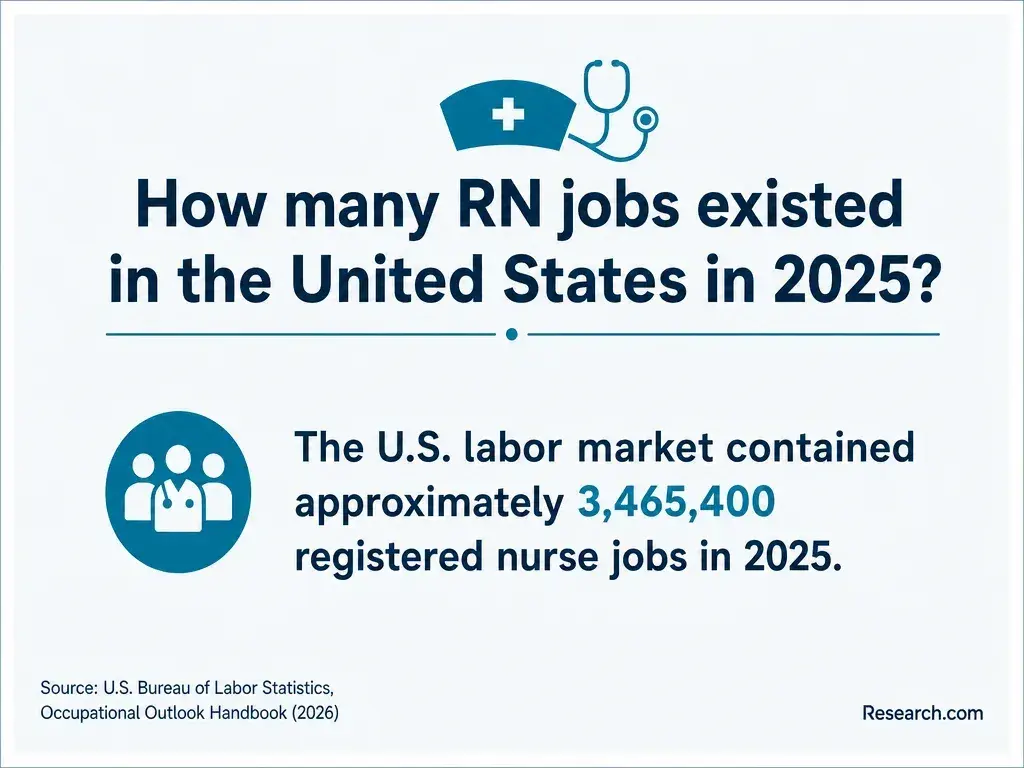
National employment projections generally describe registered nurses as an occupation, not burn and SICU openings separately. Local availability depends on hospitals, burn-center capacity, turnover, and hiring budgets. If advancement is important, ask managers how nurses gain advanced assignments, obtain preceptor training, and move into educator or leadership positions.
Advanced practice is another possible long-term direction, but it requires a qualifying program, population-focused preparation, certification where applicable, and state authorization - not simply years in an ICU. For an already-prepared master's-level nurse considering that distinct path, exploring accelerated family NP certificates after a master's is relevant only if family practice matches the intended role.
Other Things You Should Know About Nursing
Possibly, but a shared RN license does not establish competence in both settings. Ask about float policies, patient assignments, required cross-training, and the resources available when caring for an unfamiliar population.
No. Burn services can include intensive care, step-down care, and recovery-focused care. Confirm the acuity and bed types for the specific position rather than assuming every burn unit works like an ICU.
Watch how nurses receive admissions, get help with complex care, take breaks, and escalate concerns. Ask a recent hire whether orientation matched the patients they were assigned afterward.
Prioritize the stronger orientation, safer staffing support, and patient mix you want to learn first. Starting in one does not permanently close the other, though a later move will require new unit-specific training.
- Advanced Practice Registered Nurse Roles - StatPearls - NCBI https://www.ncbi.nlm.nih.gov/books/NBK589698/
- Examining the link between intensive care unit nurses... - PMC https://pmc.ncbi.nlm.nih.gov/articles/PMC11983812/
- ICU Nurse Career Guide: A Vital Role in Patient Care | American College of Education https://ace.edu/student-success/career-guides/icu-nurse/
- Burn Unit Nurse | Responsibilities, Salary and Education | University of West Florida Online https://onlinedegrees.uwf.edu/program-resources/what-is-a-burn-unit-nurse/
- Nursing Degree Levels & Career Advancement Guide | Sacred Heart University https://onlineprograms.sacredheart.edu/resources/nursing-career-advancement/
- How to Become a Critical Care Nurse | fortis.edu https://www.fortis.edu/blog/nursing/how-to-become-a-critical-care-nurse.html
- Comprehensive Guide to Nursing Specialties | Purdue Global https://www.purdueglobal.edu/blog/nursing/list-nursing-specialties/
- Nursing Shift Tips: Planning Your Effective Routine | denvercollegeofnursing.edu https://www.denvercollegeofnursing.edu/blog/nursing/creating-effective-routine-for-a-nursing-shift.html
- Advancement Opportunities Are Available for Registered Nurses | Nevada State University https://nevadastate.edu/son/rn-bsn/advancement-opportunities-registered-nurses/
- Critical Care Statistics | Society of Critical Care Medicine (SCCM) https://sccm.org/communications/critical-care-statistics