2027 Best Online Master’s In Dietetics Degree Programs

Co-Founder and Chief Data Scientist
Choosing an online master’s in dietetics is not just a question of convenience. For many students, it is a career decision tied to Registered Dietitian Nutritionist preparation, supervised practice requirements, tuition cost, schedule flexibility, and long-term earning potential. The right program can help you move toward clinical nutrition, public health, food service leadership, research, wellness consulting, or advanced nutrition practice. The wrong program can create problems if it lacks the accreditation, practicum structure, or career support you need.
This guide is for prospective graduate students comparing online master’s in dietetics, clinical nutrition, applied nutrition, and nutrition sciences programs. It explains what these programs usually include, how online study compares with campus-based learning, what costs to expect, how to evaluate accreditation and supervised experiential learning, and which career paths may be available after graduation. It also highlights common mistakes to avoid before you enroll.
Quick answer: Is an online master’s in dietetics worth it?
An online master’s in dietetics can be worth it if the program fits your career goal, meets relevant accreditation expectations, offers appropriate supervised practice or experiential learning, and is affordable enough for your expected salary range. Graduates may pursue roles such as Registered Dietitian Nutritionist (RDN), nutritionist, clinical nutrition specialist, public health nutritionist, nutrition researcher, wellness consultant, or food service manager. However, students who want to become RDNs should pay special attention to ACEND accreditation, supervised practice requirements, and state licensure rules before enrolling.
What are the benefits of getting an online master’s in dietetics degree?
- Graduates can prepare for nutrition-focused roles such as registered dietitian nutritionist (RDN), nutritionist, clinical nutrition practitioner, community nutrition specialist, or nutrition researcher.
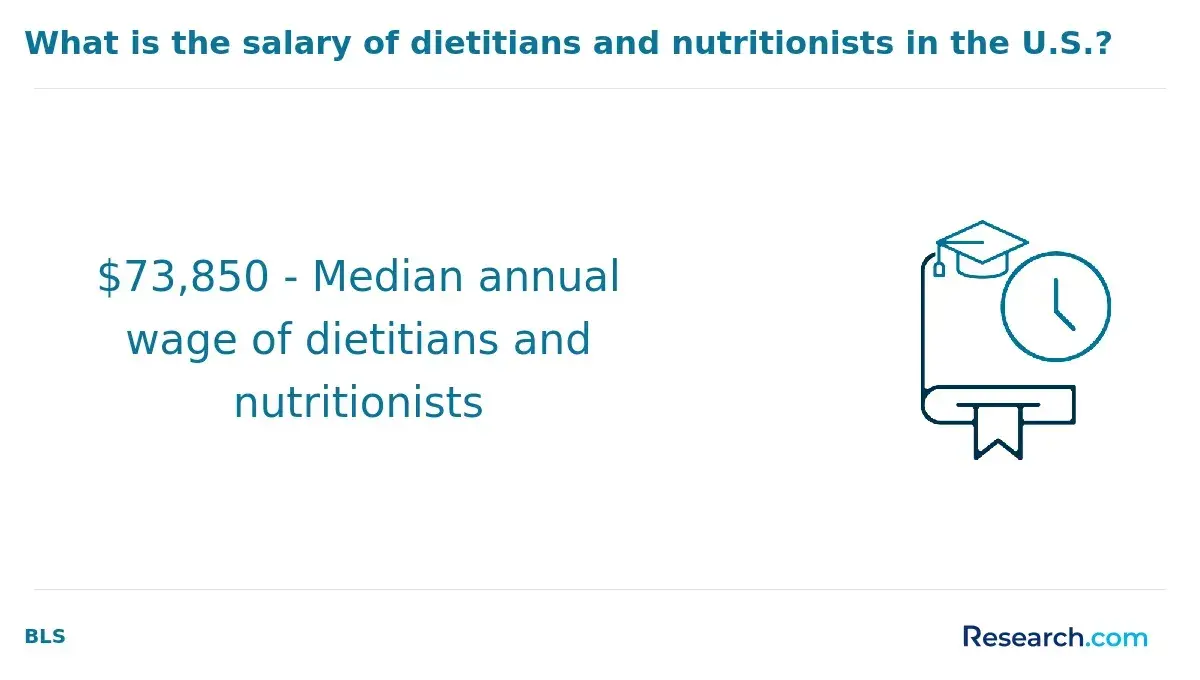
- The median annual salary for nutritionists with a master's degree ranges from approximately $65,690 to $77,740, although actual pay depends on location, employer, credentials, experience, and job function.
- Online study can make graduate education more accessible for working adults, caregivers, military-affiliated students, and learners who do not live near a campus with a dietetics program.
- Many online programs allow students to complete didactic coursework remotely while coordinating local supervised experiential learning or practicum placements when required.
- A master’s program can help students build advanced skills in medical nutrition therapy, nutrition assessment, evidence-based practice, counseling, research interpretation, and population health.
What can I expect from an online master’s in dietetics program?
An online master’s in dietetics usually combines graduate nutrition science coursework with applied training in patient care, community nutrition, food systems, research, and professional practice. Common courses include Advanced Medical Nutrition, Nutrition and Disease, Micronutrients, medical nutrition therapy, nutrition assessment, nutritional biochemistry, and research methods. Programs that are designed for RDN preparation may also include supervised experiential learning, dietetic internship components, or coordinated practice requirements.
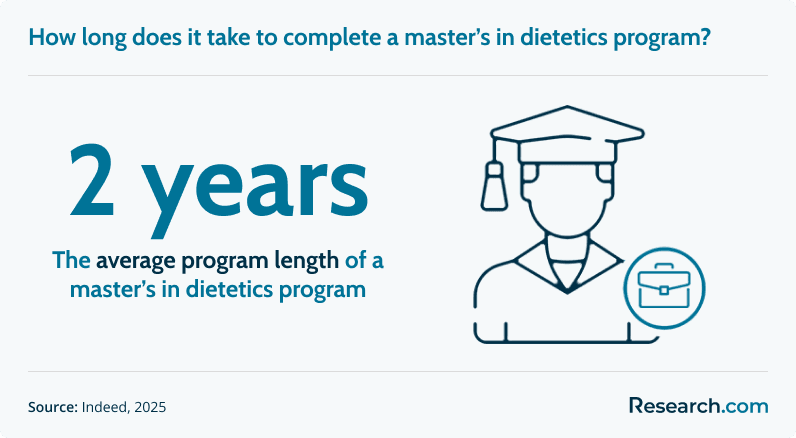
Most online master’s programs can be completed in about two years, depending on whether the student attends full-time or part-time. Some programs offer accelerated pathways, while others are intentionally paced for working professionals. Students should review not only the number of credits but also whether the program requires synchronous sessions, campus visits, exams, internships, practicums, or locally arranged clinical experiences.
| Program feature | What it means for students | Why it matters |
| Online coursework | Lectures, discussions, assignments, and exams are delivered remotely. | Helpful for students balancing school with work, family, or location constraints. |
| Supervised experiential learning | Students complete guided practice in clinical, community, or food service settings when required. | Essential for programs connected to RDN preparation and applied professional competence. |
| ACEND accreditation | The program has dietetics education accreditation from the Accreditation Council for Education in Nutrition and Dietetics when applicable. | Important for students who plan to pursue RDN eligibility. |
| Clinical nutrition curriculum | Coursework focuses on nutrition assessment, disease management, counseling, and evidence-based interventions. | Best suited for students interested in healthcare, outpatient care, long-term care, or specialty nutrition practice. |
| Flexible pacing | Students may choose full-time, part-time, or structured cohort enrollment depending on the school. | Affects graduation timeline, workload, financial aid eligibility, and work-life balance. |
Where can I work with an online master’s in dietetics program?
Graduates with an online master’s in dietetics or a closely related nutrition degree can work in healthcare, public health, education, research, food service, corporate wellness, private practice, and community programs. One common pathway is becoming a Registered Dietitian Nutritionist, where professionals assess nutritional needs, design nutrition interventions, document progress, and collaborate with healthcare teams in hospitals, clinics, outpatient centers, long-term care facilities, and community health organizations.
Other graduates focus on public health nutrition, school nutrition programs, food systems management, sports nutrition, nutrition education, wellness coaching, nonprofit work, academic research, or health communication. The best path depends on whether the graduate earns RDN credentials, holds state licensure when required, and chooses a program aligned with the workplace they want to enter.
How much can I make with an online master’s in dietetics program?
Earnings after an online master’s in dietetics vary by job title, credential, geographic region, employer type, and years of experience. Program-level salary outcomes can also differ. Graduates of programs like Tufts University report median salaries around $67,448, while the University of North Florida graduates earn approximately $62,183. Texas Woman's University graduates have median earnings of about $60,077, and those from Arizona State University can expect around $56,625 annually.
| Salary figure mentioned | How to interpret it |
| $67,448 | Reported median salary for graduates of programs like Tufts University. |
| $62,183 | Reported earnings for University of North Florida graduates. |
| $60,077 | Reported median earnings for Texas Woman's University graduates. |
| $56,625 | Reported annual expectation for Arizona State University graduates. |
| $65,690 to $77,740 | Median annual salary range for nutritionists with a master's degree cited in this guide. |
Students should treat salary figures as planning information, not a guarantee. Before enrolling, compare tuition, fees, debt, local job opportunities, licensure requirements, and whether the program’s graduates enter the kind of roles you want.
- Best Online Master’s in Dietetics Degree Programs for 2027
- How long does an online master’s in dietetics take?
- Online vs. on-campus master’s in dietetics: which format fits you?
- How much does an online master’s in dietetics cost?
- What financial aid can online dietetics graduate students use?
- What courses are included in online master’s in dietetics programs?
- What dietetics specializations can you choose?
- How should you choose the best online master’s in dietetics program?
- How do online dietetics programs support networking and mentorship?
- What jobs can graduates pursue?
- What is the job market for dietetics master’s graduates?
- What challenges come with online dietetics graduate study?
- How can interdisciplinary education improve career options?
- Can certifications add value to a dietetics master’s degree?
- What trends are changing dietetics education?
- How can technology improve dietetics education and practice?
- How do online programs handle clinical practicums?
- What can you do with a master’s in nutrition science?
- What are the certification and licensure pathways?
- Do employers respect online master’s in dietetics degrees?
- What is the ROI of an online master’s in dietetics?
List of the Best Online Master’s In Dietetics Degree Programs for 2027
The best online master’s in dietetics program is the one that matches your credential goal, budget, preferred format, and professional interests. Students seeking RDN eligibility should prioritize ACEND-accredited pathways and verify how supervised experiential learning is arranged. Students who are already credentialed, or who want nutrition science expertise without becoming an RDN, may place more weight on specialization, research opportunities, faculty expertise, and cost.
The programs below represent online or online-focused graduate options in dietetics, clinical nutrition, applied nutrition, professional nutrition practice, and nutrition sciences. Use the list as a starting point, then confirm admission requirements, tuition, accreditation status, practicum expectations, and state authorization directly with each school.
How do we rank schools?
Research.com evaluates programs using education data, institutional information, and factors that help students compare quality, affordability, and student outcomes. When reviewing online master’s in dietetics programs, important indicators include retention and graduation rates, accreditation, cost, curriculum relevance, technology infrastructure, student support, and career services. Data sources used in higher education research include:
- Integrated Postsecondary Education Data System (IPEDS database)
- Peterson’s database, including their Distance Learning Licensed Data Set
- College Scorecard database
- National Center for Education Statistics
1. Immaculata University Master of Science in Clinical Nutrition with a Dietetic Internship
Immaculata University offers a Master of Science in Clinical Nutrition with a Dietetic Internship for students planning to become Registered Dietitian Nutritionists. The program combines graduate clinical nutrition coursework with dietetic internship preparation and emphasizes mentorship from faculty who are experienced Registered Dietitian Nutritionists. Students may also engage in faculty-guided research and develop skills for serving diverse communities with culturally responsive nutrition care.
- Program Length: 2 years
- Tracks/concentrations: Dietetics
- Estimated Cost per Credit: $710
- Required Credits to Graduate: 39
- Accreditation: Accreditation Council for Education in Nutrition and Dietetics (ACEND)
2. Parker University Online Master’s in Dietetics
Parker University offers an online graduate pathway focused on functional nutrition and evidence-based practice. The program may appeal to students who want advanced nutrition knowledge with the scheduling flexibility of online study. Prospective students should review whether the curriculum, accreditation, and practice requirements align with their intended credential or career path.
- Program Length: 5 years
- Tracks/concentrations: Dietetics
- Estimated Cost per Credit: $817
- Required Credits to Graduate: 30
- Accreditation: Southern Association of Colleges and Schools Commission on Colleges (SACSCOC)
3. Rutgers University-New Brunswick Online Master’s in Clinical Nutrition
Rutgers University offers an online master’s program in clinical nutrition that blends advanced academic coursework with supervised experiential learning. Students study clinical nutrition principles, nutrition assessment, and evidence-based practice while preparing for professional roles in healthcare and nutrition services. The program is especially relevant for students seeking a structured graduate pathway connected to applied clinical training.
- Program Length: 2 years
- Tracks/concentrations: Dietetics
- Estimated Cost per Credit: $600
- Required Credits to Graduate: 42
- Accreditation: Accreditation Council for Education in Nutrition and Dietetics (ACEND)
4. Logan University Online Master’s in Applied Nutrition and Dietetics Program
The online Master of Science in Applied Nutrition and Dietetics at Logan University covers advanced topics such as nutrigenomics and the gut microbiome while integrating supervised experiential learning. Students develop applied skills in nutrition assessment, individualized nutrition planning, and evidence-based intervention. This option may be a fit for students who want a practice-oriented curriculum with advanced scientific content.
- Program Length: 2 years
- Tracks/concentrations: Dietetics
- Estimated Cost per Credit: $675
- Required Credits to Graduate: 42
- Accreditation: Accreditation Council for Education in Nutrition and Dietetics (ACEND)
5. Stony Brook University Online Master’s in Professional Nutrition Practice
Stony Brook University offers an online Master’s in Professional Nutrition Practice designed for students preparing for modern nutrition and dietetics roles. The program combines graduate-level coursework with practical training and is structured for learners who need an online format. Students should evaluate the program’s practicum model, clinical preparation, and fit with their credential goals.
- Program Length: 2 years
- Tracks/concentrations: Dietetics
- Estimated Cost per Credit: $471
- Required Credits to Graduate: 50
- Accreditation: Accreditation Council for Education in Nutrition and Dietetics (ACEND)
6. University of North Florida Integrated Graduate Program in Nutrition and Dietetics
The Integrated Graduate Program in Nutrition and Dietetics at the University of North Florida (UNF) is an online master’s degree for students who want a broad understanding of food, nutrition science, and dietetics practice. The curriculum emphasizes scientific reasoning, applied nutrition, food systems, and critical thinking. It may be useful for students who want graduate education that connects theory with professional competencies.
- Program Length: 2 years
- Tracks/concentrations: Dietetics
- Estimated Cost per Credit: $571
- Required Credits to Graduate: 39
- Accreditation: Accreditation Council for Education in Nutrition and Dietetics (ACEND)
7. Eastern Michigan University Master of Science in Dietetics Program
The Master of Science in Dietetics at Eastern Michigan University (EMU) offers graduate-level preparation in advanced nutrition, food systems management, and community nutrition. The program is structured to help students deepen scientific knowledge while building practical dietetics skills. Students comparing costs should review EMU’s tuition and fees carefully because total cost depends on credits, residency rules, and institutional charges.
- Program Length: 2 years
- Tracks/concentrations: Dietetics
- Estimated Cost per Credit: $986
- Required Credits to Graduate: 38
- Accreditation: Accreditation Council for Education in Nutrition and Dietetics (ACEND)
8. University of Alabama at Birmingham Online Master’s in Nutrition Sciences
The online Master’s in Nutrition Sciences at the University of Alabama at Birmingham (UAB) provides graduate study in nutrition science, healthcare applications, research, and community nutrition. Students learn how nutrition supports disease management and wellness through evidence-based interventions. This program may suit students who want a broader nutrition sciences degree that can support healthcare, research, education, or community nutrition goals.
- Program Length: 2 years
- Tracks/concentrations: Dietetics
- Estimated Cost per Credit: $702
- Required Credits to Graduate: 36
- Accreditation: Accreditation Council for Education in Nutrition and Dietetics (ACEND)
9. Northeast College of Health Sciences Master of Science in Applied Clinical Nutrition Program
The Master of Science in Applied Clinical Nutrition at Northeast College of Health Sciences emphasizes evidence-based nutrition practice and the clinical application of nutrition science. Coursework includes biochemical foundations of nutrition, macronutrients, micronutrients, and human health. Students should confirm whether the program’s accreditation and outcomes match their professional goals, especially if they plan to pursue a regulated credential.
- Program Length: 2 years
- Tracks/concentrations: Dietetics
- Estimated Cost per Credit: $842
- Required Credits to Graduate: 36
- Accreditation: Middle States Commission on Higher Education
10. Rosalind Franklin University Master of Science in Clinical and Lifestyle Nutrition
The Master of Science in Clinical and Lifestyle Nutrition at Rosalind Franklin University (RFU) is an online program for professionals who want to expand their knowledge of nutrition science, clinical practice, lifestyle medicine, and chronic disease prevention. The curriculum emphasizes evidence-based nutrition strategies and prepares students to think critically about nutrition within healthcare and wellness systems.
- Program Length: 2 years
- Tracks/concentrations: Dietetics
- Estimated Cost per Credit: $750
- Required Credits to Graduate: 45
- Accreditation: The Higher Learning Commission
How long does it take to complete an online master’s in dietetics degree program?
Most students complete an online master’s in dietetics in about two years. The exact timeline depends on credit requirements, course sequencing, whether the student enrolls full-time or part-time, and whether supervised experiential learning or a dietetic internship is included. Programs with 30 credits may move faster than programs with 50 credits, but credits alone do not tell the full story because practicum placement, exams, capstones, and cohort pacing can affect completion time.
Students who take two courses per semester, including summer sessions, can generally expect a two-year timeframe in many programs. Accelerated options may shorten the path for students who can handle a heavier workload. Part-time enrollment may be better for students who work full-time, but it can extend graduation. If speed is your main priority, compare program calendars carefully and look at how accelerated healthcare programs are structured, including unrelated examples such as the shortest post master's PMHNP online programs, to understand how pacing, clinical requirements, and course loads can affect completion.
| Enrollment approach | Best for | Trade-off |
| Full-time | Students who can devote substantial weekly time to coursework and practicums. | Faster completion but heavier workload. |
| Part-time | Working professionals, caregivers, or students managing multiple commitments. | More manageable schedule but longer time to graduation. |
| Accelerated | Highly organized students with strong academic preparation and flexible schedules. | Can reduce time in school but may limit time for work or personal obligations. |
| Cohort-based | Students who want a structured schedule and consistent peer group. | Less flexibility if you need to pause or change pace. |
| Self-paced or flexible | Independent learners who need maximum control over timing. | Requires strong self-discipline and careful planning. |
How does an online master’s in dietetics degree program compare to an on-campus program?
An online master’s in dietetics offers greater flexibility than a traditional campus program, especially for students who need to study around work schedules, family responsibilities, or geographic limitations. In many online programs, lectures and assignments are delivered asynchronously, while some courses include live sessions, group projects, remote presentations, or virtual simulations. This is similar to how other online credentials, such as online accounting certificate courses, use digital platforms to deliver structured academic content outside a physical classroom.
On-campus programs may offer more face-to-face interaction, easier access to campus facilities, and built-in local clinical relationships. Online programs can still include hands-on learning, but students may need to coordinate supervised practice sites near where they live. The best format depends on your learning style, your need for flexibility, and whether the program can help you complete required clinical or experiential components.
| Factor | Online master’s in dietetics | On-campus master’s in dietetics |
| Schedule | Often more flexible, with asynchronous or hybrid coursework. | Usually tied to scheduled campus classes. |
| Location | Can reduce relocation or commuting needs. | Requires regular campus attendance. |
| Networking | Occurs through virtual discussions, online events, faculty meetings, and alumni connections. | Often includes in-person interaction with classmates, faculty, and local employers. |
| Practicum | May be completed through local placements, approved sites, or partner facilities. | May rely on campus-affiliated clinical and community sites. |
| Best fit | Self-directed students who need flexibility and can manage remote learning. | Students who prefer face-to-face structure and campus resources. |
What is the average cost of an online master’s in dietetics degree program?
The average cost of an online master’s in dietetics degree program varies significantly, typically ranging from approximately $25,700 to over $89,000 depending on the institution. According to recent data, the average tuition for these programs is around $26,000. Some programs can be as affordable as $9,540 per year, while others, particularly at prestigious institutions like the University of Southern California, can exceed $89,000.
Students should compare total program cost rather than only cost per credit. A program with a lower per-credit rate may require more credits, while a higher per-credit program may have fewer credits or include more structured support. Fees, textbooks, technology, immunizations, background checks, travel to practicum sites, exam preparation, and professional membership costs can also affect the final price.
| Cost item | Why it matters | Question to ask |
| Tuition per credit | Determines the base cost of each course. | Is the rate the same for online, in-state, and out-of-state students? |
| Required credits | Affects total tuition paid. | How many credits are needed to graduate? |
| Program fees | Can add meaningful cost beyond tuition. | Are there online learning, clinical, technology, or graduation fees? |
| Practicum expenses | Students may need transportation, onboarding documents, or site-related costs. | What costs are associated with supervised experiential learning? |
| Time to completion | Longer programs may increase total living, opportunity, or borrowing costs. | Can I complete the degree while working? |
What are the financial aid options for students enrolling in an online master’s in dietetics degree program?
Online master’s in dietetics students may be able to use federal financial aid, institutional scholarships, graduate assistantships, employer tuition benefits, payment plans, private scholarships, military education benefits, or professional association awards. Availability depends on the school, enrollment status, accreditation, citizenship or residency status, and whether the student meets aid requirements.
Before borrowing, ask the school for a full cost estimate and compare it with realistic salary expectations. If affordability is your top concern, compare lower-cost nutrition pathways, including Research.com’s guide to the cheapest online nutrition degree options and its broader list of best online nutrition programs focused on affordability.
- Submit the required aid forms early. Graduate aid can be limited, so timing matters.
- Ask about department scholarships. Nutrition and health sciences departments may have awards that are not obvious on the main tuition page.
- Check employer reimbursement. Hospitals, clinics, schools, and wellness employers may help fund education related to current or future roles.
- Compare net cost, not sticker price. Scholarships, fees, and credit requirements can change the real cost substantially.
- Avoid overborrowing. Borrow only what you need and calculate monthly repayment scenarios before committing.
What courses are typically in an online master’s in dietetics degree program?
Online master’s in dietetics programs build on undergraduate preparation in biology, chemistry, physiology, food science, and human nutrition. The curriculum usually moves beyond introductory nutrition and focuses on advanced assessment, disease management, research interpretation, counseling, and systems-level nutrition practice.
- Advanced Nutrition: Examines macronutrient and micronutrient metabolism, nutrition needs across the lifespan, and the relationship between diet, health, and disease.
- Medical Nutrition Therapy (MNT) I & II: Applies nutrition science to prevention and treatment planning for conditions such as diabetes, cardiovascular disease, cancer, and gastrointestinal disorders. Courses often use case studies, documentation exercises, and simulated patient scenarios.
- Nutrition Assessment: Covers dietary intake analysis, anthropometric data, biochemical markers, clinical signs, functional measures, and interpretation of nutrition status.
- Nutritional Biochemistry: Studies nutrition-related metabolism at the cellular and molecular level, including how nutrients influence physiological processes.
- Research Methods and Evidence-Based Practice: Teaches students how to evaluate nutrition research, interpret findings, and apply evidence to practice decisions.
- Community and Public Health Nutrition: Focuses on population-level nutrition problems, program planning, evaluation, health promotion, and nutrition education.
- Foodservice Systems Management: Explores menu planning, procurement, quality control, safety, staffing, and budgeting in institutional food service settings.
What types of specializations are available in an online master’s in dietetics degree program?
Specializations help students focus their graduate study on a particular practice area. The right concentration depends on whether you want to work with patients, communities, athletes, food systems, research data, or organizational wellness. Students comparing unrelated professional pathways, such as aba approved online paralegal programs, should note that dietetics specializations are usually more closely tied to healthcare, nutrition science, and regulated practice expectations.
- Clinical Nutrition: Prepares students to apply medical nutrition therapy in healthcare settings and support nutrition care for conditions such as diabetes, cardiovascular disease, cancer, and gastrointestinal disorders.
- Community Nutrition: Focuses on improving population health through nutrition education, public health programs, food access initiatives, and community-based interventions.
- Foodservice Management: Develops skills for managing food and nutrition services in hospitals, schools, long-term care facilities, and other institutional settings.
- Sports Nutrition: Covers nutrition needs for athletes and active individuals, including energy balance, macronutrients, micronutrients, hydration, and performance-related nutrition strategies.
- Applied Clinical Nutrition: Emphasizes translating nutrition science into client-centered assessment, counseling, and intervention.
- Nutrition Research: Supports students interested in academic, clinical, public health, or industry research roles.
How to choose the best online master’s in dietetics degree program?
Choosing the best nutrition degree online requires more than comparing rankings. Start with your end goal, then work backward. If you want to become an RDN, accreditation and supervised practice structure should come before convenience. If you are already credentialed, specialization, faculty expertise, research opportunities, and cost may matter more.
- Confirm accreditation. Students pursuing RDN eligibility should look for ACEND accreditation when applicable and verify the program’s current status directly.
- Match the curriculum to your goal. Clinical nutrition, public health, sports nutrition, and foodservice management can lead to different kinds of work.
- Review faculty qualifications. Look for instructors with relevant RDN credentials, research interests, clinical experience, public health expertise, or specialty practice backgrounds.
- Understand practicum placement. Ask whether the school finds placements, whether you must secure them yourself, and what happens if a local site is unavailable.
- Calculate total cost. Include tuition, fees, books, technology, travel, practicum onboarding, and potential lost work hours.
- Evaluate online support. Strong online programs provide advising, library access, technical support, tutoring, career services, and clear faculty communication.
- Check state authorization and licensure alignment. Online programs may not meet requirements in every state, especially for regulated health professions.
| Decision question | Why it matters | Best answer to look for |
| Is the program ACEND-accredited if I need RDN eligibility? | Accreditation can affect credential pathways. | The school clearly states accreditation status and credential alignment. |
| Who arranges supervised practice? | Placement logistics can determine whether you can complete the program. | The program has transparent placement support and site approval procedures. |
| What is the total cost? | Tuition alone may understate the real price. | The school provides a complete estimate including fees and practicum-related costs. |
| Are courses synchronous or asynchronous? | Format affects weekly schedule and work compatibility. | The delivery model fits your availability and learning style. |
| What career outcomes do graduates report? | Outcomes help you judge whether the program supports your goals. | The school shares relevant, transparent career and credential information. |
How do online master’s in dietetics programs facilitate networking and mentorship?
Strong online dietetics programs create networking opportunities intentionally because students are not meeting casually on campus. Common tools include live webinars, virtual office hours, online discussion boards, alumni panels, case-study workshops, student professional groups, and virtual career events. Mentorship may come from faculty advisors, practicum preceptors, alumni, or peer cohorts.
Networking is especially important for students who need supervised practice sites, want to move into a new area of nutrition, or plan to build a private practice. Ask programs how they connect online students with employers, alumni, professional associations, and local practice settings.
What career paths are available for graduates of online master’s in dietetics degree programs?
Graduates of online master’s in dietetics programs can pursue clinical, community, research, food service, wellness, and education roles. The most recognized pathway is Registered Dietitian Nutritionist, where professionals assess nutrition needs, design interventions, counsel patients, and collaborate with medical teams. RDN roles may be found in hospitals, outpatient clinics, long-term care, dialysis centers, rehabilitation facilities, private practice, and public health agencies.
Other graduates work as public health nutritionists, nutrition educators, food service managers, corporate wellness specialists, sports nutrition consultants, research coordinators, academic instructors, or program managers. Some students decide during graduate school that another field fits them better; if so, comparing outcomes in adjacent areas such as library science degree salary resources or online colleges for finance can help clarify whether dietetics is truly the right direction.
| Career path | Typical focus | Credential considerations |
| Registered Dietitian Nutritionist | Clinical nutrition assessment, counseling, and medical nutrition therapy. | Requires careful attention to accredited education, supervised practice, exam, and state rules. |
| Public health nutritionist | Community programs, food access, health promotion, and population nutrition. | Requirements vary by employer and location. |
| Food service manager | Menu planning, safety, purchasing, staffing, and nutrition service operations. | Management experience and food safety knowledge may be important. |
| Nutrition researcher | Data collection, study support, literature review, and evidence evaluation. | Research methods training is especially valuable. |
| Corporate wellness specialist | Employee health programs, nutrition education, and wellness initiatives. | Communication and program design skills matter. |
| Private practice nutrition professional | Client counseling, specialty nutrition services, and business operations. | Licensure, scope of practice, and business skills are critical. |
What is the job market for graduates with an online master’s in dietetics degree?
The job market for dietetics and nutrition graduates is supported by ongoing demand for nutrition expertise in healthcare, chronic disease prevention, public health, aging services, and wellness programs. According to the U.S. Bureau of Labor Statistics (BLS), employment for dietitians and nutritionists is projected to grow by 6% from 2024 to 2034, resulting in approximately 6,200 job openings each year over the next decade.
Graduates may find opportunities in hospitals, outpatient care, public health departments, schools, universities, research organizations, long-term care, food service operations, private practice, and corporate wellness programs. Still, the strength of the job market varies by region and credential. Students should research local licensure rules and employer preferences before assuming an online degree alone will qualify them for every nutrition role.
What do graduates say about online master’s in dietetics programs?
-
: "
“The online format made graduate school possible while I was working full-time and managing family responsibilities. I could plan my coursework around my schedule, and the flexibility helped me stay on track without stepping away from my career.” - Mary
"
-
: "
“My program gave me access to classmates, faculty, and professionals I would not have met locally. The virtual discussions and online collaboration helped me see how nutrition practice differs across communities.” - Donnie
"
-
: "
“Studying online pushed me to become more organized and proactive. I connected with professors and peers across the country, and that broadened how I think about nutrition counseling and public health.” - Gina
"
What challenges might I face in an online master’s in dietetics degree program?
Online dietetics programs require discipline. Students must manage deadlines, participate in virtual discussions, complete science-heavy coursework, and sometimes coordinate supervised practice experiences without the daily structure of a campus environment. Limited in-person interaction can also make it harder to build relationships unless the program offers strong advising, mentorship, and cohort activities.
Practicum coordination is one of the biggest issues to investigate. Ask whether you will need to find your own sites, how preceptors are approved, what geographic restrictions apply, and what support is available if a site falls through. Also confirm technology requirements, testing procedures, and whether live sessions conflict with your work schedule.
| Common mistake | Why it can hurt you | Better approach |
| Choosing a program without checking accreditation | You may not meet credential or employer expectations. | Verify accreditation directly with the school and relevant accrediting body. |
| Focusing only on tuition per credit | Total cost may be higher because of fees, credits, or practicum expenses. | Calculate full program cost before enrolling. |
| Assuming online means self-paced | Many programs still have weekly deadlines or live meetings. | Ask for a sample course schedule. |
| Ignoring practicum logistics | You may struggle to complete required hands-on training. | Ask how placements are arranged and approved. |
| Relying only on rankings | A highly ranked program may not fit your budget, schedule, or credential goal. | Use rankings as one input, not the final decision. |
| Assuming salary outcomes are guaranteed | Pay depends on location, credential, employer, and experience. | Compare local job postings and speak with program alumni. |
How can interdisciplinary education enhance career outcomes in online master’s in dietetics programs?
Dietetics increasingly overlaps with healthcare management, informatics, behavioral health, communications, public policy, and data analysis. Students who understand both nutrition science and healthcare systems may be better prepared for roles involving quality improvement, population health, telehealth, program evaluation, or leadership.
For example, pairing nutrition coursework with health information knowledge can help graduates understand electronic health records, data privacy, documentation, and outcomes tracking. Students interested in that direction may compare related pathways such as an associate degree in health information management online. Those interested in healthcare leadership may also explore a health administration degree online as a complementary or alternative route.
Can additional certifications complement my online master’s in dietetics degree?
Additional certifications can strengthen a graduate’s profile when they align with a clear career goal. For dietetics students, the most relevant options are typically nutrition specialty credentials, food safety credentials, wellness coaching credentials, diabetes-related education, sports nutrition training, or management-focused certifications. The value depends on employer recognition, scope of practice, cost, and whether the credential adds skills you will actually use.
Students should avoid collecting unrelated credentials just to look competitive. For example, short healthcare training routes such as certified medical assistant 6 week programs or guides to the cheapest way to become a medical assistant may be useful for people considering clinical support roles, but they are not substitutes for dietetics education or RDN preparation.
What emerging trends are shaping the future of online master’s in dietetics education?
Online dietetics education is changing as healthcare becomes more digital, data-informed, and patient-centered. Programs are increasingly using virtual simulations, telehealth scenarios, interactive case studies, remote collaboration tools, and analytics-based assignments. These tools can help students practice clinical reasoning, patient counseling, documentation, and decision-making before entering supervised settings.
Curricula are also paying more attention to personalized nutrition, nutrigenomics, the gut microbiome, population health, chronic disease prevention, and culturally responsive care. Students who want a broad foundation before graduate study may compare undergraduate nutrition pathways such as an online nutrition degree.
How can emerging technologies enhance dietetics education and practice?
Technology can improve dietetics education by giving students more ways to practice assessment, counseling, documentation, and data interpretation. Virtual patient cases, telehealth role-play, nutrition analysis tools, electronic documentation exercises, and remote simulations can make online learning more applied. In professional practice, technology supports dietary tracking, patient monitoring, remote counseling, outcomes measurement, and research.
Students interested in the data side of nutrition may also explore interdisciplinary options such as bioinformatics online masters programs, especially if they want to connect nutrition science with genomics, large datasets, or research analytics.
How are clinical practicum experiences managed in an online master’s in dietetics program?
Online dietetics programs handle practicums in different ways. Some have established clinical, community, and food service partners. Others require students to identify local sites and submit them for approval. Programs may use virtual simulations to supplement training, but supervised real-world experience is still important when required for credential preparation.
Before enrolling, ask the program for a clear practicum map. You should know who finds sites, how preceptors are screened, how many settings are required, whether placements can be completed near your home, and what happens if you relocate. Also ask whether the program has experience placing students in your state or region.
What can I do with a masters in nutrition science?
A master’s in nutrition science can lead to clinical, research, public health, education, wellness, consulting, and program management roles. The specific options depend on whether the degree is dietetics-focused, whether it includes supervised practice, and whether the graduate earns credentials or licensure required for their target role. Students may use the degree to support careers in healthcare systems, corporate wellness programs, community nutrition initiatives, academic research, policy work, or private consulting.
If you are deciding between dietetics and broader nutrition science, review the career outcomes carefully. Research.com’s guide on what can I do with a masters in nutrition science can help you compare clinical and nonclinical possibilities.
What are the certification and licensure pathways following an online master’s in dietetics degree?
The pathway after graduation depends on your goal. Students who want to become Registered Dietitian Nutritionists generally need to complete the required accredited education, supervised practice, and national examination steps, then meet any state licensure or certification rules that apply where they plan to work. State requirements can differ, so students should verify rules before enrolling in an online program.
Not every nutrition master’s degree is designed for RDN eligibility. Some programs are intended for current professionals, nutrition educators, researchers, wellness practitioners, or students who want advanced nutrition knowledge without entering a regulated credential pathway. As with other regulated training areas, such as medical coding online schools accredited, the details of accreditation and credential alignment matter.
Do Employers Value Online Master’s in Dietetics Degrees?
Employers may value an online master’s in dietetics when it comes from a properly accredited institution, includes rigorous coursework, provides relevant supervised experience, and prepares graduates for the credential or role being advertised. In many hiring decisions, the delivery format matters less than accreditation, competencies, licensure eligibility, practicum performance, communication skills, and work experience.
That said, students should not assume every online nutrition degree will be viewed the same way. Employers hiring for clinical dietitian roles may expect RDN credentials or state licensure. Employers hiring for wellness, food service, public health, or research roles may prioritize different skills. Review job postings in your target area before choosing a program.
What is the return on investment of an online master’s in dietetics degree?
The return on investment depends on program cost, financial aid, debt, time to completion, credential eligibility, salary growth, and whether the degree helps you enter or advance in your target role. A lower-cost program that meets your credential needs may provide stronger ROI than a more expensive program with limited career alignment. Conversely, a higher-cost program may be worthwhile if it provides the accreditation, supervised practice, mentorship, and outcomes you need.
Use ROI as a personal calculation, not a universal answer. Compare the average tuition for an online master’s in dietetics degree program, which is around $26,000, against salary expectations, local job openings, and your current income. If your main goal is fast career entry in a different healthcare operations field, you may want to compare alternatives such as a fast track health information management program online.
When should you consider a different path?
An online master’s in dietetics is not the right choice for every student. You may want another route if you do not want to complete science-heavy coursework, cannot manage practicum requirements, are not interested in nutrition counseling or health behavior change, or need a faster and less expensive credential for a different career goal.
| If your main goal is... | Consider... | Why |
| Clinical nutrition and RDN preparation | An ACEND-aligned dietetics pathway | This is the most direct route for regulated dietetics practice. |
| General nutrition knowledge | A broader nutrition science program | You may not need a dietetic internship if you do not plan to become an RDN. |
| Healthcare data or operations | Health information management or healthcare administration | These paths may better fit students interested in systems, records, and management. |
| Finance, law, or business support work | Finance, accounting, or paralegal programs | These fields serve different career goals than dietetics. |
| Entry-level patient support | Medical assistant training | This may be faster but does not replace dietetics training. |
Key Insights
- An online master’s in dietetics can be a strong option for students who need flexibility but still want advanced preparation in clinical nutrition, public health nutrition, food systems, research, or professional dietetics practice.
- Accreditation is the first factor to check if you want to become a Registered Dietitian Nutritionist. ACEND accreditation and supervised practice alignment matter more than convenience or marketing claims.
- Completing an online master’s in dietetics degree program typically takes about two years for most students, but program length varies by credit load, pacing, and practicum requirements.
- The average tuition for an online master’s in dietetics degree program is around $26,000, with reported program costs ranging from approximately $25,700 to over $89,000 and some programs as affordable as $9,540 per year.
- The median annual salary for nutritionists with a master's degree ranges from approximately $65,690 to $77,740, but salary outcomes are not guaranteed and depend on credentials, location, employer, and experience.
- Employment for dietitians and nutritionists is projected to grow by 6% from 2024 to 2034. The guide also cites approximately 6,200 job openings each year over the next decade and approximately 5,600 job openings each year for dietitians over the next decade.
- The biggest enrollment mistakes are choosing without checking accreditation, underestimating practicum logistics, comparing only tuition per credit, assuming online means self-paced, and relying on rankings instead of career fit.
- Before applying, ask each program how it handles supervised experiential learning, whether it meets requirements in your state, what total costs include, how online students receive support, and what graduates actually do after completing the degree.
References:
- Indeed. (2025). What Does a Dietician Do? (Plus How To Become One). From Indeed
- Statista. (2025, March 11). Obesity in the United States. Retrieved from Statista.
- U.S. Bureau of Labor Statistics. (2025, August 28). Dietitians and nutritionists. BLS.
- U.S. Bureau of Labor Statistics. (2024). Occupational employment and wages, May 2023 - 29-1031 Dietitians and nutritionists. BLS.
Other Things You Should Know About the Best Online Master’s In Dietetics Degree Programs
Before the CDR registration exam, candidates must complete an ACEND-accredited supervised practice experience, usually 1,000 to 1,200 hours. Many coordinated or future education model programs build these hours into the degree. Without ACEND-approved practice, a master’s alone does not qualify a graduate for RDN eligibility.
Admission requirements typically include a bachelor’s degree in nutrition or a related field, a minimum GPA of 3.0, and completion of prerequisite courses such as biochemistry and physiology. Some programs may also require relevant work experience or GRE scores.