
2027 Best Accelerated Online Master’s Programs in Nutrition

Co-Founder and Chief Data Scientist
If you want to move into nutrition faster, an accelerated online master’s degree can shorten the path—but only if the program fits your career goal, budget, schedule, and credential requirements. Nutrition graduate programs are especially relevant as healthcare systems, employers, schools, and public health organizations continue to address preventable chronic conditions connected to diet, including heart disease, diabetes, and obesity.
This guide is for working professionals, recent graduates, registered dietitians, health coaches, career changers, and students comparing fast online nutrition master’s programs. You will learn what these degrees include, how long they take, what they cost, which careers they can support, how online programs compare with campus-based options, and how to avoid choosing a program that does not match your licensing or career plans.
Quick answer: Is an accelerated online master’s in nutrition worth considering?
An accelerated online master’s in nutrition can be a strong option if you already have the required science background, need a flexible schedule, and want to finish graduate study in about 12 to 18 months. It may support careers in clinical nutrition, wellness, public health nutrition, nutrition education, food systems, research support, or policy-related roles. However, students who plan to become Registered Dietitian Nutritionists should carefully confirm whether a program meets the required academic, supervised practice, and state credentialing expectations before enrolling.
What are the main benefits of earning an accelerated online master's in nutrition?
- Career range: Graduates may qualify for roles such as clinical nutritionist, wellness consultant, public health nutritionist, nutrition educator, food systems specialist, or food policy advisor, depending on credentials and employer requirements.
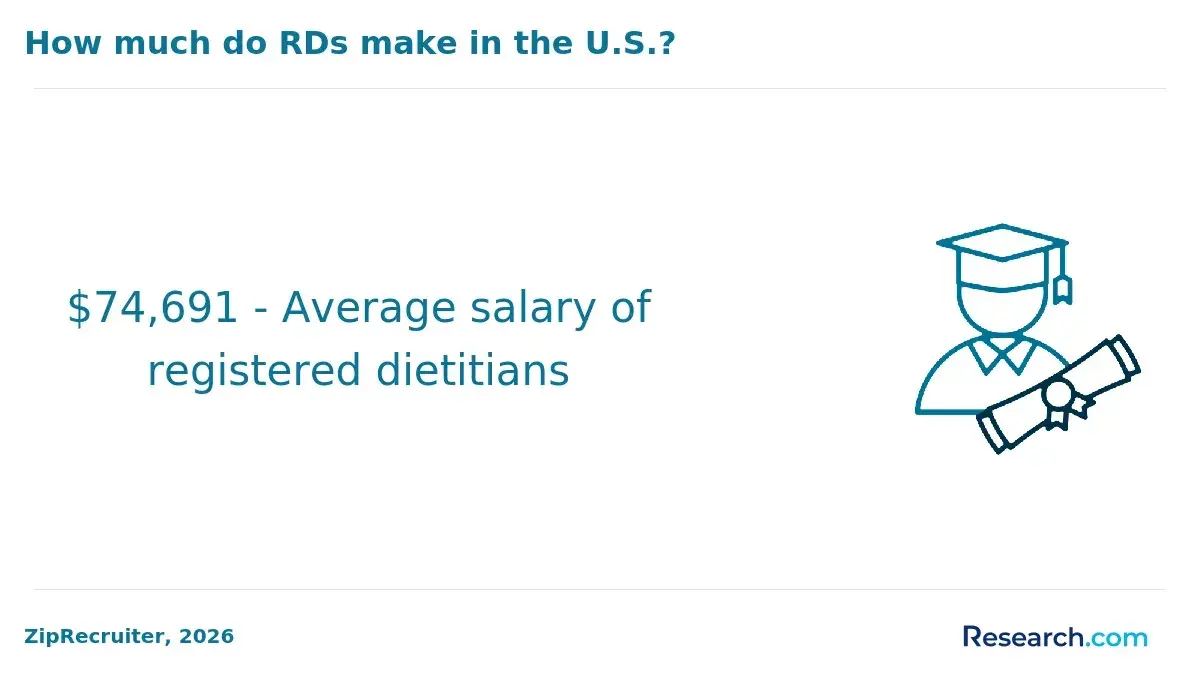
- Salary potential: Dietitians and nutritionists earned a median annual salary of $73,850 in May 2024, and graduate education may help candidates compete for specialized, supervisory, or higher-responsibility roles.
- Faster completion: Many accelerated online programs are designed to be finished in as little as one year, which can help students continue working while advancing their education.
What should you expect from an accelerated online master's in nutrition?
An accelerated online master’s in nutrition usually combines advanced nutrition science with applied training in dietetics, public health, counseling, disease prevention, research, and food systems. Common topics include nutritional biochemistry, nutrition assessment, chronic disease management, health promotion, food policy, and research methods. Because these programs compress graduate coursework into a shorter timeline, students should expect a demanding weekly workload.
Most accelerated online nutrition programs take 12 to 18 months, although pacing varies by school, transfer credit policies, thesis or non-thesis options, and whether the student enrolls full time. Many courses are asynchronous, which means students can watch lectures and complete assignments around work or family responsibilities. Some programs may also include a capstone, supervised practicum, applied project, or thesis tied to a student’s professional interests.
| Program feature | What it usually means for students | Why it matters |
| Accelerated format | Courses are compressed into a shorter schedule, often 12 to 18 months. | Finishing faster can reduce time away from career advancement, but it requires strong time management. |
| Online delivery | Classes may be asynchronous, synchronous, or a mix of both. | Asynchronous courses offer more flexibility; live courses may provide more structure and interaction. |
| Capstone, thesis, or practicum | Students may complete an applied project, research paper, supervised experience, or thesis. | The right option depends on whether you want practice-based work, research preparation, or career advancement. |
| Science prerequisites | Programs may expect prior coursework in nutrition, chemistry, biology, physiology, or related fields. | Students without a science background may need additional courses before admission. |
Where can graduates with a master's in nutrition work?
A master’s in nutrition can lead to opportunities across healthcare, public health, education, wellness, research, food systems, and private consulting. In clinical settings, nutrition professionals may work in hospitals, outpatient centers, long-term care facilities, or private practices, where they help assess nutrition needs and support patient care plans. Exact duties depend on state laws, employer expectations, and whether the graduate holds dietitian credentials.
Outside direct patient care, graduates may work for government agencies, nonprofits, schools, universities, corporate wellness programs, sports organizations, food and beverage companies, or community health initiatives. Some focus on nutrition education and counseling, while others support food policy, program evaluation, health promotion, employee wellness, product development, or community nutrition planning.
How much can you make with a master's in nutrition?
Salary depends on job title, credentials, state regulations, employer type, work setting, location, and experience. According to the U.S. Bureau of Labor Statistics, dietitians and nutritionists earn a median annual salary of $73,850. Those in the top 10% of the field earn over $100,000 annually, with stronger earning potential often associated with specialized practice areas, leadership roles, private consulting, medical nutrition therapy, outpatient care, or corporate wellness.
A graduate degree alone does not guarantee a specific salary. However, a master’s program can help students deepen their expertise, build research and leadership skills, and qualify for roles that require or prefer advanced education. Students comparing programs should ask schools for career outcome information by program, not just broad occupational salary figures.
- Best Accelerated Online Master’s Programs in Nutrition for 2027
- Completion Time for an Accelerated Online Master's in Nutrition
- Online vs. On-Campus Nutrition Master’s Programs
- Average Cost of an Accelerated Online Master's in Nutrition
- Financial Aid Options for Online Nutrition Graduate Students
- Admission Prerequisites for Accelerated Nutrition Master’s Programs
- Typical Courses in an Online Master’s in Nutrition
- Nutrition Master’s Specializations
- How to Choose the Right Accelerated Online Nutrition Master’s Program
- Career Paths After an Accelerated Online Master's in Nutrition
- Nutrition and Health Information Management Career Options
- Job Market for Nutrition Master’s Graduates
- Student Success Strategies for Accelerated Online Study and related job market considerations
- Online Student Support Resources
- Interdisciplinary Options in Nutrition Programs, plus related online learning guidance, career demand context, and common mistakes to avoid
Best Accelerated Online Master’s Programs in Nutrition for 2027
How should students use this ranking?
A ranking is a starting point, not a final decision. The best accelerated online master’s in nutrition for you depends on your professional goal, prior coursework, budget, preferred learning format, specialization interests, and whether you need a program that aligns with dietetics credentials or state-specific requirements.
Research.com created this list to help prospective students compare accredited institutions offering accelerated online master’s degrees in nutrition. The review considered affordability, completion speed, curriculum quality, accreditation status, and institutional reputation. More details about the ranking process are available on the Research.com methodology page.
To support accuracy and consistency, the ranking used current information from trusted education data sources, including the IPEDS database, Peterson’s database and its Distance Learning Licensed Data Set, College Scorecard, and the National Center for Education Statistics (NCES).
The following ten programs are among the best accelerated online master's programs in nutrition for 2027:
1. University of North Dakota
The University of North Dakota offers an online Master of Science in Nutrition for working professionals and recent graduates who want to advance in health, wellness, nutrition education, or applied nutrition. The program is fully online and uses asynchronous coursework, making it more manageable for students balancing employment or family commitments. UND emphasizes applied nutrition science, community nutrition, and health promotion, and students may be able to finish quickly depending on prior coursework and eligible transfer credits.
- Program Length: As few as 12 months
- Tracks/concentrations: General Nutrition, Nutrition Education and Counseling
- Cost per Credit: $588 (resident and nonresident)
- Required Credits to Graduate: 30
- Accreditation: Higher Learning Commission (HLC)
2. University of Alabama
The University of Alabama offers an online Master of Science in Human Nutrition through Bama by Distance. The program is built for students who want a flexible graduate pathway focused on evidence-based nutrition practice, dietetics, research, and health promotion. Courses are asynchronous, and students can choose a thesis or non-thesis route, allowing them to match the curriculum with either research interests or applied professional goals.
- Program Length: 12 to 18 months
- Tracks/concentrations: Clinical Nutrition, Community Nutrition, Generalist
- Cost per Credit: $440
- Required Credits to Graduate: 30
- Accreditation: Southern Association of Colleges and Schools Commission on Colleges (SACSCOC)
3. Texas Tech University
Texas Tech offers an online Master of Science in Nutrition and Dietetics intended for registered dietitians and nutrition professionals who want advanced clinical, research, or leadership preparation. The curriculum emphasizes nutritional therapy, clinical decision-making, and research skills. Its online structure is designed to support students who want to continue working while completing graduate study.
- Program Length: 12 to 16 months
- Tracks/concentrations: None specified (General program)
- Cost per Credit: $580 (in-state); $680 (out-of-state)
- Required Credits to Graduate: 33
- Accreditation: SACSCOC
4. Arizona State University
Arizona State University provides an online Master of Science in Nutritional Science through ASU Online. The program is suitable for students seeking a fast, structured graduate option in nutrition science. Courses are taught through the College of Health Solutions and connect nutrition theory with practical topics such as chronic disease prevention and health behavior change.
- Program Length: 12 months
- Tracks/concentrations: General Nutrition
- Cost per Credit: $735
- Required Credits to Graduate: 30
- Accreditation: HLC
5. University of Kansas Medical Center
The University of Kansas Medical Center offers an online Master of Science in Dietetics and Nutrition with a curriculum focused on research, evidence-based practice, and leadership. The program may appeal to students interested in clinical nutrition, community nutrition, health promotion, or advanced practice within healthcare and public health settings.
- Program Length: 12 to 18 months
- Tracks/concentrations: Nutrition Science, Health Promotion
- Cost per Credit: $421 (resident); $947 (nonresident)
- Required Credits to Graduate: 36
- Accreditation: HLC
6. University of Illinois at Urbana-Champaign
The online non-thesis MS in Food Science and Human Nutrition from UIUC is designed for students interested in nutrition communication, clinical practice, evidence-based assessment, or research-related work. The curriculum includes advanced nutrition theory, biostatistics, and practical evaluation skills. Its asynchronous format can support students who need graduate study to fit around full-time employment.
- Program Length: 18 months
- Tracks/concentrations: None (General Nutrition Science focus)
- Cost per Credit: $670
- Required Credits to Graduate: 32
- Accreditation: HLC
7. University of Southern Mississippi
USM offers a fully online Master of Science in Nutrition and Food Systems. The program examines how social, environmental, and economic factors influence nutrition and dietary health. It can be a strong fit for students interested in public health nutrition, food systems, policy, research, health promotion, or management-oriented nutrition roles.
- Program Length: 12 to 16 months
- Tracks/concentrations: Dietetics, Health Promotion, Management
- Cost per Credit: $494
- Required Credits to Graduate: 33
- Accreditation: SACSCOC
8. University of Central Missouri
The online MS in Nutrition at UCM is a non-thesis program with a research-oriented curriculum. Students study topics such as micronutrient metabolism, chronic disease prevention, and global nutrition. The online format includes both synchronous and asynchronous classes, so applicants should review live meeting expectations before enrolling.
- Program Length: 12 to 18 months
- Tracks/concentrations: General Nutrition
- Cost per Credit: $350
- Required Credits to Graduate: 30
- Accreditation: HLC
9. Bowling Green State University
BGSU offers an online, non-thesis MS in Food and Nutrition for health professionals and students seeking advanced nutrition knowledge. The program includes coursework in nutrient metabolism, community nutrition, and health education. Rolling admissions may make it easier for working adults to begin without waiting for a single annual start date.
- Program Length: 12 to 18 months
- Tracks/concentrations: General Nutrition
- Cost per Credit: $445
- Required Credits to Graduate: 30
- Accreditation: HLC
10. Eastern Michigan University
Eastern Michigan University offers an online MS in Human Nutrition for students preparing for roles in wellness, clinical support, nutrition education, or related health fields. The program includes asynchronous coursework and optional practicum experiences, giving students flexibility while still allowing for applied learning. Students may enroll part time or full time depending on their availability.
- Program Length: 12 to 20 months
- Tracks/concentrations: General Nutrition
- Cost per Credit: $670
- Required Credits to Graduate: 30
- Accreditation: HLC
How long does it take to complete an accelerated online master's in nutrition?
Most accelerated online master’s programs in nutrition can be completed in 12 to 18 months. Some programs may be shorter or longer depending on required credits, course availability, transfer credit rules, whether students choose a thesis, and whether they study full time or part time.
The main advantage of an accelerated format is speed. The main trade-off is intensity. Students often take condensed courses with frequent deadlines, which can be challenging for those working full time or managing caregiving responsibilities. Before enrolling, ask how many hours per week students typically spend on readings, assignments, discussions, projects, and exams.
Accelerated nutrition programs may also attract healthcare professionals who want to broaden their expertise. For example, someone researching what a home health nurse does may see nutrition training as a way to deepen patient education skills or move toward wellness, chronic disease prevention, or community health work.
| Timeline option | Best fit | Potential drawback |
| 12-month program | Students with strong preparation, fewer outside obligations, and the ability to handle a heavy pace. | Less room for schedule disruptions, work overload, or prerequisite gaps. |
| 12 to 18 months | Working adults who want a fast degree but need some flexibility. | May still require multiple courses at once. |
| 18 months or more | Students who prefer steadier pacing, thesis work, or part-time enrollment. | Longer time before graduation and potential additional term-based costs. |
How does an accelerated online master's in nutrition compare to an on-campus program?
Accelerated online and on-campus nutrition master’s programs may cover similar academic content, but the learning experience can be very different. Online programs usually offer more location flexibility, while campus programs may provide more in-person lab access, direct faculty interaction, and local networking opportunities.
| Factor | Accelerated online master’s in nutrition | On-campus master’s in nutrition |
| Schedule | Often asynchronous or partly asynchronous, with more control over when to study. | Usually follows set class times and campus-based academic calendars. |
| Location | Students can complete coursework from home, though practicums may have location requirements. | Students may need to commute or relocate. |
| Completion speed | Often structured for 12 to 18 months. | Traditional formats may take two years or more. |
| Learning environment | Requires self-direction, digital communication, and comfort with online platforms. | Offers face-to-face discussion, campus resources, and in-person collaboration. |
| Applied work | May use capstones, virtual projects, local practicums, or online simulations. | May include campus labs, in-person research, or local clinical partnerships. |
Flexibility and convenience
Online nutrition master’s programs are often more practical for students who cannot pause their careers or move near campus. Many programs allow students to access lectures and assignments throughout the week, making it easier to study around work schedules.
- Students may be able to review lectures and materials at any time.
- Some programs support full-time or part-time enrollment.
- Students can avoid commuting, relocation, and campus housing expenses.
This type of compressed, skills-focused learning is similar in concept to options such as the shortest online software engineering bootcamp, where motivated learners use an intensive format to gain targeted knowledge quickly.
Curriculum and outcomes
Both online and on-campus nutrition master’s programs may include nutritional biochemistry, chronic disease prevention, nutrition assessment, research methods, public health nutrition, and food policy. The difference is often in delivery. Online programs may rely more on applied projects, digital collaboration, virtual case studies, and local field experiences, while campus-based programs may provide more in-person laboratory or research involvement.
What is the average cost of an accelerated online master's in nutrition?
Costs vary by school, credit requirement, tuition rate, residency status, technology fees, books, and whether students need prerequisite courses. According to the Education Data Initiative, the average cost of earning a master’s degree in the U.S. is approximately $62,820. Some accelerated online programs may cost less overall because students spend fewer terms enrolled and avoid some campus-based expenses, but this is not guaranteed.
Students comparing programs should calculate total cost, not just tuition per credit. A lower per-credit rate may still be expensive if the program requires more credits or charges additional fees. If affordability is your top concern, review Research.com’s guide to the cheapest online masters in nutrition to compare lower-cost options with academic quality and accreditation.
| Cost factor | What to check before enrolling |
| Tuition per credit | Confirm whether online students pay the same rate regardless of residency. |
| Total required credits | Multiply tuition by total credits, then add fees. |
| Fees | Ask about technology fees, distance learning fees, graduation fees, and course-specific charges. |
| Prerequisites | Find out whether missing science courses must be completed before admission or alongside the program. |
| Time to completion | Shorter programs may reduce term-based costs, but heavier course loads can affect work hours. |
| Travel or practicum expenses | Ask whether any in-person experiences, local placements, or campus visits are required. |
What financial aid options are available for accelerated online nutrition master's students?
Graduate students in accelerated online nutrition programs may be able to use several funding sources. Availability varies by school, enrollment status, citizenship status, academic standing, and program eligibility.
- Federal financial aid: Eligible graduate students may access Direct Unsubsidized Loans or Grad PLUS Loans after submitting the FAFSA.
- Scholarships and grants: Universities may offer merit-based or need-based awards for graduate, online, health science, or nutrition students.
- Assistantships and fellowships: These are more common in campus-based programs, but some online students may find remote research, teaching, or administrative support opportunities.
- Employer tuition assistance: Healthcare organizations, wellness companies, school systems, and other employers may help pay for degrees related to an employee’s role.
- State aid programs: Some students may qualify for state-based grants or loan assistance depending on residency and program eligibility.
Contact each school’s financial aid office before applying. Ask about priority deadlines, minimum credit loads, satisfactory academic progress requirements, and whether accelerated terms affect aid disbursement.
What are the prerequisites for enrolling in an accelerated online master's in nutrition?
Admission requirements vary, but accelerated nutrition master’s programs typically expect applicants to show readiness for graduate-level science coursework. Many programs prefer or require a bachelor’s degree in nutrition, dietetics, biology, chemistry, exercise science, public health, or another health-related field.
- A bachelor’s degree from an accredited institution, often in nutrition, dietetics, biology, chemistry, or a related health science field.
- Prerequisite coursework such as general chemistry, organic chemistry, human physiology, introductory nutrition, or related sciences.
- A minimum undergraduate GPA, often 3.0 or higher.
- Professional experience, licensure, or prior healthcare background for certain advanced or specialized tracks.
Like the shortest clinical mental health counseling master's programs online, accelerated nutrition programs may move quickly because they assume students have already completed foundational coursework. If you are changing careers, ask whether the school offers bridge courses or conditional admission for missing prerequisites.
According to Zippia, the most common degree held by nutritionists is a bachelor’s degree (65%), followed by master’s degrees (14%). Relevant work experience, prior science coursework, or certifications may strengthen an application, but requirements differ by institution.
What courses are typically included in an accelerated online master's in nutrition?
Accelerated online nutrition master’s programs usually combine advanced science, research literacy, applied practice, and population health. The exact course list depends on the school, specialization, thesis option, and whether the program is designed for registered dietitians, future nutrition educators, public health professionals, or general nutrition students.
Common core courses
- Advanced Nutritional Biochemistry: Covers nutrient metabolism and the biochemical processes connected to health, disease, and physiological function.
- Nutrition and Chronic Disease: Examines how diet influences prevention and management of diabetes, obesity, cardiovascular disease, and related conditions.
- Research Methods in Nutrition: Teaches students to evaluate scientific literature, understand study design, analyze data, and apply evidence to practice.
- Public Health Nutrition: Focuses on nutrition interventions, food access, epidemiology, community health, and population-level strategies.
Common electives or concentration courses
- Global Nutrition
- Nutrition Education and Counseling
- Pediatric or Geriatric Nutrition
- Food Policy and Systems Management
Many programs require a capstone, practicum, thesis, or final applied project. Students planning doctoral study may prefer a thesis or research-heavy option, while working professionals seeking advancement may prefer a capstone or practice-based project.
What specializations are available in an accelerated online master's in nutrition?
Specializations allow students to match graduate coursework with a specific professional direction. Not every program offers formal concentrations, but many allow students to choose electives or projects in an area such as dietetics, public health, sports nutrition, counseling, food systems, or nutrition science.
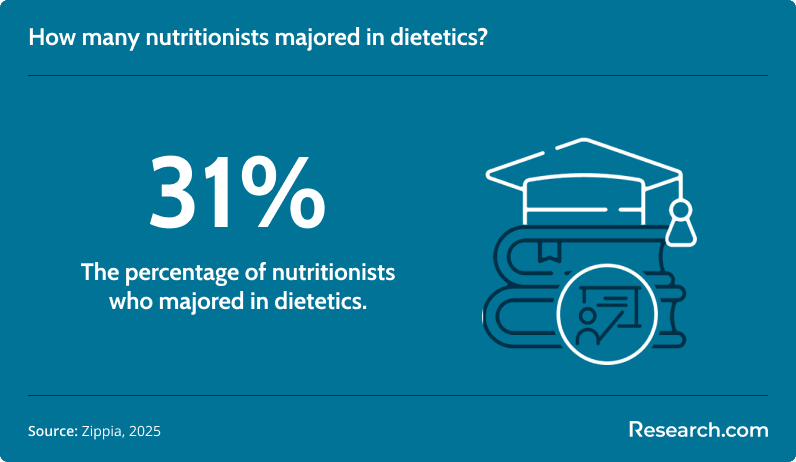
- Dietetics: Often chosen by students who want a curriculum connected to registered dietitian practice. Students pursuing the Registered Dietitian Nutritionist pathway should review Registered Dietitian Nutritionist state requirements and confirm program alignment before enrolling. According to Zippia, dietetics is the most popular undergraduate path for aspiring nutritionists, with 31% majoring in this field.
- Nutrition Science: Emphasizes physiology, biochemistry, metabolism, and research preparation.
- Public Health Nutrition: Prepares students to work on community nutrition, food access, prevention programs, and population health strategies.
- Sports Nutrition: Focuses on nutrition for athletic performance, recovery, training, and active populations.
- Pediatric or Geriatric Nutrition: Builds expertise in nutrition needs across specific life stages.
- Nutritional Counseling or Education: Supports careers in health education, coaching, program development, client communication, and behavior change.
| Specialization | Best for students who want to work in | Important caution |
| Dietetics | Clinical nutrition, patient care, dietitian-related roles, healthcare settings. | Confirm credentialing alignment and state requirements before enrolling. |
| Public Health Nutrition | Government agencies, nonprofits, community programs, health promotion. | May involve program planning and evaluation more than one-on-one counseling. |
| Sports Nutrition | Athletics, fitness, performance coaching, wellness organizations. | Employer expectations may vary widely by setting and credential. |
| Nutrition Science | Research support, doctoral preparation, academia, advanced science roles. | May be less practice-oriented than counseling or applied tracks. |
| Nutrition Education and Counseling | Client education, wellness consulting, schools, community health, coaching. | Scope of practice depends on state rules and professional credentials. |
How do you choose the best accelerated online master's in nutrition?
The best program is the one that fits your intended role, not just the one that finishes fastest. Before applying, define whether you want clinical practice, dietetics credentialing, public health work, research preparation, sports nutrition, wellness consulting, or food policy. Then evaluate each program against that goal.
1. Confirm accreditation and credential alignment
Choose a school with recognized institutional accreditation. If you plan to pursue professional credentials, ask whether the curriculum aligns with the relevant certification, licensure, or dietetics requirements. Research.com’s guide to which nutrition certifications are accredited can help you compare credential options.
2. Match the format to your life
Accelerated does not always mean easier. Review whether courses are asynchronous, live, or hybrid; how many terms run per year; whether courses are offered sequentially; and whether you can slow down if needed.
- Asynchronous courses are usually best for students with unpredictable schedules.
- Synchronous courses may work better for students who want live discussion and accountability.
- Full-time accelerated formats suit students who can protect regular study time each week.
- Part-time formats may be safer for students with heavy work or family obligations.
3. Compare curriculum depth, not just course titles
Look for coursework that supports your target role. A student interested in clinical nutrition should see strong content in assessment, disease management, and evidence-based practice. A public health student should look for food systems, epidemiology, community nutrition, policy, and program evaluation.
4. Ask about practicum, capstone, and career support
Applied experiences can help students translate coursework into job-ready skills. Ask whether the program helps students identify practicum sites, provides faculty mentorship, supports capstone projects tied to career goals, and offers career advising for online learners.
5. Calculate return on investment carefully
Do not rely only on national salary figures. Compare total program cost, financial aid, time to graduation, credential outcomes, and the types of roles graduates actually obtain. Ask programs for transparent outcome data when available.
| Question to ask | Why it matters |
| Is the institution properly accredited? | Accreditation can affect financial aid eligibility, transferability, employer recognition, and graduate school options. |
| Does the program support my intended credential or licensure path? | Not every nutrition master’s program prepares students for the same professional requirements. |
| How many hours per week should I expect to study? | Accelerated programs can be difficult to manage without a realistic time plan. |
| Are courses asynchronous, synchronous, or mixed? | Delivery format affects flexibility and your ability to balance work and school. |
| What support is available for online students? | Advising, tutoring, library access, technology help, and career services can affect completion and job readiness. |
| What is the full cost, including fees and prerequisites? | Total cost gives a clearer picture than tuition alone. |
What career paths are available for graduates of an accelerated online master's in nutrition?
Graduates can pursue roles in healthcare, wellness, education, food systems, public health, consulting, and program management. Job titles and scope of practice depend heavily on state rules, dietetics credentials, professional certifications, experience, and employer requirements.
According to BLS data from May 2024, dietitians and nutritionists earned the following median annual wages by industry:
- Outpatient care centers: $79,200
- Hospitals (state, local, and private): $75,650
- Government: $74,000
- Nursing and residential care facilities: $70,180
| Career path | Typical focus | Who it may fit |
| Clinical nutritionist or dietitian-related role | Nutrition assessment, patient education, disease-related nutrition support. | Students interested in healthcare settings and evidence-based patient care. |
| Public health nutritionist | Community programs, food access, prevention initiatives, health promotion. | Students who want to improve nutrition outcomes at the population level. |
| Wellness consultant | Employee wellness, nutrition education, behavior change, health coaching. | Students interested in corporate wellness, consulting, or client-facing education. |
| Food policy or food systems advisor | Food access, school nutrition, policy analysis, program development. | Students drawn to advocacy, systems thinking, and public service. |
| Nutrition educator | Curriculum design, workshops, community education, client communication. | Students who enjoy teaching, counseling, and translating science for the public. |
| Food service or program manager | Operations, nutrition standards, team leadership, compliance, planning. | Students seeking administrative or leadership roles in health-related organizations. |
Some graduates combine nutrition with broader public health training. Comparing nutrition roles with a master of public health degree salary pathway can help students decide whether they want to focus on individual nutrition practice, population health, policy, or program leadership.
Graduates interested in management may also explore careers such as health promotion strategist, program coordinator, food service director, or public health leader. Research.com’s guide to public health administrator salary and career paths can help students understand how administrative roles differ from nutrition-focused practice.
Can combining nutrition with health information management improve career options?
Nutrition professionals increasingly work with digital records, clinical data, program metrics, telehealth tools, and outcomes reporting. Students who understand both nutrition and health information management may be better prepared for roles that require evidence-based decision-making, documentation, quality improvement, and cross-functional collaboration.
This combination can be useful in healthcare systems, public health agencies, food service operations, population health programs, and wellness organizations that rely on data to track outcomes. Students who want stronger administrative or data-oriented skills may benefit from comparing nutrition graduate study with an affordable online health information management degree.
What is the job market like for graduates of an accelerated online master's in nutrition?
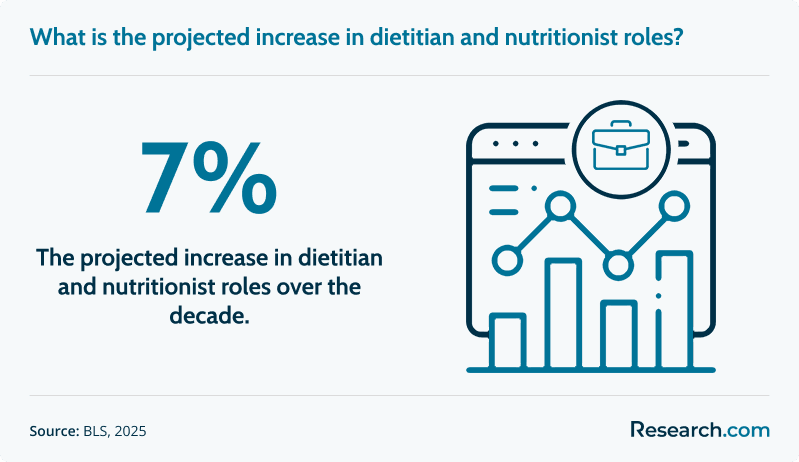
The job market for nutrition professionals is supported by demand for chronic disease prevention, healthcare nutrition services, community health initiatives, wellness programming, and food systems expertise. According to the BLS, employment of dietitians and nutritionists is projected to grow 6% from 2024 to 2034, which is faster than average for all occupations. The BLS also projects about 6,200 job openings each year during that period.
Graduates may find opportunities in clinical care, outpatient services, long-term care, government, consulting, education, research support, food service management, and corporate wellness. Students who want to work outside direct clinical care may also consider non clinical healthcare careers, including health coaching, community program development, wellness coordination, or health education roles.
An accelerated master’s can help students build advanced qualifications quickly, but job outcomes are not automatic. Credentialing, supervised experience, networking, specialization, geographic location, and employer demand all affect career prospects.
How can students succeed in an accelerated online master’s in nutrition program?
Accelerated online study requires more structure than a traditional semester pace. Students should treat the program like a major professional commitment, not a side project. The most successful learners usually plan weekly study blocks, communicate early with instructors, use school support services, and avoid falling behind during condensed terms.
- Audit your weekly schedule before enrolling. Estimate work hours, family responsibilities, commute time, and study time. If the program is full time and accelerated, build in protected time every week.
- Clarify course deadlines. Asynchronous does not mean self-paced. Most online courses still have firm due dates.
- Use digital planning tools. Calendar systems, task managers, and reminder apps can help prevent missed assignments in short terms.
- Participate actively. Discussion boards, group projects, faculty office hours, and peer communication can reduce the isolation of online learning.
- Connect assignments to your career goal. Choose capstone topics, papers, and projects that can become portfolio samples or interview talking points.
- Ask for help early. Use tutoring, advising, writing support, library services, and technical support before problems affect grades.
Some students also broaden their healthcare knowledge with adjacent training. For example, low cost medical billing and coding courses may help nutrition students better understand documentation, reimbursement, and healthcare administration, although these courses serve a different purpose than a nutrition master’s degree.
What do graduates say about accelerated online master’s programs in nutrition?
-
: "
“I needed a program that would not force me to leave my job. The online format gave me enough flexibility to study at night and on weekends, and the accelerated schedule helped me finish quickly. The workload was serious, but I was able to apply what I learned immediately in my wellness consulting work.” Melissa
"
-
: "
“Returning to graduate school felt intimidating at first, but the online structure made it manageable. I appreciated being able to review lectures on my own schedule while still interacting with classmates and instructors. The fast pace kept me focused from the first course to the last.” Daniel
"
-
: "
“The strongest part of my nutrition master’s program was how practical the coursework felt. Even though I studied online, the assignments connected to public health and clinical nutrition issues I cared about. The format helped me keep working, stay close to my family, and move into a more specialized nutrition role.” Samantha
"
What student support resources should online master's students look for?
Support services can make a major difference in an accelerated program. Because courses move quickly, students need fast access to advising, technology help, faculty communication, writing assistance, research databases, and career guidance.
- Academic advising: Helps students plan course sequences, prerequisites, transfer credits, and graduation timelines.
- Career counseling: Supports resume development, interview preparation, job search strategy, and career planning.
- Technical support: Helps resolve learning platform, login, software, or exam proctoring problems.
- Library and research support: Gives students access to databases, citation guidance, and evidence-based nutrition research.
- Writing support: Helps with research papers, capstones, literature reviews, and professional communication.
- Mentorship and networking: Connects students with faculty, alumni, peers, and potential professional contacts.
Students who are still comparing broader healthcare leadership options may also review the cheapest online healthcare administration degree programs to understand how nutrition-focused study differs from healthcare administration training.
Can accelerated online master's programs in nutrition include interdisciplinary opportunities?
Yes. Many nutrition careers overlap with public health, healthcare administration, food service management, informatics, education, behavioral health, and wellness programming. An interdisciplinary curriculum can help students understand not only nutrition science but also how health systems, organizations, data, and policy influence food and health outcomes.
Useful interdisciplinary areas may include digital health analytics, healthcare management, food systems, program evaluation, public health communication, administrative practices, and community health planning. Students interested in operations or revenue-cycle knowledge may also compare adjacent programs, including accredited medical billing and coding schools online with financial aid, while recognizing that those programs prepare students for different roles than a nutrition master’s degree.
Common mistakes to avoid when choosing an accelerated online master's in nutrition
| Mistake | Why it can hurt you | Better approach |
| Choosing the fastest program without checking fit | A shorter timeline may not support your credential, specialization, or learning needs. | Start with your target career, then compare program requirements. |
| Ignoring accreditation | Accreditation can affect aid eligibility, employer acceptance, and future education options. | Verify institutional accreditation and any credential-specific requirements. |
| Assuming every nutrition master’s leads to dietitian eligibility | RDN pathways may involve specific academic and supervised practice requirements. | Ask the program directly how it aligns with dietetics credentials and state rules. |
| Comparing only tuition per credit | Fees, prerequisites, books, and total credits can change the real cost. | Calculate the full cost of attendance before applying. |
| Underestimating the workload | Accelerated online courses can move quickly and require steady weekly effort. | Ask about weekly time expectations and review your schedule honestly. |
| Relying only on rankings | A highly ranked program may still be the wrong match for your goals or budget. | Use rankings as one tool alongside curriculum, cost, support, and outcomes. |
Key Insights
- Accelerated online master’s programs in nutrition are best for prepared students who want graduate-level nutrition training in a shorter format, often 12 to 18 months.
- A master’s in nutrition can support careers in clinical nutrition, public health, wellness, education, food systems, consulting, and program leadership, but credentials and state rules matter.
- Dietitians and nutritionists earn a median annual salary of $73,850, with BLS industry medians of $79,200 in outpatient care centers, $75,650 in hospitals, $74,000 in government, and $70,180 in nursing and residential care facilities.
- The average cost of earning a master’s degree in the U.S. is approximately $62,820, but students should compare total program cost, not just tuition per credit.
- Employment of dietitians and nutritionists is projected to grow 6% from 2024 to 2034, with about 6,200 projected openings each year.
- Students pursuing Registered Dietitian Nutritionist roles should confirm program alignment with credentialing and state requirements before enrolling.
- The best program is not always the fastest one. Prioritize accreditation, curriculum fit, support services, practicum or capstone options, total cost, and career outcomes.
References:
- BLS. (2025, August 28). Dietitians and nutritionists. bls.gov.
- FDA. (2025, June 13). FDA’s nutrition initiatives. U.S. Food And Drug Administration. fda.gov.
- Hanson, M. (2024, November 24). Average Cost of a Master’s Degree. Education Data Initiative. educationdata.org.
- Zippia. (2025, January 8). Best Colleges and Degrees for Nutritionists. zippia.com.
Other Things You Should Know About the Best Accelerated Online Master’s Programs in Nutrition
Applicants typically need a bachelor's degree in nutrition or a related field, along with GRE scores. Some programs may require specific undergraduate coursework or professional experience in the nutrition industry. Check each program's prerequisites for details.
Most 2027 accelerated online master's programs in nutrition require a stable internet connection, a modern computer or tablet, and video conferencing software like Zoom. Some programs may also require specific nutritional analysis software, which can often be accessed through student licenses.
Yes. Many 2027 accelerated online master’s programs in nutrition require a supervised practicum or internship, often totaling 100 to 400 hours. These hours may be completed in a local approved site, and some programs require a background check, immunization records, or site approval before placement.





