
2027 Easiest LPN Programs to Get Into

Co-Founder and Chief Data Scientist
As the demand for licensed practical nurses (LPNs) grows, with a projected 3% increase in jobs from 2023 to 2033, many aspiring students find themselves struggling with the admission requirements of competitive LPN programs. With over 54,000 job openings projected each year, it is crucial to find a program that is accessible and aligns with your career goals.
In this article, I will guide you through some of the easiest LPN programs to get into, helping you navigate your options and ease the concerns surrounding the application process. I aim to provide you with the insights you need to make an informed decision about your nursing education.
What are the benefits of an LPN credential?
- A licensed practical nursing (LPN) degree opens doors to jobs in hospitals, clinics, nursing homes, and other healthcare settings.
- The median annual salary for LPNs in 2023 is $59,730.
- Earning an LPN degree online offers flexibility, allowing students to balance their education with work and personal commitments.
What can I expect from the easiest LPN programs to get into?
The easiest LPN programs to get into typically have fewer admission requirements, making them more accessible to a wider range of applicants. These programs often focus on core nursing skills and basic healthcare knowledge, offering a streamlined path to becoming a licensed practical nurse. Expect to complete foundational coursework in subjects like anatomy, physiology, and patient care, as well as practical training in healthcare settings. These programs are designed to provide the essential skills needed for entry-level nursing positions, with a quicker and more straightforward application process.
In addition to easier admission, many of these programs offer flexible learning options, including online or hybrid formats, allowing students to complete coursework at their own pace. The shorter, more accessible entry requirements make them ideal for students looking to start their careers as quickly as possible. However, it is important to ensure that the program is accredited and provides quality clinical experience, which is crucial for passing the NCLEX-PN exam and obtaining licensure.
Where can I work after graduating from an LPN program?
After graduating from an LPN program, you can work in a variety of healthcare settings, including nursing care facilities, hospitals, and home healthcare services. These workplaces offer opportunities to provide essential care to patients in different environments. You may also find positions in physician offices or assisted living communities, where LPNs play a key role in patient care and support.
The demand for LPNs is high, with many of these industries offering stable job opportunities. Nursing care facilities (171,290) and home health care services (84,870) are among the largest employers, providing a range of options for graduates to begin their careers.
How much can I make with an LPN credential?
With an LPN credential, you can expect to earn between $45,670 and $77,870 annually, depending on factors such as location, experience, and work setting. The median salary for LPNs in 2023 is around $59,730, offering a competitive wage for those entering the healthcare field.
- 15 Easiest LPN Programs to Get Into for 2027 Best Programs
- How does an online LPN program compare to an on-campus program? How does an online LPN program compare to an on-campus program?
- What is the average cost of an LPN program? Average Cost
- What are the financial aid options for students enrolling in an LPN program? Financial Aid
- What are the prerequisites for enrolling in the easiest LPN programs? Requirements
- What courses are typically in an LPN program? What courses are typically in an LPN program?
- What types of specializations are available in LPN programs? What types of specializations are available in LPN programs?
- How to choose the best easy LPN program? Considerations
- What career paths are available for graduates of the easiest LPN programs? Career Paths
- What is the job market for graduates of the easiest LPN programs? Job Market
- Can LPN Programs Prepare You for a Career in Mental Health Specializations? Can LPN Programs Prepare You for a Career in Mental Health Specializations?
- How can I transition from LPN to RN effectively? How can I transition from LPN to RN effectively?
- What Are the Success Metrics of LPN Programs? What Are the Success Metrics of LPN Programs?
- Can my LPN experience accelerate my journey to advanced nursing degrees? Can my LPN experience accelerate my journey to advanced nursing degrees?
- Can Accelerated Online Nursing Programs Elevate My LPN Career? Can Accelerated Online Nursing Programs Elevate My LPN Career?
- Is Transitioning from LPN to ABSN a Viable Option? Is Transitioning from LPN to ABSN a Viable Option?
15 Easiest LPN Programs to Get Into for 2027: Practical Nursing Options, Costs, and Admissions Factors
Choosing a licensed practical nurse program is not just about finding the shortest path into nursing. You also need to confirm that the program is approved for licensure, affordable enough to make financial sense, realistic for your schedule, and strong enough to prepare you for the NCLEX-PN. This guide is for prospective nursing students who want accessible LPN or LVN programs but do not want to risk choosing a weak or poorly matched school.
Below, you will find a decision-focused review of 15 LPN programs that may be easier to enter than highly selective nursing pathways, along with practical guidance on admissions requirements, online versus campus learning, program costs, financial aid, accreditation, clinical training, career options, and LPN-to-RN advancement. The goal is to help you compare programs carefully instead of applying only because a school markets itself as “fast” or “easy.”
Quick Answer: What Makes an LPN Program Easier to Get Into?
The easiest LPN programs to get into are usually programs with clear prerequisite requirements, multiple start dates, practical admissions criteria, shorter credential timelines, and support for students who are new to healthcare. “Easy to get into,” however, does not mean easy to finish. LPN programs still require clinical training, background checks, immunizations, nursing coursework, and preparation for the NCLEX-PN licensing exam.
Students should prioritize state board approval, recognized accreditation when available, transparent tuition, clinical placement quality, NCLEX-PN outcomes, and transfer or bridge options. A low admissions barrier is helpful only if the program can actually lead to licensure and employment.
How these schools were selected
This ranking of accessible LPN programs is based on Research.com’s independent review process and our established ranking methodology. Sources consulted include the IPEDS database from the National Center for Education Statistics, Peterson’s database, including distance learning program data, and the College Scorecard database for cost and institutional outcome information.
Because LPN admissions standards can change by campus, state, and cohort, applicants should confirm current requirements directly with each school before applying.
Best Easy-Admission LPN Programs to Consider
The programs below vary in length, cost, format, and state approval. Some award certificates or diplomas, while others are connected to broader nursing pathways. Use this list as a starting point, then verify licensing eligibility with the state nursing board where you plan to work.
| Rank | School | Program length | Graduation requirement | Published cost information | Accreditation or approval listed |
| 1 | University of Arkansas Community College | ~12 months | 49 credits | $87 in-district; $127 out-of-district; $103 out-of-state per credit | Arkansas State Board of Nursing |
| 2 | Annenberg School of Nursing | 12 months | 19 courses | $25,100 tuition | California Board of Vocational Nursing and Psychiatric Technicians (BVNPT) |
| 3 | Bolivar Technical College | ~12 months | ~30-45 credits | $29,149 tuition | Accreditation Commission for Education in Nursing (ACEN) |
| 4 | Athena Career Academy | 12-16 months | 10 courses | $22,000 tuition | Commission of the Council on Occupational Education |
| 5 | Professional Skills Institute | 11 months | 65 credits | $18,864.30 tuition | Accrediting Bureau of Health Education Schools (ABHES) |
| 6 | Herzing University | 12 months | 37 credits | $525 per credit; $19,425 total | Accreditation Commission for Education in Nursing (ACEN) |
| 7 | Utah State University | 12 months | 46 credits | $735.08 in-state; $2,202.60 out-of-state per credit | Accreditation Commission for Education in Nursing (ACEN) |
| 8 | Mercyhurst University | 12 months | 30 credits | $14,328 tuition | National League for Nursing Commission for Nursing Education Accreditation (NLN CNEA) |
| 9 | Central Pennsylvania Institute of Science & Technology (CPI) | 12 months | 12 courses | $17,104 tuition | Accrediting Commission of Career Schools and Colleges |
| 10 | Louisiana State University Shreveport | 12 months | 1540 semester hours | $305.28 in-state; $853.37 out-of-state per semester hour | Louisiana State Board of Practical Nursing |
| 11 | SUNY Canton | 8 months | 36 credits | $7,070 in-state; $11,900 out-of-state tuition | Accreditation Commission for Education in Nursing |
| 12 | Beckfield College | 15 months | 64.5 credits | $3,000 tuition per quarter | National League for Nursing Commission for Nursing Education Accreditation |
| 13 | ECPI University | 15 months | 48.5 credits | $9,720 tuition per semester | North Carolina Board of Nursing & South Carolina Department of Labor, Licensing and Regulation, South Carolina Board of Nursing |
| 14 | CUNY Medgar Evers College | 18 months | 39 credits | $620 per credit; $3,465 per semester for full-time students | New York State Education Department (NYSED) Office of the Professions |
| 15 | Colorado Mesa University | 24 months | 58 credits | $7,548.48 in-state; $20,574.96 out-of-state annual tuition | Accreditation Commission for Education in Nursing (ACEN) |
1. University of Arkansas Community College
The University of Arkansas Community College offers an Associate of Applied Science in Nursing (AAS) designed to build the classroom knowledge and clinical judgment needed for entry-level practical nursing care. Students study core nursing topics such as anatomy, pharmacology, and nursing practice while completing clinical experiences in healthcare settings. The program is structured to support NCLEX-PN preparation and practical patient-care readiness.
- Program length: ~12 months
- Credits required: 49
- Cost per credit: $87 in-district; $127 out-of-district; $103 out-of-state
- Accreditation or approval: Arkansas State Board of Nursing
2. Annenberg School of Nursing
Annenberg School of Nursing provides a vocational nursing program for students preparing for the NCLEX-PN state licensing exam. The curriculum blends nursing theory with applied training in a smaller learning setting. Students in the nurse assistant track are also prepared for certification through the California Department of Public Health (CDPH).
- Program length: 12 months
- Courses required: 19
- Tuition: $25,100
- Accreditation or approval: California Board of Vocational Nursing and Psychiatric Technicians (BVNPT)
3. Bolivar Technical College
Bolivar Technical College offers a practical nursing pathway that can be completed through an intensive three-semester option or a four-semester option for students who need a more manageable pace. The curriculum covers direct patient care, nursing fundamentals, and preparation for the NCLEX-P licensing exam. The school also supports students who plan to work as LPNs before continuing into an RN program.
- Program length: ~12 months
- Credits required: ~30-45
- Tuition: $29,149
- Accreditation: Accreditation Commission for Education in Nursing (ACEN)
4. Athena Career Academy
Athena Career Academy offers a practical nursing program that can prepare students for nursing work in 12-16 months. The program includes classroom instruction and clinical learning, with coursework aimed at building the patient-care skills required for NCLEX-PN eligibility and entry-level nursing practice.
- Program length: 12-16 months
- Courses required: 10 courses
- Tuition: $22,000
- Accreditation: Commission of the Council on Occupational Education
5. Professional Skills Institute
Professional Skills Institute offers a practical nursing program with day and evening class options, which may help students who are balancing work, family, or other commitments. The program emphasizes direct clinical skill development and prepares graduates to take the NCLEX-PN exam for LPN licensure.
- Program length: 11 months
- Credits required: 65
- Tuition: $18,864.30
- Accreditation: Accrediting Bureau of Health Education Schools (ABHES)
6. Herzing University
Herzing University offers a 37-credit Diploma in Practical Nursing through the Birmingham campus. Students study patient assessment, medical-surgical nursing, maternal and child nursing, and mental health nursing, then apply that knowledge through clinical experiences. Graduates who meet program requirements may apply to sit for the NCLEX-PN exam.
- Program length: 12 months
- Credits required: 37
- Cost per credit: $525; $19,425 total
- Accreditation: Accreditation Commission for Education in Nursing (ACEN)
7. Utah State University
Utah State University offers a one-year practical nursing certificate focused on essential bedside care, medication administration, health monitoring, and patient comfort. The program is built around hands-on learning and prepares students to pursue practical nursing roles after meeting licensure requirements.
- Program length: 12 months
- Credits required: 46
- Cost per credit: $735.08 in-state; $2,202.60 out-of-state
- Accreditation: Accreditation Commission for Education in Nursing (ACEN)
8. Mercyhurst University
Mercyhurst University offers an undergraduate certificate in practical nursing that prepares students to care for patients across the lifespan. The curriculum uses defined learning objectives and encourages students to take responsibility for their clinical growth. The program is approved by the Pennsylvania State Board of Nursing and requires at least 30 credits.
- Program length: 12 months
- Credits required: 30
- Tuition: $14,328
- Accreditation: National League for Nursing Commission for Nursing Education Accreditation (NLN CNEA)
9. Central Pennsylvania Institute of Science & Technology (CPI)
Central Pennsylvania Institute of Science & Technology offers a full-time practical nursing diploma that combines classroom instruction with clinical training. The one-year program is approved by the Pennsylvania Department of Education and the Pennsylvania State Board of Nursing, and it is designed to prepare students for state licensure testing and entry-level healthcare roles.
- Program length: 12 months
- Courses required: 12
- Tuition: $17,104
- Accreditation: Accrediting Commission of Career Schools and Colleges
10. Louisiana State University Shreveport
Louisiana State University Shreveport offers a 12-month LPN certification program through The College of Education and Human Development. Students train for practical nursing responsibilities in settings such as hospitals, physician offices, clinics, and long-term care facilities. The program is approved by the Louisiana State Board of Practical Nursing and reports a 100% pass rate on the NCLEX.
- Program length: 12 months
- Credits required: 1540 semester hours
- Cost per semester hour: $305.28 in-state; $853.37 out-of-state
- Accreditation or approval: Louisiana State Board of Practical Nursing
11. SUNY Canton
SUNY Canton offers a practical nursing certificate that combines general education, nursing coursework, lab practice, and clinical practicums. Students complete clinical experiences in settings such as hospitals, long-term care facilities, and community health agencies. Graduates earn a certificate in practical nursing and may pursue LPN licensure after meeting exam requirements.
- Program length: 8 months
- Credits required: 36
- Tuition: $7,070 in-state; $11,900 out-of-state
- Accreditation: Accreditation Commission for Education in Nursing
12. Beckfield College
Beckfield College offers a practical nursing program for students seeking entry-level LPN preparation. Courses are taught by experienced nurses and are designed to prepare students for the NCLEX-PN exam. The program currently has no waitlist for admission, but applicants should confirm seat availability early because cohorts can fill.
- Program length: 15 months
- Credits required: 64.5
- Tuition: $3,000 per quarter
- Accreditation: National League for Nursing Commission for Nursing Education Accreditation
13. ECPI University
ECPI University offers a practical nursing diploma that introduces students to nursing theory, communication, clinical reasoning, lab practice, and simulation-based learning. The 15-month program prepares graduates to work as part of healthcare teams under the supervision of registered nurses, physicians, or other authorized providers after meeting licensure requirements.
- Program length: 15 months
- Credits required: 48.5
- Tuition: $9,720 per semester
- Accreditation or approval: North Carolina Board of Nursing & South Carolina Department of Labor, Licensing and Regulation, South Carolina Board of Nursing
14. CUNY Medgar Evers College
CUNY Medgar Evers College offers an 18-month certificate of practical nursing for eligible applicants pursuing entry-level nursing roles. The curriculum is designed to prepare students for the NCLEX-PN exam and practical nursing employment after graduation and licensure.
- Program length: 18 months
- Credits required: 39
- Cost per credit: $620; $3,465 per semester for full-time students
- Accreditation or approval: New York State Education Department (NYSED) Office of the Professions
15. Colorado Mesa University
Colorado Mesa University offers a technical certificate in practical nursing for students preparing to deliver direct care in hospitals, long-term care facilities, and ambulatory care clinics. Applicants must demonstrate college-level reading and writing proficiency and meet selective admission requirements, which may change each year.
- Program length: 24 months
- Credits required: 58
- Tuition: $7,548.48 in-state; $20,574.96 out-of-state annual tuition
- Accreditation: Accreditation Commission for Education in Nursing (ACEN)
How Does an Online LPN Program Compare to an On-Campus Program?
Online and hybrid LPN programs can make the classroom portion of nursing school more flexible, but they do not eliminate hands-on training. Students still need in-person lab work and clinical hours at approved healthcare sites. If speed is your main concern, compare your options with the fastest LPN programs, but check whether the accelerated schedule is realistic for your work and family obligations.
Campus-based LPN programs may be a better fit for students who want scheduled classroom time, direct access to instructors, and frequent in-person practice. Online or hybrid programs may work better for students who are self-directed, have reliable technology, and can travel to assigned clinical sites. Both formats should prepare students for the same NCLEX-PN exam if they meet state nursing board requirements.
| Factor | Online or hybrid LPN program | On-campus LPN program |
| Best for | Students who need more schedule flexibility for lectures or assignments | Students who prefer structured in-person learning |
| Clinical training | Still completed in person at approved healthcare facilities | Completed in person through school-arranged clinical sites |
| Student support | May depend heavily on virtual advising, online tutoring, and remote faculty access | Often includes direct contact with faculty, labs, and peer study groups |
| Common risk | Assuming “online” means fully remote | Underestimating commute time and fixed class schedules |
| Licensure issue to verify | Whether the program meets requirements in your state | Whether the school has current state board approval |
Students who are comparing healthcare pathways beyond practical nursing may also consider the easiest medical degree to get, especially if they want a broader healthcare credential instead of a nursing-specific license.
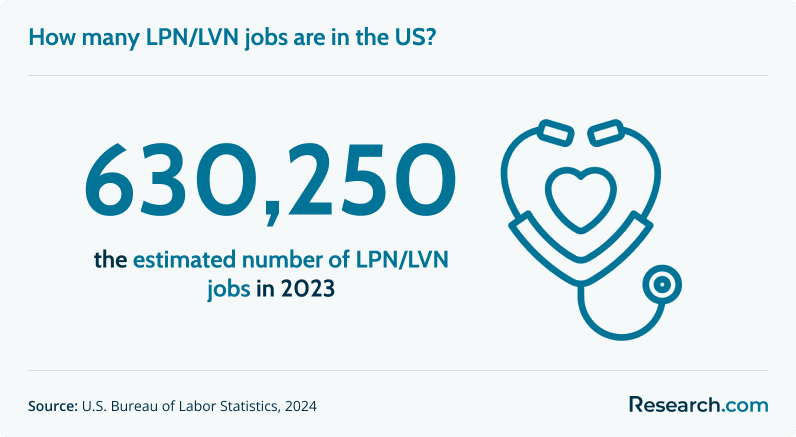
In 2023, there were around 630,250 LPNs in the US.
What Is the Average Cost of an LPN Program?
The average cost of an LPN program is around $21,000. For in-state students, the average cost per credit is approximately $522, while out-of-state students can expect to pay about $1,528 per credit. Actual costs vary by school, state residency, campus fees, books, uniforms, supplies, background checks, insurance, testing fees, and clinical travel.
When comparing LPN costs, do not look only at tuition. A program with a lower tuition rate may still be expensive if it has high fees, limited financial aid, long commuting requirements, or weak completion outcomes. Students interested in shorter healthcare training may compare LPN programs with the fastest medical assistant program, while students considering non-nursing healthcare routes can review the easiest kinesiology degree.
| Cost item | Why it matters | Question to ask before enrolling |
| Tuition | This is the largest published expense, but it may not include all required charges. | Is tuition charged by credit, course, semester, quarter, or full program? |
| Fees and supplies | Nursing students may need uniforms, equipment, drug screens, insurance, and exam fees. | What is the full estimated cost of attendance? |
| Clinical travel | Clinical sites may require commuting, parking, or schedule changes. | Where are clinical placements located? |
| Lost income | Intensive programs can reduce work hours while you are enrolled. | Can I work while completing this schedule? |
| Licensure costs | Graduation does not automatically mean you are licensed. | Which exam, application, and state licensing fees should I budget for? |
What Financial Aid Options Are Available for LPN Students?
Financial aid can make an LPN program more manageable, but eligibility depends on the school, program length, accreditation, student status, and aid rules. Before committing, ask the financial aid office for a written cost estimate and confirm which aid types apply to your exact program.
- Federal financial aid: Students may use the FAFSA to determine eligibility for federal grants, loans, and work-study when the school and program qualify.
- State grants and scholarships: Some states offer healthcare workforce funding or nursing-related aid for eligible residents.
- School-based scholarships: Institutions may provide merit-based, need-based, or program-specific scholarships for practical nursing students.
- Employer tuition assistance: Hospitals, long-term care facilities, and healthcare employers may help pay for training, especially for employees who commit to continued work.
- Private scholarships: Community foundations, professional groups, and nonprofit organizations may provide awards for nursing students.
Students who are already planning long-term academic growth may also compare nursing aid options with broader education pathways, such as the easiest education master’s degree, or evaluate management-oriented career planning through popular MBA specializations.
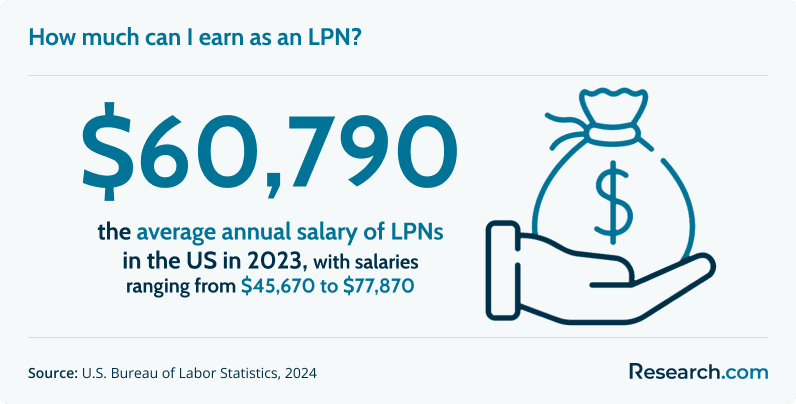
The average salary for LPNs was $60,790 in 2023. That figure can help you estimate potential value, but it should not be treated as a guaranteed income. Earnings depend on location, industry, shift type, experience, certifications, and employer. ROI is strongest when students control borrowing, finish on time, pass the NCLEX-PN, and enter a stable job market.
What Are the Common Prerequisites for Easy-Admission LPN Programs?
LPN programs with accessible admissions still screen applicants to make sure they can handle classroom learning and clinical responsibilities. Requirements vary, but most schools expect students to meet academic, health, and legal eligibility standards before beginning patient-care training.
- High school diploma or GED: Most programs require proof of secondary education or an accepted equivalent.
- Minimum GPA: Many programs set a minimum GPA, commonly ranging from 2.0 to 3.0.
- Prerequisite coursework: Some schools require biology, anatomy, basic math, or related foundational courses before admission or enrollment.
- Health screenings and immunizations: Clinical sites typically require current vaccinations, physical exams, and other health documentation.
- Background check: Students may need criminal background clearance because clinical partners can restrict participation based on certain convictions.
- Drug screening: Many nursing programs and clinical facilities require drug testing before placement.
- Entrance exam or interview: Some schools use standardized entrance assessments, interviews, or advising sessions to evaluate readiness.
If you already work in healthcare, a bridge-style route may be worth exploring. For example, a medical assistant to LPN online pathway may help experienced medical assistants move toward practical nursing while building on prior exposure to patient care.
What Courses Are Typically Included in an LPN Program?
LPN programs combine nursing theory, lab practice, and clinical experience. Coursework is designed to prepare students for practical nursing responsibilities, safe patient care, and NCLEX-PN readiness.
| Course area | What students learn | Why it matters for LPN work |
| Anatomy and physiology | Major body systems, including musculoskeletal, cardiovascular, and respiratory systems | LPNs need to understand normal and abnormal body functions when monitoring patients. |
| Nursing fundamentals | Vital signs, hygiene, documentation, infection control, and basic bedside care | This course builds the practical skills used in nearly every LPN role. |
| Pharmacology | Medication categories, effects, safety, interactions, and administration procedures | LPNs often support medication administration within their state scope of practice. |
| Medical-surgical nursing | Care for patients with illnesses, injuries, surgeries, and acute or chronic conditions | This prepares students for common work settings such as hospitals and long-term care facilities. |
| Maternal and pediatric nursing | Care for pregnant patients, newborns, infants, children, and adolescents | Students learn how nursing care changes by age and developmental stage. |
| Mental health nursing | Communication, behavioral health conditions, patient support, and safety strategies | LPNs frequently care for patients with both physical and behavioral health needs. |
Students who need maximum schedule flexibility may also compare LPN options with easy online degrees, but nursing students should remember that licensure programs require in-person clinical learning.
What LPN Specializations Can Students Consider?
Most LPN programs prepare students as generalists rather than offering deep specialization at the entry level. After licensure, however, LPNs may build experience or pursue additional training in specific patient populations or care settings.
- Geriatrics: LPNs in geriatric care support older adults in nursing homes, assisted living facilities, rehabilitation centers, and hospice settings.
- Pediatrics: Pediatric LPNs assist with care for infants, children, and adolescents in clinics, physician offices, or children’s care settings.
- Long-term care: LPNs in long-term care monitor patients with chronic conditions, administer medications, document changes, and coordinate with RNs and providers.
- Home healthcare: Home health LPNs provide patient support in private homes, which may include wound care, medication support, post-surgical care, and activities of daily living.
- Mental health support: LPNs may work in behavioral health or psychiatric settings when their employer, state scope of practice, and training allow it.
Students who want to move faster into broader nursing roles can compare practical nursing with affordable accelerated nursing programs, especially if they eventually plan to become an RN or pursue advanced credentials.
The highest-paying industries for LPNS include management, scientific, and technical consulting services ($72,720) and employment services ($72,200). See the chart below for more details.
How to Choose the Best Easy LPN Program
The best easy-admission LPN program is not necessarily the fastest or the cheapest. It is the program that you can enter, afford, complete, and use for licensure in your state. Before applying, compare schools using the same criteria employers and licensing boards care about.
| Selection factor | What to look for | Red flag |
| State board approval | The program should be approved for LPN or LVN licensure preparation in its state. | The school cannot clearly explain licensing eligibility. |
| Accreditation | Look for recognized nursing or institutional accreditation when available. | The program uses vague language instead of naming an accreditor or approval body. |
| NCLEX-PN outcomes | Ask for recent pass rates and how the school supports exam preparation. | Staff will not provide performance data or directs you only to marketing materials. |
| Clinical placement quality | Confirm where clinicals occur and whether the school arranges placements. | Students are left to find clinical sites without clear support. |
| Total cost | Request tuition, fees, supplies, testing costs, and estimated living or travel expenses. | The published price excludes major required expenses. |
| Schedule fit | Compare day, evening, weekend, hybrid, and full-time options. | The schedule conflicts with work or caregiving responsibilities. |
| Bridge opportunities | Ask whether credits may support future LPN-to-RN or RN-to-BSN pathways. | Credits are unlikely to transfer anywhere else. |
Questions to ask an admissions advisor
- Is this program currently approved by the state nursing board for LPN or LVN licensure?
- What were the most recent NCLEX-PN pass rates and completion rates?
- How many students are admitted per cohort?
- Are there waitlists, entrance exams, interviews, or prerequisite courses?
- Where are clinical sites located, and who secures placements?
- What is the full program cost, including supplies and exam-related fees?
- Can students work while enrolled, or is the schedule too intensive?
- Do credits transfer into LPN-to-RN, RN-to-BSN, or other nursing pathways?
How Do LPN Program Costs Affect Long-Term Career Value?
An LPN program’s value depends on more than upfront tuition. A lower-cost program may be a strong choice if it has state approval, solid NCLEX-PN preparation, reliable clinical placements, and good student support. A more expensive program may still be reasonable if it helps students graduate quickly, sit for licensure, and enter the workforce without unnecessary delays.
When estimating value, compare total cost against program completion, licensing readiness, employment opportunities, and your future education plans. Students who want a deeper breakdown of expenses can review this guide to LPN program costs.
What Challenges Do LPN Students Face?
LPN school is demanding because students must learn nursing theory while practicing clinical skills under strict safety expectations. Common challenges include heavy reading loads, early clinical schedules, transportation to healthcare sites, test anxiety, and balancing work or family obligations.
- Time pressure: Build a weekly study calendar before classes begin.
- Clinical stress: Use lab time seriously and ask instructors for feedback early.
- Limited mentorship: Connect with faculty, tutors, alumni, and current students.
- Financial strain: Apply for aid before deadlines and avoid borrowing more than necessary.
- Unclear advancement plans: If you want to continue beyond LPN, research bridge programs before enrolling.
LPNs who later want accelerated academic advancement may eventually explore options such as the shortest RN to MSN online program, but the first step is choosing an LPN program that supports licensure and future mobility.
How Can You Evaluate Accreditation and Program Quality?
Accreditation and state approval are not the same thing, but both matter. State board approval determines whether a program is recognized for licensure preparation in that state. Accreditation can signal that the program or institution has gone through external quality review. Employers, financial aid eligibility, and future transfer options may also be affected by accreditation status.
Before enrolling, verify program status directly with the state nursing board and the accrediting organization named by the school. Ask for recent NCLEX-PN pass rates, graduation rates, clinical placement information, and student support details. Students comparing nursing education quality at higher levels may also review advanced options such as the fastest DNP program for perspective on outcome-focused program evaluation.
How Can Specialized Certifications Affect LPN Earnings?
Specialized training can help LPNs qualify for certain units, patient populations, or employer responsibilities, but it does not guarantee higher pay. Earnings vary by state scope of practice, employer policy, experience, shift differentials, and local demand. Areas such as geriatric care, IV therapy, wound care, and long-term care may improve competitiveness for specific roles.
LPNs interested in older adult care can also compare related career information, including gerontology career and salary details, to understand how specialized healthcare knowledge may support long-term career planning.
What Additional Certifications or Education Paths Can Strengthen an LPN Career?
After licensure, LPNs can grow through employer-based training, professional certifications, bridge programs, and advanced degrees. The right option depends on whether you want deeper clinical expertise, RN licensure, leadership responsibilities, or a future advanced practice role.
| Path | When it makes sense | Important consideration |
| IV therapy or wound care training | You want to expand practical clinical skills for certain care settings. | Confirm what your state and employer allow LPNs to perform. |
| LPN-to-RN program | You want broader scope of practice and more advancement options. | Check prerequisites, clinical requirements, and NCLEX-RN eligibility. |
| RN-to-BSN pathway after RN licensure | You plan to pursue leadership, hospital roles, or graduate education. | Compare transfer credit and total completion time. |
| MSN or direct-entry graduate pathway | You are planning a major shift toward advanced nursing roles. | Some pathways are designed for non-nurses or RNs, not current LPNs alone. |
For students evaluating graduate-level nursing options, direct entry masters of nursing programs online can provide useful context, although LPNs should confirm whether their background matches each program’s eligibility rules.
What Career Paths Are Available After an Easy LPN Program?
Graduates who pass the NCLEX-PN and meet state licensing requirements can pursue practical nursing roles in multiple healthcare settings. The LPN credential can also become a stepping stone toward RN licensure, specialty practice, or administrative work.
- Licensed Practical Nurse: LPNs provide basic patient care, take vital signs, administer medications within their allowed scope, document patient status, and support RNs and providers.
- Specialized LPN role: Experience in pediatrics, geriatrics, home health, or long-term care can help LPNs focus their work around a preferred patient population.
- Charge nurse or supervisor: Some facilities allow experienced LPNs to coordinate schedules, support care teams, and handle unit-level responsibilities.
- RN transition: Many LPNs later pursue an LPN-to-RN pathway, then consider the cheapest RN to BSN programs after earning RN licensure.
- Healthcare administration support: LPNs with strong communication and organization skills may move toward care coordination, scheduling, compliance support, or office-based healthcare roles.
The industries employing the most LPNs in 2023 were nursing care facilities (171,290) and general medical and surgical hospitals (84,870). The chart below has more details.
Can LPN Credentials Lead to Psychiatric Nursing?
An LPN credential can be an entry point into behavioral health or psychiatric care, but advanced psychiatric nursing roles usually require additional education and credentials. LPNs interested in mental health should seek clinical experience in behavioral health settings, pursue employer-approved training, and understand their state scope of practice.
For long-term planning, it can be useful to compare practical nursing with advanced psychiatric nursing pathways. Reviewing the average PMHNP salary by state may help students understand why some nurses pursue graduate-level psychiatric mental health credentials after building foundational nursing experience.
What Is the Job Market for LPN Graduates?
The healthcare sector continues to need practical nursing support across long-term care, hospitals, clinics, physician offices, home health, and underserved communities. A reported shortage of healthcare workers has kept attention on nursing workforce pipelines, although hiring conditions still vary by region and employer.
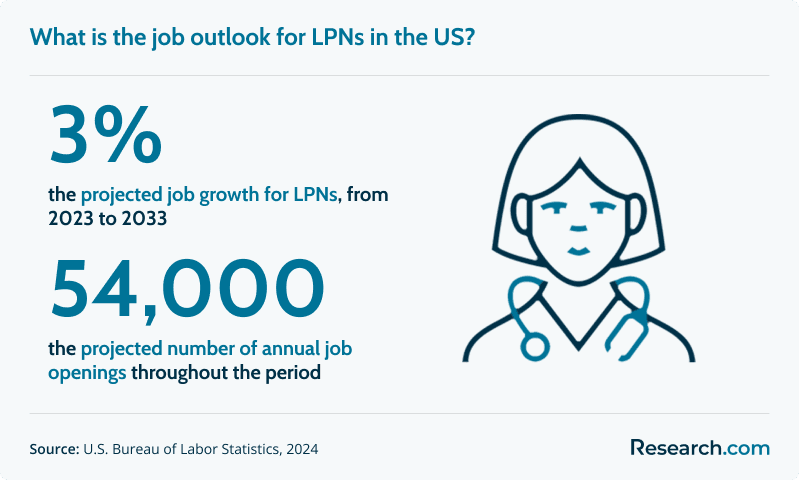
Looking at the job outlook, LPNs can expect a 3% projected job growth from 2023 to 2033, with around 54,000 annual job openings throughout the period. Job opportunities may be strongest for graduates who are licensed, flexible with shifts, open to long-term care or home health settings, and willing to continue developing clinical skills.
Can LPN Programs Prepare You for Mental Health Specializations?
LPN programs introduce communication, patient safety, documentation, and basic mental health concepts, but specialization usually develops after graduation through work experience and additional training. Students who want psychiatric nursing should look for programs with mental health coursework, simulation practice, and clinical exposure when available.
LPNs who later want advanced psychiatric roles can compare graduate pathways such as affordable PMHNP programs, while remembering that PMHNP preparation requires advanced nursing education beyond the LPN level.
LPN Career Advancement Pathways
The LPN credential can be a starting point rather than an endpoint. Many practical nurses remain in LPN roles and build expertise in a specific setting, while others continue toward RN licensure, bachelor’s-level nursing education, or graduate study.
- Move from LPN to RN: Accelerated LPN to RN programs can help practical nurses build on prior training and prepare for RN-level responsibilities.
- Specialize in a care setting: Geriatrics, pediatrics, home health, long-term care, and behavioral health can provide more focused work experience.
- Earn a BSN after RN licensure: BSN completion may support broader opportunities, especially for nurses aiming for leadership or graduate education.
- Add clinical certifications: Training in wound care, IV therapy, pharmacology, or related areas may improve role fit where permitted.
- Consider administrative roles: Experienced LPNs with strong organization skills may move into scheduling, care coordination, or team support positions.
How Can You Transition from LPN to RN Effectively?
The most effective LPN-to-RN transition starts with licensing rules. Confirm that the bridge program is approved in the state where you plan to become an RN, then compare prerequisites, clinical requirements, transfer credit, NCLEX-RN preparation, and schedule fit. Avoid choosing a bridge program solely because it advertises a short completion time.
After earning RN licensure, some nurses continue into BSN completion programs. Options such as the fastest RN to BSN program online may be relevant for licensed RNs who want a quicker bachelor’s pathway.
What Success Metrics Should You Check Before Enrolling?
Easy admission is not enough. A good LPN program should show evidence that students can complete the curriculum, pass the NCLEX-PN, and move into appropriate healthcare roles. Ask for data, not just promises.
- NCLEX-PN pass rates: Shows how well graduates are prepared for licensure testing.
- Program completion rates: Helps reveal whether students are supported through graduation.
- Job placement information: Gives insight into local employer connections, though methodology can vary.
- Clinical placement reliability: Indicates whether students can complete required hands-on training on time.
- Student support services: Tutoring, advising, exam preparation, and remediation can affect success.
Students considering advanced nursing later can also compare outcomes at higher degree levels, such as the best 12 month FNP program online, to understand how nursing programs communicate quality and graduate readiness.
Can LPN Experience Accelerate Advanced Nursing Education?
LPN experience can strengthen future nursing applications because it demonstrates patient-care exposure, clinical discipline, and familiarity with healthcare teams. However, it does not automatically shorten every degree pathway. Credit transfer depends on the receiving school, accreditation, course equivalency, grades, and state licensure rules.
A common route is LPN to RN, followed by BSN completion. Flexible options such as the easiest RN to BSN online programs may help licensed RNs continue their education while working.
Can Accelerated Online Nursing Programs Elevate an LPN Career?
Accelerated online nursing programs can help nurses continue their education, but the right pathway depends on current licensure. LPNs usually need an LPN-to-RN route before RN-to-BSN or graduate nursing options apply. Online coursework can improve flexibility, but clinical and practicum components still require in-person participation.
For broader comparison, students can review an ABSN online pathway, especially if they are weighing accelerated nursing options and want to understand how online nursing education handles intensive coursework and clinical requirements.
Is Transitioning from LPN to ABSN a Viable Option?
Transitioning from LPN to an accelerated BSN may be possible in some cases, but it depends heavily on admissions rules, prior college credits, prerequisite completion, and whether the ABSN program is designed for students who already hold a non-nursing bachelor’s degree. LPNs should ask whether their practical nursing coursework transfers or whether an LPN-to-RN bridge would be a more direct option.
If you are comparing accelerated bachelor’s-level nursing options, review the easiest ABSN nursing programs and confirm whether each program fits your academic background.
Common Mistakes to Avoid When Choosing an Easy LPN Program
- Choosing based only on easy admission: A program that is simple to enter may still have weak outcomes or limited support.
- Ignoring state approval: If the program is not approved for licensure preparation, you may not be eligible for the NCLEX-PN in your intended state.
- Assuming online means fully remote: LPN students still need labs and clinical placements.
- Looking only at tuition: Fees, supplies, transportation, exam costs, and lost work hours can change the real cost.
- Skipping NCLEX-PN data: Pass rates and remediation support are important indicators of preparation quality.
- Not asking about clinical sites: Poorly organized clinical placements can delay graduation.
- Assuming credits will transfer: Transfer policies vary widely, especially between vocational, certificate, diploma, and degree programs.
- Believing salary outcomes are guaranteed: The average salary of $60,790 in 2023 is useful context, but individual earnings vary.
What Graduates Say About Accessible LPN Programs
- : "Getting through admissions was less stressful than I expected. Once my prerequisites were finished, the school gave me a clear checklist, and the admissions staff answered questions quickly. That helped me focus on preparing for nursing school instead of feeling stuck in paperwork. — Maya"
- : "The application process was direct and organized. I knew what documents were needed, when to submit them, and how each step worked. I entered the program sooner than I thought because the school communicated well. — John"
- : "I chose a program with flexible entry requirements, and that made a real difference. The school still expected commitment, but it did not add unnecessary barriers before I could start working toward nursing. — Claire"
Key Insights
- The easiest LPN programs to get into are usually those with clear prerequisites, practical admissions standards, and accessible schedules, but they still require serious clinical and academic work.
- State board approval is essential. Do not enroll until you confirm the program can make you eligible for LPN or LVN licensure in the state where you plan to work.
- The average LPN program cost is around $21,000, but total cost should include fees, supplies, transportation, exam expenses, and potential lost work income.
- Online or hybrid LPN programs can add flexibility for coursework, but clinical training must still be completed in person.
- In 2023, there were around 630,250 LPNs in the US, and LPNs earned an average salary of $60,790 in 2023.
- LPNs can expect a 3% projected job growth from 2023 to 2033, with around 54,000 annual job openings throughout the period.
- The strongest LPN program choice is not simply the fastest or easiest; it is the one with licensure alignment, good clinical training, transparent costs, student support, and a realistic path to your career goals.
References
- Bureau of Labor Statistics. (2024, November 15). Nurse anesthetists, nurse midwives, and nurse practitioners. Retrieved November 15, 2024, from BLS.
- Bureau of Labor Statistics. (2024, November 15). Occupational employment and wages, May 2023 - 29-1171 Nurse practitioners. Retrieved November 15, 2024, from BLS occupational wage data.
- Projections Central. (2024, November 15). Long-term occupational projections (2022-2032). Retrieved November 15, 2024, from Projections Central.
Other Things You Should Know About the Easiest LPN Programs
LPN programs should be approved by the state board of nursing and accredited by the Accrediting Commission for Education in Nursing (ACEN) or a state-recognized nursing agency. In 2027, graduation from an approved program is required before you can apply for the NCLEX-PN.
Most of the easiest LPN programs in 2027 require the Test of Essential Academic Skills (TEAS) exam, focusing on reading, math, science, and English language usage. Additionally, some programs might require specific nursing aptitude tests, enhancing admission chances for well-prepared candidates.


