
2027 Most Affordable Online Licensed Practical Nurse (LPN) Programs

Co-Founder and Chief Data Scientist
Choosing an online LPN program is usually a practical decision: you want the fastest affordable route into nursing without enrolling in a four-year degree first. The challenge is that “online LPN” can be misleading. Practical nursing programs almost always combine online theory courses with in-person labs, simulations, and supervised clinical hours because state boards require hands-on training before graduates can sit for the NCLEX-PN.
This guide is for students comparing low-cost online or hybrid LPN programs, working adults who need flexible scheduling, medical assistants considering a nursing pathway, and future nurses who want to understand costs, licensure, career options, and advancement routes before applying. You will learn what online LPN programs include, how much they cost, which affordable programs are featured, how to evaluate accreditation and clinical requirements, and when an LPN pathway makes sense compared with RN, BSN, or bridge options.
Quick Answer: Are Affordable Online LPN Programs Worth Considering?
Affordable online LPN programs can be worth considering if they are approved by the relevant state nursing board, prepare graduates for the NCLEX-PN, include required in-person clinical training, and fit your budget and schedule. They are best for students who want an entry-level nursing credential in about 12 to 18 months, although some programs take longer or offer part-time pacing. Graduates may work in settings such as nursing and residential care facilities, hospitals, physicians’ offices, home healthcare, and government facilities.
As of 2022, around 655,000 licensed practical nurses or licensed vocational nurses were employed in the United States. LPNs earned a median annual salary of $59,730 as of 2023, though pay varies widely by state, employer, experience, and work setting. The Bureau of Labor Statistics projects 5% employment growth for LPNs from 2022 to 2032, equal to approximately 34,400 new jobs.
What Are the Main Benefits of an Online LPN Program?
- Flexible coursework: Many programs let students complete lecture-based content online while attending labs and clinical placements in person.
- Shorter path into nursing: LPN programs are generally faster than associate or bachelor’s nursing degrees and can prepare students for entry-level practical nursing roles.
- Multiple healthcare settings: Graduates may pursue work in long-term care, hospitals, clinics, physicians’ offices, home healthcare, schools, correctional facilities, and government agencies.
- Bridge potential: An LPN credential can become a stepping stone toward RN, BSN, MSN, FNP, PMHNP, or DNP study, depending on the student’s goals and licensure pathway.
- Lower-cost options exist: Community colleges and technical colleges may offer practical nursing programs at lower tuition than many private institutions.
What Can I Expect From an Online LPN Program?
An online LPN program teaches the academic and clinical foundations needed for practical nursing licensure. Students study anatomy and physiology, nursing fundamentals, pharmacology, patient assessment, medication administration, maternal-newborn nursing, pediatric care, mental health nursing, geriatric care, medical-surgical nursing, ethics, and legal responsibilities. The online portion usually covers theory, assignments, discussions, exams, and sometimes virtual simulations.
The hands-on portion cannot be fully online. Students should expect in-person skills labs, competency checks, simulations, and clinical rotations at approved healthcare sites. These experiences help students practice vital signs, infection control, wound care, documentation, medication administration, patient communication, and care planning under supervision.
Most programs are designed to prepare graduates for the National Council Licensure Examination for Practical Nurses, known as the NCLEX-PN. Some schools also offer bridge options for allied health workers or current healthcare employees; for example, medical assistants may compare a medical assistant to LPN bridge program online with traditional practical nursing programs.
Where Can LPN Graduates Work?
Online or hybrid LPN graduates who meet licensure requirements can work in many of the same settings as graduates of campus-based programs. In 2022, about 35% of LPNs in the U.S. worked in nursing and residential care facilities, making that the largest employment setting. Other common employers include hospitals, physicians’ offices, home healthcare agencies, outpatient clinics, correctional facilities, schools, rehabilitation centers, and government healthcare organizations.
How Much Can You Earn After an Online LPN Program?
LPN salaries are generally lower than salaries for advanced practice nurses, including professionals whose earnings are discussed in guides such as DNP salary. Still, LPN compensation can provide a viable entry point into healthcare. As of 2023, the median annual salary for LPNs in the U.S. was $59,730.
Location has a major effect on pay. In 2024, Washington State reported the highest average LPN salary at $76,824 per year. New York, Vermont, and California also offered competitive average compensation, with LPNs earning between $65,000 to $68,000 annually. In contrast, LPNs in Kentucky, Michigan, West Virginia, Arkansas, and Florida earned less than $50,000 per year on average. When comparing programs, students should consider local wages, cost of living, commute costs for clinicals, and whether they plan to relocate after licensure.
- 2027 Most Affordable Online LPN Programs
- How can LPNs advance to FNP programs?
- How long does it take to complete an online LPN program?
- How does an online LPN compare to an on-campus program?
- What is the average cost of an LPN program?
- What are the financial aid options for students enrolling in an LPN program?
- What are the prerequisites for enrolling in an LPN program?
- What courses are typically in an LPN program?
- Why is cultural competency important in nursing and how are LPN programs addressing it?
- What types of specializations are available in LPN programs?
- How do you choose the best online LPN program?
- What career paths are available for graduates of online LPN programs?
- What is the job market for graduates of online LPN programs?
- What key questions should prospective online LPN students ask before enrolling?
- What is the career outlook and growth for LPNs?
- What is the long-term financial impact of an online LPN program?
- Pathways for LPNs to advance to psychiatric nurse practitioner roles
2027 Most Affordable Online LPN Programs
How We Ranked These Schools
Affordability matters, but it should not be the only factor in choosing an LPN program. Research.com’s ranking process considers available program data and institutional information to help students compare options more clearly. Details about the evaluation process are available through the Research.com Methodology. Data sources used for this ranking include the IPEDS database, Peterson’s database and its Distance Learning Licensed Data Set, the College Scorecard database, and the National Center for Education Statistics.
Use the ranking as a starting point, not a final decision. Before applying, confirm current tuition, fees, clinical location requirements, state board approval, NCLEX-PN eligibility, and whether the program accepts students from your state.
| Rank | School | Program Format and Length | Published Cost Information | Credits and Accreditation |
| 1 | Holmes Community College | 100% online courses with in-person lab and clinical work; 5 consecutive semesters | $135 per credit | 45 credits; Mississippi Board of Nursing |
| 2 | Lake Area Technical College | Practical Nursing E-Degree with online theory and campus clinical requirements; 11 months full-time or 18 months part-time | $11,756 full-time program; $12,057 part-time program | 45.5 credits; Accreditation Commission for Education in Nursing (ACEN) |
| 3 | Pinellas Technical College | Hybrid practical nursing program with most theory online and evening or weekend clinical hours; 15 months | $7,767.25 including books, fees, and supplies | Required credits N/A; Florida State Board of Nursing |
| 4 | Southern Crescent Technical College | Practical nursing diploma with academic coursework, occupational courses, and supervised clinical experiences; 5 terms | $636.67 per semester | 57 credits; ACEN |
| 5 | Ashland Community and Technical College | Practical nursing program preparing students for supervised nursing care roles; 11 months | $189 per credit for resident students; $260 per credit for nonresident students | 45-53 credits; Southern Association of Colleges and Schools Commission on Colleges (SACSCOC) |
| 6 | Coastal Pines Technical College | Practical nursing certificate with theoretical instruction and clinical practice; program length N/A | $617.00 per semester | 49 credits; Georgia Board of Examiners of Licensed Practical Nurses |
| 7 | Florida Gateway College | Occupational certificate program for practical nursing roles; 12 | $7318.55 for the entire program | 45 credits; SACSCOC |
| 8 | Palm Beach State College | Practical Nursing Career Certificate Program; 12 months | $4,638 for the entire program for in-state students; $16,875 for out-of-state students | Required credits N/A; Florida Board of Nursing |
| 9 | Southside Virginia Community College | Certificate practical nursing program combining theory and clinical practice; 12 months | $156.50 per credit | 49 credits; The Virginia Board of Nursing does not require accreditations for PN programs. |
| 10 | East Arkansas Community College | Technical Certificate in Practical Nursing; 12 months | $3,849 for the entire program | 39 credits; Arkansas State Board of Nursing |
1. Holmes Community College
Holmes Community College in Goodman, MS offers a practical nursing pathway with online coursework and required face-to-face lab and clinical components. Students move from nursing fundamentals and lifespan care into direct clinical experience with different patient groups. The final semester emphasizes NCLEX-PN preparation and the transition from student to practical nurse.
- Program Length: 5 consecutive semesters
- Tracks/concentrations: N/A
- Cost per Credit: $135
- Required Credits to Graduate: 45
- Accreditation: Mississippi Board of Nursing
2. Lake Area Technical College
Lake Area Technical College in Watertown, SD offers a Practical Nursing E-Degree that blends online nursing theory with required campus-based labs and clinical learning. Students can choose full-time or part-time pacing. The curriculum prepares graduates to care for obstetrical, pediatric, medical, psychiatric, surgical, and geriatric patients. Graduates may sit for LPN licensure and can also continue into Lake Area Tech’s Registered Nursing program.
- Program Length: 11 months (full-time) or 18 months (part-time)
- Tracks/concentrations: N/A
- Cost: $11,756 (for the entire full-time program); $12,057 (for the entire part-time program)
- Required Credits to Graduate: 45.5
- Accreditation: Accreditation Commission for Education in Nursing (ACEN)
3. Pinellas Technical College
Pinellas Technical College offers a hybrid practical nursing program in which much of the theory coursework is completed online, while clinical training occurs during evenings and weekends at local healthcare facilities. The program prepares students for patient care across obstetric, pediatric, medical, psychiatric, surgical, and geriatric populations. Graduates may take the NCLEX-PN and may continue through the school’s bridge program toward RN preparation.
- Program Length: 15 months
- Tracks/concentrations: N/A
- Cost: $7,767.25 (for the entire program including books, fees, and supplies)
- Required Credits to Graduate: N/A
- Accreditation: Florida State Board of Nursing
4. Southern Crescent Technical College
Southern Crescent Technical College offers a practical nursing diploma designed for students preparing for NCLEX-PN licensure and entry-level practical nursing employment. The program combines classroom learning, occupational nursing courses, and clinical experiences supervised by an instructor.
- Program Length: 5 terms
- Tracks/concentrations: N/A
- Cost: $636.67 per semester
- Required Credits to Graduate: 57
- Accreditation: ACEN
5. Ashland Community and Technical College
Ashland Community and Technical College prepares students to deliver practical nursing care under the supervision of registered nurses or physicians. The curriculum emphasizes the nursing process, health maintenance, illness prevention, and care for patients experiencing health changes. Graduates may enter LPN practice or continue through an LPN to RN Bridge Program, an accelerated BSN program online, or a campus-based BSN route.
- Program Length: 11 months
- Tracks/concentrations: N/A
- Cost per Credit: $189 (resident students); $260 (nonresident students)
- Required Credits to Graduate: 45-53
- Accreditation: Southern Association of Colleges and Schools Commission on Colleges (SACSCOC)
6. Coastal Pines Technical College
Coastal Pines Technical College offers a practical nursing certificate that combines theory, clinical practice, and occupational nursing coursework. Students prepare for the NCLEX-PN and entry-level practical nursing roles. Admission requirements include items such as a satisfactory background check, drug screen, and academic criteria set by the program.
- Program Length: N/A
- Tracks/concentrations: N/A
- Cost: $617.00 (per semester)
- Required Credits to Graduate: 49
- Accreditation: Georgia Board of Examiners of Licensed Practical Nurses
7. Florida Gateway College
Florida Gateway College offers an occupational certificate in practical nursing for students preparing for work in settings such as doctors’ offices, home health, corrections, and long-term care. Students learn direct patient care, medication administration, and medical treatments. The program reports NCLEX-PN first-time pass rates consistently above state and national averages.
- Program Length: 12
- Tracks/concentrations: N/A
- Cost: $7318.55 (for the entire program)
- Required Credits to Graduate: 45
- Accreditation: SACSCOC
8. Palm Beach State College
Palm Beach State College’s Practical Nursing Career Certificate Program combines theory and clinical experience. Coursework includes medical-surgical nursing, pharmacology, medication administration, geriatric and long-term care nursing, obstetrical nursing, and pediatric nursing. The program is structured to prepare graduates for practical nursing responsibilities in varied healthcare environments.
- Program Length: 12 months
- Tracks/concentrations: N/A
- Cost: $4,638 (for the entire program for in-state students); $16,875 (for out-of-state students)
- Required Credits to Graduate: N/A
- Accreditation: Florida Board of Nursing
9. Southside Virginia Community College
Southside Virginia Community College offers a practical nursing certificate that prepares students to care for patients across the lifespan. The curriculum includes theory and clinical practice, with instruction in patient assessment, care plan implementation, and communication within healthcare teams. Graduates are prepared to take the NCLEX-PN.
- Program Length: 12 months
- Tracks/concentrations: N/A
- Cost per Credit: $156.50
- Required Credits to Graduate: 49
- Accreditation: The Virginia Board of Nursing does not require accreditations for PN programs.
10. East Arkansas Community College
East Arkansas Community College offers a Technical Certificate in Practical Nursing focused on care across the lifespan. Students study therapeutic communication, basic nursing skills, patient needs assessment, care planning, cultural competence, lifelong learning, delegation, and the Nurse Practice Act framework. The program includes both theoretical instruction and clinical practice and prepares graduates for the NCLEX-PN.
- Program Length: 12 months
- Tracks/concentrations: N/A
- Cost: $3,849 (for the entire program)
- Required Credits to Graduate: 39
- Accreditation: Arkansas State Board of Nursing
Key Findings for Students Comparing Affordable Online LPN Programs
- LPN employment is projected to grow 5% from 2022 to 2032, with approximately 34,400 new jobs expected.
- The median annual LPN salary was $59,730 as of 2023, but state averages vary significantly.
- Among the affordable programs listed, published total program costs include options from $3,849 to $12,057, depending on school and format.
- Most online or hybrid LPN programs still require in-person labs and clinical rotations.
- Many students complete LPN training in 12 to 18 months, although specific timelines depend on school structure and enrollment status.
How Can LPNs Advance to FNP Programs?
An LPN cannot usually move directly into a Family Nurse Practitioner role. The typical path is staged: become an RN, complete a BSN or qualifying bridge pathway, earn an MSN or advanced nursing degree, then complete FNP-focused coursework and clinical requirements. The route takes planning, but it can expand clinical responsibility, leadership options, and long-term earning potential.
| Step | Common Credential | Why It Matters |
| 1 | LPN/LVN license | Provides entry into practical nursing after NCLEX-PN licensure. |
| 2 | Associate Degree in Nursing (ADN) or LPN-to-RN bridge | Prepares LPNs to become registered nurses and take on a broader scope of practice. |
| 3 | Bachelor of Science in Nursing (BSN) | Often strengthens preparation for graduate nursing study and leadership roles. |
| 4 | Master of Science in Nursing (MSN) or RN-to-MSN bridge | Provides advanced nursing education and may lead toward nurse practitioner preparation. |
| 5 | FNP specialization | Focuses on primary care, patient management, and advanced clinical decision-making. |
Students considering this progression should compare accreditation, clinical placement support, schedule flexibility, and eligibility requirements. Federal aid, institutional scholarships, employer tuition assistance, and bridge-program scholarships may reduce costs. For a closer look at advanced pathway options, review Research.com’s guide to RN to FNP programs.
How Long Does It Take to Complete an Online LPN Program?
An online or hybrid LPN program commonly takes 12 to 18 months, depending on the school, required credits, clinical scheduling, and whether the student attends full time or part time. Some programs are shorter, some run across several terms, and others allow slower pacing for working students.
Program length is affected by more than the online coursework calendar. Clinical placement availability, lab schedules, prerequisite completion, entrance testing, remediation policies, and state board requirements can all change the actual time to graduation. Students who need evening or weekend clinical rotations should confirm availability before enrolling.
How Does an Online LPN Compare to an On-Campus Program?
The growth of online nursing programs has expanded access for students who cannot attend traditional daytime classes. For LPN students, online delivery usually means lecture-based coursework is completed remotely, while labs and clinical training remain in person. This model can work well for students with jobs, family responsibilities, or long commutes, but it requires consistent time management and comfort with online learning platforms.
Campus-based LPN programs may be better for students who want face-to-face instruction, scheduled classroom meetings, immediate peer interaction, and regular access to labs or campus support services. The best format depends on how you learn, how far you live from required clinical sites, and how much structure you need each week.
| Factor | Online or Hybrid LPN Program | On-Campus LPN Program |
| Course delivery | Theory courses are often online, with assignments and exams managed through a learning platform. | Lectures and discussions usually occur in classrooms on a set schedule. |
| Clinical training | Still required in person through labs, simulations, and approved healthcare placements. | Completed in person through campus labs and clinical partners. |
| Best for | Students who need flexibility and can manage independent study. | Students who prefer structured schedules and regular face-to-face support. |
| Main risk | Underestimating travel, lab, technology, and clinical scheduling requirements. | Less flexibility for students with work or caregiving responsibilities. |
What Is the Average Cost of an LPN Program?
LPN program costs vary by state, school type, residency status, program length, and whether published prices include only tuition or also books, fees, uniforms, equipment, and supplies. Many LPN programs cost $10,000 to $25,000 for tuition and fees. Lower-cost options, especially community college programs compared with university options, may cost as low as $3,000 to $4,000 per year.
Students should calculate the full cost of attendance, not just tuition. Common extra expenses include application fees, entrance exams, background checks, drug screening, immunizations, CPR certification, uniforms, shoes, stethoscope, lab supplies, transportation to clinical sites, parking, licensing fees, and NCLEX-PN registration.
| Cost Item | Why Students Often Miss It | Question to Ask |
| Clinical travel | Online coursework may create the impression that commuting is minimal. | Where are clinical sites, and how often must I attend in person? |
| Books and supplies | Some schools separate these from tuition estimates. | Does the published cost include books, uniforms, lab kits, and equipment? |
| Licensure expenses | NCLEX-PN and state licensing costs occur near graduation. | What fees should I budget for after completing the program? |
| Repeat or remediation costs | Failed courses or delayed clinicals can extend the program. | What happens financially if I need to repeat a course or clinical component? |
What Are the Financial Aid Options for Students Enrolling in an LPN Program?
LPN students may be able to reduce out-of-pocket costs through federal, state, institutional, private, employer-sponsored, and military-related funding. Aid eligibility depends on the school, program length, accreditation or approval status, enrollment intensity, financial need, and student status.
- Federal aid: Students may qualify for Federal Pell Grants, which can provide up to $7,395 in federal student aid as of 2024. Federal Supplemental Educational Opportunity Grants may offer between $1,000 and $4,000 per year. Military service education grants may also be available to qualifying service members and family members.
- State aid: Many states provide grants or scholarships for residents. Examples include Maryland’s Hal and Jo Cohen Graduate Nursing Scholarship and the Kansas Nursing Service Scholarship for students who plan to work as LPNs or RNs after graduation.
- Institutional aid: Colleges may offer need-based or merit-based scholarships, often requiring FAFSA completion.
- Private scholarships: Nonprofits, foundations, professional groups, and employers may fund nursing students based on need, academic performance, community service, or healthcare career goals.
- Work-study and payment plans: Some schools offer work-study opportunities or installment plans to help students manage tuition across the term.
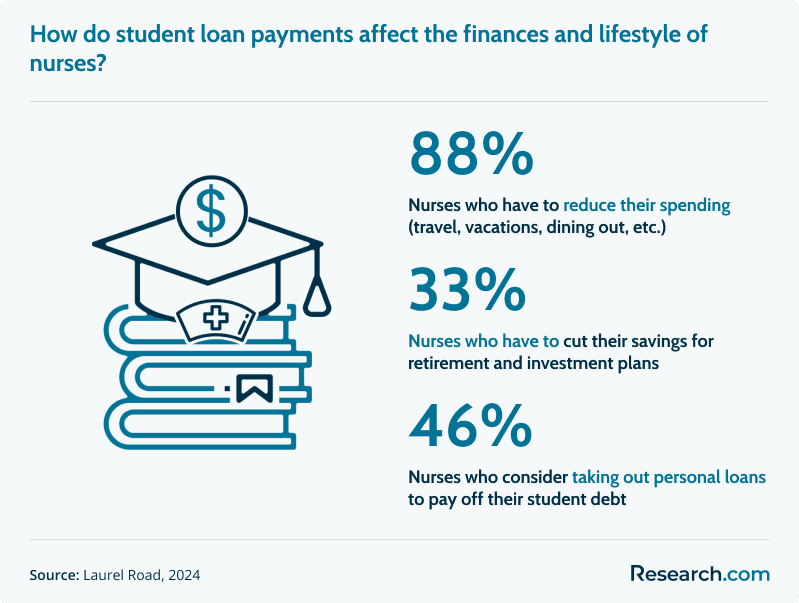
- Student loans: Federal and private loans can cover education costs, but borrowing should be approached carefully. A Laurel Road survey reported that 69% of nurses constantly feel anxious about their student loan balances.
What Are the Prerequisites for Enrolling in an LPN Program?
Most LPN programs require applicants to have a high school diploma or GED. Additional requirements may include prerequisite coursework in biology, anatomy, or related sciences; a minimum GPA; an entrance exam such as the TEAS; proof of immunizations; CPR certification; health screening; background check; drug screening; letters of recommendation; or a personal statement.
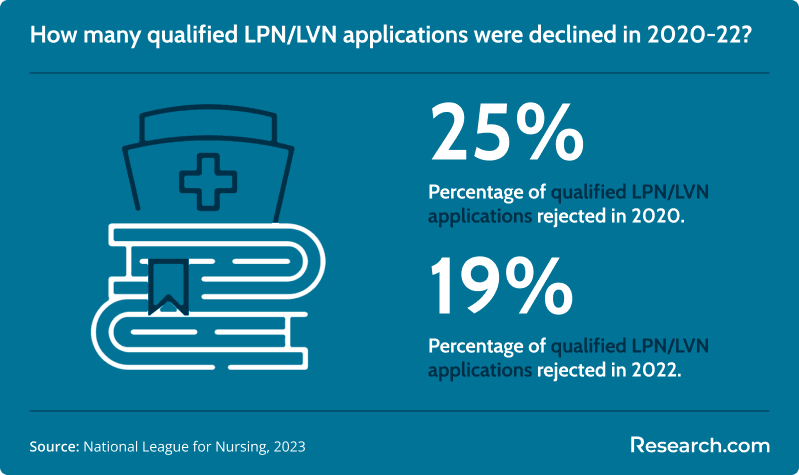
Admission can be competitive even when a student meets the minimum requirements. As of 2022, 2,958 qualified applicants for LPN/LVN programs were turned down, although this was lower than the number of rejected qualified applications in 2020. Applicants should apply early, complete all documentation carefully, and ask admissions offices how candidates are scored.
| Requirement | Why It Matters | How to Prepare |
| High school diploma or GED | Confirms baseline academic eligibility. | Request official transcripts before the deadline. |
| Entrance exam | Helps programs assess readiness for nursing coursework. | Ask which test is required and whether retakes are allowed. |
| Background check and drug screen | Clinical partners often require clearance before patient contact. | Review state board rules and disclose required information honestly. |
| Immunizations and CPR | Protects patients, students, and clinical site staff. | Schedule health appointments early to avoid enrollment delays. |
What Courses Are Typically in an LPN Program?
LPN programs are designed to teach basic nursing care across different patient populations. Course names vary by school, but curricula must align with state nursing board expectations. These programs may also appeal to career changers comparing online nursing programs for non nurses.
Common Foundational Courses
- Introduction to Nursing: Covers the nursing profession, LPN responsibilities, patient-centered care, and the nursing process.
- Medical Terminology: Teaches healthcare vocabulary, abbreviations, and documentation language.
- Anatomy and Physiology: Explains body systems, structure, and function.
- Lifespan Development: Reviews physical, cognitive, and psychosocial development from infancy through older adulthood.
- Nutrition: Connects diet, health, disease prevention, and patient care planning.
Common Nursing Skills and Clinical Courses
- Fundamentals of Nursing: Introduces vital signs, hygiene, mobility, infection control, documentation, and basic bedside care.
- Pharmacology: Teaches medication classifications, dosage concepts, safety practices, and administration responsibilities.
- Maternal-Neonatal Nursing: Focuses on care for pregnant patients, postpartum patients, and newborns.
- Pediatric Nursing: Covers nursing care for infants, children, and adolescents.
- Adult Health or Medical-Surgical Nursing: Prepares students to care for adults with common acute and chronic conditions.
- Mental Health Nursing: Addresses care for patients with behavioral health and psychiatric needs.
- Geriatric Nursing: Emphasizes aging, long-term care, chronic disease, safety, and functional support.
- Clinical Rotations: Provide supervised patient-care experience in approved healthcare settings.
Why Is Cultural Competency Important in Nursing and How Are LPN Programs Addressing It?
Cultural competency matters because LPNs often provide direct care to patients with different languages, beliefs, family structures, health practices, and communication preferences. Effective nursing care requires more than clinical skill; it also requires respect, clear communication, and awareness of how culture can influence symptoms, treatment decisions, trust, diet, end-of-life care, and medication adherence.
Many LPN programs now include cultural awareness, bias recognition, patient communication, and equitable care principles in coursework and simulations. Students should look for programs that teach these skills early and reinforce them during clinical practice. If you are comparing admission-friendly options, it may be useful to review programs discussed in Research.com’s guide to the easiest LPN program to get into while still checking curriculum quality, clinical preparation, and state approval.
What Types of Specializations Are Available in LPN Programs?
Most practical nursing programs do not offer formal specializations in the same way many RN or graduate nursing programs do. Instead, LPNs usually complete a general practical nursing curriculum first, earn licensure, gain experience, and then pursue specialty certifications. Some of these credentials may appeal to nurses comparing easy certifications to get online that pay well, although eligibility, scope of practice, and employer recognition vary.
- IV Therapy Certification: In some states, IV therapy instruction is part of the LPN curriculum; in others, LPNs complete separate didactic training. Competencies may include fluid and electrolyte balance, IV pharmacology, IV fluid types, IV pump operation, infusion flow-rate calculations, venipuncture, and identification of IV therapy complications.
- Long-Term Care Certification: NAPNES endorses the Long-Term Care Certification, which replaced the former Gerontology Certification. It recognizes preparation in long-term and geriatric care, anatomy and physiology review, therapeutic and modified diets, and pharmacology.
- Other Certifications: LPNs may also pursue credentials or additional training in nephrology, urology, wound care, correctional nursing, hospice care, breastfeeding support, research, and cardiac catheterization.
Specialty credentials can make an LPN more competitive for certain roles, but they do not automatically guarantee higher pay. Always check state scope-of-practice rules and employer requirements before paying for a certification.
Are Online LPN Programs Accredited?
Some online or hybrid LPN programs are accredited, while others may be state-board approved but not nationally accredited. Accreditation and state approval are not interchangeable, so students need to check both. Accreditation can signal that a program meets recognized educational standards, may affect federal financial aid eligibility, and may help with transfer or bridge-program options. State board approval is essential because it determines whether graduates are eligible to pursue licensure in that state.
Before enrolling, contact the state board of nursing where you intend to practice and confirm that the program qualifies graduates for the NCLEX-PN and licensure. Students comparing accelerated options such as a 6 month LPN program online should be especially careful, because speed is only helpful if the program is legitimate, approved, and clinically sufficient.
How Do You Choose the Best Online LPN Program?
The best online LPN program is the one that is approved for licensure, fits your schedule, provides reliable clinical placement support, has transparent costs, and prepares students for the NCLEX-PN. Do not choose based only on tuition or the word “online.”
- Verify state approval: Confirm that the program is recognized by the nursing board in the state where you plan to seek licensure.
- Check accreditation status: Accreditation can matter for quality assurance, financial aid, and future transfer or bridge options. Note that some states, including Virginia, do not require practical nursing programs to be accredited.
- Review NCLEX-PN pass rates: Strong, consistent pass rates may indicate better licensure preparation.
- Understand clinical placement: Ask whether the school arranges sites or whether students must secure their own placements.
- Compare total cost: Include tuition, fees, supplies, travel, testing, licensure, and repeated-course policies.
- Assess schedule fit: Confirm whether labs, simulations, and clinicals occur on weekdays, evenings, weekends, or fixed blocks.
- Evaluate student support: Look for tutoring, advising, technical support, test-prep help, and mental health resources.
- Ask about bridge pathways: If you plan to become an RN or advanced practice nurse later, ask how credits transfer and whether the school has articulation agreements.
| Common Mistake | Why It Can Hurt You | Better Approach |
| Choosing the cheapest program without checking approval | You may not qualify for NCLEX-PN or licensure. | Confirm state board approval before comparing price. |
| Assuming “online” means no campus visits | Clinical and lab attendance may require travel. | Ask for a complete in-person schedule before enrolling. |
| Looking only at tuition | Supplies, fees, travel, and testing can change affordability. | Request a full cost sheet from admissions or financial aid. |
| Ignoring state licensure rules | A program may not meet requirements where you want to work. | Contact your intended state board of nursing directly. |
| Relying only on rankings | A highly ranked program may still be a poor fit for your location or schedule. | Use rankings as a shortlist, then verify fit and outcomes. |
What Career Paths Are Available for Graduates of Online LPN Programs?
After completing an approved program and earning licensure, LPNs can pursue direct patient-care roles in several healthcare environments. Job duties vary by state scope of practice and employer policy, but practical nurses often monitor patients, administer medications, assist with activities of daily living, document care, collect basic health information, change dressings, support care plans, and communicate with RNs, physicians, patients, and families.
- Nursing homes and residential care facilities: LPNs provide daily care, medication support, monitoring, and assistance for residents, including many older adults and patients with chronic needs.
- Hospitals: LPNs may work under RN supervision and assist with vital signs, specimen collection, dressing changes, mobility, and bedside care.
- Home healthcare: LPNs care for patients in their homes, often supporting medication routines, wound care, chronic condition monitoring, and patient education.
- Physicians’ offices: LPNs may take histories, prepare patients for exams, administer injections, document visits, and assist with minor procedures.
- Other settings: Opportunities may also exist in clinics, schools, correctional facilities, rehabilitation centers, hospice, and government agencies.
If practical nursing does not fit your goals, compare other education paths before committing. Students who already hold a degree or are considering graduate education may also review affordable options outside LPN training, including the cheapest online master's in engineering management, cheap online MBA in IT programs, affordable online RN to MSN programs, and affordable online construction management degrees.
What Is the Job Market for Graduates of Online LPN Programs?
The job market for LPNs is supported by demand for direct patient care in long-term care, rehabilitation, home healthcare, outpatient care, and other clinical settings. The Bureau of Labor Statistics projects 5% growth for LPN employment from 2022 to 2032, with approximately 34,400 new jobs. Demand is tied in part to the aging population and the need for care in settings outside traditional acute-care hospitals.
Graduates should understand that local hiring conditions differ. Rural areas, long-term care facilities, home healthcare agencies, and states with higher older-adult populations may have different staffing needs than urban hospitals or specialty clinics. New LPNs can improve job prospects by maintaining a clean licensure record, gaining strong clinical references, preparing for NCLEX-PN early, and considering certifications after gaining experience.
What Key Questions Should Prospective Online LPN Students Ask Before Enrolling?
Before paying an application fee or signing an enrollment agreement, prospective students should ask direct questions about licensure, cost, scheduling, and clinical expectations. A reputable program should be able to answer clearly and provide written documentation.
- Is the program approved by the state board of nursing for NCLEX-PN eligibility?
- Is the program accredited, and if not, how could that affect financial aid, transfer, or bridge options?
- What are the most recent NCLEX-PN pass rates?
- Are clinical placements arranged by the school, or must students find their own sites?
- How far might I need to travel for labs, simulations, and clinical rotations?
- What technology, software, internet speed, or equipment do online students need?
- What tutoring, advising, technical support, and mental health resources are available?
- What happens if I fail a course, miss clinical hours, or need to pause enrollment?
- Does the program offer a bridge into RN, BSN, MSN, or other advanced pathways?
Students with long-term advanced nursing goals should also ask whether credits or experience may support future bridge pathways, including options such as post masters FNP programs online. Career services can also matter; strong programs may provide resume help, interview coaching, job fairs, alumni contacts, and employer connections. While an LPN program alone should not be selected only because of future salary hopes, students exploring high-earning career routes may find Research.com’s guide on what degree will get you 100k a year useful for broader planning.
What Is the Career Outlook and Growth for LPNs?
The LPN outlook remains steady, with the Bureau of Labor Statistics projecting 5% employment growth from 2022 to 2032 and approximately 34,400 new jobs. LPNs are especially important in long-term care, rehabilitation, home health, and outpatient services, where patients often need ongoing monitoring and hands-on support.
Career growth can come through experience, certifications, specialized settings, or additional education. Many LPNs pursue IV therapy, long-term care, geriatric care, wound care, or other focused training. Others use practical nursing as the first step toward RN licensure through LPN-to-RN bridge programs, then potentially continue toward BSN, MSN, nurse practitioner, or DNP options.
Do Online LPN Programs Offer Effective Career Placement Support?
Some online and hybrid LPN programs provide career services comparable to campus-based programs, but support varies by school. Useful services include resume reviews, mock interviews, employer introductions, alumni mentoring, job boards, clinical partner hiring events, and NCLEX-PN preparation. Students should ask whether career services are available to online learners and whether the school tracks graduate employment outcomes.
What Is the Long-Term Financial Impact of an Online LPN Program?
The long-term financial value of an online LPN program depends on total cost, licensure success, local wages, debt level, and whether the credential supports future advancement. Students should compare tuition and fees against likely starting wages in their area, but they should not assume a salary is guaranteed. Location, employer type, shift differentials, experience, certifications, and overtime policies can all influence earnings.
To evaluate value, calculate the full program cost, estimate loan payments if borrowing, research local LPN job postings, and ask the school for NCLEX-PN pass rates and placement support. For a deeper cost breakdown, see Research.com’s guide, How much does LPN school cost?.
Can LPNs Transition to Aesthetic Nursing Roles?
LPNs interested in cosmetic or aesthetic settings may be able to pursue related roles, depending on state scope-of-practice rules and employer requirements. Aesthetic nursing work may involve skincare support, patient education, pre- and post-procedure care, and assistance with minimally invasive cosmetic services. However, permitted duties vary by state, and some procedures may require RN licensure or provider supervision.
Before investing in aesthetic training, LPNs should confirm their state rules, required certifications, liability considerations, and local employer expectations. Students comparing this niche can review salary context in Research.com’s guide on how much does an aesthetic nurse make.
What Challenges Do Students Face in Online LPN Programs?
Online LPN students often face four major challenges: managing time without daily classroom structure, balancing work or caregiving with clinical schedules, learning nursing skills partly through digital tools, and traveling for required labs or clinical rotations. These challenges are manageable, but they require planning before the first term starts.
- Time pressure: Nursing coursework is content-heavy, and online flexibility does not mean lighter expectations.
- Clinical logistics: Students may need to arrange transportation, childcare, work schedule changes, or documentation for clinical sites.
- Technology demands: Online exams, simulations, learning platforms, and virtual meetings require reliable internet and basic technical confidence.
- Academic intensity: Students must master anatomy, pharmacology, patient care skills, and test-taking strategies for NCLEX-PN readiness.
Students who plan to continue far beyond practical nursing may also compare advanced pathways later, including fast DNP programs, but the first priority should be choosing an LPN program that leads to licensure.
How Can Online LPN Programs Propel Advanced Nursing Education?
An LPN program can be the first step in a longer nursing education plan. After licensure and work experience, graduates may pursue LPN-to-RN, RN-to-BSN, RN-to-MSN, and graduate nursing pathways. The strongest foundation comes from choosing a program with sound clinical preparation, strong academic support, and clear transfer or bridge options.
Students who know they eventually want leadership, advanced clinical practice, or doctoral-level roles should ask about articulation agreements and credit transfer before enrolling. Later in their education, they may compare options such as the cheapest online DNP programs, but admission to advanced programs will depend on meeting each school’s requirements.
Are Online LPN Programs Effective in Delivering Real-World Clinical Training?
Online LPN programs can deliver effective preparation when they combine well-designed online theory, simulation, skills validation, and supervised in-person clinical experience. The online classroom can teach concepts, case analysis, documentation, and decision-making, but students still need hands-on practice with patients and equipment.
Prospective students should ask how clinical competencies are verified, who supervises clinical rotations, how many sites are available, and how virtual simulations are integrated with direct patient care. Students interested in shorter education routes across fields may also compare the best accelerated degree programs, but in nursing, speed must never replace required clinical preparation.
Pathways for LPNs to Advance to Psychiatric Nurse Practitioner Roles
LPNs interested in psychiatric nursing can eventually pursue Psychiatric Mental Health Nurse Practitioner roles, but the path requires additional nursing education and licensure progression. A typical route includes becoming an RN, completing BSN or bridge coursework when required, pursuing graduate nursing education, and completing PMHNP-focused training and clinical requirements.
Because advanced nursing education can be expensive, affordability should be part of the plan from the beginning. LPNs who eventually want to specialize in mental health may compare bridge options and later review the cheapest online PMHNP programs to understand cost-conscious routes into psychiatric advanced practice.
References
- Hume, C. (2024, April 4). Financial survey: Healthcare professionals & student loan debt in 2024. Laurel Road. Retrieved July 10, 2024.
- NAPNES. (2020, August 13). IV therapy certification. National Association of Practical Nurse Education and Service. Retrieved July 2, 2024.
- NAPNES. (2020, August 13). Long-term care certification. National Association of Practical Nurse Education and Service. Retrieved July 2, 2024.
- NAPNES. (2020, August 13). Pharmacology certification. National Association of Practical Nurse Education and Service. Retrieved July 2, 2024.
- NLN. (2023). NLN annual survey of schools of nursing highlights 2021-2022. National League for Nursing. Retrieved July 2, 2024.
- U.S. BLS. (2024, April 17). Licensed practical and licensed vocational nurses: Work environment. U.S. Bureau of Labor Statistics. Retrieved July 2, 2024.
- U.S. BLS. (2024, April 17). Occupational outlook handbook: Licensed practical and licensed vocational nurses. U.S. Bureau of Labor Statistics. Retrieved July 2, 2024.
- Zippia. (2024, April 5). Licensed practical nurse demographics and statistics [2024]: Number of licensed practical nurses in the U.S. Zippia.com. Retrieved July 2, 2024.
- ZipRecruiter. (2024). What is the average LPN nurse salary by state. ZipRecruiter.com. Retrieved July 2, 2024.
Key Insights
- Online LPN programs are usually hybrid in practice: theory may be online, but labs and clinical training are in person.
- The most important eligibility check is state board approval for NCLEX-PN and licensure, followed by accreditation, clinical placement support, and cost transparency.
- Affordable programs can reduce training costs, but students should calculate the full price, including supplies, travel, testing, licensing, and possible repeat-course fees.
- LPN training is a strong fit for students who want a faster entry into nursing, but students seeking broader scope and higher advancement potential should plan for RN or BSN bridge options.
- Salary varies sharply by location. The national median was $59,730 as of 2023, while Washington State reported an average of $76,824 in 2024 and several states reported averages below $50,000.
- Do not choose a program based only on speed, ranking, or tuition. The best choice is the program that is legitimate, affordable, clinically feasible, and aligned with your long-term nursing goals.
Other Things You Should Know About Affordable Online LPN Programs
Yes. Accredited online LPN programs include in-person clinical rotations at approved healthcare sites, usually totaling about 400 to 700 hours. Students must complete these supervised placements to qualify for graduation and to meet state board licensing requirements for the NCLEX-PN exam.
In 2027, students enrolling in affordable online LPN programs can access various financial resources, including federal and state grants, scholarships from nursing organizations, and work-study opportunities. Financial aid offices at colleges often provide guidance on navigating these options to minimize educational expenses.
Students must have a reliable internet connection, an updated computer capable of streaming video lectures, and specific software like Microsoft Office. Some programs may require access to online platforms such as Blackboard or Canvas for coursework and communication.





