
2027 Most Affordable CNA to RN Online Bridge Programs

Co-Founder and Chief Data Scientist
Moving from CNA to RN is a major career decision: it can increase your clinical responsibility, qualify you for registered nurse licensure, and open access to hospital, community health, telehealth, travel nursing, leadership, and advanced practice pathways. Online CNA to RN programs are designed for working nursing assistants who already understand bedside care but need the nursing coursework, supervised clinical hours, and NCLEX-RN preparation required to become licensed registered nurses.
This guide explains how online CNA to RN programs work, how long they take, what they cost, what admissions requirements to expect, how online study compares with campus-based nursing school, and how to choose a program that will actually support licensure. It also covers salary, job outlook, financial aid, accreditation, common mistakes, and the career paths available after earning an RN license.
Quick Answer: Are Online CNA to RN Programs Worth It?
For many experienced CNAs, an online CNA to RN bridge can be worth it if the program is accredited, approved for RN licensure in your state, provides reliable clinical placement support, and fits your work schedule. The biggest advantages are flexibility, credit for prior healthcare experience, and access to RN-level pay and job opportunities. The main risks are choosing a program that lacks proper accreditation, underestimating clinical time requirements, or enrolling before confirming that the program meets your state board of nursing rules.
Key benefits of online CNA to RN programs
- RN employment is projected to grow 6% from 2023 to 2033, with roughly 197,200 openings each year.
- The BLS reported a 2024 median RN salary of $93,600 and an average salary of $98,430; experienced RNs can reach up to $135,320.
- Online and hybrid formats may let CNAs continue working while completing asynchronous nursing courses, in-person labs, and local clinical rotations.
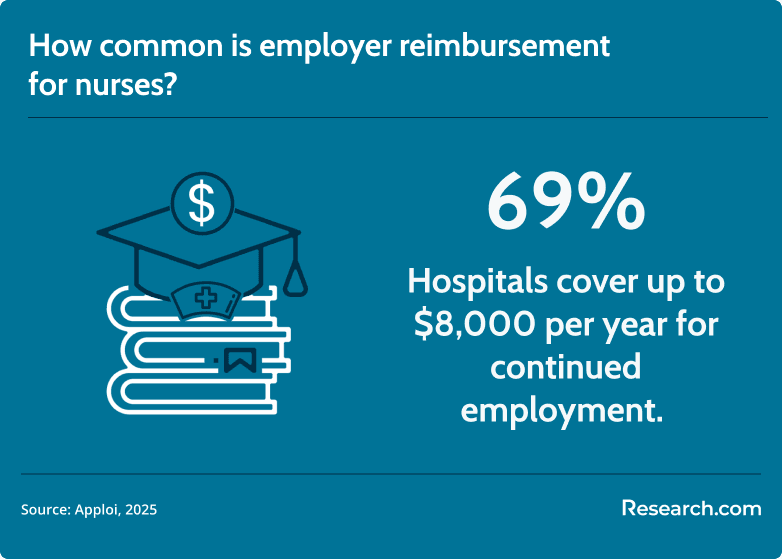
- Some employers offer tuition reimbursement of up to $8,000 per year, which can reduce out-of-pocket costs for working CNAs.
What can I expect from online CNA to RN programs?
Online CNA to RN programs are not fully remote in the way a non-clinical online degree might be. Nursing is a hands-on profession, so these programs usually combine online theory courses with in-person skills labs, simulation practice, supervised clinical rotations, and NCLEX-RN preparation. The online portion gives you schedule flexibility; the clinical portion ensures you can safely perform RN-level responsibilities.
| Program component | What it usually includes | Why it matters for CNAs |
| Online nursing coursework | Recorded lectures, readings, discussion boards, exams, care-planning assignments, and case studies | Lets working CNAs complete theory courses around shifts while building RN-level clinical judgment |
| Skills labs and simulation | Medication administration, IV therapy, assessment practice, emergency scenarios, and skills check-offs | Moves students beyond CNA task performance into broader nursing decision-making |
| Local clinical rotations | Supervised experience in hospitals, clinics, long-term care, community health, or specialty settings | Provides required hands-on practice before RN licensure eligibility |
| Credit for experience | Advanced standing, portfolio review, challenge exams, or articulated credits for documented patient-care work | May reduce duplicated coursework for CNAs with verified bedside experience |
| Student support | Virtual tutoring, technical help, success coaching, advising, and licensure tracking | Helps students manage online learning, clinical requirements, and NCLEX preparation |
| NCLEX-RN preparation | Integrated practice questions, comprehensive exams, test plans, and capstone review | Prepares graduates for the licensure exam required to become registered nurses |
The best programs are structured but flexible. You may be able to complete lectures at night or between shifts, but you should expect fixed deadlines, required clinical attendance, proctored exams, and in-person competency checks. Your CNA background can help you adjust to patient care expectations, but RN training requires deeper knowledge of pharmacology, pathophysiology, assessment, delegation, and care planning.
Where can I work after completing an online CNA to RN program?
Graduates of properly accredited and state-approved online CNA to RN programs pursue the same RN license as graduates of campus-based nursing programs. Once licensed, they can apply for RN roles in a broad range of healthcare settings.
- Hospitals: Acute-care hospitals accounted for 58% of RN roles in 2023. Medical-surgical units, emergency departments, critical care, perioperative areas, and step-down units often value applicants who already understand bedside routines.
- Ambulatory care, outpatient clinics, and home health: Physicians’ offices, outpatient centers, and home health represented another 19% of RN jobs. Home health alone employed about 174,000 nurses and continues to be tied to post-acute care needs.
- Government and public health: Federal and state agencies, including veterans’ healthcare systems and public health departments, employed 6% of RNs in roles that may combine direct care, prevention, education, and population health.
- Long-term and residential care: Nursing homes, skilled-nursing facilities, and assisted-living settings employed 5% of nurses. Former CNAs may be especially familiar with geriatric care workflows and long-term resident needs.
- Telehealth and travel nursing: The Nurse Licensure Compact is recognized in 43 jurisdictions, which can expand options for eligible RNs seeking remote triage, temporary staffing, or travel assignments.
- Nursing education, coordination, and leadership: About 3% of RNs teach in vocational or collegiate programs, while many others move into care coordination, quality improvement, case management, or unit leadership.
Your first RN role will depend on your license, clinical experience, location, employer requirements, and whether you complete an ADN, AASN, or BSN pathway. Some hospitals prefer or require a BSN for certain roles, while many community, long-term care, and outpatient settings hire associate-prepared RNs.
How much can I make after completing an online CNA to RN program?
The move from CNA to RN can create a substantial wage increase, but income is never guaranteed. Pay depends on state, employer, shift differential, specialty, union status, experience, degree level, and local demand. BLS wage data show why many CNAs consider the bridge financially meaningful.
| Pay measure | Reported figure | What it means for CNA to RN students |
| CNA median wage | $39,530 | Baseline comparison for current nursing assistants |
| RN median wage | $93,600 | Typical midpoint for registered nurse earnings |
| Approximate difference | Roughly $54,000 | Shows the potential annual pay gap between CNA and RN roles |
| Entry-level RN range | Near $66,030 at the 10th percentile | Represents lower-end RN wages, often for newer nurses or lower-paying regions |
| Experienced RN range | Up to $135,320 at the 90th percentile | Reflects higher pay that may require experience, specialty skills, location advantages, or shift premiums |
| Mean annual RN salary | $98,430 in May 2024 | Average national wage across RN roles and settings |
| Travel nursing packages | $2,289 per week nationwide in April 2025 | May appeal to mobile RNs, but contracts vary widely |
| Sign-on incentives | Up to $35,000 in shortage regions | Can increase first-year compensation, usually with service commitments and conditions |
RNs may also gain access to stronger benefits than CNA roles, including tuition support for Bachelor or Master’s study, retirement matches of up to 6%, and sign-on bonuses that can add $10,000–$20,000 to first-year compensation in shortage regions. Before counting on any bonus or reimbursement, ask the employer whether it requires a minimum employment period, specific grades, full-time status, or repayment if you leave early.
- Online CNA to RN Programs for 2027
- How long do online CNA to RN programs take?
- Online CNA to RN vs. on-campus RN programs
- Average cost of online CNA to RN programs
- Financial aid options for CNA to RN students
- Common prerequisites for online CNA to RN programs
- Typical courses in CNA to RN bridge programs
- Specializations available in online CNA to RN programs
- Advanced nursing education after RN licensure
- Accreditation and quality checks
- Outcomes and ROI considerations
- Challenges to expect in online CNA to RN programs
- How to choose the best online CNA to RN program
- Career paths after CNA to RN programs
- Job market for online CNA to RN graduates
Online CNA to RN Programs for 2027
How do we rank schools?
A strong CNA to RN program should do more than offer online classes. It should prepare students for RN licensure, provide transparent costs, offer dependable clinical placement processes, and fit the needs of working healthcare professionals. This list was developed using our methodology, with attention to accreditation, affordability, bridge options, program length, credit policies, and practical pathways into nursing employment.
The school information used in this guide draws from trusted education data sources, including the Integrated Postsecondary Education Data System (IPEDS), the Peterson’s Distance Learning database, the U.S. Department of Education’s College Scorecard, and the National Center for Education Statistics (NCES).
1. Utah Tech University
Utah Tech University offers an accelerated Associate of Applied Science in Nursing (AASN) bridge for students seeking a faster route to RN licensure. The program blends online lecture delivery with scheduled campus lab work, simulation experiences, and clinical check-offs across two consecutive semesters. Pharmacology, transition, and nursing-concept courses are delivered through Canvas, while hands-on requirements are arranged in a concentrated format. The university lists an all-inclusive resident tuition of $7,149 for the bridge year, and students may begin RN-to-BSN coursework during the final term. Cohorts of 24–36 support more direct faculty attention, and ACEN accreditation provides a recognized nursing quality benchmark.
- Program Length: Two semesters (fall–spring or spring–fall)
- Tracks/concentrations: LPN-to-RN and Paramedic-to-RN bridges, with an optional fully online RN-to-BSN continuation
- Cost per Credit: Online undergraduate rate of $255;. The bridge package averages about $110 per resident credit, based on the $7,149 total.
- Required Credits to Graduate: 64–68 credits for the AASN
- Accreditation: Accreditation Commission for Education in Nursing (ACEN); Northwest Commission on Colleges and Universities (institutional)
2. Ohio University
Ohio University provides an advanced-placement AASN route for qualified students who hold or are working toward an LPN credential. Theory content is largely available online, while required labs and clinical rotations are completed through the Chillicothe, Southern, or Zanesville campuses. The pathway allows up to nine transitional credits for prior bedside experience, then moves students through a three-semester sequence designed to prepare them for the NCLEX-RN in about 12 months. In-state tuition is listed at $278 per credit, and the program maintains ACEN accreditation and Ohio Board of Nursing approval.
- Program Length: Three semesters (approximately 12 months)
- Tracks/concentrations: LPN-to-RN advanced placement available at Chillicothe, Southern, and Zanesville campuses
- Cost per Credit: $278 in-state (standard online nursing rate)
- Required Credits to Graduate: 66.5 credits for the AASN degree
- Accreditation: ACEN; approved by the Ohio Board of Nursing
3. Arkansas State University
Arkansas State University’s online LPN/CNA-to-AASN bridge uses a streamlined articulation model for experienced healthcare workers. Students complete most theory requirements asynchronously, attend periodic campus skills intensives, and complete local clinical rotations coordinated by A-State faculty. The pathway grants six articulated credits for prior practical experience and follows a three-semester full-time plan that prepares students for the NCLEX-RN in about 12 months. Tuition is listed at $339 per credit, and the program holds ACEN accreditation.
- Program Length: Three semesters, approximately 12 months
- Tracks/concentrations: Online LPN/CNA-to-AASN fast-track (articulation credits for prior practice)
- Cost per Credit: $339 in-state online undergraduate tuition
- Required Credits to Graduate: 66 total credits for the AASN
- Accreditation: ACEN; Higher Learning Commission (HLC)
4. Indiana State University
Indiana State University offers an online LPN-to-BSN bridge that can support students moving from practical nursing toward RN licensure and a bachelor’s degree. Courses are delivered asynchronously in eight-week blocks, and clinical rotations are arranged in students’ home communities through faculty-approved preceptors. Up to 10 articulated credits may recognize prior bedside experience. Full-time students can complete the LPN-to-BSN track in about three years, while part-time students may extend the timeline to fit work schedules. Resident tuition is listed at $361 per credit.
- Program Length: Three years full time and up to four years part time
- Tracks/concentrations: Online LPN-to-BSN bridge accepting CNA patient-care hours for articulation credit
- Cost per Credit: $361 in state; $469 standard online rate out of state
- Required Credits to Graduate: 120 credits for the BSN
- Accreditation: ACEN, HLC
5. Excelsior University
Excelsior University offers a self-paced AASN pathway for working CNAs, LPNs, paramedics, and military medics seeking RN eligibility. Students complete asynchronous eight-week courses and may begin in any term. Clinical preceptorships are coordinated in the student’s home community, and the program does not require campus trips. Up to 10 articulated credits may be granted for prior hands-on experience. Although students may take up to four and a half years to complete the program, motivated learners who enter with most general education completed may finish in 18–24 months.
- Program Length: Self-paced with completion in four and a half years. Many full-time students finish in about two years.
- Tracks/concentrations: Health-care professional articulated pathway accepting CNA, LPN, paramedic, or military medic experience.
- Cost per Credit: $550 tuition, plus $40 academic services and $28 technology fee or, effectively, $618.
- Required Credits to Graduate: 69 credits (nursing and general education)
- Accreditation: ACEN; Middle States Commission on Higher Education (MSCHE); approved by the New York State Board of Regents.
How long do online CNA to RN programs take?
The timeline depends on the degree level, the number of credits you already have, whether you attend full time or part time, and how quickly you can complete required labs and clinical rotations. Like some accelerated NP programs, bridge programs are built to reduce duplication for students with healthcare experience, but they still must meet nursing education and licensure standards.
| Pathway | Typical completion time | Best fit |
| Accelerated associate program | 12–15 months full time | CNAs with prerequisites completed who can manage an intense schedule |
| Standard associate degree route | 18–24 months | Students who need a structured but manageable RN pathway |
| Part-time option | 28–36 months | CNAs working full time or managing family responsibilities |
| BSN bridge program | 33–48 months | Students who want a bachelor’s degree for broader hospital, leadership, or graduate-school options |
Many programs include 600–750 clinical hours, which can affect your weekly schedule even if lectures are online. State board requirements, prerequisite completion, clinical site availability, and failed or repeated courses can also extend the timeline. If speed is your priority, ask each school whether it offers year-round enrollment, credit for CNA experience, competency-based options, or multiple start dates.
How do online CNA to RN programs compare to on-campus programs?
Online and campus-based CNA to RN programs can lead to the same RN licensure outcome when they are accredited and approved by the relevant state board. The main difference is delivery: online programs place more theory instruction in a virtual format, while campus programs provide more face-to-face structure. Both require hands-on clinical training.
| Factor | Online CNA to RN programs | On-campus RN programs |
| Course delivery | Recorded lectures, online modules, digital assignments, and virtual discussions | Scheduled classroom instruction, campus lectures, and in-person meetings |
| Schedule flexibility | Usually better for CNAs who need to keep working | Often better for students who want a fixed routine and direct structure |
| Clinical requirements | Completed in person, often through local or approved sites | Completed in person, often through the school’s clinical partners |
| Faculty access | Email, video calls, learning platform messaging, virtual office hours | Face-to-face office hours, campus labs, and direct classroom interaction |
| Learning style | Requires self-discipline, planning, and comfort with online platforms | Provides more immediate peer and instructor presence |
| Best for | Working CNAs, caregivers, rural students, and independent learners | Students who learn best through in-person routines and campus-based support |
Online bridge programs, top ADN programs, and campus pathways should all be judged by the same core standards: accreditation, state approval, NCLEX outcomes, clinical support, total cost, and graduate employment outcomes. Do not assume an online program is easier. Nursing content is demanding regardless of format.
What is the average cost of online CNA to RN programs?
Online CNA to RN program costs vary widely by institution type, residency status, degree level, fees, transfer credits, and whether you already completed prerequisite courses. Tuition is only one part of the budget; clinical supplies, testing, background checks, technology fees, and licensure costs can add up.
| Cost category | Typical amount stated | Planning note |
| Public college associate tracks | $6,000–$20,000 in total tuition | Often lower for in-state students and community-college-based clinical networks |
| Private institutions | $40,000 or more | May include higher per-credit tuition and bundled fees |
| Per-credit example | About $550 per credit plus a $40 academic services fee | A 60-credit ADN can approach $35,400 before books and supplies |
| Annual cost surveys | $3,000–$10,000 per year | Depends on pace, credits per term, and school pricing |
| Technology fees | $150–$450 | May be charged per term or annually |
| Clinical supplies | $400–$1,200 | Can include uniforms, equipment, lab kits, and compliance tools |
| Background checks | $50–$100 | Usually required before clinical placement |
| NCLEX-RN exam | $200 | Separate from tuition at many schools |
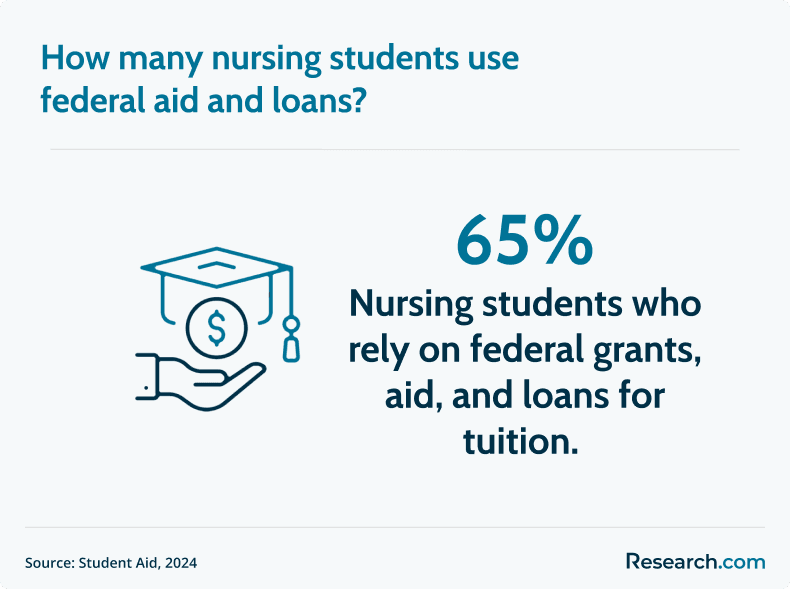
| Federal aid usage | Roughly 65% of nursing students use federal grants or subsidized loans | Eligibility depends on program participation and individual aid status |
| Employer reimbursement | $5,000–$8,000 per year at many hospitals | Often tied to continued employment commitments |
To estimate your real cost, request a full program cost sheet from each school. Compare tuition, nursing fees, clinical fees, exam fees, books, required software, travel to labs, and lost income if you need to reduce work hours. Also ask whether transfer credits or CNA experience can reduce the number of credits you pay for.
What financial aid options are available for online CNA to RN students?
Financial aid can make a CNA to RN bridge more realistic, especially for students who cannot pause work or pay tuition out of pocket. If you are also comparing post-licensure options such as affordable RN to BSN programs, it helps to understand which aid sources apply at each stage of nursing education.
| Aid option | Amount stated | What to check before relying on it |
| Federal Pell Grant | Up to $7,395 annually for eligible students in the 2024-25 award year | Requires FAFSA completion and eligibility based on financial need |
| Federal Supplemental Educational Opportunity Grant (FSEOG) | $100–$4,000 per year | Limited campus-based funds; often first come, first served |
| Direct Subsidized and Unsubsidized Loans | Lifetime undergraduate limits of $31,000 for dependent students or $57,500 for independent students | Borrow only what you need and understand repayment terms |
| HRSA Nurse Corps Scholarship | Full tuition, fees, and a monthly living stipend of $1,626 | Requires a service commitment in high-need facilities after graduation |
| Workforce Innovation and Opportunity Act (WIOA) vouchers | Up to $10,000 toward training expenses | Eligibility is handled through local American Job Centers |
| Employer tuition reimbursement | Approximately 69% of hospitals reimburse between $5,000–$8,000 per year | May require specific grades, active employment, and post-graduation service |
Apply early. Some aid sources have limited funding, documentation requirements, or service obligations. Before enrolling, ask your school’s financial aid office whether the program is eligible for federal aid and whether online students receive the same aid access as campus students.
If long-term academic progression is part of your plan, compare future graduate options carefully as well. Students who eventually want research or faculty roles may later explore affordable BSN to PhD programs online, but that decision should come after evaluating RN licensure, BSN completion, experience requirements, and career goals.
What are the prerequisites for online CNA to RN programs?
Admission requirements vary, but most CNA to RN bridge programs use prerequisites to confirm that applicants are ready for college-level nursing science, clinical expectations, and professional accountability. These requirements are different from graduate-level pathways such as an accelerated NP program, so always read the undergraduate nursing admission page carefully.
- Active CNA credential: Many programs require an unrestricted CNA certificate in the state where you will complete clinical rotations.
- Science prerequisites: Common requirements include Anatomy & Physiology I–II, Microbiology, Basic Chemistry, and college-level math or statistics with recent grades of “C” or higher.
- Entrance exam: Schools may require the Test of Essential Academic Skills (TEAS) or a comparable nursing-readiness assessment.
- Clinical compliance clearance: Background checks, drug screening, immunization records, a physical exam, and current CPR certification are commonly required before clinical placement.
- Patient-care experience: Some programs require or prefer 6–12 months of CNA or other direct-care employment.
- GPA and general education: Many programs expect a cumulative GPA of 2.5–3.0 and coursework such as English composition, psychology, and sociology.
Start by comparing prerequisite checklists before you apply. Missing one science course or entrance exam score can delay admission by a full term. If you are still at the beginning of a healthcare career, an affordable HHA certification online may be a lower-level starting point before moving into CNA and RN pathways.
What courses are typically included in online CNA to RN programs?
CNA to RN bridge programs cover the same core nursing competencies expected in associate-degree nursing education. While CNA experience helps with patient interaction and basic care, RN coursework goes much deeper into assessment, medications, clinical reasoning, patient education, delegation, and care coordination. These courses may also support later specialty goals, including pathways discussed in resources such as best way to become a travel LPN.
| Course area | What students learn |
| Foundations of Nursing and Professional Communication | Nursing process, safety, documentation, ethics, communication, and team-based care |
| Anatomy and Physiology with Pathophysiology | Normal body systems and disease processes that affect nursing interventions |
| Pharmacology for Nursing Practice | Medication classes, dosage calculation, IV therapy, administration safety, and monitoring |
| Health Assessment | Head-to-toe assessment, health histories, abnormal findings, and clinical interpretation |
| Medical-Surgical Nursing I–III | Evidence-based care for adults with acute and chronic conditions |
| Maternal–Newborn and Pediatric Nursing | Pregnancy, labor, postpartum care, newborn adaptation, child development, and family teaching |
| Mental Health Nursing | Therapeutic communication, psychiatric conditions, crisis response, and behavioral health care |
| Community and Population Health | Public health, epidemiology, health promotion, prevention, and culturally responsive care |
| Leadership, Quality Improvement, and NCLEX Preparation | Delegation, prioritization, safety systems, evidence-based practice, and licensure exam review |
Programs generally pair these courses with 600–750 supervised clinical hours. If you are a medical assistant rather than a CNA, compare bridge options separately because admissions rules may differ. A useful starting point is this guide to the cheapest medical assistant to RN programs online.
What types of specializations are available in online CNA to RN programs?
Most CNA to RN programs prepare generalist nurses because RN licensure requires broad competency across patient populations. However, some schools allow students to focus electives, capstone projects, or clinical placements in areas that align with future specialty goals. A specialization usually does not replace core nursing requirements; it adds direction to your experience.
| Specialty focus | What it may involve | Good fit for students interested in |
| Critical care and emergency nursing | High-acuity clinical exposure, rapid assessment, ventilators, emergency protocols, and titratable drips | ICU, emergency department, step-down, or rapid-response roles |
| Pediatrics | Growth and development, child assessment, family teaching, and weight-based medication dosing | Children’s hospitals, pediatric clinics, or school health |
| Oncology | Cancer care concepts, infusion-center exposure, symptom management, and patient education | Oncology units, infusion clinics, and cancer centers |
| Psychiatric and mental health | Therapeutic communication, crisis intervention, behavioral health rotations, and psychiatric care planning | Mental health units, crisis services, and community behavioral health |
| Gerontology and long-term care | Aging physiology, chronic disease management, dementia care, and skilled-nursing placements | Geriatric nursing, long-term care leadership, and charge-nurse roles |
| Maternal-newborn and women’s health | Labor, postpartum, fetal monitoring, newborn stabilization, and patient education | Labor and delivery, postpartum units, and women’s health clinics |
| Community and public health | Home health, clinics, prevention, population assessment, and health promotion | Public health, home care, rural health, and outreach nursing |
| Leadership, informatics, or quality improvement | Data use, workflow improvement, delegation, safety measures, and care coordination | Charge-nurse, quality, informatics, or management pathways |
The table below shows the top U.S. states with the highest employment of Registered Nurses.
What advanced education options can further enhance your nursing career?
RN licensure can become a platform for further education. Many students first complete an ADN or AASN bridge, pass the NCLEX-RN, and then pursue a BSN to qualify for broader hospital roles, leadership tracks, or future graduate study. If you want a flexible post-licensure path, compare options such as RN to BSN online no prerequisites programs, while confirming admissions rules, accreditation, transfer credit policies, and whether the curriculum fits your employer’s expectations.
After gaining RN experience, some nurses pursue MSN, nurse practitioner, educator, informatics, administration, or doctoral pathways. Do not rush into graduate school simply because it is available. First ask whether the next credential is required for the role you want, whether you need bedside experience before applying, and whether the expected salary increase justifies the cost and time commitment.
Are online CNA to RN programs accredited and how is quality ensured?
Accreditation and state approval are the most important quality checks for any CNA to RN program. A program may advertise low tuition, fast completion, or online convenience, but those features are not useful if the program does not meet licensure requirements where you plan to become an RN.
- Programmatic accreditation: Look for nursing accreditation from ACEN or CCNE when applicable. These agencies review nursing curriculum, faculty qualifications, student outcomes, and program quality processes.
- State board approval: Confirm that the program is approved or accepted by the state board of nursing where you intend to seek RN licensure.
- Institutional accreditation: The college or university should hold recognized institutional accreditation, which can affect aid eligibility, transfer credits, and graduate-school options.
- NCLEX-RN outcomes: Review first-time pass rates and compare them with national benchmarks and state expectations.
- Clinical placement quality: Ask whether the school arranges placements, requires students to find their own sites, or provides written agreements with facilities.
- Student outcomes: Graduation rates, retention, student debt, and employment data can help you evaluate whether students complete the program and move into nursing roles.
For students balancing budget and credibility, reviewing affordable nursing programs can be useful, but affordability should never come before licensure eligibility and recognized quality assurance.
What are the measurable outcomes and ROI of online CNA to RN programs?
The return on investment for a CNA to RN program depends on total cost, lost work hours, financial aid, employer reimbursement, transfer credit, time to completion, NCLEX success, and the RN wage in your region. The potential pay increase can be strong, but ROI is highest when students choose an affordable accredited program, complete on time, pass the NCLEX-RN, and secure RN employment soon after licensure.
| ROI factor | Why it matters | Question to ask |
| Total program cost | Tuition and fees determine how long it may take to recover your investment | What is the full cost from enrollment through graduation, including clinical and exam fees? |
| Transfer credit and experience credit | Accepted credits can reduce both cost and time | How many credits can I transfer, and will my CNA experience count? |
| NCLEX-RN pass rate | Licensure is required before you can work as an RN | What was the program’s first-time NCLEX-RN pass rate? |
| Clinical placement support | Delayed placements can delay graduation and income gains | Does the school guarantee or coordinate clinical placements? |
| Employer support | Reimbursement can reduce debt | Will my current employer pay tuition, and what service commitment is required? |
| Local RN wages | Salary gains vary by state, employer, and specialty | What do entry-level RNs earn in my area and preferred setting? |
Students thinking beyond RN licensure may later consider advanced practice options such as accelerated direct entry nurse practitioner programs, but those routes have different admissions requirements and should be evaluated separately from the immediate CNA to RN decision.
What challenges should I anticipate with online CNA to RN programs?
Online CNA to RN programs can be flexible, but they are still demanding. Many students underestimate the time required for reading, care plans, clinical paperwork, exams, simulations, and travel to clinical sites. The online format shifts more responsibility onto the learner, especially for scheduling, communication, and time management.
- Clinical scheduling can be difficult: Even if lectures are asynchronous, clinical rotations may require weekdays, weekends, early mornings, or specific facility schedules.
- Online learning requires discipline: Students who fall behind in modules, readings, or assignments may struggle because nursing courses build quickly.
- Preceptor and site availability may vary: HRSA has noted ongoing shortages of preceptor sites, especially in rural areas.
- Work-school balance can become stressful: Continuing full-time CNA work while completing nursing school may be possible, but it can be exhausting during clinical-heavy terms.
- Technology issues can disrupt progress: Reliable internet, webcam access, testing software, and learning platform skills are essential.
- Licensure rules differ by state: A program that works for one student may not meet another state’s requirements.
If your long-term goal includes advanced practice, reviewing resources such as the best direct entry NP programs for non nurses can help you understand future options, but your immediate priority should be completing an approved RN pathway and passing the NCLEX-RN.
How to choose the best online CNA to RN program
The best online CNA to RN program is not automatically the fastest, cheapest, or most advertised option. It is the one that matches your state licensure requirements, schedule, budget, learning style, and career goals while providing credible nursing education and dependable clinical support.
- Verify nursing accreditation and state approval. Confirm whether the program is accredited by the Accreditation Commission for Education in Nursing (ACEN) or CCNE, and check with your state board of nursing before applying.
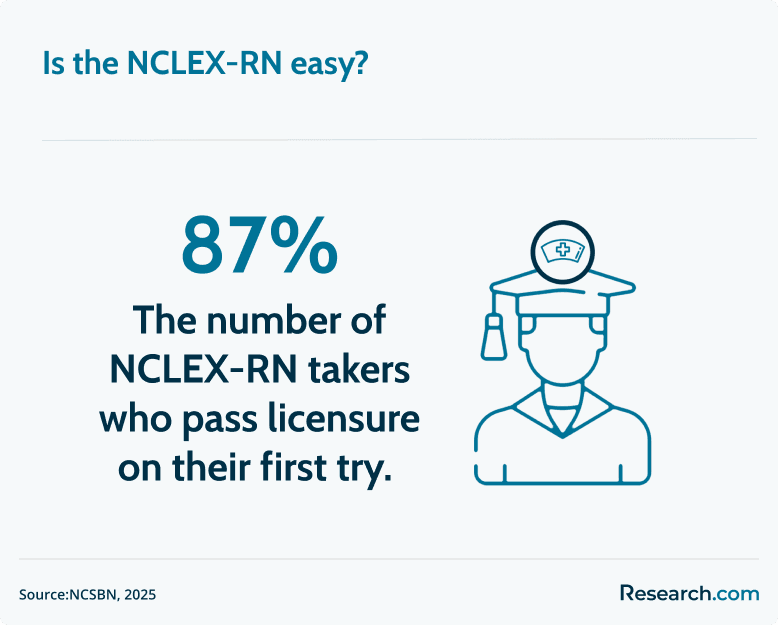
- Review NCLEX-RN outcomes. NCSBN data show the 2023 first-time pass rate for RN candidates in the U.S. was about 87%. Favor programs that meet or exceed relevant benchmarks.
- Ask exactly how clinical placements work. Determine whether the school places students, helps students find sites, or leaves placement largely to the student.
- Compare the full cost, not just tuition. Include fees, books, supplies, travel, exam costs, lost work hours, and required technology.
- Check credit-for-experience policies. Ask whether CNA work hours, prior healthcare coursework, or certifications can reduce course requirements.
- Look at graduation and retention data. Use the Department of Education’s College Scorecard to compare completion rates and debt levels.
- Evaluate support services. Strong programs offer tutoring, advising, tech support, NCLEX preparation, and help tracking licensure steps.
- Confirm schedule compatibility. Ask when labs and clinicals occur, how many hours per week are expected, and whether part-time pacing is available.
Common mistakes to avoid
| Mistake | Why it can hurt you | Better approach |
| Choosing a program before checking state approval | You may graduate from a program that does not qualify you for licensure where you live | Contact your state board of nursing before enrolling |
| Comparing only tuition | Fees, supplies, travel, and testing can change the true cost | Request a complete cost-of-attendance breakdown |
| Assuming online means fully remote | Nursing programs require labs and clinical hours | Ask where, when, and how clinicals are completed |
| Ignoring NCLEX-RN pass rates | Poor pass rates may indicate weak preparation | Compare program outcomes with the 2023 first-time pass rate of about 87% |
| Relying only on rankings | A highly ranked program may not fit your state, budget, or schedule | Use rankings as a starting point, then verify fit and licensure details |
| Overlooking employer reimbursement rules | You may owe repayment if you leave before completing a service period | Read the reimbursement agreement before accepting funds |
What career paths are available after online CNA to RN programs?
An RN license expands your scope from assisting with basic care to assessing patients, administering medications, coordinating care plans, educating patients, supervising support staff, and responding to changing clinical conditions. Career options depend on your degree, license, experience, location, and employer preferences.
- Hospital staff nurse: In 2025 BLS data, 58% of RNs worked in state, local, or private hospitals. Common areas include medical-surgical nursing, intensive care, emergency care, perioperative nursing, and step-down units. Specialty roles may also influence pay; for example, this guide explains Critical care nurse salary and career pathways.
- Ambulatory and community health nurse: About 19% of RNs work in outpatient clinics, physicians’ offices, and home-health agencies. These roles may appeal to nurses who prefer preventive care, patient education, or more predictable schedules.
- Government or long-term care nurse: Federal agencies and veterans’ facilities employ 6% of RNs, while nursing and residential care facilities employ 5%.
- Travel nurse: Travel roles can offer higher short-term earnings and location flexibility. Short-term contracts averaged $2,147 per week in May 2025.
- Telehealth and care coordination nurse: Telehealth, chronic-disease coaching, remote monitoring, and insurance-based care coordination can be options for nurses with strong communication and assessment skills.
- Advanced practice pathway: RNs who continue their education may pursue nurse practitioner roles. NP employment is projected to grow 40%, and the median salary is $132,050. Nurses interested in adult-gerontology primary care can compare options such as the cheapest online AGPCNP graduate certificate programs.
The graph below shows the 2024 median salaries of Registered Nurses in different industries.
What is the job market for graduates of online CNA to RN programs?
The RN labor market remains broad because registered nurses are employed across hospitals, clinics, home health, long-term care, government, education, and remote care settings. Online CNA to RN graduates compete in the same RN market as campus graduates once they are licensed.
- Workforce size and openings: In 2023, there were about 3,300,100 employed RNs nationwide. Employment is projected to grow 6% from 2023 to 2033, with roughly 197,200 annual openings due to growth and replacement needs.
- Scale of the profession: Nursing is the nation’s largest healthcare occupation, with nearly 4.7 million RNs in practice. The median RN age is 46 years, and 89% of licensed RNs are actively employed in nursing roles.
- High-employment states: California employs about 274,650 RNs, Texas 207,810, New York 180,730, Florida 174,710, and Pennsylvania 139,480.
- Rural and underserved demand: Rural counties and health professional shortage areas continue to create demand for travel nurses, telehealth nurses, and relocation-ready RNs.
- Current trends: Telehealth, multistate licensure, population aging, post-acute care needs, and employer interest in flexible staffing continue to influence where RNs are hired. At the same time, clinical placement availability and preceptor shortages can affect nursing education capacity.
Job prospects are strongest for graduates who pass the NCLEX-RN, can work needed shifts, are open to high-demand settings, and continue building skills after licensure. A CNA background can be an advantage because it demonstrates direct patient-care experience, but RN employers will still evaluate clinical readiness, communication, professionalism, and licensure status.
What graduates say about online CNA to RN programs
- "My CNA experience counted toward the program, which helped me move faster. I still had to work hard, but the credit policy and instructor support helped me finish and move into an RN role in under 2 years." - Jared
- "The bridge from CNA to RN was challenging, especially while working full time. The online format gave me enough flexibility to keep my job, and now I use both my CNA experience and RN training when mentoring new aides." – Tasha
- "I chose an online program because I could not afford to stop working. After licensure, my pay increased by nearly $40 more per shift, and I felt like I had moved from a job into a long-term nursing career." – Tamika
Key Insights
- Online CNA to RN programs can be a practical route to RN licensure, but they are usually hybrid in reality because labs and clinical rotations must be completed in person.
- Program length varies by pathway: accelerated associate routes may take 12 months, while BSN bridge programs can take up to 48 months.
- Costs vary widely, from about $6,000 at some public colleges to $40,000 or more at private institutions, before considering aid, fees, supplies, and lost work time.
- Financial aid can include Pell Grants, FSEOG, federal loans, WIOA vouchers, HRSA Nurse Corps Scholarship support, and employer tuition reimbursement.
- Accreditation and state board approval should be checked before cost, speed, or convenience. A program that does not support licensure is not a good investment.
- NCLEX-RN outcomes matter. The 2023 first-time pass rate for RN candidates in the U.S. was about 87%, so compare each program’s performance with that benchmark.
- RN pay can be significantly higher than CNA pay, with a 2024 RN median salary of $93,600 and CNA median wage of $39,530, but actual earnings depend on location, role, shift, and experience.
- The strongest candidates choose programs with transparent pricing, clinical placement support, credit-for-experience options, strong NCLEX preparation, and clear licensure alignment.
References:
- Bureau of Labor Statistics. (2025, April 18). Registered nurses. https://www.bls.gov/ooh/healthcare/registered-nurses.htm
- Federal Student Aid. (2025). FSEOG (Grants). https://studentaid.gov/understand-aid/types/grants/fseog
- Gooch, K. (2025, May 6). Travel nurse pay, by state. Becker’s Hospital Review | Healthcare News & Analysis. https://www.beckershospitalreview.com/compensation-issues/travel-nurse-pay-by-state-14/
- National Advisory Council on Nurse Education and Practice. (2024). Mitigating nursing workforce challenges by optimizing learning environments. Retrieved May 28, 2025, from https://www.hrsa.gov/sites/default/files/hrsa/advisory-committees/nursing/reports/nacnep-19th-report.pdf
- NCSBN. (16 January 2025). The Nurse Licensure Compact (NLC) celebrates milestone anniversary in 2025 | NCSBN. https://www.ncsbn.org/news/the-nlc-celebrates-milestone-anniversary-in-2025
- Nurse Corps Scholarship Program | Bureau of Health Workforce. (2024, November 1). https://bhw.hrsa.gov/programs/nurse-corps/scholarship
- Nursing Workforce fact sheet. (2025). https://www.aacnnursing.org/news-data/fact-sheets/nursing-workforce-fact-sheet
- Sax, K. E., BSN., RN. (2025, January 6). CNA to RN Programs - online & campus. https://www.registerednursing.org/cna-to-rn/
- Apploi. (2025). Tuition reimbursement for nurses: What employers should know - ApploI. https://apploi.com/blog/nursing-shortage/employer-tuition-reimbursement-for-nurses/
- UWorld Nursing. (2025, April 7). Nursing Outlook & Career Trends 2023 - UWorld Nursing. https://nursing.uworld.com/resources/career-outlook/
Other Things You Should Know About Online CNA to RN Programs
Yes. CNA to RN online bridge programs require supervised clinical hours, even when coursework is online. Many ADN bridge tracks include about 400 to 700 clinical hours in hospitals, long-term care, or simulation labs before graduation and NCLEX-RN eligibility.
Financial aid for 2027 CNA to RN online bridge programs includes federal grants, scholarships, and employer tuition assistance. Many online programs also offer payment plans. Check specific eligibility criteria and application deadlines with the program's financial aid office for the most accurate information.


