
2027 Most Affordable Home Health Aide Certification Online

Co-Founder and Chief Data Scientist
Choosing an online home health aide certification is usually a practical question: can you train quickly, meet your state’s requirements, and qualify for paid care work without spending more than necessary? For many students, career changers, family caregivers, and entry-level healthcare workers, the answer can be yes—but only if the program is legitimate, state-aligned, and includes the hands-on competency training employers expect.
Home health aides help older adults, people with disabilities, and individuals with chronic conditions remain safe at home. The work is personal, physically active, and relationship-based. It can also be a first step toward nursing assistant, medication aide, LPN/LVN, RN, care coordination, or healthcare administration roles. This guide explains how online HHA certification works, what to check before enrolling, how much programs cost, which schools offer online options, and how to evaluate whether this path fits your goals.
Quick answer: Is an online home health aide certification worth it?
An online home health aide certification can be worth it if the program meets your state’s training rules, includes required clinical or skills evaluation components, and is accepted by employers or state registries where you plan to work. It is one of the shorter and lower-cost ways to enter healthcare, but it is not fully online in every state because supervised hands-on skills are often required before certification or employment.
What are the main benefits of earning a Home Health Aide Certification Online?
- The labor market is strong. According to the U.S. Bureau of Labor Statistics (BLS), employment for home health and personal care aides is projected to grow 21% from 2023 to 2033, with about 718,900 openings each year.
- The wage floor is modest but stable for an entry-level healthcare role. The median annual wage for home health and personal care aides is $34,900 as of May 2024 (BLS, 2025).
- The credential can support future healthcare mobility. Certified aides may later move into Certified Nursing Assistant (CNA), medication aide, or Licensed Practical Nurse (LPN) roles, often while gaining patient-care experience and exploring employer tuition assistance.
What can I expect from a Home Health Aide Certification Online?
Online HHA programs usually teach the classroom portion through digital lessons, videos, readings, quizzes, and instructor support. However, federal and state rules still matter. Federal regulations require at least 75 training hours for home health aides, including at least 16 classroom hours completed before 16 supervised clinical hours. Programs that serve Medicare-certified providers must align training with required competency areas, and many states add their own rules.
A typical online format lets students complete theory at home, then attend an in-person skills lab, competency check, or supervised agency rotation. If you study 10–12 hours per week, the online portion may take 4–6 weeks, followed by another 2–4 weeks for clinical scheduling, documentation, and competency testing.
| Program component | What it usually includes | Why it matters |
| Online coursework | Lessons in communication, infection control, personal care, nutrition, vital signs, patient rights, and home safety | Builds the knowledge base required before supervised direct care |
| Skills demonstration | Video demonstrations, simulations, checklists, and practice scenarios | Helps prepare you for hands-on evaluation, but does not replace clinical practice where required |
| Clinical or practicum hours | Supervised work in a lab, client-care setting, or partner home health agency | Verifies that you can perform core aide duties safely |
| Readiness checks | Background screening, immunizations, TB testing, CPR/First Aid, and basic physical exam | Often required before you can enter client-care settings |
| Career services | Resume review, interview support, agency referrals, and job-board access | Can shorten the time between certification and first paid role |
By the end of a compliant program, you should understand basic caregiving tasks, know when to report changes to a nurse or supervisor, and be prepared for entry-level home care employment. The credential may also help you decide whether to continue into CNA, LPN/LVN, RN, or allied health training.
Where can I work with a Home Health Aide Certification Online?
An HHA certification is most closely associated with care delivered in private homes, but certified aides also work in community, residential, and transitional care settings. BLS data show that 49% of home health aides work in individual and family service organizations, 24% in home health care services, and around 6–7% in residential care or assisted living communities.
| Work setting | Typical role of an HHA | Best fit for |
| Medicare-certified home health agencies | Provide personal care under a care plan supervised by a nurse | Students seeking structured clinical oversight and steady agency work |
| Self-directed Medicaid care programs | Support clients who hire aides directly through government-funded programs | Aides who prefer client-directed care arrangements |
| Hospice care providers | Assist terminally ill clients with comfort-focused personal care | Workers interested in compassionate end-of-life support |
| Veterans Affairs home care programs | Deliver services through VA-approved private agencies | Aides who want to serve veterans and their families |
| Assisted living or senior care communities | Help residents with daily routines while supporting independence | Aides who prefer a facility-based team environment |
| Group homes and community programs | Support people with developmental, cognitive, or behavioral needs | Workers interested in long-term relationship-based care |
| Adult day care and rehabilitation centers | Assist with daytime care, mobility, meals, and therapeutic activities | Aides who prefer daytime schedules |
| Private duty and staffing agencies | Accept per-diem, live-in, or short-term assignments | Aides seeking schedule flexibility |
| Hospitals | Work in patient-sitter, transitional care, or recovery support roles where allowed | Aides who want exposure to broader clinical environments |
The best setting depends on your schedule, transportation, comfort with independent work, and long-term career plan. New aides who want strong supervision may prefer agencies, while experienced aides may later pursue specialty or private-duty roles.
How much can I make with a Home Health Aide Certification Online?
BLS reports a median annual wage of $34,900 for home health and personal care aides as of May 2024, or about $16.12 per hour. Workers in the lowest 10% earn about $25,600, while the top 10% earn more than $44,190. Pay varies by state, employer, shift type, benefits, and whether travel time is paid. Hourly averages rise above $20 in states such as Washington, Oregon, and Massachusetts, while some Southern states are closer to $12.
| Pay factor | What to ask before accepting a job |
| Hourly, per-visit, or live-in pay | How are travel time, care documentation, cancellations, and short visits compensated? |
| Shift differentials | Are evenings, overnights, weekends, or holidays paid at a higher rate? |
| Overtime | Does the employer pay time-and-a-half after 40 hours when required? |
| Mileage reimbursement | Does the agency reimburse driving between clients, and at what rate? |
| Benefits | Are health insurance, paid time off, tuition assistance, or retention bonuses available? |
| Advancement options | Can aides move into lead aide, scheduler, care coordinator, CNA, or medication aide roles? |
A full-time HHA who works 45–50 hours weekly and earns modest shift differentials may move closer to the upper portion of the wage range, but pay is never guaranteed. Compare total compensation—not only hourly wage—because travel reimbursement, benefits, and tuition support can significantly affect the value of a job offer.
- Online Home Health Aide Certification Programs for 2027
- How long does online HHA certification take?
- Online vs. campus HHA programs
- Average cost of online HHA certification
- Financial aid and tuition support
- Enrollment requirements
- Common HHA courses
- Available specializations
- Accreditation and regulatory standards
- Pathways into healthcare administration
- How to choose the right program
- Career paths after HHA certification
- Job market outlook
- State transfer and reciprocity
- Additional education options
- Return on investment
List of Home Health Aide Certification Online Programs for 2027
How do we rank schools?
A useful HHA program list should help you compare practical factors: length, cost, state acceptance, clinical expectations, financing options, student support, and whether the credential can actually help you qualify for work. Research.com uses our methodology to evaluate programs using criteria such as time to completion, specialization options, tuition transparency, financing availability, and verified accreditation or state approval.
Program research in this guide draws from reputable education and workforce sources, including the Integrated Postsecondary Education Data System (IPEDS), Peterson’s Distance Learning database, the U.S. Department of Education’s College Scorecard, and the National Center for Education Statistics (NCES).
1. College of Eastern Idaho
College of Eastern Idaho (CEI) offers a Home Health Aide certificate through a national online curriculum partnership. Students receive 12 months of self-paced access to a 280-hour course, which goes beyond the federal minimum and connects skills training to Idaho direct-care competency standards. The course uses interactive lessons, video instruction, and graded checkpoints, with an optional local clinical experience arranged through CEI’s Workforce Training division. Because program code GES1018 appears on the Idaho LAUNCH approved-training list, eligible Idaho residents may reduce tuition substantially through state grant support.
- Program Length: 280 hours online with 12 months of self-paced access
- Specializations: Optional add-on micro-credentials in dementia care and hospice support available through CEI’s Workforce Training catalog
- Total Program Cost: $2,495 (frequent promotional price of $1,800)
- Financing: Idaho LAUNCH grant covers up to 80% of tuition. Workforce Innovation and Opportunity Act (WIOA) vouchers, employer reimbursement, and interest-free payment plans are also offered.
- Accreditation: Northwest Commission on Colleges and Universities (NWCCU)
2. Jefferson Community College
Jefferson Community College provides a 280-hour Home Health Aide program through the ed2go career-training platform. Students can begin any day and typically finish in 4–6 months, depending on pace. The program is online and mobile-friendly, with video lessons, digital materials, learner support, and an optional volunteer externship coordinated with help from a placement adviser. Tuition also includes access to the National Workforce Career Association’s Certified Personal Care Assistant (CPCA) exam, which may be useful for students entering New York’s home-care workforce.
- Program Length: 4–6 months self-paced (280 instructional hours)
- Specializations: Generalist curriculum with optional volunteer externship and CPCA exam focus
- Total Program Cost: $1,299
- Financing: Nelnet payment plan from $90.93 per month. Additionally, many online health courses qualify for MyCAA funding.
- Accreditation: Middle States Commission on Higher Education (MSCHE)
3. Manchester Community College
Manchester Community College in New Hampshire offers an online HHA certificate through CourseStorm. Its 420-hour curriculum is much longer than the 75-hour federal minimum and includes topics such as activities of daily living (ADLs), vital signs, medication assistance basics, nutrition, and care for special populations. The course is WIOA-approved, which may make it more affordable for eligible students. Advising support includes resume guidance and local hiring information.
- Program Length: 420 hours of independent online study (self-paced)
- Specializations: Generalist HHA curriculum with focused modules in vital signs, medication assistance, nutrition, and special-population care
- Total Program Cost: $975
- Financing: Eligible for WIOA funding. Interest-free payment plans are also available.
- Accreditation: New England Commission of Higher Education (NECHE)
4. Kingsborough Community College
Kingsborough Community College delivers a Certified Home Health Aide Intensive for students seeking New York State Home Care Registry eligibility. The program includes 91 total hours: 75 hours of online lecture and lab, followed by an 8-hour clinical rotation at a partner site. Graduates earn a New York State Department of Health HHA certificate and an American Heart Association BLS card. The program is a strong option for students who need a short, structured, lower-cost path in the New York market.
- Program Length: 91 hours total (75 hours online lecture/lab, 8 hours clinical)
- Specializations: Generalist HHA curriculum; BLS provider card included; optional ESL-contextualized HHA track
- Total Program Cost: $610 base (tuition $525, lab fee $60, registration $25)
- Financing: Nelnet monthly payment plan. Free ESL cohorts for eligible learners and workforce grants such as WIOA may apply.
- Accreditation: Kingsborough is accredited by the MSCHE, the program is approved for the New York State Home Care Registry.
5. Estrella Mountain Community College
Estrella Mountain Community College offers a self-paced online Home Health Aide certificate through ed2go. The 280-hour course gives students up to 12 months of access and includes video-based lessons, HHA role preparation, and an optional externship. Listed tuition is $2,990, although the program site frequently shows a discounted price of $2,495. Students who need payment flexibility may be able to use Affirm, and eligible learners may explore WIOA or MyCAA funding.
- Program Length: 280 online hours, self-paced access for up to 12 months
- Specializations: Generalist HHA curriculum with optional externship and nurse-assistant bridge content
- Total Program Cost: $2,990 list price, often discounted to $2,495
- Financing: Pay-over-time plan through Affirm, plus potential WIOA and MyCAA funding for eligible students
- Accreditation: Higher Learning Commission (HLC)
6. Dignity College of Healthcare
Dignity College of Healthcare structures its HHA training around two California-approved routes: a 40-hour program for current CNAs adding an HHA license and a 120-hour option for students without a CNA background. The hybrid format combines online theory with instructor-led skills sessions available on weekdays, evenings, or Sundays. Students may complete the program in as little as 1–4 weeks, depending on track and schedule. Graduates test on-site and, after passing, are placed on the California Home Health Aide Registry.
- Program Length: 40 hours (CNA bridge) or 120 hours (non-CNA)
- Specializations: Separate CNA-bridge and non-CNA tracks; modules emphasize home safety, nutrition, and hospice support
- Total Program Cost: $1,500 flat tuition for either track
- Financing: $300 non-refundable deposit. Options to pay-in-full or in bi-weekly PayPal installment plans are also available.
- Accreditation: California Department of Public Health program approval
7. American Caregiver Association
American Caregiver Association (ACA) offers an online Home Health Aide pathway based on its National Caregiver Certification Course (NCCC). Materials are delivered by email, and motivated students may finish assignments quickly, though the course is listed as carrying 120 hours of in-class credit. Graduates are added to the National Caregiver Registry. ACA also offers bundles that include advanced caregiver, dementia care, or assisted-living manager training.
- Program Length: 120 credit hours, self-paced completion possible in 2–3 days
- Specializations: Optional bundles add advanced caregiver, dementia care, or assisted-living manager certifications
- Total Program Cost: $99–$138 for NCCC; bundle packages from $179–$199
- Financing: Pay-in-full at checkout (major cards, PayPal) with periodic promotional discounts, annual ACA membership available but not required.
- Accreditation: Issued by the American Caregiver Association, the nation’s primary caregiver certifying organization. Completion adds your name to the National Caregiver Registry.
8. Penn Foster College
Penn Foster offers a Home Health Aide Career Diploma that combines 200 hours of online coursework with a 40-hour local externship. Students have a full year of access, although many complete the program in 9 months, with an average completion time of around 11 months. Coursework includes therapeutic communication, body systems, and home care procedures through a mobile-friendly platform. Penn Foster advises students to review state-specific requirements before enrolling.
- Program Length: 200 online hours plus 40-hour externship. Fast track in 9 months, but the average is at around 11 months.
- Specializations: Generalist HHA curriculum
- Total Program Cost: $839 pay-in-full promotional rate ($1,039 standard)
- Financing: $59 monthly autopay plan with $20 downpayment with additional customized options available.
- Accreditation: Institutionally accredited by the Distance Education Accrediting Commission (DEAC), regionally accredited by the Middle States Commission on Secondary Schools.
9. Southern Technical Institute
Southern Technical Institute (STI) offers Fast HHA Online Training for Florida students who want a short route into home care. Students complete theory online and then finish a two-hour hands-on competency review at an STI campus or with an approved licensed nurse. The program leads to a 40-hour certificate, while current Florida CNAs may submit proof of licensure and complete a 75-hour credential designed to meet AHCA standards for Medicare or Medicaid agencies. Students receive 90 days of portal access.
- Program Length: 40 online hours plus a 2-hour skills review (75 hours for CNA bridge) and 90 days of access.
- Specializations: CNA bridge option that upgrades the certificate to 75 hours with remote skills check available with an approved nurse.
- Total Program Cost: $299 list price
- Financing: Pay-in-full at checkout with major cards; school advertises promotional pricing on request
- Accreditation: Licensed and approved by the Florida Department of Education and Board of Nursing. Course meets AHCA guidelines and is listed on CE-Broker #5015636.
10. Ashworth College
Ashworth College offers a Home Health Aide diploma made up of four self-paced online courses. Students can finish in as few as four months and have up to 12 months to complete the program. Coursework includes safety, home-care fundamentals, and specialized care, and students receive an e-book, resume tools, and access to the Ashworth College Central Network. The program exceeds the federal 75-hour minimum, but students should confirm local licensing and employer requirements before enrolling.
- Program Length: 4 self-paced courses you can finish in as few as 4 months, with up to 12 months to complete.
- Specializations: Generalist HHA curriculum (safety, home-care fundamentals, specialized care)
- Total Program Cost: Approximately $699–$899, depending on current promotions
- Financing: $20 down, interest-free monthly payments and pay-in-full discount available
- Accreditation: Institutionally accredited by the DEAC and licensed in Georgia, program meets the federal 75-hour guideline.
How long does it take to complete a Home Health Aide Certification Online?
Many online HHA programs are built around the federal 75-hour minimum, but the actual timeline depends on your state, the program calendar, and how quickly you complete background checks, health clearances, CPR/First Aid, and clinical scheduling. Federal rules require at least 16 classroom hours before students begin 16 supervised clinical hours. A student who studies 10–12 hours per week may complete online coursework in 4–5 weeks and finish skills or clinical requirements within another 1–2 weeks, for a total of about 6–7 weeks.
| Timeline factor | How it affects completion |
| Self-paced online theory | Motivated students can move faster than a fixed weekly class schedule allows. |
| Cohort-based programs | Programs with scheduled webinars or weekly modules often take 8–10 weeks. |
| CNA bridge tracks | States such as California authorize a 40-hour HHA course for workers who already hold a nursing assistant license or have completed training such as online CNA-to-LPN bridge programs. |
| Expanded state requirements | Some states require up to 120 hours, which can extend completion toward 3 months. |
| Administrative clearance | Background checks, immunizations, physical exams, and CPR updates can add 1–3 weeks. |
If your long-term plan is nursing, compare HHA training with other bridge routes. For example, LPNs can move toward registered nursing through BSN bridge options, including affordable online LPN/LVN-to-BSN programs. The right timeline depends on whether you want the fastest entry-level job or a longer credential with broader clinical scope.
The table below compares nursing and home health credentials by completion time.
How does an online Home Health Aide Certification program compare to an on-campus program?
Online and campus HHA programs can both lead to certification if they meet state and federal requirements. The difference is not the outcome; it is the learning format, pace, supervision model, and total cost. Online programs work best for students who need flexibility and can manage independent study. Campus programs may suit students who want more face-to-face coaching and structured lab time.
| Comparison point | Online HHA program | Campus HHA program |
| Instruction | Self-paced modules, videos, online quizzes, and virtual support | Scheduled lectures, in-person demonstrations, and live skills practice |
| Clinical or skills training | Usually completed through a partner site, weekend lab, local agency, or approved evaluator | Often built directly into the program schedule |
| Schedule | More flexible for working adults and family caregivers | Fixed class times can be easier for students who need structure |
| Cost considerations | May reduce commuting and parking costs, but technology access is required | May include facility fees, commuting, parking, or higher attendance-related costs |
| Learning style | Best for students comfortable with independent study and online platforms | Best for students who prefer immediate instructor feedback and peer interaction |
| Main risk | Enrolling in a program that is online but not accepted in your state | Less flexibility if you miss scheduled sessions |
Before choosing either format, confirm that the program satisfies the rules in the state where you plan to work. A cheap online course is not a good value if it does not qualify you for employment or registry placement.
What is the average cost of a Home Health Aide Certification Online?
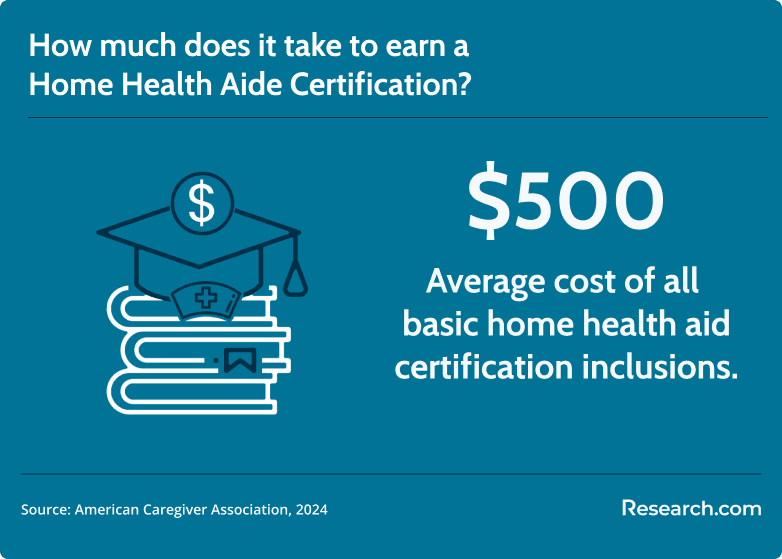
Online HHA certification is generally one of the less expensive entry points into healthcare, especially compared with longer nursing pathways. Some national caregiver association courses start at $99 and rarely exceed $138. Standard 75-hour certificates for first-time aides often cost $400–$800, while mid-tier packages with continuing education, practice exams, and resume support often fall between $599 and $799. Students considering more advanced clinical paths, such as learning how to become a functional medicine nurse practitioner, should view HHA training as an entry credential rather than a substitute for licensed nursing education.
| Expense | Typical amount stated | Why it may be required |
| Low-cost online caregiver course | $99–$138 | Basic online training and downloadable materials |
| Standard 75-hour HHA certificate | $400–$800 | Tuition, e-texts, skills checklists, and core training |
| Mid-tier support package | $599–$799 | May include extra practice tools, continuing education, or career help |
| Certification exam | National Center for Competency Testing charges $29 for the Certified Home Health Aide (CHHA) exam | May be useful or required depending on employer or state expectations |
| Background check and fingerprinting | $50–$100 | Commonly required before clinical placement or employment |
| Immunizations, TB screen, and physical | $75–$150 if insurance does not reimburse | Helps protect clients and staff in care settings |
| CPR and First Aid card | $40–$60 | Often expected by employers and sometimes bundled by programs |
| Uniform and supplies | $30–$60 | Scrubs, gait belt, stethoscope, or other required items |
Students who use low-cost providers, workforce grants, or employer reimbursement may complete training for well under $500. Programs with more support services may require a budget closer to $900. If you are comparing longer nursing routes, affordable online LVN-to-RN programs can help you understand how costs change as credentials become more advanced.
What are the financial aid options for students enrolling in a Home Health Aide Certification Online?
HHA programs are short, but you should still look for funding before paying out of pocket. Even if the cost is lower than a longer option such as a 2-semester online LPN-to-RN program, grants, reimbursement, and employer-paid training can reduce your personal expense.
- Workforce Innovation and Opportunity Act (WIOA) vouchers: Local American Job Centers may provide Individual Training Accounts for approved short-term training, including home health aide certificates. Eligibility often depends on income or unemployment status, and awards may reach $3,000 or more.
- State Medicaid or long-term-care reimbursement: Federal rules allow Medicaid-participating facilities to reimburse aides for training costs incurred within 12 months of hire. Some states, including Washington, require 100% reimbursement of tuition, books, and exam fees after employment with a contracted employer.
- Military spouse MyCAA scholarships: Eligible spouses of active-duty service members may receive up to $4,000 for portable licenses and certificates.
- State and local caregiver scholarships: Programs such as New Jersey’s Certified Home Health Aide Career Program provide $1,000 stipends and mentoring support to new entrants each year (NJ.gov, 2025).
- Employer-paid training: Many home-care agencies offer prepaid training, tuition reimbursement, or paid onboarding for applicants who agree to work after certification.
Ask each school whether it is WIOA-approved, whether it works with local agencies, and whether tuition can be reimbursed after hire. A program with higher sticker price may become cheaper if it qualifies for funding.
What are the prerequisites for enrolling in a Home Health Aide Certification Online?
Most online HHA programs are designed for fast workforce entry, but they still screen for basic academic, health, legal, and technical readiness. Requirements vary by state and provider, so confirm the exact checklist before enrolling.
- Minimum education: Many programs and employers expect a high school diploma or GED. Students who want a broader nursing path may also compare HHA training with an associate degree in nursing; affordable online ADN programs can help you evaluate that longer route.
- Minimum age: Programs often require students to be 16–18 years old, depending on state rules. California sets the minimum at 16, while Florida requires 18.
- Background clearance: Fingerprint-based screening and checks of criminal and sex-offender databases are commonly required before clinical placement or hire.
- Health documentation: A tuberculosis test, proof of immunizations, and a basic physical exam may be required by schools or agency partners.
- CPR and First Aid: Not every program requires these before admission, but many employers expect them before independent client care.
- Technology readiness: Students usually need reliable internet, a webcam or smartphone camera, and the ability to use learning platforms, quizzes, video tools, and proctored testing systems.
- English literacy and physical ability: Aides must read care plans, document observations, communicate changes, and safely assist clients with movement or positioning.
The graph below shows the number of home health agencies in the country since 2010.
What courses are typically in Home Health Aide Certification Online programs?
Quality online HHA programs organize content around the competencies aides need in client homes and the areas reviewed by regulators and employers. The curriculum should prepare you to assist with daily care while knowing your limits and reporting concerns appropriately.
| Course area | What you learn |
| Communication and documentation | How to record observations, write care notes, and report changes in a client’s condition |
| Infection control | Hand hygiene, personal protective equipment, and safe handling of contaminated materials |
| Body systems and common changes | Basic signs that may require escalation to a supervising nurse |
| Home safety | Fall prevention, environmental hazards, and safe home routines |
| Emergency principles | Recognizing urgent situations, following emergency plans, and using basic first-response skills |
| Personal care | Bathing, grooming, oral hygiene, toileting, skin care, privacy, and dignity |
| Mobility support | Transfers, ambulation assistance, range-of-motion exercises, and body mechanics |
| Vital signs and measurements | Temperature, pulse, respiration, intake-output tracking, and accurate reporting |
| Nutrition and hydration | Meal preparation, special diets, fluid monitoring, and feeding support where allowed |
| Diverse populations | Cultural awareness, psychosocial needs, privacy, and respect for client property |
| Skin integrity | Early identification of pressure injury risk and correct reporting steps |
Online modules may include video demonstrations and scenario-based quizzes, but skills should be reinforced through hands-on practice or competency evaluation when required. If a program claims to be “100% online,” ask how it satisfies your state’s practical skills requirement.
The chart below illustrates differences and demographics among home health users.
What types of specializations are available in Home Health Aide Certification Online programs?
Some HHA programs offer short add-on modules that focus on specific client populations or expanded responsibilities. These options usually add limited study time but may help you qualify for specialized assignments or stand out to agencies.
| Specialization | What it covers | When it makes sense |
| Dementia and Alzheimer’s care | Behavior support, safety modifications, communication, and family interaction | Useful for aides who want to work with older adults experiencing cognitive decline |
| Hospice and palliative support | Comfort care, emotional support, end-of-life ethics, and family-centered care; also relevant to students researching how to become a hospice nurse | Best for aides comfortable with emotionally sensitive care environments |
| Medication assistance or advanced HHA | State-approved medication support, such as oral or inhaled medications under nurse supervision where allowed | Appropriate only where state scope-of-practice rules permit it |
| Quality and compliance | Infection prevention, documentation expectations, and quality-reporting concepts such as OASIS/QRP | Helpful for aides interested in lead aide or office-based agency roles |
| Behavioral and mental health support | Recognizing depression, anxiety, substance-use triggers, and when to escalate concerns | Useful in community care, group homes, and complex home-care assignments |
Choose specializations based on job postings in your area. A dementia credential may be more valuable in senior care markets, while medication assistance depends heavily on state authorization.
What Accreditation and Regulatory Standards Should You Look for in Online HHA Programs?
For HHA training, “accreditation” is only part of the quality check. You also need to verify state approval, clinical requirements, and whether the certificate is accepted by employers where you plan to work. An institution may be accredited, but that does not automatically mean its HHA program satisfies every state’s home health aide rules.
| Quality signal | What to verify | Why it matters |
| State approval | The program appears on your state health department, nursing board, or approved-training list | Only approved programs may qualify you for registry placement in some states |
| Federal alignment | The curriculum covers Medicare Conditions of Participation and required competency areas | Medicare-certified agencies expect compliant training |
| Clinical or skills evaluation | The school explains exactly where and how hands-on skills are completed | Prevents surprises after you finish online coursework |
| Qualified instructors | Faculty include licensed nurses or approved healthcare instructors where required | Supports safe training and employer confidence |
| Institutional accreditation | The school is accredited by a recognized agency when applicable | May support transferability, employer trust, and funding eligibility |
If you want a broader healthcare credential later, you can compare short certificates with degree options such as the most affordable online public health degrees. For immediate HHA employment, however, state acceptance is the priority.
Can This Certification Propel My Advancement into Healthcare Administration?
HHA certification alone will not qualify you for most healthcare administration roles, but the experience can be useful. Home health aides learn how care plans, client communication, documentation, scheduling, family expectations, and regulatory rules affect day-to-day operations. Those skills can translate into lead aide, scheduler, intake assistant, care coordinator, or compliance-support positions after additional experience and training.
If your long-term goal is management, use the HHA role to build field knowledge while adding coursework in supervision, health information, billing, compliance, or healthcare operations. You can also review high-paying healthcare administration careers to see which positions require a degree, certification, or several years of experience.
How to choose the best Home Health Aide Certification Online program?
The best online HHA program is not automatically the cheapest or fastest. It is the one that meets your state’s requirements, provides practical skills verification, fits your schedule, and gives you a realistic path to employment. Start with your state’s approved-training list, then compare programs using evidence rather than marketing language.
| Question to ask | Why it matters |
| Is this program approved in the state where I want to work? | Certification rules are state-specific, and nonapproved programs may not qualify you for employment. |
| How are clinical hours or skills checks completed? | Online theory is not enough in many states; hands-on competency must be documented. |
| Who teaches the course? | Programs should identify qualified instructors, often registered nurses or licensed vocational/practical nurses. |
| What is included in tuition? | Books, exam fees, CPR, background checks, supplies, and clinical fees may cost extra. |
| What are the refund rules? | Short certificate programs may have strict refund deadlines. |
| Does the school publish outcomes? | Pass rates, placement information, complaints, and employer partnerships help you judge quality. |
| Can I use WIOA, MyCAA, employer reimbursement, or payment plans? | Funding options can make a more supportive program affordable. |
| Will this help me move into CNA, LPN/LVN, or RN training? | Students seeking career advancement should choose programs that align with future education goals. |
If you are unsure whether HHA or CNA is the better first step, compare job duties, state testing, and bridge options. Students planning to become registered nurses may eventually explore affordable online CNA-to-RN bridge programs, but that path requires additional education beyond HHA training.
Common mistakes to avoid
- Choosing based only on speed: A very short course may not meet state or employer requirements.
- Assuming “online” means fully remote: Clinical hours, skills labs, or competency checks may still be in person.
- Ignoring state approval: Institutional accreditation and state HHA approval are not the same thing.
- Comparing tuition without fees: Background checks, CPR, TB testing, supplies, and exam fees can change the true cost.
- Expecting guaranteed pay: BLS medians describe labor-market data, not individual job offers.
- Overlooking transportation: Home care often requires reliable travel between clients.
- Failing to ask about reimbursement: WIOA, Medicaid reimbursement, MyCAA, and employer-paid training may reduce costs.
What career paths are available for graduates of a Home Health Aide Certification Online?
An HHA certificate can be a starting point for several healthcare paths, especially if you use the role to gain patient-care hours, references, and exposure to clinical teams. Students researching how to become a travel licensed practical nurse should understand that HHA work is not a direct substitute for LPN education, but it can help confirm whether hands-on care is the right field before committing to longer training.
| Career step | What changes from HHA work | Typical next requirement |
| Senior or lead aide | Mentors new aides, helps with scheduling, and supports quality expectations | Experience, reliability, and employer training |
| Certified Nursing Assistant (CNA) | Broader facility-based patient-care duties may become available | State-approved CNA training and exam |
| Medication aide or advanced HHA | May assist with certain medications under supervision where allowed | State-approved medication aide or advanced aide credential |
| Licensed Practical or Vocational Nurse (LPN/LVN) | Licensed nursing scope, more clinical responsibility, and median wages above $58,000 (BLS, 2025) | Approved LPN/LVN program and licensure exam |
| Care coordinator or intake specialist | Moves from field care into office-based client matching, documentation, or service coordination | Agency experience, communication skills, and sometimes additional training |
| Specialty aide | Works in hospice, dementia care, pediatric home care, or other focused assignments | Specialty module, employer training, or state-recognized credential |
| RN or allied health pathway | Moves toward licensed or technical healthcare roles | Additional college-level education, clinical training, and licensure where required |
Career movement is most realistic when you choose employers that offer tuition assistance, mentorship, scheduling flexibility for school, and clear promotion pathways.
What is the job market for graduates with a Home Health Aide Certification Online?
The job outlook for home health and personal care aides is stronger than average. BLS projects 21% employment growth from 2023 to 2033 and about 718,900 openings each year. Demand is being shaped by population aging, greater use of home- and community-based services, and employer need to replace workers who leave the field. This demand exists even as healthcare training costs, including LPN school tuition costs, remain an important barrier for many students.
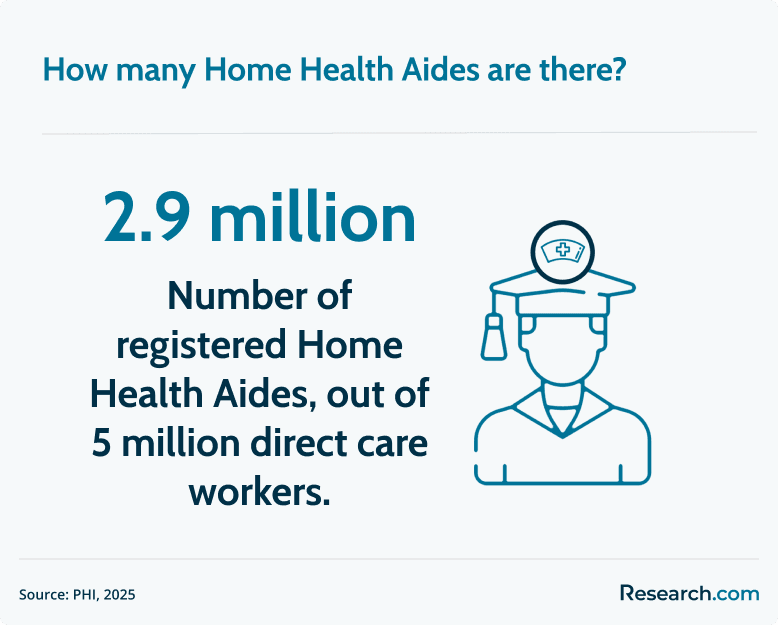
PHI projects that the broader direct-care workforce will need 860,000 additional aides between 2022 and 2032, with total hiring needs exceeding 8.9 million over the decade. For new HHA graduates, that means more entry-level openings, but also a need to evaluate employer quality carefully.
- High demand does not guarantee a good job: Compare wages, travel policies, benefits, scheduling practices, and supervisor support.
- Geography matters: States with large older-adult populations, including Florida, Maine, and Arizona, report high employment density, while rural areas may face persistent shortages.
- Employers may compete for certified aides: Sign-on bonuses, paid training upgrades, flexible scheduling apps, and tuition support are increasingly used in recruiting.
- Retention can create opportunity: Because turnover is high, reliable aides who stay two or more years may move into lead aide, scheduler, or care coordinator roles.
Can I Transfer My Home Health Aide Certification to Another State?
HHA certification portability depends on state rules. Some states may accept previous training if it meets their hour, curriculum, and competency requirements. Others may require additional coursework, testing, registry verification, or updated continuing education. Before relocating, contact the receiving state’s health department, nursing board, or home care registry and ask whether your current credential qualifies for reciprocity.
Do not assume a nationally marketed online program will be accepted everywhere. If you want a broader healthcare or science background that is less tied to one state’s aide registry, compare certificate training with degree options such as a biology online degree.
What should graduates realistically expect after completing online HHA certification?
Graduates often value the flexibility of online study, but the transition into paid work depends on local employer demand, transportation, background clearance, and willingness to work evenings, weekends, or multiple client visits. A good program should help you prepare for interviews and explain what the job is like before you accept assignments.
- Scheduling can vary: Some aides work steady full-time routes, while others begin with part-time, per-diem, or split shifts.
- The work is personal: Bathing, toileting, transfers, and meal support require patience, professionalism, and respect for privacy.
- Documentation matters: Agencies rely on accurate visit notes, incident reporting, and communication with supervisors.
- Specialized modules can help: Dementia, hospice, and behavioral health training may make you more competitive for certain assignments.
What advanced educational opportunities can supplement my HHA certification?
After HHA certification, your next step should match your career target. If you want more hands-on clinical responsibility, CNA or LPN/LVN training is usually more directly relevant than an unrelated degree. If you want administration, consider courses in healthcare operations, compliance, billing, supervision, or health information. Students interested in science-heavy healthcare or graduate pathways may compare accelerated options such as a fast-track online biology degree, but HHA experience itself is most valuable when paired with a clear next credential.
| Goal | Best next step to consider |
| Earn more in direct care | CNA, medication aide, dementia care, hospice support, or advanced HHA credential where available |
| Become a nurse | LPN/LVN, ADN, BSN, or bridge programs after meeting admission requirements |
| Move into office or coordination work | Care coordination, intake, scheduling, compliance, or health information coursework |
| Prepare for management | Healthcare administration coursework, supervisory training, and agency operations experience |
| Build a broader academic foundation | Biology, public health, or allied health degree programs aligned with long-term goals |
What is the Return on Investment for a Home Health Aide Certification Online?
The ROI of online HHA certification depends on training cost, speed to employment, local wages, transportation expenses, and whether the credential helps you advance. Because many programs are short and comparatively affordable, students may recover upfront costs quickly after finding work. However, the role’s median pay is still entry-level, so the strongest return often comes from using HHA experience as a stepping-stone to CNA, LPN/LVN, RN, care coordination, or administration.
| ROI factor | Positive sign | Warning sign |
| Program cost | Tuition is low, fees are transparent, and funding is available | Advertised price excludes required clinical, exam, or clearance costs |
| State acceptance | The program is approved where you plan to work | The school cannot explain registry or employer acceptance |
| Time to employment | Clinical placement and competency evaluation are scheduled clearly | You complete online theory but must find your own approved skills site |
| Employer value | Local agencies recruit graduates or offer reimbursement | Employers in your area do not recognize the certificate |
| Advancement | The job offers tuition support, lead aide roles, or bridge opportunities | The role has limited hours, no benefits, and no clear next step |
If healthcare leadership is your long-term objective, HHA work can provide useful field context, but you will likely need additional education. Compare options such as an online healthcare administration degree if you want to move beyond direct care into management.
References
- 42 CFR 484.80 -- Condition of participation: Home health aide services. https://www.ecfr.gov/current/title-42/chapter-IV/subchapter-G/part-484/subpart-B/section-484.80
- American Caregiver Association. (2024, January 11). Home Health Aide Training - American Caregiver Association. https://americancaregiverassociation.org/online-home-health-aide-training/
- Centers for Medicare and Medicaid Services. (2024, April 12). Appendix B - Guidance to Surveyors: Home Health Agencies. CMS. 2024. https://www.cms.gov/Regulations-and-Guidance/Guidance/Manuals/downloads/som107ap_b_hha.pdf
- Department of Public Health. Home health aide. https://www.cdph.ca.gov/Programs/CHCQ/LCP/Pages/hha.aspx
- Geriatrics and Extended Care. VA.gov | Veterans Affairs. https://www.va.gov/geriatrics/pages/Homemaker_and_Home_Health_Aide_Care.asp
- Home Health Agencies | CMS. (2025). https://www.cms.gov/medicare/health-safety-standards/certification-compliance/home-health-agencies
- Home health and Personal Care aides. (2025, April 18). Bureau of Labor Statistics. https://www.bls.gov/ooh/healthcare/home-health-aides-and-personal-care-aides.htm#tab-4
- Key Facts & FAQ - PHI. (2025, March 19). PHI. https://www.phinational.org/policy-research/key-facts-faq/
- Nursing Assistant Certified Reimbursement Program | DSHS. (2023). https://manuals.dshs.wa.gov/altsa/management-services-division/nursing-assistant-certified-reimbursement-forms
- Research Institute for Home Care. (2024). Home Health Care Chartbook 2024. https://researchinstituteforhomecare.org/wp-content/uploads/2024-RIHC-Chartbook-12122024-FINAL-1.pdf
- Statista. (2025, January 21). Number of home health agencies in the U.S. 2010-2023. https://www.statista.com/statistics/1550572/number-of-home-health-agencies-in-the-us/
- Wintemute, D. (2025, February 21). How long is nursing school? Breakdown by degree and type of nurse. NurseJournal.org. https://nursejournal.org/resources/how-long-is-nursing-school/
- Workforce Innovation and Opportunity Act. DOL. https://www.dol.gov/agencies/eta/wioa
Key Insights
- Online HHA certification can be a fast entry into healthcare, but the program must meet your state’s rules and usually must include hands-on skills verification or clinical practice.
- Federal rules require at least 75 training hours, including at least 16 classroom hours before 16 supervised clinical hours; some states require more.
- With efficient scheduling, many students can move from enrollment to job readiness in under 2 months, although background checks, health clearances, and clinical placement can extend the timeline.
- Low-cost students may earn a credential for under $500, while programs with added support commonly require a budget closer to $900 or more.
- Financial aid is worth checking before enrollment. WIOA vouchers may provide up to $3,000, and some students may qualify for MyCAA, Medicaid reimbursement, employer-paid training, or state caregiver scholarships.
- BLS reports a median annual wage of $34,900, or about $16.12 per hour, for home health and personal care aides as of May 2024.
- Job demand is strong: BLS projects 21% growth from 2023 to 2033 and about 718,900 openings each year, while PHI projects a need for 860,000 additional direct-care aides between 2022 and 2032.
- The best ROI comes from choosing a state-approved, employer-recognized program and using HHA experience as a platform for advancement into CNA, medication aide, LPN/LVN, RN, care coordination, or healthcare administration roles.
Other Things You Should Know About Home Health Aide Certification Online Programs
Yes, several programs offer affordable home health aide certification online in 2027. Look for accredited institutions like the International Career Institute or Penn Foster, which offer affordable tuition and flexible payment plans, ensuring access to quality education for future home health aides.
When seeking an affordable online home health aide certification in 2027, prioritize accredited programs offering comprehensive coursework with practical experience, reasonable fees, and positive testimonials. Ensure they meet state certification requirements while providing support resources like online counseling or study materials to enrich learning.





