
2027 Best HBCUs for Healthcare Administration Programs

Co-Founder and Chief Data Scientist
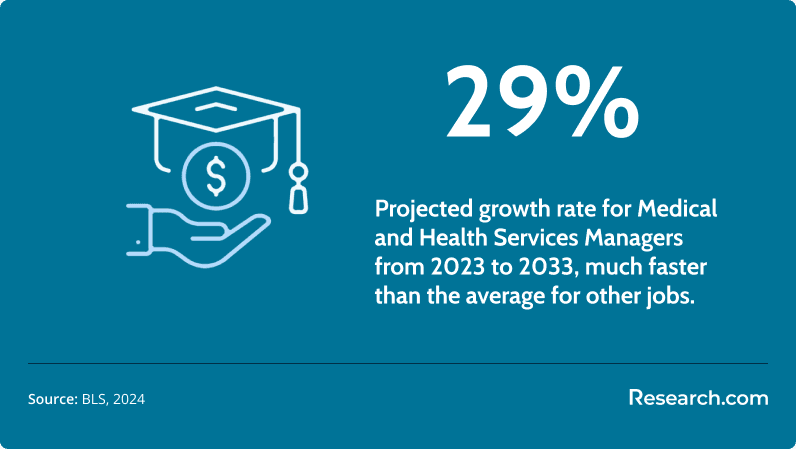
Choosing a college path that feels both financially secure and personally meaningful can be a challenge. With the healthcare management field projected to grow an incredible 29% this decade, the opportunity is clear, but finding the right starting point is critical. This is where choosing one of the best HBCUs for healthcare administration offers a unique and powerful advantage, combining purpose-driven work with a smart career move.
To help you make a confident choice, our career planning experts with over 10 years of experience have created this comprehensive guide. It’s more than just a list—it’s a roadmap to a career that gives you a distinct competitive edge.
What are the benefits of getting an HBCU for healthcare administration?
- You gain a distinct career advantage that prepares you for leadership roles in a high-growth field, allowing you to improve health equity in communities.
- You can achieve significant earning potential, as the median salary for medical and health services managers is $117,960 per year.
- You will learn within a uniquely supportive and mission-driven community that provides a strong professional network for your entire career.
What can I expect from an HBCU for healthcare administration?
You can expect a curriculum built around a core mission: health equity. This isn't just a single class; it's a perspective woven into your business, policy, and ethics courses that prepares you to serve diverse communities. This focus is a real, marketable skill in today's healthcare industry.
The environment itself is also unique. With smaller class sizes, you'll get dedicated mentorship from professors who are invested in your success. There is a tangible "family" atmosphere on campus. Don't mistake "supportive" for "easy," though. That community is there to help you meet high academic standards, not lower them.
With 102 HBCUs across 19 states, this powerful educational experience is more accessible than you might think. It’s a distinct choice, different from a purely online program or a simple certificate, that offers both a world-class education and a place to belong.
Where can I work with an HBCU for healthcare administration?
A degree in healthcare administration from an HBCU prepares you for foundational roles across the business side of healthcare. Your first job is a crucial apprenticeship, providing the operational experience you need to grow into a leadership position. The largest employers for medical and health services managers include:
- Hospitals: This is the largest sector, employing 30% of all healthcare managers in state, local, and private facilities.
- Physician's Offices: These settings employ 12% of managers and offer a direct view of clinical practice management.
- Nursing and Residential Care Facilities: A vital and growing sector that employs 9% of the workforce, focused on long-term care.
- Government: Federal, state, and local agencies employ 7% of managers in public health and policy administration roles.
- Outpatient Care Centers: This fast-growing area also employs 7% of managers and can offer quicker paths to promotion.
How much can I make with an HBCU for healthcare administration?
While entry-level salaries are the starting point, the potential for growth is significant as you gain experience and take on more responsibility. Your specific earnings will depend on factors like your role, the type of facility you work in, and your geographic location.
As of 2024, the earning potential for these roles is excellent, with a national median pay and even higher wages in top-employing sectors:
- Medical and Health Services Managers (Overall): $56.71 per hour; $117,960 per year
- Managers in Government: $132,620 per year
- Managers in Hospitals: $130,690 per year
- Managers in Outpatient Care Centers: $106,990 per year
- Managers in Physician's Offices: $100,780 per year
- List of the Best HBCUs for Healthcare Administration Programs for 2027 List of Programs
- How long does it take to complete an HBCU for healthcare administration program? Completion Time
- What is the average cost of an HBCU for healthcare administration program? Program Cost
- What are the financial aid options for students enrolling in an HBCU for healthcare administration program? Financial Aid
- What are the prerequisites for enrolling in an HBCU for healthcare administration program? What are the prerequisites for enrolling in an HBCU for healthcare administration program?
- What courses are typically in an HBCU for healthcare administration program? What courses are typically in an HBCU for healthcare administration program?
- What types of specializations are available in an HBCU for healthcare administration program? Specializations
- How to Choose the Best HBCUs for Healthcare Administration Program How to Choose the Best HBCUs for Healthcare Administration Program
- What career paths are available for graduates of an HBCU for healthcare administration program? Career Paths
- Can supplementary certifications enhance my healthcare administration credentials? Can supplementary certifications enhance my healthcare administration credentials?
- What is the job market for graduates of an HBCU for healthcare administration program? Job Market
Best HBCUs for Healthcare Administration Programs for 2027
Choosing a healthcare administration program is not only about finding a college with the right major. You are deciding how to prepare for a career that sits at the intersection of healthcare delivery, business operations, policy, finance, patient access, and community health. For many students, Historically Black Colleges and Universities offer an added advantage: a learning environment built around access, mentorship, cultural competence, and service to communities that healthcare systems have often underserved.
This guide is for students comparing HBCU healthcare administration programs at the bachelor’s or master’s level, including first-time college students, transfer students, working adults, and allied health professionals who want to move into management. It explains which programs stand out, how long they take, what they cost, what admissions requirements to expect, how to compare accreditation and internships, and what career paths graduates can pursue.
Students who are still strengthening their academic profile may also want to review options such as online colleges that admit students with lower GPAs. However, applicants interested in healthcare leadership should give HBCUs serious consideration because many combine academic preparation with advising, alumni networks, and a mission-driven focus on health equity.
Quick Answer: What Are the Best HBCUs for Healthcare Administration?
The best HBCU healthcare administration program depends on your goals. Students seeking an affordable in-state bachelor’s degree may prioritize public universities with lower per-credit tuition. Working adults may prefer online or hybrid options. Students aiming for senior leadership may want a graduate program with specialized healthcare management accreditation. The schools below include bachelor’s and master’s options with healthcare administration, healthcare management, health administration, or related concentrations.
| School | Program | Best Fit | Credits | Listed Cost per Credit |
| Albany State University | BS Health Administration | Students who want a project-based undergraduate program | 123 | $169.33 (in-state); $616.07 (out-of-state) |
| Fayetteville State University | Bachelor of Science in Healthcare Administration | Students seeking a business-centered healthcare leadership curriculum | 120 | $170.20 (in-state); $203.53 (out-of-state) |
| Texas Southern University | Bachelor of Science in Health Administration | Students who want a final-year internship experience | 121 | $251.32 (in-state); $352.98 (out-of-state) |
| Fort Valley State University | Bachelor of Science in Health Administration | Students interested in healthcare management across varied settings | 123 | $174.00 (in-state); $647.00 (out-of-state) |
| North Carolina Central University | Bachelor of Science in Health Administration (Online) | Students needing online flexibility and a health equity focus | 120 | $361.00 (in-state); $433.00 (out-of-state) |
| Florida Memorial University | Bachelor of Science in Healthcare Administration | General students and licensed allied health professionals with an associate’s degree | 120 | $519.20 (in-state); $1,038.40 (out-of-state) |
| Philander Smith University | Business Administration, Healthcare Administration Concentration | Students who want healthcare administration through a business degree | 124 | $495.00 |
| Jackson State University | Bachelor of Science in Healthcare Administration | Students preparing for entry-level management roles | 122 | $353.00 (in-state); $706.00 (out-of-state) |
| Tennessee State University | Bachelor of Science in Health Care Administration and Planning | Students comparing a traditional path with an accelerated online/hybrid option | 120 | $285.60 (in-state); $742.80 (out-of-state) |
| Florida A&M University | Master of Health Administration | Graduate students seeking advanced healthcare leadership preparation | 47 | $155.36 (in-state); $391.40 (out-of-state) |
How Research.com Ranks Schools
Because a degree can affect your finances, career options, and time commitments for years, a ranking should be transparent about the information behind it. Research.com evaluates schools using established education data sources, including the IPEDS database, Peterson’s database, the College Scorecard database, and the National Center for Education Statistics.
These sources help compare institutions using standardized data rather than marketing claims alone. To understand how Research.com evaluates schools and programs, review the full Research.com methodology.
1. Albany State University – BS Health Administration
Albany State University offers a bachelor’s program that uses projects, case analysis, and applied coursework to help students understand how healthcare organizations function. The curriculum is designed to connect organizational theory with real management problems in health services settings, including issues that affect healthcare systems beyond the local community.
- Program Length: 4 years
- Required Credits to Graduate: 123
- Cost per Credit: $169.33 (in-state); $616.07 (out-of-state)
- Accreditation: Accreditation Council for Business Schools and Programs (ACBSP)
2. Fayetteville State University – Bachelor of Science in Healthcare Administration
Fayetteville State University structures its healthcare administration degree around business, economics, and healthcare systems. The program is a strong fit for students who want to build leadership, communication, and ethics skills while preparing for administrative roles in a competitive healthcare labor market.
- Program Length: 4 years
- Required Credits to Graduate: 120
- Cost per Credit: $170.20 (in-state); $203.53 (out-of-state)
- Accreditation: Southern Association of Colleges and Schools Commission on Colleges (SACSCOC)
3. Texas Southern University – Bachelor of Science in Health Administration
Texas Southern University emphasizes management within complex healthcare delivery systems. A major strength of the program is its final-year internship, which gives students supervised experience and helps them connect classroom learning to current healthcare workplace expectations.
- Program Length: 4 years
- Required Credits to Graduate: 121
- Cost per Credit: $251.32 (in-state); $352.98 (out-of-state)
- Accreditation: Southern Association of Colleges and Schools (SACS)
4. Fort Valley State University – Bachelor of Science in Health Administration
Fort Valley State University prepares students to manage people, processes, and resources in healthcare organizations. The program is designed for students who want broad administrative preparation and exposure to healthcare systems in both domestic and international contexts.
- Program Length: 4 years
- Required Credits to Graduate: 123
- Cost per Credit: $174.00 (in-state); $647.00 (out-of-state)
- Accreditation: Southern Association of Colleges and Schools Commission on Colleges (SACSCOC)
5. North Carolina Central University – Bachelor of Science in Health Administration (Online)
North Carolina Central University offers an online bachelor’s program for students who need flexibility without giving up a healthcare administration focus. Its emphasis on health equity makes it especially relevant for students who want to lead in organizations serving diverse populations. The program also includes an experiential capstone aligned with a student’s work background and career direction.
- Program Length: 4 years
- Required Credits to Graduate: 120
- Cost per Credit: $361.00 (in-state); $433.00 (out-of-state)
- Accreditation: Southern Association of Colleges and Schools Commission on Colleges (SACSCOC)
6. Florida Memorial University – Bachelor of Science in Healthcare Administration
Florida Memorial University offers a healthcare administration degree with an interprofessional approach. Students may follow a General Track, while licensed allied health professionals with an associate’s degree may choose the Clinical Track to build on their existing healthcare background.
- Program Length: 4 years
- Tracks: General; and Clinical
- Required Credits to Graduate: 120
- Cost per Credit: $519.20 (in-state); $1,038.40 (out-of-state)
- Accreditation: Southern Association of Colleges and Schools (SACS)
7. Philander Smith University – Business Administration, Healthcare Administration Concentration
Philander Smith University places healthcare administration within a business administration degree. This format can work well for students who want a strong foundation in economics, management, and organizational decision-making before adding specialized coursework in healthcare finance, law, and healthcare organizations.
- Program Length: 4 years
- Required Credits to Graduate: 124
- Cost per Credit: $495.00
- Accreditation: Higher Learning Commission (HLC)
8. Jackson State University – Bachelor of Science in Healthcare Administration
Jackson State University combines classroom instruction with field-based learning to prepare students for early management and administrative roles. Graduates may pursue opportunities in hospitals, managed care organizations, government agencies, and other healthcare settings.
- Program Length: 4 years
- Required Credits to Graduate: 122
- Cost per Credit: $353.00 (in-state); $706.00 (out-of-state)
- Accreditation: Southern Association of Colleges and Schools Commission on Colleges (SACSCOC)
9. Tennessee State University – Bachelor of Science in Health Care Administration and Planning
Tennessee State University blends healthcare management, planning, and decision-making coursework. Students can pursue the traditional four-year route, while learners with prior credits may consider the 18-month online/hybrid option if they want a faster path to completion.
- Program Length: 4 years (18 months for accelerated option)
- Required Credits to Graduate: 120
- Cost per Credit: $285.60 (in-state); $742.80 (out-of-state)
- Accreditation: Council on Education for Public Health (CEPH)
10. Florida A&M University – Master of Health Administration
Florida A&M University offers a graduate-level healthcare administration option for students ready for advanced management preparation. Evening and online/hybrid courses can support working students, while the curriculum includes finance, research methods, applied problem-solving, and an administrative residency.
- Program Length: 2 years
- Required Credits to Graduate: 47
- Cost per Credit: $155.36 (in-state); $391.40 (out-of-state)
- Accreditation: Commission on Accreditation of Healthcare Management Education (CAHME)
How Long Does It Take to Complete an HBCU Healthcare Administration Program?
Most bachelor’s programs in healthcare administration are designed for 4 years of full-time study. During that time, students typically complete general education requirements, business courses, healthcare administration courses, electives, and a capstone, internship, or field experience.
Completion time can be shorter or longer depending on transfer credits, enrollment status, course availability, and whether the program offers an accelerated route. Some students also compare bachelor’s-to-master’s pathways or accelerated graduate options, especially if they are researching the shortest healthcare management master’s programs.
| Student Situation | Likely Timeline | What to Check Before Enrolling |
| First-time full-time bachelor’s student | Usually 4 years | Major map, internship timing, summer course availability |
| Transfer student with prior college credits | May be shorter than 4 years | Transfer credit policy, residency requirements, accepted prerequisites |
| Part-time student | Often longer than 4 years | Course rotation, online availability, maximum time to degree |
| Accelerated student with prior credits | May qualify for an 18-month option where available | Eligibility rules, required credits before entry, hybrid or online requirements |
| Graduate student | 2 years for the listed MHA option | Residency requirements, work experience expectations, online/hybrid schedule |
A Career Built Through Experience
Healthcare administration is often a progression-based career. A degree can help you qualify for entry-level administrative and coordinator roles, but many higher-level management positions require experience leading teams, managing budgets, improving operations, or working with compliance and quality systems.
The average age for a medical and health services manager is 45.9 years old, which reflects how much the field values practical judgment and accumulated experience. For most graduates, the bachelor’s degree is the starting point, not the finish line.

What Does an HBCU Healthcare Administration Program Cost?
Tuition varies significantly by school, residency status, program format, and whether you attend a public or private institution. The per-credit prices listed in this guide show why students should calculate the full cost instead of comparing tuition labels alone.
Based on the programs listed, the average total tuition for a four-year program is about $34,470 for in-state students and around $65,410 for out-of-state students. Some programs list total tuition as low as $7,300 for in-state students, while others are higher. Your actual net price may change after grants, scholarships, transfer credits, employer assistance, housing choices, fees, books, and transportation are included.
Students evaluating cost should also think about likely career outcomes and long-term earning potential. That same cost-versus-career lens is useful in other healthcare-adjacent fields, such as when students compare education investment with the salary outlook for biomedical engineers.
| Cost Factor | Why It Matters | Question to Ask |
| In-state versus out-of-state tuition | Public HBCUs may charge very different rates depending on residency | Can I qualify for in-state tuition now or after establishing residency? |
| Transfer credits | Accepted credits can reduce both time and tuition | How many of my previous credits apply directly to the major? |
| Online fees | Online programs may include technology or distance learning fees | Are online course fees included in the quoted tuition? |
| Internship or residency costs | Fieldwork may require transportation, schedule changes, or unpaid hours | Where are placements located, and are evening or weekend options available? |
| Financial aid packaging | Net price matters more than published tuition | What is my expected cost after grants and scholarships, not including loans? |
What Financial Aid Is Available for HBCU Healthcare Administration Students?
Financial aid can make a major difference in whether a healthcare administration degree is affordable. Students should start with federal aid, then look for state grants, institutional scholarships, HBCU-specific awards, private scholarships, employer tuition assistance, and payment plans.
Recent HBCU investment has expanded awareness of financial support, including over $1.3 billion from the federal government and hundreds of millions in private donations. That does not mean every student will receive a large scholarship, but it does mean applicants should be proactive and apply broadly.
Start with Federal and State Aid
The FAFSA is the starting point for most students seeking federal grants, federal student loans, and some state or institutional aid. Submit it as early as possible and follow up with each school’s financial aid office to confirm deadlines and missing documents.
Look for HBCU-Specific Scholarships
National organizations, alumni groups, professional associations, and individual HBCUs may offer scholarships for students attending historically Black institutions. Ask each program whether there are awards for healthcare administration majors, public health students, transfer students, first-generation students, adult learners, or students completing internships.
Do Not Stop at the First Aid Offer
Compare award letters carefully. A school with higher tuition may become affordable if it offers strong grant support, while a lower-cost school may require more borrowing if aid is limited. Students considering specialized professional programs in other areas, such as business law concentrations, often face the same issue: the published price is only one part of the affordability picture.
What Are the Admissions Requirements for HBCU Healthcare Administration Programs?
Admissions requirements vary by institution and degree level, but most undergraduate programs ask for standard first-year or transfer application materials. Graduate programs may require additional items such as a bachelor’s degree, prerequisite coursework, professional references, a resume, or a statement of purpose.
- A completed college application
- Official high school transcript, GED documentation, or college transcripts for transfer students
- A minimum GPA, often between a 2.5 and 3.0
- SAT or ACT scores where required, though many schools use test-optional policies
- One or two recommendation letters
- A personal essay, statement of purpose, or career goals statement
How Holistic Admissions Can Help Applicants
Many HBCUs consider more than grades and test scores. A strong essay, evidence of community service, healthcare work experience, leadership activities, or persuasive recommendations can help explain why you are ready for a degree pathway. This is especially important for students deciding between a full healthcare administration degree and shorter credentials, such as those discussed in a comparison of a medical billing and coding certificate versus a bachelor’s degree.
International applicants should expect additional requirements. Many schools require TOEFL scores for applicants whose first language is not English, and foreign transcripts may need evaluation through a credentialing service such as World Education Services (WES).
What Courses Are Common in HBCU Healthcare Administration Programs?
Healthcare administration programs teach students how healthcare organizations are financed, staffed, regulated, measured, and improved. The curriculum usually combines business fundamentals with healthcare-specific content so graduates understand both management principles and the operational realities of patient care environments.
| Course Area | What Students Learn | Why It Matters in Healthcare Management |
| Accounting and finance | Budgeting, financial statements, reimbursement, cost control | Administrators often make resource decisions that affect staffing, services, and access |
| Healthcare law and ethics | Compliance, patient rights, privacy, ethical decision-making | Healthcare leaders must manage risk while protecting patients and organizations |
| Healthcare policy | Public programs, regulation, access issues, health system structure | Policy changes can affect operations, revenue, and patient populations |
| Human resources and leadership | Team management, communication, conflict resolution, supervision | Healthcare organizations rely on coordinated work across many professional groups |
| Health informatics | Data systems, electronic records, analytics, information flow | Administrators increasingly use data to improve quality, efficiency, and planning |
| Revenue cycle and billing | Claims, coding, patient accounts, reimbursement processes | Even managers who do not code need to understand how payment systems affect operations |
Some students strengthen their operational knowledge through short-form technical training, including programs that explain how to complete medical billing and coding training from home. While that type of training is not the same as a healthcare administration degree, it can help students understand one of the most important administrative workflows in healthcare.
The HBCU Advantage in Healthcare Leadership Preparation
The distinctive value of an HBCU healthcare administration program is often the perspective built into the learning environment. Students are not only studying healthcare operations; they are also learning to recognize disparities, communicate across cultures, and lead organizations that serve diverse communities.
That mission connects to the broader history of HBCUs in healthcare education. The role of HBCUs in preparing nursing and healthcare professionals is part of a larger effort to diversify the healthcare workforce and improve care for communities that need better access and representation.
What Specializations Are Available in HBCU Healthcare Administration Programs?
Not every program offers formal concentrations, but many allow students to shape their path through electives, capstones, internships, tracks, or graduate study. A specialization can help you target your first job and build a clearer long-term professional identity.
Long-Term Care Administration
Long-term care focuses on organizations such as nursing homes, assisted living facilities, home health agencies, and related services. This path may appeal to students who want to work with aging populations, chronic care needs, care coordination, and facility operations.
Health Informatics and Data-Driven Administration
Health informatics centers on healthcare data, information systems, technology adoption, and analytics. Students interested in the technology side of healthcare operations may also compare related pathways such as fast-track online health information management degree programs.
Healthcare Finance and Revenue Cycle
This path is useful for students who want to work with reimbursement, budgeting, payer contracts, billing operations, or financial planning. It can lead to roles in hospitals, insurance organizations, physician groups, and consulting environments.
Public Health and Health Equity
Students drawn to population health, access, community-based care, and policy may prefer programs that integrate public health concepts. This can be a strong fit for those who want to work in government agencies, nonprofits, community health organizations, or health systems with equity initiatives.
Why Specialization Matters
The healthcare system needs managers across many settings. The projected 61,400 job openings for medical and health services managers every year suggest that graduates can pursue several administrative directions, but specialization helps you make your resume more focused.

How to Choose the Right HBCU Healthcare Administration Program
The best program is the one that fits your career goal, schedule, budget, academic background, and preferred learning format. Rankings can help you build a shortlist, but they should not replace a careful program-by-program review.
- Check institutional and program accreditation. Confirm that the college is institutionally accredited and review whether the specific program has relevant specialized accreditation. If you are comparing health information-related pathways, use recognized tools such as the CAHIIM program directory where appropriate.
- Review the curriculum, not just the program name. “Healthcare administration,” “health administration,” “healthcare management,” and “health care administration and planning” may overlap, but course requirements can differ.
- Ask about internships, capstones, and employer partnerships. Practical experience matters because many entry-level healthcare administration jobs require familiarity with real systems and workflows.
- Compare true net cost. Look at tuition, fees, housing, transfer credits, aid, and expected borrowing.
- Match format to your life. Online, hybrid, evening, and accelerated formats can help working adults, but they still require time for projects, group work, exams, and field experiences.
| If You Are... | Prioritize... | Be Careful About... |
| A first-time college student | Advising, student support, internships, campus fit | Choosing only by tuition without checking graduation requirements |
| A transfer student | Credit acceptance, major prerequisites, time to completion | Assuming all credits will count toward the major |
| A working adult | Online/hybrid scheduling, evening courses, flexible fieldwork | Underestimating weekly workload |
| An allied health professional | Clinical track options, credit for prior learning, management courses | Choosing a program that repeats content you already know |
| A future executive leader | Graduate pathways, alumni network, residency or internship quality | Expecting a bachelor’s alone to guarantee senior leadership roles |
Current Trend: Rising Interest in HBCUs
Interest in HBCUs has grown as more students look for colleges that combine academic preparation, community, identity, affordability, and career support. That broader trend is similar to the way some students explore alternative colleges for students with unique needs: the goal is not simply admission, but finding an environment where the student can persist and succeed.
What Careers Can You Pursue with an HBCU Healthcare Administration Degree?
Healthcare administration graduates can work in hospitals, clinics, long-term care facilities, physician practices, public health agencies, insurance organizations, managed care companies, nonprofit health organizations, and government agencies. Most graduates begin in coordinator, analyst, or assistant manager roles before moving into higher-level leadership.
| Career Stage | Example Roles | Main Responsibilities | Typical Goal |
| Entry level | Patient services representative, administrative coordinator, medical office assistant | Scheduling, records, patient communication, billing support, front-office operations | Learn how healthcare organizations operate day to day |
| Early management | Clinic supervisor, office manager, department coordinator | Staff coordination, workflow improvement, reporting, compliance support | Move from task execution to team and process management |
| Mid-level management | Practice manager, operations manager, program manager | Budgeting, performance tracking, quality initiatives, service line support | Lead larger teams and manage measurable outcomes |
| Senior leadership | Director of operations, healthcare administrator, executive-level manager | Strategic planning, organizational performance, policy implementation, executive decision-making | Shape systems, budgets, staffing, and long-term direction |
Career Progression: From First Role to Leadership
The move from entry-level work to management often takes three to five years. Students who want to accelerate toward senior roles may eventually consider graduate education, including options such as the shortest online MBA in healthcare management, especially if they want broader business training alongside healthcare expertise.
Can Certifications Strengthen Healthcare Administration Credentials?
Yes. A degree gives you the academic foundation, while targeted certifications or short courses can help demonstrate job-specific skills. The right credential depends on your intended role. A student interested in billing operations, revenue cycle, or practice management may benefit from affordable technical training, including low-cost online medical billing and coding courses.
Certifications are most useful when they support a clear career goal. Do not collect credentials at random. Instead, identify the type of job you want, read postings for that role, and note which software skills, compliance knowledge, coding knowledge, data skills, or management credentials employers mention repeatedly.
What Is the Job Market for Healthcare Administration Graduates?
The job market for healthcare administration graduates is strong because healthcare organizations need managers who can handle staffing, finances, compliance, technology, quality improvement, and patient access. The U.S. Bureau of Labor Statistics projects 29% growth for medical and health services managers by 2033, which is much faster than the average for all occupations.
Graduates from HBCU healthcare administration programs may be especially well positioned when they combine management skills with cultural competence, community health awareness, and experience serving diverse populations. However, strong demand does not guarantee a specific job or salary. Outcomes depend on location, experience, internships, employer type, graduate education, and how well a student builds professional connections before graduation.
Salary and Advancement Considerations
Top earners in the field make over $216,000, and states such as New York, Delaware, and New Jersey offer the highest average salaries. At the same time, students should be realistic: the highest salaries usually go to experienced professionals in larger organizations or senior leadership roles.
The field is majority female, but a gender pay gap still exists. Graduates should learn to evaluate offers, compare compensation by role and region, and negotiate using evidence of skills, internships, certifications, and measurable accomplishments.
What Graduates Say About HBCU Healthcare Administration Programs
- Zola: "I was the first person in my family to attend college, so I worried that I would feel out of place. Instead, my professors learned my name early, and my classmates became the people I studied with, leaned on, and grew with. That support helped me see myself as a future healthcare leader, not just a student trying to get through the semester."
- Tiago: "When I came to the U.S. as an international student, I did not have a professional network. The alumni connections changed that quickly. Graduates working in local hospitals introduced me to the field, reviewed my resume, and helped me prepare for the interview that led to my first healthcare administration job."
- Amara: "The cost made my family nervous at first. The financial aid office helped me go beyond the FAFSA and apply for HBCU-focused grants I had never heard about. I still had to plan carefully, but I finished with far less debt than I expected."
Common Mistakes to Avoid When Choosing a Program
- Choosing a school before checking accreditation. Always confirm institutional accreditation and review any program-specific accreditation that applies to your intended career path.
- Comparing only tuition. Fees, housing, transfer credits, financial aid, transportation, and time to completion can change the real cost.
- Assuming every online program is equally flexible. Some online programs still require synchronous classes, field experiences, group projects, or specific course sequences.
- Ignoring internships. Healthcare administration is practical. A program with strong field placements can help you build experience before graduation.
- Overlooking transfer rules. Credits may transfer to the university but not necessarily apply to the major.
- Expecting a degree to guarantee a management job immediately. Many graduates start in coordinator or administrative roles and move up with experience.
- Relying only on rankings. A highly ranked program may not be the best fit if it does not match your schedule, budget, location, or career goal.
Questions to Ask Before Enrolling
- Is the institution accredited, and does the program hold any specialized accreditation?
- How many credits are required, and how many of my transfer credits will apply to the major?
- Are internships, capstones, practicums, or residencies required?
- Where do students usually complete field experiences?
- What healthcare employers recruit from or partner with the program?
- What is the total estimated cost after tuition, fees, housing, books, and transportation?
- What scholarships are available specifically for HBCU students or healthcare administration majors?
- Can working adults complete the program through evening, online, hybrid, or part-time study?
- What entry-level roles do recent graduates commonly pursue?
- Does the curriculum include health equity, informatics, finance, compliance, and leadership coursework?
Key Insights
- HBCU healthcare administration programs can be a strong choice for students who want management training with an emphasis on equity, community health, mentorship, and culturally competent leadership.
- Most bachelor’s programs take 4 years, but transfer credits, part-time enrollment, online formats, and accelerated options can change the timeline.
- Program cost varies widely. The listed average total tuition is about $34,470 for in-state students and around $65,410 for out-of-state students, but net cost after aid is the number that matters most.
- Accreditation, internships, curriculum quality, alumni networks, and employer partnerships should carry more weight than tuition or ranking alone.
- The job outlook is favorable: the U.S. Bureau of Labor Statistics projects 29% growth for medical and health services managers by 2033, with 61,400 projected openings each year.
- A bachelor’s degree can open the door, but healthcare administration careers usually advance through experience. Entry-level roles build the operational knowledge needed for later management positions.
- Certifications can help when they match a specific goal, such as revenue cycle, billing, informatics, compliance, or practice management.
- The best program is not the same for every student. Choose based on your career target, budget, transfer status, schedule, internship access, and preferred learning format.
References:
- 19th News. (2024, September 10). Biden-Harris administration announces historic investment in HBCUs. Retrieved September 3, 2025, from https://19thnews.org/2024/09/hbcu-biden-announces-historic-investment/
- American Association of Colleges of Nursing. (2023, November 28). New data show enrollment and graduation trends among students from diverse backgrounds at HBCU nursing schools. Retrieved September 3, 2025, from https://www.aacnnursing.org/news-data/all-news/nursing-students-diversity-enrollment-graduation-trends-hbcus
- Data USA. (n.d.). Medical & health services managers. Retrieved September 3, 2025, from https://datausa.io/profile/soc/medical-health-services-managers
- Ellis, N. (2025, April 1). Louisiana sees uptick in Black medical school students. Axios. Retrieved September 3, 2025, from https://www.axios.com/local/new-orleans/2025/04/01/black-medical-school-students-louisiana
- Fleege, L. (2024, September 11). Interest in HBCUs surges after affirmative action ban. Inside Higher Ed. Retrieved September 3, 2025, from https://www.insidehighered.com/news/admissions/traditional-age/2024/09/11/interest-hbcus-surges-after-affirmative-action-ban
- Hussain, S. (2024, September 24). Bloomberg Philanthropies gives $600 million to four historically Black medical schools. The Wall Street Journal. Retrieved September 3, 2025, from https://www.wsj.com/us-news/education/bloomberg-philanthropies-hbcu-medical-schools-donation-e3cf2e0d
- North Carolina Central University. (2023, July 26). The history of HBCU nursing programs. Retrieved September 3, 2025, from https://online.nccu.edu/blog/history-of-hbcu-nursing-programs
- Pew Research Center. (2024, October 2). A look at historically Black colleges and universities in the U.S. Retrieved September 3, 2025, from https://www.pewresearch.org/short-reads/2024/10/02/a-look-at-historically-black-colleges-and-universities-in-the-u-s
- U.S. Bureau of Labor Statistics. (2024, May). Occupational Employment and Wages, 11-9111 Medical and Health Services Managers. Retrieved September 3, 2025, from https://www.bls.gov/oes/2023/may/oes119111.htm
- U.S. Bureau of Labor Statistics. (2024, September 4). Occupational Outlook Handbook: Medical and Health Services Managers. Retrieved September 3, 2025, from https://www.bls.gov/ooh/management/medical-and-health-services-managers.htm
- U.S. Department of Labor/Employment and Training Administration. (n.d.). 11-9111.00 - Medical and Health Services Managers. O*NET OnLine. Retrieved September 3, 2025, from https://www.onetonline.org/link/summary/11-9111.00
Other Things You Should Know About HBCUs for Healthcare Administration Programs
Yes. Many healthcare administration programs require a practicum or internship, often worth 3 to 6 credit hours and completed for 120 to 240 supervised hours. Students usually work in hospitals, clinics, or health departments under faculty and site supervision, and some programs require a final reflection or project.
Applicants should expect a minimum GPA of 3.0, completion of prerequisite courses in biology and economics, and submission of SAT or ACT scores. Some programs may also require a personal statement or letters of recommendation by March 2027.


