2027 Fastest Online Behavioral Health Science Degree Programs

Co-Founder and Chief Data Scientist
The behavioral health workforce shortage has created challenges in providing access to care to Americans and individuals across the globe. According to a 2024 report from the National Council for Mental Wellbeing (NCMW), the national average wait time for behavioral health services in the United States is 48 days.
This shortage and need have created a strong demand for behavioral health science professionals who can provide the required access to expertise and care. If you are looking to join this growing field, an accelerated online behavioral health science degree offers a flexible and quick path to start your career.
Get to know more about the fast-track behavioral health science online degree options and what you can expect when you pursue this education and specialization.
What are the benefits of getting an accelerated online behavioral health science degree?
- This degree prepares graduates for diverse and in-demand roles focusing on supporting mental wellness and addressing behavioral challenges, such as mental health technician, case manager, behavioral health specialist, or substance abuse counselor.
- According to 2025 salary data from ZipRecruiter, behavioral health science professionals in the U.S. make an average annual salary of about $51,000, but earnings can be higher with certain specializations, locations, and levels of experience.
- Earning the degree online allows students to balance studies with work or caregiving, while accelerated formats help them graduate faster and enter the workforce sooner.
What can I expect from an accelerated online behavioral health science degree?
An accelerated online behavioral health science degree offers a rigorous, concentrated pathway to understanding human behavior, mental health, and the delivery of support services.
- You can expect a condensed curriculum covering foundational psychology, sociology, abnormal psychology, counseling theories, research methods, and ethics.
- Courses are often delivered in shorter, intensive blocks, demanding significant time commitment and self-discipline.
- Fast-track online behavioral health science degrees are ideal for career advancement or entering human services roles.
- These programs also provide a solid academic foundation for pursuing graduate studies in counseling, social work, or applied behavior analysis, ultimately leading to licensed therapist roles after further education and supervised experience.
- Many programs also include optional or required field experiences or practicums, helping students build real-world experience.
Where can I work with an online behavioral health science degree?
Graduates with an online behavioral health science degree find diverse employment opportunities across a wide spectrum of industries, primarily focused on supporting individual and community well-being.
- Healthcare Settings. A significant portion of graduates work within psychiatric hospitals, outpatient mental health clinics, substance abuse treatment centers, and integrated care facilities.
- Social Service Agencies. Coordinate resources and advocate for clients, or as community support specialists, connecting individuals to vital services like housing and employment.
- Non-profit Organizations. The growing demand for behavioral health professionals also extends to non-profits where practitioners are dedicated to mental health advocacy, addiction recovery, or family support.
- Public Health Departments. Contribute to community health initiatives as health educators or community health workers, designing and implementing programs to promote wellness and prevent behavioral health issues.
- Criminal Justice System. Employed as probation officers or correctional counselors, they assist individuals involved with the law in addressing underlying behavioral challenges and facilitating rehabilitation.
- Human Resources Departments. Additionally, the analytical and interpersonal skills gained are applicable in human resources departments within various corporations, focusing on employee well-being, conflict resolution, and fostering positive workplace environments.
While many advanced therapeutic roles require a master's degree, a bachelor's in behavioral health science provides a strong foundation for these jobs and other impactful careers.
How much can I make with an online behavioral health science degree?
Graduates with an online behavioral health science degree can expect competitive earnings that reflect the growing demand for professionals in this field.
Based on 2025 data from ZipRecruiter, the average wage for behavioral health science professionals is $51,547 per year, with salaries typically ranging from about $37,500 to $63,500. The average pay range varies greatly, indicating opportunities for increased pay based on years of experience, skill level, and location.
For example, substance abuse, behavioral disorder, and mental health counselors reported a median wage of $59,190 in 2024, according to the U.S. Bureau of Labor Statistics (BLS).
Meanwhile, marriage and family therapists earned a median wage of $63,780. These figures highlight the solid earning potential across various behavioral health careers.
- List of Fastest Online Behavioral Health Science Degree Programs for 2027 List of Programs
- How long does it take to complete an accelerated online behavioral health science program? Completion Time
- What is the difference between accelerated and traditional online behavioral health science degrees? What is the difference between accelerated and traditional online behavioral health science degrees?
- Who should enroll in accelerated online behavioral health science degree programs? Who should enroll in accelerated online behavioral health science degree programs?
- What is the average cost of an accelerated online behavioral health science program? Average Cost
- Can I get financial aid for a fast-track online behavioral health science degree? Financial Aid
- What are the admission requirements for an accelerated online behavioral health science degree? Admission Requirements
- What courses are included in an accelerated online behavioral health science program? What courses are included in an accelerated online behavioral health science program?
- What types of specializations are available in accelerated online behavioral health science programs? What types of specializations are available in accelerated online behavioral health science programs?
- How to choose the best accelerated online behavioral health science program? How to choose the best accelerated online behavioral health science program?
- What is the career outlook for graduates of accelerated online behavioral health science programs? Job Outlook
- Is accreditation a key factor for accelerated online behavioral health science degrees? Is accreditation a key factor for accelerated online behavioral health science degrees?
- What challenges do students face in accelerated online behavioral health science programs? What challenges do students face in accelerated online behavioral health science programs?
- Do Employers Consider an Accelerated Online Behavioral Health Science Degree as Credible? Do Employers Consider an Accelerated Online Behavioral Health Science Degree as Credible?
- Is an Accelerated Online Behavioral Health Science Degree Worth the Investment? Is an Accelerated Online Behavioral Health Science Degree Worth the Investment?
Fastest Online Behavioral Health Science Degree Programs for 2027
An accelerated online behavioral health science degree is designed for students who want to move into behavioral health, addiction services, case management, human services, or graduate study without spending four full years in school. The challenge is that “fast” can mean very different things: some programs are true degree-completion pathways for transfer students, while others simply use shorter online terms.
This guide helps you compare fast online behavioral health science bachelor’s programs by completion time, transfer credit policies, tuition format, accreditation, concentrations, practicum options, and career alignment. It is especially useful if you already have college credits, an associate degree, work experience in human services, or a clear plan to pursue counseling, social work, psychology, applied behavior analysis, or addiction-related graduate study.
You will also learn how accelerated programs differ from traditional online degrees, what admissions requirements to expect, how financial aid works, what mistakes to avoid, and how to decide whether a fast-track behavioral health science degree is worth the investment for your goals.
Quick answer: What is the fastest way to earn an online behavioral health science degree?
The fastest route is usually a regionally accredited online bachelor’s completion program that accepts a large number of transfer credits. Several programs in this guide can be completed in as little as 18 months, but that timeline generally assumes you already have substantial prior college credit, can handle intensive seven- to eight-week terms, and can study consistently year-round.
If you are starting with no transfer credits, an accelerated online format may still shorten your timeline, but finishing in 18 months is unlikely. In that case, compare programs by total credits required, accepted transfer credits, term length, start dates, practicum requirements, and whether the curriculum supports your intended credential or graduate school path.
How we selected and compared schools
Because an online bachelor’s degree is a major financial and time commitment, students need more than a list of schools. They need to know whether a program is accredited, how fast it can realistically be completed, how much it costs, and whether it supports the career or graduate pathway they have in mind.
For this guide, our team reviewed fast-track online behavioral health science bachelor’s programs using institutional information and publicly available data sources, including the College Scorecard, the IPEDS database, the National Center for Education Statistics, and Peterson’s, including distance learning data. You can also review the Research.com ranking methodology for more information about how Research.com evaluates schools and programs.
| School | Program | Fastest listed completion time | Credits required | Cost information listed | Best fit |
| Grand Canyon University | BS in Behavioral Health Science | As short as 18 months | 120 credits; accepts up to 90 transfer credits | $485 per credit | Students who want several emphasis options and strong transfer flexibility |
| Bellevue University | BS in Behavioral Science | As short as 18 months | 127 credits | $459 per credit | Transfer students who prefer a cohort model and one-course-at-a-time structure |
| Wilmington University | BS in Behavioral Science | Approximately 18 to 24 months | 120 credits | $429 per credit | Students interested in concentrations and a pathway toward graduate-level study |
| Big Bend Community College | BAS in Behavioral Health | Approximately 18 months | 180 credits; 90 credits for the BAS degree and 90 credits from an associate degree | Tuition estimate of $7,620 per year | Associate degree holders seeking applied behavioral health training and practicum experience |
| Illinois College | BS in Behavioral Health | Approximately 18 months; major coursework can be completed in 15 months | 120 credits; accepts up to 88 transfer credits | $375 per credit | Students who want asynchronous coursework and an alcohol and drug counseling option |
1. Grand Canyon University
Grand Canyon University offers a fully online Bachelor of Science in Behavioral Health Science built around accelerated seven- to eight-week courses and multiple start dates. For students with prior college coursework, the program’s transfer policy can make the timeline substantially shorter than a traditional four-year bachelor’s degree.
GCU is also a practical option for students who want to focus their behavioral health studies around a specific population or issue, such as trauma, family systems, substance use, or childhood development.
- Program length: As short as 18 months
- Tracks/concentrations: Childhood and Adolescence Disorders; Infancy and Early Childhood Studies; Family Dynamics; Substance Use Disorders; Trauma
- Cost per credit: $485
- Required credits to graduate: 120 credits; accepts up to 90 transfer credits
- Accreditation: Higher Learning Commission (HLC)
2. Bellevue University
Bellevue University delivers an online BS in Behavioral Science in an accelerated cohort format. Students enter with a minimum of 60 transfer credits and progress with the same peer group, which can help create structure and accountability in a fast online program.
The one-course-at-a-time format may appeal to working adults who want momentum but do not want to juggle several classes at once. It is a good model for students who value a predictable schedule and ongoing interaction with classmates.
- Program length: As short as 18 months
- Tracks/concentrations: BS in Behavioral Science
- Cost per credit: $459
- Required credits to graduate: 127 credits
- Accreditation: Higher Learning Commission
3. Wilmington University
Wilmington University offers an online BS in Behavioral Science with several concentration choices. These options allow students to connect the bachelor’s curriculum with interests such as case management, human services, social justice, emotional intelligence, or human trafficking awareness.
Qualified students may also begin graduate-level coursework while finishing the bachelor’s degree. This dual-credit structure can be useful for students who already know they want to continue into graduate programs such as Human Services or Applied Family Science.
- Program length: Approximately 18 to 24 months
- Tracks/concentrations: Case Management; Emotional Intelligence; Human Trafficking Awareness; Human Services; Social Justice Advocacy
- Cost per credit: $429
- Required credits to graduate: 120 credits
- Accreditation: Middle States Commission on Higher Education (MSCHE)
4. Big Bend Community College
Big Bend Community College offers a Bachelor of Applied Science in Behavioral Health for students who already hold, or are completing, an associate degree. Because the BAS is designed as an upper-division completion pathway, it can be a fast option for students with the right prior coursework.
The program uses a HyFlex format with three live sessions per quarter. Students complete six 15-credit quarters and a three-quarter, 240-hour practicum, giving the degree an applied focus for roles in case management, addiction support, crisis intervention, and related behavioral health settings.
- Program length: Approximately 18 months
- Tracks/concentrations: BAS in Behavioral Health
- Cost per credit: BBCC provides a tuition estimate of $7,620 per year
- Required credits to graduate: 180 credits; 90 credits for the BAS degree and 90 credits from an associate degree
- Accreditation: Northwest Commission on Colleges and Universities (NWCCU)
5. Illinois College
Illinois College offers an online BS in Behavioral Health in an asynchronous format, allowing students to complete coursework without required meeting times. Optional summer sessions can help motivated students shorten the time to completion.
The program includes practicum opportunities and may support students who are interested in addiction counseling credentials, including preparation connected to the Certified Alcohol and Drug Counselor (CADC) exam. Students can choose the general behavioral health path or a concentration in Alcohol and Other Drug Counseling.
- Program length: Approximately 18 months; major coursework can be completed in 15 months
- Tracks/concentrations: BS in Behavioral Health; BS in Behavioral Health with a concentration in Alcohol and Other Drug Counseling
- Cost per credit: $375
- Required credits to graduate: 120 credits; accepts up to 88 transfer credits
- Accreditation: Higher Learning Commission
How Long Does an Accelerated Online Behavioral Health Science Degree Take?
Many accelerated online behavioral health science bachelor’s programs can be completed in 18 to 24 months, but that timeline usually applies to students who transfer a large number of credits. Programs use shorter terms, year-round enrollment, frequent start dates, and degree-completion formats to reduce the total time in school.
Students with an associate degree or 60 to 90 transferable credits are typically in the best position to finish quickly. Students with fewer credits may still benefit from accelerated courses, but their timeline may be closer to three to 3.5 years, depending on course load, transfer evaluation, general education requirements, and whether they attend full time or part time.
| Starting point | Likely completion timeline | What affects the timeline most |
| Associate degree or substantial transfer credit | As little as 18 to 24 months | Transfer acceptance, upper-division course sequencing, practicum requirements, and year-round enrollment |
| Some college credit but no associate degree | Often longer than 24 months | How many credits apply to the major and general education requirements |
| No prior college credit | May be closer to three to 3.5 years in an accelerated format | Full-time enrollment, term length, course availability, and whether the program allows continuous study |
| Part-time working student | Varies widely | Weekly study time, employer flexibility, family obligations, and ability to take summer or back-to-back terms |
Before choosing a program because it advertises a short timeline, ask the admissions office to complete a transfer credit estimate and degree plan. The fastest program on paper may not be the fastest program for your specific transcript.
Accelerated vs. Traditional Online Behavioral Health Science Degrees
Accelerated and traditional online behavioral health science programs can both prepare students for entry-level behavioral health roles, graduate study, and related pathways such as the behavior therapist career path. The main difference is not the subject itself, but the pace, structure, workload, and type of student each format serves best.
| Factor | Accelerated online degree | Traditional online degree |
| Typical duration | 18 months to 3.5 years | Four to five years |
| Course length | Short intensive terms, often seven to eight weeks | Standard semester or quarter format, often 15 to 16 weeks |
| Course load | Often one to two courses at a time, with faster deadlines | More courses may be taken at once, but assignments are spread over a longer period |
| Best for | Transfer students, disciplined adult learners, and students with clear career goals | Students who want more time for reading, reflection, campus support, or slower pacing |
| Weekly workload | More concentrated and deadline-heavy | More evenly distributed across the term |
| Cost considerations | May reduce total opportunity cost if completed faster | May allow students to work more hours or spread payments over more time |
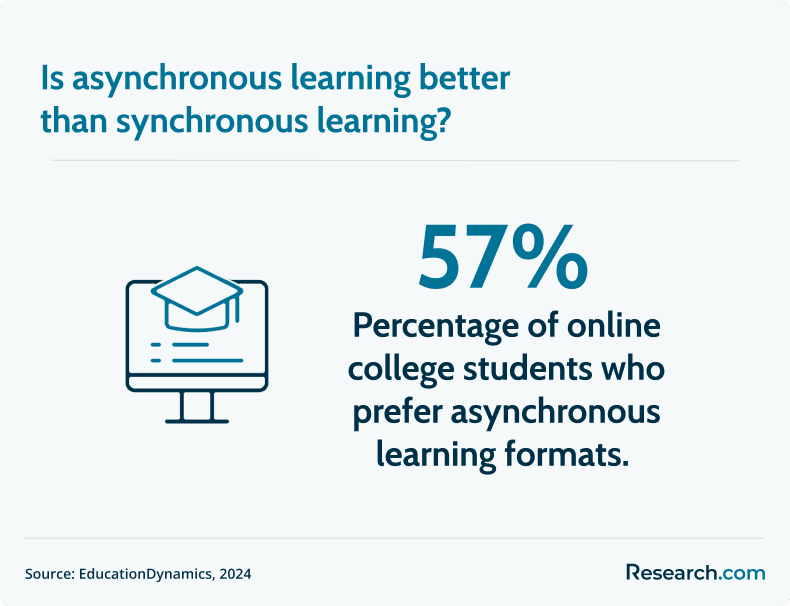
The 2024 EducationDynamics report on online college students found that 57% prefer asynchronous learning. That preference matters in accelerated behavioral health programs because asynchronous classes can be easier to fit around work, but they also require stronger self-management.
The same report found that 51% of undergraduate online students work full time. If you are working full time, do not assume “online” automatically means easy. A seven- or eight-week course can move quickly, especially when it includes research papers, discussion posts, exams, group projects, or fieldwork planning.
Choose an accelerated program if:
- You already have transferable credits and want to finish the bachelor’s degree quickly.
- You can reserve consistent weekly study time during short terms.
- You are comfortable reading, writing, and participating online without daily reminders.
- You have a clear reason for earning the degree, such as promotion, graduate school, addiction counseling preparation, or a career change.
Consider a traditional online program if:
- You are new to college-level study and want a slower academic pace.
- You need more time to absorb complex topics in psychology, ethics, statistics, or counseling theory.
- Your work or caregiving schedule changes frequently.
- You want more time to build relationships with faculty, advisors, and peers.
Who Should Enroll in an Accelerated Online Behavioral Health Science Program?
Accelerated online behavioral health science programs work best for students who are goal-driven, organized, and ready for a demanding pace. They are not ideal for every learner, but they can be highly practical for people who already have experience, credits, or a defined career plan.
Working professionals in human services, healthcare, or education
Students already working in mental health support, social services, addiction recovery, disability services, healthcare administration, corrections, schools, or community organizations may use a bachelor’s degree to qualify for advancement or broader responsibilities.
Some students also use the degree as a step toward credentials in applied behavior analysis, including online ABA certification pathways, or toward state-specific behavioral health and addiction-related credentials. Always verify credential requirements with the appropriate board or agency before enrolling.
Career changers
EducationDynamics reported that 45% of online college students enroll primarily to start a new career and earn more money. Behavioral health science can be appealing to career changers who want work that involves people, support services, mental health systems, addiction recovery, or community-based care.
An accelerated program may help career changers move faster, but it should still be chosen carefully. If your target role requires a master’s degree or license, the bachelor’s degree is only one step in a longer plan.
Associate degree holders and students with prior credits
Many fast behavioral health bachelor’s programs are designed as degree-completion programs. These are often the strongest option for students who have an associate degree, completed general education courses, or left college before finishing a bachelor’s degree.
Transfer students should request an official or unofficial transfer evaluation early. Credits that transfer as electives may not shorten the path as much as credits that satisfy general education, major, or upper-division requirements.
Students planning graduate school
A bachelor’s degree in behavioral health science can help students meet admissions requirements for graduate programs in counseling, human services, psychology, social work, applied behavior analysis, or related fields. If affordability is important at the next level, compare options such as the most affordable online master’s in mental health counseling programs.
Students planning graduate school should check whether the bachelor’s curriculum includes statistics, research methods, abnormal psychology, developmental psychology, ethics, and field experience, since these courses may strengthen graduate applications.
What Does an Accelerated Online Behavioral Health Science Degree Cost?
The cost of an accelerated online behavioral health science degree varies by institution type, tuition model, transfer credit, residency policy, fees, and time to completion. Based on the programs reviewed for this guide, several private or online-focused programs list per-credit tuition in the $350 to $500 or more range, while Big Bend Community College provides a tuition estimate of $7,620 per year.
For a bachelor’s program, our research found estimated annual tuition can range from $5,000 to $12,000 for in-state students at public universities. For out-of-state students, the range can be $10,000 to over $25,000. These figures do not always include books, technology fees, practicum expenses, background checks, or other program-specific costs.
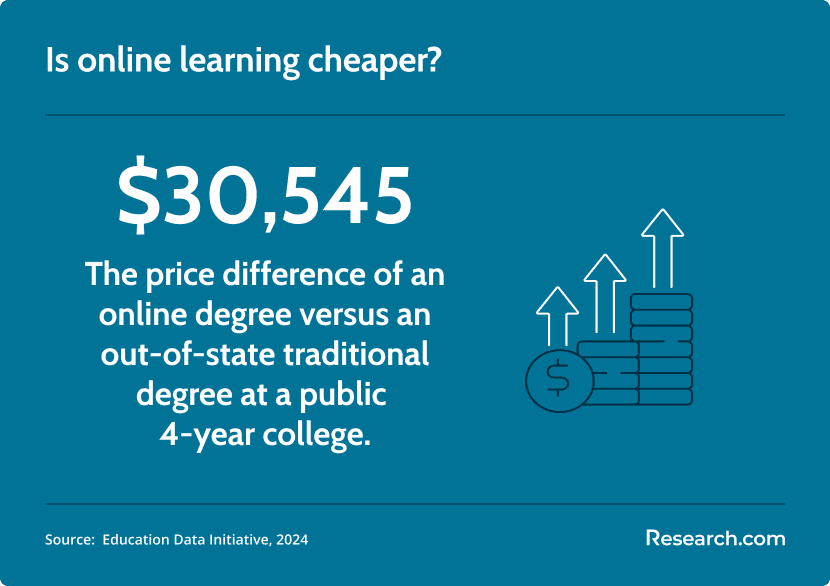
Online learning may lower certain expenses because students often avoid relocation, commuting, transportation, and parking costs. Education Data Initiative reports that an online degree at a public four-year college is $30,545 cheaper than an out-of-state traditional degree. However, online does not automatically mean inexpensive, so compare total program cost rather than tuition alone.
Students comparing accelerated behavioral health science programs should also avoid using unrelated accelerated degree costs as direct benchmarks. For example, the cost structure of accelerated online ESL programs may not reflect behavioral health practicum needs, transfer rules, or credential alignment.
| Cost factor | Why it matters | Question to ask |
| Per-credit tuition | Most online bachelor’s programs charge by credit, so transfer credits can directly reduce cost. | What is the exact per-credit rate for online undergraduate students? |
| Transfer credit acceptance | Accepted credits can reduce both tuition and time in school. | How many of my previous credits apply to this degree, not just transfer as electives? |
| Fees | Technology, online learning, graduation, background check, and practicum fees can increase the final price. | What mandatory fees should I expect from admission through graduation? |
| Residency pricing | Some public institutions charge different rates for in-state and out-of-state students, while others use one online rate. | Do online students pay in-state, out-of-state, or a separate online tuition rate? |
| Military, employer, or adult learner discounts | Some schools offer reduced tuition for military students, veterans, nontraditional students, or employees in partner organizations. | Are there discounts, partnerships, or tuition assistance options I may qualify for? |
Can You Get Financial Aid for a Fast-Track Online Behavioral Health Science Degree?
Yes. Students in accredited fast-track online behavioral health science programs may qualify for financial aid, including federal aid, state aid, institutional scholarships, employer tuition assistance, and targeted behavioral health scholarships. The key is to confirm that the school is properly accredited and that the program is eligible for aid.
- Federal and state financial aid: Students should complete the Free Application for Federal Student Aid to determine eligibility for Pell Grants, federal loans, and other aid. If you need help, use official guidance on filling out the FAFSA.
- Institutional grants and scholarships: Many universities provide scholarships, tuition discounts, or financial counseling. Bellevue University, for example, has scholarship options for Nebraska or Iowa residents.
- Employer tuition assistance: Some employers reimburse tuition for employees pursuing job-related degrees. Students working in healthcare, recovery services, schools, or human services should ask human resources about eligibility.
- Behavioral health and addiction-related scholarships: The American Addiction Centers has scholarship programs for students pursuing behavioral health education and addiction-related studies.
- Targeted service-based awards: The Behavioral Health Scholarship Program from the California Department of Health Care Access covers up to $35,000 for students willing to serve for 12 months in an underserved area in the state.
- Research-focused funding: The National Institutes of Health offers up to $20,000 per academic year to qualified students committed to careers in biomedical, behavioral, and social science health-related research.
Financial aid can be confusing for online learners. Education Data Initiative noted that 24% of students identified financial aid forms as the biggest challenge of enrolling in online college. Do not wait until after admission to ask for help; contact the financial aid office early and ask for a full aid timeline.
IPEDS data show that for 2022-2023, 1.44 million full-time, first-time students in public institutions received some form of financial aid, and 1.33 million received scholarships or grants. Aid is available, but students often need to compare deadlines, eligibility rules, enrollment requirements, and service commitments carefully.
Students looking across accelerated fields should also remember that scholarship sources vary by discipline. Funding options for accelerated online software engineering master’s programs, for example, may differ significantly from behavioral health awards tied to public service, addiction treatment, or mental health workforce needs.
The chart below uses additional IPEDS data on students who received financial aid by institutional control.
Admission Requirements for Accelerated Online Behavioral Health Science Degrees
Admission requirements vary, but accelerated online behavioral health science programs commonly expect applicants to show prior academic preparation, especially if the program is built for degree completion. The most important requirement is often transferable college credit.
- Prior college credit or an associate degree: Many accelerated programs require an associate degree or at least 60 semester hours from an accredited institution. This differs from short career programs or technical training, such as an accelerated online user experience design course, where admissions may rely more heavily on portfolio potential or related experience.
- High school completion: Applicants may need to submit a high school transcript, GED certificate, homeschool completion documentation, or another approved equivalent.
- College transcripts: Schools generally require official transcripts from every college or university previously attended.
- Minimum GPA: Some programs set a minimum GPA for admission or for transfer coursework, although the exact requirement varies by school.
- English proficiency: International students may need evaluated transcripts and proof of English language proficiency.
- Resume or work history: Some programs consider professional experience, especially for adult learners, transfer students, or applicants already working in human services.
Admissions questions to ask before applying
- How many of my credits will apply toward the behavioral health science major?
- Do you require a minimum number of completed credits before I can enter the accelerated track?
- Are there prerequisite courses I must complete before starting upper-division behavioral health coursework?
- Can I receive credit for prior learning, military training, professional certifications, or exams?
- Will the admissions office provide a written degree plan before I enroll?
Common Courses in an Accelerated Online Behavioral Health Science Program
Behavioral health science programs study how psychological, social, biological, cultural, and environmental factors affect behavior and well-being. At the bachelor’s level, the curriculum is usually broad rather than clinical, meaning it prepares students for support roles, human services work, addiction-related pathways, case management, or graduate study rather than independent clinical practice.
Some foundational topics may overlap with health-related programs such as an accelerated online exercise science degree, especially in areas like health behavior, wellness, human development, and prevention. Behavioral health science, however, places greater emphasis on mental health, counseling concepts, addiction, ethics, and social systems.
| Course area | Examples of topics | Why it matters |
| Psychology and social science foundations | Introduction to psychology, sociology, cultural anthropology | Builds the base for understanding individual and group behavior |
| Human development and behavior | Developmental psychology, social psychology, personality psychology | Helps students understand behavior across the lifespan and in social context |
| Behavioral health and mental health | Abnormal psychology, psychopathology, treatment of mental health disorders, trauma-informed care | Introduces common conditions and support approaches used in behavioral health settings |
| Addiction and recovery | Addictive disorders, psychology of addiction and recovery, relapse prevention | Supports students interested in substance use counseling or recovery services |
| Counseling and helping skills | Counseling theories, therapeutic communication, interviewing, crisis response | Develops practical skills for client-facing support roles |
| Ethics and professional practice | Ethics, values, boundaries, documentation, case management | Prepares students for responsible practice in sensitive service environments |
| Research and data | Statistics, research methods, program evaluation, capstone projects | Strengthens graduate school readiness and evidence-based decision-making |
| Practicum or internship | Supervised field experience in treatment centers, community agencies, or mental health settings | Connects coursework to real client-service environments and may support credential preparation |
If you are deciding between closely related majors, compare how each degree treats practice, research, licensure, and client contact. This guide to social work versus psychology can help clarify how different behavioral and mental health pathways diverge.
Specializations in Accelerated Online Behavioral Health Science Programs
Specializations help students shape a broad behavioral health science degree around a specific career interest. At the bachelor’s level, these may appear as concentrations, emphasis areas, certificates, electives, or practicum choices.
| Specialization | What you study | When it makes sense |
| Addiction and substance abuse counseling | Substance use disorders, recovery planning, relapse prevention, counseling skills | You want to work in addiction recovery or prepare for credentials such as CADC or LCDC where applicable |
| Mental health and clinical support | Abnormal psychology, trauma, psychiatric disorders, treatment systems | You want entry-level mental health support work or plan to pursue graduate clinical training |
| Child and adolescent behavioral health | Child development, behavior management, family systems, youth interventions | You want to work with schools, youth services, juvenile programs, or pediatric behavioral health teams |
| Crisis intervention and case management | Assessment, resource coordination, crisis response, documentation, client advocacy | You want roles in hospitals, community agencies, corrections, shelters, or human services organizations |
| Health and wellness psychology | Stress, prevention, public health, behavior change, lifestyle support | You are interested in prevention, coaching, integrated care, or community wellness programs |
Specializations are helpful, but they are not a substitute for licensure. If your goal is to become a licensed counselor, clinical social worker, psychologist, or board-certified behavior analyst, confirm the next required degree and credential steps before selecting electives.
EducationDynamics survey respondents reported that many online students strongly agreed their online education helped prepare them for their careers. The chart below provides additional detail.
How to Choose the Best Accelerated Online Behavioral Health Science Program
The best accelerated program is not necessarily the one with the shortest advertised completion time. It is the one that accepts your credits, fits your schedule, meets accreditation expectations, supports your career plan, and keeps your total cost reasonable.
Key factors to compare
- Accreditation: Choose a school accredited by a recognized accrediting body. Accreditation affects financial aid eligibility, transferability, employer confidence, and graduate school options.
- Transfer credit policy: Some programs accept up to 90 transfer credits. Ask how many credits apply directly to your degree requirements.
- Term length and schedule: Five- to 10-week courses and eight-week sessions can speed completion, but they also increase weekly workload.
- Start dates: Multiple annual starts can prevent you from waiting months to begin.
- Learning format: Asynchronous programs offer flexibility, while cohort programs provide structure and peer accountability.
- Field experience: Practicums and internships can strengthen your resume and may support credential preparation, depending on state or certification rules.
- Licensure alignment: If you plan to pursue counseling, addiction counseling, applied behavior analysis, or another regulated credential, verify requirements with the relevant board.
- Graduate school preparation: If your goal is advanced study, check whether the program includes research methods, statistics, abnormal psychology, ethics, and faculty recommendations.
- Advising and career services: Strong advising can help you choose the right electives, plan for practicum hours, prepare for graduate school, and identify entry-level roles.
EducationDynamics reported that online college students consider several factors when choosing a school: affordability at 62%, programs offered at 56%, overall reputation of school at 38%, ease of admission at 37%, scholarships offered at 34%, reputation of specific program at 31%, proximity to home/work at 29%, credit acceptance policies at 28%, quality of faculty at 26%, and ease of finding information on the school or program webpage at 23%.
| Student priority | What to look for | Red flag |
| Fastest completion | High transfer credit acceptance, year-round courses, frequent starts | A short timeline advertised without a transcript review |
| Lowest cost | Low per-credit tuition, grants, employer aid, accepted transfer credits | Low tuition but high fees or poor transfer acceptance |
| Graduate school pathway | Research, statistics, psychology foundations, faculty support | Few academic advising resources or unclear graduate preparation |
| Career readiness | Practicum, case management coursework, addiction or crisis-focused electives | No field experience or limited career support |
| Licensure preparation | Clear mapping to state or certification requirements | Vague claims that the degree “leads to licensure” without details |
If you are comparing behavioral health with other public-service fields, be careful not to rely only on rankings from unrelated disciplines. For example, the decision criteria for the most affordable online criminal justice master’s degrees may differ from behavioral health programs because licensure, practicum, and clinical-adjacent preparation can play a larger role.
Career Outlook for Accelerated Online Behavioral Health Science Graduates
Behavioral health science graduates can pursue roles in community mental health, addiction recovery, case management, social services, crisis support, residential programs, healthcare organizations, schools, nonprofit agencies, corrections, and public health programs. Many positions are support or coordination roles; independent clinical roles usually require graduate education and licensure.
O*NET OnLine projects employment for substance abuse, behavioral disorder, and mental health counselors to grow by 19% from 2023 to 2033, with roughly 48,900 job openings per year. The National Center for Health Workforce Analysis also expects shortages in certain behavioral health roles, with unmet needs reaching between 36% and 90% by 2037.
The broader U.S. behavioral health market is also projected to grow from $92.14 billion in 2025 to $132.46 billion by 2032. Market growth does not guarantee a specific salary or job offer, but it does reflect continued investment in behavioral health services.
Students interested in applied behavior analysis can compare education requirements and earnings using Research.com’s guide to behavior analyst salary and career paths. For many clinical, counseling, or analyst roles, the bachelor’s degree is a foundation rather than the final credential.
| Potential role area | Typical bachelor’s-level responsibilities | May require additional credential? |
| Case management | Coordinate services, document client needs, connect clients to resources, monitor progress | Sometimes, depending on employer and setting |
| Addiction recovery support | Support treatment plans, facilitate recovery resources, assist counseling teams | Often, especially for counseling credentials |
| Behavioral health technician or specialist | Provide structured support in residential, clinical, or community settings | Employer requirements vary |
| Crisis or community support | Assist with intervention, referrals, safety planning, and service coordination | Training or certification may be required |
| Graduate school pathway | Prepare for counseling, social work, psychology, ABA, or human services graduate programs | Yes, for most licensed clinical roles |
The chart below outlines projected annual job openings for roles commonly connected to behavioral health science education.
What Graduates Say About Accelerated Online Behavioral Health Science Programs
- Sam: "The online format helped me learn with classmates from different states and work settings. Their experiences made the behavioral health coursework feel more connected to real communities, and the degree gave me a stronger base for graduate school."
- Jeremy: "My online behavioral health science courses connected directly to what I was seeing in addiction recovery volunteering. The virtual assignments and applied projects helped me build confidence before moving into more formal client-support work."
- Megan: "I needed a program that would fit around full-time work and parenting. The accelerated schedule was demanding, but the flexibility and faculty support helped me finish in under two years and move into a case manager role after graduation."
Why Accreditation Matters for Online Behavioral Health Science Degrees
Accreditation should be one of the first items you verify. A properly accredited institution is more likely to qualify for federal financial aid, transfer credit recognition, employer acceptance, and graduate school consideration. In behavioral health, accreditation can also matter when students later pursue credentials, supervised practice, or graduate-level licensure pathways.
Institutional accreditation is not the same as licensure approval. A school can be accredited while a specific degree still may not meet every requirement for a state credential. If you are considering psychology-related options and need to balance quality with affordability, compare programs such as the most affordable online psychology degrees, but always check how each program aligns with your target career.
Common Challenges in Accelerated Online Behavioral Health Science Programs
Accelerated programs can save time, but the pace can be difficult. Students often have less time to absorb complex topics such as trauma, ethics, psychopathology, addiction, research methods, and crisis intervention. The workload can also become stressful for students working full time or caring for family members.
Online students may also need to be proactive about networking, practicum planning, and faculty communication. If your program includes fieldwork, ask whether you must find your own site and whether placements are available in your area.
Students planning an ABA-related pathway should compare bachelor’s, master’s, and certification requirements carefully. For example, reviewing the most affordable online BCBA programs can help you understand how later graduate-level choices may affect cost and credential planning.
Do Employers Respect Accelerated Online Behavioral Health Science Degrees?
Employers are more likely to view an accelerated online behavioral health science degree as credible when it comes from an accredited institution, includes relevant coursework, and is supported by practical experience. The word “accelerated” is usually less important than whether the program prepared you to document services, communicate ethically, understand client needs, and work within behavioral health systems.
Students can strengthen employer confidence by completing practicums, earning relevant certifications when appropriate, volunteering in behavioral health settings, and keeping examples of applied coursework or capstone projects. If you are concerned about online degree credibility in a related field, this guide on whether online psychology degrees are respected provides additional context.
Is an Accelerated Online Behavioral Health Science Degree Worth It?
An accelerated online behavioral health science degree can be worth it if it helps you finish faster, use transfer credits efficiently, qualify for advancement, enter a behavioral health support role, or prepare for graduate study. The value is strongest for students who already have credits and a clear plan.
It may be less worthwhile if the program does not meet your state’s credential requirements, lacks field experience, costs more than comparable options, or advertises a fast timeline that does not apply to your transcript. Students should compare total cost, time to graduation, career outcomes, licensure alignment, and graduate school requirements before enrolling.
If your main goal is speed and you are also considering psychology-related programs, compare the structure of the fastest online psychology degree programs with behavioral health science options. Psychology programs may offer broader academic preparation, while behavioral health science programs may be more applied toward service settings.
Common Mistakes to Avoid
- Choosing only by advertised speed: An 18-month timeline may depend on transfer credits you do not have.
- Ignoring accreditation: Lack of recognized accreditation can affect financial aid, transfer credits, graduate school, and employer acceptance.
- Assuming the degree leads directly to licensure: Many counseling, psychology, social work, and ABA roles require graduate education and supervised experience.
- Looking only at tuition: Fees, books, practicum costs, lost work hours, and rejected transfer credits can change the real price.
- Skipping the transfer evaluation: You need to know which credits apply to degree requirements before you can estimate time and cost.
- Underestimating the workload: Accelerated online courses compress deadlines and may require significant weekly reading, writing, and discussion.
- Not asking about practicum logistics: Online students may still need local field placements, background checks, or supervised hours.
Questions to Ask Before Enrolling
- Is the institution accredited by a recognized accrediting body?
- How many of my transfer credits will count toward graduation requirements?
- Can I receive a written degree completion plan before I commit?
- What is the total estimated cost, including fees and materials?
- Does the program include a practicum, internship, or capstone?
- Will the curriculum help me meet prerequisites for my target graduate program?
- Does this degree meet any coursework requirements for the credential I want in my state?
- How often do courses start, and are required courses available year-round?
- What academic, career, and field placement support is available to online students?
Key Insights
- Fast online behavioral health science degrees are usually fastest for transfer students. Programs listing 18-month completion times often assume an associate degree or substantial prior college credit.
- Accreditation is nonnegotiable. It affects financial aid, transferability, graduate school options, employer confidence, and future credential planning.
- Accelerated does not mean easier. Short seven- to eight-week courses can create a heavier weekly workload than traditional 15- to 16-week terms.
- Behavioral health science bachelor’s degrees often lead to support, case management, addiction recovery, or human services roles. Many licensed clinical careers require graduate education and supervised practice.
- Cost should be evaluated by total degree price, not tuition alone. Transfer credits, fees, financial aid, practicum costs, and time away from work all affect ROI.
- The best program is the one that fits your transcript, schedule, career goal, and credential requirements—not simply the one with the shortest advertised timeline.
References:
- Aslanian, C.B. and Fischer, S. (2024). Online College Students Report 2024. EducationDynamics. https://insights.educationdynamics.com/rs/183-YME-928/images/EDDY-Online-College-Students-2024.pdf
- Hanson, M. (August 2024). Cost of Online Education vs. Traditional Education. Education Data Initiative. https://educationdata.org/cost-of-online-education-vs-traditional-education
- Integrated Postsecondary Education Data System (n.d.). Student Financial Aid 2022-23 provisional data. National Center for Education Statistics. https://nces.ed.gov/ipeds/trendgenerator/app/build-table/8/25?rvc=3&cvc=8&rvc=2&cvc=3&rid=4&cid=46 Data Retrieved July 2025
- National Center for Health Workforce Analysis (November 2024). State of the Behavioral Health Workforce, 2024. Bureau of Health Workforce. https://bhw.hrsa.gov/sites/default/files/bureau-health-workforce/state-of-the-behavioral-health-workforce-report-2024.pdf
- National Council on Mental Wellbeing (2024). 2024 CCBHC Impact Report. https://www.thenationalcouncil.org/wp-content/uploads/2025/04/24.06.3_2024-CCBHC-Impact-Report_FINAL.pdf.pdf
- O*NET OnLine (n.d.). O*NET OnLine Help. https://www.onetonline.org/help/online/find_occ Data retrieved July 2025
- U.S. Bureau of Labor Statistics (n.d.). Occupational Employment and Wage Statistics, Industry: Cross-industry, Private, Federal, State, and Local Government, Period: May 2024. https://data.bls.gov/oes/#/industry/000000 Data retrieved July 2025
- ZipRecruiter (July 2025). Behavioral Health Science Salary. https://www.ziprecruiter.com/Salaries/Behavioral-Health-Science-Salary#Yearly
Other Things You Need to Know About Accelerated Online Behavioral Health Science Degrees
To enroll in a 2027 fast-track online behavioral health science program, applicants typically need a high school diploma or equivalent and may require coursework in biology or psychology. Specific prerequisites vary; checking with individual institutions is advised for detailed entry criteria.
Fast-track programs typically require a reliable high-speed internet connection, a laptop or desktop computer, and software for virtual classrooms. Check if your program mandates specific applications or learning management systems for compatibility.
Yes. Most accredited programs require supervised fieldwork or practicum hours, often 100 to 600 hours, before graduation. Placement sites must usually be approved by the program, and students may need background checks, immunization records, and site-specific training before starting the placement.