2027 Best Online Doctorate in Occupational Therapy Programs

Co-Founder and Chief Data Scientist
Choosing an online Doctor of Occupational Therapy is not just a question of convenience. It affects licensure preparation, clinical training, fieldwork access, cost, schedule, and long-term career options. Occupational therapists help people participate in daily activities after illness, injury, disability, developmental delay, aging-related change, or environmental barriers. For students and licensed practitioners, the right OTD program can determine how prepared they are for direct care, leadership, education, research, telehealth, or program development roles.
This guide explains how online and hybrid occupational therapy doctorates work, how employers view them, what accreditation means, what costs and admission requirements to expect, and how to compare programs before applying. It is written for two groups: aspiring occupational therapists considering an entry-level OTD and current occupational therapists looking at a post-professional OTD for advancement.
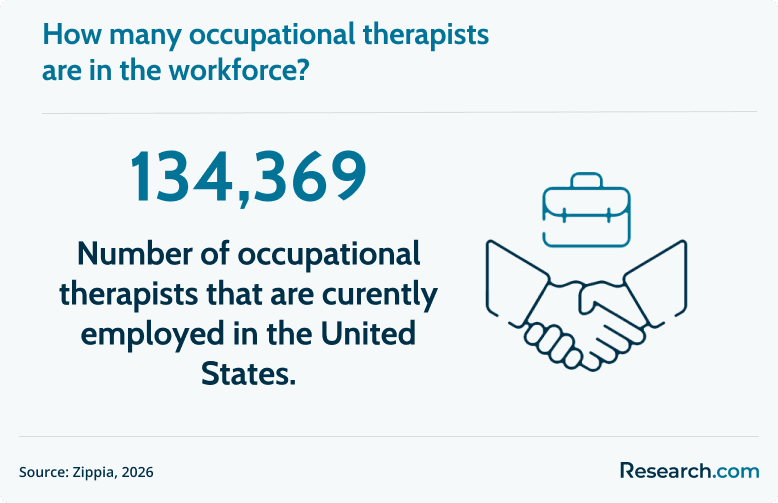
There are currently 160,000 occupational therapists in the U.S. (U.S. Bureau of Labor Statistics, 2025). These professionals evaluate client needs, monitor progress, design interventions, educate families and caregivers, and help people function more independently at home, school, work, and in the community. Occupational therapists work across the lifespan and are employed in hospitals, clinics, schools, rehabilitation centers, long-term care facilities, home health, and other healthcare settings.
Online Doctorate Program in Occupational Therapy Table of Contents
- Can an occupational therapy doctorate be completed fully online?
- Do employers respect online occupational therapy doctorates?
- Are online doctorates accepted internationally?
- Online vs. campus-based doctorate programs in occupational therapy
- 2027 selected online and hybrid OTD programs
- What does an online occupational therapy doctorate cost?
- Admission, skill, and technology requirements
- Common courses in an online OTD curriculum
- Related healthcare fields that can complement occupational therapy
- How to choose an online doctorate in occupational therapy
- Can you follow a research path without writing a dissertation?
- Which certifications can strengthen occupational therapy practice?
- How do online OTD programs support mentorship and networking?
- How do online OTD programs maintain clinical rigor?
- Can healthcare administration training help an OT career?
- How do online OTD programs use telehealth and digital tools?
- Career advancement options after an online OTD
- How to balance work, life, and online doctoral study
- Financial planning for an online OTD
- Other graduate healthcare degrees to consider
Quick Answer: Is an Online OTD a Good Option?
An online or hybrid Doctor of Occupational Therapy can be a strong option if the program fits your career stage, is properly accredited, provides adequate fieldwork or capstone support, and matches the licensure expectations in the state or country where you plan to practice. Entry-level OTD programs are usually hybrid because students need in-person labs, fieldwork, and supervised clinical experiences. Post-professional OTD programs for licensed occupational therapists are more likely to be fully online or mostly online.
The most important distinction is this: an entry-level OTD is designed for people preparing to become occupational therapists, while a post-professional OTD is designed for already licensed or practicing occupational therapists who want deeper expertise, leadership roles, teaching opportunities, or advanced practice development.
| Decision Point | Best Fit | What to Verify Before Applying |
| You are not yet an occupational therapist | Entry-level OTD, often hybrid | ACOTE status, fieldwork structure, licensure exam preparation, state requirements |
| You are already an occupational therapist | Post-professional OTD, often online | Institutional accreditation, capstone expectations, schedule flexibility, leadership or specialization options |
| You need maximum flexibility | Mostly asynchronous online format | Required live sessions, residencies, technology requirements, weekly workload |
| You want hands-on clinical preparation | Hybrid program with local or arranged clinical placements | Lab requirements, fieldwork placement support, supervision standards |
Can you get a degree completely online?
Whether an occupational therapy doctorate can be completed fully online depends on the type of OTD. Online education has expanded rapidly, and online education trends, projections, and data report that the market will gain $834.2 billion by 2030, with a compound annual growth rate (CAGR) of 18.1% (Grand View Research, 2024). That growth has made online healthcare education more accessible, but occupational therapy still requires hands-on learning.
An entry-level OTD, sometimes called an eOTD, is intended for students preparing for occupational therapy licensure. Because these students must build clinical skills from the ground up, most entry-level programs use a hybrid format rather than a fully online format. Coursework may be delivered online, but students should expect in-person labs, fieldwork, clinical practice, and doctoral experiential components.
A post-professional OTD, or PPOTD, serves licensed or practicing occupational therapists who already have foundational clinical training. These programs are more likely to be fully online, with synchronous and asynchronous coursework. Some still require limited campus attendance, a residency, local fieldwork, or a capstone presentation.
Will employers take my online degree seriously?
Employers generally focus less on whether coursework was delivered online and more on whether the degree came from a legitimate, accredited institution and whether the graduate can demonstrate competence. This is similar to how employers evaluate other healthcare programs delivered online, such as an online dental hygiene degree.
For entry-level occupational therapy candidates, the more important questions are whether the program meets accreditation expectations and whether the graduate is eligible for the required licensure pathway. For post-professional OTD graduates, employers may look at how the doctorate strengthened leadership, teaching, specialty practice, evidence-based practice, or program development skills.
Online learning is also common among working adults. A recent report found that 76% of all working learners preferred hybrid or fully online degree programs because these formats better fit professional schedules (Capella University, 2024).
Are online degrees recognized all over the world?
Online education is now a normal part of higher education in the United States. As of late 2024, approximately 54.8% of all postsecondary students were enrolled in at least one distance education course (National Center for Education Statistics, 2024).
International recognition is more complicated. Recent surveys report that 75% to 79% of global employers hired candidates with online degrees within the past year (Study.com, 2026). The same source notes that, outside the U.S. and especially in technology and business sectors, roughly 90% of employers value online and in-person degrees equally.
However, occupational therapy is a regulated healthcare profession. If you plan to work outside the U.S., do not assume that an online OTD will automatically satisfy local licensing, registration, immigration, or credential evaluation rules. Contact the occupational therapy regulatory body in the country where you want to practice before enrolling.
Online vs. Traditional Doctorate Program in Occupational Therapy
Online, hybrid, and campus-based OTD programs may share similar academic goals, but the student experience can differ substantially. Campus-based programs usually provide immediate access to labs, simulation spaces, faculty offices, peer groups, and clinical equipment. Hybrid and online programs offer more scheduling flexibility but require students to be more self-directed and technologically prepared.
Research on asynchronous learning history and benefits shows why many students value the ability to review content at their own pace. In occupational therapy education, digital learning can also support competency development through peer learning groups, virtual cases, simulations, and gamified learning activities (Hwang et al., 2023).
| Format | Advantages | Trade-Offs | Best For |
| Fully online | Maximum schedule flexibility; easier for working professionals; no routine commute | Less face-to-face interaction; may still require local projects, capstones, or brief residencies | Licensed occupational therapists pursuing a post-professional OTD |
| Hybrid | Combines online coursework with hands-on labs, fieldwork, and campus intensives | Requires travel or relocation planning for in-person components | Entry-level OTD students and learners who need clinical skill development |
| Campus-based | Frequent faculty access, peer interaction, labs, and structured schedules | Less flexibility and potentially higher indirect costs | Students who prefer in-person learning and a highly structured environment |
Is an online degree cheaper?
An online OTD is not automatically cheaper than a campus program. Tuition can be similar, and some online programs charge technology, e-book, or digital service fees. The savings often come from reduced commuting, relocation, meal, housing, and campus-related expenses. Cost patterns can resemble those seen in other online healthcare programs, including the most affordable online master's programs in healthcare administration.
Is an online degree as good as a regular degree?
An accredited online or hybrid occupational therapy doctorate can be academically credible when it provides strong coursework, fieldwork, faculty support, and appropriate clinical preparation. For entry-level OTD students, accreditation is especially important because these programs prepare graduates for licensure-related steps. ACOTE currently accredits 89 entry-level OTDs, while 69 institutions are in the process of being accredited (ACOTE, n.d.). Students comparing healthcare research-focused options may also want to review the best online clinical research programs to understand how accreditation and curriculum quality differ by field.
2027 Best Online Doctorate Program in Occupational Therapy
The following programs represent online or hybrid occupational therapy doctorate options for different types of learners. Some are entry-level programs for future occupational therapists, while others are post-professional programs for licensed practitioners. When reviewing this list, compare accreditation, fieldwork expectations, residency requirements, total cost, and whether the program aligns with your career stage.
| School | Program Type | Length | Credits | Cost Information | Accreditation |
| Boston University | Doctor of Occupational Therapy (Entry-Level) | Three years | 96 | $1,994 per credit; $85,872 total program cost | Accreditation Council for Occupational Therapy Education (ACOTE), New England Commission of Higher Education (NECHE) |
| George Washington University | Occupational Therapy Doctorate (Entry-Level) | Three years | 107 | $17,822 $18,625 per semester | ACOTE, Middle States Commission on Higher Education (MSCHE) |
| Baylor University | Occupational Therapy Doctorate (Entry-Level) | Two years | 108 | $17,820 per semester | ACOTE, Southern Association of Colleges and Schools Commission on Colleges (SACSCOC) |
| Towson University | Occupational Therapy Doctorate (Post-Professional) | Two years | 33 | $669 per credit in-state; $1,210 per credit out-of-state | MSCHE |
| Quinnipiac University | Occupational Therapy Doctorate (Post-Professional) | Two years | 32 | $1,025 per credit | NECHE |
1. Boston University
Boston University offers a hybrid entry-level OTD that emphasizes evidence-informed practice, professional service delivery, neuroscience, behavior change, and management of occupational therapy services. Students complete two levels of fieldwork, a practicum, and a capstone, which gives them structured exposure to applied clinical learning and professional practice.
- Program Length: Three years
- Tracks/concentrations: Doctor of Occupational Therapy (Entry-Level)
- Cost per Credit: $1,994 ($85,872 total program cost)
- Required Credits to Graduate: 96
- Accreditation: Accreditation Council for Occupational Therapy Education (ACOTE), New England Commission of Higher Education (NECHE)
2. George Washington University
George Washington University’s hybrid entry-level OTD includes online learning and required on-campus sessions for five weekdays. The curriculum covers systems and advocacy, mental health occupational therapy, group dynamics, research exposure, case analysis, fieldwork, and doctoral experiential activities.
- Program Length: Three years
- Tracks/concentrations: Occupational Therapy Doctorate (Entry-Level)
- Estimated Total Cost: $17,822 $18,625 (per semester)
- Required Credits to Graduate: 107
- Accreditation: ACOTE, Middle States Commission on Higher Education (MSCHE)
3. Baylor University
Baylor University’s hybrid entry-level OTD combines online learning with in-person and applied components. Because 41% of the curriculum is online, students can complete a significant portion of academic work remotely while still participating in hands-on labs, collaborative activities, fieldwork, on-site immersions, and doctoral mentorship.
- Program Length: Two years
- Tracks/concentrations: Occupational Therapy Doctorate (Entry-Level)
- Estimated Tuition Cost: $17,820 (per semester)
- Required Credits to Graduate: 108
- Accreditation: ACOTE, Southern Association of Colleges and Schools Commission on Colleges (SACSCOC)
4. Towson University
Towson University offers a fully online post-professional OTD for occupational therapists who want advanced practice knowledge, leadership preparation, and applied scholarship. Coursework includes advanced assessment and intervention, ethics and social justice in human services, healthcare policy, and a capstone project tied to the student’s area of practice.
- Program Length: Two years
- Tracks/concentrations: Occupational Therapy Doctorate (Post-Professional)
- Cost per Credit: $669 (in-state), $1,210 (out-of-state)
- Required Credits to Graduate: 33
- Accreditation: MSCHE
5. Quinnipiac University
Quinnipiac University’s online post-professional OTD is designed for practicing occupational therapists and includes a week-long on-campus residency. The program focuses on evidence-based practice, leadership in higher education, policy, ethics, directed study, professional seminars, and capstone experiences.
- Program Length: Two years
- Tracks/concentrations: Occupational Therapy Doctorate (Post-Professional)
- Cost per Credit: $1,025
- Required Credits to Graduate: 32
- Accreditation: NECHE
How much does an online doctorate program in occupational therapy cost?
A doctorate degree in occupational therapy usually costs around $11,368 (in-state) and $23,777 (out-of-state). Tuition can also reach up to $15,364 (in-state) to $40,058 (out-of-state) (College Tuition Compare, 2023a; 2023b). Your final cost depends on the school, residency status, program length, credit load, online fees, books, clinical travel, campus visits, fieldwork expenses, and financial aid.
Is an online occupational therapy doctorate worth it?
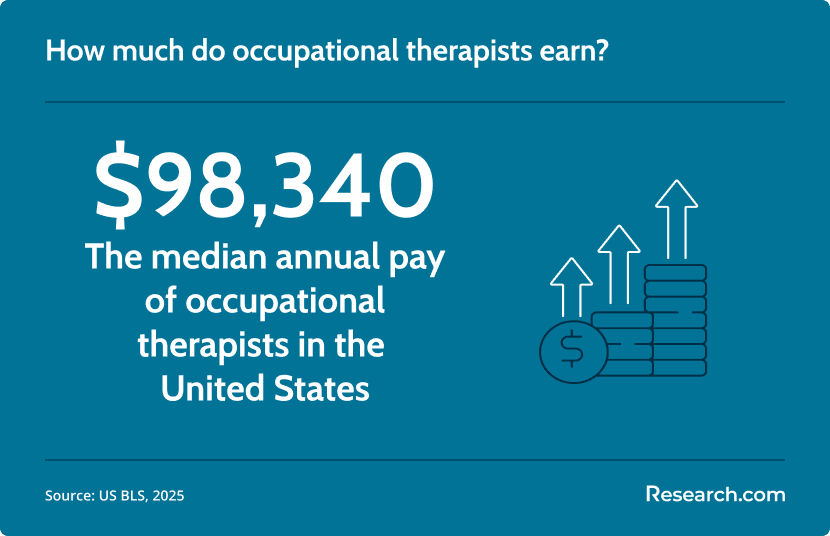
An online OTD may be worth it if it helps you meet a specific goal: becoming eligible for occupational therapy practice through an entry-level pathway, moving into leadership, qualifying for teaching or clinical education roles, building a specialty area, or developing a capstone that improves services in your workplace. Occupational therapists earn around $92,800 annually (BLS, 2023b), but salary outcomes vary by setting, location, experience, and role.
For future occupational therapists, a hybrid entry-level OTD can provide the academic and clinical preparation needed for the profession while offering more flexibility than a fully campus-based format. For current occupational therapists, a post-professional online OTD can be more practical because it allows them to keep working while applying coursework directly to their practice.
Some students also use the OTD to connect occupational therapy with broader healthcare priorities. For example, professionals interested in population health, prevention, or systems-level interventions may compare OTD options with a doctorate of public health online to decide which degree better fits their goals.
| Cost Factor | Why It Matters | Question to Ask |
| Tuition model | Programs may charge per credit, per semester, or by total program cost. | Is the published price tuition only or total estimated cost? |
| Residency or campus visits | Hybrid programs may require travel, lodging, and time away from work. | How often must I be on campus? |
| Fieldwork and clinical placement | Students may incur transportation, background check, immunization, or site-related expenses. | Does the school help arrange placements near me? |
| Technology and materials | Online students may pay digital platform, e-book, software, and equipment fees. | What technology costs are not included in tuition? |
| Lost income | Full-time clinical experiences can reduce work availability. | Can I realistically keep working during each term? |
What are the requirements of an online doctorate program in occupational therapy?
OTD requirements vary by school and by whether the program is entry-level or post-professional. Entry-level programs usually evaluate academic readiness, prerequisites, observation experience, and fit for clinical training. Post-professional programs generally require proof that the applicant is already an occupational therapist or has the required professional background.
Admission Requirements
- Official transcripts. Applicants usually submit transcripts from prior college work. Post-professional OTD programs often request a master’s degree transcript in occupational therapy, while entry-level OTD programs may review a bachelor’s transcript and prerequisite courses. Applicants from related science pathways, including master's in medical science programs, may use transcripts and diplomas to document academic preparation when applicable.
- GPA and test scores. Many universities expect a GPA of at least 3.0. GRE requirements vary, and some applicants may submit scores even when they are optional.
- Prerequisite coursework. Entry-level OTD programs commonly require completed science and math courses before enrollment.
- Licensure or certification documents. Post-professional OTD applicants may need to provide a current occupational therapy license, certification, or other practice credential.
- Observation or fieldwork hours. Some programs request proof of observation or practice experience. Requirements can be around 40 hours or more.
- OTCAS application. The Occupational Therapist Centralized Application Service lets applicants submit materials to multiple occupational therapy programs through one system when participating schools use it.
- Supplemental materials. Essays, recommendations, interviews, resumes, language proficiency scores, and background checks may also be required.
General Requirements
- Communication. Occupational therapists must explain interventions clearly, listen carefully, document accurately, and collaborate with clients, caregivers, and healthcare teams.
- Compassion. Effective occupational therapy requires empathy and patience, especially when clients are adapting to disability, pain, trauma, developmental challenges, or loss of independence.
- Interpersonal skills. Occupational therapists regularly coordinate care with physical therapists, speech-language pathologists, nurses, physicians, social workers, teachers, and family members.
- Critical thinking. Students must learn to evaluate functional limitations, choose appropriate interventions, adapt treatment plans, and respond to changing client needs.
What are the technological requirements of students for online learning?
Online OTD students need dependable technology because coursework may include video meetings, recorded lectures, simulations, digital submissions, group projects, and telehealth-related assignments. In one report, 70% of health degree students and 56% of nursing students agreed that professors paid attention to their learning, social, and emotional needs during online classes.
Most programs expect students to have a reliable internet connection, webcam, microphone, current browser, communication software, productivity tools, and enough computing power to run learning platforms smoothly. Hardware expectations often include the following or better:
- 8GB RAM
- 128GB SSD storage
- Windows 10/macOS Catalina
- Intel Core i5/Apple M1 chip with 8-core CPU
Courses to Expect in Online Doctorate Program in Occupational Therapy
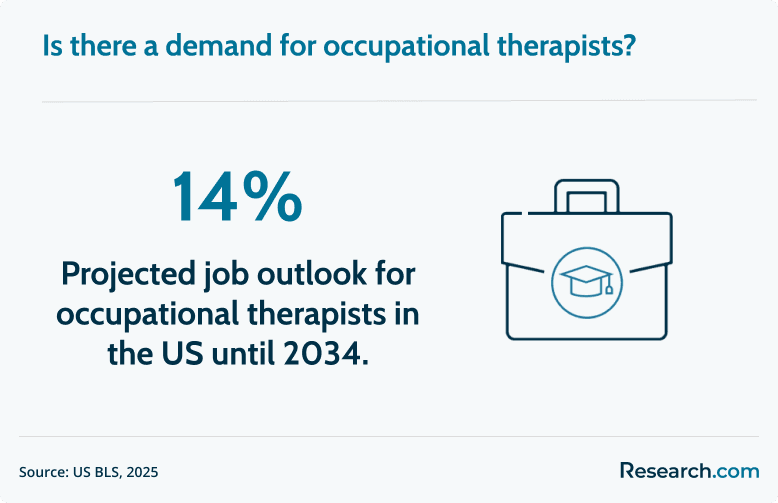
Occupational therapy doctoral curricula combine science, human occupation, assessment, intervention, leadership, research, and applied clinical learning. Employment for occupational therapists is projected to increase by 14% until 2034 (BLS, 2025), so students should expect programs to emphasize evidence-based care, interprofessional collaboration, and readiness for changing healthcare settings.
- Analysis of functional movements. Students examine gross and fine motor performance, movement patterns, biological and environmental influences, assessment methods, and treatment planning for functional change.
- Occupational therapy processes. This coursework teaches students how to interview clients, interpret occupational performance needs, connect practice models with client goals, and design interventions.
- Health in society and populations. Students study how health systems, public policy, social structures, access, and community conditions shape client participation and outcomes.
- Leadership and management. Similar to topics covered in an online master's in healthcare management, this area introduces service delivery, budgeting, supervision, communication, organizational systems, and leadership in care settings.
| Course Area | What Students Learn | Why It Matters in Practice |
| Functional movement | Motor skills, movement analysis, assessment, and intervention planning | Supports treatment for clients with physical, neurological, or developmental limitations |
| OT process | Evaluation, theory application, goal setting, and intervention design | Builds the core reasoning process used in daily clinical work |
| Population health | Social determinants, systems, policy, and community-level influences | Helps therapists address barriers beyond the clinic |
| Leadership | Management, communication, budgeting, team coordination, and service improvement | Prepares graduates for supervisory, administrative, and program development roles |
Exploring Related Fields for Interdisciplinary Growth
Occupational therapy overlaps with rehabilitation, mental health, public health, education, assistive technology, healthcare operations, and community-based care. Students who understand adjacent fields can collaborate more effectively and build career paths that extend beyond traditional clinical roles. For example, learners interested in mobility, therapeutic exercise, and rehabilitation support may compare occupational therapy with PTA online programs.
Other related areas include health informatics, community health education, healthcare administration, accessibility consulting, and behavioral health. These fields can help occupational therapy professionals use data, telehealth, community programs, and interdisciplinary care models to serve clients more effectively.
Things to Look for in an Online Doctorate Program in Occupational Therapy
The best online OTD for one student may be a poor fit for another. Your choice should depend on licensure goals, accreditation, fieldwork support, schedule, cost, faculty expertise, and the type of doctorate you need.
- Accreditation. ACOTE accredits entry-level OTD programs. Post-professional OTD programs are typically evaluated through institutional or regional accreditation. Accreditation affects credibility, quality assurance, and in some cases licensure-related eligibility.
- Program type. Confirm whether the program is entry-level or post-professional. Applying to the wrong type of OTD is one of the most expensive mistakes a student can make.
- Curriculum fit. Review courses, capstone options, faculty interests, and specialization opportunities. The curriculum should match your intended role, whether that is clinical practice, leadership, education, research, or program development.
- In-person requirements. Ask how often you must attend campus, labs, residencies, intensives, fieldwork, or capstone presentations.
- Scholarships. The American Occupational Therapy Foundation offers scholarships each year, including the Charles Christiansen and Beth Jones Endowed Scholarship, Dr. Gary Kielhofner Doctoral Research Scholarship, and Lela Llorens Endowed Scholarship.
- Financial aid eligibility. As of 2024, graduate students received $66.6 billion in total financial aid, with 61% coming from federal aid (Statista, 2024). Confirm whether your program participates in federal aid before assuming loans or grants are available.
- Fieldwork support. Strong healthcare programs, including OTD programs and top online nurse practitioner programs, should be transparent about placement support, supervision, clinical expectations, and student responsibilities.
Common Mistakes When Choosing an Online OTD
| Mistake | Why It Can Hurt You | Better Approach |
| Assuming every online OTD leads to licensure | Post-professional OTD programs are for existing occupational therapists and may not prepare non-OT students for entry into the profession. | Confirm whether the program is entry-level or post-professional before applying. |
| Ignoring accreditation | Accreditation affects quality assurance and may affect eligibility for required professional steps. | Check ACOTE status for entry-level programs and institutional accreditation for post-professional programs. |
| Looking only at tuition | Residencies, fieldwork travel, books, technology, and lost work hours can change the real cost. | Build a full cost-of-attendance estimate. |
| Underestimating clinical time | Fieldwork and experiential requirements can be difficult to balance with full-time work. | Ask for a term-by-term schedule before enrolling. |
| Relying only on rankings | A highly visible school may not fit your state, budget, schedule, or career goals. | Compare outcomes, accreditation, format, support, and total cost. |
Questions to Ask Before Applying
- Is this an entry-level OTD or a post-professional OTD?
- What accreditation applies to this program?
- Will this program support the licensure or career path I want?
- How are fieldwork, labs, residencies, and capstone requirements completed?
- Can I complete clinical experiences near where I live?
- How many live online sessions are required each week?
- What is the total estimated cost, including fees and travel?
- What support is available for online students, including advising, mentoring, library access, and career services?
Can you pursue a research track without a dissertation in an online doctoral program?
Some doctoral programs use applied projects, capstones, scholarly practice projects, or structured research activities instead of a traditional dissertation. This format can suit professionals who want to strengthen research literacy and evidence-based practice without completing a full dissertation. Students comparing doctoral formats can review options such as a PhD without dissertation to understand how applied research pathways differ from dissertation-based programs.
What complementary certifications can enhance your occupational therapy practice?
Additional credentials can help occupational therapy professionals expand into administration, specialty care, reimbursement, compliance, informatics, or interdisciplinary service models. For example, training connected to medical billing and coding classes can improve understanding of documentation, reimbursement workflows, and revenue cycle issues that affect therapy services.
Choose certifications based on your intended role. A clinician moving into supervision may benefit from leadership or healthcare management training. A practitioner building a specialty practice may prioritize pediatrics, geriatrics, neurorehabilitation, assistive technology, or mental health-related credentials. A future educator may focus on teaching, curriculum design, or clinical education.
How do online OTD programs cultivate effective mentorship and professional networks?
Well-designed online OTD programs create connection intentionally. They may use faculty advising, virtual office hours, peer cohorts, small-group projects, professional seminars, capstone mentorship, alumni events, and guest lectures from clinicians or healthcare leaders. These networks matter because many OTD students are pursuing advancement, not just another credential.
Mentorship can help students choose a capstone topic, prepare for leadership roles, explore academic pathways, or understand career options across healthcare. Students comparing long-term healthcare career trajectories may also find it useful to review broader labor market guides, including discussions of the highest paying medical jobs, while remembering that compensation depends on credentials, location, role, and experience.
How Do Online Doctorate Programs Ensure Rigorous Clinical Training?
Online and hybrid OTD programs maintain clinical rigor by combining structured coursework with fieldwork, simulation, competency assessment, case-based learning, reflective assignments, and supervised practice experiences. Entry-level programs usually require more intensive hands-on components than post-professional programs because students are preparing for initial occupational therapy practice.
Schools may partner with healthcare providers, community organizations, rehabilitation sites, or local facilities to support clinical learning. Some students also explore adjacent healthcare training, such as an accelerated MA program, to better understand clinical environments, although such programs do not replace OTD fieldwork or occupational therapy-specific preparation.
Can Complementary Healthcare Administration Expedite My Occupational Therapy Career?
Healthcare administration knowledge can be valuable for occupational therapists who want to supervise teams, manage therapy services, improve documentation systems, lead quality initiatives, or influence policy and operations. Administrative training does not replace clinical expertise, but it can make an OTD graduate more prepared for leadership responsibilities.
Professionals interested in management-oriented pathways may compare OTD coursework with the quickest healthcare administration degree programs online. This can help clarify whether they need a clinical doctorate, an administration credential, or a combination of both.
How do online occupational therapy doctorates incorporate emerging telehealth and digital tools?
Online OTD programs increasingly include digital tools because occupational therapy practice now often involves telehealth, remote consultation, electronic documentation, digital outcome tracking, assistive technology, and virtual collaboration. Students may work with simulations, video-based case reviews, remote assessment discussions, e-health platforms, or digital patient management systems.
Telehealth training is especially important for occupational therapists serving rural clients, homebound patients, school-based populations, and individuals who need environmental modification or caregiver coaching. Students interested in broader healthcare technology and interprofessional practice may also compare occupational therapy with other clinical pathways, including 3 year accelerated PharmD programs, while recognizing that each profession has different scope-of-practice rules.
What types of career advancement opportunities are available with an online doctorate in occupational therapy?
An online OTD can support advancement when the program is aligned with a clear professional goal. It may help licensed occupational therapists move beyond direct care into leadership, education, specialized practice, policy, research translation, consulting, or entrepreneurship.
- Clinical leadership: Graduates may pursue roles such as rehabilitation director, clinical supervisor, occupational therapy manager, or program lead.
- Academic and teaching roles: An OTD can support work as a clinical educator, faculty member, fieldwork coordinator, or curriculum contributor, depending on employer requirements.
- Specialized practice: Advanced study can help practitioners focus on areas such as pediatrics, geriatrics, neurorehabilitation, mental health, hand therapy, assistive technology, or community-based practice.
- Policy and program development: OTD graduates may contribute to accessibility initiatives, community programs, healthcare quality improvement, nonprofit services, or public-sector projects.
- Private practice and consulting: Some occupational therapists use doctoral training to build independent practices, consulting services, workplace ergonomics programs, home modification services, or specialty clinics.
Tips for Balancing Work, Life, and Studies in an Online Doctorate Program
An online OTD can be flexible, but it is still a doctoral program. Students should plan for weekly reading, assignments, live sessions, group work, fieldwork or capstone tasks, and faculty meetings. The most successful students treat the program like a structured professional commitment rather than something to fit into leftover time.
- Map your schedule before the term starts. Block time for coursework, work shifts, family responsibilities, commuting, exercise, and rest.
- Discuss expectations with your employer. If fieldwork, residencies, or capstone deadlines will affect work hours, address scheduling early.
- Create a dedicated study space. A consistent, quiet workspace improves focus during lectures, writing, and virtual meetings.
- Use digital planning tools. Calendars, task managers, reminders, and shared documents can keep group work and deadlines organized.
- Protect recovery time. Sleep, movement, and personal time are not optional in a demanding healthcare doctorate.
- Use faculty and peer support. Online students should actively attend office hours, participate in discussion groups, and build relationships with mentors.
These strategies apply to many rigorous healthcare pathways. Students comparing career changes or additional qualifications may also find value in reviewing guidance on how to be a nurse.
Financial Considerations and Affordability of Online Doctorate Programs in Occupational Therapy
Affordability depends on more than tuition. Online OTD students should estimate the full cost of the degree, including fees, books, technology, campus visits, clinical travel, licensure-related expenses, and possible reductions in work hours. A program with lower tuition may not be cheaper if it requires frequent travel or offers limited placement support.
Funding options may include federal student aid, institutional scholarships, private scholarships, employer tuition assistance, military or veteran benefits, payment plans, and professional association awards. Working occupational therapists should ask employers whether tuition reimbursement is available for post-professional doctoral study.
Students comparing affordability across healthcare fields may also review lower-cost graduate or professional options, such as the cheapest online MFT programs, to understand how tuition structures and financial aid differ by discipline.
What Other Graduate Degree Options Are Available in the Field of Healthcare?
An OTD is not the only graduate route for students interested in healthcare. The better choice depends on whether you want to provide occupational therapy services, work in mental health, manage healthcare organizations, conduct public health work, teach, or move into nursing or research.
For example, students interested in mental health, assessment, counseling-related work, or psychology research may compare OTD programs with doctor of psychology programs online. Others may consider public health, healthcare administration, nursing, clinical research, rehabilitation science, health informatics, or social work. Before switching fields, compare scope of practice, licensure requirements, required clinical hours, cost, salary expectations, and job duties.
Improving Daily Function Through an Occupational Therapy Doctorate
An occupational therapy doctorate can be a meaningful investment when it is chosen for the right reason. Entry-level hybrid OTD programs prepare students for the academic and clinical demands of becoming occupational therapists. Post-professional online OTD programs help practicing occupational therapists deepen their expertise, lead programs, teach, consult, or develop advanced practice projects.
The best program is not necessarily the most recognizable name or the lowest tuition. It is the program that fits your licensure needs, career stage, budget, learning style, and clinical goals. Before enrolling, confirm accreditation, total cost, fieldwork logistics, technology expectations, faculty support, and whether the program’s outcomes match the role you actually want.
Key Insights
- Know the difference between OTD types. Entry-level OTD programs are for future occupational therapists and are usually hybrid; post-professional OTD programs are for current occupational therapists and are often online.
- Accreditation is non-negotiable. Entry-level students should verify ACOTE status, while post-professional students should confirm institutional or regional accreditation.
- Online does not mean hands-off. Occupational therapy education still requires applied learning, fieldwork, competency assessment, and often in-person or local clinical experiences.
- Cost requires a full calculation. Tuition is only one part of the price. Include fees, travel, technology, fieldwork expenses, and possible lost income.
- Career value depends on your goal. An OTD can support clinical leadership, education, specialization, policy work, consulting, or private practice, but it does not guarantee a specific salary or promotion.
- Employers focus on credibility and competence. Online degrees are widely accepted when earned from reputable, accredited institutions and supported by strong clinical preparation.
- Ask practical questions before applying. Confirm program type, accreditation, fieldwork placement support, campus requirements, schedule demands, and total cost before committing.
References:
- Accreditation Council for Occupational Therapy Education. (n.d.). Numbers of programs in the accreditation process. https://acoteonline.org/all-schools
- Capella University. (2024). 2024 trends in higher education: Meeting the needs of working learners. https://www.capella.edu/blogs/news/2024-trends-in-higher-education/
- College Tuition Compare. (n.d.). Occupational therapy/therapist program tuition. https://www.collegetuitioncompare.com/majors/51.2306/occupational-therapy-therapist
- College Tuition Compare. (n.d.). Tuition comparison between best occupational therapy colleges. https://www.collegetuitioncompare.com/best-schools/occupational-therapy
- Grand View Research. (2024). Healthcare IT Market Size, Share & Trends Analysis Report By Application (Electronic Health Records, Tele-healthcare), By Type (Healthcare Analytics, mHealth), By End-use, By Region, And Segment Forecasts, 2024 - 2030. https://www.grandviewresearch.com/industry-analysis/healthcare-it-market
- Hwang, N. K., Shim, S. H., & Cheon, H. W. (2023, January 5). Digital learning designs in occupational therapy education: a scoping review. BMC Medical Education, 23(7). https://doi.org/10.1186/s12909-022-03955-x
- National Center for Education Statistics (2024). Percent of students enrolled in distance education courses in postsecondary institutions in the fall. https://nces.ed.gov/ipeds/TrendGenerator/app/build-table/2/42?rid=6&cid=85
- Statista. (2024). Graduate student aid by source and type U.S. 2024. https://www.statista.com/statistics/235327/graduate-student-aid-in-the-us/
- Study.com (2026). Employers views on online degrees: What counts most? https://study.com/college/online-degrees/are-online-degrees-respected-by-employers.html
- US BLS (2025). Occupational Outlook Handbook: Occupational Therapists. https://www.bls.gov/ooh/healthcare/occupational-therapists.htm
- US BLS. Occupational Employment and Wage Statistics. https://www.bls.gov/oes/current/oes291122.htm
- College Board. Trends in college pricing and student aid. https://research.collegeboard.org/media/pdf/trends-in-college-pricing-student-aid-2022.pdf
- National Center for Education Statistics. Digest table. https://nces.ed.gov/programs/digest/d22/tables/dt22_311.15.asp
- Bay View Analytics. Pandemic-era report card. https://www.bayviewanalytics.com/reports/pulse/pandemic-era-reportcard.pdf
- Vantage Market Research. Online education e-learning market. https://www.vantagemarketresearch.com/industry-report/online-education-e-learning-market-2028
- Zippia (2026). Occupational therapist demographics and statistics in the US. https://www.zippia.com/occupational-therapist-jobs/demographics/
- Zippia (2026). Occupational therapist salary. https://www.zippia.com/salaries/occupational-therapist/
Other Things You Should Know About Online Doctorate in Occupational Therapy Programs
As of 2027, an online doctorate in occupational therapy can significantly advance your career, offering leadership, research, and clinical skills. While the cost varies, the investment could lead to higher salary potential and specialized roles, enhancing job satisfaction and career flexibility.
Employers generally take online occupational therapy doctorate degrees seriously, especially if they are from accredited institutions. Online degrees from reputable programs are recognized as equivalent to traditional on-campus degrees.
Requirements generally include official transcripts, a minimum GPA of 3.0, prerequisite coursework in science and math, proof of licensure and certification (for post-professional OTDs), observation hours, personal essays, letters of recommendation, and sometimes standardized test scores like the GRE.
As of October 2023, the cost of an online doctorate in occupational therapy varies widely, typically ranging from $30,000 to $60,000. Factors influencing cost include the institution's location, program length, and any additional fees. Prospective students should contact specific programs for detailed tuition and fee breakdowns.
In 2027, top online doctorate programs in occupational therapy typically offer courses in advanced clinical practice, research methods, leadership in occupational therapy, and evidence-based practice. Some programs may include specialized electives tailored to student interests, focusing on areas like pediatrics or geriatrics.
Both online and traditional doctorates in occupational therapy offer similar curricula and learning outcomes. The main differences lie in the format, flexibility, and associated costs. Online programs provide greater flexibility and may be more cost-effective, while traditional programs offer more hands-on interaction and access to on-campus resources.