2027 Best Online Nurse Leadership DNP Programs

Co-Founder and Chief Data Scientist
Is it really possible to lead in healthcare without pausing your career? How can a nurse step into executive roles without stepping away from patient care—or family responsibilities? With the U.S. Bureau of Labor Statistics projecting a 29% job growth for medical and health services managers from 2023 to 2033, earning a Doctor of Nursing Practice (DNP) in leadership is more relevant than ever.
This guide explores the best online nurse leadership DNP programs for 2025, curated by career planning experts to help aspiring nurse leaders find flexible, accredited pathways that match their goals and schedules.
What are the benefits of online nurse leadership DNP programs?
- Qualifies you for top leadership roles such as Chief Nursing Officer, Clinical Director, or Healthcare Administrator.
- Median annual salary for DNP-prepared nurse executives is approximately $134,000, according to the American Association of Nurse Practitioners (AANP).
- Online programs offer flexible schedules that let you earn your degree while continuing to work full-time in your current nursing role.
What can I expect from online nurse leadership DNP programs?
Online nurse leadership programs are designed for working nurses who want to move into high-level leadership roles. Most programs include core courses in healthcare policy, organizational leadership, evidence-based practice, and systems management.
Students complete a capstone or DNP project that tackles a real-world healthcare challenge. Many programs also require supervised internship or practicum hours in leadership settings to meet graduation requirements.
Tuition typically ranges from $30,000 to $75,000, depending on the school and state residency. Classes are delivered through online learning platforms with a mix of recorded lectures, live sessions, discussion boards, and virtual group work. This format allows students to complete coursework on a flexible schedule without leaving their current job.
Where can I work as a graduate of an online nurse leadership DNP program?
Graduates of online nurse leadership DNP programs can work in hospitals, academic medical centers, public health departments, insurance companies, and nonprofit organizations. Many also move into executive roles within corporate healthcare systems, government agencies, or consulting firms. Some even launch their own healthcare practices or leadership consulting businesses.
The degree prepares nurses for positions such as Chief Nursing Officer, Director of Clinical Operations, or Healthcare Policy Advisor. Others pursue teaching roles in universities or leadership roles in healthcare technology startups.
According to the U.S. Bureau of Labor Statistics, medical and health services managers earn a median salary of $110,680 and face a job growth rate of 28% from 2022 to 2032, much faster than average.
How much can I make as a graduate of an online nurse leadership DNP program?
Graduates with a Nurse Leadership DNP can expect strong earning potential. On average, DNP-prepared professionals earn between $110,000 and $120,000 annually, depending on their role and location.
Entry-level nurse leaders often start in the $90,000–$110,000 range. With experience, salaries can rise to $120,000–$150,000, especially in executive or administrative positions. Highly experienced professionals in top roles like Chief Nursing Officer or Nurse Executive may earn over $150,000, with some exceeding $200,000.
Advanced certifications and specialized skills—such as informatics or policy expertise—can also increase salary. Earnings vary widely by industry and state, with the highest salaries found in urban areas and high-cost regions like California and New York.
- List of the Best Online Nurse Leadership DNP Programs for 2027 List of Programs
- How long does it take to complete an online nurse leadership DNP program? Program Length
- How does an online nurse leadership DNP program compare to an on-campus program? How does an online nurse leadership DNP program compare to an on-campus program?
- What is the average cost of an online nurse leadership DNP program? Program Cost
- What are the financial aid options for students enrolling in an online nurse leadership DNP program? What are the financial aid options for students enrolling in an online nurse leadership DNP program?
- What are the prerequisites for enrolling in an online nurse leadership DNP program? What are the prerequisites for enrolling in an online nurse leadership DNP program?
- What courses are typically in an online nurse leadership DNP program? What courses are typically in an online nurse leadership DNP program?
- What types of specializations are available in an online nurse leadership DNP program? Specializations
- How to Choose the Best Online Nurse Leadership DNP Programs How to Choose the Best Online Nurse Leadership DNP Programs
- What career paths are available for graduates of online nurse leadership DNP programs? Career Paths
- What is the job market like for graduates of online nurse leadership DNP programs? Job Outlook
- How can I best prepare for an online nurse leadership DNP program? How can I best prepare for an online nurse leadership DNP program?
- What are the common challenges of pursuing an online nurse leadership DNP program? What are the common challenges of pursuing an online nurse leadership DNP program?
- Is an Online Nurse Leadership DNP Program Worth the Investment? Is an Online Nurse Leadership DNP Program Worth the Investment?
Best Online Nurse Leadership DNP Programs for 2027: What to Compare Before You Apply
An online Doctor of Nursing Practice in nurse leadership is built for experienced nurses who want to move beyond bedside or unit-level responsibilities into executive, administrative, policy, education, or health systems leadership roles. The decision is not just about finding a respected school. You need to compare accreditation, total cost, required credits, clinical or practicum expectations, residency requirements, leadership focus, and whether the program fits your work schedule.
This guide is designed for BSN- and MSN-prepared nurses evaluating online nurse leadership DNP programs. You will learn how top programs compare, how long completion can take, what the degree may cost, what courses and specializations to expect, and which career paths graduates commonly pursue. You will also find practical questions to ask before enrolling so you can avoid choosing a program that is too expensive, too inflexible, or poorly aligned with your goals.
Quick Answer: What is the best online nurse leadership DNP program?
The best online nurse leadership DNP program depends on your starting degree, budget, schedule, and executive career goals. A strong program should be accredited by CCNE or ACEN, offer leadership-focused coursework, support local practicum or immersion requirements, provide transparent tuition information, and prepare students for roles such as Chief Nursing Officer, nurse administrator, healthcare executive, or director of nursing. Programs vary widely: some can be completed in about 12 months, while others take 18 months to 3 years depending on the entry pathway and course load.
How Research.com evaluates online nurse leadership DNP programs
A DNP is a major professional and financial investment, so program comparisons should be based on verifiable information rather than advertising claims. Research.com reviews data from trusted education sources, including IPEDS, Peterson’s, College Scorecard, and the National Center for Education Statistics. These sources help evaluate institutional characteristics, pricing, outcomes, and other student decision factors.
Readers can learn more about Research.com's ranking process on the methodology page. Rankings should be used as a starting point, not the only deciding factor. Before applying, confirm current tuition, accreditation status, clinical requirements, state authorization, and any campus visit expectations directly with the school.
Top online nurse leadership DNP programs compared
| Program | Required credits | Cost | Accreditation | Best fit |
| Baylor University – Executive Nurse Leadership DNP | 36 | $1,250 per credit | CCNE | Nurses seeking a fully online executive leadership pathway with no on-campus residency requirement |
| Penn State World Campus – DNP Leadership | 38–61 | $1,037 per credit | CCNE | Students who want BS-to-DNP or MSN-to-DNP entry options with short in-person intensives |
| Aspen University – Doctor of Nursing Practice Leadership | Approx. 36 | $780 per credit (approx. $28,320 total) | CCNE | Working nurses seeking frequent start dates and a practice-focused capstone |
| Carlow University – Online DNP in Nursing Practice with Leadership Focus | 34 | $950 per credit | CCNE | Post-master’s students looking for an online program that can be completed in as few as 15 months |
| Arkansas State University – DNP Leadership Practice | 36 | $560 per credit (approx. $20,160 total) | ACEN | Cost-conscious students seeking an accelerated option completed in about 12 months |
| Franklin University – Nursing Leadership DNP | 36 | $748 per credit | CCNE | Students who may benefit from transferring up to 12 credits |
| University of San Francisco – DNP in Health Systems Leadership | 36–39 | $995 per credit | CCNE | BSN- or MSN-prepared nurses interested in education, simulation, management, or population health tracks |
| University of Michigan–Flint – DNP Executive Leadership | 36 | $545 per credit | CCNE | APRNs or nurse managers interested in executive leadership, virtual residencies, or an optional dual DNP/MBA |
| Capella University – DNP Nursing Practice | 40 (12 quarters) | $850 per credit (capped at ~$32,000) | CCNE | Students seeking a tuition cap structure and a leadership-focused online format |
| Duke University – Executive Leadership DNP | ~35 | $1,997 per credit | CCNE | Nurses seeking a highly recognized executive leadership program with brief on-campus intensives |
Baylor University – Executive Nurse Leadership DNP
Baylor University offers a 100% online Executive Nurse Leadership DNP for nurses who want to lead healthcare systems, guide organizational change, and use evidence and data to improve outcomes. The program does not require an on-campus residency, which can be important for working professionals who cannot travel during the semester. Its leadership emphasis aligns with senior roles such as Chief Nursing Officer or Director of Nursing.
- Required Credits to Graduate: 36
- Cost: $1,250 per credit
- Accreditation: CCNE
Penn State World Campus – DNP Leadership
Penn State’s online DNP Leadership program combines asynchronous coursework with short in-person intensives used for benchmarking, professional development, and project presentations. Students study leadership, healthcare policy, informatics, and population health management. The program includes BS-to-DNP and MSN-to-DNP pathways, and practicum and project work are completed in the student’s community.
- Required Credits to Graduate: 38–61
- Cost: $1,037 per credit
- Accreditation: CCNE
Aspen University – Doctor of Nursing Practice Leadership
Aspen University’s DNP is fully online and offers optional local immersion experiences. New starts are available every two weeks, which may help nurses who want to begin quickly rather than wait for a traditional semester. Students complete 11 courses and accumulate 1,000 clinical immersion hours, with up to 500 hours transferable from prior MSN work. The capstone focuses on solving a real leadership problem in practice, and many students complete the degree in as few as 24 months.
- Required Credits to Graduate: Approx. 36
- Cost: $780 per credit (approx. $28,320 total)
- Accreditation: CCNE
Carlow University – Online DNP in Nursing Practice with Leadership Focus
Carlow University offers a post-master’s DNP leadership option for nurses who already have graduate nursing preparation and want a faster doctoral pathway. The 34-credit curriculum covers healthcare systems, evidence-based practice, and organizational leadership. Courses are online, delivered in eight-week terms, and the program has no GRE requirement. Students may finish in as few as 15 months.
- Required Credits to Graduate: 34
- Cost: $950 per credit
- Accreditation: CCNE
Arkansas State University – DNP Leadership Practice
Arkansas State University’s online DNP Leadership Practice track is designed for nurses seeking an accelerated and lower-cost route to doctoral leadership preparation. The program requires 36 total credits and can be completed in about 12 months. Coursework focuses on executive leadership, health policy, informatics, and translating evidence into practice.
- Required Credits to Graduate: 36
- Cost: $560 per credit (approx. $20,160 total)
- Accreditation: ACEN
Franklin University – Nursing Leadership DNP
Franklin University’s online Nursing Leadership DNP focuses on system-level leadership, evidence translation, and practice innovation. Students can complete the program in around two years, and the school allows transfer of up to 12 credits, which may reduce both time and total tuition for eligible students.
- Required Credits to Graduate: 36
- Cost: $748 per credit
- Accreditation: CCNE
University of San Francisco – DNP in Health Systems Leadership
The University of San Francisco launched its DNP in Health Systems Leadership in Fall 2024. The program serves both BSN- and MSN-prepared nurses and includes online coursework, a 1,000-hour supervised clinical requirement, and evidence-based leadership projects. Students can focus on education, simulation, management, or population health.
- Required Credits to Graduate: 36–39
- Cost: $995 per credit
- Accreditation: CCNE
University of Michigan–Flint – DNP Executive Leadership
The University of Michigan–Flint offers a master's-entry executive leadership concentration for APRNs and nurse managers who want to strengthen administrative and strategic leadership skills. The program is online and includes twice-semester virtual residencies through the School of Management. Students may also pursue an optional dual DNP/MBA and prepare for credentials such as Nurse Executive Advanced Certification or CENP.
- Required Credits to Graduate: 36
- Cost: $545 per credit
- Accreditation: CCNE
Capella University – DNP Nursing Practice
Capella University’s online DNP Nursing Practice program includes 12 quarters of coursework and uses a Tuition Cap program with an estimated tuition cap of $32,000. The curriculum covers leadership, evidence-based practice, informatics, and systems improvement. Qualifying students may also reduce costs through discounts or employer partnerships.
- Required Credits to Graduate: 40 (12 quarters)
- Cost: $850 per credit (capped at ~$32,000)
- Accreditation: CCNE
Duke University – Executive Leadership DNP
Duke University’s Executive Leadership DNP is ranked #1 by U.S. News for leadership track programs. The program combines online coursework with brief on-campus intensives and supports completion in about five semesters (~21 months). Students study transformational leadership, quality improvement, and healthcare innovation, with the option to pursue the ELS specialty certificate.
- Required Credits to Graduate: ~35
- Cost: $1,997 per credit
- Accreditation: CCNE
How Long Does It Take to Complete an Online Nurse Leadership DNP Program?
Most online nurse leadership DNP programs take 18 months to 3 years to complete. Your timeline depends mainly on whether you enter with a BSN or MSN, whether you study full time or part time, how many practicum hours you can transfer, and how quickly you complete the DNP scholarly project.
Programs commonly require between 30 and 65 credits, plus up to 1,000 clinical hours. Some schools allow students to transfer up to 500 practicum hours from a previous MSN program, which can shorten the remaining clinical requirement. MSN-entry students usually finish faster because they have already completed graduate-level nursing coursework, while BSN-to-DNP students complete both advanced nursing and doctoral content.
| Student situation | Likely impact on timeline | What to verify before enrolling |
| MSN-prepared nurse | Often the fastest route because prior graduate coursework and clinical hours may apply | How many credits and practicum hours can transfer |
| BSN-prepared nurse | Usually requires more time because the curriculum includes additional advanced nursing coursework | Whether the program is truly BSN-to-DNP or requires an MSN first |
| Full-time student | May finish sooner but must manage a demanding course and practicum schedule | Weekly workload, clinical expectations, and residency dates |
| Part-time student | Better for working nurses but may extend completion | Maximum time allowed to finish and course sequencing |
Students interested in leadership roles serving older adults may also want to understand broader workforce and compensation patterns in aging services. Research.com's guide to gerontology salary trends can help nurses connect DNP leadership planning with long-term population health needs.
Online vs. On-Campus Nurse Leadership DNP Programs: Which Format Fits You?
Online and campus-based nurse leadership DNP programs can lead to similar academic outcomes when they are properly accredited and meet doctoral nursing standards. The main differences are schedule control, travel requirements, interaction style, practicum coordination, and how much structure you want from the program.
| Factor | Online nurse leadership DNP | On-campus nurse leadership DNP |
| Flexibility | Often better for nurses working full time, especially when courses are asynchronous | Usually follows fixed class times and campus schedules |
| Residency expectations | May be fully online or may require short intensives | Requires regular campus attendance and may include more in-person events |
| Clinical or practicum work | Often completed locally, but students may need to help identify sites | May offer more direct access to school-affiliated clinical partners |
| Networking | Built through virtual cohorts, discussion boards, faculty meetings, and professional projects | Often includes more frequent face-to-face interaction with faculty and peers |
| Best for | Self-directed learners who need geographic and schedule flexibility | Students who prefer structured routines and in-person academic support |
Format and flexibility
Online programs usually use a mix of recorded lectures, virtual discussions, online assignments, and digital faculty communication. This structure can work well for nurses managing shifts, leadership responsibilities, and family obligations. On-campus programs may be better for students who learn best through live classroom interaction and scheduled in-person support.
Curriculum and outcomes
Both formats typically cover leadership theory, healthcare policy, systems improvement, evidence-based practice, informatics, finance, and a DNP scholarly project. The delivery format does not remove the need for practicum hours or project work. Students should compare graduation requirements rather than assuming online programs are easier or less rigorous.
Although nurse leadership DNP students are already licensed RNs, NCLEX-RN pass rates can still provide context for nursing education quality across the broader pipeline. First-time U.S.-educated candidates had a strong pass rate of 88.0% in 2025. Candidates with a baccalaureate degree performed slightly better at 88.6%, while repeat test-takers and internationally educated nurses had lower pass rates, including repeat international candidates at just 29.9%.
These figures do not rank DNP programs, but they show why academic support, advising, and program structure matter in nursing education. Location can also affect career outcomes in other health professions; for a comparison outside nursing, see Research.com's guide to the highest paying SLP states.
Cost and accessibility
Online programs may reduce commuting, relocation, and housing expenses. They also allow students to consider schools outside their local area. Campus programs may provide more immediate access to faculty, on-site networking, and local clinical relationships. The better choice depends on your work schedule, learning style, support needs, and whether you can travel for any required intensives.
What Is the Average Cost of an Online Nurse Leadership DNP Program?
The average cost of an online nurse leadership DNP program typically ranges from $30,000 to $75,000 in total tuition. Your actual cost depends on the number of credits required, per-credit tuition, residency status, transfer credits, fees, and whether the school offers flat-rate pricing or a tuition cap.
Many online nurse leadership programs require between 30 and 65 credit hours, with per-credit costs ranging from $500 to $1,200. MSN-entry students may pay less overall than BSN-entry students because they usually complete fewer credits. However, the lowest tuition rate is not automatically the best value if the program offers limited advising, weak practicum support, or a specialization that does not match your career goals.
| Cost factor | Why it matters | Question to ask the school |
| Per-credit tuition | Small differences add up quickly across doctoral credits | Is the listed rate the same for all online students? |
| Total required credits | A lower per-credit rate may not save money if the program requires many more credits | How many credits will I personally need after transcript review? |
| Transfer credits | Approved credits can reduce time and tuition | How many credits can I transfer, and which courses qualify? |
| Clinical or immersion travel | Online programs may still require campus visits or local site expenses | Are there required intensives, residencies, or travel costs? |
| Fees and materials | Technology, application, books, and course fees can increase the total bill | Can you provide a full estimated cost of attendance? |
Comparing DNP costs with unrelated career training programs can clarify how different education paths vary in length and price. For example, students researching how to become a stenographer will encounter a very different training model, timeline, and cost structure.
Financial Aid Options for Online Nurse Leadership DNP Students
Students in accredited online DNP programs may be eligible for many of the same financial aid options as campus-based graduate students. The first step is usually completing the Free Application for Federal Student Aid (FAFSA), then comparing school-based scholarships, employer benefits, and loan options.
- Federal student loans: Graduate students may qualify through FAFSA, depending on eligibility.
- Nursing scholarships and grants: Universities, nonprofits, foundations, and professional nursing organizations may offer awards.
- Employer tuition assistance: Hospitals and health systems may reimburse tuition or fund part of the degree for employees.
- Military and veteran benefits: Eligible students may be able to use GI Bill® or other education benefits.
- Loan forgiveness programs: Nurses working in underserved settings may qualify for state or federal loan forgiveness programs.
- Graduate assistantships: Some universities offer tuition reductions or stipends in exchange for part-time academic or administrative work.
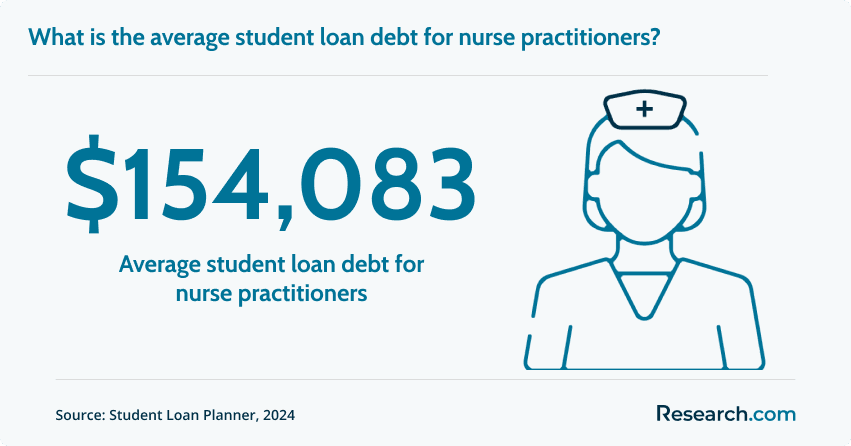
Debt planning matters. The average student loan debt for nurse practitioners has reached $154,083, so applicants should compare net cost rather than tuition alone. Scholarships, employer support, and transfer credits can make a major difference. Similar to students comparing LMFT vs AMFT pathways, DNP applicants should evaluate how education costs connect to licensing, advancement, and long-term career plans.
Admission Requirements for Online Nurse Leadership DNP Programs
Online nurse leadership DNP programs generally admit licensed nurses with strong academic preparation, professional experience, and clear leadership goals. Requirements vary by school and entry pathway, so applicants should review whether the program is designed for BSN-prepared nurses, MSN-prepared nurses, APRNs, nurse managers, or a mix of applicants.
- An active, unencumbered RN license in the U.S.
- A Bachelor of Science in Nursing (BSN) or Master of Science in Nursing (MSN) from an accredited program
- Minimum GPA, usually 3.0 or higher on previous coursework
- Professional nursing experience, often 1–2 years minimum, especially in a leadership or management role
- Letters of recommendation from academic or professional references
- Personal statement or goal statement outlining leadership experience and career goals
- Current resume or CV
- Official transcripts from all previous colleges or universities
Some programs may also request an interview, writing sample, proof of prior clinical hours, or documentation of leadership responsibilities. If you are still deciding between advanced healthcare paths, comparing role expectations can help. For example, Research.com's chiropractor vs physical therapist guide shows how different healthcare careers can have very different education and practice requirements.
Common Courses in an Online Nurse Leadership DNP Program
An online nurse leadership DNP combines doctoral nursing practice with executive decision-making. The curriculum is usually less focused on bedside clinical specialization and more focused on leading systems, improving quality, managing resources, translating evidence, and influencing health policy.
| Course area | What students learn | Why it matters for nurse leaders |
| Healthcare Policy and Advocacy | How policy decisions shape access, quality, reimbursement, and care delivery | Prepares graduates to influence organizational and public health decisions |
| Organizational and Systems Leadership | Leadership theory, strategic planning, change management, and system-level thinking | Supports executive roles that require leading departments or entire nursing divisions |
| Evidence-Based Practice | Research appraisal, data interpretation, and translating findings into practice | Helps leaders justify decisions with evidence rather than habit or tradition |
| Healthcare Finance and Economics | Budgeting, cost control, resource allocation, and financial decision-making | Essential for nurse executives responsible for staffing, operations, and performance |
| Quality Improvement and Patient Safety | Methods for improving outcomes, reducing errors, and measuring care quality | Prepares nurses to lead initiatives that enhance care outcomes |
| Informatics and Health Technology | Electronic health records, health data, analytics, and digital care systems | Supports data-informed leadership and technology implementation |
| Population Health and Epidemiology | Community health trends, risk patterns, and population-level interventions | Helps leaders plan services for broader patient groups and communities |
| DNP Capstone or Scholarly Project | A practice-based project addressing a real organizational or clinical problem | Demonstrates the ability to lead measurable improvement |
| Practicum or Clinical Leadership Hours | Supervised leadership experience in administrative, executive, or systems settings | Connects doctoral coursework to real healthcare operations |
DNP program enrollment has grown from 39,530 students in 2020 to 42,760 in 2024. That growth reflects continued interest in doctoral-level nursing practice and leadership preparation, especially in areas such as policy, finance, quality improvement, and healthcare innovation.
Specializations in Online Nurse Leadership DNP Programs
Many online nurse leadership DNP programs let students tailor electives, practicum experiences, and scholarly projects around a specific leadership goal. The right specialization can make the degree more relevant to your next role, whether you want to move into executive administration, health systems improvement, informatics, education, or policy.
- Executive Nurse Leadership: Designed for nurses targeting C-suite or senior administrative roles such as Chief Nursing Officer or Director of Nursing.
- Health Systems Leadership: Focuses on organizational transformation, healthcare operations, and system-wide strategy.
- Nursing Administration: Emphasizes staffing, budgeting, compliance, team management, and operational leadership.
- Public Health Leadership: Prepares nurses to guide population health programs and community-level initiatives.
- Informatics Leadership: Combines leadership with health data, electronic health records, analytics, and health IT strategy.
- Educational Leadership: Supports nurses who want to teach, design curriculum, or lead academic and clinical education programs.
- Policy and Advocacy: Focuses on health policy, regulation, legislative advocacy, and nonprofit or government leadership.
Nurses interested in academic leadership may also compare DNP options with MSN to EdD bridge programs online. Those aiming to grow from a specialized clinical role into management may benefit from career-specific planning, such as reviewing how to advance after learning how to become a telemetry nurse.
How to Choose the Best Online Nurse Leadership DNP Program
The best program is the one that fits your licensure status, leadership goals, budget, timeline, and learning preferences. Prestige can matter, but it should not outweigh accreditation, clinical support, affordability, and career alignment. Nurses comparing other advanced practice options, such as MSN WHNP online programs, should apply the same decision process: match the curriculum to the role you actually want.
1. Confirm accreditation first
Look for accreditation from the Commission on Collegiate Nursing Education (CCNE) or the Accreditation Commission for Education in Nursing (ACEN). Accreditation can affect eligibility for financial aid, employer reimbursement, certification, and future academic mobility.
2. Match the entry pathway to your background
Do not assume every DNP program accepts both BSN- and MSN-prepared nurses. Some are post-master’s only, while others offer BSN-to-DNP routes. Ask for a transcript review before estimating cost or completion time.
3. Review practicum and project expectations
A DNP requires applied practice work. Ask whether you must find your own site, whether the school helps with placement, and how the scholarly project is approved, supervised, and evaluated.
4. Compare total cost, not tuition alone
Calculate tuition, fees, books, technology costs, travel, residency expenses, and lost work time if applicable. A higher-priced program with strong employer partnerships or transfer credit policies may cost less than it first appears, while a lower-priced program may become expensive if it extends your timeline.
5. Check format details
“Online” can mean asynchronous, synchronous, hybrid, or mostly online with required residencies. Ask how often live attendance is required and whether campus visits are mandatory.
6. Look at outcomes and support
Ask about graduation rates, student support, faculty accessibility, alumni career paths, and employer relationships. A program should help you complete the degree and translate it into leadership advancement.
Questions to ask admissions advisors
- Is the program currently CCNE- or ACEN-accredited?
- How many credits will I need based on my transcripts?
- Can prior MSN practicum hours count toward the DNP requirement?
- Are there required campus visits, immersions, or synchronous class meetings?
- Who helps secure practicum sites?
- What leadership roles do graduates commonly enter?
- What is the full estimated cost of attendance?
- Are employer tuition benefits, scholarships, or payment plans available?
Career Paths for Online Nurse Leadership DNP Graduates
Graduates of online nurse leadership DNP programs commonly pursue roles that combine clinical judgment, administrative authority, quality improvement, and strategic planning. These positions may be found in hospitals, health systems, clinics, long-term care organizations, academic settings, consulting firms, public health agencies, and government organizations. Many roles focus on improving healthcare systems rather than providing direct bedside care.
| Career path | Typical focus | Who it may fit |
| Chief Nursing Officer (CNO) | Leads nursing strategy, staffing, budgets, quality standards, and policy across an organization | Experienced nurse leaders seeking enterprise-level responsibility |
| Nurse Administrator | Manages teams, compliance, staffing, workflows, and operations in healthcare settings | Nurses who want to lead departments, units, or service lines |
| Healthcare Executive | Serves in senior roles such as director of patient services or vice president of nursing | Professionals interested in broad operational and strategic leadership |
| Clinical Nurse Leader (CNL) | Coordinates care, improves outcomes, and supports quality initiatives across teams | Nurses who want to remain close to patient care while leading systems improvement |
| Nursing Faculty or Educator | Teaches nursing students or staff and contributes to curriculum and professional development | Nurses interested in education, mentorship, and workforce development |
| Policy Advisor or Health Consultant | Advises organizations, agencies, or policymakers on healthcare delivery and regulation | Nurses interested in advocacy, consulting, or public-sector work |
Salary data shows strong earning potential in senior nursing leadership roles, though individual pay varies by employer, region, experience, and responsibility level. Chief nursing officers top the list with an average annual salary of $259,490, followed by directors of nursing at $166,027 and nurse managers (NPs) at $165,617. Specialized non-clinical roles such as nurse informatics specialists and flight nurses earn competitive salaries of $157,086 and $134,000 respectively.
Nurses who are not ready for a doctorate may first compare master's-level leadership preparation, including an executive nurse leadership MSN program online.
Job Market Outlook for Online Nurse Leadership DNP Graduates
The job market for nurse leadership DNP graduates is supported by the broader demand for healthcare managers who can oversee complex organizations, improve care delivery, manage teams, and use evidence to guide decisions. Many graduates move into nurse executive, healthcare administration, clinical director, quality improvement, informatics, policy, consulting, or nursing faculty roles.
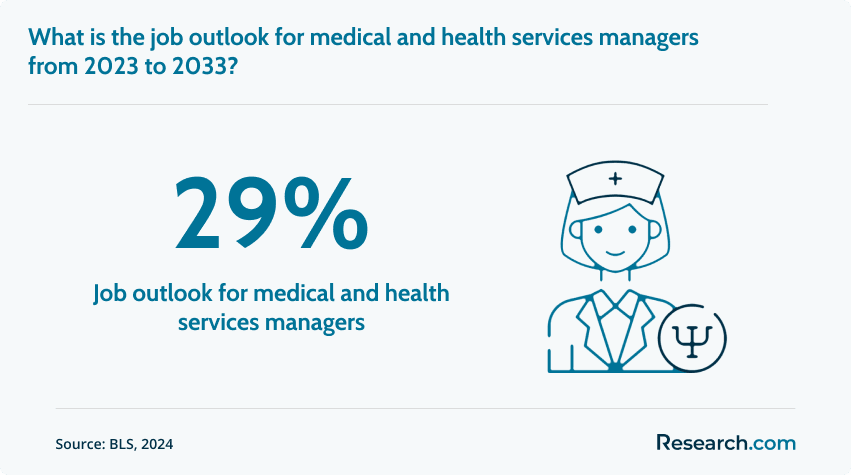
The job outlook for medical and health services managers, a category that includes many healthcare leadership roles, is projected to grow by 29% from 2023 to 2033. This is much faster than the average for all occupations and reflects the need for leaders who understand both clinical care and business operations.
Healthcare organizations increasingly need leaders who can manage staffing challenges, financial pressures, technology adoption, quality metrics, and patient safety goals. A nurse leadership DNP can be valuable when it builds practical executive skills rather than simply adding another credential. Nurses who want broader scientific preparation before or alongside healthcare leadership may also explore related academic options such as the best online natural sciences degree programs.
What Graduates Say About Online Nurse Leadership DNP Programs
- Jenna: "The online format made it possible for me to stay in my full-time role while preparing for a higher leadership position. The most valuable part was applying leadership theory directly to communication, staffing, and process improvement challenges in my department."
- Paige: "I chose the program because I wanted more than a management credential. The evidence-based practice courses helped me evaluate outcomes more carefully, and the virtual cohort gave me access to experienced nurses from different healthcare systems."
- Tom: "The strongest programs pushed me to think like an executive. Finance, systems leadership, and strategic planning were challenging, but they changed how I approach decisions and organizational change."
How to Prepare for an Online Nurse Leadership DNP Program
Preparation should begin before you submit an application. Review your academic history, leadership experience, clinical background, technology readiness, and available weekly study time. If your nursing education pathway is not yet aligned with doctoral admission requirements, a bridge or completion option such as one of the easiest RN to BSN nursing program online pathways may help strengthen your academic foundation.
- Clarify your career target: Decide whether you want executive administration, nursing education, informatics, policy, quality improvement, or health systems leadership.
- Organize documentation: Gather transcripts, RN license information, resume details, leadership examples, and prior clinical hour records.
- Strengthen writing skills: DNP programs require scholarly writing, evidence appraisal, and project documentation.
- Identify potential practicum mentors: Look for nurse executives, administrators, quality leaders, or faculty who may support your applied project.
- Build a realistic schedule: Plan for reading, assignments, meetings, practicum activities, and project work around your employment schedule.
- Check technology requirements: Reliable internet, video conferencing access, and comfort with online learning platforms are essential.
Common Challenges in Online Nurse Leadership DNP Programs
Online DNP study is flexible, but it is not easy. Students must manage doctoral-level coursework, practicum coordination, project deadlines, and professional responsibilities at the same time. Nurses considering accelerated pathways in other areas, such as a list of accelerated BSN programs, should remember that speed often increases workload intensity.
| Common mistake | Why it causes problems | Better approach |
| Choosing a program without checking accreditation | Accreditation can affect aid, employer acceptance, and future credentialing options | Verify CCNE or ACEN status before applying |
| Focusing only on tuition per credit | Total cost also depends on credits, fees, travel, and time to completion | Request a full cost estimate based on your transcript review |
| Assuming online means no travel | Some programs require intensives, residencies, or in-person project presentations | Ask for all required campus dates before enrolling |
| Underestimating practicum coordination | Finding qualified preceptors or leadership sites can take time | Ask what placement support the program provides |
| Starting without a project idea | The DNP scholarly project can delay graduation if poorly scoped | Identify workplace problems that are measurable and feasible |
| Relying only on rankings | A highly ranked program may not fit your budget, schedule, or specialization needs | Use rankings with accreditation, cost, format, and outcome data |
Is an Online Nurse Leadership DNP Worth the Investment?
An online nurse leadership DNP can be worth the investment for nurses who are targeting senior leadership, health systems improvement, policy, informatics, administration, or academic roles and who choose a program with strong accreditation, practical project support, and manageable cost. It may not be the right investment if your employer does not value the credential, if you are unsure about leaving direct clinical work, or if the debt required would outweigh realistic advancement opportunities.
Return on investment depends on more than salary. Consider your current income, employer tuition assistance, loan amount, promotion timeline, local leadership opportunities, and whether the program’s curriculum matches your desired role. Flexible scheduling and reduced commuting can improve value, but only if the program still provides strong advising, faculty access, and practicum support.
Prospective students should compare multiple online DNP programs before deciding. A shorter program may be attractive, but speed should not come at the expense of accreditation, faculty support, project quality, or career alignment.
When an online nurse leadership DNP may be a good fit
- You already have meaningful nursing experience and want senior leadership responsibility.
- Your employer values doctoral nursing leadership preparation.
- You can connect your DNP project to a real organizational problem.
- You have access to tuition assistance, scholarships, transfer credits, or a manageable payment plan.
- You prefer applied leadership and systems improvement over a research-focused PhD pathway.
When to consider a different path
- You want a primarily research-focused academic career rather than practice leadership.
- You are not yet sure which leadership area you want to pursue.
- You need an advanced clinical specialty that the leadership DNP does not provide.
- You would need to borrow heavily without a clear advancement plan.
- You prefer in-person learning and need frequent face-to-face faculty interaction.
References
- American Association of Colleges of Nursing. (2024). Schools of nursing: Enrollment increases across most program levels, signaling strong interest in nursing careers. AACN.
- Mecham, L. (2024). Student loan debt for nurse practitioners: What to know in 2024. Student Loan Planner.
- National Council of State Boards of Nursing. (2025). NCLEX pass rates. NCSBN.
- Salary.com. (2024). Nursing director salary. Salary.com.
- U.S. Bureau of Labor Statistics. (2024). Medical and health services managers: Occupational outlook handbook. BLS.
Key Insights
- An online nurse leadership DNP is best for experienced nurses who want executive, administrative, policy, informatics, education, or systems-level leadership roles.
- Program timelines usually range from 18 months to 3 years, but accelerated options, entry pathway, transfer credits, and practicum requirements can change that significantly.
- Total tuition commonly ranges from $30,000 to $75,000, so applicants should compare full cost of attendance, not just per-credit tuition.
- Accreditation matters. Prioritize programs accredited by CCNE or ACEN before considering rankings, convenience, or price.
- Online does not always mean fully remote. Some programs include short intensives, residencies, synchronous classes, or local practicum requirements.
- The strongest programs connect coursework to measurable leadership practice through a DNP scholarly project, practicum experience, and executive-focused curriculum.
- A nurse leadership DNP can offer strong career value, especially as medical and health services manager roles are projected to grow by 29% from 2023 to 2033, but salary and promotion outcomes are not guaranteed.
- Before enrolling, ask about accreditation, transfer credits, practicum placement support, total cost, campus requirements, graduation outcomes, and how the program supports your specific leadership goal.
Other Things You Should Know About Online Nurse Leadership DNP Programs
Many online Nurse Leadership DNP programs require one or more short on-campus residencies for orientation, simulation, or dissertation defense. Programs commonly ask for 1 to 3 visits, each lasting 2 to 5 days, and publish these requirements in the curriculum or admissions section.
In 2027, it's crucial to ensure that a Nurse Leadership DNP program is accredited by the Commission on Collegiate Nursing Education (CCNE) or the Accreditation Commission for Education in Nursing (ACEN). These accreditations confirm the program meets national standards for nursing education.