
2027 Best Online Marketing Degree Programs

Co-Founder and Chief Data Scientist
Choosing an online marketing degree is no longer just a question of convenience. It is a career decision shaped by digital advertising, analytics, AI-supported campaign tools, privacy rules, ecommerce growth, and employers’ rising expectations for measurable results. Through 2034, experts project that market research analyst and marketing specialist jobs are to grow by 6.7%, while marketing management jobs are projected to grow by 6.6%. For students who want a business-focused degree with broad career options, an online marketing program can be a flexible way to build skills in consumer behavior, brand strategy, digital channels, research, and campaign planning.
This guide explains what online marketing degree programs include, how long they take, what they cost, how online learning compares with campus study, which career paths are available, and how to evaluate whether a program is worth the investment. It is designed for first-time college students, working adults finishing a degree, and professionals considering graduate-level marketing study.
Quick Answer: Is an Online Marketing Degree Worth It?
An online marketing degree can be worth it if the program is accredited, fits your budget, teaches current marketing tools, and helps you build a portfolio that proves your ability to analyze markets, create campaigns, and measure performance. Graduates may pursue roles such as marketing specialist, digital marketer, brand manager, market research analyst, social media manager, and marketing manager. Salary outcomes vary by role, location, industry, and experience, but available data show median pay of $76,950 for market research analysts and an annual average of $161,030 for marketing managers.
What are the benefits of getting an online marketing degree?
- Broader career options: Marketing graduates can work in business-to-business marketing, consumer brands, technology, healthcare, retail, finance, entertainment, nonprofit organizations, and government agencies.
- Strong earning potential in advanced roles: The median annual salary for market research analysts is $76,950, and marketing managers report an annual average salary of $161,030.
- Flexible learning format: Online programs often allow students to complete coursework while managing jobs, family responsibilities, internships, or freelance projects.
What can I expect from an online marketing degree program?
An online marketing degree typically combines business fundamentals with applied marketing coursework. Students learn how organizations identify customers, study competitors, build brands, price products, choose communication channels, and measure campaign performance. Most programs include topics such as marketing strategy, market research, consumer behavior, advertising, branding, digital marketing, analytics, sales, and business communication.
The strongest programs go beyond lectures. They ask students to evaluate real campaigns, build customer personas, interpret data, create content plans, design promotional strategies, and present marketing recommendations. Because marketing work is increasingly measurable, students should expect assignments involving spreadsheets, dashboards, customer research, social media metrics, search behavior, email performance, and campaign return on investment.
Online delivery usually depends on a learning platform where students access recorded or live classes, discussion boards, readings, assignments, exams, and group projects. Some programs are fully asynchronous, while others require scheduled online meetings. Before enrolling, students should confirm whether the program includes internships, capstone projects, portfolio development, career coaching, or access to professional networking opportunities.
Where can I work with an online marketing degree?
A marketing degree can apply across nearly every sector because organizations need to understand customers, communicate value, and compete for attention. Graduates commonly work for corporations, startups, agencies, nonprofits, healthcare systems, universities, ecommerce companies, financial firms, entertainment brands, consulting firms, and public agencies.
Common roles include marketing specialist, digital marketing coordinator, brand manager, market researcher, advertising account executive, product marketing associate, social media strategist, content marketer, sales enablement specialist, ecommerce marketer, and marketing analyst. Students who want leadership roles usually need experience, measurable campaign results, and strong management skills in addition to the degree.
How much can I make with an online marketing degree?
Earnings depend heavily on the role, industry, city, experience level, technical skill set, and whether the job is entry-level, specialist, or managerial. Market research analysts earned median pay of $76,950, according to available data. Marketing managers report an annual average salary of $161,030. These figures should not be treated as guaranteed outcomes, but they do show why many students view marketing as a business degree with meaningful long-term upside.
Students who want to improve their earning potential should build evidence of practical ability before graduation. Employers often look for candidates who can interpret data, use marketing platforms, write clearly, understand customers, collaborate with designers or sales teams, and connect campaigns to business goals.
- 2027 Best Online Marketing Degree Programs
- How long does it take to complete an online marketing degree program?
- How does an online marketing degree program compare to an on-campus program?
- What is the average cost of an online marketing degree program?
- What financial aid can online marketing students use?
- What are the admission requirements for online marketing degree programs?
- What courses are included in an online marketing degree?
- What soft skills matter most in marketing?
- What marketing specializations are available online?
- How should you choose the best online marketing degree program?
- Which marketing specializations can improve career prospects?
- Is an Executive MBA useful for marketing professionals?
- Why does accreditation matter for an online marketing degree?
- What jobs can graduates pursue?
- What is the job market for online marketing degree graduates?
- Can a fast track social media marketing degree online help you move faster?
- What skills do aspiring marketing managers need?
- Can game design ideas improve digital marketing?
- What digital marketing trends should students understand?
- How can advanced communication skills support a marketing career?
- Can creative coursework strengthen a marketing degree?
- Can graphic design skills improve marketing work?
- How can marketing graduates stand out?
2027 Best Online Marketing Degree Programs
How do we rank schools?
Research.com evaluates online marketing programs using a structured methodology that considers available institutional data, program characteristics, and student-relevant factors. To support the ranking process, our research team reviewed information from sources such as the IPEDS database maintained by the National Center for Education Statistics, which provides institutional data for U.S. colleges and universities.
We also reviewed Peterson's database, including its Distance Learning Licensed Data Set, along with outcome and cost information from the College Scorecard. Rankings should be used as a starting point, not as the only basis for choosing a school. Students should also compare accreditation, tuition, transfer credit policies, course content, career support, and fit with their professional goals.
1. Syracuse University
Syracuse University's online MBA in Marketing is offered through the Martin J. Whitman School of Management and is designed for professionals who want graduate business training while continuing to work. The marketing specialization focuses on leading marketing and sales functions, understanding customers, building competitive strategies, and managing relationships that create business value. Students also study product development, pricing, distribution, and promotional planning.
- Program Length: 24 months
- Tracks/concentrations: Marketing
- Total Tuition: $101,088
- Required Credits to Graduate: 54
- Accreditation: Association to Advance Collegiate Schools of Business (AASCB)
2. Marquette University
Marquette University's MBA in Marketing gives students a graduate-level view of marketing within modern business environments. Coursework emphasizes consumer behavior, market research, branding, digital marketing, marketing analytics, and strategic decision-making. The program is suited for students seeking leadership preparation rather than only entry-level marketing training.
- Program Length: ~2 years
- Tracks/concentrations: Marketing
- Cost per Credit: $1,295
- Required Credits to Graduate: 31.5 to 42
- Accreditation: Association to Advance Collegiate Schools of Business (AASCB)
3. Florida International University
Florida International University offers an online BBA with a concentration in marketing that builds an undergraduate foundation in marketing concepts, strategy, and business practice. Students study consumer behavior, sales, advertising, distribution and logistics, international marketing, and related subjects. FIU also has a chapter of the American Marketing Association, which has ranked among the top 10 chapters in the country over the decade.
- Program Length: 4 years
- Tracks/concentrations: Marketing
- Cost per Credit: $228.81 (in-state); $345.87 (out-of-state)
- Required Credits to Graduate: 120
- Accreditation: Association to Advance Collegiate Schools of Business (AASCB)
4. Santa Clara University
Santa Clara University's MS in Marketing is structured for students who want focused graduate education in digital marketing, marketing analytics, MarTech, and related modern marketing practices. Built with input from global marketing leaders in Silicon Valley, the program can be completed in about one year. Students should note that one on-campus residency weekend for intensives is required.
- Program Length: ~1 year
- Select Concentrations: MarTech; Product Innovation; ECommerce; Programmatic and Digital Advertising; Channel and Social Media; and many others
- Cost per Credit: $1,186
- Required Credits to Graduate: 36
- Accreditation: Association to Advance Collegiate Schools of Business (AASCB)
5. University of Minnesota Crookston
University of Minnesota offers an online BS in Marketing centered on customer-focused marketing strategies and the role of different channels in marketing plans. The curriculum covers challenges marketers face in the global business environment and includes brand and product management, marketing research, digital marketing, consumer behavior, and related areas.
- Program Length: 4 years
- Cost per Credit: $441.50
- Required Credits to Graduate: 120
- Accreditation: Accreditation Council for Business Schools and Programs (AASCB)
6. Colorado State University (CSU) Global
Colorado State University Global offers a BS in Marketing that introduces students to marketing theories, strategy, and tactical execution. The program includes coursework connected to creative services, strategic planning, advertising, research, promotion, and public relations.
- Program Length: 4 years
- Tracks/concentrations: Organizational Leadership; Project Management; Human Resources and Organizational Development; Emergency Management; Healthcare Management; and Foundations of Accounting
- Cost per Credit: $350
- Required Credits to Graduate: 120
- Accreditation: Accreditation Council for Business Schools and Programs (ACBSP)
7. Purdue University Global
Purdue University Global's BSBA in Global Marketing Management combines business administration with international marketing preparation. Students develop communication, technical, management, and critical-thinking skills while studying market analysis, international strategy, consumer behavior, and digital trends.
- Program Length: 4 years
- Concentration: Global Marketing Management
- Cost per Credit: $371
- Required Credits to Graduate: 180
- Accreditation: Accreditation Council for Business Schools and Programs (ACBSP)
8. Louisiana State University Shreveport
Louisiana State University Shreveport offers an online BS in Marketing that gives online students access to individualized learning in a format aligned with the university’s campus instruction. The curriculum includes personal selling, advertising, sales promotions, brand publicity, product pricing, finance, economics, and business law.
- Program Length: 4 years
- Tracks/concentrations: Consumer Analysis and Behavior; Marketing Management; and Marketing Research
- Cost per Credit: $284
- Required Credits to Graduate: 120
- Accreditation: Association to Advance Collegiate Schools of Business (AASCB)
9. University of Arkansas at Little Rock
University of Arkansas at Little Rock offers a BBA in Marketing built around advertising, the marketplace, and stakeholder relationships. Students learn how to generate insights, think strategically, and market products or services to defined audiences. The program can support preparation for roles in marketing management, digital marketing, and advertising.
- Program Length: 4 years
- Tracks/concentrations: Digital Marketing
- Cost per Credit: $280
- Required Credits to Graduate: 120
- Accreditation: Association to Advance Collegiate Schools of Business (AASCB)
10. University of North Carolina Wilmington
The University of North Carolina Wilmington offers an online MBA with a Specialization in Marketing for both experienced professionals and students newer to the field. The program covers branding, advertising, communications, consumer behavior, digital marketing analytics, global marketing strategy, and customer service research associated with UNCW.
- Program Length: ~12 months
- Tracks/concentrations: Digital Marketing
- Cost per Credit: $517.60
- Required Credits to Graduate: 36
- Accreditation: Association to Advance Collegiate Schools of Business (AASCB)
Online marketing degree program comparison
| Program | Degree Level | Program Length | Cost Detail | Best Fit |
| Syracuse University | MBA | 24 months | Total Tuition: $101,088 | Working professionals seeking MBA-level marketing leadership preparation |
| Marquette University | MBA | ~2 years | Cost per Credit: $1,295 | Students who want strategic marketing in a graduate business context |
| Florida International University | BBA | 4 years | Cost per Credit: $228.81 (in-state); $345.87 (out-of-state) | Undergraduates seeking an online business marketing foundation |
| Santa Clara University | MS | ~1 year | Cost per Credit: $1,186 | Students focused on analytics, MarTech, and modern digital marketing |
| University of Minnesota Crookston | BS | 4 years | Cost per Credit: $441.50 | Learners who want a customer-centered marketing degree |
| Colorado State University Global | BS | 4 years | Cost per Credit: $350 | Students seeking a flexible business marketing degree with broad electives |
| Purdue University Global | BSBA | 4 years | Cost per Credit: $371 | Learners interested in global marketing management |
| Louisiana State University Shreveport | BS | 4 years | Cost per Credit: $284 | Students who want marketing, sales, pricing, and business law coverage |
| University of Arkansas at Little Rock | BBA | 4 years | Cost per Credit: $280 | Students focused on digital marketing and advertising |
| University of North Carolina Wilmington | MBA | ~12 months | Cost per Credit: $517.60 | Professionals seeking a faster online MBA with a marketing specialization |
Here's what graduates have to say about their online marketing degree
As a single parent, I was worried that returning to school would be too difficult. The online format made it possible to study without stepping away from my family responsibilities. I could attend from home, keep up with assignments, and move toward a degree that supported my career goals. – Dianne
I had a full-time job and family obligations, so a traditional schedule would not have worked for me. Online learning gave me the structure and flexibility I needed. Faculty support and the online student community helped me stay on track until graduation. – Jean
Affordability mattered to me from the start. My online marketing program helped me avoid commuting expenses while still giving me access to course materials and academic resources. I finished with a degree that fit my budget. – James
Key Findings
- Online marketing programs can be a practical option for students who need flexibility but still want business, branding, digital, and analytics training.
- Typical coursework includes market research, consumer behavior, digital marketing strategy, advertising, promotion, and brand management.
- Common specialization areas include digital marketing, social media marketing, market research, advertising, ecommerce marketing, and marketing analytics.
- Graduates can pursue jobs such as marketing specialist, digital marketer, brand manager, market research analyst, social media manager, and marketing manager.
- Labor market projections show 6.7% growth for market research analysts and marketing specialists and 6.6% growth for marketing managers through 2034.
- The industries with the brightest job outlook for marketing research analysts and specialists include management, scientific, and technical consulting services; management of companies and enterprises; and computer systems design services.
- Marketing management can be a high-paying path, with an annual average salary of $161,030. Top-paying industries for marketing managers include information services, oil and gas extraction, and pipeline transportation of natural gas.
How long does it take to complete an online marketing degree program?
The time required to complete an online marketing degree depends on degree level, enrollment status, transfer credits, academic calendar, and whether the program offers accelerated scheduling. Many bachelor’s programs are designed for four years of full-time study, while students who enroll part time may need four to six years. Some full-time learners with transfer credits can finish sooner.
Accelerated formats may allow students to take more courses each term or move through shorter sessions. This can be useful for motivated students, but it also increases workload. Before choosing a faster route, compare the pace with your job, family schedule, and ability to complete projects. Students exploring broader business options may also compare marketing programs with online colleges business pathways.
| Degree Type | Common Timeframe | Who It Fits Best | Important Consideration |
| Bachelor’s degree | 3 to 4 years for many full-time students | First-time college students or transfer students seeking entry-level preparation | Transfer credits can change the timeline significantly |
| Part-time bachelor’s study | Typically around four to six years | Working adults and students with family responsibilities | Longer timelines can increase total fees and delay career progression |
| Master’s or MBA program | Often about one to two years, depending on format | Professionals seeking advancement, specialization, or leadership preparation | Some programs require business prerequisites or professional experience |
| Accelerated program | Varies by school | Students who can handle heavier course loads | Speed should not come at the expense of portfolio quality or learning depth |
How does an online marketing degree program compare to an on-campus program?
Online and campus marketing programs can lead to similar academic outcomes when they are accredited and well designed, but the learning experience differs. Online programs usually offer more scheduling flexibility and are often better for working students, parents, military learners, or students who do not live near the school. Campus programs may offer more immediate in-person access to faculty, classmates, student organizations, career fairs, and facilities.
Many online programs use digital collaboration tools, discussion boards, video lectures, and learning management systems to support interaction. Campus programs may provide more face-to-face feedback and in-person networking. Neither format is automatically better; the right choice depends on how you learn, how much structure you need, and what type of access you want to faculty and peers.
Cost is another major difference. Campus-based education can involve housing, commuting, parking, relocation, meal plans, and other expenses. Students comparing formats should account for the real cost of a traditional college education, not tuition alone.
| Factor | Online Marketing Degree | On-Campus Marketing Degree |
| Schedule | Often more flexible, especially with asynchronous courses | Usually follows scheduled class meetings |
| Networking | Depends on virtual events, group projects, alumni access, and career services | Can include in-person clubs, events, fairs, and faculty interaction |
| Cost | May reduce commuting and housing costs | May include additional campus-related expenses |
| Learning style | Works best for self-directed students who manage deadlines well | Works well for students who prefer physical classrooms and direct structure |
| Career preparation | Strong if it includes projects, portfolio work, internships, and advising | Strong if students use campus recruiting, faculty access, and student organizations |
What is the average cost of an online marketing degree program?
The average cost of an online marketing degree varies by institution, residency status, degree level, and program structure. For in-state students, the average cost per credit is $448, resulting in total tuition of approximately $42,800. For out-of-state students, the average cost per credit is $465, with total tuition around $59,000.
The range is wide. Cost per credit spans from $228 to $1,186 for in-state students and from $280 to $1,186 for out-of-state students. Total tuition ranges from $27,500 to $66,800 for in-state students and from $33,600 to $142,300 for out-of-state students. Because of this spread, students comparing business and marketing education degree programs should calculate the full cost before applying.
Do not evaluate tuition alone. Add technology fees, books, software subscriptions, residency requirements, transfer credit rules, graduation fees, and any travel requirements. Also consider opportunity cost: a cheaper program that takes much longer may not be the most efficient choice, while an expensive program is not automatically better.
Marketing graduates can see strong ROI if they build in-demand skills and move into higher-paying roles. For example, the annual median salary of marketing managers stood at $161,030. Still, salary depends on performance, location, industry, seniority, and market conditions.
| Cost Factor | Why It Matters | Question to Ask |
| Cost per credit | Small differences multiply across the full degree | Is the rate different for in-state, out-of-state, or online students? |
| Transfer credits | Accepted credits can reduce both time and tuition | How many credits can I transfer, and how are they evaluated? |
| Fees | Online, technology, course, and graduation fees add to the bill | What is the total estimated cost beyond tuition? |
| Residency or campus visits | Travel can increase expenses | Are any in-person sessions required? |
| Financial aid eligibility | Aid can change affordability dramatically | Is the program eligible for federal aid and scholarships? |
What are the financial aid options for students enrolling in an online marketing degree program?
Online marketing students may be able to use the same major categories of financial aid as campus students, as long as the school and program meet eligibility requirements. Always confirm aid eligibility with the financial aid office before enrolling.
- FAFSA (Free Application for Federal Student Aid). Students can submit the FAFSA to be considered for federal grants, loans, and work-study programs that may help cover tuition, fees, and education-related costs.
- Scholarships. Many scholarships are available through schools, professional associations, foundations, companies, and community organizations. Some are based on merit, financial need, career interest, identity, location, or academic achievement.
- Grants. Eligible students may qualify for state or federal grants. Grants are especially valuable because they generally do not need to be repaid.
- Employer Tuition Assistance. Working students should ask whether their employer offers tuition reimbursement, direct tuition payment, professional development funds, or education benefits tied to job advancement.
- Private Loans. Private loans can help fill funding gaps, but students should compare interest rates, repayment terms, cosigner rules, and borrower protections before borrowing.
What are the prerequisites for enrolling in an online marketing degree program?
Admission requirements depend on whether the program is undergraduate, master’s-level, or doctoral. Students should read the official admissions page carefully because requirements can vary even among programs with the same degree title.
Bachelor's Degree
- High School Diploma or Equivalent. Applicants usually need a high school diploma or GED equivalent.
- SAT/ACT Scores. Some colleges may request SAT or ACT scores, while others use test-optional policies.
- Prerequisite Courses. A school may require or recommend prior coursework in math, statistics, economics, writing, or business fundamentals.
Master's Degree
- Bachelor's Degree. Applicants must generally hold a bachelor’s degree from an accredited institution, often with preference for marketing, business administration, communications, or another related field.
- Minimum GPA. Many master’s programs set a minimum GPA, often around 3.0 or higher on a 4.0 scale.
- Work Experience. Some graduate programs prefer or require professional experience in marketing, business, communications, sales, or a related area.
- Letters of Recommendation. Programs may ask for recommendations from professors, supervisors, or professional contacts who can speak to the applicant’s readiness.
Doctorate Degree (PhD or DBA)
- Master's Degree. Most doctoral programs require a master’s degree in marketing, business administration, or a related discipline.
- Research Proposal. Applicants may need to describe a proposed research topic and explain how it could contribute to the field.
- GRE/GMAT Scores. Many doctoral programs request GRE or GMAT scores.
- Letters of Recommendation. Academic or professional references are often required to evaluate research potential and readiness for advanced study.
Before applying, ask admissions staff whether transfer credits, professional certifications, prior learning, or military training can reduce your required coursework.
What courses are typically in an online marketing degree program?
Online marketing programs usually combine general business courses with specialized marketing classes. The exact curriculum differs by school, but students can expect courses that connect customer insight, strategy, communication, data, and business performance.
- Marketing Principles. Covers core concepts such as target markets, segmentation, positioning, consumer needs, and marketing strategy.
- Digital Marketing. Introduces online channels such as social media, search, content, websites, and email marketing software. Students who want a deeper digital focus may compare a digital marketing degree online.
- Market Research and Analysis. Teaches students how to collect, interpret, and apply customer and market data to support decisions.
- Brand Management. Explains how brands are positioned, developed, protected, measured, and managed over time.
- Advertising and Promotion. Covers campaign planning, media decisions, creative messaging, and promotional strategy across traditional and digital channels.
For students asking whether marketing is a good major, the answer depends on goals and execution. Marketing can be a strong business major for students who like strategy, communication, data, creativity, and customer behavior. It is especially useful when paired with portfolio projects, internships, analytics skills, or sales and communication experience. Students motivated by long-term management roles may also consider the field’s income potential.
According to the latest BLS data in 2024, the highest-paying industries for marketing managers are web search portals, libraries, archives, and other information services ($247,540), oil and gas extraction ($247,200), and pipeline transportation of natural gas ($245,810).
What soft skills are crucial for a successful marketing career?
Marketing is not only about tools and tactics. Employers also value professionals who can communicate clearly, think creatively, respond to change, collaborate with different teams, and understand customer motivations. These soft skills often separate strong candidates from applicants who only know the terminology.
Communication is central because marketers must explain strategy, write persuasive copy, brief designers, present campaign results, and translate customer insights into business recommendations. Creativity matters because brands need fresh ways to earn attention in crowded markets. Adaptability is also essential because platforms, algorithms, customer behavior, privacy expectations, and measurement practices can change quickly.
Emotional intelligence helps marketers understand audiences and work effectively with sales teams, product teams, executives, agencies, and customers. Critical thinking and problem-solving support better campaign decisions, especially when performance data is incomplete or unclear. Time management matters because marketers often juggle multiple deadlines, channels, stakeholders, and revisions.
| Soft Skill | Why It Matters in Marketing | How Students Can Practice It |
| Communication | Supports persuasive messaging, presentations, and stakeholder alignment | Write campaign briefs, present analytics reports, and revise copy based on feedback |
| Creativity | Helps campaigns stand out and connect with audiences | Create sample ads, content calendars, social posts, and brand concepts |
| Adaptability | Allows marketers to respond to platform changes and market shifts | Analyze current campaigns and recommend adjustments |
| Emotional intelligence | Improves customer understanding and team collaboration | Build personas, conduct interviews, and practice peer feedback |
| Critical thinking | Connects data to decisions rather than surface-level observations | Interpret campaign metrics and explain what should change next |
What types of specializations are available in an online marketing degree program?
Specializations let students align a marketing degree with a more specific career direction. Not every school offers the same options, so students should compare course lists carefully and look for projects that produce portfolio-ready work.
- Market Research and Analytics. Focuses on customer data, research methods, trend analysis, and performance measurement.
- Ecommerce Marketing. Covers online sales strategy, ecommerce platforms, digital storefront optimization, and customer acquisition.
- Luxury Brand Management. Examines brand positioning, premium customer experiences, and consumer behavior in luxury markets.
- Sports Marketing. Looks at sponsorships, athlete endorsements, sports event promotion, and fan engagement.
- Martech (Marketing Technology). Studies marketing automation, CRM systems, analytics platforms, data tools, and technology-supported campaign management.
How do you choose the best online marketing degree program?
The best online marketing degree is the one that is accredited, affordable for your situation, aligned with your goals, and strong enough to help you produce evidence of job-ready skills. A school’s name can matter, but it should not be the only decision factor. As with any college choice, No matter where one chooses to go to college, accreditation, outcomes, cost, and fit deserve close review.
- Verify accreditation. Check institutional accreditation first, then review any business-specific accreditation listed by the program.
- Read the curriculum, not only the program title. A “marketing” degree may emphasize analytics, branding, sales, digital media, management, or general business depending on the school.
- Compare faculty and student support. Look for instructors with relevant academic or industry experience, plus advising, tutoring, library access, and career services.
- Check flexibility and course format. Find out whether classes are asynchronous, synchronous, accelerated, full-time, part-time, or cohort-based.
- Test the technology requirements. Make sure the learning platform, software, and internet requirements match your resources.
- Calculate total cost. Include tuition, fees, books, technology, software, residency travel, and lost work time if applicable.
- Look for career evidence. Strong programs help students build portfolios, complete projects, prepare resumes, and connect with internships or employers.
- Ask about transfer and credit policies. Transfer-friendly programs can be much less expensive for students with prior college credits.
| Question to Ask | Why It Matters |
| Is the institution accredited? | Accreditation can affect credit transfer, graduate school eligibility, employer recognition, and financial aid access. |
| Does the curriculum teach current marketing tools? | Employers often expect practical knowledge of analytics, digital channels, content, automation, and campaign measurement. |
| Will I graduate with portfolio pieces? | A portfolio can show employers what you can actually do. |
| How much will I pay after aid and transfer credits? | The listed tuition may not reflect your actual cost. |
| What support is available online? | Online students need access to advising, tutoring, technical support, and career coaching. |
What Are the Available Specializations in Marketing That Can Enhance Career Prospects?
Specializations can help students move from a broad marketing background into a clearer job target. Digital marketing, social media marketing, content marketing, and marketing analytics are common options because employers need professionals who can manage online campaigns, interpret customer behavior, create persuasive content, and measure results. A social media marketing degree online may be useful for students who want to focus on platform strategy, audience engagement, influencer campaigns, paid social, and social analytics.
Students should choose a specialization based on job postings they actually want, not just on what sounds interesting. Review required skills, software tools, preferred certifications, and portfolio expectations before committing to a concentration.
Is an Executive MBA a Valuable Investment for Marketing Professionals?
An Executive MBA can make sense for experienced marketing professionals who want to move into senior management, general business leadership, or cross-functional strategy roles. It can broaden a marketer’s understanding of finance, operations, organizational strategy, and executive decision-making. However, it is usually not the best first credential for someone seeking an entry-level marketing job.
ROI depends on current career level, employer support, tuition, time commitment, and whether the degree helps the student access leadership opportunities. Before applying, compare program expenses carefully, including the EMBA cost, and ask whether alumni outcomes match your professional goals.
How Does Accreditation Impact the Quality and Value of an Online Marketing Degree?
Accreditation is one of the most important checks students should complete before enrolling. It helps confirm that a school meets recognized academic standards and can affect federal financial aid eligibility, credit transfer, employer recognition, and graduate school admission. Business-related accreditation may also signal that a program follows standards for curriculum, faculty qualifications, and continuous improvement.
Accreditation does not guarantee a job or a high salary, but lack of proper accreditation can create serious problems. Students should verify accreditation directly through official accreditor or school resources. Those who want to strengthen communication-heavy marketing roles may also compare related graduate options such as online masters in communications.
What career paths are available for graduates of online marketing degree programs?
Marketing graduates can pursue analytical, creative, strategic, and managerial roles. Entry-level roles usually involve campaign coordination, content creation, research support, reporting, and channel management. Advanced roles typically require experience, leadership ability, and a record of measurable results.
- Digital Marketing Specialist. Builds and manages campaigns across websites, search, email, social media, and other digital channels. So far, the average annual salary of digital marketers is $65,418.
- Market Research Analyst. Studies customer behavior, market trends, competitors, and data to guide business and marketing decisions. The current annual average salary for market research analysts is $76,950.
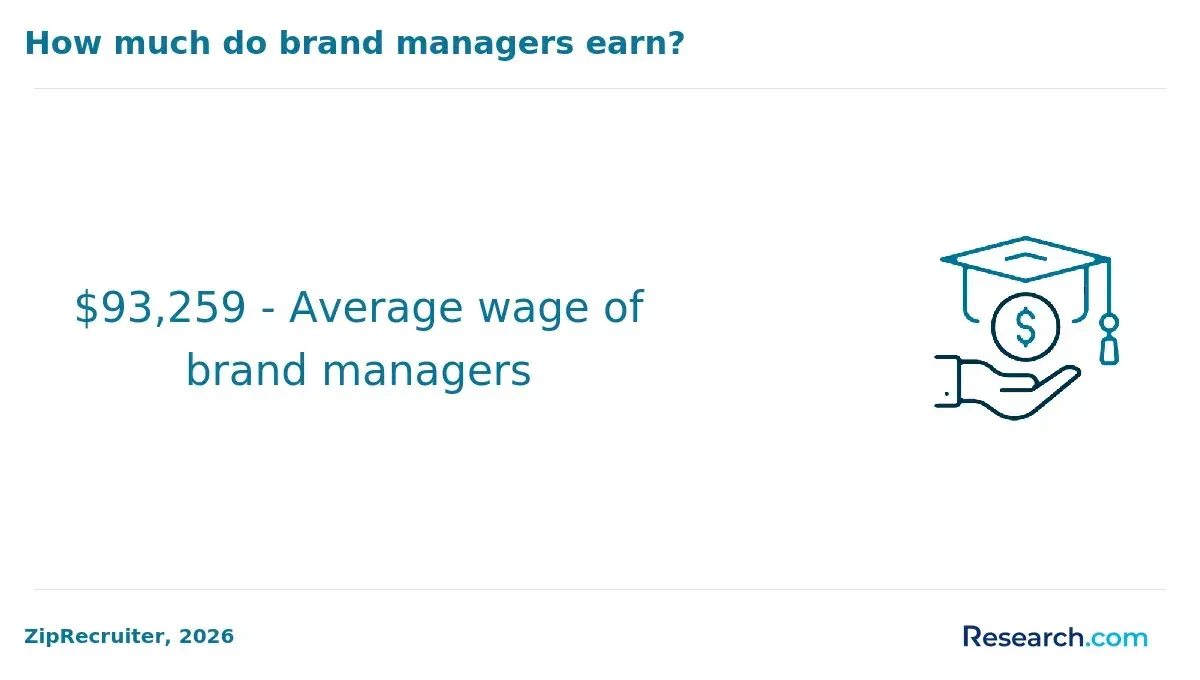
- Brand Manager. Manages brand positioning, messaging, identity, product launches, promotions, and consistency across channels. Brand managers in the US earn $93,259 annually on average.
- Social Media Manager. Plans and executes social media strategy, manages audience engagement, tracks platform performance, and supports brand presence. On average, social media managers earn around $79,169.
- Marketing Manager. Leads marketing campaigns and teams while coordinating advertising, research, product support, and promotional strategy. The annual median salary of marketing managers hovers around $161,030.
Through 2034, market research analysts and marketing specialists will expect 87,200 annual new openings. Meanwhile, in 2024, the industries with the highest employment for these professionals included the management, scientific, and technical consulting services (96,100), the management of companies and enterprises (72,390), and computer systems design services (48,730).
| Career Path | Typical Focus | Useful Skills | Salary Figure Provided |
| Digital Marketing Specialist | Online campaigns and channel execution | SEO, paid media, email, analytics, content planning | $65,418 |
| Market Research Analyst | Customer and market insight | Research methods, statistics, surveys, data interpretation | $76,950 |
| Brand Manager | Brand strategy and positioning | Messaging, consumer insight, product marketing, project management | $93,259 |
| Social Media Manager | Social platforms and audience engagement | Content strategy, community management, analytics, paid social | $79,169 |
| Marketing Manager | Campaign leadership and team coordination | Strategy, budgeting, analytics, leadership, cross-functional communication | $161,030 |
What is the job market for graduates with an online marketing degree?
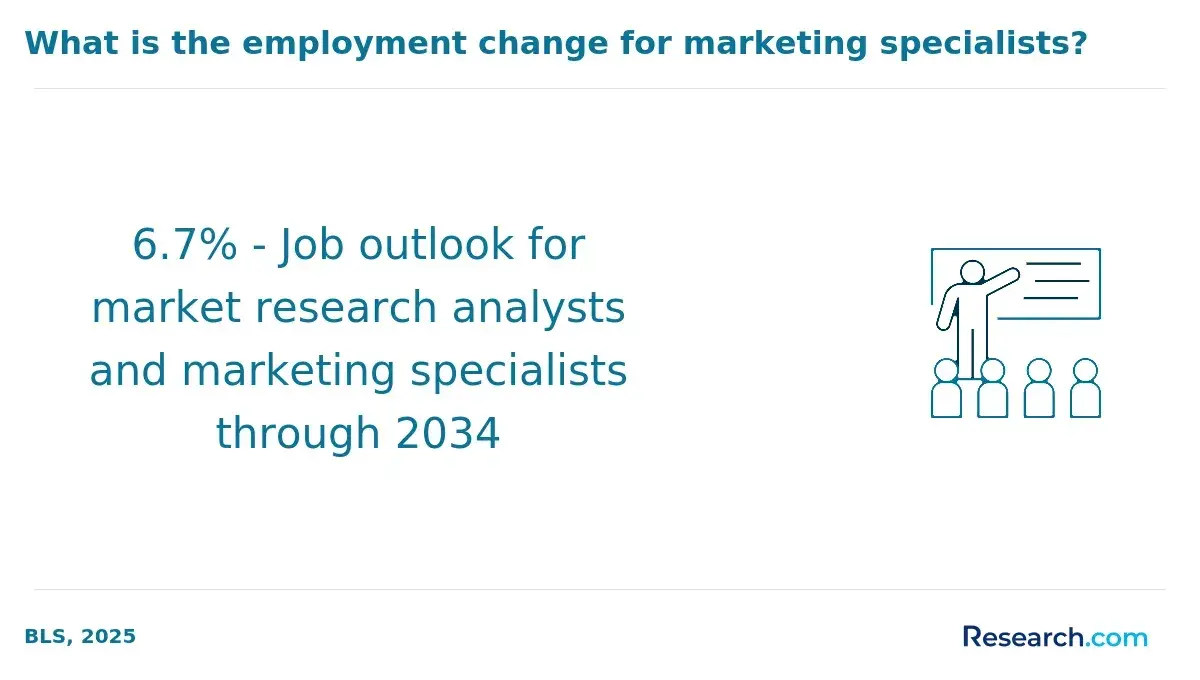
The job market for marketing graduates is supported by organizations’ need to understand customers, compete digitally, manage brands, and measure campaign performance. Market research analysts and marketing specialists are expected to see job growth of 6.7% through 2034, while marketing managers are projected to see 6.6% growth during the same period.
For marketing managers, that growth equals approximately 34,300 additional marketing manager jobs by 2034. The demand reflects the continuing need for professionals who can lead campaigns, manage teams, evaluate data, and connect marketing activity to business outcomes.
Industries showing the highest employment for marketing managers in 2024 included the management of companies and enterprises (50,050), the management, scientific, and technical consulting services (30,700), and computer systems design services (25,290). By 2034, an estimated 34,300 marketing manager jobs will be produced in the US.
Can a fast track social media marketing degree online accelerate your career?
A faster program can help some students enter or advance in the field sooner, especially if it includes practical social media strategy, analytics, paid campaign work, content planning, and platform-specific projects. However, speed is only valuable if the program still provides enough time to develop skills and build credible work samples.
Students considering a fast track social media marketing degree online should ask how many courses they will take at once, whether the program includes portfolio projects, how faculty feedback works, and whether career support is available. An accelerated timeline is best for organized learners who can manage heavy reading, writing, analytics, and project deadlines.
What skills are essential for aspiring marketing managers?
Marketing managers need more than channel knowledge. They must lead people, set priorities, allocate budgets, interpret results, and explain strategy to executives and cross-functional teams. Students who want management roles should develop both technical marketing depth and leadership capability.
Important skills include team leadership, campaign planning, data analysis, marketing analytics, budgeting, customer research, project management, stakeholder communication, and digital platform fluency. Managers should understand SEO, PPC advertising, email marketing, social media marketing, and performance reporting, even if specialists handle day-to-day execution.
Soft skills are equally important. Emotional intelligence supports team leadership, while critical thinking helps managers avoid reacting to vanity metrics. Strong communication allows managers to explain why a campaign worked, why it failed, and what should happen next. Students exploring management goals can use this guide on how to become a marketer to plan possible next steps.
Can Game Design Principles Transform Your Digital Marketing Approach?
Game design concepts can make digital marketing more interactive and engaging when used strategically. Storytelling, progression, rewards, challenges, feedback loops, and user-centered design can encourage participation and strengthen customer engagement. These ideas are especially relevant for brands creating apps, loyalty programs, interactive campaigns, quizzes, training experiences, or immersive content.
Marketing students do not need to become game designers, but studying creative fields can expand how they think about audience motivation and experience design. Students curious about this connection may find value in exploring whether is a degree in game design worth it and how design-centered education develops creative problem-solving.
What are the top emerging trends in digital marketing that students should know?
Digital marketing changes quickly, so students should learn principles that remain useful while also staying aware of major shifts in tools and employer expectations. The most valuable graduates are often those who understand strategy, data, customers, and technology together.
- Artificial Intelligence (AI) in Marketing: AI tools are changing content production, segmentation, customer analysis, campaign testing, and personalization. Students should learn how to use AI responsibly while checking accuracy, bias, brand voice, and privacy implications.
- Voice Search Optimization: Voice-enabled search encourages more conversational queries. Marketers need to understand natural language, search intent, and content structured around direct answers.
- Video and Live Streaming: Short-form video and live interaction remain important for many brands. Students should learn how to plan, script, edit, distribute, and measure video content.
- Influencer Marketing 2.0: Brands increasingly evaluate creators based on audience fit, authenticity, engagement, and measurable results rather than follower count alone.
- Privacy-First Marketing: Marketers must balance personalization with user trust and legal requirements, including regulations like the GDPR and CCPA.
- Augmented Reality (AR) and Virtual Reality (VR): Immersive experiences can support product demonstrations, retail engagement, events, training, and branded storytelling.
How Can Advanced Communication Skills Propel Your Marketing Career?
Communication is one of the strongest career multipliers in marketing. Professionals who can write clearly, present persuasively, ask better customer questions, brief creative teams, and explain data-driven recommendations are more likely to influence decisions. Strong communication also helps marketers collaborate with sales, product, finance, leadership, agencies, and clients.
Online students can improve these skills through group projects, recorded presentations, peer review, campaign briefs, analytics reports, and client-style assignments. Students who want to explore communication-focused roles alongside marketing can review communication career opportunities to understand overlapping paths.
Can Supplementing Your Marketing Degree with Creative Courses Enhance Your Career?
Creative coursework can strengthen a marketing degree when it helps students improve storytelling, brand voice, content development, audience engagement, and campaign concepts. This is especially useful for students interested in content marketing, social media, advertising, copywriting, brand strategy, or creative direction.
Students do not necessarily need a second degree, but targeted creative study can help them produce stronger samples. Those comparing affordable options may consider whether a cheap creative writing degree online or selected writing courses would support their marketing goals.
Can Incorporating Graphic Design Skills Strengthen Your Marketing Strategy?
Graphic design skills can make marketers more effective because visual communication shapes how audiences notice, understand, and remember a brand. Even marketers who do not become designers benefit from understanding layout, hierarchy, color, typography, accessibility, and brand consistency.
Design knowledge also improves collaboration with creative teams because marketers can give clearer feedback and connect visuals to campaign goals. Students wanting a deeper creative toolkit may compare a graphic design online program with shorter design courses or certificates.
How to Stand Out as a Marketing Graduate
A degree alone is rarely enough in a competitive marketing job search. Employers often want proof that candidates can apply concepts, use tools, communicate clearly, and improve results. Students should begin building that evidence before graduation.
- Build a portfolio. Include campaign plans, research reports, social media calendars, content samples, analytics dashboards, email campaigns, ad mockups, and capstone projects.
- Earn relevant certifications. Credentials such as Google Ads, HubSpot Content Marketing, or Meta Blueprint can show familiarity with commonly used platforms and practices.
- Network intentionally. Join professional associations, attend webinars, connect with alumni, and seek informational interviews with people in roles you want.
- Choose a niche. Areas such as influencer marketing, analytics, content strategy, ecommerce, or paid media can make your job search more focused.
- Get practical experience. Internships, freelance work, volunteer campaigns, campus projects, and small business consulting can provide measurable examples for interviews.
- Learn to explain results. Instead of saying you “managed social media,” show what you tested, what changed, and what the data suggested.
Students in accelerated marketing degree programs online should be especially deliberate about portfolio development because the faster schedule can leave less time for internships or exploratory projects.
Common mistakes to avoid when choosing an online marketing degree
| Mistake | Why It Can Hurt You | Better Approach |
| Choosing a program without checking accreditation | It may affect aid, transfer credits, graduate study, and employer confidence | Verify institutional accreditation before applying |
| Looking only at tuition | Fees, books, technology, travel, and lost time can change total cost | Ask for a full cost estimate through graduation |
| Assuming every online program is flexible | Some require live attendance, group meetings, or campus visits | Confirm course format, meeting times, and residency requirements |
| Ignoring portfolio opportunities | Marketing hiring often depends on proof of applied skill | Choose programs with projects, capstones, internships, or campaign work |
| Relying only on rankings | A highly ranked program may not match your budget, schedule, or goals | Use rankings as one input alongside cost, curriculum, support, and outcomes |
| Assuming salary outcomes are guaranteed | Pay varies by experience, location, industry, and performance | Use salary data as context and build marketable skills early |
Key Insights
- An online marketing degree is most valuable when it combines accredited coursework, current digital tools, analytics training, and portfolio-ready projects.
- Program cost varies widely, so students should compare total tuition, fees, transfer credit policies, financial aid, and any in-person requirements before enrolling.
- Marketing careers can be broad or specialized. Students should choose electives and projects based on target roles such as digital marketing, research, brand management, social media, ecommerce, or marketing management.
- Labor projections through 2034 show growth of 6.7% for market research analysts and marketing specialists and 6.6% for marketing managers, but individual outcomes depend on skills, experience, industry, and location.
- AI, privacy-first marketing, analytics, video, and marketing technology are reshaping employer expectations. Students should learn how to use tools strategically rather than only memorizing platform features.
- The strongest graduates leave school with proof of ability: campaign plans, data reports, content samples, certifications, internships, freelance work, and clear examples of measurable marketing decisions.
References:
- American Marketing Association. (2025). Marketing in the Age of Disruption: The Skills Marketers Need in 2025 and Beyond. https://www.ama.org/2025/01/31/2025-marketing-skills-report
- Salesforce. (2026). Tenth Edition State of Marketing. https://www.salesforce.com/marketing/resources/state-of-marketing-report
- U.S. Bureau of Labor Statistics. (2025, August 28). Occupational projections and worker characteristics. Retrieved March 2026, from https://www.bls.gov/emp/tables/occupational-projections-and-characteristics.htm
- ZipRecruiter. (2026). Brand Manager Salary. Retrieved March 2026, from https://www.ziprecruiter.com/Salaries/Brand-Manager-Salary
- ZipRecruiter. (2026). Digital Marketing Specialist Salary. Retrieved March 2026, from https://www.ziprecruiter.com/Salaries/Digital-Marketing-Specialist-Salary
Other Things You Should Know About Online Marketing SDegrees
Students in 2027 online marketing degree programs should master skills in data analytics, artificial intelligence tools, and digital marketing platforms like Google Analytics and HubSpot. Proficiency in these tools is crucial for creating effective strategies and measuring campaign success.
Renowned universities such as the University of Southern California and Pennsylvania State University are known for excellent career support. They provide career counseling, job placement services, industry connections, and networking opportunities that significantly enhance employability post-graduation in 2027.
Yes. Many 2027 online marketing degree programs require a capstone project in the final term, often worth 3 to 6 credits. Some schools use online proctoring for exams through services such as ProctorU or Respondus, while others evaluate students through project-based assessments only.


