2027 Fastest Online Professional Writing Degree Programs

Co-Founder and Chief Data Scientist
Choosing an online professional writing degree is not just a question of whether you like writing. It is a decision about cost, time, career fit, portfolio development, and whether a program will help you build writing skills that employers and clients actually use. For high school graduates, transfer students, working adults, and career changers, the biggest challenge is sorting through similar-sounding programs and identifying which ones offer practical training in areas such as technical writing, editing, digital content, rhetoric, publishing, and professional communication.
This guide explains what to expect from online professional writing degree programs, how long they take, what they cost, which schools offer strong options, and how graduates can use the degree in the job market. It also covers financial aid, admissions requirements, common courses, specializations, career paths, online versus campus learning, and the questions students should ask before enrolling.
Quick answer: Is an online professional writing degree worth considering?
An online professional writing degree can be a good fit for students who want flexible study, structured feedback, a portfolio of writing samples, and career preparation for roles in content, editing, communications, technical writing, publishing, public relations, and freelance work. It is most useful when the program is accredited, includes practical assignments or internships, and helps students graduate with polished samples for employers or clients.
The field is competitive, but demand remains steady. Employment for writers and authors is projected to grow 5% from 2023 to 2033. Earnings vary widely by role, industry, location, specialization, and experience, so students should not choose a program based on salary claims alone.
What are the main benefits of an online professional writing degree program?
- Flexible access to writing-focused education: Online programs allow students to study from home while developing skills in writing, editing, research, communication, digital content, and audience analysis.
- Preparation for many communication roles: Graduates may pursue work as copywriters, content writers, editors, grant writers, speechwriters, communications specialists, publication managers, or project managers in business, government, nonprofit, media, technology, healthcare, education, and creative industries.
- Portfolio-building opportunities: Strong programs give students assignments that can become writing samples, such as reports, proposals, feature articles, web copy, technical documents, persuasive writing, and capstone projects.
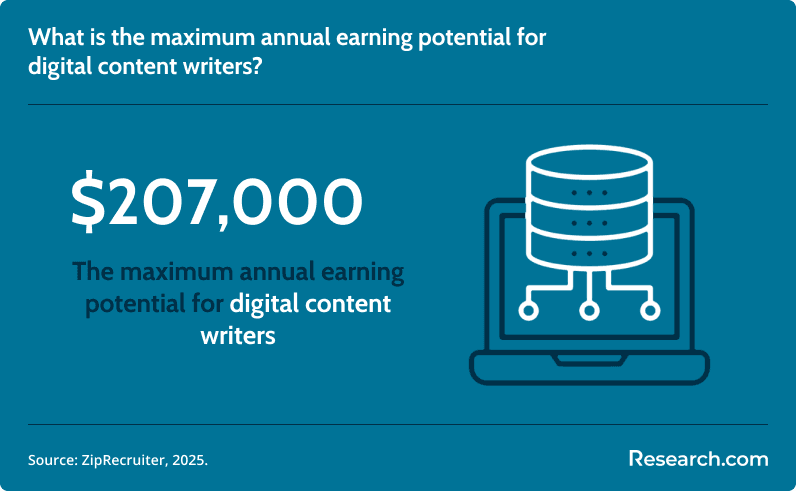
- Career flexibility: Median salaries for writing-related roles vary widely. General writers average around $28,500 annually, while specialized positions like digital content writers can earn between $28,500 to $207,000 per year.
- A practical option for busy students: Online delivery can work well for students balancing school with employment, caregiving, military service, or other responsibilities, especially when courses are asynchronous and feedback is consistent.
What can I expect from an online professional writing degree program?
An online professional writing degree usually combines writing practice, revision, rhetorical analysis, editing, digital communication, and professional portfolio development. Students learn how to write for specific audiences and purposes rather than only studying literature or creative expression.
Common program requirements include core writing courses, electives or concentrations, peer review, faculty feedback, and a final project. Some programs also require a capstone, internship, practicum, or portfolio review. Internship expectations can vary, but many programs require practical experience, often around 120 hours, so students should confirm this before applying.
Tuition can differ substantially by school. Programs commonly charge about $300 to $860 per credit, depending on institution type, residency status, transfer credits, and fees. Online courses are typically delivered through recorded lectures, discussion boards, peer workshops, writing exercises, live sessions, and instructor feedback. Students who do best in this format are self-directed, comfortable with revision, and willing to participate actively even when classes do not meet in person.
| Program feature | What it usually means for students | Why it matters |
| Asynchronous courses | Students can complete weekly work without logging in at a fixed class time. | Useful for working adults and students with unpredictable schedules. |
| Live sessions | Some classes may include real-time workshops, lectures, or meetings. | Improves interaction but may reduce schedule flexibility. |
| Portfolio or capstone | Students complete a final collection of polished writing or a major applied project. | Provides evidence of skills for employers, clients, graduate schools, or internships. |
| Internship or practicum | Students gain supervised experience in a workplace or writing-related setting. | Can help with networking and career readiness, especially for students without professional experience. |
| Specialization options | Programs may offer tracks such as technical writing, business communication, rhetoric, digital writing, or creative writing. | Helps students align coursework with target careers. |
Where can I work with an online professional writing degree program?
Graduates can use professional writing training in organizations that need clear, persuasive, accurate, or audience-specific communication. This includes corporations, startups, government agencies, nonprofits, universities, publishers, healthcare organizations, technology companies, marketing agencies, and consulting firms.
Common roles include editor, communications specialist, content strategist, technical writer, grant writer, proposal writer, copywriter, project manager, social media manager, and publication coordinator. Some graduates also choose independent work. The Bureau of Labor Statistics reports that 66% of writers and authors were self-employed, which shows how common freelance, contract, and entrepreneurial paths are in this field.
The degree is not limited to writing-only jobs. Employers often value graduates who can research, organize information, translate complex ideas, edit for clarity, collaborate with subject matter experts, and adapt messages for different audiences.
How much can I make with an online professional writing degree program?
Salary outcomes depend on the job title, industry, location, experience level, portfolio quality, technical knowledge, and whether the worker is employed full time, freelancing, or combining several income streams. Professionals with an online professional writing degree can expect an average salary of around $85,500 per year, with typical hourly wages of $41.
Freelance writers average about $48,412 per year, but freelance income can fluctuate significantly based on client volume, niche, pricing strategy, deadlines, and repeat contracts. Specialized areas such as technical documentation, digital content strategy, grant writing, medical communication, financial writing, or UX writing may offer stronger earning potential than general writing roles, but they may also require subject-matter knowledge, software skills, or additional experience.
Students should treat salary figures as reference points, not guarantees. The best way to improve earnings is to build a strong portfolio, choose marketable electives, gain internship or freelance experience, learn digital publishing tools, and develop expertise in a field that needs skilled communicators.
- Best Online Professional Writing Degree Programs for 2027
- How long does an online professional writing degree take?
- Online vs. on-campus professional writing programs
- Average cost of an online professional writing degree
- Financial aid options for online professional writing students
- Admissions requirements and prerequisites
- Common courses in online professional writing programs
- Professional writing specializations
- How to choose the right online professional writing program
- Career paths for professional writing graduates
- Future trends in online professional writing education
- Interdisciplinary career opportunities
- Job market for professional writing graduates
- Further academic options after a professional writing degree
- Challenges students may face in online writing programs
- Common mistakes to avoid before enrolling
Best Online Professional Writing Degree Programs for 2027
The programs below can help students compare online and hybrid options in professional writing, English writing, rhetoric, creative writing, and technical communication. Because program details can change, students should verify tuition, delivery format, internship requirements, transfer policies, and available concentrations directly with each institution before applying.
The ranking uses data from trusted education sources, including the IPEDS database, Peterson's database, the College Scorecard database, and the National Center for Education Statistics. Research.com's full ranking process is explained on the methodology page.
1. Missouri State University - Bachelor of Science or Bachelor of Arts in Professional Writing
Missouri State University offers a 100% online Professional Writing program leading to either a BA or BS. The program is designed for students who want to strengthen professional communication skills for fields such as content marketing, technical writing, journalism, and workplace communication. Its asynchronous structure may appeal to students who need a flexible schedule while completing a full bachelor's degree.
- Program length: 36 hours of program requirements
- Cost per credit: Approximately $290 for in-state and out-of-state.
- Total credits: 120
- Accreditation: Higher Learning Commission (HLC)
2. Southwest Minnesota State University - Professional Writing, Online Certificate
Southwest Minnesota State University provides an online Professional Writing Certificate for students and professionals who want focused training without committing to a full bachelor's program. The curriculum emphasizes writing for business, scientific, technical, and advanced composition contexts, making it a practical option for career upskilling or résumé development.
- Program length: Typically self-paced for certificates
- Cost per credit: N/A
- Total credits: 16 credits
- Accreditation: HLC
3. Eastern Oregon University - B.S./B.A. in English/Writing
Eastern Oregon University offers an online Bachelor of Science or Bachelor of Arts in English/Writing. The program suits students who want a flexible writing-focused English degree with room to explore literature, creative writing, rhetoric, and applied writing. Students can also gain practical experience through practicum opportunities and instruction from published faculty.
- Program length: 4 years (full-time)
- Cost per credit: $329
- Total credits: 180 credits
- Accreditation: Northwest Commission on Colleges and Universities (NWCCU)
4. Southern New Hampshire University - Bachelor of Arts (BA) in Creative Writing and English
Southern New Hampshire University offers an online BA in Creative Writing and English for students who want to develop storytelling, literary analysis, and creative writing skills while building a portfolio. The program's online format and 8-week terms may work well for students who prefer shorter course sessions and steady progress toward degree completion.
- Program length: 40 courses, 8-week terms
- Cost per credit: $330
- Total credits: 40 courses suggest a typical 120-credit program
- Accreditation: New England Commission of Higher Education (NECHE)
5. Central Washington University - English Professional and Creative Writing, BA
Central Washington University offers a BA in English Professional and Creative Writing that blends writing practice, workshops, seminars, and internship opportunities. It may suit students who want both creative and workplace communication preparation while developing the persistence and revision habits needed for writing-centered careers.
- Program length: 4 years (full-term)
- Cost per credit: $7,469 + $1,349 annually
- Total credits: 120
- Accreditation: NWCCU
6. Florida International University- Bachelor of Arts in English: Writing and Rhetoric Track
Florida International University offers an online BA in English with a Writing and Rhetoric track. The program focuses on 21st-century communication, digital content, rhetoric, project-based learning, and applied work with community partners. Students interested in writing across media and managing communication projects may find this track especially relevant.
- Program length: 4 years (full-time)
- Cost per credit: $235.57 (In-State) + Fees; $648.87 (Out-of-State) + Fees
- Total credits: 120
- Accreditation: Southern Association of Colleges and Schools Commission on Colleges (SACSCOC)
7. Indiana University - Bachelor of Arts in English: Technical and Professional Writing
Indiana University offers a 100% online BA in English with an emphasis on technical and professional writing. The curriculum develops writing, critical thinking, argumentation, data analysis, science communication, and advanced technical writing skills for students interested in careers that require clear communication of complex information.
- Program length: 4 years (full-time)
- Cost per credit: $257.23 (In-State); $378.10 (Out-of-State)
- Total credits: 120
- Accreditation: HLC
8. University of Wisconsin Superior - Bachelor of Arts in Writing
The University of Wisconsin-Superior offers a BA in Writing that can be completed online or on campus. Students study creative, professional, and applied writing and may gain practical exposure through publishing-related work and internships. The program is a fit for students who want broad writing preparation rather than a narrowly technical track.
- Program length: 4 years (full-time)
- Cost per credit: $319
- Total credits: 120
- Accreditation: HLC
9. University of Colorado Denver - Bachelor of Arts in English Writing, Rhetoric, and Technology
The University of Colorado Denver offers a BA in English Writing, Rhetoric, and Technology in a flexible hybrid format that combines online and campus-based options. Coursework covers rhetoric, digital technologies, multimedia composition, language theory, and advanced writing topics, with internship opportunities for applied experience.
- Program length: 4 years (full-time)
- Cost per credit: $506 (Resident, with COF); $607 (Non-Resident)
- Total credits: 120
- Accreditation: HLC
10. University of Central Florida - Online English – Creative Writing, BA
The University of Central Florida offers an online BA in English with a Creative Writing specialization. The program helps students study rhetoric, communication, literary structure, fiction, poetry, and nonfiction while preparing for careers that require strong written communication and disciplined revision.
- Program length: 4 years (full-time)
- Cost per credit: $179.19 (In-State)
- Total credits: 120
- Accreditation: SACSCOC
The chart below summarizes common degree routes for students interested in writing careers.
How long does it take to complete an online professional writing degree program?
Completion time depends on credential level, transfer credits, enrollment intensity, and whether the program follows standard semesters, accelerated terms, or self-paced courses. Online professional writing degrees typically take one to four years to complete. Graduate certificates and master's programs often require about 12 months of full-time study, while bachelor's degrees commonly require around 120 credits and take two to four years depending on prior coursework and course load.
Students who already have college credits may finish faster through a degree-completion pathway. Part-time students may need longer, but they may find the schedule more manageable if they are working or caring for family. Final requirements often include a capstone, internship, digital portfolio, or applied writing project.
| Credential type | Typical completion time | Best for |
| Online certificate | Often shorter and sometimes self-paced | Professionals who want targeted writing skills without completing a full degree |
| Online bachelor's degree | Usually two to four years, depending on transfer credits and enrollment | Students seeking broad undergraduate preparation and entry-level career options |
| Graduate certificate or master's pathway | Often about 12 months of full-time study for some programs | Graduates who want advanced writing, communication, or specialization training |
Students comparing accelerated formats in other disciplines may notice similar flexibility trends in programs such as accelerated MFT programs online, although admission requirements, licensure relevance, and career outcomes differ by field.
How does an online professional writing degree program compare to an on-campus program?
Online and campus-based professional writing programs can both provide strong preparation, but they serve different learning styles and life situations. The best choice depends on how much structure, flexibility, networking, and in-person access a student needs.
| Factor | Online professional writing program | On-campus professional writing program |
| Schedule | Often more flexible, especially when classes are asynchronous. | Usually follows fixed class times, campus schedules, and in-person attendance. |
| Interaction | Uses discussion boards, video tools, peer review platforms, and virtual office hours. | Offers face-to-face workshops, informal conversations, campus events, and in-person mentoring. |
| Networking | Requires students to be proactive through online communities, internships, LinkedIn, alumni groups, and professional associations. | May provide easier access to campus-based events, writing centers, student media, and local internships. |
| Learning environment | Works well for independent writers who can manage deadlines without daily reminders. | Works well for students who want regular classroom structure and immediate discussion. |
| Cost considerations | May reduce commuting, housing, and relocation expenses. | May include additional living or transportation costs but can offer richer campus access. |
Flexibility and schedule
Online programs are usually the stronger choice for students who need to study around work, caregiving, military service, or location constraints. Some students also combine writing studies with technical or creative credentials, such as an accelerated online AutoCAD course with certificate, when they want communication skills plus a more specialized technical background.
Learning and interaction
Professional writing can be taught effectively online because much of the work involves drafting, revising, reading feedback, and responding to peers. However, students who learn best through live discussion may prefer a campus or hybrid format. On-campus workshops can offer spontaneous conversation and a stronger sense of community, while online workshops require more intentional participation.
Academic resources and support
Campus students may have easier access to writing centers, faculty offices, libraries, and student publications. Online students should look for virtual writing support, library access, technology help, career advising, and active faculty feedback. A program that is technically online but offers little interaction may not provide enough support for developing writers.
Career and networking
Campus programs may make it easier to build local professional relationships, but online students can still create strong networks through internships, professional groups, alumni contacts, freelance platforms, and virtual events. The key is to choose a program that encourages applied projects and external engagement rather than only essay submission.
Students comparing delivery formats across fields may see similar trade-offs in options such as online PsyD programs, but professional writing generally has fewer licensure-driven restrictions than clinical programs.
What is the average cost of an online professional writing degree program?
The cost of an online professional writing degree depends on school type, residency status, tuition model, fees, transfer credits, course load, and whether books or software are required. Students should compare the total cost of attendance, not just tuition per credit.
- Tuition typically costs between $300 and $750 per credit hour, depending on the institution and program specifics.
- For a four-year bachelor's degree, the total tuition cost averages around $30,000 to $39,000.
- Some affordable online professional writing bachelor's programs have tuition costs at or below approximately $11,700.
- Public in-state tuition for four-year programs averages about $9,750 per year, while private institutions charge closer to $35,250 annually.
- An online degree can be around $30,545 cheaper due to lower commuting, housing, and campus-related expenses.
| Cost factor | What to check before enrolling |
| Tuition model | Ask whether the school charges per credit, per course, per term, or by flat-rate enrollment. |
| Residency pricing | Confirm whether online students pay in-state, out-of-state, or separate online tuition. |
| Fees | Look for technology fees, online learning fees, graduation fees, and transcript fees. |
| Transfer credits | Ask how many credits can transfer and whether prior writing, English, or general education credits apply. |
| Materials and software | Check whether courses require publishing tools, design software, style guides, textbooks, or subscriptions. |
| Lost time or work changes | Consider whether your course load could affect work hours, childcare, or other responsibilities. |
Cost-conscious students in creative fields may also compare online education costs across related programs, such as an affordable cinematography degree online, but each program should be judged by accreditation, curriculum fit, and career relevance.
What are the financial aid options for students enrolling in an online professional writing degree program?
Online students enrolled in eligible accredited programs may qualify for many of the same financial aid options as campus-based students. The most important first step is to confirm that the school and program are eligible for aid, then complete the required applications on time.
- Federal financial aid: Students can submit the Free Application for Federal Student Aid (FAFSA) to be considered for federal grants, including the Pell Grant, and federal student loans, including subsidized and unsubsidized loans. Federal work-study may also be available in some cases.
- State aid: Some states provide grants, loans, and scholarships funded through public sources, including lottery revenues. Eligibility rules, deadlines, and award amounts vary by state.
- Scholarships: Students can search for awards for online learners, writing students, transfer students, first-generation students, military-affiliated students, and adult learners. One example is the GetEducated.com Distance Learning Scholarship. Some scholarships require FAFSA completion.
- Loans: Federal loans generally offer stronger borrower protections than private loans. Private loans may be an option for some students, but they often have higher interest rates and fewer repayment protections.
- Employer tuition assistance: Working students should ask whether their employer offers tuition reimbursement, education stipends, scholarship programs, or flexible scheduling for degree completion.
- Institutional aid and advising: Many schools offer grants, scholarships, payment plans, and financial aid counseling. Ask whether online students are eligible for the same institutional aid as campus students.
Students comparing affordability across communication-adjacent programs may also review options such as an affordable entertainment business degree online, especially if they are interested in media, marketing, or creative industry careers.
What are the prerequisites for enrolling in an online professional writing degree program?
Admissions requirements vary by school, but most online undergraduate professional writing programs are designed for first-time college students, transfer students, or adult learners. Students should review both general university admissions rules and program-specific requirements.
- High school diploma or GED: Most bachelor's programs require a high school diploma or General Educational Development (GED) certificate, along with official transcripts.
- Minimum GPA: Many programs expect a minimum high school GPA of around 2.0 to 2.5, though selective schools or transfer pathways may set different standards.
- Standardized tests: Some schools may request SAT or ACT scores, but many online programs have made these requirements optional or waived them.
- Transfer credits: Degree-completion programs may require prior college coursework, often around 30 credits, and may expect a minimum GPA of 2.0 or higher in transferable credits.
- Application materials: Applicants typically submit an application, official transcripts from all previous schools, and sometimes an application fee.
- English proficiency: International applicants whose first language is not English may need TOEFL or equivalent scores.
Students planning to move into strategic communication, brand messaging, or public relations after graduation may later consider a fast-track online public relations master's degree, but they should first confirm how undergraduate credits, GPA, and portfolio work affect graduate admissions.
What courses are typically in an online professional writing degree program?
Online professional writing programs usually combine writing workshops, rhetorical theory, editing, digital communication, and career-focused writing assignments. The best courses do more than ask students to write essays; they teach students how to make decisions about audience, purpose, tone, structure, evidence, accessibility, usability, and revision.
- Introduction to Creative Writing: Students study fiction, poetry, and creative nonfiction while learning how voice, scene, structure, and revision shape a piece. Students who want a faster creative route may also compare creative writing accelerated programs online.
- Editing and Publishing: This course trains students to revise for clarity, correctness, tone, organization, and publication standards. It may include digital publishing, layout, proofreading, and editorial workflow.
- Rhetoric and Audience Analysis: Students learn how writers persuade, inform, and adapt messages for different readers, platforms, and professional contexts.
- Technical and Professional Writing: Students practice creating manuals, proposals, reports, procedures, emails, white papers, documentation, and other workplace materials for business, scientific, or technical audiences.
| Course area | Skills students build | Career relevance |
| Technical writing | Documentation, instructions, usability, clarity, collaboration with experts | Useful for software, healthcare, engineering, science, and compliance communication |
| Business communication | Reports, proposals, memos, presentations, executive communication | Relevant to corporate communications, operations, administration, and management support |
| Digital writing | Web content, search-focused writing, multimedia storytelling, social platforms | Useful for content marketing, social media, UX writing, and digital publishing |
| Editing | Copyediting, proofreading, style guides, revision, publication workflows | Relevant to publishing, content management, media, and quality control |
| Rhetoric | Persuasion, audience analysis, argumentation, ethical communication | Useful across public relations, advocacy, marketing, policy, and leadership communication |
What types of specializations are available in an online professional writing degree program?
Specializations help students connect writing coursework to specific industries or career goals. Not every program offers formal concentrations, so students should review electives, faculty expertise, internship options, and portfolio requirements carefully.
- Business Writing and Communications: This track focuses on reports, proposals, presentations, marketing copy, internal communication, persuasive writing, and leadership communication.
- Digital and Multimedia Writing: This area covers web writing, social media, digital storytelling, UX writing, content strategy, and sometimes basic web design or software tools. Students interested in visual communication may also explore the most affordable online digital photography degree as a separate creative pathway.
- Science, Medical, and Financial Writing: These specialized writing areas often require the ability to explain technical or regulated information accurately for professional, patient, investor, or public audiences.
- Journalism and Public Relations: This specialization prepares students to write news articles, press releases, media materials, public statements, and audience-focused communication. Students focused on reporting may compare the shortest online journalism programs.
How to Choose the Best Online Professional Writing Degree Program
The best online professional writing program is the one that fits your goals, budget, schedule, and learning needs while giving you credible credentials and strong writing samples. Do not rely on a ranking alone. Use rankings as a starting point, then compare the details that affect your education and career outcomes.
Accreditation and reputation
Start by confirming that the institution is regionally accredited by a recognized accrediting body. Accreditation can affect credit transfer, graduate school eligibility, employer confidence, and access to federal financial aid. This is important in professional writing and in other interdisciplinary programs, including options such as the fastest online hospitality management degree programs, where communication skills may support management and service roles.
Curriculum and specializations
Review the course list to see whether it teaches the writing you want to do. A student aiming for technical writing should look for documentation, usability, science writing, and digital tools. A student interested in publishing should look for editing, layout, literary publishing, and internship options. A student focused on marketing should look for copywriting, content strategy, audience research, analytics, and multimedia writing.
Faculty expertise and feedback
Writing improves through practice and detailed revision. Look for programs where faculty have relevant writing, editing, publishing, technical communication, journalism, or industry experience. Ask how often students receive instructor feedback and whether peer workshops are structured and meaningful.
Portfolio and applied experience
A professional writing degree should help you graduate with samples that show what you can do. Ask whether students complete a portfolio, capstone, internship, client project, student publication, or workplace writing assignment.
Career support and salary context
Review career services, internship placement, alumni outcomes, employer partnerships, and portfolio support. Use salary scores and economic mobility data as part of your return-on-investment evaluation, but remember that salaries depend heavily on specialization and experience.
Students who want to write in highly technical fields may benefit from supplemental credentials. For example, someone interested in cybersecurity documentation may consider accelerated CCSP online training to build subject-matter familiarity alongside writing ability.
| Question to ask | Why it matters |
| Is the institution regionally accredited? | Accreditation affects aid, transfer, graduate admissions, and employer recognition. |
| How many transfer credits will the school accept? | Transfer credit policies can change completion time and total cost. |
| Does the program require a portfolio, internship, or capstone? | Applied work can make graduates more competitive for jobs and freelance clients. |
| What writing tools or platforms are used? | Digital fluency matters for content, editing, publishing, and technical communication roles. |
| How often do students receive feedback? | High-quality feedback is one of the most valuable parts of writing education. |
| What career services are available to online students? | Online students should have access to advising, résumé help, internship support, and portfolio guidance. |
What career paths are available for graduates of an online professional writing degree program?
Professional writing graduates can pursue roles wherever organizations need clear written communication. Some jobs focus directly on writing, while others combine writing with editing, strategy, research, project coordination, marketing, training, or subject-matter expertise.
- Technical Writer: Technical writers create manuals, user guides, white papers, process documents, and technical explanations. Specializations may include medical, legal, IT, scientific, or software documentation. Students who want to understand technology environments may pair writing preparation with accelerated IT training online.
- Content Marketing Specialist and Copywriter: These professionals write web pages, campaigns, advertisements, email content, product descriptions, blog content, and other materials that support brand or sales goals.
- Public Relations Specialist and Corporate Communications Manager: These roles involve press releases, public statements, executive communication, internal messaging, media relations, and reputation management.
- Editor and Publishing Roles: Editors, proofreaders, managing editors, content managers, and publishing assistants help shape written material for accuracy, style, organization, and audience fit.
- Social Media Coordinator/Manager: Social media professionals plan, write, schedule, and evaluate content for platforms used by brands, nonprofits, public agencies, and creators.
| Career path | Strong supporting skills | Good fit for students who enjoy |
| Technical writing | Clarity, structure, interviewing experts, documentation tools, process thinking | Explaining complex topics in simple, accurate language |
| Copywriting and content marketing | Persuasion, audience research, digital writing, SEO awareness, brand voice | Writing for campaigns, products, websites, and measurable audience goals |
| Editing and publishing | Grammar, style guides, project management, proofreading, editorial judgment | Improving other writers' work and managing publication quality |
| Grant and proposal writing | Research, persuasive structure, budgeting context, nonprofit or business communication | Building evidence-based cases for funding, contracts, or partnerships |
| Corporate communications | Professional tone, stakeholder messaging, crisis communication, internal communication | Helping organizations communicate clearly with employees, media, and the public |
What future trends are shaping online professional writing degree programs?
Professional writing programs are adapting as employers expect writers to work across formats, platforms, and technologies. Strong programs increasingly emphasize digital content creation, multimedia storytelling, content strategy, workplace collaboration, and data-informed communication. Students may also see more assignments involving web writing, UX writing, accessibility, content management systems, and cross-functional communication with designers, analysts, marketers, or technical teams.
AI tools are also changing how writers work. Students should expect to learn not only how to draft and revise but also how to evaluate machine-generated text, fact-check claims, preserve voice, protect originality, and use technology ethically. Programs that teach judgment, research accuracy, editing, and audience awareness will remain valuable because tools can assist with drafts but cannot replace strategic communication decisions.
Some students broaden their thinking through complementary academic study, including options such as an accelerated degree in philosophy online, especially when they want stronger preparation in argumentation, ethics, logic, or critical analysis.
Can an online professional writing degree program boost interdisciplinary career opportunities?
Yes. Professional writing is highly transferable because nearly every industry needs people who can turn information into clear, usable communication. Graduates may combine writing with healthcare, technology, education, finance, public policy, science, nonprofit work, entertainment, or business operations.
The strongest interdisciplinary opportunities usually come from pairing writing ability with domain knowledge. For example, a student interested in healthcare communication could combine writing coursework with health-related experience or additional study. Some learners may explore separate pathways such as online SLP programs, although speech-language pathology has distinct training and licensure requirements that are not replaced by a writing degree.
What is the job market for graduates with an online professional writing degree program?
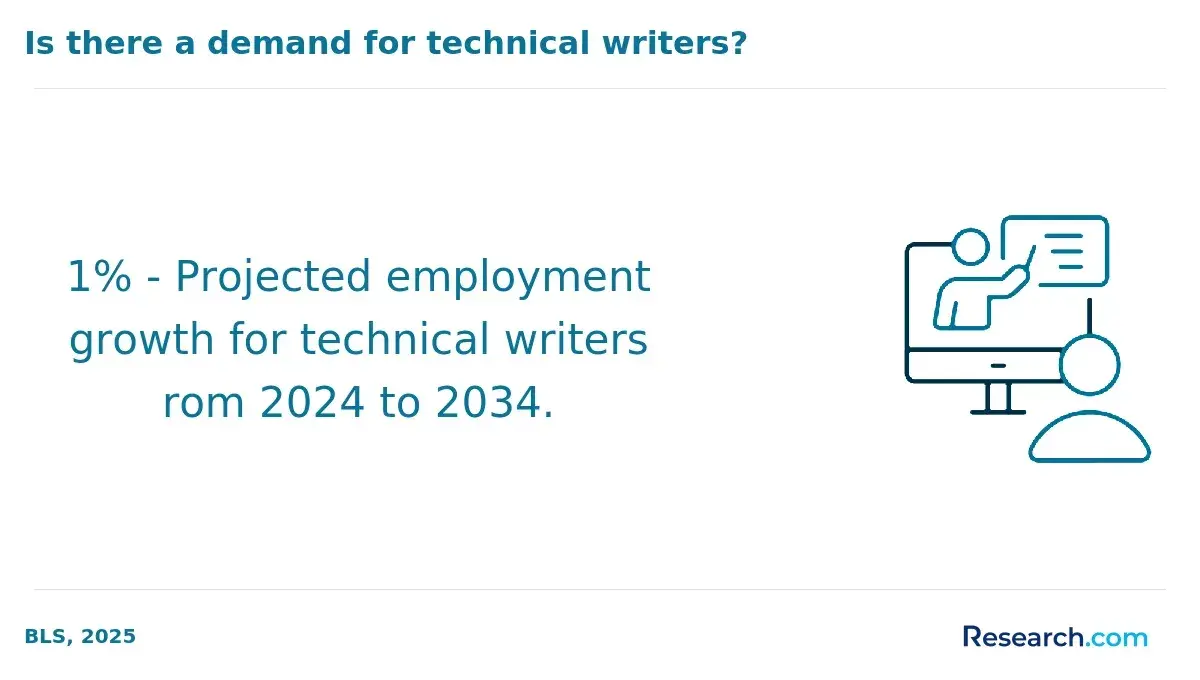
The job market for writing graduates is steady but competitive. Employment for writers and authors is expected to grow 5% from 2023 to 2033, with roughly 15,100 job openings each year. Technical writers are projected to see 4% growth over the same decade, with about 4,100 annual openings. These figures suggest continuing demand for skilled communicators, but students still need strong portfolios, relevant experience, and adaptable digital skills.
Graduates who want to work in education, instructional content, curriculum writing, or institutional communication may eventually consider advanced credentials. For example, the shortest online education specialist programs may be relevant for professionals who want to combine communication skills with instructional leadership, curriculum design, or education consulting.
Here’s What Graduates Have to Say About Online Professional Writing Degree Programs
-
: "
The online format made it possible for me to keep my full-time job while finishing my coursework. I was able to apply what I learned in content strategy and technical communication right away, and the projects helped me strengthen my portfolio. — Nicole
"
-
: "
I was unsure about studying writing online, but the courses were interactive and the student community was more supportive than I expected. The persuasive writing practice helped me communicate more effectively at work and contributed to a promotion. — Aaron
"
-
: "
The program gave me structured practice across several writing genres. Being able to review lectures and complete assignments on my schedule helped me revise more carefully, and the faculty feedback gave me confidence to pursue freelance projects. — Monica
"
What are the options for further academic advancement after an online professional writing degree?
Graduates who want to continue their education can pursue graduate certificates, master's degrees, or doctoral pathways depending on career goals. Common next steps include graduate study in professional writing, technical communication, rhetoric and composition, creative writing, public relations, journalism, communication, education, library science, instructional design, or business.
Students interested in teaching, curriculum development, academic administration, or education consulting may eventually consider doctorate-level study. Some candidates compare accelerated options such as 2 year Ed D programs online, but they should review admissions expectations, dissertation or capstone requirements, accreditation, and whether the credential aligns with their intended role.
What challenges might students encounter in an online professional writing degree program?
Online writing students often face challenges that are less about the subject and more about the learning format. Without a physical classroom, students must manage deadlines, seek feedback, build relationships, and create professional opportunities more intentionally.
- Limited face-to-face interaction: Students may miss informal conversations with classmates and professors unless the program offers live sessions, peer workshops, or active discussion spaces.
- Fewer built-in networking moments: Online learners should proactively pursue internships, alumni groups, professional associations, student publications, and freelance projects.
- Need for self-discipline: Writing courses require repeated drafting and revision. Students who fall behind may struggle to complete major projects.
- Feedback delays: Students should ask how quickly instructors return comments and how detailed that feedback is.
- Technology and access issues: Reliable internet, writing software, document sharing tools, and comfort with learning platforms are essential.
Students who later pursue leadership-oriented academic paths, such as affordable educational leadership doctoral programs online, may find that the communication, project management, and independent learning habits developed in an online writing program remain useful.
Common mistakes to avoid before enrolling
A professional writing degree can be valuable, but only if the program fits your goals and offers credible, practical preparation. Avoid these common mistakes before committing your time and money.
| Mistake | Why it can hurt you | Better approach |
| Choosing a program without checking accreditation | Unaccredited programs can create problems with financial aid, transfer credits, graduate admission, and employer recognition. | Verify institutional accreditation before applying. |
| Looking only at tuition per credit | Fees, transfer limits, materials, and required credits can change the true cost. | Calculate total program cost after transfer credits and aid. |
| Assuming all writing degrees teach the same skills | A creative writing-heavy program may not prepare you for technical writing, and a technical writing program may not fit publishing goals. | Compare course lists, portfolios, and specialization options. |
| Ignoring portfolio requirements | Employers and clients often want samples, not just a degree title. | Choose a program that helps you graduate with polished, job-relevant work. |
| Underestimating online workload | Flexible does not mean easy. Writing courses require drafting, reading, discussion, revision, and feedback. | Plan weekly writing time before classes begin. |
| Relying only on rankings | A highly ranked program may still be a poor fit for your schedule, budget, or career direction. | Use rankings as a starting point, then compare fit, cost, support, and outcomes. |
Key Insights
- An online professional writing degree is most valuable when it combines accredited coursework, frequent feedback, applied projects, and a strong portfolio.
- Employment for writers and authors is projected to grow 5% from 2023 to 2033, while technical writers are projected to see 4% growth over the same period.
- Writing careers vary widely. General writers average around $28,500 annually, specialized digital content writers can earn between $28,500 to $207,000 per year, and professionals with an online professional writing degree can expect an average salary of around $85,500 per year, with typical hourly wages of $41.
- Because 66% of writers and authors were self-employed, students should prepare for both traditional employment and independent work by learning client communication, portfolio presentation, editing, and deadline management.
- Online professional writing bachelor's degrees commonly require around 120 credits and typically take two to four years to complete, depending on transfer credits and enrollment status.
- The right program depends on career goals: technical writing, editing, digital content, business communication, creative writing, grant writing, and public relations all require different course choices and portfolio samples.
- Before enrolling, students should verify accreditation, total cost, transfer credit policies, feedback quality, internship options, portfolio requirements, and online student support.
References:
- Digital Content Writer salary. (2024). ZipRecruiter. Retrieved June 28, 2025, from https://www.ziprecruiter.com/Salaries/Digital-Content-Writer-Salary#Yearly
- Freelance Writer Salary. (2025). ZipRecruiter. Retrieved June 28, 2025, from https://www.ziprecruiter.com/Salaries/Freelance-Writer-Salary#Yearly
- Hanson, M. (2024, August 31). Cost of Online Education vs. Traditional Education [2024]: Comparison. Education Data Initiative. https://educationdata.org/cost-of-online-education-vs-traditional-education
- U.S. Bureau of Labor Statistics. (2025). Writers and authors. In Occupational Outlook Handbook. U.S. Department of Labor. Retrieved February 3, 2026, from https://www.bls.gov/ooh/media-and-communication/writers-and-authors.htm
- ZipRecruiter. (2026). Creative writer salary in the United States. https://www.ziprecruiter.com/Salaries/Creative-Writer-Salary
- Zippia. (2025). Creative writer education requirements: Degrees, majors, and colleges. https://www.zippia.com/creative-writer-jobs/education/
- Online writer salary. (2025). ZipRecruiter. Retrieved June 28, 2025, from https://www.ziprecruiter.com/Salaries/Online-Writer-Salary#Yearly
- Technical Writers. (2025, August 28). Bureau of Labor Statistics. https://www.bls.gov/ooh/media-and-communication/technical-writers.htm#tab-6
- Writer salary. (2025). ZipRecruiter. Retrieved June 28, 2025, from https://www.ziprecruiter.com/Salaries/Writer-Salary
- Writers and authors. (2025, August 28). Bureau of Labor Statistics. https://www.bls.gov/ooh/media-and-communication/writers-and-authors.htm#tab-6
Other Things You Should Know About Online Professional Writing Degree Programs
In 2027, some online professional writing degree programs can be completed in as little as 12 to 18 months. These accelerated programs often offer intensive coursework and flexible scheduling to accommodate students looking to expedite their education.
In 2027, several institutions offer the fastest online professional writing degree programs. Notable examples include Arizona State University, Southern New Hampshire University, and the University of Maryland Global Campus. These programs are designed to be completed in an accelerated format, enabling students to graduate quickly and enter the workforce with practical skills.
The fastest online professional writing degree programs in 2027 stand out for their accelerated formats, enabling completion in as little as 12 to 18 months. They offer practical coursework focused on current industry demands, flexibility for working professionals, and opportunities for specialization, ensuring graduates are well-prepared for the modern digital landscape.