
2027 Best Online Master’s in Digital Marketing Programs

Co-Founder and Chief Data Scientist
Choosing an online master’s in digital marketing is no longer just a question of convenience. It is a decision about whether a graduate credential can help you move into strategy, analytics, brand leadership, agency management, consulting, or freelance work in a marketing field that is increasingly shaped by data, automation, AI, and platform change.
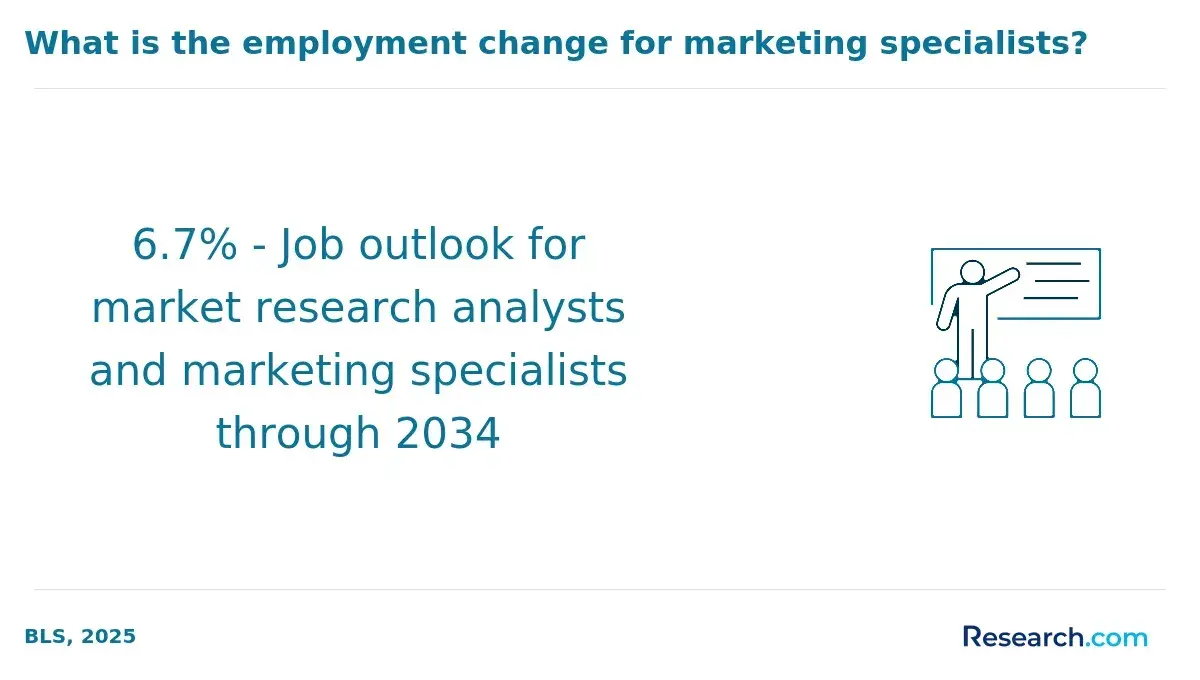
Digital marketing remains a major part of business growth, with ad spending expected to grow by 6.6% in 2026, according to Statista. Employers continue to need professionals who can connect audience research, content, paid media, search, analytics, customer experience, and revenue goals. Estimates point to about 87,200 job openings per year throughout the decade, and many marketing roles pay more than the average for all occupations.
This guide explains how online master’s in digital marketing programs work, how employers view them, what they cost, what courses and admissions requirements to expect, and how to compare programs realistically. It also discusses whether this degree is worth it compared with certificates, boot camps, work experience, and other business credentials such as a business degree online, a masters degree in organizational management, or other marketing-related graduate options.
If you are already working in marketing, reviewing marketing salaries, planning a career switch, or deciding whether a graduate degree is necessary, use this article as a practical decision guide rather than a simple list of schools.
Best Online Master’s in Digital Marketing Programs Table of Contents
- Quick answer: Is an online master’s in digital marketing worth considering?
- Can you complete a digital marketing master’s fully online?
- Do employers respect online digital marketing degrees?
- Are online degrees accepted internationally?
- Online vs. campus-based master’s programs in digital marketing
- How much does an online master’s in digital marketing cost?
- Admissions and technical requirements
- Common courses in online digital marketing master’s programs
- How to choose the right online digital marketing master’s program
- The role of AI in digital marketing education
- Networking and career support in online programs
- Why communications can strengthen digital marketing strategy
- How communication skills improve marketing impact
- How creative writing supports stronger campaigns
- How to think about return on investment
- The value of visual design skills in digital marketing
- How game design concepts can improve campaign engagement
- Using an online master’s to build a freelance marketing career
- Emerging technologies in digital marketing education
- How the degree can prepare students for leadership roles
- Should you specialize in social media marketing?
Quick answer: Is an online master’s in digital marketing worth considering?
An online master’s in digital marketing can be worth it if you want structured graduate training in marketing strategy, analytics, SEO, paid media, content, social media, digital branding, and campaign measurement while continuing to work. It is most useful for professionals who want to move beyond execution into strategy, management, consulting, or specialized digital roles.
The degree is not the only path into digital marketing. Certificates, vendor credentials, portfolios, freelance projects, and employer-based experience can also build marketable skills. A master’s degree makes the most sense when the program is accredited, affordable for your budget, aligned with your target role, and strong in practical projects, analytics, and career support.
| Choose an online master’s if... | Consider another path if... |
| You want a graduate credential for management, strategy, or leadership roles. | You need only one narrow skill, such as a specific ad platform or analytics tool. |
| You can benefit from faculty feedback, case studies, peer projects, and career services. | You already have advanced marketing experience and mainly need updated certifications. |
| You need flexibility because of work, family, location, or travel demands. | You learn best through face-to-face classroom interaction and campus networking. |
| You are comparing accredited programs with clear costs and outcomes. | You have not checked accreditation, total program cost, or employer recognition. |
Can you complete a digital marketing master’s fully online?
Yes. Many schools now offer online master’s degrees in digital marketing or closely related areas such as marketing, digital strategy, communication, and marketing analytics. Digital marketing is also a popular major, with 159,451 undergraduate enrollees in fall 2025, according to the National Student Clearinghouse Research Center, which helps explain why institutions continue to expand remote and flexible options.
In a fully online program, students usually access lectures, readings, assignments, discussions, exams, group work, and faculty communication through a learning management system. Some courses are asynchronous, meaning you complete work on your own schedule by set deadlines. Others include live sessions, virtual presentations, team meetings, or scheduled discussions.
Some programs also include applied projects, consulting-style assignments, portfolio work, simulations, or internships. Because digital marketing work itself is heavily digital, online learning can mirror real workplace conditions: remote collaboration, campaign analysis, online presentation, dashboard reporting, and tool-based execution.
Students interested in adjacent online graduate paths may also compare programs such as a doctorate in human resources online or an online master’s in communication if their long-term goals involve leadership, organizational strategy, or brand communication rather than digital marketing alone.
Do employers respect online digital marketing degrees?
Employers are generally more concerned with the credibility of the institution, the relevance of the curriculum, and the candidate’s ability to produce results than with whether the program was completed online or on campus. An online master’s from an accredited, reputable school is typically viewed more favorably than an unaccredited or poorly documented credential.
For digital marketing roles, employers often look for proof that you can use data, manage campaigns, interpret performance metrics, write for audiences, understand customer behavior, and connect marketing activity to business goals. A degree can support your candidacy, but it is stronger when paired with a portfolio, measurable projects, internships, freelance work, case studies, or professional certifications from organizations such as the American Marketing Association.
| What employers usually evaluate | How an online student can strengthen the signal |
| School and program credibility | Verify institutional accreditation and, when relevant, business-school accreditation. |
| Marketing skill depth | Choose courses in analytics, SEO, paid media, content strategy, and digital strategy. |
| Evidence of execution | Build a portfolio with campaign plans, dashboards, reports, and case analyses. |
| Tool familiarity | Use coursework to gain exposure to analytics, social media, automation, and advertising platforms. |
| Communication ability | Practice presenting insights, writing briefs, and translating data into recommendations. |
Are online degrees accepted internationally?
Online degrees from recognized universities are widely accepted, but international recognition is not automatic in every country, employer, licensing environment, or immigration context. Acceptance can depend on the issuing institution, accreditation status, degree level, field, local credential-evaluation rules, and employer policy.
If you plan to use the degree outside the United States, check the specific requirements in the country or region where you expect to work. You may need to confirm whether the institution is recognized, whether the transcript identifies the program as online, and whether a credential evaluation agency or government office must review the degree.
This is especially important for students who want to work for multinational companies, apply for international graduate programs, pursue immigration pathways, or enter regulated business environments. Before enrolling, ask the school how international students have used the credential and whether graduates have successfully completed third-party credential evaluations.
Marketers' Industry Insights

Online vs. campus-based master’s programs in digital marketing
Online and campus-based digital marketing master’s programs can teach similar concepts: campaign planning, market research, analytics, consumer behavior, digital channels, branding, and performance measurement. The main difference is not always academic quality. It is the learning format, networking environment, schedule, cost structure, and level of in-person access.
| Factor | Online master’s in digital marketing | Campus-based master’s in digital marketing |
| Schedule | Often better for working adults because courses may be asynchronous or offered in the evening. | Usually follows a fixed class schedule with required campus attendance. |
| Location | Can be completed from a distance if the program has no residency requirement. | Requires living near campus or commuting regularly. |
| Networking | Relies on virtual discussions, group projects, alumni networks, webinars, and online career services. | Offers in-person classmates, faculty meetings, campus events, and local employer access. |
| Learning style | Best for self-directed students who can manage deadlines independently. | Best for students who prefer face-to-face structure and immediate classroom interaction. |
| Costs beyond tuition | May reduce commuting, relocation, housing, and campus-related expenses. | May involve transportation, housing, parking, relocation, or campus fees. |
| Access to resources | Usually includes digital libraries, online databases, virtual advising, and remote faculty support. | May provide easier access to physical libraries, studios, labs, and campus-based organizations. |
The better format depends on your learning habits and career goals. Online programs can be a strong fit for professionals who need flexibility and already have workplace networks. Campus programs may be better for students who want immersive networking, structured in-person learning, or access to a specific local marketing market.
Is an online degree usually cheaper?
An online degree can cost less overall, but it is not automatically cheaper. Tuition varies by institution, residency policy, credit requirements, fees, and financial aid. Online students may save on relocation, commuting, campus housing, and some living expenses, but they may still pay technology fees, distance-learning fees, books, software costs, or travel costs for optional residencies.
When comparing programs, look at total cost rather than tuition alone. A lower per-credit price may not save money if the program requires more credits, has high fees, offers limited transfer credit, or extends your time to graduation. If the cost of marketing graduate school does not match your goals, you may also compare other business career paths, including resources on how to become a auditor, to decide whether a different specialization is a better investment.
Is an online degree academically comparable to a campus degree?
An online degree can be academically comparable to an on-campus degree when it comes from an accredited institution, uses qualified faculty, has a rigorous curriculum, and assesses students through meaningful projects and exams. Many online students study the same concepts as campus students, although the delivery method differs.
Before enrolling, review the curriculum, faculty profiles, accreditation, student support, and outcomes. A strong online degree in digital marketing should help students apply marketing strategy, analytics, content, search, paid media, and consumer insight in practical business contexts.
How much does an online master’s in digital marketing cost?
The price of an online master’s in digital marketing depends on the school, residency status, number of required credits, program length, fees, and whether the institution is public or private. Graduate costs often fall near the average cost of $19,749. For public institutions, the average cost is $12,394. For private institutions, the average cost is $26,621.
Based on Research.com’s review, the average cost of an online master’s in digital marketing is around $18,000 for in-state students and $22,000 for out-of-state students. These figures should be treated as planning estimates rather than guaranteed costs for any individual program.
| Cost item | Why it matters |
| Tuition per credit | Multiply this by required credits to estimate the academic portion of the bill. |
| Required credits | A lower tuition rate may still cost more if the program requires more credits. |
| Residency pricing | Some public universities charge different rates for in-state and out-of-state students. |
| Technology and online fees | These can add to the advertised tuition price. |
| Books, software, and tools | Marketing courses may require analytics tools, design software, or course platforms. |
| Time to completion | Longer enrollment can affect fees, opportunity cost, and financial planning. |
Is an online master’s in digital marketing worth the investment?
The degree may be worth it if it helps you qualify for better roles, move into management, develop advanced analytics and strategy skills, or reposition yourself in a competitive labor market. A digital marketing manager can make as much as $87,719 yearly, and there were more than 407,000 marketing managers in the United States with an annual average salary of $161,030.
Those salary figures do not guarantee individual outcomes. Pay depends on experience, location, industry, employer size, portfolio strength, technical skills, leadership ability, and market conditions. The practical question is whether the program’s cost, time commitment, and curriculum align with your next career move.
A strong program can help students study SEO, SEM, social media, web analytics, content marketing, brand strategy, campaign planning, customer research, and needs analysis for organizations. It may also support consulting, agency work, startup marketing, or entrepreneurship careers for you.
However, a master’s degree is not required for every digital marketing job. Certificates, boot camps, employer training, specialized postgraduate diplomas, freelance projects, and portfolio-based learning may be more efficient for some learners. Before applying, clarify what can you do with a business degree in digital marketing and whether a graduate credential is necessary for your target role.
Admissions and technical requirements for online master’s in digital marketing programs
Admissions standards differ by school, but most online digital marketing master’s programs evaluate academic preparation, professional experience, writing ability, and fit with the program. Some programs are designed for experienced marketers, while others accept career changers with strong business, communication, analytics, or creative backgrounds.
- Bachelor’s degree. Most programs require a bachelor’s degree from an accredited institution. A related major such as marketing, business, communications, or a similar field may help, but it is not always mandatory.
- Official transcripts. Applicants usually submit transcripts from every college or university previously attended.
- Minimum GPA. Many programs set a minimum GPA, often 2.5 or higher on a 4.0 scale, although requirements vary.
- Letters of recommendation. Schools may ask for references from professors, supervisors, or professionals who can discuss your academic ability, work ethic, leadership, or marketing potential.
- Statement of purpose. This essay typically explains why you want the degree, how it fits your career goals, and why the specific program is a good match.
- Resume or CV. A current resume helps admissions teams understand your work history, internships, certifications, projects, and relevant achievements.
- English language proficiency. Applicants whose first language is not English may need TOEFL or IELTS scores.
- Professional experience. Some programs require or prefer experience in marketing, advertising, communications, sales, business, analytics, or a related area.
Skills that help students succeed
Online graduate marketing students do not need to be experts before enrolling, but they benefit from a basic understanding of business, customers, communication, and digital tools. O*NET describes relevant general skill and knowledge requirements for marketing managers and related roles.
- Strategic thinking. Students should be ready to connect campaigns with business objectives, audience needs, budgets, timelines, and measurable outcomes.
- Administration and management. Marketing leadership often requires planning, resource coordination, team management, and cross-functional collaboration.
- Customer and personal service. Digital campaigns work better when marketers understand customer needs, service quality, satisfaction, and relationship-building.
- Communications and media. Students should be comfortable working with written, visual, oral, and digital forms of communication.
- Fluency of ideas. Marketing frequently requires generating multiple campaign concepts, testing messages, and refining creative options.
Technology requirements for online learning
At minimum, students need reliable internet access, a computer or device capable of running the school’s learning platform, updated browsers, email, video conferencing tools, and productivity software. A laptop or desktop is usually more practical than a phone for analytics work, presentations, long-form writing, and group projects.
Students should also be prepared to use digital collaboration tools, cloud-based files, discussion boards, virtual meeting platforms, and marketing software. Each school sets its own technical standards, so review the program’s requirements before enrolling. It is also useful to become familiar with in-demand technologies used in marketing roles, including SaaS platforms.
Common courses in online digital marketing master’s programs
Curricula vary, but most online master’s programs in digital marketing combine strategy, analytics, consumer behavior, channel management, and campaign execution. The strongest programs do not teach tools in isolation; they show how marketing decisions affect acquisition, retention, brand position, and revenue.
| Course area | What students typically learn |
| Digital marketing foundations | Core channels, customer journeys, digital strategy, campaign planning, and performance goals. |
| Social media marketing | Platform strategy, audience engagement, content planning, community management, paid social, and measurement. |
| Content marketing | Editorial planning, brand voice, audience research, content distribution, and conversion-focused messaging. |
| Digital analytics | Measurement frameworks, dashboards, attribution, reporting, and interpretation of campaign data. |
| Search engine optimization | Keyword research, technical SEO concepts, on-page optimization, off-page signals, and search visibility. |
| Paid search and performance media | Budgeting, bidding, audience targeting, ad testing, landing pages, and campaign optimization. |
| Brand and consumer strategy | Positioning, customer insight, market segmentation, value propositions, and competitive analysis. |
| Capstone or applied project | A final campaign, consulting project, portfolio piece, or strategic plan that demonstrates applied learning. |
How to choose the right online master’s in digital marketing program
The best online master’s program is not simply the one with the most recognizable name or the lowest tuition. It is the program that matches your career goal, budget, learning style, experience level, and need for flexibility. Use the following criteria to compare options carefully.
- Accreditation and reputation. Confirm institutional accreditation and check whether the business school or program holds specialized accreditation, such as accreditation from the Association to Advance Collegiate Schools of Business (AACSB), when applicable.
- Curriculum fit. Review whether the courses match your target role. A future analytics manager needs different depth than a brand strategist, content lead, social media director, or agency owner.
- Faculty expertise. Look for instructors with relevant academic work, professional marketing experience, consulting work, research, or industry leadership.
- Student support. Evaluate advising, tutoring, library access, technical support, writing help, career coaching, and access to faculty.
- Flexibility. Check whether the program is asynchronous, synchronous, part time, full time, accelerated, or self-paced.
- Career outcomes. Ask for available information on alumni roles, employer relationships, portfolio requirements, internships, and career services.
- Alumni network. A useful alumni community can support referrals, mentorship, informational interviews, and industry insight.
- Total cost. Compare full program cost, fees, required credits, books, software, and available financial aid instead of focusing only on advertised tuition.
Questions to ask before applying
| Question | Why it matters |
| Is the institution accredited? | Accreditation affects credibility, transferability, employer trust, and financial aid eligibility. |
| Does the curriculum include analytics, AI, SEO, paid media, and strategy? | Digital marketing roles increasingly require both technical and strategic competence. |
| Will I graduate with portfolio-ready work? | Employers often want evidence of campaign thinking and measurable results. |
| What is the total cost of attendance? | Fees, software, and required credits can change the real cost substantially. |
| How are online students supported? | Remote learners need accessible advising, tech help, faculty communication, and career services. |
| Are classes live, asynchronous, or both? | The format should match your work schedule and learning preferences. |
| Can I speak with alumni or current students? | They can give practical insight into workload, faculty responsiveness, and career value. |
Common mistakes to avoid
- Choosing by tuition alone. A cheap program with weak support, limited projects, or poor fit may not deliver the value you need.
- Ignoring accreditation. An unaccredited credential can create problems with employers, financial aid, and future education.
- Assuming online means easy. Graduate-level online programs require disciplined time management and independent work.
- Skipping the portfolio question. Digital marketing employers often want examples, not only transcripts.
- Overvaluing rankings. Rankings can be useful, but they should not replace careful review of curriculum, cost, format, and outcomes.
- Assuming salary results are guaranteed. A degree can improve preparation, but compensation depends on market factors and individual performance.
Best Online Master’s in Digital Marketing Programs for 2027
More than 90 institutions in the United States offer graduate-level distance learning options in business and marketing. Research.com reviewed publicly available information and considered factors such as accessibility, reputation, affordability, flexibility, alumni-generated reviews, and outcomes to highlight programs worth comparing.
Use this list as a starting point, not as the only basis for your decision. Confirm current tuition, fees, admissions requirements, accreditation, curriculum, and delivery format directly with each school before applying.
1. Rutgers Business School Master of Science in Digital Marketing
Rutgers Business School offers a 100% online Master of Science in Digital Marketing. The curriculum covers digital marketing strategy, social media marketing, search engine optimization, data-driven marketing, and digital analytics. Students can also earn certifications in Google Analytics and Hootsuite.
- Program Length: 9 months to 4.5 years
- Tracks/concentrations: none
- Cost per Credit: $1,218
- Required Credits to Graduate: 30
- Accreditation: Association to Advance Collegiate Schools of Business (AACSB)
2. University of Alabama at Birmingham Master of Science in Marketing with a Concentration in Digital Marketing
The University of Alabama at Birmingham offers an online Master of Science in Marketing with a Digital Marketing concentration. The program is designed to help students combine digital and traditional marketing approaches while building the ability to analyze and interpret data for marketing decisions.
- Program Length: 12 to 18 months
- Cost per Credit: $440
- Required Credits to Graduate: 30
- Accreditation: Association to Advance Collegiate Schools of Business (AACSB)
3. Southern New Hampshire University Master of Science in Marketing with a Concentration in Digital Marketing
Southern New Hampshire University offers an online Master of Science in Marketing with a Concentration in Digital Marketing. The program includes topics such as social media marketing, search engine optimization, and digital analytics, and students can build applied experience through projects and case studies that may support portfolio development.
- Program Length: 12 to 18 months
- Cost per Credit: $627
- Required Credits to Graduate: 36 credits
- Accreditation: International Accreditation Council for Business Education (IACBE)
4. University of Florida Online Master of Arts in Mass Communication with a concentration in Digital Strategy
The University of Florida offers an Online Master of Arts in Mass Communication with a concentration in Digital Strategy. Students can complete the program in as fast as 16 months, with 33 credit hours devoted to coursework and three credit hours assigned to a capstone course.
- Program Length: 16 months
- Cost per Credit: $725
- Required Credits to Graduate: 36
- Accreditation: Southern Association of Colleges and Schools Commission on Colleges (SACSCOC)
5. Brandeis University Master’s in Digital Marketing and Design
Brandeis University offers a 100% online Master of Science in Digital Marketing and Design. The program combines marketing and design, helping students study customer acquisition, digital engagement, creative strategy, and campaign development across digital platforms.
- Program Length: 1 to 3 years
- Cost per Credit: $1,500
- Required Credits to Graduate: 30
- Accreditation: New England Commission of Higher Education
What is the role of AI in digital marketing education?
AI is now central to many digital marketing workflows, including audience segmentation, content ideation, paid media optimization, predictive analytics, personalization, chatbots, and marketing automation. A current online master’s in digital marketing should help students understand where AI improves efficiency and where human judgment remains essential.
Useful AI-related coursework may cover machine learning concepts for marketers, responsible AI use, campaign automation, data privacy, AI-assisted content development, personalization, testing, and analytics interpretation. Students should not only learn how to use tools; they should learn how to evaluate outputs, reduce bias, protect customer trust, and connect automation to strategy.
For students trying to balance cost and advanced topics, comparing quickest cheapest masters degree options can help identify programs that combine affordability with relevant modern coursework.
Can online master’s programs boost your professional networking and career support?
Online programs can support networking when they intentionally build interaction into the student experience. Useful features include live workshops, cohort-based courses, alumni panels, mentorship, career coaching, resume reviews, employer events, project teams, and access to faculty with industry connections.
Students should not assume networking will happen automatically. Ask whether the program has active alumni groups, career services for online students, virtual recruiting events, internship support, and opportunities to work on real or simulated client projects. Students who want broader business preparation may also compare interdisciplinary options, including cheap online business administration degree programs.
Is combining digital marketing with communications a strategic advantage?
Digital marketing requires both data interpretation and persuasive communication. Analytics can identify audience behavior, but communication skills turn those insights into messages, campaigns, brand narratives, and stakeholder recommendations.
Students who want roles in brand strategy, public relations, content leadership, corporate communication, or integrated campaigns may benefit from combining marketing with communications. Programs such as online communications masters can be relevant for learners who want deeper training in messaging, media, audience analysis, and organizational communication.
How can enhanced communication skills amplify your digital marketing impact?
Strong communication skills help marketers explain campaign strategy, present analytics clearly, write persuasive content, manage stakeholders, and respond during brand-sensitive moments. In many organizations, the marketer who can translate data into a clear decision has more influence than the marketer who only reports numbers.
Graduate digital marketing students should look for assignments that require presentations, campaign briefs, executive summaries, crisis communication, negotiation, and cross-functional collaboration. These skills also connect to broader communication career paths for students interested in roles beyond marketing departments.
Can creative writing skills enhance your digital marketing strategies?
Creative writing can make digital marketing more effective by improving storytelling, brand voice, headlines, email copy, scripts, landing pages, social posts, and long-form content. While analytics shows what audiences do, writing shapes what they understand, remember, and act on.
Students who want to specialize in content strategy, brand storytelling, SEO content, email marketing, or social media may benefit from additional writing practice. An affordable online creative writing degree can be useful to compare if your main goal is persuasive content development rather than a broader marketing management credential.
How does an online master’s in digital marketing deliver a measurable return on investment?
The return on investment from an online master’s in digital marketing depends on the relationship between program cost, time commitment, career goals, and post-graduation opportunities. The degree may create value by helping students move into higher-responsibility roles, strengthen their portfolio, qualify for management tracks, or build advanced skills in analytics and strategy.
Students should measure ROI realistically. Compare tuition and fees against likely career benefits, but also consider non-salary outcomes such as stronger confidence, better professional network, leadership preparation, and the ability to launch consulting or freelance work. Specialized programs, including a fast social media marketing degree online, may be more efficient if your goals are narrower and time-sensitive.
Can strong visual design skills boost your digital marketing effectiveness?
Visual design affects how audiences perceive credibility, emotion, usability, and brand identity. Digital marketers who understand layout, color, typography, accessibility, user experience, and visual hierarchy can collaborate more effectively with designers and create stronger briefs, ads, landing pages, presentations, and social assets.
A marketing master’s program does not need to turn students into professional designers, but it should help them evaluate visual communication strategically. Students who want deeper creative training may also review graphic design online programs as a complementary or alternative path.
How can game design insights optimize digital marketing campaigns?
Game design concepts can improve digital marketing when used thoughtfully. Gamification, rewards, progress tracking, interactive storytelling, and user-centered design can increase engagement, encourage repeat interaction, and make campaigns feel more participatory.
These methods should support real customer value rather than manipulate users. Marketers interested in interactive experiences, loyalty programs, branded games, immersive campaigns, or engagement design may benefit from understanding whether is a game design career worth it aligns with their creative and technical interests.
How can you leverage an online master’s in digital marketing to build a successful freelance career?
An online master’s can support freelance work if you use the program to build marketable services, not just earn credits. Freelance clients usually care about whether you can solve a specific problem: improve search visibility, manage paid campaigns, plan content, analyze performance, grow social engagement, or clarify brand strategy.
- Choose a clear niche. Focus on a service area such as SEO, paid search, content strategy, analytics, email marketing, social media, or marketing automation.
- Create a portfolio while enrolled. Turn class projects into case studies, sample audits, campaign plans, dashboard reports, and strategy documents.
- Build proof of results. When possible, document baseline metrics, actions taken, and outcomes. Avoid making claims you cannot support.
- Use professional platforms strategically. Sites such as Upwork, Fiverr, and LinkedIn can help with visibility, but strong positioning and client communication matter more than simply creating a profile.
- Market yourself like a client. Build a simple website, publish useful insights, show your process, and explain the problems you solve.
- Network with other specialists. Designers, developers, copywriters, photographers, and consultants can become referral partners.
- Keep updating your skills. Platforms, privacy rules, ad products, and analytics tools change often, so continuing education remains part of freelance work.
The role of emerging technologies in digital marketing education
Digital marketing education must keep pace with the tools and expectations shaping modern campaigns. Students should look for programs that teach durable strategy while also exposing them to current technologies used in campaign execution and measurement.
- Automation and personalization. Marketing automation helps teams coordinate email, lead nurturing, customer journeys, and campaign timing. Students should understand both efficiency gains and the risks of poorly targeted automation.
- Data-driven decision-making. Analytics tools help marketers evaluate traffic, conversions, engagement, and channel performance. Graduate students should learn how to ask better questions, not just how to read dashboards.
- Virtual and augmented reality. VR and AR can support immersive product experiences, interactive campaigns, and brand storytelling, although they are most useful when they serve a clear audience need.
Students who want to move quickly into marketing education may also compare accelerated marketing degree programs online, especially if they already have relevant work experience and a clear career target.
How an online master’s in digital marketing prepares you for leadership roles
Leadership in digital marketing requires more than platform knowledge. Managers and directors must set strategy, allocate budgets, guide teams, work with sales and product leaders, interpret analytics, manage vendors, and explain marketing performance to executives.
An online master’s can support leadership development when it includes strategy, analytics, brand management, consumer behavior, project management, and applied decision-making. Students exploring how to become a brand manager should look for coursework in competitive positioning, branding, customer insight, campaign planning, and communication.
The strongest leadership preparation also includes group projects, presentations, case studies, and feedback from instructors or peers. These experiences help students practice the judgment and communication required to lead marketing work, not just execute individual tasks.
Is specializing in social media marketing essential for your digital marketing career?
Social media specialization is valuable for some careers, but it is not essential for every digital marketing professional. It is most relevant if you want roles in social strategy, influencer marketing, community management, paid social advertising, brand engagement, content calendars, or audience development.
Students should avoid treating social media as a standalone skill disconnected from business goals. Effective social media marketing still requires audience research, content strategy, analytics, brand voice, paid media knowledge, and conversion thinking. A focused social media marketing degree online may be a good option if your career goal is specifically tied to social platforms and digital community growth.
Is the online route right for you?
Online study can be a strong fit if you need flexibility, want to keep working, live far from campus, or prefer a program that lets you apply coursework directly to your current job. Research on online learning also points to benefits such as work-life balance, but flexibility does not remove the need for discipline.
The main challenges are self-management, limited face-to-face interaction, possible technology disruptions, and fewer informal campus experiences. Students who depend heavily on in-person accountability may find online learning harder unless the program includes live sessions, active advising, and structured deadlines.
Before enrolling, decide how you will manage study time, where you will complete coursework, what backup internet or technology options you have, and how you will build practical experience. These issues matter across many types of business degrees, especially programs that require applied projects and team collaboration.
Key Insights
- An online master’s can be valuable, but only when it fits your goal. It is strongest for students seeking strategy, analytics, leadership, consulting, or career advancement rather than a single platform skill.
- Accreditation matters. Employer recognition, credibility, financial aid, and future education options depend heavily on choosing a reputable institution.
- Cost should be evaluated in full. Compare tuition, required credits, fees, software, time to completion, and opportunity cost before deciding.
- Portfolio evidence is essential. A transcript is useful, but employers often want proof that you can plan, execute, analyze, and communicate marketing work.
- AI and analytics are now core skills. Strong programs should teach data-driven decision-making, automation, ethical AI use, campaign measurement, and strategic interpretation.
- Online learning rewards self-discipline. Flexibility is an advantage only if you can manage deadlines, participate actively, and create your own structure.
- Specialization should match your target role. Social media, content, analytics, design, communications, and digital strategy all lead to different career outcomes.
- Salary outcomes are not guaranteed. Reported pay can be attractive, but individual earnings depend on experience, location, industry, technical skills, leadership ability, and market demand.
- The best program is the one you can finish and use. Choose a degree that is affordable, credible, practical, and aligned with the kind of marketing work you actually want to do.
References
- American Marketing Association. (2025). Marketing in the Age of Disruption: The Skills Marketers Need in 2025 and Beyond. https://www.ama.org/2025/01/31/2025-marketing-skills-report
- National Student Clearinghouse Research Center. (2026, January 15). Final Fall Enrollment Trends. https://nscresearchcenter.org/final-fall-enrollment-trends
- Salesforce. (2026). Tenth Edition State of Marketing. https://www.salesforce.com/marketing/resources/state-of-marketing-report
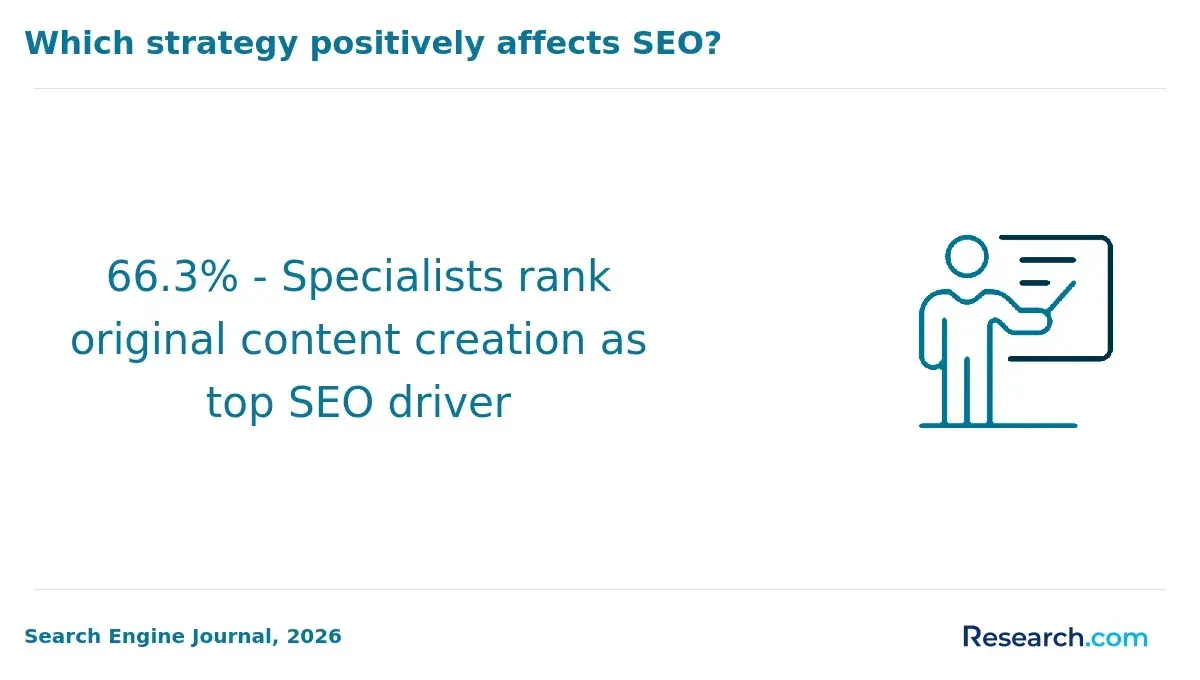
- Search Engine Journal. (2026). State of SEO 2026: How to Survive. https://www.searchenginejournal.com/state-of-seo
- Statista. (2026). Advertising Facts and Statistics. https://www.statista.com/outlook/amo/advertising/worldwide
- U.S. Bureau of Labor Statistics. (2025, August 28). Occupational projections and worker characteristics. Retrieved March 2026, from https://www.bls.gov/emp/tables/occupational-projections-and-characteristics.htm
- ZipRecruiter. (2026). Digital Marketing Manager Salary. Retrieved March 2026, from https://www.ziprecruiter.com/Salaries/Digital-Marketing-Manager-Salary
- ZipRecruiter. (2026). Digital Marketing Specialist Salary. Retrieved March 2026, from https://www.ziprecruiter.com/Salaries/Digital-Marketing-Specialist-Salary
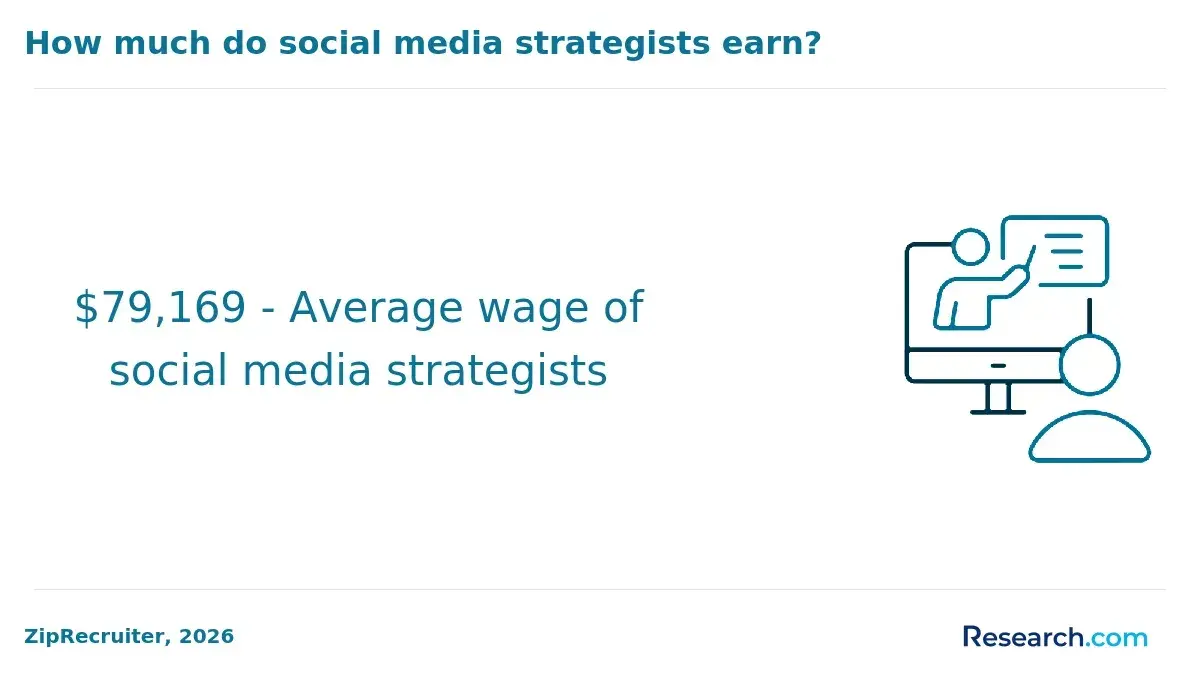
- ZipRecruiter. (2026). Social Media Strategist Salary. Retrieved March 2026, from https://www.ziprecruiter.com/Salaries/Social-Media-Strategist-Salary
Other Things You Should Know About Online Master’s in Digital Marketing Programs
Online master’s programs in digital marketing offer flexibility without sacrificing quality, featuring similar coursework to traditional programs. They often include interactive components like webinars and forums to facilitate networking. Graduates gain comparable credentials, equipped with practical skills for the digital marketing landscape.
Yes, scholarships are often available for 2027 online master’s in digital marketing programs. Many institutions offer merit-based and need-based scholarships. Check the specific program's website for eligibility criteria, deadlines, and application procedures to maximize your funding opportunities.
Look for programs accredited by recognized bodies like the Accreditation Council for Business Schools and Programs (ACBSP) or the International Accreditation Council for Business Education (IACBE) in 2027. Accreditation ensures quality education and is important for employer recognition.
In 2027, expect courses such as Digital Marketing Strategy, Social Media Analytics, Consumer Behavior, and SEO Optimization in top online master's programs in digital marketing. These courses not only align with current industry demands but also equip students with actionable skills for real-world applications.
Admission requirements for an online master's in digital marketing program often include a bachelor's degree, preferably in marketing or a related field, professional experience, letters of recommendation, a personal statement, and possibly GRE or GMAT scores. Specific requirements may vary by institution.
Most online master’s in digital marketing programs require about 30 to 36 credit hours. Many students finish in 12 to 24 months, depending on full-time or part-time enrollment. Some programs also require a final capstone, thesis, or internship-style project.


