2027 How to Become a Marketing Manager: Step-By-Step Guide

Co-Founder and Chief Data Scientist
Becoming a marketing manager is a strong option for professionals who want to combine business strategy, consumer research, creativity, analytics, and leadership. The role matters because companies now compete across search engines, social platforms, email, retail media, paid advertising, creator partnerships, and increasingly automated marketing systems. Employers need people who can turn customer data into clear campaigns, manage budgets, guide teams, and prove results.
Current projections show demand for marketing managers increasing by 6.6% through 2034, with an average of 34,300 openings each year over the decade. For students and career changers, that makes marketing management a practical career path to evaluate—but not one to enter blindly. The field rewards measurable skills, portfolio evidence, campaign experience, and comfort with changing technology.
This guide explains how to become a marketing manager, what education and experience employers typically expect, which skills matter most, what jobs you can pursue at different degree levels, and how to decide whether a marketing degree program, certification, accelerated program, or graduate degree fits your goals.
Marketing Management Careers Table of Contents
- Reasons to choose marketing management
- Career outlook and earning potential
- Skills employers expect from marketing managers
- How to begin a marketing management career
- How to move into senior marketing roles
- Advanced education options for career growth
- Major challenges facing marketing managers
- Why visual communication matters in marketing leadership
- How professional development supports long-term success
- Using marketing skills in communications careers
- Sustainability, CSR, and brand strategy
- Legal and ethical priorities for marketing managers
- Gamification and immersive campaign design
- Accelerated learning routes in marketing
- Career paths with social media marketing training
- Education requirements for marketing managers
- How design skills strengthen marketing strategy
Quick Answer: How Do You Become a Marketing Manager?
Most marketing managers start by earning a bachelor’s degree in marketing, business, communications, or a related field; gaining hands-on experience through internships or entry-level roles; building technical skills in digital marketing, analytics, campaign management, and branding; and then moving into supervisory roles after proving they can plan and measure successful campaigns. Certifications can help, especially in digital advertising, inbound marketing, analytics, social media, or marketing automation, but they usually work best when paired with real campaign experience.
| Career step | What to focus on | Why it matters |
| Education | Marketing, business, communications, analytics, or related coursework | Builds the foundation for research, consumer behavior, strategy, and communication |
| Early experience | Internships, assistant roles, coordinator jobs, freelance projects, student campaigns | Shows employers that you can execute campaigns, not just describe marketing concepts |
| Technical skills | SEO, paid media, social media, email marketing, analytics, project management | Modern marketing managers must connect strategy with measurable channel performance |
| Leadership preparation | Budgeting, team coordination, vendor management, reporting, presentation skills | Management roles require cross-functional influence and accountability for outcomes |
| Career advancement | Certifications, graduate study, portfolio development, specialization | Helps professionals compete for senior, director-level, or specialized marketing roles |
Why Choose a Career in Marketing Management?
Marketing managers help organizations understand customer demand, position products or services, evaluate competitors, set pricing strategies, and choose the right channels to reach target audiences. Their work connects market research with business decisions: what to sell, who to sell it to, how to communicate value, and how to measure whether campaigns are working.
The role is highly collaborative. A marketing manager may coordinate with sales teams on lead quality, product teams on feature launches, public relations teams on messaging, finance teams on budgets, and executives on growth goals. In many companies, marketing managers are also responsible for translating customer behavior into actionable strategy.
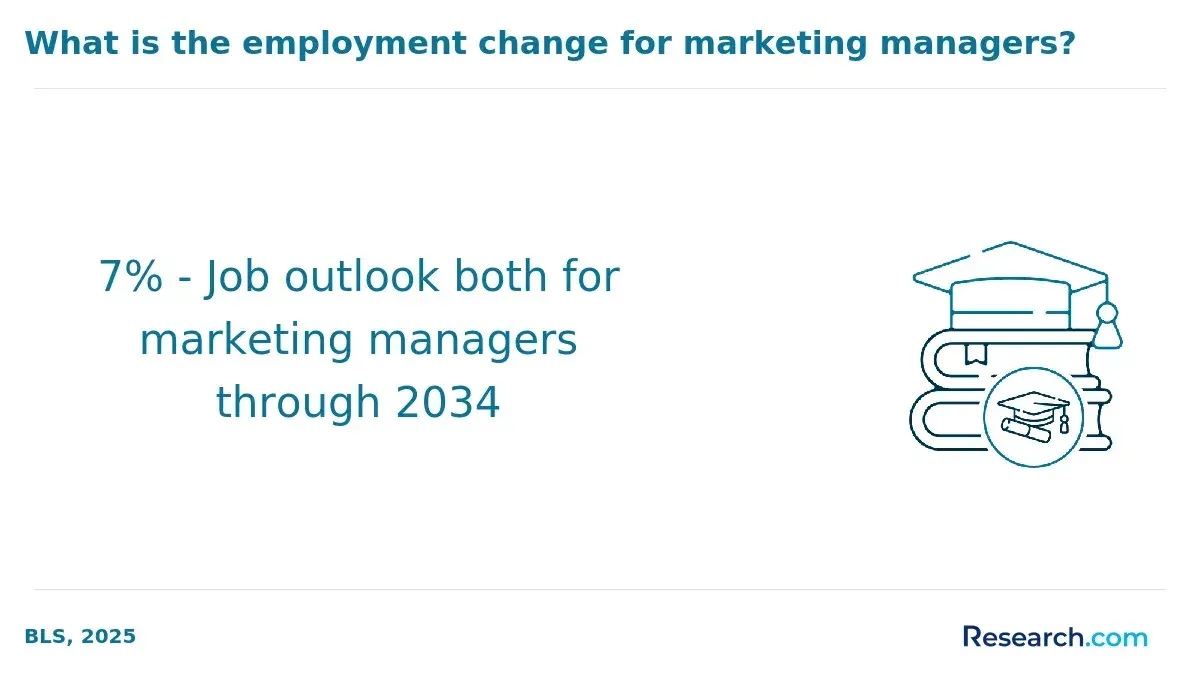
As of 2024, there were approximately 407,000 marketing managers employed in the US, and this workforce will reach 433,700 by 2034. Demand is expected to continue because organizations rely on marketing campaigns to protect market share, reach new buyers, improve pricing strategies, and strengthen customer relationships.
Marketing Management Career Outlook
Marketing managers earn a median annual wage of $161,030. When people ask, “how much does a marketing manager make,” that figure is a useful midpoint, not a guaranteed outcome. Earnings vary by industry, location, company size, performance expectations, and level of responsibility. The lowest 10% earn less than $81,900, while the highest 10% earn more than $239,200. Marketing managers primarily worked in the management of companies and enterprises.
Education and experience can influence advancement. Some professionals strengthen their business and entrepreneurial judgment through specialized study, including programs offered by top colleges for entrepreneurship, while others build expertise through analytics certifications, digital marketing portfolios, or industry-specific experience.
| Marketing management factor | What the current data shows | How to interpret it |
| Projected growth | 6.6% through 2034 | Demand is positive, but competition may still be strong for high-paying leadership roles |
| Average annual openings | 34,300 each year over the decade | Openings may come from growth, job changes, and replacement needs |
| Employment base | 407,000 marketing managers in 2024 | The occupation is established across many industries |
| Projected workforce | 433,700 by 2034 | Employers are expected to continue hiring marketing leaders |
| Median annual wage | $161,030 | Pay can be strong, but results depend on industry, performance, and seniority |
| Salary range | Lowest 10% earn less than $81,900; highest 10% earn more than $239,200 | Experience, specialization, and leadership scope can create wide pay differences |
Skills You Need to Become a Marketing Manager
Marketing management requires both technical ability and leadership judgment. A strong candidate understands digital channels, campaign execution, customer research, budgeting, analytics, brand positioning, communication, and team coordination. Some skills come from coursework, but many are developed through campaigns, internships, entry-level jobs, and measurable project results.
Core Technical Skills
The most important technical abilities for many marketing managers include digital marketing, campaign execution, and project management. These skills help managers connect strategy with measurable outcomes.
Digital Marketing
Digital marketing management involves planning and overseeing online campaigns across channels such as search, social media, email, content, paid advertising, and websites. Because buyer behavior changes quickly, marketing managers need to understand where audiences spend time, what messages perform, and how digital tools track results. Awareness of adjacent fields and customer interests, such as searches related to how to become a financier, can also help marketers refine targeting and content strategy for specific audiences.
Marketing Campaign Execution
Campaign execution covers planning, launching, monitoring, and improving marketing initiatives. A campaign may promote a product launch, event, brand repositioning, seasonal offer, or lead-generation goal. Effective managers set objectives, define audiences, choose channels, coordinate creative work, track performance, and adjust campaigns when results fall short.
Project Management
Marketing managers often oversee timelines, budgets, stakeholders, creative production, approvals, and reporting. Strong project management keeps campaigns on schedule, prevents scope creep, clarifies ownership, and helps teams deliver work that meets business goals and customer expectations.
Essential Soft Skills
Marketing managers also need strong judgment, communication, creativity, and analytical thinking. These skills determine whether a manager can turn data into decisions, align teams, and communicate ideas clearly to executives, clients, and customers.
Analytical Thinking
Analytics help marketing managers understand what is working, what is wasting budget, and which audiences are responding. Managers use data to assess campaign performance, identify useful key performance indicators, improve return on investment, and make better decisions about future strategy.
Communication
Marketing depends on clear communication with customers, internal teams, vendors, executives, and partners. A manager must explain strategy, present results, guide creative direction, and maintain consistent messaging across channels. Poor communication can lead to mismatched campaigns, weak branding, and wasted spending.
Creativity
Creativity helps marketing teams find better ways to capture attention, solve constraints, and differentiate a product or service. In management roles, creativity is not only about visuals or slogans; it also involves framing problems, testing new approaches, and finding persuasive ways to connect customer needs with business value.
| Skill area | What employers look for | How to build evidence |
| Digital marketing | Channel knowledge, performance tracking, audience targeting | Run campaigns, earn platform certifications, document results |
| Analytics | Ability to interpret data and recommend action | Create reports, analyze campaign metrics, learn dashboard tools |
| Brand strategy | Consistent messaging and customer positioning | Build case studies, brand briefs, and messaging frameworks |
| Project management | Timeline, budget, and stakeholder coordination | Lead student, freelance, internship, or workplace projects |
| Communication | Clear writing, presentation skills, executive-ready reporting | Prepare campaign summaries, client presentations, and content samples |
| Creativity | Original ideas tied to customer insight and business goals | Develop campaign concepts and test creative variations |
How to Start a Career in Marketing Management
The usual starting point is a bachelor’s degree in a business-related field such as marketing, communications, business administration, or a related discipline. However, degree choice is only one part of the path. Employers also look for internships, campaign experience, writing samples, analytics ability, and evidence that you can work with deadlines and teams.
Students should try to graduate with more than coursework. A useful early portfolio may include social media calendars, SEO content samples, market research summaries, paid ad mockups, email campaigns, brand audits, analytics reports, or internship projects.
Jobs You Can Pursue with an Associate’s Degree in Marketing Management
An associate’s degree can help candidates enter support, coordinator, and assistant-level roles. These positions can be valuable stepping stones, especially when paired with certifications, internships, or strong digital skills.
Digital Marketing Coordinator
A digital marketing coordinator supports online campaigns by helping manage social media, update website content, assist with digital advertising, and review campaign data. This role is often a practical way to build channel experience before moving into strategy or management.
Median salary: $50,405
Marketing Assistant
A marketing assistant helps with campaign coordination, market research, promotional materials, client communication, and administrative support. The job can expose early-career professionals to many parts of a marketing department.
Median salary: $55,006
Social Media Manager
A social media manager develops and executes strategies for platforms such as Facebook, Twitter, and Instagram. Responsibilities may include audience research, content planning, brand voice development, campaign goals, reporting, and implementation of an approved social media plan.
Median Salary: $57,220
Jobs You Can Pursue with a Bachelor’s Degree in Marketing Management
A bachelor’s degree generally opens more doors in analytics, advertising, SEO, brand, research, and campaign roles. These jobs often provide the experience needed to move toward marketing management.
Search Engine Optimization Specialist
An SEO specialist improves a website’s visibility on search engines such as Google, Yahoo!, and Bing. The role may include keyword research, on-page optimization, content recommendations, technical coordination, traffic analysis, and user experience improvements that support lead generation and brand awareness.
Median Salary: $72,152
Advertising Manager
Advertising managers plan and coordinate campaigns that promote products, services, or brands. They may work with creative teams, set budgets, negotiate media placements, evaluate performance, and ensure advertising aligns with broader marketing goals.
Median salary: $62,623
Market Research Analyst
Market research analysts collect and interpret information about customers, competitors, market trends, and campaign performance. They may use surveys, interviews, data analysis, and reports to help organizations make better marketing decisions.
Median salary: $76,950
Can You Get a Marketing Management Job with Only a Certificate?
A certificate can help you qualify for some entry-level digital marketing, social media, SEO, advertising, or analytics roles, especially if you can show work samples. However, many employers still prefer candidates with an associate’s or bachelor’s degree for management-track roles. A certificate is most useful when it fills a specific skill gap, such as search advertising, content marketing, or marketing analytics, and when you can connect the credential to real projects.
| Education level | Best fit | Typical role examples | Main limitation |
| Certificate | Skill-building, career changers, digital specialization | SEO assistant, paid ads assistant, social media support | May not meet degree preferences for management-track roles |
| Associate’s degree | Entry-level support roles and transfer pathways | Digital marketing coordinator, marketing assistant, social media manager | Advancement may require more experience or a bachelor’s degree |
| Bachelor’s degree | Most common foundation for marketing careers | SEO specialist, advertising manager, market research analyst | Degree alone is not enough without practical experience |
| Master’s degree | Career advancement, leadership preparation, specialization | Marketing manager, brand manager, sales representative | ROI depends on cost, timing, and career goals |
| Doctorate | Research, academia, executive-level specialization | Marketing professor, marketing research director, marketing director | Usually unnecessary for most corporate marketing manager jobs |
Marketers' Industry Insights

How to Advance in Marketing Management
Advancement usually comes from a combination of performance, leadership ability, measurable campaign results, and strategic thinking. Higher education can help, but it should be chosen carefully. Before enrolling in a graduate program, compare cost, employer tuition support, program flexibility, alumni outcomes, and whether the curriculum matches your target role.
Jobs You Can Pursue with a Master’s in Marketing Management
A master’s degree can support advancement into leadership or specialized roles, particularly for professionals who want deeper training in strategy, analytics, brand management, consumer behavior, or executive decision-making.
Sales Representative
Sales representatives sell products or services, build client relationships, identify opportunities, negotiate agreements, and work toward sales targets. Marketing knowledge can help sales professionals understand customer segments, messaging, and product positioning.
Median salary: $64,200
Marketing Manager
A marketing manager develops and executes strategies to promote products or services. Duties may include market research, consumer behavior analysis, campaign coordination, advertising oversight, budget management, team leadership, and collaboration with other departments.
Median salary: $161,030
Brand Manager
Brand managers shape how customers understand and experience a brand. They may guide positioning, product messaging, market research, advertising, and cross-functional brand consistency. Compensation varies by experience, industry, and company size, so readers comparing broader management roles may also want to review business management salary information.
Median salary: $93,259
Jobs You Can Pursue with a Doctorate in Marketing Management
A doctorate is not required for most marketing management roles, but it may make sense for professionals who want to teach, conduct advanced research, lead high-level research functions, or pursue specialized academic and executive paths.
Marketing Director
Marketing directors oversee broader marketing strategy and departmental performance. They may manage budgets, lead teams, evaluate market trends, supervise campaign planning, and work with executives to align marketing with business objectives.
Median salary: $93,856
Marketing Professor
Marketing professors teach courses, conduct research, mentor students, publish scholarly work, and contribute to academic programs. This path is best suited for people interested in research, teaching, and long-term academic work.
Median salary: $97,270
Marketing Research Director
Marketing research directors lead research programs that generate consumer and market insights. They design studies, manage research teams, analyze findings, and provide recommendations that shape strategy and business decisions.
Median salary: $193,131
Best Certifications for Marketing Management
There is no single certification that automatically qualifies someone for a marketing manager job. The best choice depends on your current skill gaps and target role. A paid media specialist may benefit from platform certifications, while a brand strategist may need analytics, consumer research, or project management training.
- Professional Certified Marketer (PCM). The PCM credential from the American Marketing Association allows marketers to demonstrate knowledge in specific marketing areas and continue developing professional expertise.
- Google Ads Certifications. Google Ads certifications recognize knowledge of fundamental and advanced aspects of Google Ads. They can be useful for professionals who manage search, display, video, shopping, or other online advertising campaigns.
- HubSpot Inbound Marketing Certification. HubSpot’s Inbound Marketing Course focuses on attracting, engaging, and supporting audiences through helpful content and personalized customer experiences.
Other useful credentials may focus on digital marketing, social media marketing, analytics, marketing automation, or project management. Choose certifications that produce practical work samples or help you solve problems you will face in the role you want.
Advanced Education Options for Marketing Career Growth
Advanced education can help marketing professionals deepen their skills in analytics, leadership, strategy, consumer behavior, and business decision-making. It is most valuable when the credential directly supports a career move, such as shifting from execution to management, moving into brand leadership, or preparing for director-level responsibility.
Working professionals who need a shorter academic timeline may compare 1 year masters programs USA. These programs can be useful for students who want graduate-level training without stepping away from work for an extended period. However, speed should not be the only criterion. Review accreditation, course depth, faculty experience, schedule expectations, employer reputation, and total cost before choosing a fast program.
Specialized certificates in digital analytics, marketing automation, brand strategy, or content strategy can also complement a graduate degree. For many professionals, the strongest development plan combines formal learning, workplace projects, portfolio evidence, and measurable campaign outcomes.
Challenges Marketing Managers Face Now
Marketing managers operate in an environment where customer expectations, privacy rules, technology, and competition change quickly. The strongest managers are not just creative; they are adaptable, data-literate, and disciplined about ethics and measurement.
- Digital transformation: Marketing tools, automation platforms, artificial intelligence features, and analytics systems keep evolving. Managers need enough technical fluency to evaluate tools without chasing every trend.
- Data privacy and security: Regulations such as GDPR and CCPA require careful handling of customer data. Marketers must balance personalization with transparency, consent, and responsible data practices.
- Changing consumer behavior: Economic conditions, social trends, media habits, and technology can shift buying decisions. Managers need research and analytics to understand those changes.
- More competition online: Digital channels are crowded. Brands need clearer positioning, stronger creative work, and better measurement to stand out.
How Visual Communication Improves Marketing Management
Strong visual communication helps marketing managers turn complex ideas into messages customers can understand quickly. Infographics, short videos, product visuals, landing page layouts, and presentation graphics can clarify value, make data easier to interpret, and strengthen brand recognition. Professionals who want deeper visual skills may consider training such as an affordable online graphic design degree, especially if their roles involve content direction, creative review, or brand storytelling.
How Continuous Professional Development Supports Marketing Success
Marketing changes too quickly for one degree to carry an entire career. Ongoing learning helps managers keep up with analytics, automation, customer research, leadership practices, and communication strategy. Some professionals use short courses and certifications, while others pursue broader graduate study, such as an online masters in communication, to strengthen messaging, leadership, and stakeholder engagement skills.
Can Marketing Management Skills Transfer to Communications Careers?
Yes. Marketing managers often build skills that translate well into public relations, corporate communications, media planning, internal communications, and brand messaging roles. They understand audiences, data, campaign planning, storytelling, channel strategy, and stakeholder needs. Professionals considering a pivot can compare these strengths with careers with a communications degree to identify roles where marketing experience gives them an advantage.
How Sustainability and Corporate Social Responsibility Affect Marketing Management
Sustainability and corporate social responsibility can influence brand trust, customer loyalty, and public perception. Marketing managers must communicate these efforts carefully. Overstating environmental or social claims can damage credibility, while transparent, evidence-based messaging can strengthen a brand’s reputation. Marketers who work on CSR campaigns may need research, storytelling, and audience education skills. Creative communication training, including options such as the cheapest bachelors in creative writing degree, can support clearer and more authentic messaging when used alongside sound business practices.
Legal and Ethical Issues Marketing Managers Should Prioritize
Marketing managers need to understand the rules that shape advertising, data collection, disclosures, influencer partnerships, privacy, consumer protection, and claims about products or services. Regulations and standards such as GDPR and FTC requirements make transparency especially important. Ethical marketing also means avoiding deceptive messaging, respecting user data, and reporting campaign results honestly. Professionals who work heavily in social platforms may explore structured training such as the quickest online social media marketing degree to build platform-specific and compliance-aware skills.
Alternative Career Options for Marketing Managers
Marketing management builds transferable skills in strategy, research, communication, analytics, positioning, and leadership. Those skills can support related paths in consulting, product marketing, brand strategy, communications, public relations, and even global business roles. If you are considering broader business paths, compare how marketing experience fits an international business career.
Marketing Consultant
Marketing consultants advise organizations on strategy, audience targeting, messaging, channel selection, and campaign improvement. This path can appeal to experienced professionals who want independence, variety, and client-facing work. Some consultants specialize by sector; for example, they may help schools or organizations market programs such as the best real estate programs online.
Digital Marketing Strategist
Digital marketing strategists design and coordinate online campaigns across SEO, content, paid media, social media, email, and conversion-focused channels. Marketing managers with strong analytics and planning skills can transition into this role when they want deeper specialization in digital growth strategy.
Product Marketing Manager
Product marketing managers focus on positioning specific products or services. Their work may include market research, competitive analysis, product messaging, launch planning, sales enablement, and collaboration with product, sales, and customer success teams.
Brand Strategist
Brand strategists define how a company should be perceived in the market. They analyze customers, competitors, cultural trends, and brand assets to shape identity, messaging, and positioning. This role suits professionals who combine research, creativity, and strategic communication.
Editor
Editors in marketing help improve clarity, consistency, tone, and persuasiveness across campaign materials. They may review website copy, social posts, advertisements, email campaigns, product pages, and promotional materials. The role is especially useful for professionals who enjoy language, brand voice, and content quality control.
Public Relations Specialist
In marketing-related settings, public relations specialists help organizations manage reputation, media communication, public messaging, and stakeholder relationships. A public relation major can prepare students to write media releases, plan social campaigns, and shape how audiences understand an organization’s work and goals.
Can Gamification and Immersive Design Improve Marketing Campaigns?
Gamification and immersive design can make campaigns more interactive by using elements such as challenges, rewards, feedback, narrative, and participation. These techniques can be useful when they match the audience and campaign goal; they should not be added simply because they feel novel. Marketers interested in interactive storytelling and user engagement can learn from creative fields, including discussions of whether game design education is worth it.
Accelerated Learning Pathways for Marketing Management
Accelerated programs can help students or working professionals complete marketing coursework in a shorter timeframe. They may be useful for people who already know their career goal, can handle a compressed schedule, and need a credential faster. However, accelerated does not always mean better. Students should compare workload, accreditation, faculty support, transfer credit policies, internship access, and total cost.
Faster Completion
Accelerated programs compress coursework so students can finish more quickly than in a traditional format. This can reduce time away from the workforce, but it may require strong time management and fewer breaks between terms.
Online Flexibility
Many schools offer accelerated marketing degree programs online for students balancing work, family, or location constraints. Online study can be convenient, but students should confirm that the program includes practical assignments, current digital marketing content, and adequate instructor support.
Career-Focused Learning
Some accelerated programs include projects, case studies, and industry-relevant assignments. These can help students build evidence for roles such as digital marketing strategist, brand manager, marketing consultant, or campaign coordinator.
What Career Opportunities Exist with a Social Media Marketing Degree?
A social media marketing degree online can prepare students for roles that involve content planning, audience engagement, platform analytics, paid social campaigns, influencer coordination, and brand community management. Possible roles include digital marketing specialist, social media manager, and content creator. Graduates may work in e-commerce, entertainment, nonprofit organizations, agencies, or in-house marketing teams.
Education Requirements for Becoming a Marketing Manager
There is no single required major for every marketing manager job, but most employers expect at least a bachelor’s degree in marketing, business administration, communications, or a related field. Coursework in consumer behavior, market research, statistics, branding, digital marketing, business strategy, writing, and communication can be especially useful.
A master’s degree, such as a marketing master’s or an MBA with a marketing focus, may help professionals move into leadership, but it is not always necessary. Before enrolling, compare the cost of the degree with your target role, employer expectations, and the experience you already have.
Certifications in digital marketing, data analysis, content marketing, social media, or advertising platforms can add value when they match your career direction. If you are evaluating communications as a route into marketing, review communications degree requirements to see whether the curriculum supports your goals.
How Design Skills Strengthen Marketing Strategy
Design skills help marketing managers communicate ideas visually, improve brand consistency, and make campaigns easier to understand. A manager does not always need to be a professional designer, but understanding layout, hierarchy, color, typography, accessibility, and visual storytelling can improve creative direction and campaign quality. Students who want deeper preparation can compare graphic design degrees online as a complement to marketing training.
Is Marketing Management Worth It?
Marketing management can be worth it for people who enjoy strategy, communication, data, creative problem-solving, and leadership. The salary potential is strong, and projected employment growth is positive. However, the field can be competitive, performance-driven, and demanding. Success depends on more than earning a degree; employers want proof that you can generate insight, manage campaigns, coordinate teams, and improve business outcomes.
| Marketing management may be a good fit if... | You may want another path if... |
| You enjoy both creativity and data analysis | You dislike measuring performance or working with metrics |
| You can manage deadlines, budgets, and stakeholder feedback | You prefer work with little collaboration or rapid change |
| You are comfortable learning new tools and platforms | You want a career where skills remain mostly static |
| You like understanding customers and influencing decisions | You are not interested in consumer behavior, persuasion, or messaging |
| You want a path with leadership potential | You prefer a purely technical or independent contributor role long term |
Common Mistakes to Avoid When Preparing for Marketing Management
- Choosing a program only by tuition: Low cost matters, but also review accreditation, curriculum quality, career support, faculty experience, and internship access.
- Assuming a degree automatically leads to management: Most people need campaign experience and measurable results before moving into manager roles.
- Ignoring analytics: Creative ideas are valuable, but managers must also prove performance with data.
- Collecting random certifications: Choose credentials that support your target role instead of adding unrelated badges.
- Building no portfolio: Employers often want work samples, campaign summaries, reports, or case studies.
- Overlooking communication skills: Marketing managers must present strategy, explain results, and align cross-functional teams.
- Relying only on rankings: Rankings can help with research, but program fit, cost, outcomes, and flexibility matter more for individual decisions.
Questions to Ask Before Choosing a Marketing Program
- Is the institution properly accredited?
- Does the curriculum include digital marketing, analytics, consumer behavior, branding, and campaign strategy?
- Are internships, capstones, simulations, or client-based projects available?
- Can students build a portfolio before graduation?
- Are courses taught by faculty with current marketing or industry experience?
- What career services are available for internships and entry-level roles?
- How much will the program cost after financial aid, fees, and materials?
- Will transfer credits reduce time and cost?
- Does the format fit your schedule if you work full time?
- Do alumni outcomes match the kind of marketing role you want?
Building a Marketing Management Career in the Digital Era
Marketing management offers many possible paths, from digital coordination and SEO to brand strategy, product marketing, research leadership, and executive marketing roles. The strongest candidates combine education with practical experience, current technical skills, communication ability, and evidence of campaign results.
Some professionals expand their options by blending marketing with other disciplines, such as combining business strategy with consumer behavior through a business and psychology degree. Others pursue advanced business credentials or compare alternatives such as doctorate of business administration online programs if they are aiming for senior leadership, consulting, or academic-oriented pathways.
Key Insights
- Marketing management is a strategy-and-results role: Managers must understand customers, guide campaigns, coordinate teams, manage budgets, and measure outcomes.
- Demand is projected to grow: Marketing manager demand is expected to increase by 6.6% through 2034, with about 34,300 openings each year over the decade.
- Pay can be strong, but it varies: The median annual wage is $161,030; the lowest 10% earn less than $81,900, and the highest 10% earn more than $239,200.
- A bachelor’s degree is the common foundation: Marketing, business, communications, and related degrees are typical starting points, but experience and portfolio evidence matter heavily.
- Certifications are useful when targeted: PCM, Google Ads Certifications, HubSpot Inbound Marketing Certification, and other digital credentials can strengthen specific skills but do not replace practical experience.
- Technology and ethics are now central: Marketing managers must understand digital tools, automation, analytics, privacy expectations, and responsible messaging.
- Career options are broad: Marketing skills can lead to roles in brand strategy, product marketing, consulting, public relations, communications, research, social media, and digital strategy.
- The best path depends on your goal: Choose education, certifications, and experience based on the role you want—not just on speed, rankings, or degree title.
References:
- American Marketing Association. (2025). Marketing in the Age of Disruption: The Skills Marketers Need in 2025 and Beyond. https://www.ama.org/2025/01/31/2025-marketing-skills-report
- Salesforce. (2026). Tenth Edition State of Marketing. https://www.salesforce.com/marketing/resources/state-of-marketing-report
- U.S. Bureau of Labor Statistics. (2025, August 28). Occupational projections and worker characteristics. Retrieved March 2026, from https://www.bls.gov/emp/tables/occupational-projections-and-characteristics.htm
- ZipRecruiter. (2026). Brand Manager Salary. Retrieved March 2026, from https://www.ziprecruiter.com/Salaries/Brand-Manager-Salary
Other Things You Should Know About Becoming a Marketing Manager
To become a marketing manager, you typically need a bachelor’s degree in marketing, business administration, or a related field. Completing internships during your academic years can also provide valuable experience and enhance your prospects.
To advance in marketing management in 2027, focus on continuous learning. Gain advanced skills in digital marketing, analytics, and leadership. Networking is vital, as is pursuing further education, such as an MBA with a marketing concentration. Seek diverse experiences to broaden your understanding of various market dynamics.
Certifications like the Professional Certified Marketer (PCM) from the American Marketing Association and HubSpot Content Marketing Certification enhance credibility. In 2027, consider emerging tech-focused courses, such as those in digital analytics, to stay competitive in the dynamic marketing landscape.
The demand for marketing managers is projected to grow by 6.6% through 2034, resulting in approximately 34,300 job openings each year, driven by the increasing reliance on marketing campaigns to retain and expand market share.
While certain employers may prioritize candidates with an associate’s or bachelor’s degree in marketing, others may value relevant work experience or specialized skills. Certifications in digital marketing, social media marketing, or project management can enhance job prospects without a traditional marketing degree.
The career outlook for marketing managers varies by industry. For example, marketing managers in professional, scientific, and technical services earn a median annual wage of $155,470, with a job growth rate of 79.6% by 2031. In contrast, marketing managers in finance and insurance earn a median wage of $151,870, with a growth rate of 37.3%.