2027 What Can You Do With a Journalism Degree?

Co-Founder and Chief Data Scientist
A journalism degree can lead to more than a newsroom job. Graduates now compete for roles in digital publishing, streaming media, social platforms, public relations, broadcast production, technical communication, political reporting, data storytelling, and freelance content markets. That variety is useful, but it also makes the degree harder to evaluate: the best path depends on your writing strengths, multimedia skills, tolerance for unstable media markets, and willingness to keep learning new tools.
This guide explains what you can do with a journalism degree for 2027, how the strongest career paths compare, where the labor market is shifting, and what practical steps can improve your odds of turning the degree into paid work. It is designed for prospective students, current journalism majors, career changers, and graduates deciding whether to enter reporting, communications, public relations, or a related digital media field.
Quick answer: What can you do with a journalism degree?
With a journalism degree, you can work as a reporter, digital content producer, broadcast journalist, editor, public relations specialist, technical writer, political reporter, investigative journalist, social media strategist, content marketer, podcast producer, or freelance writer. The strongest opportunities tend to go to graduates who combine reporting fundamentals with multimedia production, audience analytics, data skills, ethical judgment, and a clear portfolio of published work.
Key things to know before choosing this path
- Journalism graduates can pursue roles in media streaming services, social networks, and digital content platforms, where the average salary is listed at $112,060.
- The same reporting, interviewing, writing, and message-framing skills can transfer into public relations, where specialists earn an average annual salary of $94,520.
- Traditional and digital broadcasting still offer career options in live reporting, multimedia production, and video storytelling, with radio and TV broadcast stations remaining major employers.
- Communications fields have shown steady workforce growth of around 3% year-over-year through 2024, reaching approximately 2.5 million professionals, which reflects broader demand for skilled communicators across industries.
- Best journalism career paths for 2027 graduates
- How journalism graduates can compete in digital media
- Using a journalism degree to enter public relations
- Broadcast journalism opportunities for 2027
- Steps to becoming an investigative journalist for 2027
- Tech reporting and technical communication careers
- How AI is changing journalism work for 2027
- How to start a freelance journalism career for 2027
- Freelance niches that may offer stronger earning potential
- Why internships and practical training matter
- How additional education can improve journalism career options
- Whether accelerated adult degree programs can help
- How journalism graduates can build a credible personal brand
- Breaking into political reporting for 2027
- Handling ethics, bias, and misinformation in digital journalism
- Whether a journalism degree is a sound financial investment for 2027
- How advanced degrees can support journalism careers
- Using data visualization to strengthen storytelling
- How affordable education choices can support career growth
- Advocacy journalism compared with traditional political coverage
- Non-writing careers for journalism graduates
- Certifications and cross-disciplinary courses for 2027 related career options and reference sources
What are the top journalism career paths for 2027 graduates?
The best journalism career path is not always the most traditional one. Graduates can still pursue reporting and editing roles, but many also move into digital content, broadcast production, public relations, corporate communication, technical writing, audience engagement, and content strategy. The common thread is the ability to gather accurate information, explain it clearly, and adapt the story for a specific audience and platform.
Traditional publishers remain important employers. Recent industry data show approximately 17,310 news analysts, reporters, and correspondents working in newspapers, periodicals, and book publishing. Digital media has also become a major destination, with media streaming services, social networks, and other digital content providers accounting for nearly 12,910 jobs. Radio and TV broadcast stations employ roughly 10,660 professionals, while the motion picture and video industry represents a smaller category with under 1,500 roles.
Because the skills overlap with broader communications careers, many students also compare journalism with related programs and ask what career can you get with a communications degree. Journalism is usually the better fit for students who want reporting, interviewing, editing, or public-interest storytelling. Communications may be broader for students leaning toward organizational messaging, media relations, or internal communication.
| Career direction | Best fit for graduates who enjoy | Common work products | What to build before applying |
| News reporting and editing | Researching public issues, interviewing sources, verifying facts, and writing under deadline | Articles, features, breaking news updates, newsletters, explainers | Published clips, beat knowledge, editing samples, source development |
| Digital media and social platforms | Audience engagement, multimedia storytelling, platform-specific content, analytics | Short-form posts, video scripts, newsletters, web articles, podcasts | Portfolio website, analytics examples, multimedia samples, social strategy work |
| Broadcast and video journalism | Live reporting, visual storytelling, production, on-camera or audio presentation | Packages, scripts, interviews, field reports, livestream segments | Demo reel, editing skills, camera presence, production experience |
| Public relations and corporate communications | Message strategy, reputation management, media outreach, crisis communication | Press releases, statements, media kits, speeches, internal updates | Writing samples, campaign examples, media list experience, brand judgment |
| Technical and tech reporting | Explaining complex products, platforms, science, policy, or innovation clearly | Product explainers, how-to articles, industry analysis, documentation-style content | Subject-matter knowledge, research depth, plain-language writing, technical literacy |
How can journalism graduates succeed in digital media careers?
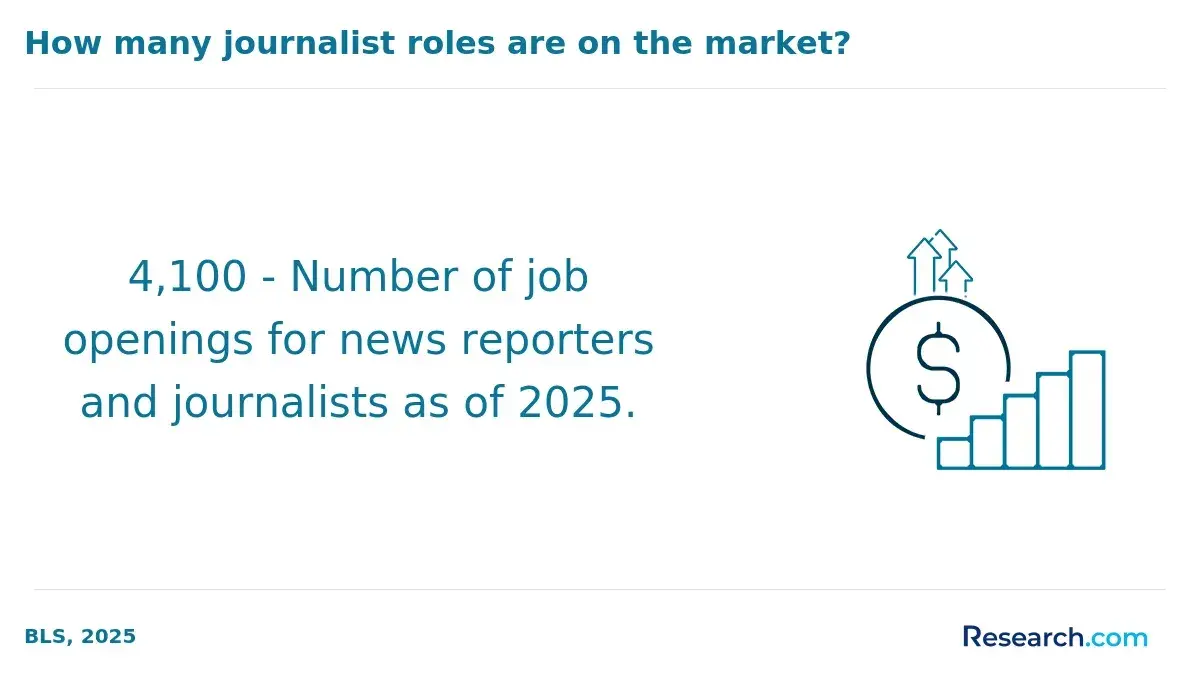
Digital media rewards journalists who can report accurately and package information for search, social, newsletters, audio, video, and mobile audiences. The challenge is that traditional journalism roles face pressure: employment projections indicate a modest 3% decline over the next decade. Even so, an average of 4,500 openings per year suggests that replacement hiring and demand for adaptable media talent will continue.
To compete, graduates need more than strong prose. Employers often look for candidates who can shoot and edit basic video, write clean headlines, understand audience metrics, use content management systems, verify information quickly, and adapt tone for different platforms without weakening accuracy. A digital portfolio should show range: reported articles, multimedia projects, social-first storytelling, newsletter samples, and evidence that the work reached or served a real audience.
Graduate study is not required for every digital media role, but some professionals use advanced education to deepen leadership, analytics, or strategic communication skills. Students comparing options may look at master degrees that pay well, but salary should not be the only factor. The better question is whether the program gives you marketable work samples, specialized expertise, and access to internships or industry networks.
| Digital media skill | Why it matters | How to prove it to employers |
| Multimedia reporting | Newsrooms and content teams increasingly need stories that work as text, video, audio, and visual packages. | Include edited videos, photo essays, podcast clips, or interactive packages in your portfolio. |
| Search and audience awareness | Digital stories must be discoverable without sacrificing accuracy or editorial judgment. | Show headlines, explainers, newsletters, or analytics-informed updates. |
| Verification and fact-checking | Misinformation spreads quickly online, making trust a core hiring signal. | Document your sourcing process and include examples of corrections, confirmations, or data checks. |
| Platform fluency | Each platform has different audience expectations and storytelling conventions. | Share examples tailored for web, social, email, short video, or audio. |
Can a journalism degree lead to a career in public relations?
Yes. A journalism degree can be a strong foundation for public relations because PR work depends on clear writing, audience analysis, source handling, message discipline, and media judgment. Many journalism graduates understand how reporters think, which can help them write better pitches, anticipate questions, and communicate responsibly during high-pressure situations.
The broader media and communication sector is expected to grow at a rate comparable to the national average, with approximately 109,500 new openings each year from both growth and worker turnover. Public relations is one of the most common adjacent paths for journalism graduates, and public relations specialists earn an average annual salary of around $94,520.
Students who want to move from journalism into communication strategy may consider graduate programs that focus on public relations, corporate communication, crisis messaging, or digital analytics. For example, online master of communications programs may appeal to working adults who want a flexible way to build management-level skills. Before enrolling, compare cost, accreditation, faculty experience, portfolio outcomes, and whether coursework aligns with the PR roles you want.
| Journalism skill | How it transfers to public relations | Risk to manage |
| Interviewing | Helps gather accurate internal information before writing statements or campaign materials. | PR work represents an organization, so ethical boundaries and transparency matter. |
| Deadline writing | Supports fast preparation of press releases, talking points, and crisis responses. | Speed should not override accuracy or legal review. |
| News judgment | Helps determine what journalists and audiences are likely to find relevant. | A pitch that ignores public interest can damage credibility. |
| Fact-checking | Reduces the chance of releasing misleading or unsupported claims. | Brand pressure can create conflicts; documentation is essential. |
What are the emerging careers in broadcast journalism for 2027?
Broadcast journalism now includes far more than a television newscast. Graduates may work on livestreams, video explainers, podcasts with visual elements, social video, streaming news segments, field production, or multimedia packages designed for both broadcast and digital platforms.
Broadcasting stations currently show the highest employment concentration of news analysts, reporters, and journalists at 8.74%, while newspaper publishers account for 5.92%. That concentration shows that broadcast employers remain an important part of the journalism labor market, even as streaming and digital video change how audiences consume news.
Students who want to enter broadcast faster sometimes explore accelerated graduate options such as the fastest masters degree. That route may help if the curriculum produces a strong demo reel or specialized production skills, but speed alone is not enough. Employers will still judge your reporting accuracy, voice, visual storytelling, editing, and ability to perform under deadline pressure.
| Broadcast-related role | Main responsibilities | Portfolio evidence to prepare |
| Multimedia journalist | Report, shoot, write, edit, and publish stories across video and web platforms. | Standups, packages, web scripts, edited field pieces. |
| Producer | Shape rundowns, coordinate segments, write scripts, and manage timing. | Show rundowns, scripts, segment plans, production notes. |
| Video editor | Turn raw footage into clear, accurate, audience-ready stories. | Before-and-after edits, packages, motion graphics, captioned clips. |
| Live reporter or anchor | Deliver verified information clearly on camera or audio under time pressure. | Demo reel, breaking-news simulations, live-shot samples. |
How do you become an investigative journalist for 2027?
Investigative journalism is built on persistence, documentation, source development, public records, data analysis, and careful legal and ethical judgment. It is not only about finding wrongdoing; it is about proving what happened, giving people a fair opportunity to respond, and presenting complex evidence in a way the public can understand.
Students should start by mastering beat reporting. Cover local government, courts, schools, business, health, housing, or environmental issues consistently. Strong investigations often come from noticing patterns in routine coverage. Build habits around document tracking, interview notes, source verification, and transparent methodology.
- Learn public records practices. Understand how to request, organize, and verify documents from public agencies and institutions.
- Develop a beat. Expertise in one area helps you identify gaps, contradictions, and underreported problems.
- Practice data literacy. You do not need to be a programmer to start, but you should be able to read spreadsheets, question data quality, and explain numbers responsibly.
- Build source trust slowly. Investigative sources often need confidence that you will be accurate, fair, and careful with sensitive information.
- Study media law and ethics. Defamation, privacy, attribution, anonymous sourcing, and corrections policies matter in high-stakes reporting.
The strongest candidates show that they can pursue difficult stories without overstating evidence. Editors value reporters who are skeptical, organized, fair, and willing to keep checking facts even after a story appears complete.
What opportunities exist for journalism graduates in tech reporting?
Tech reporting is a strong option for journalism graduates who can translate complex ideas into plain language. The work may include covering software, artificial intelligence, cybersecurity, consumer devices, social platforms, startup funding, science policy, regulation, workplace technology, or the social effects of innovation.
The US Bureau of Labor Statistics (BLS) describes technical writers as professionals who prepare clear, instructive documents that explain complicated processes. That skill overlaps with tech reporting because both roles require accuracy, structure, and the ability to make specialized information understandable to non-experts.
The median pay for roles in this field is approximately $80,050 per year, with job growth projected at an average rate. For journalism graduates, the opportunity is not limited to writing news stories. It can also include explainers, product analysis, research summaries, documentation-informed content, industry newsletters, and reporting on how technology affects people, business, and policy.
| Tech-focused path | Best for | Skills to add |
| Technology reporter | Graduates who want to cover companies, products, policy, and social impact. | Beat knowledge, source development, regulatory awareness, clear explainers. |
| Technical writer | Graduates who prefer structured instructional content over daily news. | Documentation practices, product familiarity, user-focused writing. |
| Science and technology freelancer | Writers who want niche expertise and flexible assignments. | Pitching, research depth, editor relationships, topic specialization. |
| Content strategist for tech companies | Graduates interested in audience education, product messaging, and editorial planning. | Content management, analytics, messaging frameworks, stakeholder collaboration. |
How is artificial intelligence reshaping journalism for 2027?
Artificial intelligence is changing newsroom workflows, but it does not remove the need for human judgment. A global survey found that 63% of newsroom executives see significant potential in AI-driven text creation, and more than half of respondents already use these tools in their workflows. Common uses include text correction, content generation support, summarization, transcription, data sorting, and audience-related experimentation.
The opportunity is efficiency. AI tools can help journalists scan documents, identify patterns, draft routine summaries, or test headlines. The risk is trust. AI-generated material can introduce errors, blur authorship, repeat bias, or create false confidence when the output sounds polished but lacks verification.
For 2027, the most employable journalism graduates will not be those who ignore AI or rely on it blindly. They will be the ones who can use AI responsibly while maintaining source verification, editorial independence, transparency, and accountability.
| AI use in journalism | Helpful use case | Ethical risk | Better practice |
| Transcription and summarization | Speeding up interview review or meeting notes. | Misquoting or omitting important context. | Check key quotes against original audio or documents. |
| Draft assistance | Creating a rough structure for routine updates. | Publishing unsupported or generic claims. | Use human reporting, editing, and attribution before publication. |
| Data pattern detection | Finding leads in large documents or datasets. | Assuming a pattern proves causation. | Verify with records, experts, and additional reporting. |
| Audience optimization | Testing headlines or formats for clarity and reach. | Prioritizing clicks over public value. | Balance engagement metrics with editorial standards. |
How do you launch a freelance journalism career for 2027?
Freelance journalism can offer flexibility, but it requires more business discipline than many new graduates expect. You are not only reporting and writing; you are finding clients, pitching editors, negotiating rates, tracking invoices, managing deadlines, and building a reputation for reliability.
- Choose a beat before pitching broadly. Editors are more likely to trust a freelancer who understands a subject area and can bring original angles.
- Create a focused portfolio. Include your best reported work, multimedia samples, and a short description of the topics you cover.
- Study the publication before sending a pitch. A strong pitch fits the outlet’s audience, format, tone, and current coverage gaps.
- Write concise pitches. Explain the story, why it matters now, who you will interview, and why you are the right person to report it.
- Track assignments and payments. Treat freelancing like a small business from the beginning.
- Keep improving your skills. Workshops, editing feedback, and advanced training can help you move from one-off assignments to repeat clients.
A realistic first goal is not instant full-time income. It is building repeat editor relationships, dependable clips, and a niche that makes your pitches easier to approve.
What are the most lucrative freelance niches for journalism graduates?
Some freelance beats are more likely to support steady assignments because they require specialized knowledge, travel access, audience demand, or the ability to explain complex topics. Research from the Pew Research Center notes that entertainment and travel are predominantly covered by freelancers, with 57% of professionals in those beats working independently. Nearly half of journalists covering science and technology are freelancers or self-employed professionals.
Entertainment, travel, science, and technology can be attractive, but they are not automatically easy. Competitive freelance niches require original access, distinct expertise, reliable sourcing, and a clear editorial voice. Graduates who want to broaden their business or audience skills sometimes explore adjacent training and ask, How long does it take to get a marketing degree? Marketing knowledge can help freelancers understand audience positioning, newsletters, search visibility, and client communication, but it should complement rather than replace reporting standards.
| Freelance niche | Why editors may buy it | What makes a beginner credible |
| Science and technology | Readers need clear explanations of complex developments and their real-world impact. | Subject literacy, expert sources, careful fact-checking, plain-language writing. |
| Travel | Publications need destination stories, service journalism, culture pieces, and reported features. | Original reporting, local sources, strong photography or multimedia, fresh angles. |
| Entertainment | Audience interest can be high, and coverage can include interviews, criticism, industry analysis, and features. | Beat knowledge, access, distinctive voice, fast turnaround. |
| Business and work | Companies, workers, and readers need reporting on markets, careers, technology, and workplace change. | Data comfort, source network, clear explainers, balanced analysis. |
How do internships and practical training enhance journalism careers?
Internships matter because journalism hiring is heavily portfolio-driven. Classroom assignments can teach structure and ethics, but internships show whether you can work with editors, meet deadlines, handle corrections, interview real sources, and adapt to newsroom expectations.
Students pursuing a journalism degree should look for programs that require or strongly support practical experience. Strong internships expose students to editing workflows, multimedia tools, audience analytics, publication standards, and professional feedback. They also help students test whether they prefer reporting, production, editing, PR, digital strategy, or another communications path.
| Training experience | What it teaches | How to evaluate quality |
| Newsroom internship | Reporting, editing, deadlines, source communication, corrections. | Ask whether interns publish work and receive editor feedback. |
| Campus media | Beat coverage, leadership, production routines, peer editing. | Look for consistent publishing and real audience reach. |
| Broadcast lab or student station | On-air delivery, video editing, production, script writing. | Check whether you can build a usable demo reel. |
| PR or communications internship | Media relations, brand voice, campaign planning, stakeholder communication. | Ask whether interns write real materials and join campaign reviews. |
How can further education enhance journalism career prospects?
Further education can help when it adds a specific, marketable capability. Good options include training in data journalism, multimedia production, audience analytics, investigative reporting, public relations, coding basics, media law, or visual storytelling. Weak options are programs that add cost without producing stronger work samples, better networks, or clearer career outcomes.
Some students compare journalism with broader or more flexible academic routes, including easy degrees. Ease should not be the main criterion. A program that is convenient but does not build writing, research, production, or communication skills may not improve employment prospects. The better test is whether the credential helps you produce better work and compete for specific roles.
Professional networks also matter. Alumni contacts, editors, mentors, faculty with industry experience, and professional associations can lead to internships, freelance assignments, and entry-level roles. Some students use an online AA degree to build foundational skills before transferring or specializing, but they should verify transfer policies and program relevance before enrolling.
Can accelerated adult degree programs enhance journalism career prospects?
Accelerated programs can help working adults or career changers move faster, especially if they already have professional experience and need a credential or updated digital skills. The trade-off is intensity. A shorter format can be useful, but only if students still receive enough editing feedback, reporting practice, portfolio development, and career support.
Adults comparing accelerated adult degree programs should ask whether the program accepts transfer credits, offers flexible scheduling, includes hands-on media projects, and provides access to internships or applied capstone work. A fast degree without portfolio evidence may be less useful than a slower program with strong professional outcomes.
How can journalism graduates build an effective personal brand?
A personal brand for journalists should not be a slogan. It should be a clear public record of what you cover, how you report, and why audiences and editors can trust your work. The strongest brands are built around a beat, consistent quality, transparent sourcing habits, and a professional online presence.
- Create a portfolio site. Include your strongest clips, multimedia work, contact information, and a short bio that explains your reporting focus.
- Choose a recognizable beat. Editors remember writers who consistently cover a subject with authority.
- Use social platforms carefully. Share work, engage with sources, and demonstrate expertise without undermining credibility.
- Keep your clips current. Replace weaker student work as you publish stronger professional samples.
- Invest in relevant learning. If cost is a barrier, compare options carefully; some students also review colleges with no application fee other when looking for lower-friction education pathways.
How do journalism graduates break into political reporting for 2027?
Political reporting is difficult because the work is highly scrutinized and public trust can be fragile. Recent surveys found that 51% of Republican respondents and a smaller fraction of Democrats expressed concerns about misinformation and bias in political news. That distrust makes accuracy, transparency, and fairness essential for new reporters.
Graduates who want to enter political journalism should start locally. City councils, school boards, courts, election offices, state agencies, and local campaigns provide opportunities to learn policy, budgets, public records, and community impact. National political reporting is often built on years of beat experience and source development.
- Learn election and government basics. Understand how local, state, and federal systems function before covering political conflict.
- Read primary documents. Bills, budgets, court filings, campaign finance records, and meeting agendas often matter more than speeches.
- Separate evidence from spin. Campaigns and officials have incentives; your job is to verify, contextualize, and explain.
- Disclose methods where useful. Readers are more likely to trust reporting when they understand how information was gathered.
- Build a diverse source list. Do not rely only on politicians, party operatives, or advocacy groups.
Political reporters can help rebuild trust by being precise about what is known, what is disputed, and what remains unverified.
How can journalism graduates navigate ethical challenges in the digital era?
Digital journalism increases both reach and risk. A story can be updated, shared, clipped, misread, or amplified before a reporter has time to correct mistakes. Graduates need a practical ethics framework for sourcing, attribution, corrections, AI use, privacy, conflicts of interest, sponsored content, and social media behavior.
Continuing education can help working journalists stay current on digital verification, platform literacy, and ethical decision-making. Some professionals compare flexible options such as the best online degree programs for working adults, especially when balancing work, family, and career change. Before enrolling, confirm that coursework addresses real digital media challenges rather than only general communication theory.
| Common ethical challenge | Why it matters | Better response |
| Using anonymous sources too casually | Readers may not be able to judge credibility. | Explain why anonymity was granted and verify claims independently. |
| Publishing before verification | Speed can spread errors widely. | Confirm facts first and clearly label what is developing. |
| Blending opinion and reporting | Audiences may misunderstand the purpose of the piece. | Label analysis, commentary, advocacy, and straight news clearly. |
| Relying on AI-generated text | AI can produce confident but incorrect statements. | Use AI only with human verification and editorial oversight. |
Is a journalism degree a sound financial investment for 2027?
A journalism degree can be worth it when the program is affordable, accredited, portfolio-focused, and connected to internships or professional networks. It is a weaker investment when students take on high costs without a clear career target, transferable skills, or a realistic plan for gaining experience.
Students should compare tuition, fees, living costs, transfer credits, internship access, career services, faculty experience, student media opportunities, and graduate outcomes. Flexible programs can reduce opportunity costs for some learners, but the cheapest or easiest option is not automatically the best. For example, students researching the easiest online bachelor's degree should still ask whether the curriculum builds reporting, writing, editing, multimedia, and communication skills employers recognize.
| ROI factor | Why it affects value | Question to ask before enrolling |
| Accreditation and institutional quality | Accreditation can affect credit transfer, graduate study, and employer confidence. | Is the institution properly accredited, and is the journalism program respected by employers? |
| Portfolio development | Employers often judge journalism candidates by clips and work samples. | Will I graduate with published work, a demo reel, or campaign materials? |
| Internship access | Practical experience can lead to references and job leads. | Does the program help place students in internships or require applied work? |
| Total cost | Debt can limit early-career flexibility, especially in competitive media markets. | What is the full cost after aid, fees, technology, and time away from work? |
| Career flexibility | Journalism skills can transfer into PR, content strategy, technical writing, and communications. | Does the curriculum prepare me for more than one career path? |
How can advanced degrees enhance journalism careers?
An advanced degree can help when it supports a specific career move: investigative reporting, data journalism, international reporting, media leadership, public relations management, teaching, research, or specialized beat expertise. It may not be necessary for entry-level reporting roles, where clips and practical experience often carry more weight.
Professionals considering graduate study should compare curriculum depth, faculty industry experience, assistantships or aid, alumni networks, capstone projects, and whether the degree can be completed while working. Some students explore online one year masters programs to gain targeted expertise quickly, but a shorter timeline should still include rigorous writing, research, and portfolio development.
How can journalism graduates leverage data visualization to enhance storytelling?
Data visualization helps journalists turn complicated information into charts, maps, timelines, and interactive explainers that audiences can understand quickly. It is especially useful for stories involving budgets, elections, public health, climate, demographics, criminal justice, education, business, or technology.
Good visual journalism begins with accurate data, not design. Graduates should learn how to question a dataset, identify missing context, avoid misleading scales, and explain methodology. Tools matter, but judgment matters more. A simple chart based on verified data is more valuable than an impressive graphic that overstates the evidence.
Students who need faster skill development sometimes compare flexible programs, including the shortest online bachelor's degree. Before choosing any accelerated option, confirm that it includes hands-on work with data, editing feedback, and portfolio-ready projects.
How can affordable education options drive journalism career success?
Affordable education can improve journalism career outcomes by reducing debt and giving students more freedom to accept internships, entry-level roles, freelance assignments, or lower-paid but high-value learning opportunities. The goal is not simply to find the lowest price. It is to find the best combination of cost, quality, flexibility, and career preparation.
Students comparing programs such as the cheapest online degree should look beyond tuition. Ask about fees, financial aid eligibility, transfer credits, technology requirements, internship support, student media access, and whether faculty provide detailed feedback on reporting and writing.
- Do not choose on tuition alone. A low-cost program with weak career support may cost more in missed opportunities.
- Check accreditation before applying. Accreditation can affect transfer, aid, and graduate options.
- Ask about published student work. A journalism program should help you build clips, not just complete assignments.
- Compare flexibility honestly. Online formats can work well, but you still need time for reporting, interviews, and revisions.
What distinguishes advocacy journalism from traditional political coverage?
Advocacy journalism and traditional political reporting can both serve the public, but they use different approaches. The key distinction is transparency of purpose. Traditional political reporting aims to inform audiences through verification, balance, and multiple perspectives. Advocacy journalism reports from an explicit reform-oriented or cause-driven perspective, often emphasizing communities, issues, or harms that the journalist believes deserve more attention.
| Feature | Advocacy journalism | Traditional political reporting |
| Primary purpose | To highlight a problem, elevate affected voices, and often encourage change. | To explain political events, policy decisions, campaigns, and public consequences. |
| Tone | May be more urgent, values-driven, or reform-focused. | Usually more detached, evidence-focused, and balanced in presentation. |
| Source strategy | Often centers affected communities, advocates, and issue experts. | Typically includes officials, critics, experts, documents, and affected groups. |
| Main ethical obligation | Be transparent about perspective while remaining accurate and fair with facts. | Maintain independence, context, verification, and proportionality. |
The two forms should not be confused. Advocacy journalism still requires evidence, verification, and fairness. Traditional political coverage should not become stenography for powerful sources. Both are strongest when audiences can clearly understand the reporter’s methods and purpose.
What non-writing career paths are available for journalism graduates?
Journalism graduates are not limited to bylined writing jobs. The degree develops research, editing, interviewing, audience analysis, deadline management, and storytelling skills that can transfer into communication-heavy roles across media, business, nonprofits, government, education, and technology.
- Media management and editorial strategy: Planning coverage, managing workflows, supervising teams, and aligning content with audience needs.
- Broadcast production and video journalism: Producing segments, editing footage, coordinating live shows, and shaping visual narratives.
- Public relations and corporate communications: Managing reputation, writing statements, preparing media materials, and supporting crisis response.
- Content marketing and social media strategy: Creating audience-focused campaigns, editorial calendars, newsletters, and platform-specific content.
- Research and audience insights: Analyzing audience behavior, content performance, and public information needs.
- Podcast and audio production: Booking guests, scripting episodes, editing audio, and developing narrative structure.
Some graduates add business, marketing, or analytics training to expand their options. If you are considering related credentials or easy bachelor degrees, focus on whether the coursework strengthens your career target. A related degree should add usable skills, not simply another credential.
What certifications and cross-disciplinary courses can future-proof journalism careers for 2027?
Certifications can help journalism graduates when they fill a clear skill gap. They are most useful in areas where employers can immediately see the value: data journalism, multimedia editing, analytics, digital marketing, coding basics, content management systems, search strategy, verification, cybersecurity awareness, and media law.
Short credentials are not a substitute for reporting ability, but they can make a candidate more versatile. Graduates looking for focused, career-oriented training may compare short online degrees and certificate-style programs. The best choice depends on your target role: a future investigative reporter may prioritize data and public records training, while a future content strategist may prioritize analytics, SEO, and campaign planning.
| Credential or course area | Best for | How it helps |
| Data journalism | Investigative reporters, policy reporters, business journalists. | Improves ability to analyze records, find patterns, and explain evidence. |
| Video and audio production | Broadcast journalists, podcast producers, digital reporters. | Builds multimedia storytelling and platform flexibility. |
| Digital analytics | Editors, audience engagement specialists, content strategists. | Helps connect editorial decisions with audience behavior. |
| Public relations or crisis communication | Graduates moving into PR, corporate communication, or nonprofit messaging. | Develops strategic communication and stakeholder management skills. |
| AI literacy and verification | Nearly all journalism and communication roles. | Supports responsible tool use, fact-checking, and transparency. |
Common mistakes journalism students and graduates should avoid
| Mistake | Why it hurts | Better approach |
| Choosing a program without checking accreditation | It can affect credit transfer, aid, and future education options. | Verify institutional accreditation before enrolling. |
| Relying only on rankings or reputation | A well-known school may not offer the best fit, cost, or practical experience for your goals. | Compare curriculum, internship access, faculty feedback, student media, and portfolio outcomes. |
| Graduating without published work | Employers usually want evidence that you can report, write, edit, or produce for real audiences. | Use student media, internships, freelance assignments, or capstones to build clips. |
| Assuming writing alone is enough | Many roles now require multimedia, analytics, platform judgment, or technical fluency. | Add video, audio, data, CMS, newsletter, or audience engagement skills. |
| Ignoring salary variation | Average salaries do not guarantee individual outcomes, especially by region, employer, and role. | Research local markets, entry-level expectations, and transferable career paths. |
| Using AI without verification | AI errors can damage credibility quickly. | Treat AI as a support tool, not a source of truth. |
Questions to ask before choosing a journalism degree or career path
- Does the program help students publish work or produce portfolio-ready projects?
- Are internships, student media, broadcast labs, or professional newsroom partnerships available?
- Will I learn digital skills such as multimedia production, analytics, data journalism, and verification?
- How much will the degree cost after aid, fees, transfer credits, and living expenses?
- Do graduates work only in journalism, or also in PR, content strategy, communications, and related fields?
- Does the curriculum include ethics, media law, AI literacy, and misinformation response?
- Can I identify a beat or specialization before graduation?
- Will this path give me enough flexibility if traditional reporting jobs are competitive?
References
- BLS. (2024, April 3). News analysts, reporters, and journalists. BLS.
- BLS. (2024, August 29). Media and communication occupations. BLS.
- BLS. (2024, August 29). News analysts, reporters, and journalists. BLS.
- BLS. (2024, August 29). Technical Writers. BLS.
- Guttmann, A. (2024, November 5). Media and politics in the United States - statistics & facts. Statista.
- Watson, A. (2024, April 12). Industries employing the most reporters and journalists U.S. 2023. Statista.
- Watson, A. (2024, November 28). GenAI tools in newsrooms worldwide 2023. Statista.
Key Insights
- A journalism degree can lead to reporting, broadcast, digital media, PR, technical writing, content strategy, political journalism, investigative work, and freelance careers.
- The labor market is mixed: traditional journalism roles are projected to decline by 3% over the next decade, but an average of 4,500 openings per year still creates opportunities for adaptable graduates.
- Digital platforms are major employers, with media streaming services, social networks, and other digital content providers accounting for nearly 12,910 jobs, while traditional publishers account for approximately 17,310.
- Public relations is one of the strongest adjacent paths because journalism graduates already understand writing, media judgment, research, and audience communication; public relations specialists earn an average annual salary of $94,520.
- AI is becoming part of newsroom workflow, with 63% of newsroom executives seeing significant potential in AI-driven text creation, but verification and editorial judgment remain essential.
- The degree is most worthwhile when students graduate with published work, internships, multimedia skills, ethical training, and a realistic plan for more than one career path.
- Before enrolling, compare accreditation, total cost, portfolio opportunities, internship support, faculty experience, and whether the program teaches current digital journalism tools.
Other Things You Should Know About What You Can Do With a Journalism Degree
After a journalism degree, you can pursue an MA or MS in journalism, media studies, communications, or public affairs. Many U.S. programs require a bachelor’s degree and a GPA near 3.0, and some ask for a writing sample, résumé, and GRE scores.
In 2027, journalism graduates can pursue roles such as digital content creator, data journalist, podcast producer, or multimedia reporter. Additionally, opportunities in social media management and public relations are prevalent, leveraging skills in storytelling and digital communication tailored to current media landscapes.
In 2027, a journalism degree should focus on developing skills such as digital storytelling, data analysis, fact-checking, and multimedia content creation. It's essential to stay updated with evolving technology and ethical standards in the field to remain competitive.