2027 Fastest Online Architecture Degree Programs You Can Finish in Under 2 Years

Co-Founder and Chief Data Scientist
Choosing a fast online architecture degree is not just a question of speed. Students also need to know whether the program is accredited, whether prior credits will count, what technology and studio work are required, and whether the degree supports their career or licensure goals.
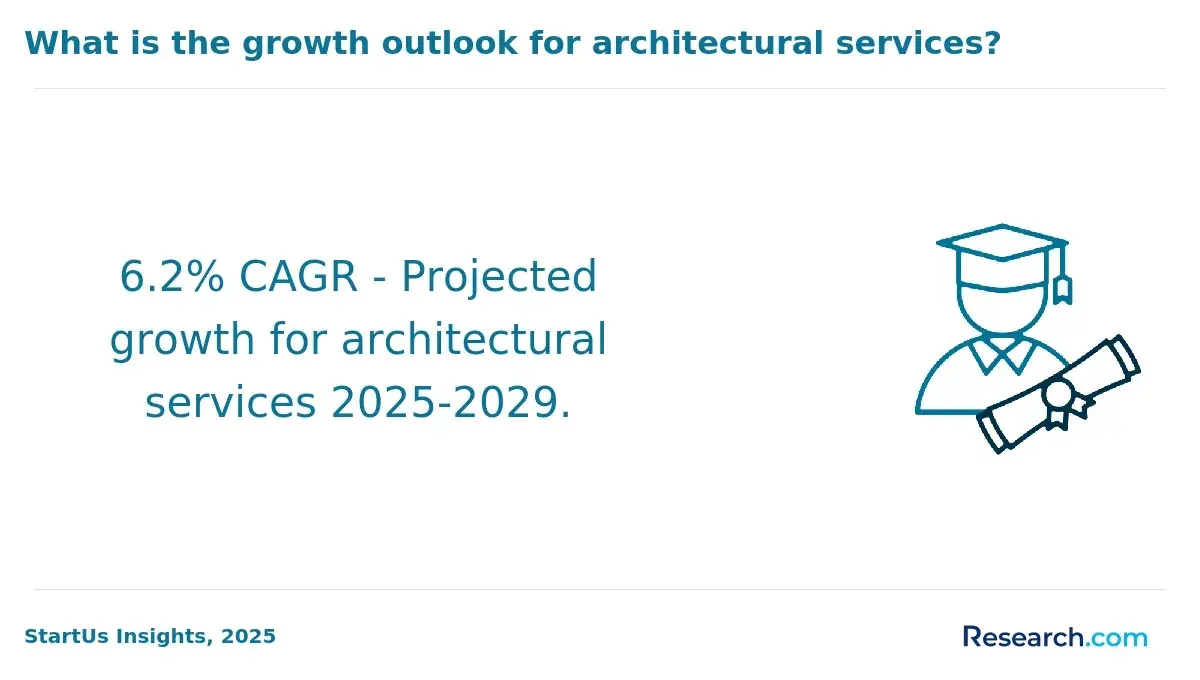
Many prospective students are trying to balance work, family responsibilities, and a need to move into the architecture workforce quickly. According to recent data, over 40% of architecture students seek online options that can be finished within two years to enter the workforce quickly. That demand has made accelerated formats more visible, but not every “fast” program offers the same value.
This guide explains how accelerated online architecture programs are structured, what formats can realistically shorten completion time, what admissions teams look for, how transfer credits affect speed and cost, and how employers may view these credentials. It is designed for students comparing online architecture pathways in the U.S. and trying to make a practical, informed decision.
Key Benefits of Online Architecture Degree Programs You Can Finish in Under 2 Years
- Completing an online architecture degree in under 2 years enables faster workforce entry, meeting the 8% projected job growth in architecture by 2030, according to the U.S. Bureau of Labor Statistics.
- Accelerated programs reduce overall education costs by shortening tuition time, appealing as average student debt exceeds $30,000 nationally for undergraduate degrees.
- Online formats offer flexible schedules for working adults; enrollment in distance learning increased by 21% in architecture-related fields.
What Features Make an Online Architecture Program Accelerated?
An online architecture program is considered accelerated when its calendar, credit policies, and course delivery are designed to help qualified students finish faster than a traditional schedule allows. For students seeking faster career entry in architecture, accelerated online architecture degree programs may create a path to completing a credential in under two years, especially when transfer credits or prior coursework apply. Enrollment in accelerated online degree programs has grown by 20% over the past five years.
The strongest accelerated programs do more than shorten class dates. They make the sequence of courses predictable, reduce scheduling delays, and give students enough flexibility to complete studio, drafting, and design assignments without waiting for once-a-year course offerings.
Common features of accelerated online architecture programs
- Compressed course terms: Instead of traditional 15-week semesters, many accelerated programs use 5-8 week terms. This lets students focus on a smaller number of courses at a time while completing more course cycles across the year.
- Higher course loads: Some programs allow students to take more credits per term than a standard schedule. This can shorten time to completion, but it also increases weekly workload, especially in design-heavy courses that require drafting, modeling, critiques, and revisions.
- Flexible scheduling: Asynchronous lectures, recorded demonstrations, digital submissions, and online critique tools can help students study around work or family responsibilities. Flexibility matters most when courses require large project files, software practice, and iterative feedback.
- Year-round course availability: Programs that offer summer, winter, or continuous enrollment reduce long breaks between required courses. This is especially important when prerequisites must be completed in a set order.
- Transfer-friendly policies: Accelerated completion is often most realistic for students who already have general education, design, math, art, construction, or drafting credits that can be applied toward the degree.
Students exploring fast track online architecture degree admissions should ask whether the accelerated pace comes from shorter terms, heavier credit loads, transfer credit acceptance, or a combination of all three. A short calendar is useful only if the required courses are available when students need them.
Students comparing accelerated education outside architecture may also review accelerated online MBA options to see how different fields structure faster online study.
What Are the Online Architecture Degree Formats You Can Finish in Under 2 Years?
The format of an online architecture program has a major effect on whether finishing in under two years is realistic. Some students can move quickly because they bring transfer credits. Others need a program designed around short terms, year-round enrollment, or competency-based progress. The best format depends on how much college credit the student already has, how many hours per week they can study, and whether the program includes design studio requirements.
Fast track online architecture programs under two years usually fall into a few practical formats.
- Accelerated term-based programs: These programs divide the academic year into shorter sessions, such as 8-week sessions. Students may complete more courses in a calendar year than they would in a traditional semester model.
- Competency-based education (CBE): In CBE formats, students progress by demonstrating mastery rather than sitting through a fixed number of weeks. This can benefit students who already have drafting, design, construction, or software experience, although architecture programs still need clear ways to assess portfolio-quality work.
- Full-time intensive tracks: These tracks require students to take a heavier load each term. Completion within 18 to 24 months may be possible for students who can treat school like a full-time commitment and keep up with studio deadlines.
- Year-round enrollment models: Continuous course offerings, including summer terms, help students avoid long gaps between classes. This is useful in architecture because course sequencing can otherwise slow progress.
- Degree-completion formats: These programs are often built for students who already hold an associate degree or a significant number of credits. They may be among the most realistic options for finishing quickly because students are not starting from zero.
Research from the National Center for Education Statistics indicates that accelerated and competency-based formats can shorten degree time by 30% or more, benefiting ambitious learners. Still, students should confirm whether the shortened timeline applies to all applicants or only to those entering with eligible transfer credits.
Students interested in how acceleration works in another discipline can compare these formats with an accelerated psychology degree online.
What Are the Admission Requirements for Accelerated Online Architecture Degrees?
Admission requirements for accelerated online architecture degrees are often more selective than those for standard-paced programs because students must be ready for compressed deadlines, technical software work, and design-based feedback. Programs want evidence that applicants can manage the pace without sacrificing the quality of their portfolio or academic performance.
Requirements vary by school and degree level, but applicants commonly encounter the following expectations.
- Minimum GPA requirements: Most programs require a minimum undergraduate GPA of around 3.0 on a 4.0 scale. This helps schools identify students with the academic foundation needed for intensive study.
- Prior coursework: Applicants may need completed courses in design, drawing, math, art, drafting, construction, or related subjects. These prerequisites reduce the need for remedial coursework and help students enter advanced classes sooner.
- Relevant experience: Some accelerated programs consider applicants with an associate degree or professional experience in architecture, construction, drafting, or design. Practical experience can be valuable when students need to complete projects quickly.
- Placement tests and portfolio reviews: Programs may use placement exams, transcript reviews, or portfolio evaluations to determine whether students are ready for the pace and technical expectations of the curriculum.
- Statement of purpose or interview: Admissions teams may ask applicants to explain their goals, schedule, and readiness for accelerated study. Strong time management is especially important in programs with short terms.
- Technology readiness: Because architecture coursework can require large files, design software, virtual critiques, and digital submissions, some programs expect students to meet hardware and software requirements before enrolling.
Compared with traditional admissions, requirements to enroll in fast-track online architecture degrees often place more emphasis on prior learning, portfolio evidence, and readiness for a demanding schedule. Before applying, students should ask whether missing prerequisites will extend the timeline beyond the advertised completion period.
Students who are still comparing online degree fields may also review options such as a low-cost online psychology degree to understand how admissions and acceleration differ across programs.
How Many Transfer Credits Do Fast Online Architecture Programs Accept?
Transfer credits can be the difference between a genuinely fast online architecture degree and a program that only looks accelerated on paper. Recent data show that approximately 65% of online learners bring transfer credits into new programs, and architecture students may benefit if prior coursework matches general education, design foundations, drafting, construction technology, or related requirements.
Most schools review transfer credits individually. A course that transfers as elective credit may not always satisfy a specific architecture requirement, so students should request a formal transfer evaluation before assuming they can finish in under two years.
- Maximum transfer limits: Many programs allow 50% to 75% of total credits to be transferred, depending on institutional and accreditation standards. Programs may still require students to complete major-specific studio or capstone courses through the degree-granting school.
- Course equivalency review: Schools commonly ask for official transcripts, course descriptions, and sometimes syllabi. Architecture-related transfer courses may be reviewed for contact hours, learning outcomes, software use, design content, and portfolio evidence.
- Grade and recency rules: Some institutions accept only courses completed with a minimum grade. Technical or software-heavy courses may also be subject to recency expectations if tools or standards have changed.
- Impact on program duration: Students with a substantial number of accepted credits may finish much faster, sometimes in under two years when transfer credit is combined with accelerated terms. Students with few transferable credits should expect a longer timeline.
- Accreditation and residency requirements: Even when credits transfer, programs may require a certain number of credits to be completed in residence. Students should ask how this affects graduation timing.
The safest approach is to apply early, submit complete documentation, and ask for a written degree plan showing exactly which credits remain. A fast program is only fast if the transfer evaluation supports the advertised schedule.
How Many Classes Do You Take at Once in a Fast Online Architecture Program?
Course load is one of the most important practical decisions in an accelerated online architecture program. Taking too few courses may extend the timeline, while taking too many can lead to missed deadlines, weaker design work, and burnout. Nearly 60% of these students enroll in 3 to 4 courses per term, seeking a pace that balances speed with manageability.
Architecture coursework can be more time-intensive than a typical lecture course because students may need to revise drawings, create models, prepare presentations, participate in critiques, and learn specialized software. A realistic schedule should account for project time, not just class meetings.
- Term length: Shorter terms, often lasting 8 weeks or less, usually require sharper focus. Students may take fewer courses at once but complete more terms per year.
- Program flexibility: Self-paced or asynchronous formats may allow students to adjust course load around work and family commitments. However, design critiques and group projects may still have fixed deadlines.
- Course sequencing: Prerequisites can limit how many architecture courses students can take together. A required design studio, for example, may need to be completed before advanced technical courses.
- Studio intensity: A studio course can demand significantly more weekly time than a standard lecture course. Students should ask the program how many hours per week are expected for each course type.
- Employment status: Full-time workers may need a different pace than students who can study full time. Fast completion often requires trade-offs in evenings, weekends, and personal time.
A strong plan is to review the full curriculum map before enrolling. Students should identify the most demanding terms, confirm whether courses can overlap, and avoid stacking multiple project-heavy classes unless they have the available time and technical skills to keep up.
Do Employers Respect Accelerated Online Architecture Degrees?
Employers are generally more concerned with accreditation, skills, portfolio quality, software proficiency, and relevant experience than with whether a program was completed online or on an accelerated schedule. A 2025 survey from the American Association of Colleges and Universities revealed that employers express strong confidence in higher education's effectiveness, with 81% reporting that colleges and universities are helping students build AI-related competencies aligned with workplace needs.
For architecture-related roles, respect for an accelerated online degree depends on whether the program produces graduates who can contribute to real design, documentation, visualization, and project workflows.
- Accreditation: Employers often look for degrees from reputable institutions and may value programs accredited by organizations such as the National Architectural Accrediting Board (NAAB). Students who plan to pursue architect licensure should verify how the degree fits state requirements before enrolling.
- Skills relevance: Graduates should be able to use tools and methods common in architectural practice, including drafting, modeling, documentation, design communication, and project coordination. A strong portfolio makes these skills visible.
- Program rigor: A shorter timeline does not automatically mean lower quality. Employers may respect accelerated programs when they maintain clear standards, meaningful critique, and substantial design work.
- Experience and portfolio: Internships, applied projects, construction exposure, studio work, and a polished portfolio can matter as much as the degree format. Employers want evidence that a candidate can produce accurate, useful work under deadlines.
- Clarity about the credential: Students should understand whether the program leads to a certificate, associate degree, bachelor’s degree, master’s degree, or professional architecture pathway. The credential level affects job options and licensure planning.
Choosing an accelerated online architecture degree should involve more than asking whether employers “respect” online study. The better question is whether the program gives students a credible credential, strong project work, and marketable technical skills.
How Much Does a Fast Online Architecture Degree Cost?
Cost is a major factor for students considering accelerated online architecture programs, especially if the goal is to finish in less than two years. A faster program can reduce time away from full-time work or shorten the period of tuition payments, but students still need to calculate the full price of attendance.
Fast online architecture degrees typically range from $15,000 to $40,000 in total expenses. The final amount depends on tuition rates, transfer credits, required software, fees, and whether students can complete courses on the planned schedule.
- Per-credit tuition: Some accelerated programs charge a higher per-credit rate because of compressed scheduling or intensive support. Others may be cost-effective if students transfer in credits or complete more coursework in fewer terms.
- Total program cost: Students should compare the full degree cost, not just the per-credit price. A program with lower tuition may still cost more if it requires additional credits or takes longer to complete.
- Additional fees: Architecture students may pay for technology fees, virtual labs, design software, rendering tools, digital storage, printing, materials, or required equipment. These expenses can add hundreds or even thousands to the final bill.
- Cost-saving opportunities: Transfer credits, employer tuition assistance, scholarships, financial aid, and flat-rate tuition can reduce the net cost. Some programs also limit campus visits, which may lower travel and housing expenses.
- Pace-related financial risk: Accelerated programs can become more expensive if students withdraw, repeat courses, or extend enrollment because the workload is too heavy. A realistic course plan can protect both time and money.
When comparing programs, students should request a written cost estimate that includes tuition, fees, software, equipment, and the number of credits still required after transfer evaluation. For a broader comparison of tuition factors, students can also review online architecture degree cost when building a budget.
What Jobs Can You Get With a Fast Online Architecture Degree?
A fast online architecture degree can support entry into architecture-adjacent and design-support roles, particularly when graduates have strong drafting, modeling, documentation, and software skills. According to the U.S. Bureau of Labor Statistics, employment for architects is projected to grow 8% through 2032, which is faster than the average for all occupations, indicating stable demand.
Job outcomes depend on the degree level, accreditation, state licensure rules, portfolio quality, and experience. Some roles may be available soon after graduation, while licensed architect roles typically require additional education, experience, exams, or state-specific steps.
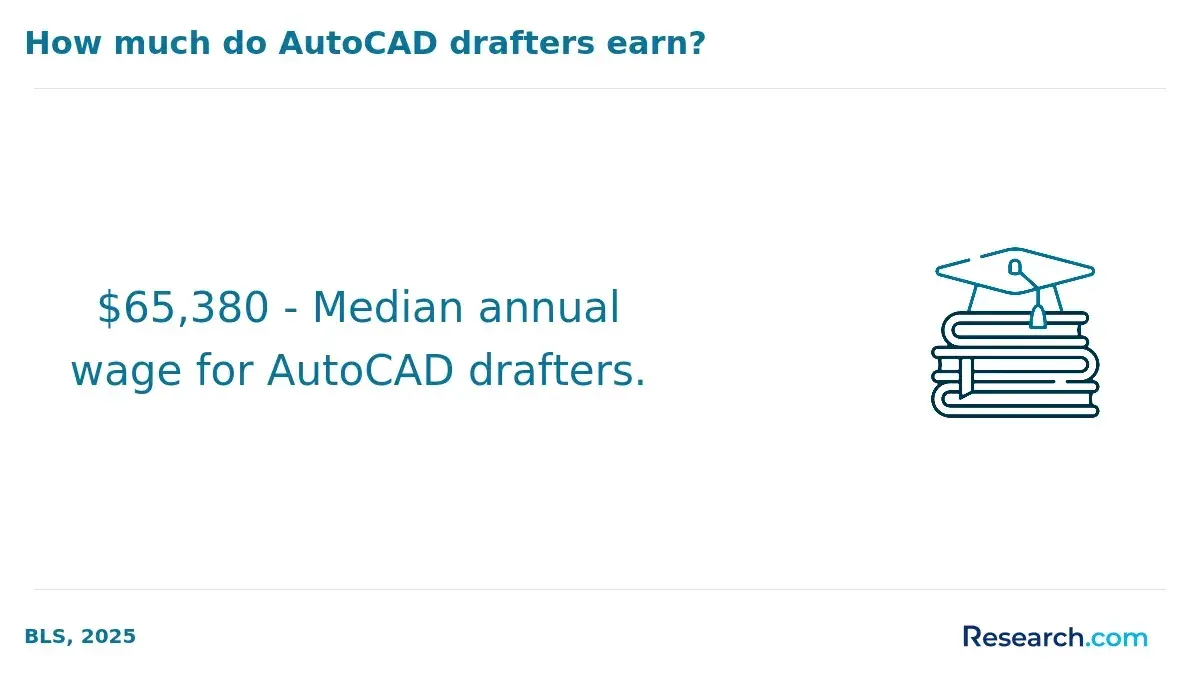
- Architectural drafter: Architectural drafters prepare technical drawings and plans under the supervision of architects or engineers. They typically need CAD skills, attention to detail, and the ability to interpret design instructions. Salaries typically range from $50,000 to $65,000 annually.
- Junior architect assistant: These assistants support architects with research, drafting, documentation, presentations, and project coordination. They need communication skills, design literacy, and familiarity with structural and building concepts. Salaries often fall between $55,000 and $70,000 per year.
- CAD technician: CAD technicians create precise digital drawings using software such as AutoCAD or Revit. Accuracy, file organization, and software fluency are essential. Median annual wages generally fall around $60,000.
- Design assistant: Graduates may assist with early-stage concepts, visual materials, product research, and client presentations. A strong portfolio can help candidates compete for these roles.
- Building information modeling support: Students with strong 3D modeling and documentation skills may support BIM workflows, model coordination, and digital project documentation.
Careers with fast online architecture degrees can help graduates enter the field quickly, but students should match their program to their intended role. Those who plan to become licensed architects should verify licensure pathways before enrolling, while those seeking drafting or design-support roles should prioritize software training and portfolio development.
Students considering graduate study after gaining experience may also compare online master’s degree options for further specialization.
What Technology Is Required for Accelerated Online Architecture Programs?
Technology requirements are especially important in accelerated online architecture programs because students often move quickly from lectures to studio submissions, critiques, and software-based assignments. Delays caused by weak hardware, poor internet, or missing software can quickly affect grades and project quality.
Before enrolling, students should ask the program for a current technology checklist and confirm whether software is included in tuition, discounted through the school, or purchased separately.
- Reliable high-speed internet: Students need stable internet for streaming lectures, joining critiques, uploading large files, downloading design resources, and using cloud-based collaboration tools.
- Learning management system access: The LMS is the central hub for assignments, grades, feedback, readings, recordings, and announcements. In a fast program, students should check it frequently to avoid missing deadlines.
- Video conferencing tools: Architecture courses may use live meetings for studio critiques, presentations, team reviews, and instructor feedback. A working webcam, microphone, and quiet presentation space can be important.
- Powerful computer hardware: Drafting, 3D modeling, rendering, and visualization work may require strong processing power, sufficient memory, and advanced graphics capabilities. Students should not rely on a basic laptop unless the program confirms it meets requirements.
- Specialized design software: Programs may require CAD, BIM, modeling, rendering, graphic design, or project collaboration tools. Students should learn whether licenses are provided and whether software works on their operating system.
- Backup and file management systems: Architecture files can be large and time-consuming to recreate. Cloud storage, external drives, and organized naming systems can prevent lost work during compressed terms.
These essential software tools for fast online architecture programs help students manage complex projects and stay productive. Students should budget for technology early, because the right setup can directly affect performance in an accelerated format.
Those comparing fast education pathways in architecture and related fields may also review quick degrees that pay well.
How Do You Choose the Fastest Online Architecture Degree Program?
The fastest online architecture degree program is not always the best choice. The right program should be fast enough to meet your timeline, but also credible, affordable, properly accredited, and aligned with your career goals. Students should compare programs using a checklist rather than relying only on advertised completion time.
- Program length and curriculum: Look for a clear degree plan showing how students can finish in less than two years. Confirm whether that timeline assumes transfer credits, full-time enrollment, summer courses, or a heavier-than-normal course load.
- Accreditation: Verify institutional accreditation and, when relevant, programmatic accreditation from respected organizations like the National Architectural Accrediting Board (NAAB) or regional bodies. Students pursuing licensure should check state requirements carefully.
- Transfer credit policy: Ask for a preliminary transfer review before committing. A generous policy can shorten the degree, but only if credits apply to required courses rather than general electives.
- Cost and financial aid: Compare total program cost, not just tuition per credit. Include fees, software, hardware, materials, and the financial impact of studying at an accelerated pace.
- Course availability: A fast curriculum only works if required courses are offered when students need them. Ask whether courses are available year-round and whether prerequisites can delay graduation.
- Career support: Strong programs provide portfolio guidance, resume support, employer connections, internship resources, and job search assistance.
- Faculty expertise and practical experience: Programs taught by experienced faculty and industry professionals can offer stronger feedback on design, documentation, and professional workflows.
- Technology and studio support: Confirm software access, hardware requirements, online critique formats, tutoring, and technical support before enrolling.
A practical way to compare programs is to request three documents from each school: a transfer evaluation, a term-by-term graduation plan, and a full cost estimate. If a program cannot explain how students finish quickly, what support is available, and how the credential fits career or licensure goals, keep looking.
What Graduates Say About Their Fastest Online Architecture Degree Programs
- : "Finding an accelerated online architecture program was a game-changer for me. The total cost was surprisingly affordable compared to traditional routes, averaging around $30,000, which made it manageable without massive debt. Finishing in under two years allowed me to quickly transition into my dream job as an urban planner—something I thought would take much longer. — Brianna"
- : "I was initially skeptical about fast-tracking my architecture degree online, but the $25,000 to $35,000 investment proved worth every penny. Reflecting on the experience, I appreciate how the condensed curriculum pushed me to develop practical skills rapidly while balancing my work commitments. This degree boosted my portfolio and credibility, making me more competitive in the architectural consultancy field. — Tawny"
- : "The professional advantage of completing an accelerated online architecture degree program in less than two years is undeniable. The cost, which hovered near $28,000 total, was a fraction of what I expected given the quality and depth of the coursework. This swift path allowed me to promptly gain licensure eligibility and land a role with a top firm, accelerating my career trajectory early on. — Juliana"
Other Things You Should Know About Architecture Degrees
Internships in these programs often involve practical experience with architectural firms and virtual design projects, allowing students to earn credit hours. Programs typically ensure internships are conducted online or in hybrid formats to accommodate faster completion within the two-year time frame.
Admission requirements for the fastest online architecture degree programs often include a high school diploma or equivalent, relevant coursework in math and science, a portfolio showcasing creative skills, and sometimes standardized test scores. Programs may also require letters of recommendation and a personal statement.
References
- Architecture Degree Online Program - Dunwoody College https://dunwoody.edu/design/architecture-online/
- Introduction to Architecture for College Students Online https://cooper.edu/architecture/summer-programs/introduction-architecture
- Bachelor of Virtual Architecture Degree | Marywood University | Marywood University https://www.marywood.edu/virtual-architecture-bachelors-degree
- Find Online Master of Architecture Degree Programs https://teach.com/online-ed/design-degrees/online-masters-architecture/
- 17 Architecture Schools now offer a faster track to becoming an architect | News | Archinect https://archinect.com/news/article/150013309/17-architecture-schools-now-offer-a-faster-track-to-becoming-an-architect
- Online Architecture Postgraduate Tutors Spires | Further Study Opportunities With A Master's In Architecture https://spires.co/online-architecture-tutors/postgraduate/further-study-opportunities-with-a-masters-in-architecture
- Athabasca University https://www.athabascau.ca/programs/summary/bachelor-of-science-in-architecture.html
- Online Architecture Courses https://www.open.edu.au/study-online/architecture-construction/architecture