
2027 How To Become a Wound Care Nurse (WOCN): Salary & Career Paths

Co-Founder and Chief Data Scientist
If you are an RN who wants a more specialized, hands-on clinical role, wound care nursing can be a strong path to consider in 2026. Wound Care Nurses help patients recover from acute injuries, surgical wounds, pressure injuries, diabetic ulcers, ostomies, and other complex conditions that can affect mobility, comfort, infection risk, and quality of life.
This specialty is often associated with Wound, Ostomy, and Continence Nurses, or WOCNs, although not every wound care role requires the full wound-ostomy-continence credential. What matters most is that the nurse has strong assessment skills, understands evidence-based wound treatment, can educate patients and caregivers, and can work closely with physicians, dietitians, therapists, and other clinicians.
This guide explains what Wound Care Nurses do, how to become one, which degrees and certifications matter, where these nurses work, how much they may earn, and how to decide whether this specialty fits your career goals.
Quick Answer: How do you become a Wound Care Nurse?
To become a Wound Care Nurse, you generally need to become a licensed RN, gain clinical experience in settings where wound management is common, complete wound care education, and earn a specialty certification such as CWCN, WCC, CWS, or another recognized credential. Most nurses begin with an ADN or BSN, pass the NCLEX-RN, work in areas such as med-surg, long-term care, home health, rehabilitation, or outpatient care, and then pursue certification once they meet the eligibility requirements.
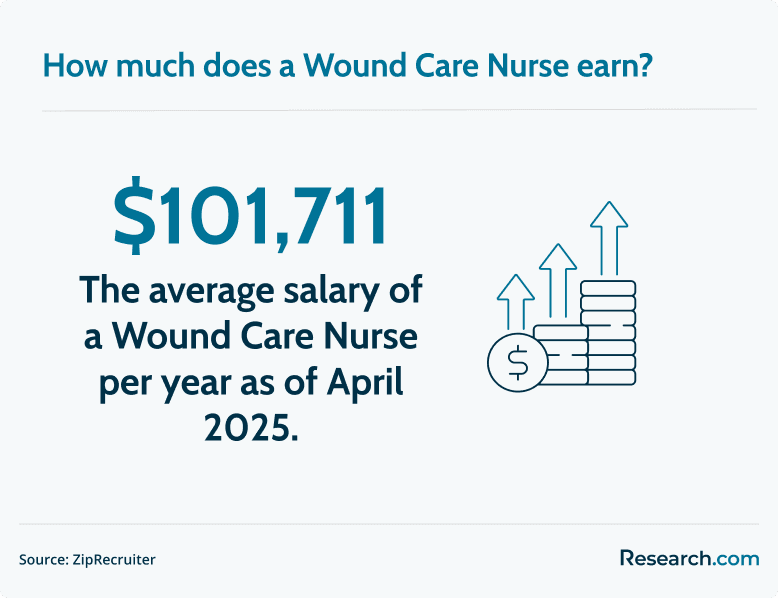
The role can offer strong earning potential, but salaries vary by employer, location, certification, experience, and scope of responsibility. ZipRecruiter reports an average annual salary of $101,711 for Wound Care Nurses, while BLS projects employment of RNs overall, including WOCNs, to grow 6% from 2023 to 2033.
What are the benefits of becoming a Wound Care Nurse?
- Specialized earning potential: Reported annual salaries for Wound Care Nurses range from $100,000 to $180,000, according to ZipRecruiter (n.d.), although individual pay depends on location, employer, experience, credentials, and responsibilities.
- Stable nursing demand: Employment for registered nurses overall, including nurses who specialize in wound, ostomy, and continence care, is projected to increase 6% from 2023 to 2033, which BLS describes as faster than the average for all occupations.
- Multiple work environments: Wound care nurses can work in hospitals, outpatient wound centers, home health, hospice, rehabilitation, skilled nursing, and long-term care, giving nurses more flexibility to choose a setting that matches their preferred pace and patient population.
- What does a Wound Care Nurse do?
- How do you become a Wound Care Nurse in 2026?
- What skills do Wound Care Nurses need?
- Which degree programs are best for future Wound Care Nurses?
- What wound care nursing certifications are available?
- Is wound care nursing worth it in 2026?
- How much does a Wound Care Nurse make?
- Where do Wound Care Nurses work?
- What career paths can Wound Care Nurses pursue?
- What legal and ethical issues affect wound care nursing?
- How can accelerated RN to BSN programs strengthen wound care expertise?
- How can non-nursing graduates move into wound care nursing?
- How are new technologies changing wound care?
- What healthcare trends should Wound Care Nurses watch?
- How does affordability affect advanced wound care education?
- What flexible online education options support wound care advancement?
- Can more education speed up a wound care nursing career?
- How can professional networking improve wound care nursing practice?
What does a Wound Care Nurse do?
A Wound Care Nurse assesses, treats, monitors, and helps prevent wounds that are slow to heal, at risk of infection, or complicated by underlying health problems. These nurses often manage pressure injuries, diabetic foot ulcers, venous and arterial wounds, surgical wounds, burns, traumatic injuries, ostomies, and moisture-related skin breakdown.
In practice, the role is both clinical and educational. A Wound Care Nurse may evaluate the wound bed, measure wound size and depth, select appropriate dressings, assist with debridement protocols, monitor signs of infection, document healing progress, coordinate referrals, and teach patients or caregivers how to manage care between visits.
| Responsibility | What it involves | Why it matters |
| Wound assessment | Evaluating tissue type, drainage, odor, size, depth, infection signs, circulation, pain, and healing progress. | Accurate assessment helps clinicians choose the right treatment and identify complications early. |
| Treatment planning | Using evidence-based dressings, compression, pressure relief, debridement support, infection prevention, and advanced therapies when appropriate. | Wounds often fail to heal when the underlying cause is not addressed. |
| Patient and caregiver education | Teaching dressing changes, offloading, skin protection, nutrition basics, signs of infection, and when to seek help. | Many patients manage wound care at home, so education directly affects outcomes. |
| Interdisciplinary coordination | Working with physicians, podiatrists, dietitians, physical therapists, surgeons, case managers, and home health teams. | Complex wounds often involve vascular disease, diabetes, immobility, nutrition issues, or infection risk. |
| Documentation and quality improvement | Recording wound measurements, interventions, patient response, and changes over time. | Clear documentation supports continuity of care, reimbursement, risk management, and clinical decision-making. |
How do you become a Wound Care Nurse in 2026?
Wound care nursing is best suited for nurses who like detailed clinical assessment, patient teaching, and problem-solving. The pathway is not usually a direct-entry specialty. Most nurses first become RNs, build bedside or community-based experience, and then add wound care education and certification.
Here is the typical route:
- Earn a nursing degree: Start by completing an accredited nursing program that qualifies you for RN licensure. An Associate Degree in Nursing usually takes about two years, while a Bachelor of Science in Nursing typically takes four years. If you are comparing faster routes into nursing, you may want to review Research.com’s guide to 1 year accelerated online nursing degree programs, but always confirm whether a program meets RN licensure requirements in your state.
- Pass the NCLEX-RN exam: After finishing an accredited nursing program, you must pass the National Council Licensure Examination for Registered Nurses. Passing the NCLEX-RN is required to receive an RN license and practice legally as a registered nurse in the US.
- Build relevant clinical experience: Many wound care credentials expect nurses to have at least 1–2 years of clinical nursing experience. Med-surg, home health, rehabilitation, skilled nursing, long-term care, hospice, and outpatient clinics can all expose nurses to wound prevention and treatment.
- Complete wound care education: Enroll in a wound care training program recognized by a credentialing organization such as the Wound, Ostomy and Continence Nursing Certification Board or the National Alliance of Wound Care and Ostomy. Programs may combine didactic learning, clinical application, and exam preparation.
- Earn a wound care credential: After meeting education and experience requirements, you can sit for a certification exam. Common options include Certified Wound Care Nurse, Wound Care Certified, and Certified Wound Specialist. Certification is not required for every wound care job, but it can strengthen credibility and may be preferred by employers.
- Apply for specialized roles: Once you have experience and, ideally, certification, you can pursue jobs in hospitals, wound care centers, home health agencies, long-term care facilities, hospice programs, surgical services, and specialty clinics. With additional experience, nurses may move into education, consulting, management, or advanced practice.
Typical pathway to wound care nursing
| Stage | Primary goal | Decision point |
| ADN or BSN | Qualify for RN licensure. | An ADN can be faster and less expensive, while a BSN may offer broader advancement options. |
| NCLEX-RN and state license | Become legally authorized to practice as an RN. | Check your state board of nursing requirements before enrolling in any program. |
| Clinical experience | Develop wound assessment, documentation, patient education, and care coordination skills. | Choose units or settings where wound prevention and chronic wound care are common. |
| Wound care education | Prepare for specialty practice and certification. | Compare eligibility rules, clinical requirements, cost, format, and recognition by employers. |
| Certification and specialization | Demonstrate wound care competence to employers and patients. | Select a credential that matches your license type, degree level, experience, and career goals. |
What skills do Wound Care Nurses need?
Wound care requires more than knowing which dressing to apply. Nurses in this specialty must understand why wounds develop, why some fail to heal, and how medical conditions, nutrition, mobility, circulation, infection, and patient behavior affect recovery.
The most important skills include:
- Clinical assessment: Wound Care Nurses must recognize wound type, depth, tissue characteristics, drainage, odor, infection warning signs, pressure injury stage, circulation concerns, and delayed-healing risk factors such as diabetes or vascular disease.
- Product and therapy knowledge: The specialty involves a wide range of dressings, topical products, debridement approaches, antimicrobial materials, enzymatic options, negative pressure wound therapy, compression, and offloading strategies.
- Precise documentation: Wound size, tissue appearance, drainage, pain, odor, patient tolerance, and response to treatment must be recorded consistently so care teams can track healing and adjust interventions.
- Patient communication: Patients and caregivers often need clear instructions for dressing changes, skin protection, ostomy care, infection warning signs, and follow-up. The best Wound Care Nurses can explain complex care in plain language.
- Critical thinking: Wounds do not always improve on schedule. Nurses must notice patterns, question barriers to healing, and know when to escalate concerns to physicians or specialists.
- Organization and time management: Wound care visits can be detailed and time-intensive, especially when nurses manage multiple high-risk patients in hospitals, clinics, or home health.
- Team collaboration: Wound healing often depends on coordinated care. Nurses may need to involve prescribers, surgeons, dietitians, podiatrists, vascular specialists, physical therapists, and case managers.
If you want a faster academic route to strengthen nursing fundamentals, Research.com’s list of online nursing degrees you can finish in 12 months can help you compare options. Before enrolling, confirm accreditation, licensure eligibility, clinical placement expectations, and state authorization.
Which degree programs are best for future Wound Care Nurses?
There is no single “wound care nursing degree” required for entry into the specialty. Most Wound Care Nurses first complete a nursing degree that leads to RN licensure, then add specialty education and certification after gaining experience.
The right degree depends on your current education, budget, timeline, and long-term career goals.
| Program type | Best for | Advantages | Limitations to consider |
| Associate Degree in Nursing | Students who want a faster route to RN licensure. | Often shorter and more affordable than a BSN; allows earlier entry into clinical practice. | Some employers and advancement paths may favor or require a BSN later. |
| Bachelor of Science in Nursing | Students who want broader preparation and stronger long-term flexibility. | Builds a deeper foundation in nursing leadership, population health, research, pathophysiology, and clinical judgment. | Takes longer than an ADN and may cost more upfront. |
| RN-to-BSN bridge program | Licensed RNs with an ADN who want to advance while working. | Often offered online or in flexible formats; useful for nurses preparing for specialty roles. | Quality, cost, transfer credit policies, and clinical expectations vary by school. |
| Master of Science in Nursing | RNs aiming for advanced practice, education, leadership, or research roles. | Can support movement into nurse practitioner, educator, management, or specialist positions. | Not required for most staff wound care nursing positions and requires additional time and investment. |
A BSN is often the strongest general foundation for nurses planning to specialize. It supports RN licensure preparation and includes coursework that can help with complex wound care, such as anatomy, physiology, evidence-based practice, health assessment, and care coordination. Research.com also identifies nursing among the highest earning medical bachelor's degrees, with graduates earning up to $102,263 a year, according to ZipRecruiter (n.d.).
How to choose a nursing program if wound care is your goal
- Confirm that the nursing program is accredited and meets your state’s RN licensure requirements.
- Ask where clinical placements occur and whether students gain exposure to med-surg, long-term care, home health, rehabilitation, or other wound-heavy settings.
- Compare NCLEX preparation support, student outcomes, faculty experience, and clinical placement assistance.
- Review transfer credit rules if you plan to move from ADN to BSN or from BSN to MSN later.
- Look beyond tuition and calculate fees, supplies, travel, lost work time, and exam costs.
What wound care nursing certifications are available?
Certification is one of the clearest ways to show that you have focused knowledge in wound management. It may not be required for every job, but employers often prefer certified nurses for wound care teams, outpatient wound clinics, consulting roles, and leadership positions.
Nurses who are comparing specialty pathways can also review Research.com’s guide on how to become a telemetry nurse. Telemetry nursing follows a similar career logic: complete nursing education, earn RN licensure, gain relevant clinical experience, and add specialty credentials such as Advanced Cardiac Life Support when appropriate.
| Certification path | Credential examples | Who it may fit | Key eligibility details from available information |
| WOCNCB certification | CWCN, COCN, CCCN, CWON | RNs who want a rigorous wound, ostomy, continence, or combined specialty credential. | Offered by the Wound, Ostomy, and Continence Nursing Certification Board; nurses may focus on wound, ostomy, continence, or combined practice. |
| NAWCO Wound Care Certification | WCC | RNs, LPNs/LVNs, nurse practitioners, and other eligible healthcare professionals seeking a flexible wound care credential. | Requires 120 hours of wound care education or recent hands-on wound care experience, followed by a certification exam. |
| APWCA certification | APWCA-related wound certification exams | Licensed clinicians involved in wound management, especially in outpatient, long-term care, and home health contexts. | Designed for healthcare professionals who participate in wound care practice. |
| ABWM certifications | CWS, CWCA | Clinicians with substantial wound care experience who want board-recognized wound management credentials. | CWS is intended for experienced healthcare professionals with at least a bachelor’s degree and a minimum of three years of clinical wound care experience. CWCA is open to a broader group of licensed clinicians, including LPNs and allied health professionals with at least three years of direct wound care experience. |
Specialty nursing careers often require targeted knowledge beyond general RN preparation. For comparison, Research.com’s guide to radiology nurse requirements explains how imaging-focused nurses need procedure knowledge, monitoring skills, and, in many cases, credentials such as the Certified Radiology Nurse.
Is wound care nursing worth it in 2026?
Wound care nursing can be worth it for RNs who want a clinically specialized role with visible patient impact, interdisciplinary responsibility, and multiple employment settings. It is not the best fit for every nurse, however. The work can involve complex chronic conditions, slow healing, detailed documentation, difficult conversations, and patients who face pain, disability, infection risk, or long-term lifestyle changes.
Reasons nurses choose wound care include:
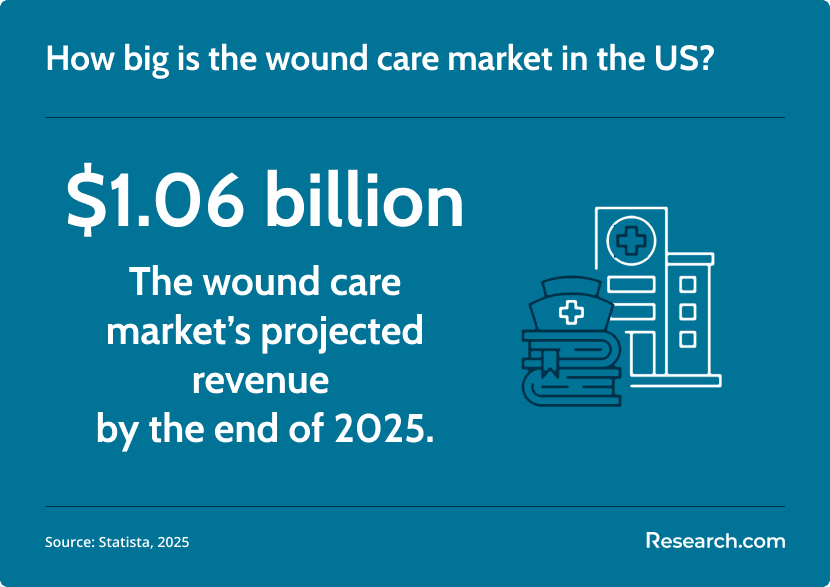
- Strong demand signals: Wound prevention and treatment are important across hospitals, long-term care, outpatient clinics, and home health. Statista projects the U.S. wound care market to generate over $1.06 billion in revenue by 2025.
- Competitive pay possibilities: ZipRecruiter reports an average salary of $101,711 for Wound Care Nurses, while some specialized or leadership roles can reach up to $188,664. For a broader nursing wage comparison, see Research.com’s US nurse salary guide.
- Greater clinical autonomy: Experienced Wound Care Nurses are often consulted by care teams, asked to recommend treatment plans, and expected to educate other clinicians.
- Meaningful patient outcomes: Successful wound care can reduce pain, improve mobility, lower infection risk, support independence, and restore confidence for patients living with chronic or difficult wounds.
- Room for advancement: Nurses can move into wound care leadership, staff education, product consulting, research support, quality improvement, hyperbaric medicine, or advanced practice.
Who should consider wound care nursing?
- RNs who enjoy detailed assessment and measurable clinical progress.
- Nurses who want a specialty that combines technical skill with patient education.
- Clinicians comfortable working with chronic illness, diabetes, vascular disease, immobility, infection risk, and complex care plans.
- Nurses who like collaborating across disciplines rather than working in isolation.
Who may want a different nursing specialty?
- Nurses who prefer fast, short encounters and minimal follow-up.
- Clinicians who dislike extensive documentation and measurement.
- Nurses who are uncomfortable with wounds, drainage, odor, tissue changes, or ostomy care.
- Those who want a specialty with less chronic disease management and fewer long-term patient barriers.
How much does a Wound Care Nurse make?
Wound care nursing can offer strong compensation, but salary figures should be treated as estimates rather than guarantees. ZipRecruiter (n.d.) reports an average U.S. salary of $101,711 per year for Wound Care Nurses. Pay can differ based on state, employer type, certification, years of experience, union status, shift, leadership duties, and whether the role is inpatient, outpatient, home health, consulting, or advanced practice.
Within related wound care and nursing leadership roles, ZipRecruiter reports that a Wound Care and Hyperbaric Medicine Physician can earn up to $188,664, a Chief Nursing Officer salary averages $155,833, and a Wound Ostomy Continence Nurse earns about $108,525 annually. These figures show that wound care expertise can support several types of career growth, from bedside specialization to clinical leadership.
For comparison, the postpartum nurse salary is generally lower on average, reflecting differences in specialty focus, work setting, and employer demand. The chart below highlights selected high-paying wound care-related roles in the United States.
Salary factors to evaluate before choosing this path
| Factor | How it can affect pay |
| Certification | Specialty credentials may improve competitiveness for wound care team, clinic, consulting, or leadership roles. |
| Work setting | Hospitals, wound centers, home health agencies, long-term care facilities, and specialty clinics may use different pay structures. |
| Experience | Nurses with years of direct wound care experience may qualify for senior clinical, educator, or consultant positions. |
| Location | Compensation varies by state, region, cost of living, and employer demand. |
| Scope of responsibility | Leadership, advanced practice, hyperbaric medicine, quality improvement, or program management can change earning potential. |
Where do Wound Care Nurses work?
Wound Care Nurses are employed wherever patients need prevention, monitoring, and treatment for complex wounds. Many work in hospitals, but the specialty also has strong relevance in outpatient care, rehabilitation, long-term care, skilled nursing, home health, hospice, and specialty wound centers.
Statista (2024) reports that about 58% of registered nurses, including WOCNs, work in hospitals. Ambulatory healthcare services employ 19%, while government positions account for 6% of the nursing workforce.
To understand how different nursing roles vary by patient population, Research.com’s article on what does a psychiatric nurse practitioner do provides a useful contrast. Psychiatric nurse practitioners focus on mental health assessment, diagnosis, therapy, and medication management, while Wound Care Nurses concentrate on skin integrity, healing, infection prevention, ostomy support, and wound-related patient education.
The breakdown below shows the major employer categories for registered nurses across specialties.
Common wound care nursing work settings
| Setting | Typical patients | What to expect |
| Hospitals | Post-surgical patients, pressure injury patients, trauma patients, patients with infections or complex medical conditions. | Fast-paced care, interdisciplinary rounds, consults, inpatient documentation, and prevention protocols. |
| Outpatient wound centers | Patients with chronic wounds, diabetic ulcers, venous ulcers, surgical wounds, and recurring skin breakdown. | Scheduled visits, treatment plans, advanced therapies, patient teaching, and progress monitoring. |
| Home health | Patients recovering at home who need dressing changes, education, and monitoring. | More autonomy, travel, home-based teaching, caregiver support, and coordination with prescribers. |
| Long-term care and skilled nursing | Older adults, immobile patients, residents at risk for pressure injuries, and patients with chronic conditions. | Prevention-focused care, skin surveillance, staff education, and regulatory documentation. |
| Hospice and palliative care | Patients needing comfort-focused wound and skin care. | Symptom control, dignity, family education, and realistic goals for comfort rather than cure. |
What career paths can Wound Care Nurses pursue?
Wound care can lead to several career directions. Some nurses stay in direct patient care and become highly skilled clinical specialists. Others move into management, education, consulting, industry roles, or advanced practice.
- Clinical Wound Care Specialist: These nurses provide direct wound assessments, recommend treatment plans, consult on difficult cases, and help improve prevention protocols in hospitals, clinics, and long-term care settings.
- ER Nurse with wound care expertise: Emergency nurses who understand wound care are valuable when treating lacerations, burns, traumatic injuries, bites, and acute tissue damage. If emergency nursing interests you, Research.com’s guide to ER nurse job requirements can help you compare that pathway.
- Nurse Educator or Clinical Trainer: Experienced Wound Care Nurses may teach nursing students, train staff, lead competency programs, or develop wound prevention education for facilities.
- Wound Care Manager or Director: Nurses with leadership strengths may oversee wound care teams, manage budgets, develop policies, monitor outcomes, and lead quality improvement initiatives.
- Medical product consultant or sales specialist: Companies that develop dressings, compression products, negative pressure devices, ostomy supplies, and wound care technology often need nurses who can train clinicians and provide clinical insight.
- Hyperbaric medicine or advanced practice: Some nurses pursue graduate education and move toward nurse practitioner roles, hyperbaric medicine, research, or specialized wound management positions with greater autonomy.
What legal and ethical issues affect wound care nursing?
Wound care has important legal and ethical responsibilities because treatment decisions, documentation, consent, infection control, privacy, and follow-up can affect patient safety and liability. Nurses must document assessments clearly, follow facility protocols, protect confidential information, and communicate risks and treatment instructions in a way patients can understand.
Common issues include informed consent for procedures, accurate staging of pressure injuries, timely escalation when wounds worsen, safe delegation, patient refusal of care, culturally respectful education, and compliance with HIPAA and facility policies. Nurses who want broader clinical authority may eventually explore graduate pathways such as the fastest online NP program, but they should verify state scope-of-practice rules, accreditation, clinical requirements, and licensure outcomes before enrolling.
How can accelerated RN to BSN programs strengthen wound care expertise?
Accelerated RN to BSN programs can help licensed RNs build stronger foundations in assessment, leadership, evidence-based practice, care coordination, and quality improvement. These areas matter in wound care because nurses often need to interpret patient risk factors, teach other staff, participate in prevention programs, and communicate recommendations across the care team.
A flexible bridge program can be useful for working nurses who already have an ADN and want a BSN without stepping away from practice for an extended period. If speed is important, Research.com’s guide to a 9 month RN to BSN online program can help you compare accelerated options. Before committing, ask whether the program is accredited, whether your credits transfer, how clinical or practicum components work, and whether the schedule is realistic alongside your job.
How can non-nursing graduates move into wound care nursing?
People who already hold a non-nursing bachelor’s degree usually cannot move directly into wound care nursing without first becoming licensed nurses. The practical route is to complete an entry-level nursing pathway that prepares graduates for RN licensure, then gain clinical experience and pursue wound care education or certification.
Some students consider online direct entry MSN programs for non-nurses because these programs are designed for career changers who need nursing preparation at an accelerated pace. If your goal is wound care, evaluate whether the program prepares you for RN licensure, includes sufficient clinical placements, is approved in your state, and offers exposure to adult health, chronic disease, surgical care, rehabilitation, or community-based nursing.
How are new technologies changing wound care?
Technology is becoming more important in wound care assessment, monitoring, and treatment planning. Digital imaging, telehealth follow-ups, clinical decision support, remote monitoring tools, and data-driven wound measurement can help clinicians track healing more consistently and identify problems earlier.
However, technology should support clinical judgment rather than replace it. Wound Care Nurses still need to understand tissue appearance, patient symptoms, circulation, infection risk, nutrition, mobility, and social barriers to healing. Nurses interested in how digital tools are affecting other specialties may also find value in Research.com’s guide to cheapest online PMHNP certificate programs, which reflects how technology, access, and flexible education are shaping advanced nursing practice across fields.
What healthcare trends should Wound Care Nurses watch?
Wound care is changing as researchers, clinicians, and technology companies look for better ways to detect infection, monitor healing, reduce preventable complications, and personalize treatment. The following developments are especially relevant for Wound Care Nurses in 2026:
- Contactless wearable sensors for wound monitoring: Engineering researchers at Northwestern University have developed devices that can monitor wound healing without direct skin contact. These sensors detect gases released from the skin, including water vapor and volatile organic compounds, which may provide information about hydration and early infection concerns. Data can be sent wirelessly to clinicians, supporting earlier intervention and potentially lowering the risk of complications such as sepsis.
- Smart bandages for chronic wounds: Researchers at the Keck School of Medicine of USC have developed smart bandages that monitor and respond to chronic wound conditions. The dressings use wireless technology to detect inflammation, infection, and blood-flow problems, then alert patients and healthcare providers through Bluetooth. In animal tests, the bandages identified wound problems and delivered real-time treatment autonomously (Keck School of Medicine of USC, 2023).
- Artificial intelligence in wound assessment: AI tools are increasingly being studied and used to analyze wound images, support more consistent measurement, forecast healing patterns, and assist clinical decision-making. Research and Markets projects the AI in wound care market to grow from $3.32 billion in 2025 to $7.65 billion by 2030, at a CAGR of 18.17%, driven by demand for faster diagnosis and more individualized treatment recommendations.
- Microneedle patches for diabetic wound healing: Researchers at the National University of Singapore have developed microneedle patches designed to accelerate diabetic wound healing. The patches deliver interleukin-4 to stimulate growth factor production while extracting pro-inflammatory proteins, addressing chronic inflammation and protease activity. This dual action has shown significantly faster healing than traditional treatments (National University of Singapore, 2025).
- Robotic dressing removal: Robotic systems such as AutoPeel are being explored to make dressing removal safer. By using physics-based simulations to optimize peeling trajectories, these systems are designed to reduce tissue damage, protect patients during dressing changes, and lessen physical strain on clinicians (Baldwin et al., 2024).
How does affordability affect advanced wound care education?
Affordability matters because wound care specialization often involves several layers of investment: the nursing degree, licensure exam costs, continuing education, certification fees, renewal requirements, and possible graduate education later. A program with lower tuition is not automatically the best value if it lacks accreditation, has weak clinical support, or does not meet your licensure or career needs.
When comparing advanced nursing programs, calculate the total cost and the likely career benefit. Include tuition, fees, books, technology, travel, clinical placement expenses, time away from work, and certification costs. Nurses exploring advanced practice routes may also compare options such as affordable online WHNP degree programs to understand how price, flexibility, accreditation, and specialization affect long-term planning.
What flexible online education options support wound care advancement?
Online nursing programs can help working nurses continue their education while staying employed, but flexibility should not be the only criterion. For wound care advancement, the program should strengthen clinical reasoning, evidence-based practice, patient education, leadership, and quality improvement—not just provide a convenient schedule.
Some RNs consider accredited online RN to BSN programs no clinicals if they want to complete a BSN without traditional clinical hours. Before enrolling, confirm how the school defines “no clinicals,” whether practice-based projects are required, whether the program is accredited, and whether your employer or state board recognizes the credential.
Can more education speed up a wound care nursing career?
Further education can accelerate advancement when it matches a clear goal. A BSN may help an ADN-prepared RN qualify for more roles. An MSN may support movement into education, administration, advanced practice, or research. Certification can be more directly useful for clinical wound care credibility than a graduate degree if your immediate goal is a staff specialist position.
Nurses who want advanced practice options may consider bridge pathways such as RN to MSN FNP programs. If your target is wound care, ask how much adult health, chronic disease management, clinical assessment, and specialty practice exposure the curriculum provides. Also verify licensure outcomes, clinical placement expectations, and whether the degree aligns with the role you actually want.
How can professional networking improve wound care nursing practice?
Professional networking helps Wound Care Nurses stay current, learn from experienced clinicians, find mentors, and understand how wound care practice is changing across settings. Networking can also expose nurses to certification preparation resources, conference education, product updates, research discussions, and job opportunities.
Useful networking steps include joining wound care or WOC-focused professional organizations, attending continuing education events, connecting with wound care specialists inside your health system, volunteering for skin integrity committees, and seeking mentorship before applying for specialty roles. Career changers researching advanced nursing options may also explore an accelerated nurse practitioner program for non-nurses, but they should understand that NP education and wound care specialization are distinct decisions that require careful planning.
Common mistakes to avoid when pursuing wound care nursing
| Mistake | Why it can hurt your plans | Better approach |
| Choosing a nursing program without checking accreditation | Non-accredited or poorly recognized programs may create licensure, transfer, employment, or graduate school problems. | Verify accreditation, state board approval, NCLEX eligibility, and employer recognition before enrolling. |
| Assuming every online program supports licensure | Some online programs may not meet clinical or state authorization requirements where you live. | Ask the school and your state board whether the program qualifies you for the license or credential you need. |
| Focusing only on tuition | Fees, supplies, travel, clinical placement costs, exam fees, and lost work time can change the real cost. | Compare total cost of attendance and likely career benefit, not just advertised tuition. |
| Pursuing certification before meeting requirements | Certification bodies have specific eligibility rules tied to license type, education, experience, and wound care training. | Review the official certification handbook before paying for courses or exams. |
| Expecting salary averages to apply automatically | Published salary data reflects broad estimates and may not match your local job market. | Compare local job postings, employer pay scales, shift differentials, and certification preferences. |
| Ignoring bedside experience | Wound care judgment improves through direct patient assessment and exposure to complex cases. | Seek roles in med-surg, long-term care, home health, rehab, or wound-heavy outpatient settings early in your career. |
Questions to ask before choosing this specialty
- Do I enjoy detailed assessment, documentation, and long-term patient follow-up?
- Am I comfortable caring for wounds, ostomies, drainage, odor, and tissue changes?
- Which work setting fits me best: hospital, outpatient wound center, home health, long-term care, hospice, or consulting?
- Which certification matches my license, education level, experience, and career goals?
- Will my employer support wound care training, certification fees, or continuing education?
- Do I want to remain in direct care, or am I aiming for education, management, advanced practice, or industry roles?
Here’s what graduates have to say about becoming a Wound Care Nurse
- "Wound care nursing gave me a focused clinical skill set that changes patients’ lives in a visible way. Helping someone recover from a chronic wound they thought would never improve is incredibly meaningful." — Ruby
- "This specialty keeps evolving, especially as wound care technology advances. I value being part of a team that helps patients regain independence and function, and the work continues to push me to grow." — Dennis
- "As a Wound Care Nurse, I often support patients through some of their hardest moments. Watching a wound heal and seeing a patient regain confidence reminds me why this specialty matters." — Phyllis
Key Insights
- Wound care nursing is a specialized RN pathway focused on complex wound assessment, treatment, prevention, documentation, patient education, and interdisciplinary care.
- The usual route is nursing degree, NCLEX-RN, RN licensure, relevant clinical experience, wound care education, and specialty certification.
- ZipRecruiter reports an average annual Wound Care Nurse salary of $101,711, while reported annual salaries range from $100,000 to $180,000; these figures vary by employer, location, credential, and role.
- BLS projects RN employment overall, including WOCNs, to grow 6% from 2023 to 2033.
- Statista projects the U.S. wound care market to generate over $1.06 billion in revenue by 2025, reflecting the continued importance of wound prevention and treatment.
- About 58% of RNs and WOCNs work in hospitals, but wound care opportunities also exist in outpatient care, home health, long-term care, rehabilitation, hospice, and specialty clinics.
- Certification can improve credibility, but the best credential depends on your license, degree, experience, employer expectations, and long-term career goals.
- The biggest education mistake is choosing a program or certification without verifying accreditation, licensure eligibility, clinical requirements, total cost, and employer recognition.
References:
- American Board of Wound Management. (n.d.). Certified Wound Care Associate (CWCA®). Abwmcertified.org. Retrieved 16 April 2025.
- American Board of Wound Management. (n.d.). Certified Wound Specialist (CWS®). Abwmcertified.org. Retrieved 16 April 2025.
- American Professional Wound Care Association. (n.d.). ABWH certification exams. Apwca.org. Retrieved 16 April 2025.
- Baldwin, R., Smith, J., & O'Neill, L. (2023). AutoPeel: Adhesion-aware safe peeling trajectory optimization for robotic wound care. Researchgate.net. Retrieved 16 April 2025.
- Keck School of Medicine of USC. (2024). New smart bandages hold potential for revolutionizing the treatment of chronic wounds. Keck.usc.edu. Retrieved 16 April 2025.
- McCormick School of Engineering. (2025). Your skin is breathing: New wearable device can measure it. Northwestern University. Mccormick.northwestern.edu. Retrieved 16 April 2025.
- National Alliance of Wound Care and Ostomy. (n.d.). Wound care certification. Nawccb.org. Retrieved 16 April 2025.
- National University of Singapore. (2025). Microneedle technology accelerates diabetic wound healing. News.nus.edu.sg. Retrieved 16 April 2025.
- Research and Markets. (2025). Artificial intelligence (AI) in wound care: Market analysis, 2025–2030. Researchandmarkets.com. Retrieved 16 April 2025.
- Statista. (2024). Distribution of registered nurses in the U.S. in 2023, by place of employment. Statista.com. Retrieved 16 April 2025.
- Statista. (2025). Wound care in the United States: Market overview. Statista.com. Retrieved 16 April 2025.
- U.S. Bureau of Labor Statistics. (2024). Registered nurses. U.S. Bureau of Labor Statistics. Bls.gov. Retrieved 16 April 2025.
- Wound, Ostomy and Continence Nursing Certification Board. (n.d.). Certification overview. Wocncb.org. Retrieved 16 April 2025.
- ZipRecruiter. (n.d.). What is the average BSN nurse salary by state? ZipRecruiter.com. Retrieved 16 April 2025.
- ZipRecruiter. (n.d.). Wound care nurse salary. ZipRecruiter.com. Retrieved 16 April 2025.
Other Things You Need to Know About Becoming a Wound Care Nurse
The Wound, Ostomy, and Continence Nursing Certification Board offers the CWOCN and CWCN exams, with the CWCN focused on wound care. Applicants usually need a current RN license and documented practice hours before testing. Certification must be maintained through continuing education and renewal requirements set by the board.
To become a Wound, Ostomy, and Continence Nurse (WOCN) in 2027, certification from the Wound, Ostomy, and Continence Nursing Certification Board (WOCNCB) is typically required. This involves completing accredited education and passing the WOCNCB exam.


