
2027 Best 12-month Accelerated Online Nursing Degree Programs

Co-Founder and Chief Data Scientist
A 12-month accelerated online nursing degree can help career changers move into registered nursing faster than a traditional four-year BSN, but it is not a casual online program. Most accelerated BSN pathways are built for students who already have a non-nursing bachelor’s degree and can handle a full-time, clinically intensive schedule that combines online theory courses with in-person labs and supervised patient care.
This guide is for prospective students comparing 12-month accelerated online nursing degree programs, especially those asking whether an ABSN is worth the cost, how online clinical training works, which schools offer fast-track options, and what to check before applying. You will learn how these programs compare, what they typically cost, what prerequisites are common, how accreditation affects licensure, and which career paths may open after graduation.
The timing matters. According to the U.S. Bureau of Labor Statistics (BLS, 2023), employment for registered nurses is projected to grow 6% from 2023 to 2033, with more than 197,200 nursing job openings expected each year. Healthcare employers continue to need qualified nurses as patient demand rises, the population ages, and hospitals, clinics, long-term care facilities, and home health organizations compete for licensed staff.
Quick Answer: Are 12-Month Accelerated Online Nursing Degrees Worth Considering?
A 12-month accelerated online nursing degree can be worth considering if you already hold a bachelor’s degree, have completed the required science prerequisites, can study full time, and need a fast route to RN licensure. These programs usually lead to a Bachelor of Science in Nursing and prepare graduates to sit for the NCLEX-RN exam, but they still require in-person clinical rotations and may not be available in every state.
The best choice is not simply the fastest program. Students should prioritize accreditation, NCLEX-RN preparation, clinical placement support, total cost, state authorization, admissions fit, and whether the schedule is realistic for their work and family responsibilities.
Key Benefits of an Accelerated Online Nursing Degree
- Faster entry into nursing. A traditional BSN can take up to four years, while accelerated online nursing programs may allow eligible students to finish in as little as 12 months.
- Strong earning potential after licensure. The median annual salary for registered nurses was $86,070 in 2023, according to the BLS (BLS, 2023).
- Flexible didactic coursework. Online lectures and assignments can make the academic portion more manageable for career changers, parents, and working adults, although clinical hours must still be completed in person.
- Clear pathway to licensure. Accredited ABSN programs are designed to prepare students for the NCLEX-RN exam and entry-level registered nursing practice.
What Can I Expect From an Accelerated Online Nursing Degree?
An accelerated online nursing degree is usually a second-degree BSN program for students who earned a bachelor’s degree in another field and now want to become registered nurses. The “online” portion typically refers to nursing theory courses, recorded or live lectures, assignments, discussions, exams, and virtual simulations. The clinical training is still completed face to face in approved healthcare settings.
Most programs compress nursing coursework into a demanding 12- to 18-month schedule. Students study core nursing concepts, practice clinical reasoning, complete supervised rotations, and prepare for the NCLEX-RN licensure exam. Because the timeline is short, many schools strongly discourage full-time employment during the program.
| Program Feature | What It Usually Means for Students |
| Online coursework | Students complete nursing theory, readings, exams, discussions, and simulations through a learning platform. |
| In-person labs | Students practice skills such as assessment, medication administration, sterile technique, and patient safety procedures. |
| Clinical rotations | Students complete supervised patient care hours in hospitals, clinics, long-term care facilities, or other approved settings. |
| Fast-paced schedule | Courses are condensed, assignments overlap, and students need strong time management and study discipline. |
| Licensure preparation | Graduates are typically prepared to apply for RN licensure and take the NCLEX-RN after meeting state requirements. |
- Common subject areas include anatomy, pharmacology, pathophysiology, health assessment, patient care, nursing ethics, and evidence-based practice.
- Most programs use a hybrid model, even when marketed as online, because nursing requires hands-on clinical training.
- The workload is usually intensive enough to require full-time availability.
- Clinical rotations may take place in hospitals, outpatient clinics, rehabilitation centers, long-term care facilities, and community health settings.
- Graduates generally use the degree as a direct route to NCLEX-RN eligibility, subject to state board approval.
Where Can I Work With an Accelerated Online Nursing Degree?
Graduates who pass the NCLEX-RN and meet state licensing requirements can pursue registered nursing roles in many healthcare environments. Hospitals remain a major employer, but nursing careers are not limited to bedside acute care.
- Hospitals and medical centers. ABSN graduates may work on medical-surgical floors, emergency departments, intensive care units, operating rooms, maternity units, and specialty departments.
- Outpatient clinics and ambulatory care. RNs may support primary care, urgent care, cardiology, orthopedics, oncology, and other specialty practices.
- Long-term care and rehabilitation. Nurses in these settings care for patients recovering from illness, managing chronic conditions, or needing ongoing support.
- Community and public health. Opportunities may exist in schools, public health agencies, nonprofit organizations, and prevention-focused programs.
- Home health and telehealth. RNs can provide care in patients’ homes, support remote monitoring, educate patients, and coordinate follow-up care.
- Leadership and coordination roles. With experience, nurses may move into case management, charge nurse roles, nurse management, or healthcare administration.
How Much Can I Make With an Accelerated Online Nursing Degree?
Completing an accelerated online nursing degree does not guarantee a specific salary. Earnings depend on license status, employer type, location, shift differentials, specialty, experience, union coverage, and whether the nurse later earns graduate credentials. According to ZipRecruiter and Salary.com, average annual salary figures for selected nursing roles include:
- RNs: $65,000–$75,000
- Remote RN: $75,006
- Clinic RNs: $99,696
- Nurse Practitioners (NPs): $118,549
- Certified Registered Nurse Anesthetists (CRNAs): $208,540
- Nurse managers and healthcare administrators: $100,204
- Manager Orthopedic Nurse: $102,684
Salary can vary widely even within the same profession. For example, a Staff Nurse RN II has an annual salary of $85,929, while a Staff Nurse Senior-RN has an average salary of $104,552 per year. Geography also matters: RNs in Nome, AK, can earn $99,638 per year, while those in Soledad, CA, can earn $120,153.
| Salary Factor | Why It Matters |
| Location | Pay may reflect regional demand, cost of living, union contracts, and local healthcare workforce shortages. |
| Specialty | Critical care, emergency nursing, perioperative care, oncology, and advanced practice roles may have different pay structures. |
| Experience | New graduates usually start in entry-level RN roles, while senior staff nurses and managers often earn more. |
| Credentials | Graduate degrees and specialty certifications can support advancement into advanced practice, education, or leadership roles. |
| Work setting | Hospitals, clinics, home health, telehealth, and administrative employers may use different compensation models. |
- Best universities offering 12-month accelerated online nursing degrees for 2027
- How long does an accelerated online nursing degree take?
- Online accelerated nursing degree vs. on-campus ABSN: which is better?
- How much does an accelerated online nursing degree cost?
- Financial aid options for accelerated online nursing students
- Prerequisites for 12-month accelerated online nursing programs
- Typical courses in a 12-month accelerated online nursing degree
- Specializations after an accelerated online BSN
- Why accreditation matters for accelerated online nursing degrees
- Common challenges in 12-month accelerated nursing programs
- Can an accelerated online nursing degree lead to advanced practice?
- How to evaluate clinical training in accelerated online programs
- Can advanced certifications improve nursing career options?
- Is a direct-entry nurse practitioner program a better fit?
- Can you specialize in women’s health after an accelerated online nursing degree?
- How to move from an accelerated BSN to a DNP program
- How to choose the best accelerated online nursing degree program
- Career paths after a 12-month accelerated online nursing degree
- Job market outlook for accelerated online nursing graduates
Best Universities Offering 12-Month Accelerated Online Nursing Degrees for 2027
How Do We Rank Schools?
Choosing an Accelerated Bachelor of Science in Nursing program requires more than comparing tuition and completion time. Students also need to understand clinical access, academic quality, student outcomes, institutional credibility, and whether a program’s structure fits their life.
Our ranking methodology reviews academic quality, affordability, student outcomes, and institutional reputation using recognized data sources, including the IPEDS database for institutional information, Peterson’s database for online nursing program information, the College Scorecard database for tuition and graduate earnings, and the National Center for Education Statistics for program-level data.
| School | Program Length | Credits | Cost per Credit | Accreditation |
| Emory University | 12 months | 60 | $1,250 | CCNE |
| Baylor University | 12–16 months | 62 | $1,100 | CCNE |
| Texas Tech University Health Sciences Center | 12 months | 61 | $275 (in-state), ~$680 (out-of-state) | CCNE |
| University of Massachusetts Boston | 12–15 months | 52 | $575 (in-state), $1,200 (out-of-state) | CCNE |
| University of Wisconsin-Oshkosh | 12 months | 60 | $750 | CCNE |
| Mercer University | 12 months | 56 | $850 | CCNE |
| The College of St. Scholastica | 15 months | 56 | $990 | CCNE |
| Queens University of Charlotte | 12–16 months | 58 | $875 | CCNE |
| University of St. Thomas | 12 months | 58 | $900 | CCNE |
| Wilkes University | 12 months | 54 | $915 | CCNE |
1. Emory University
Emory University offers an Accelerated BSN launched in 2021 for students who already hold a non-nursing bachelor’s degree. The program uses a hybrid structure: students complete much of the academic work online while attending campus-based labs and clinical experiences through healthcare partners in Georgia. The program may appeal to students who want a fast timeline, strong faculty support, and access to Emory’s healthcare network.
- Program Length: 12 months
- Tracks/Concentrations: General ABSN
- Cost per Credit: $1,250
- Required Credits to Graduate: 60
- Accreditation: Commission on Collegiate Nursing Education (CCNE)
2. Baylor University
Baylor University introduced its online ABSN program in 2018 for students seeking an intensive route into registered nursing. The program pairs fully online coursework with in-person clinical rotations at approved healthcare sites near the student’s location. Three annual start dates may help qualified applicants begin sooner, but students should confirm clinical placement availability in their area before enrolling.
- Program Length: 12–16 months
- Tracks/Concentrations: General ABSN
- Cost per Credit: $1,100
- Required Credits to Graduate: 62
- Accreditation: CCNE
3. Texas Tech University Health Sciences Center
Texas Tech University provides an accelerated second-degree BSN for students with a bachelor’s degree outside nursing. Online coursework is combined with clinical learning at Texas healthcare facilities, making location an important factor for applicants. Smaller classes and individualized instruction can be helpful in a condensed curriculum that demands consistent academic progress.
- Program Length: 12 months
- Tracks/Concentrations: General ABSN
- Cost per Credit: $275 (in-state), ~$680 (out-of-state)
- Required Credits to Graduate: 61
- Accreditation: CCNE
4. University of Massachusetts Boston
UMass Boston launched its Accelerated BSN in 2019. The hybrid format combines online coursework, on-site labs, and clinical training across Massachusetts healthcare settings. Its curriculum emphasizes evidence-based nursing and patient-centered care, which can prepare graduates for a range of entry-level RN roles.
- Program Length: 12–15 months
- Tracks/Concentrations: General ABSN
- Cost per Credit: $575 (in-state), $1,200 (out-of-state)
- Required Credits to Graduate: 52
- Accreditation: CCNE
5. University of Wisconsin-Oshkosh
The University of Wisconsin-Oshkosh has offered its accelerated BSN since 2003, giving it a longer operating history than many newer online ABSN options. Students complete coursework remotely and complete in-person clinical rotations arranged in their home state. This option may suit career changers who want an established accelerated model with remote academic delivery.
- Program Length: 12 months
- Tracks/Concentrations: General ABSN
- Cost per Credit: $750
- Required Credits to Graduate: 60
- Accreditation: CCNE
6. Mercer University
Mercer University launched its online ABSN in 2020. The program blends online nursing courses, skills labs at Mercer’s Georgia campus, and clinical rotations through healthcare partners. Students who want a fast transition into nursing should review travel expectations for labs and clinical scheduling before applying.
- Program Length: 12 months
- Tracks/Concentrations: General ABSN
- Cost per Credit: $850
- Required Credits to Graduate: 56
- Accreditation: CCNE
7. The College of St. Scholastica
The College of St. Scholastica introduced its Accelerated BSN in 2016. The hybrid program uses online learning, virtual simulation, in-person skills development, and clinical rotations. Because it is designed with Minnesota and nearby-state students in mind, applicants should confirm eligibility and clinical site access based on where they live.
- Program Length: 15 months
- Tracks/Concentrations: General ABSN
- Cost per Credit: $990
- Required Credits to Graduate: 56
- Accreditation: CCNE
8. Queens University of Charlotte
Queens University of Charlotte launched its ABSN in 2020. Students complete online coursework, attend campus-based skills labs, and rotate through clinical settings in North Carolina. The program may be a strong fit for students who want an online-heavy format but can reliably access North Carolina-based hands-on learning requirements.
- Program Length: 12–16 months
- Tracks/Concentrations: General ABSN
- Cost per Credit: $875
- Required Credits to Graduate: 58
- Accredation: CCNE
9. University of St. Thomas
The University of St. Thomas-Houston began its accelerated online BSN in 2021. Coursework is delivered online, while clinical training takes place at Texas healthcare facilities. The program’s faith-based orientation may appeal to students who want nursing education that incorporates holistic care and ethical practice.
- Program Length: 12 months
- Tracks/Concentrations: General ABSN
- Cost per Credit: $900
- Required Credits to Graduate: 58
- Accreditation: CCNE
10. Wilkes University
Wilkes University introduced its online ABSN in 2021. The program is designed to cover nursing coursework and hands-on training in 12 months, with clinical experiences completed at affiliated healthcare centers across the U.S. Students should ask how clinical placements are secured, what travel may be required, and whether placements are available in their state.
- Program Length: 12 months
- Tracks/Concentrations: General ABSN
- Cost per Credit: $915
- Required Credits to Graduate: 54
- Accreditation: CCNE
How Long Does It Take to Complete an Accelerated Online Nursing Degree Program?
Most accelerated nursing programs take 12 to 18 months, depending on credit requirements, term structure, clinical scheduling, and whether the school offers a slightly extended pace. A 12-month option is the fastest, but it usually leaves little room for outside obligations.
| Timeline | Best For | Trade-Offs |
| 12 months | Students who can study full time and limit work hours | Fastest route, but the workload is highly compressed and often requires more than 40 hours per week across coursework and clinicals. |
| 15 to 18 months | Students who want an accelerated path with slightly more breathing room | Still demanding, but pacing may be more manageable for students with limited outside responsibilities. |
| Part-time or extended formats | Students who cannot pause employment or caregiving | May be less stressful, but completion takes longer and may delay RN licensure. |
- 12-month programs. These usually require full-time enrollment, condensed terms, simultaneous nursing courses, frequent testing, and significant clinical commitments.
- 15- to 18-month programs. These remain accelerated but may distribute coursework and clinical rotations over a longer period, which can reduce weekly intensity.
- Clinical training requirements. Online coursework does not replace hands-on nursing practice. Many programs require 500 to 700 clinical hours completed at partnered hospitals, clinics, or healthcare facilities under supervision.
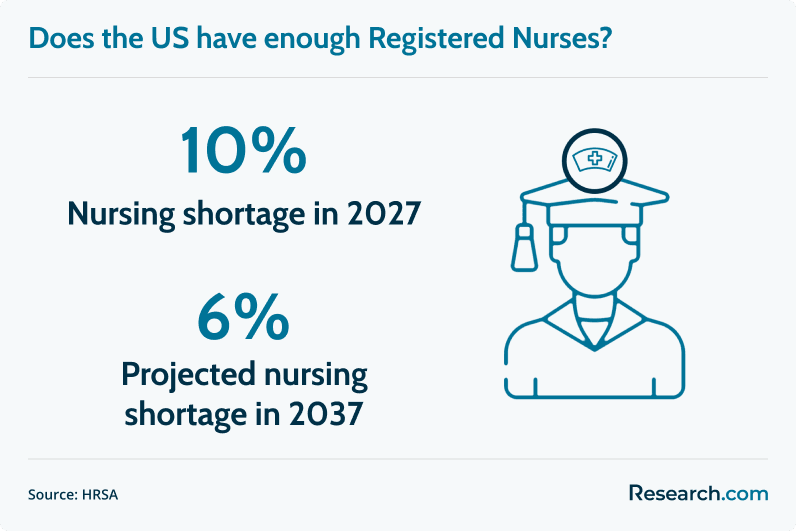
The workforce need behind accelerated nursing education is significant. According to the U.S. Health Resources & Services Administration (HRSA), the U.S. is projected to face a 10% shortage of registered nurses in 2027 and a 6% shortage in 2037, equivalent to 207,980 full-time RNs.
Accelerated online nursing programs can help qualified second-degree students enter the RN workforce faster, but the shortened timeline only works when students have the academic readiness, financial plan, and schedule capacity to complete the program successfully.
How Does an Accelerated Online Nursing Degree Compare to an On-Campus Program?
The main difference is where students complete the classroom portion of the degree. In an accelerated online program, nursing theory is delivered remotely. In an on-campus program, students attend most classes, labs, and academic activities in person. Both formats still require supervised clinical rotations because RN preparation cannot be completed entirely online.
Online accelerated programs are often better for students who need location flexibility, recorded lectures, or reduced commuting. Campus programs may be better for students who want frequent face-to-face faculty access, structured schedules, peer interaction, and immediate lab support.
| Factor | Accelerated Online or Hybrid ABSN | On-Campus ABSN |
| Course delivery | Mostly online lectures, assignments, exams, and simulations | In-person classes and scheduled campus learning |
| Clinical training | In person at approved clinical sites | In person at approved clinical sites |
| Flexibility | Often stronger for students who need remote coursework | Usually less flexible but more structured |
| Networking | May require intentional effort through virtual groups and clinical sites | More built-in peer and faculty interaction |
| Skills labs | May require periodic campus visits or regional intensives | Typically more frequent access to campus simulation labs |
| Best fit | Self-directed students with strong organization and clinical access | Students who learn best through regular in-person instruction |
Students sometimes ask whether employers respect online nursing degrees. The better question is whether the program is accredited, state-authorized, clinically rigorous, and successful in preparing graduates for licensure. For a deeper look at credibility, see Research.com’s guide on whether online nursing degrees are respected.
Students entering nursing for the first time may also compare associate-level routes such as ADN vs AAD vs AAS nursing degrees. Those programs can lead to RN eligibility in many cases, but they differ from accelerated second-degree BSN programs in admissions requirements, timeline, scope, and long-term advancement options.
Some accelerated BSN students perform strongly on licensure outcomes. Data from George Mason University found that ABSN students have a 94.03% first-time passing rate, while traditional BSN students have an 83.65% first-time pass rate (George Mason University, 2023).
What Is the Average Cost of an Accelerated Online Nursing Degree Program?
The average cost of online RN programs for non-nurses can vary sharply, typically ranging from $17,000 to $80,000, depending on the institution, residency status, program length, fees, and clinical requirements. Public universities may offer lower in-state tuition, while private institutions often charge higher rates.
Students should compare total attendance cost, not just tuition per credit. In accelerated programs, expenses can accumulate quickly because the schedule is compressed and clinical participation may require supplies, travel, background checks, and exam preparation.
| Cost Category | What to Ask Before Enrolling |
| Tuition | Is tuition charged per credit, per term, or as a flat program cost? |
| Online learning fees | Are there technology, simulation, platform, or distance learning charges? |
| Clinical expenses | Who pays for transportation, parking, health clearance, background checks, and drug screening? |
| Books and materials | Are digital resources, pharmacology tools, and NCLEX materials included? |
| Supplies | Are scrubs, stethoscopes, equipment, and lab kits included in tuition? |
| Licensure costs | Does the program include NCLEX-RN preparation, application guidance, or review resources? |
- Online coursework. Students may pay for access to lectures, learning platforms, assignments, virtual simulations, and nursing-specific digital tools.
- Clinical training. In-person rotations at affiliated hospitals or healthcare organizations provide supervised experience across nursing specialties.
- Lab fees and technology costs. Some schools charge for simulation platforms, virtual lab resources, or technical support.
- NCLEX-RN preparation. Some programs include review courses or materials, while others require students to pay separately.
- Student services. Advising, tutoring, career services, and clinical coordination may be included or charged through fees.
- Textbooks and course materials. Nursing courses often require specialized resources in pharmacology, assessment, ethics, and patient care.
- Uniforms and clinical supplies. Students commonly need scrubs, a stethoscope, and other equipment for lab and clinical practice.
The personal return on a nursing degree can include more than salary. Nurses lead the way as the most respected profession in America, topping a list of 23 occupations, followed closely by grade-school teachers, military officers, and pharmacists (Gallup, 2025). Still, students should avoid assuming that respect for the profession automatically makes every ABSN financially worthwhile. Total debt, local pay, graduation rates, NCLEX outcomes, and clinical placement reliability should all factor into the decision.
Alternative Career Path
Some students drawn to patient care may decide that nursing is broader than what they want. Comparing respiratory therapy vs nursing degree programs can help clarify the difference. Respiratory therapy focuses more narrowly on lung function and cardiopulmonary care, while nursing prepares graduates for a broader patient care role across many settings and specialties.
What Are the Financial Aid Options for Students Enrolling in an Accelerated Online Nursing Degree Program?
Even cheap online nursing programs can be difficult to pay for because accelerated students complete many credits in a short period and may have limited time to work. Common funding sources include federal loans, private loans, grants, scholarships, institutional aid, and employer tuition assistance.
- Federal and private student loans through FAFSA. Federal student loans often have fixed interest rates and repayment protections. Undergraduate students can borrow up to $7,500 per year as dependent students or $12,500 per year as independent students, with a total undergraduate limit of $57,500 (Federal Student Aid, n.d.).
- Scholarships and grants. The HRSA Nurse Corps Scholarship Program covers full tuition and fees and provides a monthly stipend in exchange for a two-year service commitment in an approved Critical Shortage Facility (HRSA.gov). The American Association of Colleges of Nursing also lists nursing-specific scholarships for BSN and graduate nursing students.
- University financial assistance. Emory University offers institutional aid and scholarships, including Robert W. Woodruff Scholarships and Fellowships. Villanova University offers the Joanne and William Conway Scholarship Program, which includes full and partial tuition awards based on merit and need.
- Employer tuition reimbursement. Some healthcare employers help pay for nursing education in exchange for a work commitment after graduation. Kaiser Permanente is one example of a large healthcare system that has offered professional development financial aid and scholarship resources (Kaiser Permanente, n.d.).
| Funding Source | Best For | Important Caution |
| Federal loans | Students who need predictable loan terms and repayment options | Annual and aggregate borrowing limits may not cover the full cost. |
| Private loans | Students with remaining costs after federal aid | Rates and repayment protections vary by lender. |
| Scholarships and grants | Students seeking non-loan aid | Deadlines, eligibility rules, and service commitments can be strict. |
| Employer assistance | Students already working in healthcare or willing to commit to an employer | Leaving early may trigger repayment obligations. |
| Institutional aid | Applicants to schools with nursing-specific scholarships | Aid may be limited and competitive. |
Alternative Healthcare Careers: Exploring Your Options
If you want a healthcare career but are unsure about nursing, comparing radiographer vs radiologist degree programs can be useful. Radiographers operate imaging equipment such as X-rays, while radiologists are physicians who interpret diagnostic images after extensive medical training. Both are healthcare pathways, but the education length, responsibility level, and scope of practice differ substantially from nursing.
What Are the Prerequisites for Enrolling in a 12-Month Accelerated Online Nursing Degree Program?
Admissions requirements vary by school, but most 12-month accelerated online nursing programs are designed for students who already have a bachelor’s degree in a non-nursing field. Because the nursing curriculum moves quickly, schools often require proof that applicants have completed foundational science and general education courses before starting.
| Common Requirement | Why Schools Require It |
| Non-nursing bachelor’s degree | Accelerated BSN programs build on prior college-level learning and focus on nursing-specific preparation. |
| Science prerequisites | Courses such as anatomy, physiology, microbiology, chemistry, and nutrition support clinical nursing coursework. |
| Minimum GPA | Many programs expect strong academic performance because the curriculum is compressed. |
| Recommendations and essay | Schools use these to evaluate motivation, professionalism, and readiness for nursing. |
| Entrance exams | Some programs use TEAS or HESI results to assess academic readiness. |
| Health and legal clearance | Clinical sites commonly require immunizations, background checks, drug screening, and CPR certification. |
- Bachelor’s degree in a non-nursing field. Applicants are typically expected to hold a bachelor’s degree from an accredited institution before entering the ABSN curriculum.
- Completion of prerequisite coursework. Common prerequisites include Human Anatomy and Physiology, Microbiology, General or Organic Chemistry, Statistics, Nutrition, and Psychology.
- Minimum GPA requirement. Many programs require a cumulative GPA of 3.0, though some may consider applicants with a 2.75 GPA case by case. Some schools also require approximately a 3.0 GPA in prerequisite courses.
- Letters of recommendation and personal statement. Applicants may need one to three recommendations and an essay explaining why they want to enter nursing.
- Entrance exams. Depending on the school, applicants may need to take the Test of Essential Academic Skills (TEAS) or the HESI Admission Assessment Exam.
- Background check and health requirements. Students working with patients must usually complete criminal background checks, drug screening, immunization documentation, and CPR certification such as Basic Life Support for Healthcare Providers.
- Interview. Some schools conduct virtual or in-person interviews to assess communication skills, motivation, and readiness for the pace of the program.
Students who want patient-facing work but are not ready for a nursing degree may also review the medical assistant job description. Medical assistants often perform both clinical and administrative tasks, such as taking vital signs, helping with exams, and supporting office workflows. Some 12-month medical assistant programs can provide a faster entry point into healthcare, though the role and scope are different from registered nursing.
What Courses Are Typically in a 12-Month Accelerated Online Nursing Degree Program?
A 12-month accelerated online nursing degree covers the same foundational nursing competencies as a traditional BSN, but in a shorter timeframe. Students should expect a heavy reading load, frequent assessments, simulation activities, and clinical rotations that connect classroom concepts to patient care.
- Introduction to Professional Nursing. Students learn the role of the nurse, professional standards, ethics, healthcare policy, and the responsibilities of patient-centered practice.
- Pathophysiology. This course examines disease processes and how illness affects body systems.
- Pharmacology. Students study medication administration, drug actions, interactions, dosage safety, and patient education.
- Health Assessment and Physical Examination. ABSN students learn how to gather patient histories, perform physical assessments, and identify abnormal findings.
- Medical-Surgical Nursing. This course prepares students to care for adult patients with acute and chronic conditions.
- Maternal and Newborn Nursing. Students learn about pregnancy, labor, delivery, postpartum care, and newborn health.
- Pediatric Nursing. Coursework focuses on infants, children, adolescents, developmental stages, family-centered care, and pediatric conditions.
- Psychiatric and Mental Health Nursing. Students study mental health conditions, therapeutic communication, crisis intervention, and psychiatric nursing care.
- Critical Care and Emergency Nursing. This course introduces care for patients with urgent or life-threatening conditions in ICU and ER environments.
- Community and Public Health Nursing. Students learn about prevention, health promotion, population health, outreach, and community-based care.
- Nursing Leadership and Healthcare Policy. Coursework covers leadership, delegation, quality improvement, regulations, and healthcare systems.
- Clinical Rotations and Capstone Experience. Students may complete 500 to 700 clinical hours at partnered healthcare facilities, often finishing with an integrative capstone experience.
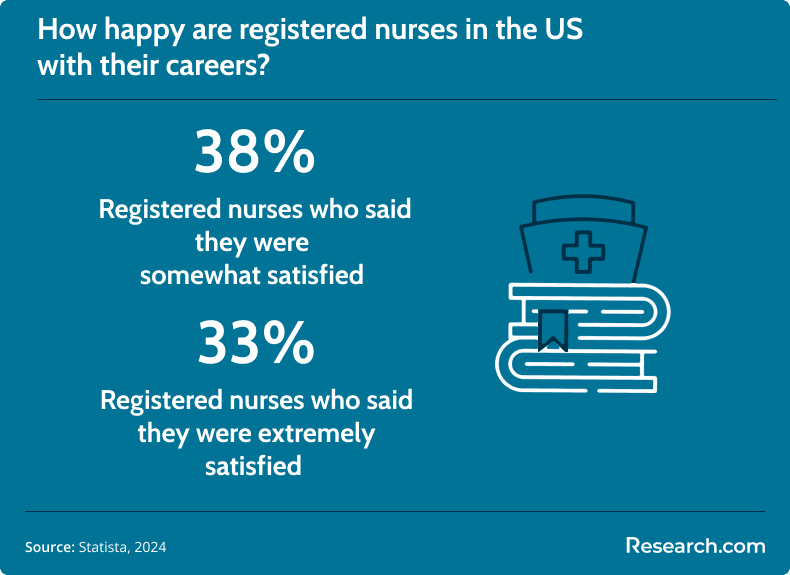
Although the academic workload is intense, many nurses report satisfaction with their career choice. In 2023, a survey of more than 18,200 registered nurses in the United States found that 38% were somewhat satisfied and 33% were extremely satisfied with their career choice (Statista, 2024).
What Types of Specializations Are Available in a 12-Month Accelerated Online Nursing Degree Program?
Most 12-month accelerated online nursing degrees prepare students for general registered nursing practice rather than a formal undergraduate specialization. After graduation and RN licensure, nurses can move toward specialty areas through clinical experience, employer training, certifications, or graduate education.
- Medical-Surgical Nursing. This broad specialty focuses on adult patients with acute and chronic conditions in hospitals and outpatient settings.
- Critical Care and Emergency Nursing. Nurses in this area care for unstable or high-acuity patients in ICUs, trauma units, and emergency departments.
- Maternal and Newborn Nursing. This pathway includes labor and delivery, postpartum care, prenatal services, and neonatal care settings.
- Pediatric Nursing. Pediatric nurses work with infants, children, adolescents, and families in hospitals, clinics, and community settings.
- Psychiatric and Mental Health Nursing. This specialty focuses on behavioral health, substance use, crisis care, and therapeutic communication.
- Community and Public Health Nursing. Nurses in this field work on prevention, population health, education, outreach, and care for underserved groups.
Many nurses pursue specialization after an ABSN through certifications, clinical experience, or graduate programs such as the types of master's degrees in nursing, including MSN and DNP pathways.
The National Council of State Boards of Nursing reports 5.74 million active nurses in the U.S., including 4.89 million registered nurses and 917,000 practical nurses. Specialization can help RNs develop deeper expertise and compete for focused roles, but it usually requires additional experience, certification, or advanced education.
How Does Accreditation Impact Your Accelerated Online Nursing Degree?
Accreditation is one of the most important checks before enrolling in an accelerated online nursing program. It indicates that the curriculum, faculty qualifications, clinical expectations, and academic processes meet recognized nursing education standards. For students, accreditation can affect financial aid eligibility, transfer options, employer recognition, graduate school admission, and the ability to pursue RN licensure.
Look for nursing program accreditation from recognized agencies such as CCNE or ACEN, and also confirm that the institution is properly accredited. Students interested in future graduate study should be especially careful because many fast track to nurse practitioner programs expect applicants to graduate from an accredited nursing program.
What Challenges Might Arise in a 12-Month Accelerated Online Nursing Degree Program?
The biggest challenge is intensity. A 12-month ABSN compresses a large amount of science, clinical reasoning, patient care, documentation, and exam preparation into a short calendar. Students who underestimate the weekly workload can quickly fall behind.
| Common Challenge | Why It Happens | How to Reduce the Risk |
| Burnout | Multiple courses, exams, labs, and clinical days overlap. | Plan study blocks before the term starts and limit nonessential obligations. |
| Clinical scheduling conflicts | Rotations may occur during weekdays, evenings, or weekends. | Ask how placements are scheduled and whether students can decline assigned sites. |
| Online isolation | Remote coursework can reduce informal peer and faculty interaction. | Join study groups, attend office hours, and communicate early when struggling. |
| Financial pressure | Students may be unable to work full time during the program. | Create a full cost plan that includes living expenses, supplies, and emergency funds. |
| Licensure surprises | State rules and authorization may vary. | Confirm with the state board of nursing before enrolling. |
Students who already hold an RN license and want a shorter bachelor’s completion route should compare this path with accelerated options such as RN to BSN online 9 months programs. Those programs serve licensed RNs, not non-nurses seeking initial RN licensure.
Can an Accelerated Online Nursing Degree Program Help Transition to Advanced Practice Roles?
Yes, an accelerated online BSN can become the academic foundation for advanced practice nursing, but it is only the first step. Graduates typically need RN licensure, clinical experience, and later graduate education to become nurse practitioners, clinical nurse specialists, nurse anesthetists, nurse midwives, educators, or nursing leaders.
Students already thinking about advanced practice should compare MSN, DNP, and certificate pathways early. Cost-conscious students may eventually explore options such as the cheapest FNP program online, but they should still verify accreditation, clinical placement quality, certification eligibility, and state licensure alignment.
How Can Accelerated Online Programs Guarantee Comprehensive Clinical Training?
No program can honestly guarantee that every student will have an identical clinical experience, because clinical site availability, patient populations, preceptor access, and state rules vary. What a strong program can do is provide a structured clinical plan, qualified supervision, documented competencies, simulation support, and placements that satisfy licensing standards.
Prospective students should ask how clinical placements are secured, whether the school or student is responsible for finding sites, how many specialties are included, how simulation is used, and what happens if a placement falls through. Students comparing RN-to-BSN completion options should note that online RN BSN programs without clinicals are designed for already licensed RNs and are not the same as pre-licensure ABSN programs.
Can Advanced Certifications Further Enhance Your Nursing Career?
Advanced certifications can help nurses demonstrate specialized expertise after they gain the required experience. Certifications may support movement into areas such as critical care, emergency nursing, oncology, psychiatric nursing, case management, informatics, and leadership. They do not replace RN licensure or graduate education when a role legally requires advanced practice credentials.
Nurses interested in mental health and advanced practice may eventually compare graduate certificate options such as the most affordable psychiatric nurse practitioner graduate certificate program. Before enrolling, confirm that the program fits your current license, graduate degree status, certification goals, and state practice requirements.
Could a Direct-Entry Nurse Practitioner Program Be Right for You?
A direct-entry nurse practitioner pathway may appeal to students with a non-nursing bachelor’s degree who already know they want advanced practice. These programs are different from ABSN programs because they combine entry into nursing with graduate-level preparation. They may take longer than a 12-month BSN route and can be more academically and financially demanding.
Students considering this path should compare accreditation, clinical hours, RN licensure sequencing, NP certification eligibility, state approval, and whether they want time to work as an RN before taking on advanced practice responsibilities. Research.com’s guide to online nurse practitioner programs for non-nurses can help compare this alternative.
Can I Pursue a Specialization in Women’s Health Through an Accelerated Online Nursing Degree Program?
An accelerated online BSN can be a starting point for nurses interested in women’s health, but specialization usually happens after RN licensure. A nurse may first work in labor and delivery, postpartum care, reproductive health, OB-GYN clinics, public health, or related settings before pursuing graduate education or certification.
Students who want to become women’s health nurse practitioners should review graduate-level requirements, clinical expectations, and state rules. Cost-focused students may compare the cheapest online WHNP programs, but affordability should be evaluated alongside accreditation, board certification preparation, faculty support, and clinical placement quality.
How Can I Transition From an Accelerated BSN to a DNP Program?
Graduates of accelerated BSN programs can move toward Doctor of Nursing Practice study after meeting admissions requirements, which commonly include RN licensure and, depending on the program, clinical experience. DNP programs focus on advanced clinical practice, systems leadership, quality improvement, evidence-based practice, and healthcare decision-making.
Before applying, compare BSN-to-DNP and MSN-to-DNP structures, clinical hour expectations, specialty tracks, admissions competitiveness, and whether the program prepares you for your intended role. Students looking for accessible options may review the easiest DNP degree to get into, but admission ease should not outweigh program quality, licensure alignment, or career fit.
How to Choose the Best Accelerated Online Nursing Degree Program
The best accelerated online nursing program is the one that can realistically get you from your current academic background to RN licensure with strong preparation, manageable cost, and clinical training that meets your state’s rules. Speed matters, but it should not be the deciding factor by itself.
When comparing online accelerated BSN programs, use the following checklist before applying or depositing.
| Question to Ask | Why It Matters |
| Is the nursing program accredited by CCNE or ACEN? | Accreditation affects licensure preparation, employer confidence, and graduate school options. |
| Is the program authorized in my state? | State authorization and board approval can affect clinical placement and licensure eligibility. |
| Who secures clinical placements? | Programs that leave placement entirely to students can create serious delays. |
| What are the NCLEX-RN pass rates? | Pass rates can help indicate whether the curriculum prepares students for licensure exams. |
| What is the true total cost? | Fees, supplies, travel, background checks, and lost income can change affordability. |
| How much faculty and advising support is available? | Accelerated students need quick feedback, tutoring, and academic intervention when problems arise. |
| Can I handle the weekly schedule? | A 12-month program may require major reductions in work, caregiving, and other commitments. |
- Accreditation. Confirm that the program is accredited by the Commission on Collegiate Nursing Education or the Accreditation Commission for Education in Nursing.
- NCLEX pass rates. Review first-time NCLEX-RN pass rates and ask how the school supports students who are at risk academically.
- Clinical placement support. Find out whether the school arranges placements, approves student-found sites, or requires travel to specific regions.
- Program length and flexibility. Decide whether a 12-month schedule is realistic or whether 15–18 months would reduce risk.
- Tuition and aid. Compare tuition, fees, scholarships, grants, federal aid eligibility, and employer reimbursement.
- Faculty support and online resources. Look for accessible instructors, tutoring, virtual simulations, advising, career services, and clear communication systems.
Choosing carefully matters in a large and competitive profession. With 6,769,070 RN and PN licenses in the U.S. as of 2024, a strong program can help graduates enter the workforce prepared and avoid preventable licensure or clinical placement problems.
The chart below outlines the total number of RN/PN licenses in the United States.
What Career Paths Are Available for Graduates of a 12-Month Accelerated Online Nursing Degree Program?
Most graduates begin as entry-level registered nurses after passing the NCLEX-RN and meeting state licensure requirements. Over time, they can move into specialty, leadership, education, and advanced practice roles through experience, certification, and additional education.
| Career Stage | Typical Roles | What Helps You Advance |
| 0–2 years | Staff RN in hospitals, clinics, long-term care, or community settings | Strong clinical fundamentals, documentation skills, teamwork, and NCLEX-RN success |
| 3–5 years | Experienced RN, charge nurse, specialty RN | Specialty experience, certifications, precepting, and leadership readiness |
| 6–10 years | Nurse practitioner, clinical nurse specialist, nurse manager, nurse educator | MSN or DNP education, advanced certification, and supervisory or specialty experience |
| 10+ years | Director of nursing, chief nursing officer, healthcare administrator | Leadership record, graduate education, policy knowledge, and operational experience |
- Entry-level registered nurse (0–2 years). Staff nurses provide direct patient care, administer medications, monitor symptoms, document care, and collaborate with physicians and interdisciplinary teams.
- Experienced or specialized RN (3–5 years). Nurses may move into charge nurse roles or specialty areas such as emergency care, critical care, labor and delivery, oncology, or perioperative nursing.
- Advanced practice nurse or nurse manager (6–10 years). With graduate education, nurses may become NPs, CNSs, educators, or managers. Some roles require an MSN or Doctor of Nursing Practice.
- Senior leadership or executive roles (10+ years). Directors of nursing, chief nursing officers, and healthcare administrators oversee teams, budgets, policy, staffing, and patient care outcomes.
What Is the Job Market for Graduates With an Accelerated Online Nursing Degree Program?
The job market for registered nurses remains strong in many healthcare settings, although opportunities vary by region, specialty, employer, and economic conditions. According to Statista, in 2024, nearly half of surveyed U.S. hospitals reported an RN vacancy rate above 10%, which was an improvement from the previous year but still showed ongoing staffing pressure (Statista, 2024).
Nurse Workforce Projections for 2022 - 2037 show that demand for registered nurses in the U.S. is projected to remain steady up to 2037. It projects demand of 3,544,980 positions, indicating a continued need for nurses across healthcare settings.
For accelerated BSN graduates, this demand can support job opportunities, but employment is never automatic. Students should build clinical references, prepare for the NCLEX-RN early, use career services, consider high-need units, and stay flexible about first job location and shift.
The chart below shows the states with the highest projected shortages of registered nurses by 2037.
What Graduates Say About 12-Month Accelerated Online Nursing Programs
- “The online accelerated format gave me the flexibility I needed as a career changer. I could complete the academic work while still managing personal responsibilities, and the clinical rotations helped me build real patient care experience. In 12 months, I moved from a non-healthcare background into registered nursing.” – Nancy
- “It was the most demanding year I have ever had, but it was worth it. The pace required long study hours, and the clinical schedule was serious. The online structure helped me organize the coursework, while the rotations gave me the hands-on practice I needed.” – Christian
- “I had doubts about an online nursing degree at first, but the mix of virtual classes and in-person clinical training worked well. Recorded lectures, online access to instructors, and clinical practice made the program feel both flexible and structured.” – Shiela
Common Mistakes to Avoid When Choosing an Accelerated Online Nursing Program
- Choosing only by speed. A 12-month program is not automatically better than a 15- or 18-month option if the faster pace increases your risk of failing or withdrawing.
- Ignoring accreditation. Accreditation can affect licensure, employment, financial aid, and graduate school options.
- Assuming online means no campus or clinical travel. Most pre-licensure nursing programs require in-person labs, simulations, and clinical rotations.
- Looking only at tuition. Fees, supplies, transportation, lost wages, housing, health requirements, and NCLEX costs can change the real price.
- Not checking state board requirements. A program available online may not meet licensure requirements in every state.
- Overestimating your ability to work full time. Many accelerated programs require a workload that competes with full-time employment.
- Relying only on rankings. Rankings can help narrow options, but your best program depends on clinical access, cost, licensure fit, and support services.
Key Insights
- A 12-month accelerated online nursing degree is best for students who already have a non-nursing bachelor’s degree, meet science prerequisites, and can commit to a full-time, clinically intensive schedule.
- Online ABSN programs are not fully remote. The academic coursework may be online, but labs and clinical rotations must be completed in person at approved sites.
- Program cost varies widely, typically from $17,000 to $80,000, so students should compare total cost rather than tuition alone.
- Accreditation, state authorization, clinical placement support, and NCLEX-RN outcomes are more important than marketing claims about speed or convenience.
- Accelerated BSN students may have strong NCLEX-RN outcomes; George Mason University reported a 94.03% first-time passing rate for ABSN students and an 83.65% first-time pass rate for traditional BSN students.
- The U.S. has about 5.74 million active nurses, including 4.89 million registered nurses and 917,000 practical nurses, but local hiring conditions still vary by state and employer.
- A 2023 survey of more than 18,200 U.S. registered nurses found that 38% were somewhat satisfied and 33% were extremely satisfied with their career choice.
- By 2035, demand for registered nurses is projected to grow by over 12%, reaching approximately 3,889,770 positions across the country.
- An accelerated BSN can lead to RN practice and later support graduate pathways such as MSN, NP, and DNP programs, but advanced roles require additional education, experience, and licensure steps.
References:
- American Association of Colleges of Nursing. (2023). New graduate employment data. Retrieved from https://www.aacnnursing.org/news-data/research-data-center/new-graduate-employment-data
- American Association of Colleges of Nursing. (n.d.). Scholarships & financial aid for students. Retrieved from https://www.aacnnursing.org/students/scholarships-financial-aid
- Bureau of Labor Statistics. (2023). Registered nurses: Occupational outlook handbook. U.S. Department of Labor. Retrieved from https://www.bls.gov/ooh/healthcare/registered-nurses.htm
- Bureau of Labor Statistics. (2023). Nurse anesthetists, nurse midwives, and nurse practitioners: Occupational outlook handbook. U.S. Department of Labor. Retrieved from https://www.bls.gov/ooh/healthcare/nurse-anesthetists-nurse-midwives-and-nurse-practitioners.htm
- Emory University. (n.d.). Financial aid and scholarships overview. Retrieved from https://www.nursing.emory.edu/overview/financial-aid-and-scholarships
- Gallup. (2025). Americans' ratings of professions stay historically low. Retrieved from https://news.gallup.com/poll/655106/americans-ratings-professions-stay-historically-low.aspx
- George Mason University School of Nursing. (2023.). Facts and rankings. George Mason University. Retrieved from https://nursing.gmu.edu/about-us/facts-and-rankings
- Health Resources and Services Administration. (n.d.). Nurse Corps scholarship program guidance. U.S. Department of Health and Human Services. Retrieved from https://bhw.hrsa.gov/sites/default/files/bureau-health-workforce/funding/nursecorps-sp-guidance.pdf
- Health Resources and Services Administration (HRSA). (2024). Nursing projections fact sheet. U.S. Department of Health & Human Services.
- Kaiser Permanente. (n.d.). Professional development financial aid & scholarships. Retrieved from https://kpnursing.org/_SCAL/professionaldevelopment/finaid/scholarships.html
- National Council of State Boards of Nursing. (n.d.). National nursing database.
- Salary.com. (n.d.). Entry-level registered nurse salary research. Retrieved from https://www.salary.com/research/company/entry-level/registered-nurse-salary?cjid=12445428
- Salary.com. (2025). Nurse salary. Salary.com. Retrieved March 14, 2025, from https://www1.salary.com/Nurse-Salary.html
- Statista. (2024). Nursing career choice satisfaction in the United States. Retrieved from https://www.statista.com/statistics/1388858/nursing-career-choice-satisfaction-united-states/
- Statista. (2024). Vacancy rate of registered nurses in hospitals in the United States. Retrieved from https://www.statista.com/statistics/1251419/vacancy-rate-of-registered-nurses-in-hospitals-in-the-united-states/
- StudentAid.gov. (n.d.). Federal student aid information. U.S. Department of Education. Retrieved from https://studentaid.gov/
- U.S. Department of Education. (n.d.). College Scorecard database. Retrieved from https://collegescorecard.ed.gov/
- U.S. Department of Education. (n.d.). National Center for Education Statistics. Retrieved from https://nces.ed.gov/
- U.S. Department of Education. (n.d.). Integrated Postsecondary Education Data System (IPEDS). Retrieved from https://nces.ed.gov/ipeds/
- Villanova University. (n.d.). Financial assistance for second-degree accelerated BSN students. Villanova University. Retrieved from https://www1.villanova.edu/university/nursing/academic-programs/undergraduate/second-degree-accelerated-bsn/financial-assistance.html
- ZipRecruiter. (2025). Registered nurse salary data. Retrieved from https://www.ziprecruiter.com/Salaries/Rn-Salary
Other Things You Should Know About 12-month Accelerated Online Nursing Degree Programs
Yes. Many 12-month accelerated online nursing programs require either the TEAS or HESI A2 before admission, while some BSN completion tracks waive testing for applicants with a prior bachelor’s degree and a minimum GPA, often 2.75 to 3.0. Healthcare background checks and immunization records are also common.
Several 2027 accelerated online nursing programs accept transfer credits, typically allowing up to 30 semester hours. Prospective students should verify specific policies with each institution, as acceptance can vary based on the institution's evaluation criteria and course equivalencies.


