2027 Best Nursing Schools in Alabama – Accredited ADN, BSN, MSN Programs

Co-Founder and Chief Data Scientist
Choosing a nursing school in Alabama is not only about finding a nearby campus or the lowest tuition. The program you select can affect your eligibility for licensure, your NCLEX preparation, your clinical placement options, your total cost, and the type of nursing role you can pursue after graduation. Alabama offers ADN, BSN, MSN, DNP, LPN, RN-to-BSN, and advanced practice pathways, so the best choice depends on your current education level, career goal, schedule, and budget.
This guide explains how nursing programs in Alabama compare, what degree levels lead to different nursing careers, how online and campus-based formats work, what costs and prerequisites to expect, and how to evaluate accreditation, outcomes, licensure readiness, and student support before enrolling.
Quick Answer: What is the best nursing program path in Alabama?
The best nursing pathway in Alabama depends on where you are starting. An ADN is usually the fastest route to registered nurse eligibility, a BSN can improve preparation for broader clinical and leadership roles, and an MSN is designed for nurses pursuing advanced roles such as nurse practitioner, nurse educator, nurse administrator, or nurse midwife. Students should choose only programs that are properly approved or accredited, prepare graduates for the NCLEX when required, provide supervised clinical experience, and align with Alabama Board of Nursing requirements.
What are the benefits of getting a nursing degree in Alabama?
- Multiple entry points into nursing. Students can begin with an ADN for entry-level registered nursing preparation, pursue a BSN for broader clinical and leadership preparation, or complete an MSN for advanced nursing roles such as nurse practitioner, nurse educator, or nurse administrator.
- Career options across healthcare settings. Alabama nursing graduates can work in hospitals, clinics, long-term care facilities, community health centers, schools, public health agencies, private practices, government agencies, and healthcare organizations.
- Salary potential varies by degree, role, and experience. The average salary range of nurses in Alabama typically falls between $58,158 and $74,182. Pay can differ by city, education level, certifications, specialty, additional skills, and years of professional experience.
- Flexible formats are available. Online ADN, BSN, and MSN options can help working students balance coursework with employment, family obligations, or clinical requirements.
What can I expect from a nursing degree in Alabama?
Alabama has over 40 nursing programs offering ADN and BSN degrees, with many options available through public community colleges and universities. Program structure varies by school, but all nursing students should expect a combination of classroom instruction, laboratory learning, clinical practice, and preparation for professional standards in patient care.
An ADN focuses on the core nursing knowledge and clinical skills needed for registered nurse preparation. It is often chosen by students who want a shorter route into RN practice and may later continue into an RN-to-BSN program.
A BSN provides a wider nursing education. In addition to clinical foundations, BSN programs commonly include leadership, evidence-based practice, research, population health, and community health. This degree can be useful for students who want more flexibility in hospital, public health, specialty, or leadership-oriented roles.
An MSN is a graduate-level nursing degree for licensed nurses who want advanced preparation. Depending on the track, MSN students may prepare for nurse practitioner, nurse educator, nurse administrator, leadership, or other specialized roles. Each degree level builds on the previous one and can expand a nurse’s scope of preparation, career options, and advancement potential.
| Degree path | Typical purpose | Common fit | Career direction |
| ADN | Builds foundational nursing and clinical skills for RN preparation | Students seeking a shorter entry route into registered nursing | Direct patient care in hospitals, clinics, long-term care, and community settings |
| BSN | Adds broader study in leadership, research, population health, and community care | Students who want wider career flexibility or future graduate study | RN practice, specialty nursing, public health, leadership preparation, and graduate school readiness |
| MSN | Provides graduate training for advanced practice, education, administration, or leadership | Licensed nurses seeking advanced or specialized roles | Nurse practitioner, nurse educator, nurse administrator, researcher, and other advanced roles |
Where can I work with a nursing degree in Alabama?
Nursing graduates in Alabama can work in many clinical and non-clinical environments. The setting often depends on the degree earned, licensure status, specialty preparation, and experience.
ADN graduates commonly provide direct patient care under appropriate supervision or within RN practice settings such as:
- Hospitals
- Clinics
- Long-term care facilities
- Community health centers
BSN graduates may qualify for a wider mix of roles, including bedside nursing, specialty units, care coordination, public health, school nursing, research support, and leadership-oriented positions. Employers may include hospitals, public health agencies, schools, and pharmaceutical companies.
MSN graduates often move into advanced or specialized work, including:
- Nurse practitioner roles
- Nursing education
- Nursing administration
- Research roles in hospitals
- University-based positions
- Private practice settings
- Government agencies
- Healthcare organizations
MSN-prepared nurses may contribute to direct patient care, health education, clinical leadership, policy development, research, or workforce training.
How much can I make with a nursing degree in Alabama?
Nursing salaries in Alabama generally rise with advanced education, specialized credentials, greater experience, and higher-responsibility roles. Location and employer type also matter.
For example, a staff nurse - RN I in Alabama can expect a median salary of $64,327. A pediatric nurse receives a median wage of $73,100, while the average nurse practitioner's salary in the state is $114,255.
These figures should be used as planning estimates rather than guarantees. Individual earnings may vary based on experience, shift differentials, specialty area, certification, employer, and city.
- Best Nursing Schools in Alabama for 2027
- How long does a nursing degree take in Alabama?
- Online vs. on-campus nursing programs in Alabama
- Average cost of nursing programs in Alabama
- Financial aid for Alabama nursing students
- Prerequisites for Alabama nursing programs
- Common nursing courses in Alabama programs
- Student support services to look for
- Challenges for Alabama nursing students and how to manage themStudent support reference
- Are online nursing programs in Alabama practical?
- NCLEX pass rates and student outcomes
- Affordable nurse practitioner education in Alabama
- How to get a nursing license in Alabama
- Nursing specializations available in Alabama
- Interdisciplinary collaboration in nursing education
- LPN requirements in Alabama
- How to choose the best Alabama nursing program
- Accreditation and national standards
- Nursing education and allied healthcare careers
- Career paths for Alabama nursing graduates
- Alabama nursing job market
- Accelerated nursing pathways in Alabama
- Technology and simulation in Alabama nursing education
- Nurse midwife education requirements in Alabama
- Skills needed to succeed in nursing schoolProgram selection checklist
Best Nursing Schools in Alabama for 2027
How Research.com ranks nursing schools
A nursing degree is a major investment of time, money, and effort. To help students compare options more carefully, Research.com reviews nursing schools in Alabama using transparent data and program-level indicators. Our ranking process uses current and comprehensive U.S. government and education datasets, including:
- The Integrated Postsecondary Education Data System (IPEDS)
- Peterson’s database, including the Distance Learning Licensed Data Set
- College Scorecard
- National Center for Education Statistics
Our analysts also consider factors such as graduation rate, student-faculty ratio, and program focus. Additional details are available on our methodology page.
1. University of Alabama at Birmingham
The UAB School of Nursing in Birmingham offers undergraduate, accelerated, master’s, and doctoral nursing options, along with several specialization pathways for students seeking focused preparation.
- Program Length: Two to four years
- Tracks/concentrations: Midwifery, Gerontology, Anesthesiology, and more.
- Cost per Credit: $434 (in-state), $1,157 (out-of-state)
- Required Credits to Graduate: 120
- Accreditation: Southern Association of Colleges and Schools Commission on Colleges
2. Auburn University
Auburn University offers traditional bachelor’s-level nursing study as well as BSN completion pathways. The Auburn University School of Nursing admits students to RN-to-BSN and concurrent RN-to-BSN options.
- Program Length: Two to four years
- Tracks/concentrations: N/A
- Cost per Credit: $446 per credit hour (in-state), $1,338 (out-of-state)
- Required Credits to Graduate: 122
- Accreditation: Commission on Collegiate Nursing Education (CCNE)
3. Samford University
Samford University was established in 1922 and is identified as the Southeast's fourth-best private Christian nursing school. The school reported a 96% employment rate for BSN graduates by graduation and offers both undergraduate and graduate nursing degrees.
- Program Length: Four years
- Tracks/concentrations: N/A
- Cost per Credit: $935 Summer (all credits)
- Required Credits to Graduate: 125
- Accreditation: CCNE
4. University of North Alabama
The Anderson College of Nursing and Health Professions at the University of North Alabama was founded in 1973. The school offers nursing scholarships, support for students in online nursing programs, and a Nurse Faculty Loan Program for MSN degree holders preparing for faculty roles.
- Program Length: 12 to 24 months (MSN)
- Tracks/concentrations: Family nurse practitioner, psychiatric mental health practitioner, leadership, teaching/learning
- Cost per Credit: $495 (in-state), $990 (out-of-state)
- Required Credits to Graduate: 32-41 total hours depending on the chosen track
- Accreditation: CCNE
5. Jacksonville State University
Jacksonville State University offers BSN to Doctor of Nursing Practice programs online. Students may find traditional, fully online, or partially online formats, with synchronous and asynchronous learning options. Its online DNP programs include specialization options such as gerontology and family nursing.
- Program Length: Two to four years
- Tracks/concentrations: Family nursing, Gerontology, and more
- Cost per Credit: $520
- Required Credits to Graduate: 69
- Accreditation: Commission on Colleges of the Southern Association of Colleges and Schools
6. University of South Alabama
The University of South Alabama offers a BSN program designed to prepare students for registered nursing practice. The curriculum supports professional nursing care for diverse populations across the lifespan and prepares graduates to sit for the National Council Licensure Examination and apply for RN licensure.
- Program Length: Four years
- Tracks/concentrations: N/A
- Cost per Credit: $423 (in-state), $846 (out-of-state)
- Required Credits to Graduate: 62
- Accreditation: CCNE
7. Troy University
The Troy University School of Nursing offers ASN, BSN, MSN, and DNP pathways. It also provides an RN Mobility track for registered nurses pursuing a BSN. The ASN program takes five semesters, is offered at the Montgomery Campus, and includes in-person coursework with flexible night class options.
- Program Length: Five semesters
- Tracks/concentrations: N/A
- Cost per Credit: $408 (in-state), $816 (out-of-state)
- Required Credits to Graduate: 70
- Accreditation: Accreditation Commission for Education in Nursing (ACEN)
8. Spring Hill College
Spring Hill College offers an online MSN with two concentrations: Executive Leadership and Nursing Education. Coursework is delivered fully online, which may help students who need a flexible graduate schedule.
- Program Length: One year
- Tracks/concentrations: Executive leadership, nursing education
- Cost per Credit: $411
- Required Credits to Graduate: 36
- Accreditation: CCNE
9. University of Mobile
The University of Mobile offers a Traditional Bachelor of Science in Nursing program that combines classroom instruction with clinical experience. The program is designed to prepare students for professional nursing practice and community health needs in a changing healthcare environment.
- Program Length: N/A
- Tracks/concentrations: N/A
- Cost per Credit: $395
- Required Credits to Graduate: 55 semester hours
- Accreditation: CCNE
10. Oakwood University
The Department of Nursing at Oakwood University prepares nurses to address bio-psychosocial and spiritual needs across the lifespan. Its BS degree in nursing supports professional practice in settings such as communities, industry, government, hospitals, and clinics.
- Program Length: Four to five years
- Tracks/concentrations: N/A
- Cost per Credit: $9,487 per semester (12-16 credits)
- Required Credits to Graduate: 129-132
- Accreditation: ACEN
How to use this nursing school list
A ranking is a starting point, not the final decision. Before applying, compare each school’s accreditation, Alabama Board of Nursing approval status, NCLEX outcomes, clinical placement process, cost after aid, transfer credit rules, schedule format, and graduation requirements. A lower-cost program may not be the best value if it has weak student support, limited clinical placement assistance, or a format that does not fit your work schedule.
Key Findings
- Nurses in Alabama can expect an average salary range of $58,158 to $74,182, with variation by education, experience, specialty, city, and employer.
- Financial aid for Alabama nursing students may include scholarships, educational loans, graduate assistantships, and programs such as the National Health Service Corps.
- Average program costs vary by degree level: ADN programs cost around $5,000, BSN programs approximately $5,000 to $11,800, and graduate nursing programs around $7,500 to $17,800 depending on residency status.
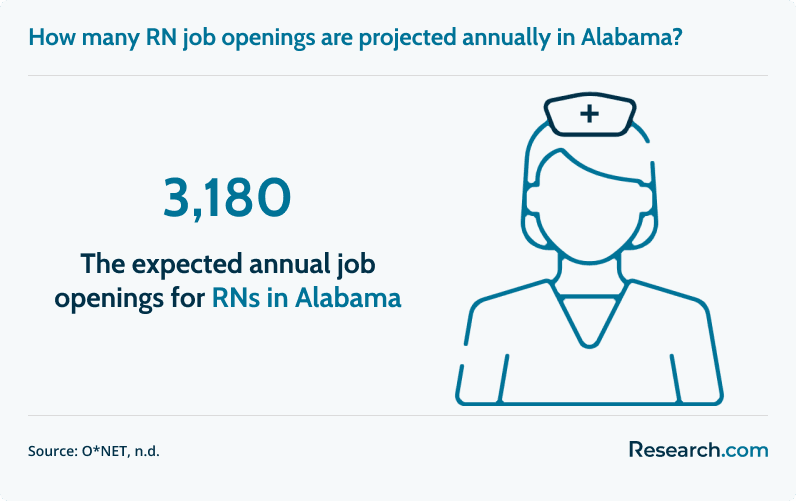
- The job market for nurses in Alabama continues to grow. Employment for registered nurses (RNs) in the state is projected to increase by 8% through 2030, resulting in approximately 3,180 annual job openings during the decade (U.S. Bureau of Labor Statistics, 2025).
- Alabama RN licenses are valid for two years.
How long does it take to complete a nursing degree in Alabama?
The time required to finish a nursing degree in Alabama depends on the credential, enrollment pace, transfer credits, clinical scheduling, and whether the student is entering nursing for the first time or already holds an RN license.
An ADN in Alabama typically takes two years. A traditional BSN usually takes four years. Registered nurses who already hold an ADN may complete an RN-to-BSN program in one to two years, depending on the school and enrollment status.
After earning a BSN, the graduate portion of an MSN program in Alabama can require an additional three to five years, depending on experience level and intended career path.
| Program type | Typical completion time stated | Best for |
| ADN | Two years | Students seeking a shorter pathway toward RN preparation |
| Traditional BSN | Four years | Students starting college and seeking broad nursing preparation |
| RN-to-BSN | One to two years | Licensed RNs who want to complete a bachelor’s degree |
| MSN after BSN | Three to five additional years | Nurses pursuing advanced practice, teaching, administration, or leadership |
How does an online nursing program in Alabama compare to an on-campus program?
Online nursing programs in Alabama can make nursing education more accessible for working adults, parents, and students who live far from campus. However, “online” does not mean entirely remote. Nursing students still need clinical practice, and some programs may require in-person labs, campus intensives, simulation sessions, or local clinical placements.
Compared with campus programs, online programs may offer more control over when students complete readings, recorded lectures, discussion posts, or assignments. Campus programs may offer more structured schedules, easier access to faculty in person, and face-to-face lab practice.
Cost comparisons require careful review. Online students may save on relocation, transportation, room, or board, but tuition and fees vary by institution. Students evaluating online learning across disciplines may also compare how flexible formats are used in other fields, such as affordable online elementary education master’s degrees, but nursing has additional clinical and licensure requirements that make program approval especially important.
Accredited online and on-campus nursing programs must meet applicable academic and clinical standards. Graduates from licensure-track programs must still pass the National Council Licensure Examination (NCLEX) to become licensed. Students considering graduate study can also compare Alabama options with online Master of Science in Nursing programs to understand format, specialization, and clinical expectations.
| Factor | Online nursing program | On-campus nursing program |
| Schedule | Often more flexible for coursework | Usually follows set class and lab times |
| Clinical training | May be arranged locally or include campus visits | Often coordinated near the campus or partner facilities |
| Best fit | Working students, rural students, and RN-to-BSN or MSN learners | Students who prefer in-person learning and structured schedules |
| Main caution | Confirm clinical placement support and licensure eligibility | Plan for commuting, housing, and fixed class schedules |
What is the average cost of a nursing program in Alabama?
Nursing program costs in Alabama differ by degree level, school type, residency status, delivery format, required fees, books, supplies, uniforms, background checks, immunizations, testing fees, and travel for clinicals.
An Associate’s Degree in Nursing typically costs around $5,000 for a two-year program. Bachelor’s nursing programs may cost approximately $5,000 for in-state students and around $11,800 for out-of-state students. Graduate nursing programs may cost about $7,500 for in-state students and approximately $17,800 for out-of-state students.
Students may find night, weekend, hybrid, or online nursing formats in Alabama. RN-to-BSN online programs vary in price, and some online programs also support associate degree or diploma-level nursing pathways.
When comparing online tuition, students should separate nursing-specific requirements from general online learning costs. For example, students researching broad online education affordability may also encounter resources such as affordable online MFA programs or low-cost online engineering degree options, but nursing students must pay close attention to clinical placement, licensure, and lab requirements.
| Degree level | Approximate cost stated | Cost factors to verify |
| ADN | Around $5,000 for a two-year program | Community college fees, testing, uniforms, supplies, clinical travel |
| BSN | Approximately $5,000 for in-state students and around $11,800 for out-of-state students | Residency status, campus fees, housing, clinical costs, transfer credits |
| Graduate nursing programs | About $7,500 for in-state students and approximately $17,800 for out-of-state students | Track requirements, practicum hours, technology fees, certification preparation |
The chart below shows the cost of nursing programs in Alabama.
What are the financial aid options for students enrolling in a nursing program in Alabama?
Alabama nursing students may be able to combine federal aid, school-based awards, employer tuition support, scholarships, loans, assistantships, and service-based programs. Availability depends on degree level, citizenship status, enrollment intensity, academic standing, and program eligibility.
- Alabama State Nurses Association (ASNA). ASNA offers an educational loan for ASNA member RNs pursuing advanced nursing education. Applicants must be enrolled in an Alabama-approved nursing school and maintain ASNA membership until repayment.
- Army Student Nurse Program. This option allows nursing students to voluntarily enlist in the Women’s Army Corps Reserve while completing nursing education. Participants receive full pay and allowances, and the Department of the Army covers tuition, fees, and books. Graduates are commissioned as second lieutenants in the Army Nurse Corps.
- Associated Health Professions and Occupations Affiliated Educational Programs. These programs support master’s-level advanced nurse practitioner and nursing administration practicum students at Veteran Affairs Medical Centers by providing funds during clinical practicum experiences.
- Federal Direct Stafford Loan. The federal government offers this long-term loan program with varying interest rates. Repayment begins six months after a student is no longer enrolled at least half-time, and borrowing limits depend on student status.
- Graduate Assistantships. Assistantships may provide an annual stipend and eligibility for in-state tuition. Nursing graduate students may also receive tuition and fee support.
- National Health Service Corps (NHSC). NHSC offers scholarships and loan repayment programs to recruit and retain primary care medical, nursing, dental, and behavioral or mental health clinicians in health professional shortage areas. Applicants must be U.S. citizens or U.S. nationals.
How to reduce the cost of nursing school
- Compare total program cost, not just tuition per credit.
- Ask whether clinical travel, lab kits, uniforms, insurance, testing, and background checks are included in published fees.
- Use transfer credits whenever the school allows them.
- Ask employers about tuition reimbursement if you already work in healthcare.
- Compare ADN-to-BSN and direct BSN pathways if your goal is to become an RN while controlling debt.
- Apply early for school-specific nursing scholarships and state or federal aid.
What are the prerequisites for enrolling in a nursing program in Alabama?
Admissions requirements vary by school and degree level, but Alabama nursing applicants should expect academic prerequisites, health documentation, background checks, and entrance testing. Competitive programs may require stronger grades than the minimum.
ADN Programs
- High school diploma or General Educational Development (GED)
- Minimum Grade Point Average (GPA) of 3.0 in required lower-division classes
- Minimum composite American College Testing (ACT) score of 16 or Scholastic Aptitude Test (SAT) total of 790 or higher
- Completion of all prerequisite courses with a passing grade
- Health exam and background check completion
- Passing score on a nursing program entrance exam
BSN Programs
- Admission to the college or university offering the BSN
- Formal nursing program application, which may include an application fee
- Minimum overall GPA ranging from 2.75 to 3.0 in required prerequisite courses
- Completion of all prerequisite courses with a grade of "C" or higher
- Passing score on a nursing program entrance exam
- Criminal background check and drug screen clearance
- Prior bachelor’s degree in another field for accelerated BSN applicants
MSN Programs
- Valid RN license
- ADN or BSN from an accredited college or university
- Minimum GPA of 3.0 on all undergraduate work
- Resume showing clinical experience
- Specific clinical experience requirements, such as at least two years of relevant experience
- Drug screen and background check completion
- Proof of Cardiopulmonary resuscitation (CPR) certification
- Completion of prerequisite courses
- Three letters of recommendation and/or a resume highlighting clinical experience
What courses are typically in a nursing program in Alabama?
Nursing curricula vary by school and degree level, but Alabama programs commonly include science foundations, nursing theory, lab practice, clinical rotations, professional ethics, and population-focused care. Typical courses may include:
- Nursing Fundamentals
- Physiology
- Introduction to Psychology
- Microbiology
- Gerontology
- Psychology and Mental Health
- Pharmacology
- Women and Infant Health
- Leadership Management
- Ethics in Nursing
- Community and Environmental Nursing
- Care Transitions
- Population Health
- Clinical Theory
- Clinical Study
- Medical Billing and Coding
Students interested in healthcare administration, patient records, or revenue-cycle work can also review affordable online medical billing and coding courses as a related healthcare pathway outside direct nursing practice.
What student success and support services are available in nursing programs in Alabama?
Student support can make a major difference in a demanding nursing program. This is especially important for working adults, first-generation college students, online learners, and students entering clinical environments for the first time.
When comparing schools, including affordable MSN program options, look beyond tuition. Strong programs typically provide academic advising, tutoring, faculty office hours, simulation lab access, clinical placement coordination, career services, NCLEX preparation, wellness resources, and technology support for online coursework.
Clinical placement assistance is particularly important. Ask whether the school assigns placements, expects students to find their own sites, or uses a hybrid approach. Graduate students should also confirm whether preceptor placement support is available for their specialization.
| Support service | Why it matters | Question to ask the school |
| Clinical placement coordination | Clinical access affects graduation progress and licensure preparation | Who is responsible for securing clinical sites? |
| NCLEX preparation | Licensure-track students must pass the exam to practice | What NCLEX resources are included in tuition or fees? |
| Tutoring and academic advising | Nursing coursework is intensive and sequential | How quickly can students access tutoring after struggling in a course? |
| Mental health and wellness support | Clinical training and heavy workloads can increase stress | Are counseling and wellness services available to online and campus students? |
| Career services | Students need help moving from school into nursing employment | Does the school assist with resumes, interview preparation, and employer connections? |
Challenges Faced by Nursing Students in Alabama and Strategies for Success
Nursing school in Alabama can be rewarding, but students should prepare for competitive admissions, demanding coursework, clinical scheduling, and the emotional pressure of patient care training.
Admissions can be selective because many programs have limited seats, faculty capacity, and clinical placement availability. Strong grades in prerequisites, early exam preparation, and complete application materials can improve a student’s chances.
Coursework and clinical training are also intensive. Students often need to balance labs, care plans, exams, simulations, clinical rotations, jobs, and family obligations. Time management becomes essential. Successful students often use calendars, study groups, tutoring, and faculty feedback early rather than waiting until they are failing.
Students researching how to become an RN in Alabama should also plan financially. Scholarships, employer assistance, state and federal aid, work-study opportunities, and service-based programs may help reduce out-of-pocket costs.
Resilience matters. Nursing students should build a support network that includes classmates, faculty, advisors, mentors, family, and clinical supervisors. Asking for help early is usually a better strategy than trying to manage academic or clinical stress alone.
Are online nursing programs in Alabama a viable option for students?
Online nursing programs in Alabama can be a practical choice when the program is properly approved, provides required clinical experiences, and matches the student’s schedule and learning style. They are often especially useful for licensed nurses completing RN-to-BSN or MSN coursework while working.
Students comparing online nursing programs in Alabama should verify whether the program includes local clinical placements, required campus visits, synchronous classes, asynchronous coursework, lab intensives, and technology requirements. Online flexibility is valuable, but licensure-track nursing education still requires hands-on clinical preparation.
What are the NCLEX pass rates and educational outcomes for nursing programs in Alabama?
NCLEX pass rates are one of the most important indicators for students applying to licensure-track nursing programs. They show how well a program prepares graduates for the national licensing exam, although they should be reviewed alongside graduation rates, retention, clinical placement strength, faculty support, and employment outcomes.
Programs that clearly report outcomes give applicants better information for comparing risk and value. Students pursuing advanced practice can also review nurse practitioner programs in Alabama to compare graduate-level pathways and specialization options.
How can I access affordable nurse practitioner education in Alabama?
Prospective nurse practitioners in Alabama can manage costs by comparing tuition, fees, program length, clinical placement expectations, financial aid, and scheduling flexibility. Hybrid and online formats may reduce commuting or relocation expenses, but students should confirm whether local clinical placements are supported.
Cost should not be the only deciding factor. A lower-priced program may be less practical if students must locate their own preceptors without support or if the format does not fit their work schedule. For broader cost comparisons, review affordable online nurse practitioner programs.
How do I secure a nursing license in Alabama?
To obtain a nursing license in Alabama, graduates must complete an approved nursing program, meet clinical requirements, pass the National Council Licensure Examination when applicable, and submit required documentation to the Alabama Board of Nursing. Applicants should also expect background verification and must follow renewal and continuing education rules after licensure.
Because licensure requirements can vary by role and can change, students should verify details before enrolling, before graduation, and before applying. For a focused state guide, see Alabama nursing license requirements.
What types of specialization are available in a nursing program in Alabama?
Nursing specializations allow students and licensed nurses to focus on a patient population, care setting, clinical problem, or leadership function. Availability depends on the school and degree level. Common options include:
- Advanced Practice Registered Nursing (APRN)
- Ambulatory Care Nursing
- Cardiac Nursing
- Care Management Nurse
- Critical Care Nursing
- Dialysis Nursing
- Genetics Nursing
- Geriatric Nursing
- Mental Health Nursing
- Neonatal Nursing
- Oncology Nursing
- Pediatric Nursing
How do nursing programs in Alabama promote interdisciplinary collaboration?
Nurses rarely work alone. Alabama nursing programs increasingly emphasize communication, teamwork, patient handoffs, and coordinated care with other healthcare professionals. Students may learn through simulations, interprofessional case studies, collaborative labs, and clinical rotations involving physicians, pharmacists, therapists, social workers, and allied health workers.
This type of training helps students understand how care teams make decisions, reduce errors, and manage complex patient needs. Students interested in pharmacy as a related healthcare profession can review how to become a licensed pharmacist in Alabama.
What are the LPN requirements in Alabama?
Licensed Practical Nurse programs in Alabama prepare students for hands-on patient care under appropriate supervision. Candidates generally need to complete an accredited practical nursing program with classroom and supervised clinical training, meet program entry requirements, document clinical competencies, pass the required licensing exam, and complete background checks required by the Alabama Board of Nursing.
Students comparing practical nursing options should verify approval status, clinical hours, exam preparation, and whether credits can later apply toward RN education. For more detail, review LPN requirements in Alabama.
How to Choose the Best Nursing Program in Alabama
According to the Alabama Board of Nursing, there were more than 81,700 licensed registered nurses in Alabama based on the most recent workforce data. If you plan to join this workforce, choose a program carefully and compare evidence, not marketing language.
- Accreditation and approval. Confirm that the program holds appropriate accreditation or approval from relevant bodies such as the Alabama Board of Nursing, the Accreditation Commission for Education in Nursing, or the Commission on Collegiate Nursing Education. Accreditation can affect licensure readiness, financial aid eligibility, transfer options, and employer recognition.
- Program type. Match the credential to your goal. ADN, BSN, RN-to-BSN, MSN, DNP, and LPN pathways serve different students and career outcomes.
- NCLEX pass rates. Review the school’s NCLEX results for licensure-track programs. Strong outcomes may indicate effective instruction and exam preparation.
- Specializations and tracks. Look for programs that support your intended area, such as pediatrics, geriatric care, mental health, family nursing, leadership, teaching, or advanced practice.
- Tuition and financial aid. Compare tuition, fees, supplies, testing, transportation, housing, and clinical-related expenses. Then review scholarships, grants, loans, assistantships, and employer benefits.
- Faculty qualifications. Experienced faculty can affect clinical preparation, mentorship, academic support, and professional networking.
| Common mistake | Why it can hurt students | Better approach |
| Choosing based only on tuition | Low tuition may not include fees, supplies, testing, or clinical travel | Compare total cost of attendance and cost after aid |
| Ignoring accreditation | Licensure, transfer, financial aid, and employment may be affected | Verify approval and accreditation before applying |
| Assuming online means fully remote | Nursing programs still require clinical and sometimes lab experiences | Ask about campus visits, simulations, labs, and clinical placement rules |
| Relying only on rankings | A high-ranked school may not fit your schedule, location, or specialty goal | Use rankings with outcomes, cost, support, and licensure data |
| Overlooking transfer credit policies | Lost credits can increase time and cost | Request a transfer evaluation before enrolling |
| Assuming salary is guaranteed | Pay varies by role, experience, city, employer, and specialty | Use salary data as an estimate and compare local job postings |
Are Alabama Nursing Programs Accredited to Meet National Standards?
Accreditation helps confirm that a nursing program meets recognized academic and clinical standards. Agencies such as the Accreditation Commission for Education in Nursing and the Commission on Collegiate Nursing Education evaluate curriculum quality, faculty qualifications, student outcomes, and clinical preparation.
Accreditation can affect NCLEX preparation, licensure eligibility, federal financial aid access, graduate study, and employer confidence. Students should check each program’s current accreditation and approval status directly with the school and the relevant accrediting or licensing body. Students exploring practical nursing options can also compare the best online LPN programs in Alabama as part of their planning.
How can nursing education serve as a gateway to allied healthcare careers in Alabama?
Nursing education builds knowledge of patient care, documentation, healthcare systems, compliance, communication, and clinical workflows. Those skills can also support allied healthcare or administrative roles for students who decide direct bedside care is not their long-term fit.
Some graduates or career changers may move toward healthcare support areas such as health information, medical records, billing, coding, care coordination, or compliance. To explore one related path, review how to become a medical biller and coder in Alabama.
What career paths are available for graduates of nursing programs in Alabama?
Many Alabama nursing graduates pursue registered nurse roles in hospitals, clinics, long-term care facilities, and community health organizations. Their responsibilities may include patient assessment, medication administration, care coordination, documentation, patient education, and communication with healthcare teams.
Nurses who complete graduate education may qualify for Advanced Practice Registered Nurse roles. APRN pathways include nurse practitioners, nurse anesthetists, and nurse midwives, which generally involve greater autonomy and higher salary potential than many RN roles.
Other nursing career paths include nurse researcher, nurse educator, informatics nurse, geriatric nurse, psychiatric nurse, travel nurse, toxicology nurse, prison nurse, and nutrition or fitness-focused nursing roles. These options allow nurses to specialize by care setting, patient group, or professional function.
| Career direction | Typical education level | Example settings |
| Registered nurse | ADN or BSN plus licensure | Hospitals, clinics, long-term care, community health |
| Specialty nurse | Often BSN plus experience or certification | Pediatrics, critical care, oncology, mental health, gerontology |
| Nurse practitioner | MSN or higher plus advanced practice requirements | Clinics, private practices, hospitals, community care |
| Nurse educator | Graduate nursing education | Colleges, universities, healthcare organizations |
| Nurse administrator | Graduate education or leadership preparation | Hospitals, health systems, government agencies, healthcare organizations |
What is the job market for graduates with a nursing degree in Alabama?
According to O*NET, there were 51,280 registered nurses employed in Alabama. Employment is projected to grow to 55,450 nurses by 2030, reflecting an 8% increase over the decade. During this period, the state is expected to see approximately 3,180 annual job openings for registered nurses, driven by workforce growth and the need to replace retiring nurses.
Students should interpret job outlook data alongside local hiring conditions. Demand can vary by region, specialty, shift, employer, and experience level. Rural areas, hospitals, long-term care facilities, outpatient clinics, and specialty practices may have different staffing needs.
Is there an accelerated pathway to a nursing career in Alabama?
Some Alabama schools offer accelerated options for students who already have a degree or healthcare background. These pathways may compress coursework and clinical preparation, helping eligible students move more quickly toward licensure or an advanced credential.
Accelerated formats can save time, but they are often intense. Before enrolling, confirm prerequisites, weekly time expectations, clinical placement requirements, support services, and whether you can realistically manage the pace. Students interested in quicker practical nursing routes can also review fast-track LPN program options.
How Are Emerging Technologies and Simulation Labs Enhancing Alabama Nursing Education?
Technology is changing how nursing students practice clinical judgment before entering patient care settings. Alabama nursing programs may use simulation labs, electronic health record training, telehealth tools, virtual case scenarios, and high-fidelity mannequins to help students practice assessment, communication, prioritization, emergency response, and teamwork.
Simulation does not replace clinical experience, but it can help students make mistakes safely, receive feedback, and prepare for complex patient situations. Nurses planning advanced practice roles can also review how to become a nurse practitioner in Alabama.
What are the educational requirements for aspiring nurse midwives in Alabama?
Aspiring nurse midwives need advanced nursing preparation that combines registered nursing foundations with graduate-level midwifery education. Programs typically include reproductive health, maternal care, neonatal support, clinical decision-making, and supervised practice in relevant healthcare settings.
Students should confirm degree requirements, clinical hours, certification expectations, and Alabama-specific licensing rules before choosing a pathway. For a more detailed explanation, see nurse midwife education requirements in Alabama.
What skills are essential for success in a nursing program in Alabama?
Nursing students need more than strong grades. Success requires academic discipline, clinical judgment, emotional maturity, and the ability to work safely with patients and healthcare teams.
- Communication. Nurses must explain care clearly, listen carefully, document accurately, and coordinate with patients, families, and healthcare professionals.
- Critical thinking. Nursing students must connect symptoms, lab values, medications, and patient history to make safe decisions.
- Time management. Students balance lectures, labs, exams, clinical rotations, assignments, and personal responsibilities.
- Attention to detail. Medication administration, documentation, patient identification, and care planning require accuracy.
- Empathy and compassion. Patient-centered care depends on trust, respect, and sensitivity to each patient’s condition and background.
- Technical confidence. Nurses must use medical equipment, electronic health records, simulation tools, and healthcare technology accurately.
- Adaptability. Students may train in hospitals, rural clinics, community settings, and specialty units with different workflows and patient needs.
- Stress management. Nursing can be demanding, and students need healthy strategies for pressure, fatigue, and emotional strain.
Questions to ask before enrolling in an Alabama nursing program
- Is the program approved for Alabama licensure preparation?
- What is the program’s current accreditation status?
- What are the NCLEX pass rates and graduation outcomes?
- Who arranges clinical placements?
- Are any campus visits required for online students?
- What is the total cost, including fees, supplies, testing, and clinical travel?
- Can I transfer prior credits?
- What support is available if I struggle academically or clinically?
- Does the program support my intended specialization or graduate pathway?
- What happens if I need to pause or repeat a course?
Challenges of Pursuing Nursing Programs in Alabama and How to Overcome Them
Alabama nursing students may face limited clinical placement availability, especially in areas with fewer healthcare facilities. They may also struggle with demanding coursework, long study hours, commuting, work obligations, or family responsibilities.
Students can reduce these risks by choosing programs with strong advising, clinical placement support, tutoring, flexible scheduling, and career services. Applicants who need more accessible admissions options may also explore nursing schools that are easier to get into, while still checking accreditation, outcomes, and licensure readiness.
Related Articles for Nearby States
- 2027 Best Nursing Schools in Mississippi – Accredited ADN, BSN, MSN Programs
- 2027 Best Nursing Schools in Tennessee – Accredited ADN, BSN, MSN Programs
- 2027 Best Nursing Schools in Georgia – Accredited ADN, BSN, MSN Programs
- 2027 Best Nursing Schools in Florida – Accredited ADN, BSN, MSN Programs
- 2027 Best Nursing Schools in Louisiana – Accredited ADN, BSN, MSN Programs
- 2027 Best Nursing Schools in Arkansas – Accredited ADN, BSN, MSN Programs
- 2027 Best Nursing Schools in Kentucky – Accredited ADN, BSN, MSN Programs
- 2027 Best Nursing Schools in South Carolina: Accredited ADN, BSN, MSN Programs
- 2027 Best Nursing Schools in North Carolina – Accredited ADN, BSN, MSN Programs
- 2027 Best Nursing Schools in Missouri – Accredited ADN, BSN, MSN Programs
Key Insights
- The right Alabama nursing program depends on your starting point: ADN for a shorter RN route, BSN for broader preparation, MSN for advanced nursing roles, and LPN for practical nursing entry.
- Accreditation and Alabama licensure eligibility should be verified before cost, convenience, or ranking. A program that does not support your licensing goal is a poor investment.
- Online nursing programs can be legitimate and flexible, but students must confirm clinical placement requirements, lab expectations, and any campus visit obligations.
- Cost comparisons should include tuition, fees, supplies, uniforms, background checks, testing, clinical travel, and time away from work.
- NCLEX pass rates, graduation outcomes, faculty support, and clinical placement quality are more useful decision factors than reputation alone.
- Alabama’s nursing employment outlook shows projected growth, but individual job results depend on location, specialty, experience, licensure, and employer demand.
- Before enrolling, ask schools direct questions about accreditation, clinical placements, transfer credits, total cost, support services, and whether the program aligns with your long-term nursing role.
References:
- Alabama Board of Nursing. (2024). FAQs. Retrieved May 7, 2024, from https://www.abn.alabama.gov/licensing/apply/reinstate-license/faqs
- Alabama Department of Public Health. (2024). Office of Primary Care and Rural Health. Retrieved May 7, 2024, from https://www.alabamapublichealth.gov/ruralhealth/nhsc.html
- O*NET Online. (2024). Alabama Employment Trends. Retrieved May 7, 2024, from https://www.onetonline.org/link/localtrends/29-1141.04?st=AL
- Salary.com. (2024). Nurse, RN Salary in Alabama. Retrieved May 6, 2024, from https://www.salary.com/research/salary/listing/nurse-rn-salary/al
- Salary.com. (2024). Nurse Practitioner Salary in Alabama. Retrieved May 7, 2024, from https://www.salary.com/research/salary/benchmark/nurse-practitioner-salary/al
- Salary.com. (2024). Pediatric Nurse Salary in Alabama. Retrieved May 7, 2024, from https://www.salary.com/research/salary/alternate/pediatric-nurse-salary/al
- Salary.com. (2024). Staff Nurse - RN I Salary in Alabama. Retrieved May 7, 2024, from https://www.salary.com/research/salary/benchmark/staff-nurse-rni-salary/al
- O*NET OnLine. (2025). Registered nurses—Alabama employment projections. https://www.onetonline.org
- Alabama Board of Nursing. (2025). Nursing workforce statistics. Montgomery, AL: Author. https://www.abn.alabama.gov
Other Things You Should Know About the Best Nursing Program in Alabama
In 2027, nursing programs in Alabama require students to complete clinical rotations in various healthcare settings. ADN programs typically include 500 clinical hours, while BSN and MSN programs may require up to 800 hours, supervised by registered nurses.
In 2027, Alabama nursing schools with the highest NCLEX pass rates are often considered top performers. Programs like the University of Alabama and Auburn University have historically achieved high pass rates, reflecting their strong curriculum and preparation efforts for the NCLEX examination.
The Alabama Board of Nursing approves prelicensure nursing programs before graduates can qualify for licensure. Students should verify that an ADN, BSN, or MSN program is approved by the board and that clinical requirements align with Alabama licensure standards and NCLEX-RN eligibility.