2027 Best Online Nursing Programs in Utah: Accredited RN to BSN Programs

Co-Founder and Chief Data Scientist
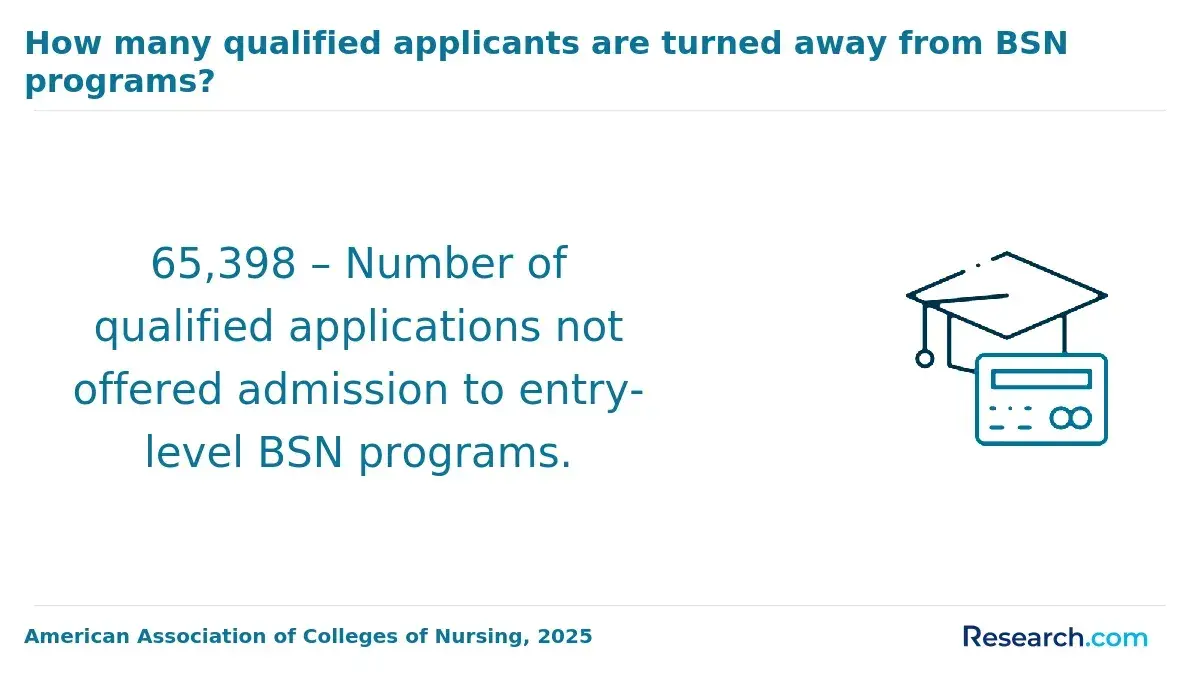
Utah nurses who already hold an RN license often face a practical decision: whether earning a BSN online is worth the time, tuition, and workload while continuing to work. The answer depends on your current credential, career goals, employer expectations, transfer credits, and whether the program is properly accredited. Utah, like the rest of the United States, is dealing with a nursing shortage (American Association of Colleges of Nurses, 2025; Worthen, 2025), but demand alone does not remove competition for preferred roles. Many hospitals and healthcare systems continue to value BSN-prepared registered nurses because the degree adds broader preparation in leadership, evidence-based practice, population health, informatics, and care coordination.
This guide focuses on online nursing programs Utah students and working RNs may consider, especially RN to BSN options. You will learn how nursing pathways work in Utah, what online RN to BSN programs typically cost, how long each credential can take, how to evaluate accreditation and quality, what career outcomes to compare, and which questions to ask before enrolling. If you are still comparing broader options, you may also want to review national RN to BSN programs online alongside Utah-based choices.
Quick Answer: Are Online RN to BSN Programs in Utah Worth Considering?
Yes, online RN to BSN programs in Utah can be a strong option for licensed RNs who want a bachelor’s degree without leaving the workforce. They are especially useful for ADN-prepared nurses seeking leadership roles, graduate school eligibility, stronger job competitiveness, or broader clinical and community health preparation. The best choice is an accredited program that fits your schedule, accepts transfer credits, supports working nurses, and aligns with your long-term career plan.
| Question | Practical answer |
| Who are online RN to BSN programs mainly for? | Licensed RNs who already hold an ADN or nursing diploma and want to complete a BSN. |
| Can a non-nurse enter an RN to BSN program directly? | Usually no. RN to BSN programs require an active RN license; non-nurses generally need a pre-licensure BSN, ADN, or accelerated nursing pathway first. |
| What is the estimated Utah RN to BSN cost range? | Online RN to BSN programs Utah residents consider can cost between $5,000 to $25,000, with cost per credit starting as low as $250 to $1000. |
| What accreditation should students check? | Look for nursing program accreditation from ACEN or CCNE, plus institutional accreditation and Utah licensure alignment when relevant. |
| What is the main benefit of the BSN? | A BSN can strengthen preparation for leadership, population health, evidence-based practice, graduate nursing study, and competitive RN roles. |
Best Online Nursing Programs in Utah Table of Contents
- Nursing pathways and licensure steps in Utah
- Career support resources for Utah nurses
- Typical cost of online nursing programs in Utah
- Timeline to become a nurse in Utah
- Whether an online degree can lead to nursing work in Utah
- Online Nursing Programs Utah Schools Offer for 2027
- How to judge online nursing program quality
- How RN to BSN programs differ from non-nurse pathways?
- Moving into nursing from a non-healthcare background in Utah
- Ways to improve nursing career opportunities in Utah
- How to stay aligned with Utah nursing license requirements
- Whether Utah is a good state for nursing
- Complementary healthcare roles to consider in Utah
- Advanced certifications for Utah nurses
- ADN to NP programs and career growth
- Program evaluation factors for Utah nursing students
- LVN pathways and nursing advancement in Utah
- Steps toward becoming a nurse practitioner in Utah
- Healthcare administration skills for nurses
- Nurse midwife career planning in Utah
- Ongoing professional development for Utah nurses
How to Become a Nurse in Utah
Utah offers several nursing entry points, and the right one depends on whether you want a fast path into patient care, RN licensure, a BSN completion route, or advanced practice authority. For someone still exploring terminology and degree value, it helps to first understand what a BSN can lead to in nursing and how it differs from an ADN, diploma, or graduate nursing credential.
The key distinction is this: LPN and RN pathways prepare students for different scopes of practice, while RN to BSN programs are completion programs for people who are already registered nurses. APRN and CRNA roles require graduate-level education, certification, and additional preparation beyond basic RN licensure.
| Utah nursing path | Typical starting point | Main exam or credential step | Best fit |
| Licensed Practical Nurse (LPN) | State-approved practical nursing program | NCLEX-PN | Students who want a shorter route into basic patient care under RN supervision. |
| Registered Nurse (RN) | Nursing diploma, ADN, or BSN | NCLEX-RN | Students who want broader clinical responsibility and direct RN practice. |
| RN to BSN | Active RN license plus prior ADN or diploma preparation | BSN completion requirements | Working RNs seeking bachelor’s-level preparation and career mobility. |
| Advanced Practice Registered Nurse (APRN) | RN license and graduate nursing education | Role-specific certification and state requirements | Nurses pursuing advanced diagnosis, treatment, and specialized care roles. |
| Certified Registered Nurse Anesthetist (CRNA) | RN license, critical care experience, and accredited nurse anesthesia education | National Certification Examination | RNs seeking anesthesia practice after advanced specialty training. |
Licensed Practical Nurse (LPN)
The LPN route is often the shortest nursing entry path. In Utah, aspiring LPNs generally complete a state-approved practical nursing program and then seek licensure by passing the required exam.
- Step 1: Finish an approved practical nursing program. These programs commonly take about a year and focus on foundational bedside care, medication support, vital signs, patient monitoring, and basic clinical judgment.
- Step 2: Pass the NCLEX-PN. After completing the program, graduates must pass the National Council Licensure Examination for Practical Nurses to qualify for LPN licensure.
- Step 3: Enter supervised practical nursing practice. Licensed LPNs typically provide direct patient care under RN or provider supervision in settings such as long-term care, clinics, rehabilitation, and other healthcare environments.
Registered Nurse (RN)
The RN pathway gives nurses a wider scope of clinical responsibility. Utah candidates may enter through a diploma, ADN, or BSN program, then complete licensure requirements.
- Step 1: Select an RN education route. Students may complete a nursing diploma, an associate degree in nursing, or a Bachelor of Science in Nursing from accredited RN programs in Utah. ADN-prepared RNs can later complete a BSN through traditional or online nursing programs Utah schools offer.
- Step 2: Pass the NCLEX-RN. Graduates must pass the National Council Licensure Examination for Registered Nurses before practicing as licensed RNs.
- Step 3: Start RN practice. Registered nurses assess patients, administer treatments, educate patients and families, coordinate care, document outcomes, and collaborate with interdisciplinary healthcare teams.
Advanced Practice Registered Nurse (APRN)
APRN roles include nurse practitioner, clinical nurse specialist, nurse anesthetist, and nurse midwife. These careers require graduate-level preparation and role-specific credentialing.
- Step 1: Complete graduate nursing education. Nurses typically pursue an MSN or DNP focused on the advanced role they plan to practice.
- Step 2: Earn the required certification. Certification requirements vary by APRN role and specialty, so candidates should confirm the correct certifying body before enrolling.
- Step 3: Practice at an advanced level. APRNs in Utah may diagnose, treat, and manage patients with greater autonomy, depending on their role, setting, and regulatory requirements.
Certified Registered Nurse Anesthetist (CRNA)
The CRNA pathway is an advanced specialty route for nurses who want to administer anesthesia and manage anesthesia-related care.
- Step 1: Build RN and critical care experience. Candidates first become RNs and gain experience in high-acuity or critical care nursing environments.
- Step 2: Complete an accredited nurse anesthesia program. Applicants should choose a program accredited by the Council on Accreditation of Nurse Anesthesia Educational Programs (COA).
- Step 3: Pass the certification exam. Graduates must pass the National Certification Examination to become Certified Registered Nurse Anesthetists.
Each pathway serves a different purpose. LPN programs can move students into nursing support roles sooner, ADN programs can lead to RN licensure, BSN programs add broader professional preparation, and graduate programs prepare nurses for advanced clinical authority. For working RNs, the online RN to BSN path is often the most practical next step because it builds on existing licensure rather than starting over.
Maintaining a Nursing License in Utah
Utah nurses must track renewal deadlines carefully because renewal timing depends on license type. A Utah RN license expires in odd years on January 31, while LPN licenses expire on January 31 of even years. The Division of Occupational and Professional Licensing (DOPL) sends renewal notices about 60 days before expiration. If a license has been inactive for less than two years, the nurse may renew online or in person, but a reinstatement fee applies in addition to the regular renewal fee.
Renewal applicants must also meet recent practice or continuing education requirements. Over the last 2 years, Utah nurses must document at least 400 hours of licensed practice, or at least 200 practice hours combined with 15 hours of approved continuing education. Another option is completing 30 hours of approved continuing education.
Utah also requires at least one online suicide prevention training for renewal applicants. Examples include Suicide Prevention (0.5 credit), Supporting Patients (0.5 credit), Collaborative Safety Planning (0.5 credit), or CALM-Utah (Counseling on Access to Lethal Means) (1 credit). Because requirements can change, nurses should verify current rules directly with DOPL before the renewal window. Some online nursing programs Utah institutions offer may also provide continuing education credits that support license renewal.
Why Many Working RNs Choose the BSN When They Can
A BSN is not the only way to become an RN, but it can make a meaningful difference in long-term career flexibility. Compared with shorter entry routes, BSN coursework usually includes more depth in leadership, research interpretation, community and population health, healthcare policy, informatics, quality improvement, and evidence-based practice. Those areas matter because modern nursing is not limited to bedside tasks; nurses increasingly coordinate care across systems, use health data, educate patients, and participate in quality and safety initiatives.
The BSN can also serve as a bridge to graduate study. Nurses who plan to pursue an MSN, DNP, nurse practitioner preparation, nursing leadership, education, or specialized advanced roles often find that earning the BSN first creates a clearer academic pathway. That is why bridge options, including the best LPN to BSN programs and RN to BSN programs, remain popular among nurses who want upward mobility without losing credit for prior training.
Career Support Resources for Nurses in Utah
Choosing a nursing program is only one part of career planning. Utah nurses can also use professional associations, school-based career services, state workforce resources, loan assistance programs, and job boards to find opportunities, maintain credentials, and build professional networks.
- Utah Nurses Association (UNA): UNA can help nurses connect with peers, follow state policy issues, access continuing education, and participate in professional advocacy.
- Utah Nurse Practitioners (UNP): This organization is especially relevant for APRNs and nurses planning advanced practice careers because it supports leadership development, mentorship, certification awareness, and professional networking.
- University career services: Schools such as the University of Utah and Southern Utah University commonly offer resume help, interview preparation, job-search support, and employer connections for nursing students and graduates.
- Utah Workforce Services: This state employment resource connects healthcare professionals with openings in hospitals, clinics, community health organizations, and other care settings across Utah.
- Loan forgiveness and tuition assistance programs: Programs such as the National Health Service Corps (NHSC) and Utah's Rural Health Loan Forgiveness Program may support nurses who commit to qualifying underserved or rural areas.
- Online nursing communities and job boards: Platforms such as Nurse.com and Utah-focused job boards can help nurses monitor hiring trends, compare roles, and connect with other professionals.
What Is the Typical Cost of Online Nursing Programs Utah Schools Offer?
For students asking how much nursing school costs on average, the answer depends heavily on the type of program. For online RN to BSN programs Utah residents may choose, Research.com estimates a total cost between $5,000 to $25,000. Cost per credit can start as low as $250 to $1000. The final amount depends on tuition model, fees, transfer credits, residency rules, enrollment pace, and whether the school charges separate online learning fees.
Transfer credit is one of the biggest cost variables. An RN who enters with many accepted ADN credits may need fewer remaining credits than a student whose prior coursework does not transfer cleanly. Some schools may also evaluate professional certifications or prior learning, which can reduce the number of required courses. Before comparing sticker prices, ask each program for a degree audit showing exactly how many credits you would still need to complete.
If cost is the deciding factor, compare program totals, not only cost per credit. A lower per-credit rate can still become expensive if more credits are required. Students with tight budgets should also compare affordable RN to BSN online programs with Utah-based options to see whether an out-of-state online program offers better overall value.
| Cost factor | Why it matters | Question to ask before enrolling |
| Accepted transfer credits | More accepted credits can reduce the number of courses you pay for. | Can I receive a written transfer evaluation before I commit? |
| Per-credit tuition | Programs may charge different rates for in-state, out-of-state, and online students. | Is the listed rate the full online rate for my residency status? |
| Required credits | Total cost depends on both price and the number of credits needed. | How many credits will I personally need to graduate? |
| Fees and materials | Technology fees, books, background checks, and clinical-related expenses can add cost. | What expenses are not included in tuition? |
| Employer tuition support | Some healthcare employers help working nurses pay for BSN completion. | Does my employer reimburse tuition, and does this program qualify? |
Scholarships, Grants, and Financial Aid
Scholarships and grants can lower out-of-pocket costs, but students need to apply early and read eligibility rules carefully. Institutional scholarships may be tied to enrollment status, GPA, residency, nursing level, or financial need. External scholarships may prioritize current RNs, rural healthcare commitments, professional association membership, or service in underserved areas.
In addition to school-based aid, students can check opportunities from professional and nonprofit organizations. The Utah Nurses Association provides scholarship information for nursing students. Because award availability and deadlines can change, contact the financial aid office of each school you are considering and ask for RN to BSN-specific funding options.
Do not assume the cheapest listed program is automatically the best financial decision. The better value may be the program that accepts the most credits, lets you continue working, has strong student support, and helps you finish without extending your timeline unnecessarily.
How Long Does It Take to Become a Nurse in Utah?
The timeline depends on the credential. Shorter pathways can prepare students for entry-level nursing support, while RN and advanced practice roles require more education, exams, and clinical preparation. Working adults should also account for part-time enrollment, prerequisite courses, transfer evaluation delays, and clinical scheduling.
- Licensed Practical Nurse (LPN). An LPN pathway in Utah typically starts with a state-approved practical nursing program that generally takes about one year. After completing the program, candidates pass the National Council Licensure Examination for Practical Nurses (NCLEX-PN). This route can be completed in approximately 1 year.
- Registered Nurse (RN). RN candidates can choose several educational routes. An Associate Degree in Nursing usually takes around two to three years, while a Bachelor of Science in Nursing takes about four years. After graduation, candidates must pass the National Council Licensure Examination for Registered Nurses (NCLEX-RN). Depending on the route, becoming an RN may take 2 to 4 years.
- Certified Registered Nurse Anesthetist (CRNA). Future CRNAs first become RNs and gain critical care nursing experience. They then complete an accredited nurse anesthesia program, which typically takes around two to three years, and pass the National Certification Examination. The CRNA stage takes approximately 2 to 3 years following RN licensure.
- Advanced Practice Registered Nurse (APRN). APRN preparation varies by role. Nurses generally complete an MSN or DNP program, which usually takes two to three years, followed by certification and licensure requirements. The approximate time to become an APRN is four to six years.
Can You Become a Nurse in Utah With an Online Degree?
Yes, but the answer depends on the kind of online program. Online RN to BSN programs are usually designed for people who are already licensed RNs, so they do not replace the clinical training and licensure steps required for initial RN practice. Pre-licensure nursing programs, by contrast, must include supervised clinical experiences even if some coursework is online.
Utah State University offers a fully online BSN option for registered nurses who want to complete the bachelor’s degree. The University of Utah also offers an online RN-BS program for licensed RNs. These programs are examples of online completion pathways rather than direct-entry nursing programs for people without RN licensure.
Why Accreditation Should Be Nonnegotiable
Students should verify that an online nursing program is accredited by a recognized nursing accreditor such as the Accreditation Commission for Education in Nursing (ACEN) or the Commission on Collegiate Nursing Education (CCNE). Accreditation signals that the curriculum, faculty, outcomes, and program operations have been reviewed against recognized standards. It can also affect employer acceptance, graduate school eligibility, and, for pre-licensure programs, licensure readiness.
How Online Quality Shows Up in Practice
A strong online nursing program is not just a set of recorded lectures. Look for experienced nursing faculty, clear communication channels, accessible advising, technology support, evidence-based assignments, meaningful projects connected to clinical practice, and transparent outcomes. For working RNs, the best programs make expectations clear before classes begin so students can balance shifts, family responsibilities, and deadlines.
Online Nursing Programs Utah Schools Offer for 2027
The following online RN to BSN programs in Utah were selected by Research.com using factors such as accessibility, faculty reputation, student outcomes, and networking opportunities. This list focuses on RN to BSN options for licensed registered nurses and should not be read as a list of accelerated or direct-entry programs for non-nurses.
| School | Program length | Credits | Cost information listed | Accreditation |
| Utah State University | 2 to 4 semesters | 31 | $712.01 (in-state); $382 (out-of-state online) | Accreditation Commission of Education in Nursing (ACEN) |
| Western Governors University | 2 years | 30 | $4,885 per semester | Commission on Collegiate Nursing Education (CCNE) |
| Southern Utah University | 10-12 months | 30 | $300 per credit | Commission on Collegiate Nursing Education (CCNE) |
| Utah Tech University | 12-18 months | 25 | $7,650 to $10,200; $255 per credit | Commission on Collegiate Nursing Education (CCNE |
| University of Utah | 12-18 months | 30 | $260 (in-state); $900 (out-of-state) | Commission on Collegiate Nursing Education (CCNE) |
1. Utah State University RN to BSN Program
Utah State University offers a fully online BSN completion program for registered nurses who want a flexible route to bachelor’s-level nursing education. The program is built for working RNs and extends prior associate degree preparation into professional nursing practice, population health, evidence-based care, health informatics, aging adult care, advanced health assessment, leadership, management and policy, healthcare trends, and a Capstone experience. Students can move through the program in two, three, or four semesters depending on their preferred pace.
- Program length: 2 to 4 semesters
- Tracks/concentrations: None
- Annual Tuition: $712.01 (in-state); $382 (out-of-state online)
- Required Credits to Graduate: 31
- Accreditation: Accreditation Commission of Education in Nursing (ACEN)
2. Western Governors University RN to BSN Program
Western Governors University offers an online RN to BSN program for practicing RNs who hold an ADN or nursing diploma. The curriculum builds on previous nursing education and work experience while emphasizing research, theory, leadership, community concepts, healthcare policy, therapeutic interventions, and current healthcare trends. The program is aligned with the Essentials of Baccalaureate Education for Professional Nursing Practice from the American Association of Colleges and Nursing and is designed to connect applied nursing knowledge with broader theoretical and policy preparation.
- Program length: 2 years
- BSN Certificates: Genetics and Genomics, Palliative Care, Evidence-Based Practice, Protection of Human Subjects in Research, Cultural Competence, Quality and safety, Wellness, Sexual Orientation and Gender Identity Nursing
- Cost per Semester: $4,885
- Required Credits to Graduate: 30
- Accreditation: Commission on Collegiate Nursing Education (CCNE)
3. Southern Utah University RN to BSN Program
Southern Utah University provides an online RN to BSN option for RNs who want a flexible and comparatively quick completion route. The CCNE-accredited program can be finished in as few as 10 months and includes coursework in evidence-based practice, leadership, ethics, communication, and diversity. Graduates are prepared to apply BSN-level knowledge in care for individuals, families, groups, and communities across a range of healthcare settings.
- Program length: 10-12 months
- Tracks/concentrations: None
- Cost per Credit: $300
- Required Credits to Graduate: 30
- Accreditation: Commission on Collegiate Nursing Education (CCNE)
4. Utah Tech University RN to BSN Program
Utah Tech University offers an online RN to BSN program for registered nurses who want to complete a bachelor’s degree while continuing their careers. The curriculum is designed around the increasing complexity of healthcare and prepares RNs for expanded clinical and leadership responsibilities. Because the coursework is fully online, students do not need to travel to the St. George Campus.
- Program length: 12-18 months
- Tracks/concentrations: None
- Total Tuition Cost: $7,650 to $10,200; $255 (per credit)
- Required Credits to Graduate: 25
- Accreditation: Commission on Collegiate Nursing Education (CCNE
5. University of Utah RN to BSN Program
The University of Utah’s online RN to BSN program is designed for licensed RNs who want a flexible BSN completion path. Students may complete the degree over two, three, or four semesters, depending on pace. The program is online except for one required attendance day each semester, which supports interactive learning and faculty connection. Students may also pursue Geriatric Nursing Leadership or prepare for future graduate study.
- Program length: 12-18 months
- Tracks/concentrations: Geriatric Nursing Leadership
- Cost per Credit: $260 (in-state); $900 (out-of-state)
- Required Credits to Graduate: 30
- Accreditation: Commission on Collegiate Nursing Education (CCNE)
How to Evaluate the Quality of Online Nursing Programs in Utah
The strongest online nursing program is not simply the cheapest or fastest. It is the one that is accredited, transparent, academically rigorous, realistic for your schedule, and aligned with your career goal. Before applying, confirm the program type: RN to BSN, pre-licensure BSN, ADN, LPN, MSN, DNP, or certificate. Each one serves a different student.
Start with accreditation. Nursing program accreditation from ACEN or CCNE is a major quality marker. Then review outcomes, faculty qualifications, student support, transfer policies, clinical expectations, and employer reputation. If you plan to advance beyond the BSN, also ask whether graduates are regularly admitted to MSN, DNP, or nurse practitioner programs in Utah.
| Quality factor | What to verify | Why it matters |
| Program accreditation | ACEN or CCNE recognition for the nursing program | Supports credibility, employer confidence, and future academic mobility. |
| Institutional legitimacy | School accreditation and authorization to serve online students | Protects students from programs that may not be recognized. |
| Transfer credit policy | How ADN, diploma, prior coursework, and certifications are evaluated | Determines cost, timeline, and remaining credits. |
| Support for working nurses | Advising, flexible pacing, online access, faculty response times | Helps students stay enrolled while managing shifts and family responsibilities. |
| Career outcomes | Graduate feedback, employer connections, advancement support | Shows whether the program helps students move toward practical goals. |
Also ask whether any required practicum, project, or in-person component can be completed near your location. Even fully online RN to BSN programs may require community-based projects, capstones, or occasional campus attendance.
How Online RN to BSN Programs Support ADN-Prepared RNs and Career Changers
Online RN to BSN programs are designed primarily for licensed registered nurses, not for people with no nursing background. If you are an RN with an associate degree or diploma, these programs can help you convert prior nursing preparation into a BSN through upper-division coursework. If you are not yet a nurse, you should look for pre-licensure ADN, BSN, or accelerated options rather than an RN to BSN completion program. For broader information about nursing routes for students without a nursing background, compare online RN programs for non nurses carefully and confirm whether they actually lead to initial licensure.
For current RNs, the most useful RN to BSN features usually include flexible schedules, asynchronous coursework, transfer-credit review, faculty access, leadership-focused assignments, and projects that connect directly to current practice settings.
- Flexible scheduling: Online delivery can make BSN completion more realistic for nurses working shifts, managing family responsibilities, or living far from campus.
- Faculty and advising support: Strong programs give students clear academic planning, responsive instructors, and help navigating course sequencing.
- Career advancement preparation: BSN coursework can support movement into charge nurse roles, case management, public health, quality improvement, graduate school, or specialty practice.
- Stronger professional positioning: A BSN may improve competitiveness for employers or roles that prefer bachelor’s-prepared nurses, although it does not guarantee a specific salary or promotion.
Transitioning Into Nursing From a Non-Healthcare Background in Utah
If you do not already hold an RN license, an RN to BSN program is usually not the correct starting point. Career changers with a non-healthcare degree generally need a pre-licensure pathway that includes nursing fundamentals, supervised clinical experiences, and eligibility for the NCLEX-RN. Some students choose an ADN first, while others pursue a traditional BSN or an accelerated nursing program if they already have a bachelor’s degree in another field.
1. Choosing the Right Entry Route as a Non-Nurse
Start by asking one question: “Will this program make me eligible for RN licensure?” If the answer is no, it may still be valuable academically, but it will not get you into RN practice. Non-nurses should compare prerequisites, clinical placement support, licensure eligibility, admission selectivity, cost, and schedule format before selecting a program.
Online coursework can be part of a non-nurse pathway, but nursing cannot be learned entirely through remote study. Skills labs, simulations, and supervised clinical practice are essential. Before enrolling, confirm where clinicals occur, who arranges placements, and whether the program meets Utah requirements.
2. Career Paths for BSN Graduates in Utah
BSN-prepared nurses in Utah may work in direct care, coordination, education, leadership, research support, and community health roles. Common paths include:
- Registered Nurse (RN): Provide care in hospitals, clinics, long-term care, home health, and other settings.
- Nurse Educator: Support student nurses or staff development in academic or healthcare environments.
- Case Manager: Coordinate patient services, transitions of care, and treatment plans.
- Clinical Research Nurse: Support clinical trials, participant care, documentation, and research protocols.
3. Lower-Stress Nursing Roles to Compare
Some nurses prefer settings with more predictable schedules, less emergency intensity, or narrower patient acuity. These jobs are not stress-free, but they may feel more manageable for certain personalities and life stages.
- School Nurse: Provides health support and basic care in educational settings.
- Clinic Nurse: Works in outpatient care, often with scheduled appointments and routine follow-up.
- Telehealth Nurse: Supports patients remotely by phone or video.
- Public Health Nurse: Focuses on prevention, education, outreach, and community health programs.
For a deeper comparison, see Research.com’s guide to the easiest nursing jobs to get. Use that type of resource as a starting point, but remember that job stress depends on employer, staffing, patient population, schedule, and personal fit.
4. Financial Support for Career Changers
Career changers should ask schools about scholarships, grants, employer partnerships, federal aid eligibility, and payment plans. Because non-nurse pathways can require prerequisites and clinical hours, the total cost may differ significantly from an RN to BSN completion program. Get a written estimate that includes tuition, fees, books, supplies, uniforms, exams, background checks, immunizations, and travel to clinical sites.
How Can I Maximize My Career Opportunities as a Nurse in Utah?
Career growth in Utah nursing is strongest when education, credentials, experience, and networking point in the same direction. A BSN can support movement into broader roles, but nurses should also build specialty experience, pursue relevant certifications, maintain licensure on time, and develop leadership and communication skills. If you are still mapping the early pathway, review the steps in how to become an RN in Utah.
- Choose a specialty intentionally. Critical care, emergency, pediatrics, geriatrics, public health, case management, and perioperative nursing all require different strengths.
- Document accomplishments. Track quality projects, committee work, precepting, charge experience, and measurable patient-care contributions.
- Use professional networks. Associations, alumni groups, employer committees, and mentors can lead to roles that are not obvious from job boards alone.
- Prepare for graduate study early. If you want NP, nurse midwife, CRNA, or leadership roles, choose BSN electives and experiences that support that direction.
How Can I Ensure Compliance With Utah's Nursing License Requirements?
Utah nurses should treat licensure compliance as an ongoing professional responsibility, not a last-minute renewal task. Keep records of practice hours, continuing education, required suicide prevention training, renewal notices, and any name or address changes. Review official requirements regularly and compare them with guidance from nursing license requirements in Utah so you do not miss deadlines or documentation rules.
Before paying for a continuing education course, confirm that it is approved for Utah renewal purposes. If you move states or work across state lines, ask DOPL how your license status, compact privileges, or endorsement rules apply to your situation.
Is Utah Good for Nursing?
Utah can be a good state for nursing education and employment, but the decision is not one-dimensional. The state offers quality nursing programs, including online nursing programs Utah RNs can use for BSN completion. Healthcare growth also creates demand for skilled nurses. At the same time, pay, staffing strain, and competition for preferred roles should be part of your decision.
Utah has faced a nursing shortage like many other states. One estimate shows nearly 3,000 unfilled RN positions in the state (Utah Hospital & Health Care Association, n.d.).
Every year, there will be an average of 189,100 job openings. That outlook suggests opportunity for RNs, but opportunity does not automatically solve retention challenges. Pay remains a major factor.
Today, RNs in Utah earn 12% below the national average, with an average salary of $72,790 (Incredible Health, 2026). That is lower than average annual RN salaries reported for neighboring states such as Nevada ($102,280), Colorado ($96,650), and Arizona ($95,230), where it is higher than the national average (Nurse.org, 2026). For this reason, Utah may be attractive for education, lifestyle, and local healthcare opportunities, but nurses should compare compensation, cost of living, employer benefits, staffing ratios, schedule expectations, and advancement options before committing long term.
Should I Explore Complementary Healthcare Roles in Utah?
Complementary healthcare training can be useful if it supports your nursing goal rather than distracting from it. For example, learning administrative, clinical support, or allied health skills may help nurses understand workflow, documentation, patient intake, and interdisciplinary care. Programs such as medical assistant programs in Utah may be relevant for people exploring healthcare before committing to nursing or for professionals who want broader clinical operations knowledge.
For licensed nurses, however, complementary training should not replace higher-value nursing credentials if your goal is RN advancement. Compare the return on time and cost: a BSN, specialty certification, MSN, or leadership training may be more directly tied to nursing progression than an unrelated healthcare credential.
What Can I Do With a BSN Degree in Utah?
A BSN can support several nursing career directions in Utah. It may help RNs compete for hospital roles, prepare for supervisory responsibilities, qualify for graduate programs, or move into specialties requiring stronger academic preparation. Salary outcomes vary by employer, experience, schedule, region, and role, so the figures below should be used as comparison points rather than guarantees.
Registered Nurse (RN)
BSN-prepared RNs provide patient assessment, care planning, medication administration, patient education, care coordination, and collaboration with healthcare teams. They may work in hospitals, clinics, long-term care, home health agencies, and community settings. The BSN can be especially useful for roles that require leadership potential, quality improvement participation, or broader population health knowledge.
- Average salary: $79,590 (-14% below national average)
Nurse Manager
Nurse managers oversee nursing teams, coordinate staffing, support policy implementation, monitor care quality, and help create safer work environments. This role requires clinical credibility plus communication, budgeting, conflict resolution, and leadership skills. A BSN can be a foundation for nurse management, though some employers may prefer or require graduate education for higher-level leadership.
- Average salary: $113,806 (+12% above national average)
Advanced Practice Registered Nurse (APRN)
A BSN can also be the academic bridge toward advanced practice. Nurses who want to become nurse practitioners, clinical nurse specialists, nurse anesthetists, or nurse midwives typically need graduate study such as an MSN, an online nursing master degree, or a DNP. APRN roles can involve advanced assessment, diagnosis, treatment, prescribing responsibilities, and specialized patient management depending on the role and regulatory requirements.
- Average salary: $128,617 (+14% above national average)

Is an Online RN to BSN Program Right for You?
An online RN to BSN program is most appropriate if you are already licensed as an RN, want to keep working, and can manage independent coursework. The experience differs from what to expect in your first year of traditional nursing school because online BSN completion programs often focus less on initial bedside skill acquisition and more on professional development, leadership, community health, evidence-based practice, and capstone work.
| Choose an online RN to BSN if... | Consider another route if... |
| You already hold an RN license and want bachelor’s-level completion. | You are not yet a nurse and need initial RN licensure. |
| You need flexibility because you work shifts or have family responsibilities. | You learn best through frequent in-person structure and live classroom interaction. |
| Your employer prefers or rewards BSN preparation. | Your career goal requires a different credential, such as an MSN, DNP, or certificate. |
| You are comfortable using online learning platforms and managing deadlines. | You lack reliable internet, quiet study time, or the ability to keep a consistent schedule. |
Before enrolling, be honest about your time. Online does not mean easy. You still need dedicated weekly study blocks, comfort with digital platforms, strong writing skills, and the ability to complete assignments without daily reminders. If your work schedule changes often, ask whether the program offers part-time pacing or multiple start dates.
Can Advanced Certifications Enhance My Nursing Career in Utah?
Advanced certifications can help nurses show focused expertise in areas such as critical care, pediatrics, emergency care, oncology, case management, informatics, or leadership. They are most valuable when they match your current role or the next role you want. A nursing certificate may also help nurses document specialized preparation, but it should be evaluated for accreditation, recognition, cost, and relevance to employer requirements.
Certification alone does not guarantee a promotion or salary increase. Its value depends on whether Utah employers in your target specialty recognize the credential and whether you also have the clinical experience to support it.
Can ADN to NP Programs Elevate My Nursing Career?
ADN-prepared RNs who want advanced practice may consider bridge routes that move them toward graduate nursing preparation. These pathways can combine BSN-equivalent coursework with MSN-level study, depending on the school structure. They are demanding, but they may be efficient for experienced RNs who already know they want advanced clinical responsibilities.
When comparing ADN to NP programs, look closely at admission requirements, clinical hour expectations, specialty tracks, certification eligibility, state authorization, and whether the program supports placement in Utah. The right bridge program should connect your RN experience with advanced assessment, pharmacology, diagnosis, patient management, and leadership preparation.
Which Factors Should I Consider When Evaluating Nursing Programs in Utah?
When comparing accredited nursing schools in Utah, focus on fit and outcomes rather than reputation alone. Accreditation, clinical access, faculty quality, student support, technology, cost transparency, transfer credits, and licensure alignment matter more than a school’s name by itself.
- Accreditation: Confirm nursing program accreditation and institutional recognition.
- Licensure alignment: Make sure pre-licensure programs meet Utah requirements and RN to BSN programs are designed for licensed RNs.
- Clinical or practice requirements: Ask where hands-on components, projects, or practicums take place.
- Faculty experience: Review whether instructors have relevant clinical, leadership, or specialty backgrounds.
- Student support: Compare advising, tutoring, library access, technology help, and career services.
- Total cost: Include tuition, fees, supplies, books, exams, and lost work time.
- Program pace: Choose a timeline that you can complete without burnout.
Should I Consider LVN Pathways for Advancing My Nursing Career in Utah?
LVN and LPN pathways can provide a faster entry into practical nursing, but they are not the same as RN or BSN preparation. They may be appropriate if you want to enter healthcare sooner, build patient-care experience, and later bridge into RN or BSN study. Before choosing this route, compare accreditation, clinical quality, transfer options, and long-term mobility. For Utah-specific steps, see how to become an LVN nurse in Utah.
What Steps Should I Take to Become a Nurse Practitioner in Utah?
To become a nurse practitioner, start by confirming your current credential level. ADN-prepared RNs may need a bridge pathway, while BSN-prepared nurses can usually compare BSN to NP, MSN, or DNP options. The program should include advanced assessment, pharmacology, pathophysiology, diagnosis, specialty coursework, and supervised clinical experience. For a full pathway overview, review how to become a nurse practitioner in Utah.
Before enrolling, ask whether the program’s specialty track leads to the certification exam you need and whether it supports clinical placement in Utah. Clinical placement can be one of the biggest barriers in online NP education, so clarify responsibilities early.
How Can Expanding Into Healthcare Administration Benefit My Nursing Career?
Healthcare administration skills can help nurses move beyond bedside care into operations, documentation, compliance, revenue cycle awareness, quality improvement, and leadership. Nurses who understand both clinical care and administrative systems may be better prepared for charge nurse, case management, utilization review, clinic coordination, or management roles.
If you are interested in the administrative side of healthcare, learning how to become a medical biller and coder in Utah can clarify how documentation, coding, billing, and reimbursement connect to patient care delivery. This path is most useful when it supports a larger nursing leadership or operations goal.
How Can Pursuing a Nurse Midwife Career Influence My Professional Trajectory in Utah?
Nurse midwifery is an advanced practice path focused on reproductive health, prenatal care, labor and birth, postpartum care, and patient education. It requires graduate-level nursing education, supervised clinical preparation, and national certification. Nurses drawn to women’s health, community-based care, and long-term patient relationships may find this specialty meaningful.
Because the pathway is specialized, confirm requirements before selecting a program. Research.com’s guide on how to become a nurse midwife in Utah explains the credentialing steps and role considerations in more detail.
What Ongoing Professional Development Options Are Available for Nurses in Utah?
Professional development helps Utah nurses stay current with clinical standards, licensure requirements, evidence-based practice, patient safety expectations, and technology changes. Options may include continuing education courses, specialty certifications, employer workshops, leadership programs, mentorship, professional conferences, and academic bridge programs.
Development should match your career stage. A new LPN may focus on basic clinical confidence and RN bridge planning; an RN may pursue BSN completion or specialty certification; a BSN-prepared nurse may prepare for leadership or graduate study. For an entry-level pathway overview, explore how to become an LPN in Utah.
Common Mistakes to Avoid When Choosing an Online Nursing Program in Utah
- Assuming every online nursing program leads to RN licensure: RN to BSN programs usually require an existing RN license and do not prepare non-nurses for the NCLEX-RN.
- Skipping accreditation checks: Always verify ACEN or CCNE nursing program accreditation and institutional legitimacy before applying.
- Comparing only tuition: Total cost also includes required credits, fees, supplies, books, travel, and possible lost work hours.
- Ignoring transfer credit rules: A program that accepts more prior credits may be cheaper and faster even if its listed tuition is higher.
- Overloading your schedule: Online programs require steady work. Choose a pace that fits your shifts and personal responsibilities.
- Assuming salary outcomes are guaranteed: A BSN can improve career positioning, but pay depends on employer, role, location, experience, and specialty.
- Failing to ask about clinical or project requirements: Even online programs may include community-based work, capstones, or occasional in-person attendance.
Questions to Ask Before Enrolling
- Is this program for licensed RNs, pre-licensure students, LPNs, or graduate nursing students?
- Is the nursing program accredited by ACEN or CCNE?
- How many of my existing credits will transfer, and can I get that in writing?
- What is the full estimated cost, including fees and materials?
- Can I complete requirements while working full time or part time?
- Are any campus visits, clinical projects, or in-person sessions required?
- What student support is available for online learners?
- Does the program prepare me for my next step, such as leadership, MSN admission, NP study, or specialty certification?
- How does the school support career planning, networking, and job search preparation?
- What happens if I need to pause or reduce my course load?
Key Insights
- Online RN to BSN programs are best for licensed RNs: They are completion pathways for ADN- or diploma-prepared registered nurses, not direct-entry programs for people with no nursing background.
- Utah offers flexible BSN completion options: Several Utah schools provide online RN to BSN programs with timelines ranging from 10-12 months to 2 years or 2 to 4 semesters.
- Accreditation should come first: Prioritize programs accredited by ACEN or CCNE and verify that the school is properly recognized before committing tuition dollars.
- Cost depends heavily on transfer credits: Research.com estimates online RN to BSN programs Utah residents consider can cost between $5,000 to $25,000, but your personal cost depends on accepted credits, fees, and pace.
- A BSN can improve career flexibility: The degree can support leadership, graduate study, specialty practice, population health, and stronger job competitiveness, though it does not guarantee a specific promotion or salary.
- Utah has opportunity and trade-offs: The state faces nursing workforce demand, including nearly 3,000 unfilled RN positions by one estimate, but RN pay is reported as 12% below the national average.
- Choose by fit, not speed alone: The right program is accredited, affordable for your situation, realistic with your work schedule, transparent about requirements, and aligned with your next nursing goal.
Related Articles for Nearby States
- 2027 Best Online Nursing Programs in Nevada – Accredited RN to BSN Programs
- 2027 Best Online Nursing Programs in Arizona – Accredited RN to BSN Programs
- 2027 Best Online Nursing Programs in Idaho – Accredited RN to BSN Programs
- 2027 Best Online Nursing Programs in Wyoming – Accredited RN to BSN Programs
- 2027 Best Online Nursing Programs in Colorado – Accredited RN to BSN Programs
- 2027 Best Online Nursing Programs in New Mexico – Accredited RN to BSN Programs
- 2027 Best Online Nursing Programs in California: Accredited RN to BSN Programs
- 2027 Best Online Nursing Programs in Montana – Accredited RN to BSN Programs
- 2027 Best Online Nursing Programs in Oregon – Accredited RN to BSN Programs
- 2027 Best Online Nursing Programs in Washington: Accredited RN to BSN Programs
References:
- Carson-Newman. (2025). By the Numbers: Nursing Statistics 2025. https://onlinenursing.cn.edu/news/nursing-by-the-numbers
- HRSA. (2025). 2024 National Sample Survey of Registered Nurses. https://bhw.hrsa.gov/data-research/access-data-tools/national-sample-survey-registered-nurses
- NCSBN. (2025). 2024 National Nursing Workforce Study. https://www.ncsbn.org/workforce
- Nightingale College. (2024). Nursing Shortage: 2026 US Statistics. https://nightingale.edu/blog/nursing-shortage-by-state.html
- U.S. Bureau of Labor Statistics. (2025). Occupational Outlook Handbook: Registered Nurses. https://www.bls.gov/ooh/healthcare/registered-nurses.htm
Other Things You Should Know About Online Nursing Programs in Utah
In 2027, Utah offers several excellent online RN to BSN programs. Some of the top choices include those at the University of Utah, Utah Valley University, and Weber State University. These programs are known for their flexibility, accredited curriculum, and a strong focus on developing advanced nursing skills.
Yes, there are various financial aid options for online nursing programs in Utah. Students can explore federal financial aid, scholarships specific to the nursing field, and programs offered by individual institutions. It's important to check each university's financial aid office for the most current and comprehensive options.
Admission to Utah's online RN to BSN programs typically requires an active RN license, a diploma or associate degree in nursing, and a minimum GPA, often around 2.5–3.0. Applicants might also need to meet specific coursework requirements in subjects like anatomy or microbiology.
Yes. Most Utah RN to BSN programs require an active, unencumbered registered nurse license in Utah or a compact state before enrollment or clinical coursework. Applicants must also hold an associate degree or diploma in nursing and meet the school’s transfer-credit rules.
Utah's online RN to BSN programs typically require stable internet access and the use of digital learning platforms like Blackboard or Canvas. Students may need specific software, such as Microsoft Office and video conferencing tools, essential for coursework and collaboration.