2027 Is Nursing School Worth It?

Co-Founder and Chief Data Scientist
Choosing nursing school is really a decision about time, money, stamina, and long-term career fit. A nursing degree can lead to stable healthcare roles, direct patient care, strong advancement options, and specialized paths such as nurse practitioner, nurse midwife, nurse anesthetist, nurse educator, or research nurse. It can also involve difficult coursework, clinical pressure, licensing requirements, irregular schedules, and emotional strain.
This guide is for prospective nursing students, career changers, licensed practical nurses considering an RN pathway, associate-degree nurses comparing RN-to-BSN options, and registered nurses thinking about graduate study. It explains what nursing school includes, how much it can cost, what nurses can earn, how long different pathways take, what to look for in a school, and when nursing may or may not be the right investment.
Quick Answer: Is Nursing School Worth It?
For many students, nursing school is worth it if they want a licensed healthcare career with direct patient impact, multiple work settings, and advancement routes through BSN, MSN, DNP, and specialty certification pathways. The return depends on the program’s cost, accreditation, licensure outcomes, clinical quality, your state’s requirements, and your tolerance for demanding academic and clinical work.
The career outlook is one reason students continue to consider nursing. Jobs for registered nurses are projected to grow by 8% from 2024 to 2034, and registered nurses in the United States earn an average annual wage of $89,010. However, those benefits should be weighed against tuition, fees, books, clinical expenses, exam costs, and the physical and emotional demands of the profession.
What are the benefits of getting into a nursing school?
- Nursing remains a high-demand field, with registered nurse employment projected to increase by 8% from 2024 to 2034.
- A nursing credential can open doors in hospitals, long-term care facilities, private practices, outpatient clinics, public agencies, schools, home health, and other healthcare environments.
- Registered nurses in the United States earn an average annual wage of $89,010, though actual pay varies by role, location, degree level, specialization, employer, and experience.
What Should You Expect from Nursing School?
Nursing school combines science-heavy classroom learning with skills labs, simulation, and supervised clinical practice. Students typically study anatomy, physiology, pharmacology, pathophysiology, disease processes, nursing theory, ethics, communication, public health, and patient assessment. The academic load can be intense because students must learn both the science behind care and the judgment required to apply it safely.
The schedule is often more rigid than many other majors. A typical week may include lectures, lab checkoffs, simulation sessions, clinical rotations, care plans, exams, and patient documentation assignments. Clinical placements expose students to different patient populations, acute and chronic illness, recovery, family dynamics, and end-of-life situations. That experience can strengthen empathy and resilience, but it can also be emotionally difficult.
The goal is not only to memorize content. Nursing school is designed to help students think clinically, communicate clearly, prioritize care, recognize changes in patient condition, administer medication safely, document accurately, and work as part of an interdisciplinary healthcare team.
Where Can Nursing Graduates Work?
Nursing graduates can work in many parts of the healthcare system. Hospitals are a common starting point, with opportunities in acute care, chronic care, pediatrics, cardiology, labor and delivery, emergency care, surgery, and other units. Nurses may also work in community clinics, public health programs, home health agencies, school health offices, rehabilitation centers, nursing facilities, and private medical practices.
Experienced nurses can also move into less traditional roles, including travel nursing, military nursing, clinical research, nursing education, legal nurse consulting, case management, informatics, quality improvement, and telehealth. The best setting depends on your preferred pace, patient population, schedule, risk tolerance, and long-term advancement goals.
| Work setting | What nurses commonly do | Who may prefer it |
| Hospitals | Provide acute care, monitor patients, administer medications, coordinate care, and respond to changing conditions. | Students who want fast-paced clinical experience and exposure to multiple specialties. |
| Community and public health | Support prevention, health education, screenings, outreach, and care coordination. | Nurses interested in population health, education, and prevention-focused work. |
| Home health | Care for patients in their homes, manage chronic conditions, educate families, and coordinate with providers. | Nurses who prefer one-on-one care and more independent fieldwork. |
| Schools and clinics | Provide routine care, triage concerns, support wellness programs, and manage health records. | Nurses looking for community-based patient care and potentially more predictable schedules. |
| Research, education, legal, or telehealth roles | Support studies, teach, review cases, advise patients remotely, or apply clinical knowledge outside bedside care. | Experienced nurses seeking alternatives to physically demanding bedside roles. |
How Much Can You Make with a Nursing Degree?
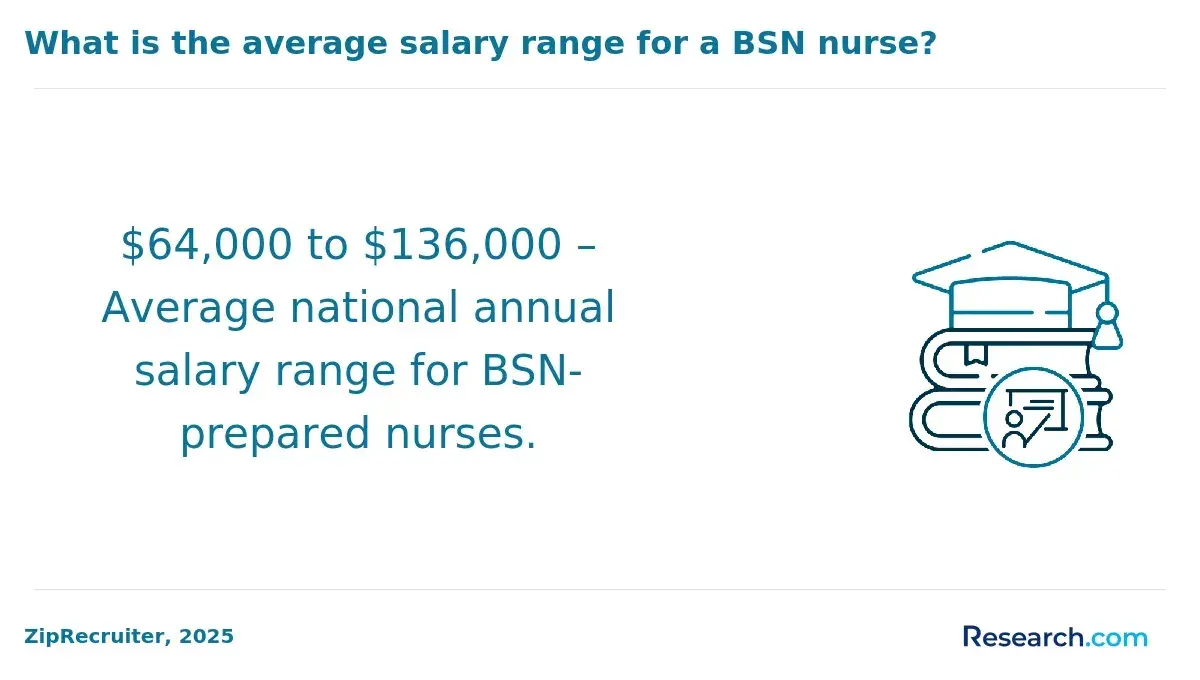
Nursing pay depends heavily on credential level, location, employer type, shift, specialty, and experience. Across nursing roles, the average annual salary range cited here is $55,860 to $205,770. Registered nurses earn an average of $89,010 per year, or $42.80 per hour, while the annual median pay for RNs is $ 81,220.
Licensed practical nurses and licensed vocational nurses earn a median of $54,620 per year, or $26.26 per hour. Advanced practice registered nurses, including certified registered nurse anesthetists, nurse midwives, and nurse practitioners, earn a median annual salary of $125,900, or $60.53 per hour.
Compensation may also include benefits such as health insurance, continuing education support, 401(k) plans, accidental death and dismemberment insurance, paid time off, and other employer-sponsored benefits. These benefits can affect the total value of a nursing job, so students should not evaluate salary alone.
| Nursing role | Education level commonly required | Pay information cited |
| Licensed Practical Nurse / Licensed Vocational Nurse | LPN or LVN program and state licensure | Median of $54,620 per year, or $26.26 per hour |
| Registered Nurse | Diploma, ADN, or BSN, plus RN licensure | Average of $89,010 per year, or $42.80 per hour; annual median pay of $ 81,220 |
| Advanced Practice Registered Nurse | Graduate nursing education, certification, and state authorization | Median annual salary of $125,900, or $60.53 per hour |
Nursing School Guide Table of Contents
- Why pursue a degree in a nursing school?
- Is the career outlook after nursing school worth it?
- What courses are typically included in a nursing school program?
- What are the pros and cons of enrolling in a nursing school?
- How much does a nursing school cost?
- What career paths are available for nursing school graduates?
- What are the requirements for a career in nursing?
- How long does it take to finish nursing school?
- What prerequisites should I complete before enrolling in nursing school?
- Could an RN to BSN online fast-track program accelerate my career?
- How can bridge programs accelerate my nursing career?
- How does accreditation impact the quality of nursing education?
- Can online FNP programs offer a flexible and affordable pathway to advanced practice nursing?
- What are the emerging trends shaping nursing education?
- How do nursing schools support job placement and career success?
- What challenges can I expect in an online RN to BSN program?
- How do I choose the best nursing school?
- What are the financial aid options for students enrolling in nursing school?
- What Are Career Advancement Options After Earning a Nursing Degree?
- What are the key differences between nursing school and other healthcare degree programs?
- What are the opportunities for non-nurses to transition into nursing?
2027 Best Nursing Schools
How do we rank schools?
Research.com evaluates nursing programs because choosing a school affects cost, clinical preparation, licensure readiness, and career opportunities. A strong ranking should help students compare programs using reliable information rather than marketing claims alone.
The list below highlights 10 nursing schools in the U.S. based on research and data analysis aligned with Research.com’s established methodology. Data sources include the IPEDS database, Peterson’s database, including the Distance Learning Licensed Data Set, the College Scorecard database, and the National Center for Education Statistics.
1. Duke University
Duke University School of Nursing offers programs at multiple levels, including Accelerated Bachelor of Science in Nursing, Master of Science in Nursing, Doctor of Nursing Practice, Doctor of Philosophy in Nursing, and specialty certificates. Its MSN and DNP options include specialization tracks, and students use a simulation lab accredited by the Society for Simulation in Healthcare and the Council for Accreditation of Healthcare Simulation Programs.
- Location: Durham, NC
- Type of Institution: Private
- Nursing Programs Offered: Accelerated BSN, MSN, DNP, PhD in Nursing, Specialty Certificates
- Tuition: Undergraduate cost per semester: $25,258 | Graduate cost per credit hour: $2,075
- Accreditation: Commission on Collegiate Nursing Education (CCNE), Council on Accreditation of Nurse Anesthesia Educational Programs (COA)
2. Johns Hopkins University
Johns Hopkins School of Nursing focuses on graduate nursing education and emphasizes interprofessional learning, research, service, and practice. Its programs prepare students for leadership in patient care, community health, and global health settings.
- Location: Baltimore, MD
- Type of Institution: Private
- Nursing Programs Offered: Pre-Licensure MSN, MSN, DNP, PhD/DNP Dual Degree, PhD in Nursing, and Post-Master’s Certificate
- Tuition: MSN: $1,881 per credit | PhD and DNP: $1,900-$2,400 per credit
- Accreditation: CCNE, COA
3. New York University
Founded in 1932, New York University Rory Meyers College of Nursing is the second-largest private university college of nursing in the country. Its undergraduate and graduate programs are designed to prepare nurses for clinical practice, leadership, and lifelong professional development.
- Location: New York, NY
- Type of Institution: Private
- Nursing Programs Offered: BS, MS, DNP, and PhD
- Tuition: Per credit hour (undergraduate): $1,844.00 | Per credit hour (graduate): $2,308
- Accreditation: CCNE, Accreditation Commission for Midwifery Education (ACME), Pediatric Nursing Certification Board (PNCB)
4. University of Pennsylvania
University of Pennsylvania School of Nursing offers undergraduate, accelerated, master’s, and doctoral nursing options. Penn Nursing combines scientific coursework, clinical learning, faculty research, and leadership preparation for students pursuing roles as clinicians, scientists, policymakers, and health leaders.
- Location: Philadelphia, PA
- Type of Institution: Private
- Nursing Programs Offered: BSN, Master of Professional Nursing (MPN), MSN, DNP, and PhD in Nursing
- Tuition: Undergraduate tuition for the 2024-2025 academic year is approximately $61,200, while graduate cost per course unit ranges from $6,300 to $7,500.
- Accreditation: CCNE, COA, ACME
5. Emory University
Emory University’s Nell Hodgson Woodruff School of Nursing provides undergraduate, graduate, dual-degree, and continuing education pathways. The school connects students with clinical learning opportunities, faculty expertise, healthcare partnerships, and programs that support nursing leadership and scholarship.
- Location: Atlanta, GA
- Type of Institution: Private
- Nursing Programs Offered: BSN, MSN, DNP, PhD, Dual-degree, and Continuing Education Programs
- Tuition: Undergraduate: $2,497 per credit hour | Graduate: $1,900 to $2,100 per credit hour
- Accreditation: CCNE, COA, ACME
6. University of Alabama at Birmingham
The UAB School of Nursing offers undergraduate and graduate programs that prepare students for practice, scholarship, education, and leadership in patient-centered healthcare. Its curriculum includes nursing and professional coursework intended to build clinical judgment and care competence.
- Location: Birmingham, AL
- Type of Institution: Public
- Nursing Programs Offered: BSN, MSN, DNP, PhD, Dual DNP-PhD, Post-Graduate Certificate, and Accelerated Programs
- Tuition: Undergraduate in-state tuition per semester hour: $434 Undergraduate out-of-state tuition per semester hour: $1,076 Graduate in-state tuition per semester hour: $595 Graduate out-of-state tuition per semester hour: $1,461
- Accreditation: CCNE, COA, ACME
7. University of North Carolina at Chapel Hill
The University of North Carolina at Chapel Hill’s School of Nursing offers undergraduate and graduate nursing programs designed around clinical learning, innovation, scientific inquiry, and leadership in the nursing profession.
- Location: Chapel Hill, NC
- Type of Institution: Public
- Nursing Programs Offered: BSN, MSN, DNP, PhD
- Tuition: Undergraduate tuition per credit hour (resident): $292.46 Undergraduate tuition per credit hour (non-resident): $1,556.67 Graduate tuition per credit hour (resident): $1,019.57 Graduate tuition per credit hour (non-resident): $2,035.79
- Accreditation: CCNE
8. University of Washington
The University of Washington School of Nursing offers undergraduate and graduate nursing degrees for students preparing to lead evidence-based healthcare improvements. The university also supports faculty, clinicians, and students through seven centers of excellence.
- Location: Seattle, WA
- Type of Institution: Public
- Nursing Programs Offered: BSN, ABSN, DNP, PhD, Graduate Certificates
- Tuition: BSN (resident): $4,215 per quarter | BSN (non-resident): $13,999 per quarter ABSN: $12,416 per quarter DNP: $982 per credit PhD (resident): $7,062 per quarter | PhD (non-resident): $12,296 per quarter
- Accreditation: CCNE, ACME, PNCB
9. University of Michigan Ann Arbor
University of Michigan Ann Arbor’s School of Nursing offers undergraduate and graduate nursing programs that emphasize innovation, persistence, clinical skill, public service, and leadership in healthcare.
- Location: Ann Arbor, MI
- Type of Institution: Public
- Nursing Programs Offered: BSN, MSN, DNP, PhD
- Tuition: Undergraduate (resident): $1,066 per credit | Undergraduate (non-resident): $2,768 Graduate (resident): $1,908 per credit | Graduate (resident): $3,488
- Accreditation: CCNE, Accreditation Commission for Education in Nursing (ACEN), ACME
10. Boston College
The William F. Connell School of Nursing at Boston College offers undergraduate and graduate nursing programs for students pursuing clinical, educational, scientific, and leadership roles in local and global healthcare.
- Location: Chestnut Hill, MA
- Type of Institution: Private
- Nursing Programs Offered: BSN, MSN, DNP, and PhD
- Tuition: Cost per credit: Undergraduate: $1,018 | Graduate: $1,726
- Accreditation: CCNE
How to Use Nursing School Rankings Wisely
Rankings can narrow your search, but they should not replace program-level due diligence. A highly ranked school may still be too expensive, too far away, too competitive, or poorly matched to your preferred specialty. A less famous accredited program may offer stronger local clinical partnerships or a better schedule for working students.
| Factor to check | Why it matters | Question to ask |
| Accreditation | Accreditation affects licensure eligibility, financial aid access, transferability, and employer confidence. | Is the nursing program accredited by a recognized nursing accreditor? |
| Clinical placements | Clinical quality shapes your readiness for patient care and licensure exams. | Where do students complete rotations, and who arranges them? |
| NCLEX-RN outcomes | Licensure exam preparation is essential for RN practice. | What are the most recent first-time pass rates? |
| Total cost | Tuition is only part of the expense. | What are the full costs for fees, uniforms, equipment, exams, books, travel, and clinical requirements? |
| Schedule format | Program structure affects completion for working adults and caregivers. | Are courses full-time, part-time, hybrid, online, evening, or accelerated? |
Here’s What Graduates Have to Say About Their Degrees from Nursing Schools
-
: "
Completing an online nursing program while managing work and family responsibilities was challenging, but the flexible format made it possible. Watching patients improve during my first clinical rotation reminded me why the long study nights mattered. Elena
"
-
: "
I expected online learning to feel lonely, but the class chats, virtual study groups, simulations, and responsive faculty helped me feel connected. The convenience did not mean I had to give up community. Michael
"
-
: "
My online nursing program connected me with classmates from across the country and let me replay lectures when I needed extra time with difficult material. Those relationships continued after graduation and became a support system in practice. Aisha
"
Key Findings
- More than 200,000 RN job openings are projected each year from 2024 to 2034, while 33,700 openings are projected for advanced practice registered nurses.
- Nursing offers multiple advancement routes because students can continue into higher degrees, bridge programs, graduate specializations, and professional certifications.
- A licensed practical nurse pathway can take about one year, and LPNs can later use bridge programs to pursue RN preparation without restarting their education from the beginning.
- Demand for healthcare professionals, including nurses and nurse practitioners, is influenced in part by the country’s aging population and workforce.
- Earning a BSN from a private institution can cost you $26,000 to $32,900.
Why Pursue a Degree in a Nursing School?
Nurses do far more than complete tasks at the bedside. They assess patients, monitor changes, educate families, coordinate with physicians and allied health professionals, advocate for safe care, and apply evidence-based practice. In some specialties, such as when a nutrition nurse supports diet-related care, nurses also provide targeted patient education tied to health goals and disease management.
The need for nurses is shaped by several factors, including an older population, workforce aging, burnout, and safety concerns in clinical environments. One cited demographic detail shows that 49.5% of the male and 50.5% of the female population in the United States are 65 or older. Additional potential reasons for nursing shortage include an aging workforce, nurse burnout, and violence in healthcare settings.
Nursing can be worth pursuing for students who want a practical healthcare role with strong human impact. It is also a field with paths into some of the highest paying jobs in the medical field, especially for nurses who advance into graduate-level practice or specialized roles. The trade-off is that nursing requires clinical accountability, emotional maturity, and consistent professional development.
Is the Career Outlook After Nursing School Worth It?
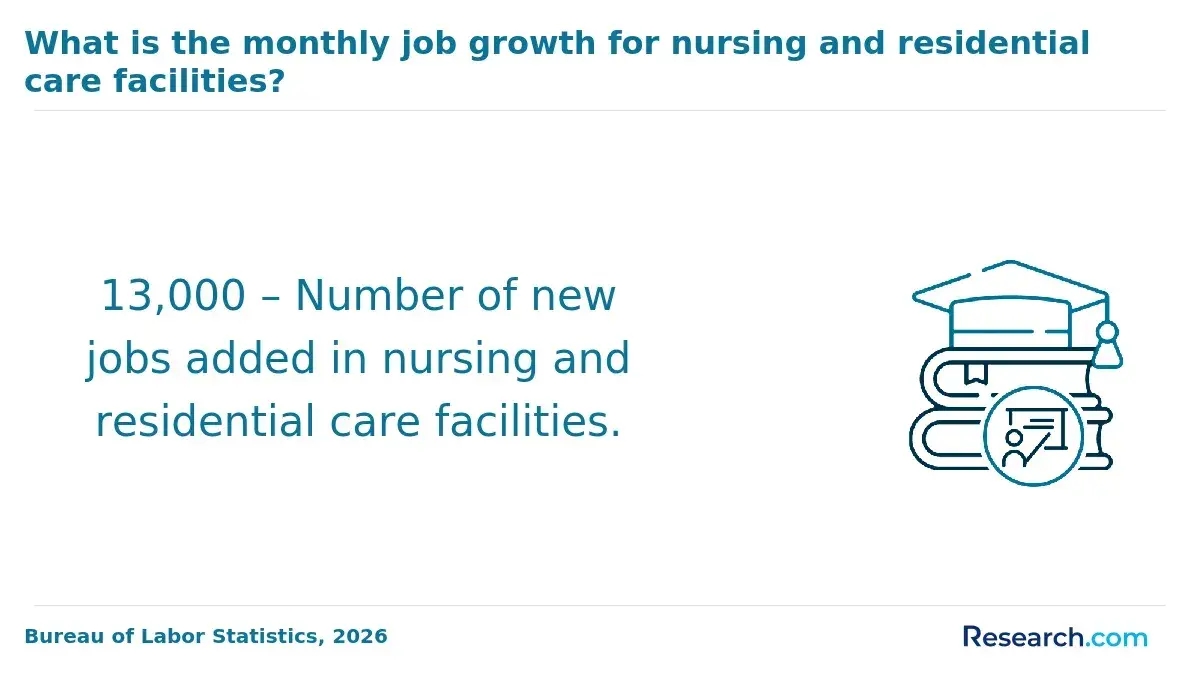
The job outlook is one of the strongest arguments for nursing school, especially for students who want a licensed profession with broad employer demand. According to the U.S. Bureau of Labor Statistics, registered nurse employment is projected to grow 8% from 2024 to 2034, with an estimated 203,700 job openings projected each year during that period.
Licensed practical nurse employment is projected to grow by 4%, with about 51,000 openings. Employment for nurse anesthetists, nurse midwives, and nurse practitioners is projected to grow 36%, with about 31,200 openings.
For students asking whether they should go to nursing school, these figures point to a favorable labor market. Still, no degree guarantees a specific salary or job. Your outcome depends on licensure, clinical performance, location, specialty, employer demand, and willingness to work shifts that many healthcare organizations need covered.
Nursing school is demanding, and the profession can be physically and emotionally taxing. For students who want healthcare work but are unsure about bedside care, it may be wise to compare nursing with other options before enrolling. If you are already in college and thinking about changing direction, review how credits may move by learning how to transfer colleges.
What Courses Are Typically Included in a Nursing School Program?
Nursing programs are built around both scientific knowledge and clinical decision-making. Students learn how the body works, how illness changes normal function, how medications affect patients, how to communicate with patients and families, and how to deliver care within legal and ethical boundaries.
The curriculum also develops leadership, documentation, patient advocacy, cultural awareness, safety practices, and collaboration with interdisciplinary teams. In that sense, the training is rigorous and structured, similar to how other health careers require sequenced preparation; students comparing medical pathways may also review the steps to becoming a pediatrician.
Foundational Science Courses
- Anatomy and Physiology. Students study body systems, structure, function, and how disease affects normal processes.
- Microbiology and Immunology. Coursework introduces microorganisms, infection control, immune response, and disease prevention.
- Pharmacology. Students learn medication classes, mechanisms of action, dosage safety, side effects, and administration principles.
- Pathophysiology. This course explains how disease disrupts body systems and affects patient health.
- Chemistry and Biochemistry. Students examine chemical principles that support biological processes and medication interactions.
Core Nursing Courses
- Nursing Fundamentals. This course introduces basic nursing care, communication, safety, assessment, and patient-centered practice.
- Medical-Surgical Nursing. Students learn care strategies for common adult medical and surgical conditions.
- Maternal-Child Health. Coursework covers prenatal, perinatal, postpartum, newborn, and child-focused care.
- Mental Health Nursing. Students study psychiatric conditions, therapeutic communication, crisis response, and mental health interventions.
- Public Health Nursing. This course focuses on community health, prevention, education, and population-based care.
- Ethics and Legal Issues in Nursing. Students examine consent, scope of practice, patient rights, confidentiality, and professional accountability.
Many programs also offer electives in areas such as geriatrics, oncology, pain management, research, or specialty care. Clinical rotations are required in supervised healthcare settings, including hospitals, clinics, and community agencies, so students can apply classroom learning to real patient care.
What Are the Pros and Cons of Enrolling in a Nursing School?
Nursing school can lead to meaningful work, but it is not an easy path. Students should evaluate the benefits and drawbacks before committing money, time, and emotional energy to a program.
| Potential advantage | What it means for students |
| Job opportunities and stability | Nursing has a favorable outlook, and a license can qualify graduates for work across many healthcare settings. |
| Competitive salary and benefits | Many nursing roles offer solid compensation, especially with experience, advanced degrees, and specialty credentials. |
| Specialization options | Nurses can focus on areas such as pediatrics, mental health, obstetrics, oncology, geriatrics, anesthesia, or family practice. |
| Advancement potential | Further education can lead to leadership, advanced practice, education, research, informatics, or administrative roles. |
| Direct patient impact | Nurses often play a central role in patient comfort, safety, education, recovery, and advocacy. |
| Potential drawback | Why it matters |
| Physical and emotional strain | Nurses may work long shifts, lift or reposition patients, handle urgent situations, and support people in distress. |
| Burnout risk | Repeated exposure to suffering, staffing pressure, and high-stakes decisions can affect well-being. |
| Irregular hours | Many roles require nights, weekends, holidays, or rotating schedules, especially in hospitals. |
| Ongoing learning | Nurses must keep up with changing practice standards, technology, evidence, and continuing education requirements. Flexible online nursing degree programs can help some working nurses continue their education. |
| High education costs | Tuition, books, equipment, exams, transportation, and clinical requirements can create financial pressure. |
How Much Does Nursing School Cost?
Nursing school cost can change the value of the degree. Students should calculate the full price of attendance, not just tuition. Common expenses include application fees, tuition, student fees, textbooks, uniforms, background checks, immunizations, drug screenings, supplies, transportation to clinical sites, exam preparation, and licensure fees.
A two-year course from a public college can cost around $16,100. A four-year course can cost $26,000 for in-state students and $32,900 for out-of-state students. Private universities can charge $55,800. A master’s degree program can cost $12,394 at public universities and $28,445 at private universities.
| Program type or institution category | Cost figure cited | What to verify before enrolling |
| Two-year course from a public college | Around $16,100 | Whether the estimate includes fees, books, supplies, clinical expenses, and exam costs. |
| Four-year course for in-state students | $26,000 | State residency rules, tuition increases, and program-specific fees. |
| Four-year course for out-of-state students | $32,900 | Whether out-of-state tuition can be reduced through residency, scholarships, or reciprocity. |
| Private universities | $55,800 | Net price after institutional grants and scholarships. |
| Master’s degree at public universities | $12,394 | Credit load, clinical placement costs, and graduate fees. |
| Master’s degree at private universities | $28,445 | Total program cost and employer tuition assistance options. |
What Career Paths Are Available for Nursing School Graduates?
- Registered Nurse. Registered nursing is one of the most common careers for BSN degree holders, and associate-degree graduates may also qualify after meeting licensure requirements. RNs assess patients, create care plans, administer medications, educate families, document care, and collaborate with healthcare teams. They may work in hospitals, clinics, nursing homes, home health, pediatrics, obstetrics, neonatal care, labor and delivery, and other specialties.
- Nurse Practitioner. Nurse practitioners complete advanced education, usually through an MSN or DNP pathway. Depending on state rules and certification, NPs may diagnose conditions, treat illnesses, prescribe medications, order tests, interpret results, and deliver primary or specialty care.
- Nurse Anesthetist. Certified registered nurse anesthetists provide anesthesia care during surgical and procedural services. They monitor patients, manage pain, support safety during anesthesia, and collaborate with surgeons, anesthesiologists, and other clinicians. Nurse anesthesia is generally pursued through graduate nursing education.
- Nurse Midwife. Nurse midwives provide care related to pregnancy, childbirth, postpartum recovery, reproductive health, gynecology, family planning, and women’s health across the lifespan. They may work in hospitals, birthing centers, clinics, or private practice settings.
- Nurse Educator. Nurse educators teach future nurses or provide continuing education for practicing nurses. They may develop curriculum, supervise clinical learning, evaluate student performance, and train nurses in healthcare organizations. MSN, PhD in Nursing, or DNP preparation may support this path.
- Research Nurse. Research nurses support clinical trials and studies by coordinating protocols, collecting data, monitoring participants, maintaining compliance, and contributing to evidence-based nursing practice.
What Are the Requirements for a Career in Nursing?
A nursing career requires education, supervised clinical preparation, licensure, and often ongoing certification or continuing education. The exact route depends on whether you plan to become an LPN/LVN, RN, or advanced practice nurse.
Education. Students may compare diploma vs. ADN vs. BSN pathways depending on their goals, timeline, cost limits, and employer expectations. A bachelor’s degree can prepare graduates to apply for licensure exams and may support broader advancement options.
Licensure. Nurses must meet state licensing requirements before practicing. Because licensure requirements vary by state, students should confirm expectations with the appropriate nursing regulatory body.
Clinical Experience. Nursing programs include supervised clinical practice, and work experience can strengthen future graduate school applications. Some MSN and DNP programs require applicants to document a specific amount of clinical experience before admission.
Specialty and Certification. Nurses who want roles in areas such as family practice, psychiatric nursing, gerontology, oncology, or pediatrics may need additional education, experience, and certification. The American Nurses Credentialing Center lists certification programs for nurses pursuing specialty credentials. Students preparing for RN practice should also plan for the NCLEX-RN; the passing rate for US-educated first-time takers is 79.9%.
How Long Does It Take to Finish Nursing School?
The time required for nursing school depends on the credential and whether you study full-time, part-time, online, in person, or through a bridge format. Students should also account for prerequisite courses, admission cycles, clinical scheduling, exam preparation, and licensure processing.
| Pathway | Typical time cited | Best fit |
| LPN certification program | Around one year | Students who want a faster entry into practical nursing and may later bridge into RN education. |
| Associate Degree in Nursing | Around two years | Students seeking an RN pathway with a shorter academic timeline than a traditional BSN. |
| Bachelor of Science in Nursing | Four years | Students who want broader undergraduate preparation and possible access to more advancement routes. |
| LPN-to-RN bridge | Associate’s degree in one year instead of two, or BSN in two years years instead of four | LPNs who want to build on existing training and move toward RN practice. |
| MSN | 18 months to three years | RNs pursuing advanced clinical, leadership, education, or specialty roles. |
| Doctorate in nursing | One to two years for students who already hold a master’s degree | Nurses seeking doctoral-level practice, leadership, or scholarly preparation. |
LPNs who want to move into registered nursing may consider LPN-to-RN programs. These bridge options let licensed practical nurses use prior training and experience instead of starting completely over.
After RN preparation, nurses comparing advanced clinical careers may examine physician assistant vs. NP pathways. MSN programs often focus on specialty roles such as nurse practitioner preparation, while doctoral nursing programs may support advanced practice, leadership, and systems-level work.
What Prerequisites Should I Complete Before Enrolling in Nursing School?
Most nursing programs expect applicants to complete foundational coursework before entering the professional nursing sequence. Common prerequisite areas include biology, chemistry, and mathematics, along with other school-specific requirements. These courses help students prepare for anatomy, physiology, pharmacology, pathophysiology, and clinical reasoning.
Online preparatory options may help students complete required coursework while managing work, family, and cost concerns. Students looking for lower-cost prerequisite options can compare the cheapest online nursing prerequisites. Before enrolling, confirm that the target nursing program will accept the credits and that the coursework meets grade, lab, and recency requirements.
Could an RN to BSN Online Fast-Track Program Accelerate My Career?
An RN-to-BSN fast-track program can be useful for licensed registered nurses who already hold an ADN or diploma and want to earn a bachelor’s degree without leaving the workforce for a traditional campus program. These programs typically focus on leadership, evidence-based practice, community health, health assessment, nursing research, and professional development.
The main advantage is flexibility, but speed should not be the only factor. Compare accreditation, clinical or practicum expectations, transfer credit policies, faculty access, writing support, and employer tuition assistance. To explore accelerated options, review the RN to BSN online fast-track pathway.
How Can Bridge Programs Accelerate My Nursing Career?
Bridge programs are designed for nurses who already have a credential and want to move to the next level without repeating unnecessary coursework. Examples include LPN-to-RN, RN-to-BSN, ADN-to-MSN, and other structured advancement routes.
For experienced nurses, a bridge program can shorten the academic path and connect prior clinical experience with higher-level coursework. Pathways such as ASN to FNP may help nurses move from associate-degree preparation toward advanced family nurse practitioner training, with emphasis on evidence-based practice, assessment, diagnostics, and leadership.
How Does Accreditation Impact the Quality of Nursing Education?
Accreditation is one of the most important checks when evaluating nursing schools. It signals that a program has been reviewed for curriculum quality, faculty qualifications, student support, clinical preparation, and educational standards. It can also affect access to federal financial aid, graduate school admission, transfer credit, and licensure eligibility.
Students should verify both institutional accreditation and nursing program accreditation. Do not rely only on a school’s website language; confirm status with the accrediting agency and the state nursing board. Prospective students interested in historically black colleges and universities can compare accredited options through What is the best HBCU for nursing?.
Can Online FNP Programs Offer a Flexible and Affordable Pathway to Advanced Practice Nursing?
Online family nurse practitioner programs may help working nurses pursue advanced practice education while reducing commuting or relocation barriers. These programs often combine online coursework with clinical placements, simulation activities, faculty advising, and digital learning tools.
Flexibility does not remove the need for careful review. Students should confirm accreditation, state authorization, clinical placement support, certification preparation, tuition, fees, and required campus visits. To compare lower-cost options, review the cheapest online FNP programs.
What Are the Emerging Trends Shaping Nursing Education?
Nursing education is changing as healthcare delivery changes. Programs are increasingly using virtual simulation, telehealth training, digital learning platforms, remote mentoring, and interdisciplinary learning to prepare students for modern practice environments. These tools can strengthen preparation, but they do not replace the need for supervised clinical experience.
Accelerated graduate pathways are also drawing attention from nurses who want to advance quickly. For example, students comparing doctoral options may research a 1 year DNP program online. Before choosing an accelerated program, verify workload, accreditation, clinical expectations, state authorization, and whether the format is realistic with your work schedule.
How Do Nursing Schools Support Job Placement and Career Success?
Career support can make a meaningful difference, especially for students entering nursing for the first time. Strong nursing schools may offer resume reviews, mock interviews, employer events, alumni networks, faculty references, clinical partner connections, job boards, and guidance on licensure documentation.
Ask schools for current job placement information, employer relationships, clinical placement sites, and graduate outcomes. Some applicants also compare admissions accessibility through resources on colleges with the easiest nursing programs, but admissions ease should never be the only factor. A program must still prepare you for safe practice and licensure.
What Challenges Can I Expect in an Online RN to BSN Program?
Online RN-to-BSN programs can be convenient, but they require discipline. Students must manage readings, writing assignments, discussion boards, exams, group projects, and sometimes practicum or community health requirements while continuing to work as nurses.
Common difficulties include balancing shifts with deadlines, learning unfamiliar technology, staying motivated without in-person structure, and adjusting to evidence-based writing or leadership coursework. Before enrolling, review student support, technology requirements, faculty response times, tutoring, writing help, and course pacing. For a closer look, read How difficult is an RN to BSN program?.
How Do I Choose the Best Nursing School?
The best nursing school is not automatically the most famous or expensive one. It is the accredited program that fits your career goal, budget, schedule, learning style, clinical needs, and licensure requirements.
- Confirm accreditation. Make sure the institution and nursing program hold recognized accreditation. This affects licensure, financial aid, graduate study, and employer recognition.
- Review the curriculum. Check whether the program covers nursing theory, clinical skills, patient assessment, pharmacology, pathophysiology, ethics, public health, and hands-on practice.
- Evaluate clinical experiences. Ask where rotations happen, how placements are assigned, which specialties are available, and whether students must find their own sites.
- Check licensure exam pass rates. NCLEX-RN outcomes help indicate whether the program prepares students for entry-level RN licensure.
- Inspect learning resources. Look for simulation labs, clinical skills facilities, tutoring, advising, library access, technology support, and career services.
- Compare schedule flexibility. Students who work or care for family may need part-time, evening, hybrid, or online options.
- Calculate total cost. Include tuition, fees, supplies, transportation, clinical requirements, exam fees, lost wages, and loan interest.
| Common mistake | Better approach |
| Choosing a school based only on ranking | Use rankings as a starting point, then verify accreditation, cost, clinical quality, and outcomes. |
| Looking only at tuition | Calculate the full cost of attendance, including clinical expenses and licensure preparation. |
| Assuming all online programs meet state requirements | Confirm state authorization and licensure eligibility with the school and state nursing board. |
| Ignoring transfer credit rules | Ask how prior credits are evaluated and whether science prerequisites expire. |
| Assuming salary outcomes are guaranteed | Use wage data as a guide, but account for geography, employer, specialty, shifts, and experience. |
| Skipping NCLEX-RN outcome review | Ask for recent first-time pass rates and how the program supports exam preparation. |
What Are the Financial Aid Options for Students Enrolling in Nursing School?
Nursing school can be expensive, but students may reduce out-of-pocket costs through federal, state, institutional, employer, and nursing-specific aid. Always begin with the school’s financial aid office and verify eligibility before assuming aid will apply to your program.
- Federal Grants and Loans. Need-based federal grants such as the Pell Grant generally do not require repayment unless you withdraw before completing the program. Federal Direct Subsidized Loans are need-based, with the government paying interest while you are in school and during deferment periods. Federal Direct Unsubsidized Loans are available regardless of financial need, with interest accruing from the time of borrowing. Parents of dependent undergraduate students with good credit histories may use the Federal PLUS Loan.
- State and Institutional Grants and Scholarships. Many states offer need-based and merit-based aid for nursing students. Colleges and universities may also provide nursing scholarships, grants, or tuition discounts, so contact the program’s financial aid office early.
- Nursing-Specific Scholarships and Programs. Professional nursing associations, hospitals, healthcare systems, and community organizations may offer scholarships or tuition support for nursing students.
- Work-Study. Federal work-study can allow eligible students to work part-time on campus or with approved employers to help pay educational expenses.
What Are Career Advancement Options After Earning a Nursing Degree?
Licensure is often the beginning of a nursing career, not the endpoint. Nurses can advance by gaining experience, earning certifications, completing higher degrees, moving into leadership, or shifting into specialty practice.
Graduate education such as an MSN or DNP can lead to advanced roles including nurse practitioner, clinical nurse specialist, nurse anesthetist, nurse midwife, educator, or healthcare leader. These roles may provide more autonomy, higher responsibility, and stronger earning potential, depending on state rules and employer needs.
Specialty certification can also help nurses stand out in areas such as oncology, pediatrics, geriatrics, psychiatric nursing, and other focused practice areas. Certification requirements vary, so nurses should review experience requirements, exam content, renewal rules, and continuing education expectations.
Not every advancement path requires more bedside intensity. Nurses who want less physically demanding work may consider education, research, telehealth, informatics, case management, quality improvement, legal nurse consulting, or administrative roles. For options that may offer a different balance of workload and impact, review easiest nursing jobs.
Continuing education remains essential because nursing practice changes as medical evidence, technology, policy, and patient needs evolve. Workshops, graduate certificates, online courses, and employer training can help nurses stay current and qualify for new opportunities.
What Are the Key Differences Between Nursing School and Other Healthcare Degree Programs?
Nursing school is distinct because it prepares students for direct licensed patient care through a combination of classroom instruction, simulation, skills labs, and clinical rotations. Students learn to assess patients, administer medications, document care, prioritize interventions, and communicate with families and providers.
Other healthcare programs may emphasize different professional outcomes. Psychology programs, for example, often focus more heavily on behavioral science, research methods, assessment, and counseling-related foundations, while many clinical psychology roles require graduate education and licensure beyond the bachelor’s level.
A BSN typically takes four years to complete, after which graduates can begin working as registered nurses after passing the NCLEX-RN. By contrast, many other healthcare fields require longer graduate study before independent clinical practice. Students comparing healthcare-related majors can review is a psychology degree worth it for another view of education paths and career outcomes.
What Are the Opportunities for Non-Nurses to Transition into Nursing?
Career changers without a nursing background may enter the field through accelerated or second-degree nursing pathways. These programs are often designed for students who already hold a bachelor’s degree in another field and want to move into registered nursing more quickly than through a traditional four-year route.
Accelerated BSN programs are intensive and may allow eligible students to complete nursing preparation in 12 to 18 months, depending on the school. Graduates can then become eligible to sit for the NCLEX-RN if they meet program and state requirements.
Some programs offer online coursework combined with in-person clinical placements, which may help working adults or caregivers manage the transition. Before enrolling, confirm accreditation, clinical placement support, state authorization, prerequisite requirements, and NCLEX-RN preparation. To compare options, review the best online nursing programs for non nurses.
Transitioning into nursing can be rewarding, but it is not a shortcut around rigor. Non-nurses should be prepared for compressed coursework, intensive clinical expectations, and a steep learning curve in patient care.
References
- AACN. (2025). 2024-2025 Enrollment and Graduations in Baccalaureate and Graduate Programs in Nursing. https://www.aacnnursing.org/news-data/all-news/schools-of-nursing-enrollment-increases
- NCSBN. (2025). 2024 National Nursing Workforce Study. https://www.ncsbn.org/workforce
- U.S. Bureau of Labor Statistics. (2026). The Employment Situation. https://www.bls.gov
- College Ave. (2025). BSN Nurse Salary: What Graduates Can Expect to Earn. https://www.collegeave.com
Key Insights
- Nursing school is most likely to be worth it for students who want licensed, patient-facing healthcare work and are prepared for rigorous science courses, clinical rotations, licensing exams, and emotionally demanding care environments.
- Accreditation, NCLEX-RN pass rates, clinical placement quality, state licensure eligibility, and total program cost matter more than school reputation alone.
- Program length varies widely: an LPN program can take around one year, an ADN around two years, a BSN four years, an MSN 18 months to three years, and a doctorate in nursing one to two years for students who already hold a master’s degree.
- Salary potential improves with credential level and specialization, but pay is not guaranteed. Location, employer, shift, experience, and specialty all affect earnings.
- Online and bridge programs can make advancement more accessible, but students must verify accreditation, clinical requirements, transfer policies, state authorization, and support services before enrolling.
- The smartest nursing school decision is not “which program is best overall?” but “which accredited program gives me the safest path to licensure, manageable debt, strong clinical preparation, and the career role I actually want?”
Other Things You Should Know About Nursing Schools
In 2027, U.S. nursing students can access a variety of clinical training opportunities including placements in hospitals, community health settings, and telehealth. Schools are also increasingly incorporating advanced simulation labs to provide hands-on experience in a controlled environment, preparing students for diverse healthcare settings.
Most prelicensure nursing programs require about 500 to 1,000 supervised clinical hours before graduation, but the exact total varies by state board and program type. Accelerated BSN and ADN programs must still meet their state board of nursing and CCNE or ACEN accreditation standards.
In 2027, nursing graduates must pass the NCLEX-RN exam and meet state-specific licensing requirements, which often include a background check. Some states may have additional criteria like continuing education credits to maintain an active nursing license.