
2027 Best Online Nursing Programs in New York – Accredited RN to BSN Programs

Co-Founder and Chief Data Scientist
An online nursing program in New York can be a practical way to enter the profession, move from RN to BSN, or prepare for graduate-level nursing roles without leaving the workforce. The decision is not simply whether online learning is convenient. Students also need to confirm accreditation, clinical placement support, New York licensure eligibility, total cost, transfer credit policies, and whether the program fits their career goal.
This guide is for current registered nurses, licensed practical nurses, medical assistants, career changers, and prospective students comparing online nursing pathways in New York. It explains how online nursing education works, what program types are available, how much programs may cost, how long different routes take, and what questions to ask before enrolling. It also connects RN to BSN options with broader online nursing pathways and clarifies when alternatives such as direct entry nursing programs may make more sense.
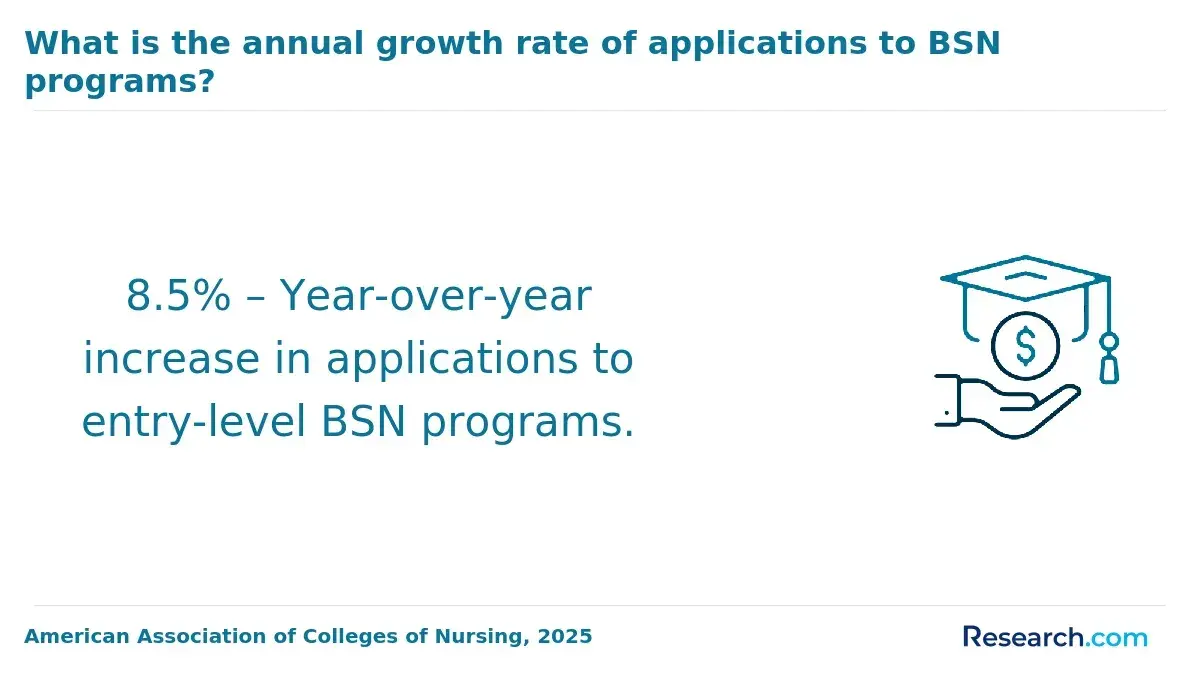
Online nursing education has become more visible because working adults need flexible routes into healthcare careers, and current nurses often need bachelor’s or graduate education to qualify for leadership, specialty, and advanced practice opportunities. According to the American Association of Colleges of Nursing, online nursing programs saw enrollment increases across most program levels over the last year (AACN, 2024). Flexibility matters, but quality matters more. A convenient program that does not meet licensure, clinical, or employer expectations can become an expensive mistake.
Best Online Nursing Programs in New York Table of Contents
- How to Become a Nurse in New York
- What is the typical cost of online nursing programs in New York?
- How long does it take to become a nurse in New York?
- Can you become a nurse in New York with an online degree?
- Online Nursing Programs in New York for 2027
- What are bridge programs for non-nurses, and how do they work?
- The Role of Advanced Nursing Programs in Shaping New York’s Healthcare Landscape
- Is New York good for nursing?
- What are the current nursing license requirements in New York?
- How can medical assistants pivot to a nursing career in New York?
- What are the job market and salary trends for online nursing graduates in New York?
- Why is accreditation critical for online nursing programs in New York?
- How can LVN experience lead to advanced nursing roles in New York?
- What are the opportunities for advanced practice roles in New York?
- Can supplemental healthcare certifications enhance your nursing career in New York?
- How can starting as an LPN pave the way for further nursing advancement in New York?
- What can I do with a nursing degree in New York?
- How can you transition into nurse midwifery in New York?
- Do New York Employers Value Online Nursing Degrees?
Quick Answer: Are Online Nursing Programs in New York Worth Considering?
Yes, online nursing programs in New York can be worth considering if they are properly accredited, include approved clinical experiences when required, and align with the student’s licensure or advancement goal. RN to BSN programs are often the best fit for licensed RNs who already have an ADN or nursing diploma and want a bachelor’s degree for career mobility. Non-nurses need a pre-licensure program, accelerated BSN, direct-entry pathway, or practical nursing route that includes supervised clinical training and prepares them for the correct licensing exam.
| Student goal | Best-fit nursing pathway | Key point to verify before enrolling |
| Become an LPN | Practical nursing program | Eligibility for the NCLEX-PN and New York licensure |
| Become an RN | ADN, BSN, or accelerated BSN | Clinical placement availability and NCLEX-RN preparation |
| Move from RN to BSN | Online RN to BSN program | Transfer credits, total cost, and CCNE or other recognized accreditation |
| Move from LPN/LVN to RN | LPN/LVN to RN bridge program | How prior nursing experience is credited |
| Become an advanced practice nurse | MSN, DNP, or specialty graduate program | Specialty accreditation, clinical hours, and New York APRN requirements |
How to Become a Nurse in New York
New York has a large and varied healthcare system, including hospitals, outpatient clinics, long-term care facilities, home care organizations, academic medical centers, and community health providers. That range creates multiple entry points into nursing, but the right path depends on whether you are starting from high school, already hold a healthcare credential, or are a licensed RN seeking a bachelor’s degree.
The basic process is straightforward: complete the required education, meet clinical training expectations, pass the appropriate licensing exam, and apply for licensure. Students comparing online RN programs from New York universities should also understand what a BSN degree can lead to before choosing between an ADN, BSN, RN to BSN, or graduate-level route.
Step 1: Complete High School or an Equivalent Credential
A high school diploma or GED is the usual starting point for nursing education. Courses in biology, chemistry, anatomy, algebra, and written communication can make the transition into nursing prerequisites easier. Some programs may require specific science coursework before admission, especially pre-licensure RN and accelerated BSN programs.
Step 2: Choose the Right Nursing Program Type
Students often compare online nursing programs by tuition or speed, but the more important question is whether the program leads to the credential you actually need. The different kinds and levels of nursing programs serve different students, from first-time nursing students to experienced RNs preparing for leadership or graduate study.
| Program type | Who it is for | Typical outcome | Decision tip |
| Associate Degree in Nursing (ADN) | Students seeking a shorter RN pathway | Preparation for RN licensure | Useful for faster entry, but BSN completion may be needed later for advancement |
| Bachelor of Science in Nursing (BSN) | Students who want a broader undergraduate nursing education | Preparation for RN licensure and bachelor’s-level roles | Often preferred for leadership preparation and graduate school readiness |
| Direct Entry or Accelerated BSN | Students who already hold a non-nursing bachelor’s degree | Accelerated preparation for RN licensure | Best for career changers who can handle an intensive schedule |
| LPN to RN | Licensed practical nurses moving toward RN licensure | RN preparation building on prior practical nursing experience | Ask how much LPN coursework and experience transfers |
| RN to BSN | Licensed RNs with an ADN or diploma | Bachelor’s degree completion | Often the most practical online option for working nurses |
| Master of Science in Nursing (MSN) | BSN-prepared nurses pursuing advanced or specialized roles | Graduate-level nursing preparation | If you are asking, what can an MSN in nursing do, compare specialties before applying |
| Doctor of Nursing Practice (DNP) | Nurses preparing for advanced practice, systems leadership, or high-level clinical roles | Terminal practice-focused nursing degree | Check specialty requirements and clinical hour expectations |
| Doctor of Philosophy in Nursing (PhD) | Nurses focused on research, scholarship, and academic careers | Research doctorate | Best for students interested in generating nursing knowledge rather than primarily expanding clinical practice |
Step 3: Apply for the Correct Nursing License
Licensure determines what nursing work you can legally perform. New York applicants must follow state requirements, and the license type depends on the program completed and the scope of practice sought.
- Licensed Practical Nurse (LPN) or Licensed Vocational Nurse (LVN). LPNs and LVNs generally complete a practical nursing program of about one year and provide basic nursing care under the supervision of RNs, physicians, or other authorized professionals. Duties may include taking vital signs, administering certain medications, changing dressings, and assisting with patient care.
- Registered Nurse (RN). RNs complete an approved nursing program, such as a 2-year nursing program in NYC online or a four-year BSN program, then pass the NCLEX-RN. RNs assess patients, administer medications, provide IV therapy, coordinate care, and work across hospitals, clinics, home health, long-term care, and other healthcare settings.
- Advanced Practice Registered Nurse (APRN). APRNs are licensed RNs who complete graduate-level nursing education at the master’s or doctoral level. APRN categories include nurse practitioners, certified nurse midwives, certified registered nurse anesthetists, and clinical nurse specialists.
- Nurse Practitioner (NP). NPs provide advanced assessment, diagnosis, treatment, and prescribing services within their scope of practice and specialty area.
- Certified Nurse Midwife (CNM). CNMs deliver care related to pregnancy, childbirth, postpartum health, gynecological care, and family planning.
- Certified Registered Nurse Anesthetist (CRNA). CRNAs provide anesthesia care and monitor patients during surgical and procedural care.
- Clinical Nurse Specialist (CNS). CNSs bring advanced expertise to a defined patient population, specialty, or setting and often support evidence-based practice, staff education, and quality improvement.
Step 4: Prepare for the NCLEX
The National Council Licensure Examination is the required licensing exam for entry-level nursing practice. Students pursuing RN licensure take the NCLEX-RN, while practical nursing candidates take the NCLEX-PN. Passing the correct exam is essential before practicing under that license.
- NCLEX-RN. The NCLEX-RN, administered by the National Council of State Boards of Nursing (NCSBN), evaluates whether a candidate has the knowledge and judgment needed for safe entry-level RN practice. It is a computerized adaptive exam, so question difficulty changes based on the candidate’s answers.
- NCLEX-PN. The NCLEX-PN is also administered by the NCSBN and is designed for practical nursing candidates. It assesses whether a graduate is ready to provide safe and effective care at the LPN level.
What is the typical cost of online nursing programs in New York?
The cost of online nursing programs in New York varies by degree level, school type, residency status, required credits, transfer credits, and whether clinical or lab fees are charged separately. Online programs may reduce commuting or relocation expenses, but they are not automatically low-cost. Students should calculate the full price, not only advertised tuition.
Costs may include tuition, textbooks, online learning fees, technology requirements, background checks, immunization documentation, clinical or lab fees, uniforms, exam preparation resources, graduation fees, and licensure application expenses. Some schools offer scholarships, employer tuition assistance, payment plans, or financial aid for eligible students. Students comparing cheap online BSN programs should verify the total degree cost after transfer credit review.
| Program level | Approximate cost range cited | Cost factors that can change the final price |
| ADN to RN program | $12,000 to $35,000 for the entire program | Community college versus university pricing, clinical fees, supplies, and exam preparation |
| BSN to RN program | $25,000 to $120,000 or more | Public or private institution, residency status, transfer credits, and institutional reputation |
| APRN program | $63,000 to $100,000 or more | Specialty, graduate tuition rate, clinical requirements, and university fees |
How to reduce the cost of an online nursing degree
- Request a written transfer credit evaluation before committing to an RN to BSN program.
- Ask whether your employer offers tuition reimbursement or preferred-school discounts.
- Compare total program cost rather than tuition per credit alone.
- Check whether clinical, simulation, technology, and graduation fees are included in the listed price.
- Consider public institutions if you qualify for in-state tuition.
- For graduate study, compare specialty outcomes and affordability, including cheap MSN programs when cost is a major factor.
How long does it take to become a nurse in New York?
The timeline depends on the license and degree you are pursuing. Some students can enter practical nursing in less than two years, while RN, BSN, and advanced practice routes require more time. Students should also plan for prerequisite courses, application cycles, clinical scheduling, exam preparation, licensure processing, and possible part-time enrollment.
| Nursing path | Typical education timeline cited | Licensing or next step |
| LPN/LVN | 12 to 18 months | Pass the NCLEX-PN and apply for licensure |
| RN through ADN | 2 to 3 years | Pass the NCLEX-RN and apply for RN licensure |
| RN through BSN | Around 4 years | Pass the NCLEX-RN and apply for RN licensure |
| APRN through MSN | 2 to 3 years after the BSN | Meet graduate, certification, and state requirements for the specialty |
| APRN through DNP | Additional 1 to 3 years for some students | Prepare for advanced practice or leadership roles depending on program focus |
Overall, the education timeline may range from around 1.5 to 6 years or more, depending on the route. Demand for nurses is affected by population needs, healthcare utilization, workplace staffing patterns, and advances in treatment. Research on healthcare access notes that need, demand, and supply in health care are related but distinct concepts that shape access to services.
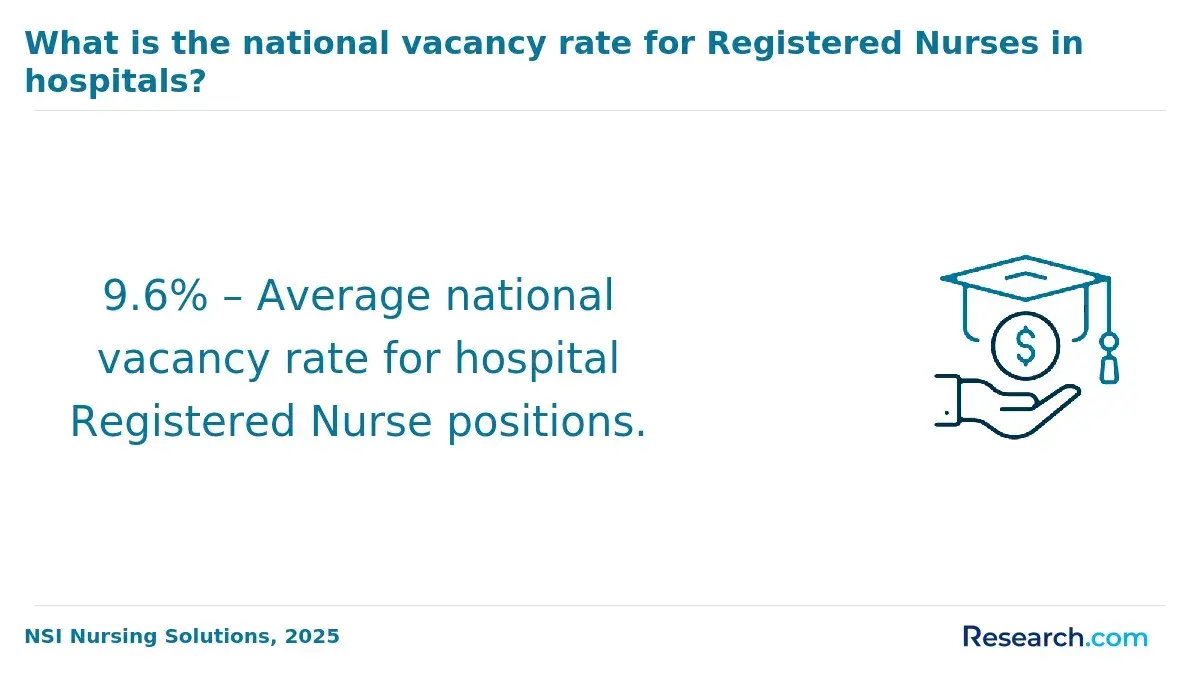
Nursing shortages can create heavier workloads, slower access to care, and difficulty maintaining consistent staffing. The U.S. is projected to experience a shortage of 206,555 registered nurses by 2030, with demand continuing to outpace supply across diverse healthcare settings (World Population Review, 2026).
Can you become a nurse in New York with an online degree?
Yes, but only if the program satisfies the requirements tied to your intended license or credential. Online nursing education works especially well for RN to BSN completion because students are already licensed RNs and can complete much of the academic coursework remotely. Pre-licensure nursing programs, however, still require in-person clinical training, even when lectures or didactic courses are online.
Before enrolling, confirm that the school is properly accredited, that the program is accepted for the licensure pathway you need, and that clinical placements are available in approved settings. A strong online program should clearly explain how clinical hours are arranged, who approves preceptors, where students can complete placements, and whether students are responsible for finding their own sites.
A recent report found that roughly 89% of RNs who maintain their licenses are currently working at nursing facilities; among these nurses, 70% work full time, 11% work part time, and about 8% work per diem shifts.
Online Nursing Programs in New York for 2027
The following online RN to BSN programs in New York may be useful for licensed RNs who want a bachelor’s degree while continuing to work. When comparing them, look beyond speed and tuition. Review accreditation, required credits, residency pricing, clinical or practicum expectations, transfer credit rules, and whether the academic calendar fits your work schedule.
1. Stony Brook University RN to BSN Program
Stony Brook University offers an RN to BSN pathway for registered nurses who want additional preparation in leadership, management, clinical care, prevention, and population-focused nursing practice.
- Program length: 2 years (part-time)
- Tracks/concentrations: None
- Cost: $39,000 (out-of-state)
- Required credits: 60
- Accreditation: Commission on Collegiate Nursing Education (CCNE)
2. University at Buffalo RN to BSN Program
The online RN to BSN program at the University at Buffalo is designed for working RNs who want bachelor’s-level coursework in areas such as nursing research, pathophysiology, pharmacology, and professional nursing practice. Its structure may appeal to nurses seeking a flexible and comparatively affordable completion route.
- Program length:1 to 2 years
- Tracks/concentrations: None
- Cost: $12,000 (in-state) or $14,000 (out-of-state)
- Required credits: 32
- Accreditation: CCNE
3. Saint John Fisher College RN to BSN Program
The online RN to BSN program at St. John Fisher College serves RNs who want to complete a bachelor’s degree while maintaining professional and personal commitments. The curriculum includes two required clinical practicums and coursework in pharmacology, health assessment, leadership, ethics, statistics, English, math, and other liberal arts areas.
- Program length: 12-18 months
- Tracks/concentrations: None
- Cost: $38,000 (in-state) or $48,000 (out-of-state)
- Required credits: 60
- Accreditation: CCNE
4. Hunter College RN to BSN Program
Hunter College provides an RN to BSN program with study in leadership, research, community health, and healthcare policy. Its online delivery can help licensed RNs balance coursework with employment.
- Program length: 12-18 months
- Tracks/concentrations: None
- Cost: $35,000 (in-state) or $45,000 (out-of-state)
- Required credits: 60
- Accreditation: CCNE
5. Lehman College RN to BSN Program
Lehman College offers an online RN to BSN program for registered nurses preparing for broader professional practice or future graduate study. The program emphasizes critical thinking, compassionate care, and professional competence. Admission requires 60 college credits with a GPA of 2.5 or higher and an associate degree in nursing from a CUNY or SUNY school.
- Program length: 12-18 months
- Tracks/Concentrations: None
- Cost per Credit: $305
- Required credits: 60
- Accreditation: CCNE
What are bridge programs for non-nurses, and how do they work?
Bridge programs for non-nurses are accelerated nursing pathways for students who already hold a bachelor’s degree in another field or have related healthcare experience. They are often called Direct Entry or Accelerated BSN programs. Instead of repeating a full undergraduate education, students complete intensive nursing coursework, labs, simulation, and clinical training that prepare them for RN practice and the NCLEX-RN.
Key features of bridge programs
- Accelerated curriculum. Many programs compress nursing education into 12–24 months by building on previous college coursework.
- Classroom and clinical integration. Students study nursing theory, assessment, pharmacology, pathophysiology, and care planning while completing supervised clinical experiences.
- Flexible learning formats. Some programs offer online coursework, hybrid schedules, or evening components, but clinical training must still occur in approved healthcare settings.
When a bridge program makes sense
A bridge program can be a strong fit if you already have a non-nursing bachelor’s degree, want to change careers quickly, and can manage a demanding academic schedule. It may not be ideal if you need to work full time without schedule flexibility, because accelerated clinical requirements can be intense. Students comparing online RN programs for non-nurses should ask how clinical placements are secured and whether graduates are eligible for New York licensure.
The Role of Advanced Nursing Programs in Shaping New York’s Healthcare Landscape
Advanced nursing programs prepare experienced RNs for specialized clinical practice, leadership, education, and systems improvement. In New York, nurse practitioners and other advanced practice nurses can help expand access to care, support chronic disease management, serve underserved communities, and strengthen care coordination across complex healthcare settings.
RNs considering graduate education should compare specialty outcomes carefully. The best nurse practitioner programs in New York typically combine advanced coursework, specialty clinical training, and preparation for certification. Graduate study can also support roles in policy, mentorship, population health, research translation, and nursing leadership.
Is New York good for nursing?
Yes. New York can be a strong state for nursing because it has a large healthcare sector, many practice settings, and opportunities in acute care, outpatient care, long-term care, community health, research, education, and advanced practice. The trade-off is that competition, cost of living, and workplace demands can be significant, especially in major metropolitan areas.
Compensation may be higher in large cities such as New York, Los Angeles, or San Francisco because of healthcare demand and living costs. Based on a recent report, the median annual salary for nurses in New York is $113,490 (Rebellion Research, 2026).
New York also offers conferences, workshops, nursing schools, academic medical centers, and professional networks that can support continuing education and specialization. Nurses who want long-term advancement should think beyond first employment and choose programs that keep future BSN, MSN, DNP, or certification options open.
What are the current nursing license requirements in New York?
Registered nurse applicants in New York generally need to graduate from an approved nursing program, pass the NCLEX-RN, and submit the required state application materials. Applicants may also need fingerprinting, background checks, identity documentation, transcripts, and other evidence that they meet professional and educational standards. Requirements can change, so students should confirm details before applying or relocating. For documentation, fee, and timeline guidance, review the full overview of nursing license requirements in New York.
How can medical assistants pivot to a nursing career in New York?
Medical assistants already have patient-facing experience, familiarity with clinical workflows, and exposure to healthcare documentation. That background can make the transition to nursing smoother, but it does not replace the need for approved nursing education and licensure. A dedicated bridge option, such as an MA to LPN bridge program, can help medical assistants build on existing skills while adding nursing theory, supervised clinical training, and preparation for the required licensing pathway.
Do New York Employers Value Online Nursing Degrees?
New York employers can value online nursing degrees when they come from accredited programs and include the clinical preparation required for the role. Employers typically care less about whether lectures were online and more about licensure status, clinical judgment, patient care experience, communication skills, reliability, and readiness for the setting. Candidates who began in allied health programs, including medical assistant programs in New York, can strengthen their applications by showing how prior experience improved their patient care, teamwork, and documentation skills.
What are the job market and salary trends for online nursing graduates in New York?
Online RN to BSN graduates in New York may benefit from employer interest in nurses with bachelor’s-level preparation, leadership potential, and adaptability. Hospitals, clinics, long-term care providers, and community health organizations need nurses who can manage complex patient needs, work with interdisciplinary teams, and use technology-supported care systems. Pay and advancement vary by role, location, shift, specialty, experience, union status, and employer type. Students comparing career paths should review differences such as the LPN vs RN salary comparison before choosing an entry route.
Current trends affecting online nursing students
- More flexible education models. Online and hybrid formats continue to help working nurses complete BSN and graduate coursework.
- Greater attention to clinical quality. Employers and licensing bodies still expect hands-on preparation, even when didactic courses are online.
- Rising importance of technology skills. Nurses increasingly work with electronic health records, telehealth workflows, remote monitoring, simulation tools, and data-informed care processes.
- Leadership and population health expectations. BSN and graduate curricula often emphasize care coordination, community health, evidence-based practice, and quality improvement.
Why is accreditation critical for online nursing programs in New York?
Accreditation is one of the first things students should verify because it signals that a nursing program has been reviewed against established educational standards. It can affect licensure eligibility, transfer credit acceptance, graduate school admission, and employer confidence. Programs from accredited nursing schools in New York are more likely to have structured curricula, qualified faculty, documented outcomes, and appropriate clinical learning processes.
| What to check | Why it matters | Question to ask the school |
| Institutional and nursing accreditation | Supports quality assurance, licensure, and employer recognition | Which agency accredits the nursing program, and when is the next review? |
| New York licensure alignment | Prevents enrolling in a program that does not meet state requirements | Does this program qualify graduates for the New York license I want? |
| Clinical placement process | Clinical gaps can delay graduation or licensure | Does the school arrange placements, approve student-found sites, or require travel? |
| Transfer credit policy | Major cost and timeline factor for RN to BSN students | How many credits will transfer from my ADN, diploma, or prior degree? |
| Total program cost | Advertised tuition may exclude required fees | What is the estimated full cost from enrollment to graduation? |
How can LVN experience lead to advanced nursing roles in New York?
LVN or LPN experience can provide a strong clinical foundation for nurses who want to move toward RN licensure and eventually pursue BSN or graduate-level roles. Bridge programs may recognize prior practical nursing education while adding RN-level coursework, broader patient assessment skills, leadership concepts, and more advanced clinical training. For entry-path details, see the guide on how to become an LVN nurse in New York.
What are the opportunities for advanced practice roles in New York?
Advanced practice roles can offer greater clinical responsibility, more autonomy, and specialized career options. After earning a BSN, nurses may pursue graduate education for roles such as nurse practitioner, clinical nurse specialist, nurse midwife, or nurse anesthetist. These positions require additional education, clinical training, and certification or licensure steps. Nurses planning this path should review specialty-specific expectations and read guidance on how to become a nurse practitioner in New York.
Can supplemental healthcare certifications enhance your nursing career in New York?
Additional certifications can help nurses broaden their skill set, especially in areas that connect clinical work with administration, compliance, informatics, quality improvement, patient safety, or revenue cycle operations. For nurses interested in administrative or documentation-heavy roles, learning how to become a medical biller and coder in New York may provide useful context for billing, coding, reimbursement, and interdisciplinary communication. Supplemental credentials should support a clear career goal rather than simply add unrelated letters to a resume.
How can starting as an LPN pave the way for further nursing advancement in New York?
Starting as an LPN can be a realistic entry route for students who want to begin patient care sooner, gain clinical confidence, and earn experience before committing to an RN or BSN pathway. LPN work can clarify which specialties you enjoy and may make later bridge programs more meaningful. Students considering this route should review how to become an LPN in New York and compare the long-term trade-offs between entering quickly and completing a longer RN or BSN pathway from the start.
What can you do with a nursing degree in New York?
A nursing degree can lead to bedside care, advanced clinical practice, education, administration, research, and specialty roles. A BSN earned through an online nursing program can be especially useful for licensed RNs who want broader responsibilities in hospitals, community health, leadership, case management, public health, or graduate study.
- Registered Nurse (RN). RNs provide direct patient care in hospitals, clinics, nursing homes, home health agencies, and other settings. They assess patients, administer medications, coordinate care, and collaborate with physicians and interdisciplinary teams.
- Advanced Practice Registered Nurse (APRN). With graduate education and specialty certification, RNs can pursue advanced practice roles such as nurse practitioner, certified nurse midwife, clinical nurse specialist, or nurse anesthetist.
- Certified Registered Nurse Anesthetist. CRNAs provide anesthesia care, monitor patients during procedures, and work closely with surgical and procedural teams.
- Nurse Educator. Nurse educators teach students in academic programs or support continuing education for working nurses in healthcare organizations.
- Nurse Administrator or Manager. Nurse leaders manage units, staffing, budgets, quality improvement, compliance, and patient care operations.
- Nurse Researcher. Nurse researchers study clinical questions, care delivery, patient outcomes, and nursing practice improvements.
How do online nursing programs in New York prepare students for clinical placements?
Clinical learning is essential because nursing cannot be learned through online coursework alone. In RN to BSN programs, clinical or practicum experiences may focus on leadership, community health, population health, quality improvement, or professional practice. In pre-licensure programs, clinical training is more intensive and directly tied to entry-level nursing competence.
- Local healthcare partnerships. Some programs coordinate placements through hospitals, clinics, community health centers, or long-term care facilities near the student.
- Flexible scheduling for working nurses. RN to BSN programs may design practicums around working nurses’ schedules, though students still need to meet program deadlines and site requirements.
- Preceptor-based learning. Students may work with experienced nurses or approved preceptors who guide practice, assess progress, and connect coursework to real patient care situations.
- Specialized clinical experiences. Some placements allow students to focus on areas such as pediatrics, geriatrics, public health, or community nursing, depending on program design.
- Simulation for practice and preparation. Virtual or campus-based simulation can help students rehearse clinical scenarios before working directly with patients.
- Licensure alignment. Strong programs document how clinical experiences satisfy New York expectations and support preparation for the NCLEX or advanced licensure when applicable.
Specialization Opportunities for Nurses in New York
Specialization can help nurses move into more focused clinical work, leadership, or advanced practice. The right specialty depends on your interests, tolerance for high-acuity environments, preferred patient population, desired autonomy, and willingness to complete graduate education or certification.
- Family Nurse Practitioner (FNP) – FNPs provide primary care across the lifespan and can be especially important in settings with limited access to primary care providers. BSN-prepared nurses can compare online BSN to FNP programs if they want a graduate route into this specialty.
- Acute Care Nurse Practitioner (ACNP) – ACNPs often work with seriously ill or complex patients in hospitals, emergency departments, intensive care, or specialty units.
- Psychiatric Mental Health Nurse Practitioner (PMHNP) – PMHNPs focus on mental health assessment and treatment in hospitals, outpatient clinics, rehabilitation settings, and community care environments.
- Nurse Anesthetists (CRNAs) – CRNAs administer anesthesia and monitor patients during surgical or medical procedures. This specialty requires advanced preparation and a high level of clinical responsibility.
Career Growth for Nurses with Advanced Degrees
Experienced nurses with graduate education may move into roles such as nurse manager, director of nursing, chief nursing officer, educator, advanced practice clinician, policy contributor, or quality improvement leader. These roles require more than a degree. Employers also look for strong communication, clinical judgment, team leadership, data awareness, and the ability to improve patient outcomes.
How can you transition into nurse midwifery in New York?
RNs interested in midwifery typically need graduate-level education, focused maternal-child health coursework, supervised clinical experiences, and certification preparation that aligns with New York requirements. Before applying, compare accreditation, clinical rotation sites, faculty expertise, certification prerequisites, and state eligibility. For a detailed pathway, review how to become a nurse midwife in New York.
Common Mistakes to Avoid When Choosing an Online Nursing Program in New York
| Common mistake | Why it can hurt you | Better approach |
| Choosing based only on tuition | Low tuition may exclude fees, clinical costs, or extra terms | Compare total cost to graduation |
| Ignoring accreditation | It can affect licensure, transfer, graduate admission, and hiring | Verify programmatic and institutional accreditation before applying |
| Assuming online means fully remote | Nursing programs often require clinicals, labs, practicums, or campus visits | Ask exactly which requirements must be completed in person |
| Not checking New York licensure eligibility | An out-of-state or online program may not automatically meet state standards | Confirm eligibility with the school and state licensing resources |
| Overlooking transfer credit rules | You may pay for credits you expected to transfer | Get a written credit evaluation before enrolling |
| Relying only on rankings | A highly ranked program may not fit your budget, schedule, or specialty goal | Use rankings as one input, not the entire decision |
| Assuming salary outcomes are guaranteed | Pay varies by role, region, employer, shift, experience, and credentials | Compare realistic career paths and local employer expectations |
Becoming a Nurse in New York
New York offers many reasons to pursue nursing: varied employers, multiple entry points, advanced practice opportunities, and strong demand across care settings. These are among the practical reasons to pursue nursing careers, but students should choose their route carefully. The best option for a current RN may be an online RN to BSN program, while a non-nurse may need an accelerated BSN, direct-entry option, ADN, or LPN pathway.
Online RN to BSN programs in New York can help working nurses advance without leaving their jobs, but success requires planning. Confirm accreditation, clinical expectations, cost, transfer credits, program length, and career alignment before enrolling. A flexible schedule is valuable only when the program also supports licensure, employer recognition, and long-term mobility.
Key Insights
- Online nursing can work in New York, but clinical requirements still matter. RN to BSN coursework may be largely online, while pre-licensure programs still require supervised hands-on training.
- Accreditation should be nonnegotiable. It affects licensure eligibility, employer confidence, credit transfer, and future graduate study.
- Costs vary widely. Cited program ranges include $12,000 to $35,000 for an online ADN program, $25,000 to $120,000 or more for an online BSN program, and $63,000 to $100,000 or more for an APRN program.
- The right pathway depends on your starting point. Medical assistants, LPNs, RNs, bachelor’s degree holders, and first-time college students each need different nursing routes.
- New York can be a strong nursing market, but outcomes are not automatic. A recent report cites a median annual salary for nurses in New York of $113,490, while pay still depends on role, location, employer, specialty, and experience.
- Do not enroll until you ask the hard questions. Verify clinical placement support, New York licensure alignment, total cost, transfer credits, and whether the program fits your long-term nursing goal.
Related Articles for Nearby States
- 2027 Best Online Nursing Programs in New Jersey – Accredited RN to BSN Programs
- 2027 Best Online Nursing Programs in Pennsylvania: Accredited RN to BSN Programs
- 2027 Best Online Nursing Programs in Connecticut – Accredited RN to BSN Programs
- 2027 Best Online Nursing Programs in Massachusetts – Accredited RN to BSN Programs
- 2027 Best Online Nursing Programs in Delaware – Accredited RN to BSN Programs
- 2027 Best Online Nursing Programs in Maryland – Accredited RN to BSN Programs
- 2027 Best Online Nursing Programs in New Hampshire – Accredited RN to BSN Programs
- 2027 Best Online Nursing Programs in Ohio – Accredited RN to BSN Programs
- 2027 Best Online Nursing Programs in Maine – Accredited RN to BSN Programs
- 2027 Best Online Nursing Programs in West Virginia – Accredited RN to BSN Programs
References:
- AACN. (2025). 2024-2025 Enrollment and Graduations in Baccalaureate and Graduate Programs in Nursing. https://www.aacnnursing.org/news-data/all-news/schools-of-nursing-enrollment-increases
- Carson-Newman. (2025). By the Numbers: Nursing Statistics 2025. https://onlinenursing.cn.edu/news/nursing-by-the-numbers
- NCSBN. (2025). 2024 National Nursing Workforce Study. https://www.ncsbn.org/workforce
- NurseJournal. (2025). The Top 20 Highest-Paying Nursing Specialties. https://nursejournal.org/articles/best-nursing-specialities-for-the-future/
- U.S. Bureau of Labor Statistics. (2025). Occupational Outlook Handbook: Registered Nurses. https://www.bls.gov/ooh/healthcare/registered-nurses.htm
Other Things You Should Know About Online Nursing Programs in New York
Yes. New York RN to BSN programs should be registered by the New York State Education Department’s Office of the Professions, and the nursing curriculum should meet New York Board of Regents standards. Accreditation by ACEN or CCNE is also a key quality marker for transfer and graduate study.
Online RN to BSN programs in New York typically require clinical practice hours, often ranging from 60 to 90 hours. These can be completed in a healthcare setting close to the student's location, ensuring practical experience alongside theoretical learning in 2027.
To enroll in an online RN to BSN program in New York in 2027, candidates must have an active RN license in good standing and completed an associate degree in nursing or a diploma program. Some programs may require specific GPA thresholds or prerequisite courses.


