2027 New York Nursing License Requirements

Co-Founder and Chief Data Scientist
Getting licensed as a nurse in New York is not just a paperwork step. It determines whether you can legally practice, where you can work, how quickly you can start earning, and whether your education meets state standards. The process can feel confusing because New York has its own application rules, required coursework, renewal cycle, endorsement pathway, and requirements for nurses educated outside the state. This guide explains the New York nursing license process in practical terms so you can understand what applies to you, avoid delays, compare education options, and plan your next step with fewer surprises.
Quick Answer: How do you get a nursing license in New York?
To become licensed as a registered professional nurse in New York, you generally need to complete a nursing program accepted by the New York State Education Department, meet required coursework standards, pass the NCLEX-RN, submit the state application, pay the $143 application fee, and complete any required background or credential review. Nurses licensed in another state may apply by endorsement rather than retaking the NCLEX-RN, while internationally educated nurses usually need additional credential verification.
Key Things You Should Know About New York Nursing Licenses
- Licensing authority: Nursing licensure in New York is handled by the New York State Education Department (NYSED), including its Office of the Professions.
- Licensure exam: RN applicants must pass the National Council Licensure Examination for Registered Nurses (NCLEX-RN). The pass rate for first-time test-takers in New York was approximately 85% in 2022.
- Education requirement: Applicants must complete an approved nursing education pathway, such as an Associate Degree in Nursing (ADN) or a Bachelor of Science in Nursing (BSN).
- Application fee: Candidates submit their application through NYSED and pay a fee of $143.
- Criminal history review: Applicants must disclose prior convictions, and a criminal background check is mandatory. A past conviction does not always mean denial, but incomplete disclosure can cause serious delays.
- What is a New York nursing license and why does it matter?
- What nursing license options are available in New York?
- What are the requirements for a New York nursing license?
- How do you apply for a nursing license in New York?
- What financial considerations should future nurse practitioners in New York understand?
- How often must a New York nursing license be renewed?
- Can a nurse with a Compact license practice in New York?
- How can specialized certifications strengthen a nursing career in New York?
- What licensing mistakes should New York nursing applicants avoid?
- How can out-of-state nurses become licensed in New York?
- Could a pharmacy license support a nursing career in New York?
- How can nurse residency and mentorship programs help New York nurses grow?
- What continuing education rules apply to New York nurses?
- How can complementary certifications expand nursing career options?
- Should you consider becoming a nurse midwife in New York?
- What should internationally educated nurses know about New York licensure?
- Which nursing schools in New York can support your goals?
- Can additional education improve nursing opportunities in New York?
- How can nurses keep up with healthcare regulations and innovation?
- Can online nursing programs prepare students for New York licensure?
- What exam tips and resources can help New York nursing candidates?
What is a New York nursing license and why does it matter?
A New York nursing license is the legal authorization to practice nursing in the state. For registered professional nurses, the license confirms that the nurse has completed an acceptable education program, passed the required national exam, and met New York’s professional standards. Without it, you cannot independently practice as an RN in New York healthcare settings.
The New York State Education Department, through the Office of the Professions, oversees nursing licensure. Its role is not simply administrative. The licensing system is designed to protect patients, define professional accountability, and make sure nurses meet minimum standards before providing clinical care.
| Why the license matters | What it means for patients and employers |
| Public safety | Licensure limits nursing practice to people who have met state education, examination, and eligibility standards. |
| Professional accountability | Licensed nurses are responsible for their clinical decisions, documentation, communication, and adherence to nursing standards. |
| Employment eligibility | Hospitals, clinics, long-term care facilities, schools, and other healthcare employers generally require an active New York license for RN roles. |
| Career mobility | A current license is often the foundation for specialty certifications, graduate nursing programs, leadership roles, and advanced practice pathways. |
Licensure also affects long-term career planning. Nurses in New York must renew their licenses every three years and complete specific required training, including infection control coursework every four years. Staying compliant helps prevent gaps in employment and protects your ability to keep practicing.
The broader healthcare labor market also makes licensure important. The U.S. Bureau of Labor Statistics reported an anticipated average of 29,200 job openings each year for nurse anesthetists, nurse midwives, and nurse practitioners over the next decade. While these are advanced roles rather than entry-level RN positions, they show why a properly maintained nursing license can become the foundation for future advancement.
If you are entering nursing from a related healthcare role, bridge options such as medical assistant to LPN online programs may help you compare entry routes before committing to a longer RN pathway.
What nursing license options are available in New York?
New York nursing candidates should understand the difference between full RN licensure and temporary authorization for recent graduates. The right category depends on whether you have already passed the NCLEX-RN and whether you are applying for initial licensure, endorsement, or a limited permit.
| License or permit type | Who it is for | What it allows | Important limitation |
| Registered Nurse license | Graduates of approved nursing programs who pass the NCLEX-RN and meet New York requirements | Allows full RN practice within the scope of New York law | Must be renewed every three years to remain active |
| Graduate Nurse permit | Nursing graduates who have not yet passed the NCLEX-RN | Allows supervised practice under a registered nurse | Valid for up to one year or until the candidate takes the NCLEX-RN |
| Endorsement license | Nurses already licensed in another state | Allows eligible out-of-state nurses to obtain New York licensure without retaking the NCLEX-RN | Applicants must still meet New York documentation and eligibility rules |
For a full RN license, candidates may qualify through an associate degree, bachelor’s degree, master’s degree, or diploma program recognized by NYSED. After completing the program, the applicant must pass the NCLEX-RN. Registered nurses may assess patients, administer medications, coordinate care, provide education, and collaborate with physicians and other healthcare professionals.
A Graduate Nurse permit can be useful for candidates who want to begin supervised clinical work while waiting to complete the exam process. However, it should not be treated as a long-term substitute for licensure. Once the permit expires or the candidate takes the NCLEX-RN, practice under that permit must stop if full licensure has not been obtained.
Specialty choice can also affect long-term compensation and career direction. For example, nurses exploring aesthetics often ask how much aesthetic and cosmetic nurses make, but pay varies by education, experience, specialization, employer, location, and industry.
The chart below provides a comparison of nursing earnings by selected specialization.
What are the requirements for a New York nursing license?
The New York RN licensing process has several major requirements: approved education, required training, examination, application documentation, and eligibility review. Missing even one item can delay approval, so applicants should confirm requirements directly with NYSED before submitting materials.
- Approved nursing education: Applicants must graduate from a nursing program accepted by NYSED. Eligible routes may include associate, bachelor’s, master’s, or diploma nursing programs.
- Clinical preparation: Nursing programs include supervised clinical training in healthcare settings. This experience helps students apply classroom knowledge to patient assessment, medication administration, documentation, communication, and care planning.
- Required training topics: Candidates must complete infection control and child abuse identification and reporting training. Many New York nursing programs that began after September 1, 1990 include these areas in the curriculum.
- NCLEX-RN: RN candidates must pass the National Council Licensure Examination for Registered Nurses. The exam evaluates whether a candidate has the entry-level clinical judgment and knowledge needed for safe nursing practice.
- Application and eligibility review: Applicants submit the required forms, fee, education verification, exam information, and disclosures requested by NYSED.
| Requirement | Why it matters | Common issue to avoid |
| NYSED-approved education | Confirms that your nursing program meets state licensing standards | Enrolling before confirming the program is acceptable for New York licensure |
| Clinical training | Builds practical readiness for patient care | Assuming an online program automatically arranges compliant clinical placements |
| Infection control and child abuse training | Satisfies New York-specific public health and reporting expectations | Failing to document completed training if it was not included in the program |
| NCLEX-RN | Establishes national entry-level competency | Scheduling the exam before building a realistic study plan |
| Application documentation | Allows NYSED to verify eligibility | Submitting unofficial transcripts, incomplete forms, or inconsistent personal information |
Once a candidate meets these requirements and is approved, the New York nursing license is valid for three years before renewal is required. If you are considering advancement after RN licensure, compare pathways carefully; options such as affordable RN to BSN programs can help nurses strengthen their academic credentials while managing cost.
How do you apply for a nursing license in New York?
The application process is manageable if you approach it as a checklist instead of waiting until graduation to gather documents. Most delays occur because transcripts, forms, background information, or credential reviews are incomplete or sent to the wrong place.
- Confirm that your nursing program meets New York requirements. If you graduated from a New York program recognized by the State Education Department, the school may complete part of the education verification process. If you studied outside New York or completed your program before April 1, 1998, you may need additional forms and direct transcript submission.
- Complete required coursework or training. Make sure your infection control and child abuse reporting requirements are documented if they were not built into your nursing curriculum.
- Apply through NYSED. Submit the licensing application and pay the required $143 fee.
- Register for and pass the NCLEX-RN. Your exam results must be reported as part of the licensing process.
- Complete background and disclosure requirements. Applicants should accurately report prior convictions and follow fingerprinting or background check instructions as required.
- Track missing items. Follow up on transcripts, credential evaluations, and forms rather than assuming the state has received everything.
Internationally educated nurses must complete additional verification steps. Credentials may need to be reviewed through the Commission on Graduates of Foreign Nursing Schools (CGFNS) or sent directly from the nursing school. A credential verification service can be helpful, although it is not always mandatory.
| Applicant type | Likely documents needed | Best next step |
| Graduate of a New York nursing program | Application, fee, school verification, NCLEX-RN results, required training documentation if applicable | Ask the school how and when it sends verification to NYSED |
| Graduate of an out-of-state U.S. program | Application, fee, official transcripts, NCLEX-RN results, required training documentation | Confirm whether your program meets New York licensing standards before applying |
| Nurse licensed in another state | Endorsement application, fee, license verification, transcripts, background information | Begin license verification early because processing times can vary |
| Internationally educated nurse | Credential evaluation or direct education verification, English proficiency evidence when required, application materials, exam information | Review NYSED instructions before paying for third-party evaluations |
The median annual salary for nurse anesthetists, nurse midwives, and nurse practitioners was reported at $125,900 in 2022. That figure applies to advanced practice roles, not every nursing position, so use it as labor-market context rather than a guaranteed outcome.
If your long-term goal is advanced practice, learn how the education and licensure sequence changes by reviewing how to become a nurse practitioner in New York.
What financial considerations should future nurse practitioners in New York understand?
Becoming a nurse practitioner in New York usually requires a larger investment than initial RN licensure because the pathway typically includes graduate education, national certification, and ongoing professional development. Before enrolling, compare the total cost of the pathway, not just tuition.
- Graduate tuition and fees: Aspiring nurse practitioners commonly pursue an MSN or DNP. Program cost can vary widely by institution, format, residency status, and clinical requirements.
- Books, technology, and clinical expenses: Budget for textbooks, software, equipment, health screenings, immunizations, background checks, travel to clinical sites, and possible lost income if reducing work hours.
- Certification exam costs: Nurse practitioner candidates must pass a national certification exam through an approved organization such as the American Nurses Credentialing Center (ANCC) or the American Association of Nurse Practitioners (AANP). Exam registration, study materials, and travel may add to the total.
- Licensure and renewal costs: Advanced practice nurses should plan for application fees, renewal costs, continuing education, professional memberships, and malpractice coverage where applicable.
- Financial aid and employer support: Scholarships, grants, federal aid, loan options, and employer tuition assistance may reduce out-of-pocket costs, but each comes with eligibility rules and deadlines.
The most useful financial question is not “What is the cheapest program?” but “Which accredited program can I complete on time, with reliable clinical placement, acceptable board preparation, and debt I can reasonably manage?” A low tuition price can become expensive if credits do not transfer, clinical placement support is weak, or the program does not match New York requirements.
How often must a New York nursing license be renewed?
New York nursing licenses must be renewed every three years. Renewal keeps the license active and allows nurses to continue practicing legally. Missing the renewal deadline can interrupt employment, delay onboarding for a new role, or create compliance issues with an employer.
- Renewal application: Nurses submit a renewal application and pay the required fee through the state process.
- Required training: Nurses must stay current with New York’s required education topics, including infection control training every four years.
- Career impact: Employers generally expect an active, unrestricted license. A lapse can affect promotions, travel assignments, specialty roles, and credentialing.
- Planning tip: Set reminders well before the three-year deadline and keep copies of completed training certificates.
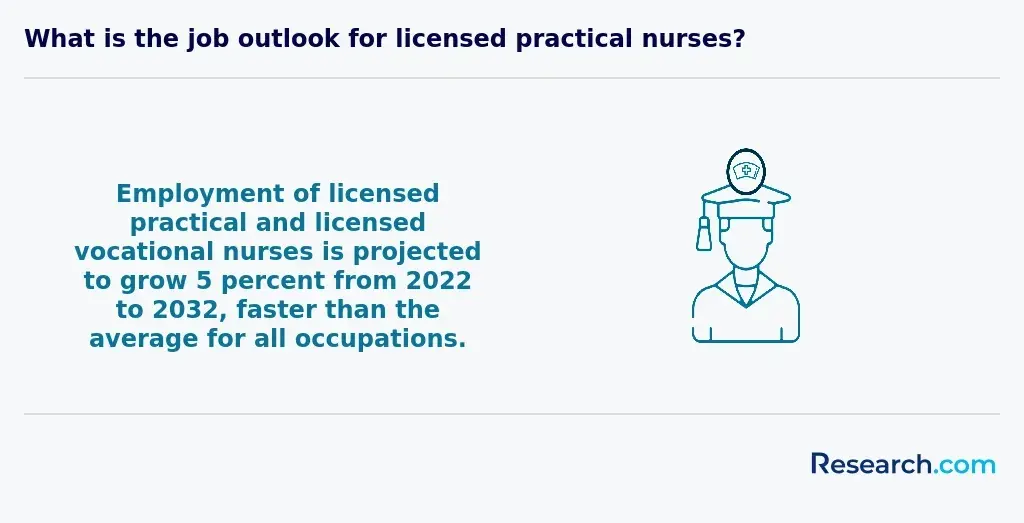
Licensed vocational nurses alone have projected job growth of 5% from 2022 to 2032, which makes license maintenance important for nurses who want to remain employable and ready for advancement. Renewal is also a good time to reassess whether a next academic step, such as an RN-to-BSN pathway, fits your career goals.
Can a nurse with a Compact license practice in New York?
No. A nurse who holds a multistate license under the Nurse Licensure Compact cannot use that license alone to practice in New York because New York has not joined the Compact. To work as a nurse in New York, the nurse must obtain a New York nursing license.
The Nurse Licensure Compact allows eligible nurses in participating states to practice across state lines under one multistate license. Enacted in 2018, the Compact currently includes 39 states and can reduce administrative burden for nurses who work in multiple participating jurisdictions.
New York’s nonparticipation means mobility works differently. If you are moving to New York, taking a travel assignment, or accepting a remote role that involves New York patients, do not assume your Compact license is enough. Confirm whether the role requires New York licensure before you start work.
| Situation | Can you practice in New York with only a Compact license? | What to do |
| You hold a Compact license from another state | No | Apply for a New York license before practicing in the state |
| You are licensed in New York and want to work in a Compact state | Not automatically | Review that Compact state’s licensure rules |
| You are considering travel nursing in New York | No, not with Compact licensure alone | Begin the New York application early to avoid assignment delays |
How can specialized certifications strengthen a nursing career in New York?
Specialty certifications can help nurses demonstrate focused expertise after they have established the required license and clinical foundation. In New York’s large healthcare market, certifications may support transitions into behavioral health, critical care, family practice, women’s health, aesthetics, informatics, education, case management, or leadership roles.
The strongest reason to pursue a certification is alignment with a specific career goal. For example, nurses interested in psychiatric-mental health care may compare options such as the shortest online PMHNP certificate programs if they already meet the appropriate graduate-level prerequisites. A short program is not automatically the best program; check clinical placement expectations, board preparation, accreditation, and whether the credential matches the role you want.
| Certification decision factor | Why it matters |
| Required license level | Some certifications require RN licensure, graduate education, or advanced practice status. |
| Clinical experience requirement | Many specialty credentials expect documented experience in the practice area. |
| Employer recognition | A credential is most useful when New York employers in your target setting value it. |
| Renewal obligations | Certifications may require continuing education, practice hours, and renewal fees. |
What licensing mistakes should New York nursing applicants avoid?
Licensure delays are often preventable. The most common problems come from applying before confirming eligibility, using unofficial documents, overlooking required training, or assuming another state’s rules apply in New York.
| Common mistake | Why it causes problems | Better approach |
| Choosing a program without checking New York approval | Graduation alone does not guarantee eligibility for New York licensure | Confirm that the program meets NYSED requirements before enrolling |
| Focusing only on tuition | Low tuition may not include fees, clinical travel, exam preparation, or technology costs | Compare total cost of attendance and completion support |
| Waiting to request transcripts | Schools and credential evaluators can take time to process records | Request official documents as early as the state allows |
| Assuming online programs handle clinical placement | Clinical requirements still apply, even when coursework is online | Ask who secures placements and whether New York sites are available |
| Ignoring criminal history disclosure instructions | Incomplete or inaccurate disclosure can delay review | Answer questions carefully and provide requested documentation |
| Relying only on rankings | A highly ranked school may not be the best fit for your schedule, budget, or licensure needs | Use rankings as one factor, not the full decision |
If you want a broader overview of the full career pathway, review how to become a nurse in New York before finalizing your plan.
How can out-of-state nurses become licensed in New York?
Nurses who already hold a license in another state can apply for New York licensure by endorsement. This route allows eligible nurses to seek New York licensure without retaking the NCLEX-RN, but it does not remove New York’s documentation requirements.
Out-of-state applicants generally need to:
- Submit the New York application and pay the required $143 fee.
- Provide verification of a current, active nursing license from another state.
- Complete the required criminal background check, including fingerprinting.
- Send official transcripts showing completion of an accredited nursing education program.
Foreign-educated nurses have additional steps. They must usually have credentials evaluated by a recognized credential evaluation service to determine comparability to U.S. nursing standards. Proof of English proficiency is also required, commonly through an exam such as the TOEFL.
New York is home to over 300,000 registered nurses, and the state has one of the highest employment levels of nurse practitioners in the country. For nurses relocating to New York, endorsement can be a practical pathway, but it should be started early if a job offer has a firm start date.
Could a pharmacy license support a nursing career in New York?
A pharmacy license is not a routine add-on for most nurses, but it can make sense for professionals who want to move into medication safety, pharmacology-focused education, interdisciplinary clinical work, research, consulting, or healthcare leadership. The value depends on the role you want, the time and cost of meeting pharmacy requirements, and whether the additional credential creates opportunities that nursing credentials alone would not.
Before pursuing this route, compare the return on investment with alternatives such as an advanced nursing degree, pharmacology-related certification, informatics training, or a leadership credential. If your interest is specifically pharmacy practice, review how to become a licensed pharmacist in New York to understand the separate licensing pathway.
How can nurse residency and mentorship programs help New York nurses grow?
Nurse residency and mentorship programs can make the transition from school to practice less overwhelming. They are especially useful for new graduates, nurses changing specialties, and LPNs planning future advancement. Strong programs combine supervised clinical experience, feedback, preceptor support, communication training, and professional development.
| Program feature | Why it helps |
| Structured onboarding | Reduces the gap between classroom learning and independent clinical responsibilities |
| Preceptor or mentor access | Gives early-career nurses a safe place to ask questions and develop judgment |
| Specialty exposure | Helps nurses decide whether areas such as emergency, pediatrics, behavioral health, or critical care fit their strengths |
| Professional network | Builds relationships that may support future job changes, references, and advancement |
For practical nurses who want to understand an earlier step in the nursing ladder, reviewing the requirements to become an LPN in New York can clarify how education, licensure, and advancement connect.
What continuing education rules apply to New York nurses?
Continuing education in New York is tied to patient safety, public health, and professional accountability. Requirements may differ by role, so nurses should verify the rules that apply to their license category and specialty.
- Infection control training: Nurses must complete an approved infection control course every four years. This training addresses prevention practices and New York health standards.
- Child abuse identification and reporting: Initial licensure requires training in child abuse identification and reporting so nurses can recognize warning signs and understand reporting responsibilities.
- CEUs for RNs: New York does not require a specific number of CEUs for RNs, but certain roles, credentials, or employers may impose additional requirements.
- Advanced and specialty roles: Nurse practitioners and nurses with national certifications may have additional continuing education, practice hour, or renewal requirements set by certifying bodies or employers.
The best habit is to maintain a personal compliance file. Save certificates, completion dates, course provider names, and renewal confirmations. Do not rely only on an employer’s learning system, especially if you change jobs.
How can complementary certifications expand nursing career options?
Not every useful healthcare credential is clinical. Nurses who want to move into administration, utilization review, revenue cycle management, compliance, case management, or practice operations may benefit from training outside traditional bedside care.
For example, a medical billing and coding certification in New York can help nurses understand documentation, reimbursement, claims workflows, and administrative communication. This does not replace nursing licensure, but it may support roles that combine clinical knowledge with operational responsibilities.
Should you consider becoming a nurse midwife in New York?
Nurse midwifery may be a strong fit for nurses who want to provide pregnancy, birth, postpartum, reproductive, and gynecologic care. It is not simply a specialty interest; it requires advanced education, certification, and compliance with state requirements.
Consider this path if you are drawn to long-term patient relationships, maternal health, health education, and high-responsibility clinical decision-making. Consider a different specialty if you prefer broader acute care, administrative leadership, or a shorter route to advancement. To understand the required preparation, review the educational requirements for a nurse midwife in New York.
What should internationally educated nurses know about New York licensure?
Internationally educated nurses should expect a more document-heavy process than graduates of New York programs. The state must determine whether the applicant’s nursing education is comparable to U.S. standards and whether all legal, language, and exam requirements have been met.
- Credential evaluation: Applicants may need a review from an approved evaluation agency or direct verification from their nursing school.
- English proficiency: Proof of English proficiency may be required, often through standardized testing such as the TOEFL.
- Supplemental requirements: Depending on the evaluation, some applicants may need additional clinical training or bridging coursework.
- Immigration and work authorization: Licensure and employment authorization are separate issues. A nursing license does not automatically create eligibility to work in the United States.
- Timeline planning: International transcripts, translations, evaluations, and exam eligibility reviews can take time, so start early.
Terminology can also be confusing because nursing titles vary by state and country. If you are comparing practical nursing pathways, review how to become an LVN in New York to better understand role naming and licensing differences.
Which nursing schools in New York can support your goals?
The right nursing school is the one that fits your licensure goal, budget, schedule, learning style, and clinical needs. Reputation matters, but it should not be the only factor. A program must also help you qualify for the license you want.
| Question to ask a nursing school | Why it matters |
| Is the program accepted for New York nursing licensure? | Licensure eligibility is the first requirement for entering practice. |
| What are recent NCLEX-RN outcomes? | Exam preparation quality affects how quickly graduates can become licensed. |
| Who arranges clinical placements? | Clinical access can affect graduation timing and practical readiness. |
| What is the total cost, including fees and supplies? | Tuition alone does not show the full financial commitment. |
| Can transfer credits reduce time to completion? | Transfer policies can affect both cost and graduation timeline. |
| What support is available for working adults? | Advising, tutoring, scheduling flexibility, and exam support can influence completion. |
Students comparing options can start with the best nursing schools in New York, then verify each program’s current licensure alignment, clinical model, and affordability.
Can additional education improve nursing opportunities in New York?
Further education can expand a nurse’s options, but it should be tied to a clear career outcome. A BSN may support broader RN opportunities, graduate nursing education can lead to advanced practice roles, and post-master’s certificates may help nurses change specialties. The best choice depends on your current license, experience, goals, and tolerance for additional debt.
For nurses considering advanced clinical practice, nurse practitioner programs in New York may provide specialized coursework, clinical preparation, and professional networks. Compare programs by accreditation, certification exam alignment, clinical placement support, format, and cost rather than speed alone.
How can nurses keep up with healthcare regulations and innovation?
Nursing practice changes as regulations, technology, employer expectations, and patient care models evolve. In New York, nurses should regularly review NYSED updates, employer policies, public health guidance, and certification requirements that apply to their role.
- Monitor official sources: Use NYSED and employer compliance updates rather than relying only on social media or informal advice.
- Build digital competence: Electronic health records, telehealth platforms, clinical decision tools, and secure communication systems are now part of many nursing roles.
- Practice evidence-based care: Continuing education should strengthen clinical judgment, not just satisfy a requirement.
- Assess specialty credentials carefully: Options such as the shortest post-master's FNP program may appeal to experienced nurses, but the program must still meet certification and practice goals.
Can online nursing programs prepare students for New York licensure?
Online nursing programs can be a legitimate route when they are properly accredited, meet New York licensing expectations, and include compliant clinical training. The key issue is not whether lectures are online. It is whether the full program prepares you for required clinical practice and state licensure.
| Online program factor | What to verify before enrolling |
| Accreditation and state acceptance | Confirm that the program can lead to New York licensure. |
| Clinical placement support | Ask whether the school arranges placements in New York or expects students to find sites. |
| Simulation and skills training | Review how the program teaches hands-on competencies before clinical rotations. |
| NCLEX-RN preparation | Ask about exam support, practice testing, and graduate outcomes. |
| Student support | Look for advising, tutoring, faculty access, technical support, and career services. |
Students who need flexibility can compare the top online nursing programs in New York, but each program should still be checked against licensure requirements, clinical logistics, and total cost.
What exam tips and resources can help New York nursing candidates?
The NCLEX-RN is a major step in the New York licensing process, and preparation should begin before graduation. The goal is not to memorize isolated facts but to practice clinical judgment, prioritization, safety, delegation, and patient-centered decision-making.
- Know the licensing sequence: Confirm NYSED requirements, program verification steps, NCLEX registration, and application timing.
- Use structured study tools: NCLEX review books, online question banks, and timed practice exams can help identify weak areas. Resources such as UWorld and Kaplan offer practice questions designed to resemble the exam experience.
- Analyze rationales: Do not only count correct answers. Review why the correct answer is right and why the other options are unsafe or less appropriate.
- Create a realistic schedule: Short, consistent study sessions are usually more sustainable than last-minute cramming.
- Study with peers carefully: Study groups can help with accountability, but avoid groups that become unfocused or increase anxiety.
- Protect your health: Sleep, nutrition, movement, and breaks are part of exam readiness. Exhaustion can weaken judgment and recall.
- Use professional networks: Organizations such as the New York State Nurses Association can provide community, resources, and professional context for new nurses.
On exam day, arrive prepared, follow testing instructions closely, and avoid comparing your exam length or question style with other candidates. Passing the NCLEX-RN is an important milestone, but it is also one part of a larger licensure and career process.
Related Articles for Nearby States
- 2027 New Jersey Nursing License Requirements
- 2027 Pennsylvania Nursing License Requirements
- 2027 Connecticut Nursing License Requirements
- 2027 Massachusetts Nursing License Requirements
- 2027 Vermont Nursing License Requirements
- 2027 Rhode Island Nursing License Requirements
- 2027 Delaware Nursing License Requirements
- 2027 Maryland Nursing License Requirements
- 2027 New Hampshire Nursing License Requirements
- 2027 Ohio Nursing License Requirements
References:
- U.S. Bureau of Labor Statistics. (2023, September 6). Occupational outlook handbook - Nurse anesthetists, nurse midwives, and nurse practitioners. BLS.
- op.nysed.gov (n.d.). Registered Professional Nurse. New York State Education Department Office of the Professions
- Auerbach, D., Buerhaus, P., & Staiger, D. (2020). Implications Of The Rapid Growth Of The Nurse Practitioner Workforce In The US. Health Affairs.
Key Insights
- A New York nursing license is required to practice as an RN in the state, and the process is overseen by NYSED through the Office of the Professions.
- Most RN applicants need an approved nursing education, required infection control and child abuse reporting training, NCLEX-RN results, a completed application, and the $143 fee.
- New York is not part of the Nurse Licensure Compact, so Compact nurses must obtain a separate New York license before practicing in the state.
- Nurses licensed in another state can usually apply by endorsement, but they still need license verification, transcripts, background review, and New York-specific documentation.
- Internationally educated nurses should plan for credential evaluation, possible English proficiency documentation, and a longer verification timeline.
- New York nursing licenses must be renewed every three years, and infection control training is required every four years.
- The safest program choice is one that is accepted for New York licensure, provides reliable clinical preparation, supports NCLEX-RN readiness, and fits your budget without relying only on rankings or advertised speed.
Other Things You Should Know About Nursing Licenses in New York
To renew a New York nursing license in 2027, a nurse must complete the continuing education requirements, which often include specific hours in infection control and child abuse reporting. Renewal applications are submitted via the New York State Education Department’s online portal, and fees may apply.
To obtain a nursing license in New York in 2027, applicants must have graduated from a state-approved nursing program and passed the National Council Licensure Examination (NCLEX). Additionally, they are required to complete coursework on child abuse reporting and infection control.
In 2027, to obtain a nursing license in New York, applicants must complete an accredited nursing program, obtain a minimum of an Associate’s Degree in Nursing (ADN), and pass the National Council Licensure Examination for Registered Nurses (NCLEX-RN).