
2027 How to Become a Nurse in New York

Co-Founder and Chief Data Scientist
Becoming a nurse in New York can lead to a stable healthcare career, but the path is not as simple as choosing a school and applying for jobs. You need to select the right nursing program, meet New York State Education Department requirements, pass the correct NCLEX exam, apply for licensure, and understand whether your education qualifies you for the role you want.
The decision matters because New York is projected to face a shortage of over 39,000 registered nurses by 2030. At the same time, nursing school can be expensive, licensure rules can be confusing, and not every program fits every career goal. This guide explains the practical steps to becoming a nurse in New York, compares nursing pathways, outlines licensing and renewal requirements, and helps you evaluate programs, costs, career options, and common mistakes before you commit.
Quick Answer: How Do You Become a Nurse in New York?
To become a nurse in New York, you must complete a state-approved nursing education program, meet required training rules such as infection control when applicable, pass the NCLEX-RN or NCLEX-PN, apply for licensure through the New York State Education Department, and renew your license every three years. Registered nurses typically complete an ADN or BSN program, while licensed practical nurses complete a practical nursing program. Advanced practice roles require graduate education, national certification, and additional state authorization.
Key Things You Need to Know About Becoming a Nurse in New York
- RN pay is competitive in the state. The average salary for registered nurses in New York is approximately $85,000 per year, which is significantly higher than the national average and reflects both healthcare demand and the state’s high cost of living.
- Demand is strong, but projections vary by source. Nursing employment in New York is projected to grow by 9% from 2020 to 2030, and another cited projection from the New York State Department of Labor estimates 12% RN growth from 2020 to 2030.
- New York offers many practice settings and specialties. Nurses can work in hospitals, outpatient care, long-term care, home healthcare, pediatrics, geriatrics, advanced practice, and other specialty areas.
- There is more than one education route. Students may pursue an Associate Degree in Nursing, Bachelor of Science in Nursing, practical nursing program, graduate nursing degree, or accelerated pathway depending on their background and career target.
- Licensure is mandatory. You cannot legally practice as a nurse in New York without the appropriate active license or authorization.
- Steps to becoming a nurse in New York
- Education requirements for New York nurses
- Types of nurses legally allowed to practice in New York
- New York nursing licensing requirements
- Nursing program options in New York
- Types of nursing licenses in New York
- Whether compact nurses can practice in New York
- Transitioning from nursing to pharmacy in New York
- Advanced specialization and career growth for nurses
- Nurse practitioner education requirements in New York
- Continuing education and license renewal requirements
- Alternative healthcare careers for nurses
- Pathway to becoming an LVN or LPN in New York
- Financial support options for nursing students
- Transferring a nursing license to New York
- Licensure for internationally educated nurses
- How to become a nurse midwife in New York
- Practicing nursing without a license in New York
- The current nursing workforce in New York
- Nursing job outlook in New York
- Choosing the right nursing program in New York
What are the steps to becoming a nurse in New York?
The basic process depends on whether you want to become an RN, LPN, or advanced practice nurse, but most candidates follow the same broad sequence: complete approved education, pass the appropriate national exam, apply to New York for licensure, and maintain that license after approval.
| Step | What You Need to Do | Why It Matters |
| Choose a nursing role | Decide whether you are pursuing LPN, RN, or advanced practice nursing. | Your role determines the required program, exam, scope of practice, and timeline. |
| Complete approved education | Enroll in a nursing program recognized by the New York State Education Department. | Graduating from an acceptable program is required before you can qualify for licensure. |
| Complete required training | If your nursing program was completed more than four years ago, complete an NYSED-approved infection control course, unless you qualify for an exemption. | New York requires nurses to understand infection control standards used in clinical settings. |
| Pass the NCLEX | Take the NCLEX-RN for registered nursing or the NCLEX-PN for practical nursing. | The NCLEX verifies that you meet minimum standards for safe entry-level practice. |
| Apply for licensure | Submit the required application, documents, and fees to NYSED. | You cannot practice independently as a nurse until New York grants the correct license. |
| Maintain your license | Renew your license every three years and complete required continuing education or training. | Renewal keeps your authorization active and aligned with state practice expectations. |
Recent graduates may be eligible for a limited permit that allows supervised practice while they wait for exam results. This can help new nurses begin gaining experience, but it is not the same as a full license and must be used only within the rules set by New York.
What are the educational requirements for becoming a nurse in New York?
New York nursing education requirements depend on the level of practice you want. A practical nursing program can prepare you for LPN licensure, an ADN or BSN can prepare you for RN licensure, and graduate nursing education is required for nurse practitioner, nurse midwife, clinical specialist, and other advanced practice pathways.
Nursing Degree Options
Before choosing a school, match the credential to your career goal. A shorter program may get you into the workforce faster, while a higher degree may support advancement, specialization, leadership, or graduate study.
| Pathway | Typical Purpose | Best Fit |
| Licensed Practical Nursing program | Prepares students for practical nursing roles and the NCLEX-PN. | Students who want a faster route into bedside support roles under RN or physician supervision. |
| Associate Degree in Nursing (ADN) | A two-year RN pathway that covers core nursing theory and clinical practice. | Students who want to qualify for the NCLEX-RN without completing a four-year degree first. |
| Bachelor of Science in Nursing (BSN) | A four-year RN degree that may support hospital hiring, advancement, leadership, and graduate study. | Students seeking broader career flexibility or planning for future advanced practice education. |
| RN-to-BSN | Allows licensed RNs with an associate degree to complete bachelor’s-level nursing coursework. | Working RNs who want to upgrade credentials; some may compare options such as a 6-month RN to BSN program online. |
| Master of Science in Nursing (MSN) | Prepares nurses for advanced practice, education, leadership, or specialty roles. | RNs seeking nurse practitioner, clinical specialist, educator, or administrative pathways. |
| Doctor of Nursing Practice (DNP) | A terminal practice-focused degree centered on high-level clinical leadership and advanced practice. | Nurses pursuing the highest practice-focused credential after graduate preparation. |
| Accelerated nursing program | Condensed nursing education for students who already hold a degree in another field. | Career changers who want a faster entry into nursing and can manage an intensive schedule. |
Accreditation
Accreditation should be one of your first checks, not an afterthought. A nursing program should be recognized by the New York State Education Department so that your education can support New York licensure. National nursing accreditation from organizations such as the Accreditation Commission for Education in Nursing (ACEN) or the Commission on Collegiate Nursing Education (CCNE) can also matter for employer recognition, graduate admissions, and transfer options.
The chart below shows the educational levels of nurses in the United States.
What types of nurses can legally practice in New York?
New York recognizes several nursing roles, each with a different scope of practice, education requirement, and licensure process. Understanding the difference helps you avoid enrolling in a program that does not match your intended career.
- Registered Nurses: RNs assess patients, administer medications, coordinate care, educate patients and families, and help develop care plans. To become an RN in New York, candidates generally complete an approved ADN or BSN program and pass the NCLEX-RN.
- Licensed Practical Nurses: LPNs provide direct patient care under the supervision of RNs, physicians, or other authorized providers. They typically complete a state-approved practical nursing program and pass the NCLEX-PN.
- Advanced Practice Registered Nurses: APRNs include nurse practitioners, clinical nurse specialists, nurse anesthetists, and nurse midwives. These nurses complete graduate-level education, meet certification requirements, and may diagnose, treat, prescribe, or provide specialized care within their authorized scope. RNs who want a shorter transition into advanced practice may compare options such as 1 year nurse practitioner programs, while still verifying whether a program meets New York requirements.
| Role | Common Education Route | Exam or Certification | Typical Scope |
| LPN | Practical nursing program | NCLEX-PN | Basic nursing care under supervision |
| RN | ADN or BSN | NCLEX-RN | Assessment, care planning, medication administration, coordination of care |
| APRNs | Graduate nursing degree | National specialty certification and state authorization | Advanced diagnosis, treatment, prescribing, or specialty care depending on role |
What are the licensing requirements for nurses in New York?
New York nursing licensure is handled through the New York State Education Department. The exact requirements differ by license type, but candidates should expect to prove their education, pass the required exam, submit an application, and complete state-specific requirements.
- Choose the correct license: New York licenses practical nurses and registered professional nurses, while advanced practice nurses need additional credentials tied to their specialty.
- Graduate from an acceptable program: RNs usually complete an ADN or BSN program; LPNs complete a practical nursing program.
- Pass the required NCLEX: RN candidates take the NCLEX-RN, while LPN candidates take the NCLEX-PN.
- Submit an application to NYSED: Applicants provide documentation and pay required fees, which can range from $143 to $200 depending on license type.
- Complete required checks: Fingerprinting and a criminal background check are mandatory parts of the process.
- Budget beyond tuition: Plan for application fees, exam fees, fingerprinting, study materials, uniforms, supplies, transportation to clinical sites, and possible lost work time during clinical rotations.
A useful way to avoid delays is to create a licensure checklist before graduation. Confirm that your school is approved, ask when your education verification will be sent, register for the correct NCLEX, and keep copies of every application confirmation.
What types of nursing programs are available in New York?
New York offers practical nursing, registered nursing, bridge, bachelor’s completion, graduate, and advanced practice programs. The right option depends on your current education, whether you already hold a nursing license, how quickly you want to work, and whether your long-term goal is bedside care, leadership, advanced practice, education, or another healthcare role.
| Program Type | Who It Serves | Decision Point |
| LPN program | Students seeking practical nursing licensure | Best for faster workforce entry, but the scope is more limited than RN practice. |
| ADN program | Students seeking RN licensure through an associate route | May be more affordable or faster than a BSN, but some employers prefer bachelor’s-prepared nurses. |
| BSN program | Students seeking RN licensure and broader career mobility | Often better for leadership, specialty, or graduate school plans. |
| RN-to-BSN program | Licensed RNs who already hold an associate degree | Useful for employed nurses who want bachelor’s completion without restarting their education. |
| MSN or DNP program | RNs seeking advanced practice, leadership, or specialty roles | Requires careful review of clinical placement, certification preparation, and state authorization. |
| Online or hybrid program | Students needing scheduling flexibility | Online coursework may be convenient, but clinical hours must still meet program and state expectations. |
Students interested in practical nursing can compare online LPN programs in New York, but they should confirm clinical requirements, approval status, and whether the program prepares graduates for New York licensure.
What types of nursing licenses are available in New York?
New York nursing licenses align with level of practice. Choosing the right license matters because each category has different responsibilities, education standards, and advancement options.
- Registered Nurse: RNs provide comprehensive patient care, assessment, medication administration, care coordination, and patient education. Candidates complete an acceptable nursing program and pass the NCLEX-RN. RNs must also maintain required training, including infection control training every four years when applicable.
- Licensed Practical Nurse: LPNs support patient care by monitoring vital signs, assisting with daily activities, and performing tasks allowed under supervision. Candidates complete a practical nursing program and pass the NCLEX-PN.
- Advanced Practice Registered Nurse: APRN roles include nurse practitioners, clinical nurse specialists, nurse anesthetists, and nurse midwives. These roles require graduate education, national specialty certification, and state authorization.
If you are weighing advanced practice nursing, salary expectations should be compared by state, specialty, employer, and local cost of living. A helpful next step is reviewing state-by-state NP salaries before investing in graduate education.
Can a Compact nurse practice in New York?
No. New York is not currently a member of the Nurse Licensure Compact. A nurse who holds a multistate license from a compact state cannot use that license alone to practice in New York. They must obtain a separate New York nursing license.
For nurses moving from another state, this means you should begin the New York licensure process before accepting a job start date whenever possible. Processing time, document verification, background checks, and employer onboarding can all affect your timeline.
To practice in New York as a nurse from another state, expect to:
- Verify that your nursing education is acceptable: New York will review whether your education supports the license you are seeking.
- Show exam history: You may need to provide evidence of passing the NCLEX-RN or NCLEX-PN.
- Apply through New York: Submit the required documents and fees to the state rather than relying on a multistate privilege.
- Complete additional state requirements: These may include background checks, training, or documentation requested by NYSED.
RNs who want to build on their license after relocating may also consider graduate study. For example, nurses interested in family practice can compare cheap online RN to FNP degrees, but they should verify clinical placement availability in New York.
Is transitioning from nursing to pharmacy a viable option in New York?
Yes, but it is a career change rather than a simple nursing specialization. Nurses bring patient-care knowledge, medication familiarity, and clinical communication skills to pharmacy, but they still need to meet pharmacy education, experiential training, examination, and licensure requirements.
This route may make sense for nurses who want deeper involvement in medication therapy, prefer a different scope of practice, or are interested in healthcare roles outside traditional nursing shifts. Before committing, compare the time, cost, prerequisites, and licensure process. For a focused overview, review how to become a pharmacist in New York.
How can nurses pursue advanced specialization and career growth in New York?
Nurses in New York can advance by earning specialty certifications, completing graduate education, moving into leadership, or entering advanced practice. The strongest path depends on whether you want more clinical authority, higher-level patient care, management responsibility, teaching opportunities, or a role outside direct bedside care.
| Goal | Possible Path | When It Makes Sense |
| Specialize clinically | Earn specialty-focused training or certification | You enjoy patient care but want to focus on a defined population or setting. |
| Become an NP | Complete an MSN, DNP, or qualifying post-master’s certificate | You want advanced assessment, diagnosis, treatment, and prescribing responsibilities. |
| Move into leadership | Pursue BSN, MSN, DNP, or administrative experience | You want to manage teams, improve systems, or influence care delivery. |
| Teach future nurses | Build graduate-level preparation and clinical expertise | You want to work in nursing education or staff development. |
For nurses who already hold graduate nursing preparation and want a focused family practice route, a post-master's FNP online certificate may be worth comparing. Confirm certification eligibility, clinical placement requirements, and New York authorization before enrolling.
What are the nurse practitioner education requirements in New York?
Nurse practitioners in New York must complete graduate-level nursing education, meet clinical training expectations, pass the appropriate specialty certification exam, and satisfy state requirements for advanced practice. The program should align with the NP population focus you plan to practice in, such as family care, adult-gerontology, acute care, psychiatric-mental health, pediatrics, or women’s health.
Because NP requirements are more complex than RN licensure, prospective students should verify accreditation, certification exam alignment, clinical placement support, and state eligibility before choosing a program. For a more detailed route map, see nurse practitioner education requirements in New York.
What are the continuing education and license renewal requirements for nurses in New York?
Registered nurses in New York must renew their licenses every three years. Renewal is not just an administrative task; it is how the state keeps professional credentials active and connected to current healthcare expectations.
Continuing education and training may include areas such as infection control, patient safety, and ethical practice. Nurses should confirm that any course or provider they use is accepted for New York renewal purposes. Working RNs who want to combine career advancement with flexible study may compare online accelerated BSN programs, but degree coursework should not be assumed to automatically satisfy every renewal requirement unless the state or employer confirms it.
What alternative healthcare careers can nurses pursue in New York?
Nurses who want to move away from traditional bedside care have several options that still use clinical judgment, healthcare communication, and patient-system knowledge. Common alternatives include care coordination, case management, healthcare administration, nursing informatics, quality improvement, education, public health, compliance, and revenue-cycle roles.
A nurse interested in documentation, claims, coding, or administrative healthcare work may explore how to become a medical biller and coder in New York. This path may appeal to nurses who want a healthcare role with less direct patient care, though it requires learning coding systems, payer rules, and billing workflows.
What is the pathway to becoming an LVN in New York?
New York commonly uses the term Licensed Practical Nurse rather than Licensed Vocational Nurse, although many people search for LVN because that term is used in some other states. In practical terms, a person seeking this level of nursing in New York should research LPN education and licensure requirements.
The usual route is to complete a state-approved practical nursing program, gain supervised clinical experience through the program, pass the NCLEX-PN, and apply for New York licensure. Students comparing this route can review how to become an LVN in New York, while paying close attention to New York’s LPN terminology and state-specific licensing rules.
What financial support options are available for nursing students in New York?
Nursing school costs can include tuition, fees, books, uniforms, technology, clinical supplies, background checks, transportation, exam fees, and reduced work hours during clinical rotations. A low tuition price does not always mean the lowest total cost, so students should compare the full financial picture.
- Federal aid: Eligible students may use loans, Pell Grants, and other federal aid options.
- Scholarships and grants: Schools, employers, foundations, and professional associations may offer funding that does not need to be repaid.
- Work-study: Some students may qualify for campus-based work-study opportunities.
- Employer tuition support: Healthcare employers may offer reimbursement or advancement support for employees.
- Payment plans: Some institutions allow installment payments instead of one large upfront bill.
- Online or hybrid formats: Flexible formats may reduce commuting or scheduling costs, but students still need to account for clinical travel.
Students who want flexibility and financial aid options can compare the best online nursing programs in New York, while confirming program approval, clinical placement rules, and total cost of attendance.
Can I transfer my nursing license from another state to New York?
Yes, nurses licensed in another state may be eligible to apply for New York licensure by endorsement. This is not the same as automatic transfer. You must apply to New York, verify your current or previous license, submit required documentation, and meet any state-specific conditions.
Because New York is not part of the Nurse Licensure Compact, out-of-state nurses should not assume they can begin practice immediately. Review the requirements for nursing licensure in New York before accepting an employment start date or relocating.
How can internationally educated nurses obtain licensure in New York?
Internationally educated nurses must show that their education and credentials meet New York expectations. This typically involves credential evaluation, verification of prior licensure, proof of education, NCLEX passage, and English proficiency when required by state rules.
Some internationally educated nurses may need additional coursework or support to address differences between their prior training and New York standards. A bridge or supplemental program through one of the best nursing schools in New York may help candidates prepare for U.S. practice, but they should verify with NYSED what is required in their individual case.
How can I become a nurse midwife in New York?
To become a nurse midwife in New York, candidates generally need advanced nursing or midwifery education, specialized clinical training in women’s health and maternity care, national certification, and state authorization. The role requires preparation in prenatal care, labor and birth, postpartum care, reproductive health, and patient-centered family care.
This pathway is best suited for nurses who want an advanced practice role focused on pregnancy, birth, and women’s health across the lifespan. For step-by-step details, review how to become a nurse midwife in New York.
Can you practice as a nurse without a license in New York?
No. You cannot legally practice as a nurse in New York without the required license or authorization. Licensure protects patients by confirming that a person has completed acceptable education, passed the required exam, and met state standards for practice.
Licensure matters for several reasons:
- Patient protection: Nurses make decisions that affect medication safety, infection control, monitoring, escalation of care, and patient education.
- Legal authority: A nursing title and nursing scope of practice are regulated, so unlicensed practice can create serious legal and employment consequences.
- Professional mobility: Employers require proper credentials for hiring, promotion, and specialty placement.
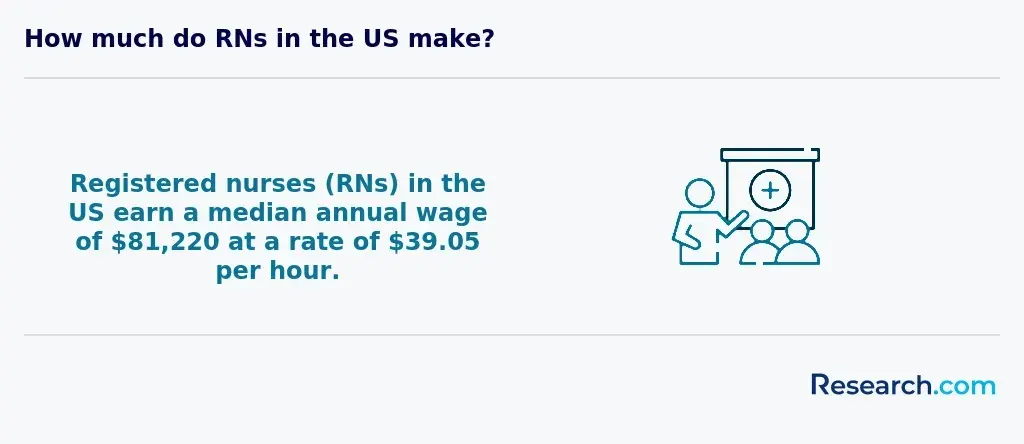
- Income potential: The referenced median annual wage for licensed practical and vocational nurses was $54,620 in 2022, showing that licensure connects directly to recognized employment pathways.
A New York nurse described the turning point this way: I wanted to help patients before I was licensed, but I understood that wanting to care for people was not enough. Preparing for the NCLEX took long nights and a lot of discipline. When my license was finally issued, I felt the responsibility as much as the excitement. Working in a busy New York facility has challenged me, but it also reminded me why the licensing process exists.
The lesson is simple: do not treat licensure as paperwork. It is the legal foundation for safe nursing practice.
What is the state of nursing in New York?
Nursing in New York is shaped by high demand, large healthcare systems, varied patient populations, and strong competition for some roles. The state employs tens of thousands of registered nurses and offers opportunities in hospitals, outpatient care, long-term care, home health, specialty clinics, and community-based care.
The projected shortage of over 39,000 registered nurses by 2030 creates opportunity for new and experienced nurses, but it also points to workplace pressures. Staffing needs may be especially visible in rural communities, underserved urban areas, long-term care, and high-acuity environments.
New York’s healthcare market can be attractive because of its range of employers and specialties. However, cost of living matters. A salary that looks strong on paper may feel different depending on housing, commuting, childcare, student loans, and whether you work in New York City, Long Island, Westchester County, or another region.
RNs who want to move into more advanced clinical roles may compare affordable online BSN to DNP programs, but they should evaluate clinical placement, accreditation, certification outcomes, and total program cost before enrolling.
The top industries employing nurses in New York include:
- Hospitals: Major employers for RNs and specialty nurses, especially in acute care and high-acuity settings.
- Outpatient care centers: Growing settings for nurses who prefer less inpatient-focused work.
- Home healthcare services: Important for patients who need care outside hospitals or facilities.
- Long-term care facilities: A key employment area as the population ages and chronic care needs increase.
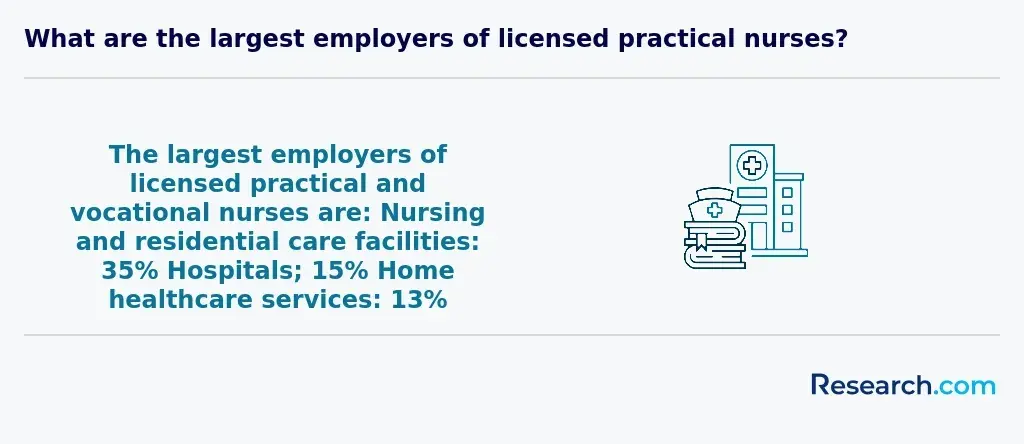
The graphic below shows the sectors considered as the largest employers of LPNs in the U.S.
What is the job outlook for nursing in New York?
The nursing job outlook in New York is strong, with demand supported by an aging population, healthcare access needs, and ongoing staffing gaps. One cited projection shows nursing job growth of 9% from 2020 to 2030, while the New York State Department of Labor projection cited in this guide estimates RN demand growth of 12% from 2020 to 2030.
Compensation is also a major reason many students consider nursing in New York. As of 2023, the average annual salary for registered nurses in the state is approximately $85,000. Pay varies by region, employer, shift, specialty, experience, union status, and level of education.
- New York City: RNs earn an average of $93,000 annually.
- Long Island: RNs earn an average salary of around $88,000.
- Westchester County: Nurses can expect to earn about $86,000.
Advanced practice nurses can earn more than many staff nursing roles. Nurse anesthetists and nurse practitioners are among the highest-paid nursing professionals, with salaries often exceeding $130,000. If you are comparing advanced degrees and asking how much do DNPs make, a cautious answer is that many advanced roles can go well over $100,000 a year, but results depend heavily on role, specialty, location, and employer.
LPNs typically earn less than RNs and advanced practice nurses, with an average around $50,000 annually. For students choosing between LPN and RN routes, the trade-off is usually speed versus long-term scope and earning potential.
The chart below shows the average annual salary of different types of nurses in the United States. Nurse anesthetists are the highest-paid nurses, followed by certified nurse midwives.
How to Choose the Right Nursing Program in New York
The best nursing program is not always the highest-ranked or most familiar name. It is the program that qualifies you for licensure, fits your life, supports clinical learning, has realistic costs, and aligns with your career goal.
Key Factors to Compare
| Factor | What to Check | Why It Matters |
| State approval | Confirm the program is recognized by the New York State Education Department. | Without acceptable education, you may not qualify for New York licensure. |
| National accreditation | Look for ACEN or CCNE accreditation when applicable. | It can affect employer confidence, graduate study, and transfer options. |
| NCLEX preparation | Ask how the curriculum supports exam readiness. | Passing the NCLEX is required for RN or LPN licensure. |
| Clinical placement | Find out where clinical rotations occur and whether the school arranges them. | Nursing cannot be learned fully online; supervised clinical experience is essential. |
| Schedule format | Compare full-time, part-time, evening, weekend, online, hybrid, and accelerated options. | The wrong format can make a good program unrealistic for your life. |
| Total cost | Include tuition, fees, books, supplies, uniforms, transportation, exams, and lost work time. | Tuition alone does not show the real cost of attendance. |
| Career alignment | Match the degree to your goal: LPN, RN, BSN, NP, midwife, educator, or leader. | A program should support the role you actually want. |
| Graduate outcomes | Ask about NCLEX pass rates, job placement support, and employer partnerships. | Outcomes help you judge whether the program delivers practical career value. |
Online vs. Campus Nursing Programs
| Format | Advantages | Risks to Check |
| Campus-based | More face-to-face instruction, lab access, and structured peer support. | Less scheduling flexibility and possible commuting costs. |
| Online or hybrid | Better for working adults and students with family responsibilities. | Clinical rotations are still required, and not every online program meets New York licensure expectations. |
| Accelerated | Can shorten the route for qualified students, especially career changers. | Intensive pacing may make employment difficult during the program. |
| Part-time | Easier to balance with work and caregiving. | Longer completion time may delay earnings and licensure. |
Questions to Ask Before Enrolling
- Is the program approved for New York nursing licensure?
- Is the program accredited by ACEN, CCNE, or another recognized body when applicable?
- What exam does the program prepare students to take?
- Who arranges clinical placements, and where are they located?
- What are the total estimated costs beyond tuition?
- Can prior credits transfer into the program?
- What happens if a student fails or must repeat a course?
- What academic, tutoring, and NCLEX preparation support is available?
- Does the program support the specialty or advanced role you eventually want?
Students planning to become nurse practitioners can also compare the best NP programs in New York, especially if they want specialized preparation in primary care, acute care, or family practice.
Common Mistakes to Avoid
- Choosing a program without checking approval: A school’s marketing language is not enough. Verify whether the program supports New York licensure.
- Focusing only on tuition: Fees, clinical travel, supplies, exam costs, and lost wages can change the real price.
- Assuming online means fully remote: Nursing programs require clinical practice, labs, or supervised experiences.
- Ignoring transfer policies: Credits do not always transfer cleanly between nursing programs.
- Relying only on rankings: Rankings can be useful, but licensure fit, clinical support, affordability, and outcomes matter more.
- Assuming salary outcomes are guaranteed: Salaries vary by location, specialty, experience, shift, and employer.
- Waiting too long to plan licensure: Application documents, exams, and background checks can delay employment if handled late.
Here’s What Nurses Say About Becoming a Nurse in New York
- My nursing work in New York has exposed me to patients from many backgrounds, and that has made me a stronger clinician. The pace can be demanding, but the teamwork and range of advancement options have kept me motivated. Bella
- I chose New York because I wanted training and experience in a healthcare environment known for high standards. The ability to specialize has been one of the biggest advantages, and the pay and benefits made the decision practical as well as meaningful. Dave
- As an LPN, I appreciate the energy of New York healthcare. The work can be intense, but the support among nurses makes a difference. I feel proud to contribute to patient care in such a large and diverse state. Fernan
Key Insights
- New York offers strong opportunity for nurses, with a projected shortage of over 39,000 registered nurses by 2030 and cited growth projections of 9% and 12% from 2020 to 2030.
- The fastest nursing route is not always the best route. LPN programs may lead to quicker entry, while ADN, BSN, MSN, and DNP pathways support broader scope, advancement, and specialization.
- New York is not part of the Nurse Licensure Compact, so compact-state nurses need a separate New York license before practicing in the state.
- Program approval and accreditation should be verified before enrollment. This is especially important for online, hybrid, accelerated, and out-of-state programs.
- RN salaries in New York average approximately $85,000 per year, with higher averages cited for New York City, Long Island, and Westchester County, but cost of living should be included in any ROI calculation.
- Advanced practice roles can offer higher earning potential and greater clinical authority, but they require graduate education, certification, clinical training, and state authorization.
- Do not choose a nursing program based only on tuition or ranking. Compare licensure eligibility, clinical placement, NCLEX support, total cost, schedule fit, and graduate outcomes.
Related Articles for Nearby States
- 2027 How to Become a Nurse in New Jersey
- 2027 How to Become a Nurse in Pennsylvania
- 2027 How to Become a Nurse in Connecticut
- 2027 How to Become a Nurse in Massachusetts
- 2027 How to Become a Nurse in Vermont
- 2027 How to Become a Nurse in Rhode Island
- 2027 How to Become a Nurse in Delaware
- 2027 How to Become a Nurse in Maryland
- 2027 How to Become a Nurse in New Hampshire
- 2027 How to Become a Nurse in Ohio
References:
- New York State Education Department Office of the Professions. Registered Professional Nurse. op.nysed.gov
- Nursing License Map. Become a Nurse in New York – Education, Licensure, Requirements. nursinglicensemap.com
- Nurse Journal. Nursing Compact States | Nurse Licensure Compact (NLC). Nurse Journal
- U.S. Bureau of Labor Statistics. Licensed practical and licensed vocational nurses. BLS
Other Things You Should Know About Becoming a Nurse in New York
To become a registered nurse in New York by 2026, you'll need to complete an accredited nursing program, pass the NCLEX-RN exam, apply for state licensure, and maintain CPR certification. Consider internships or residencies to gain practical experience and potentially fulfill clinical hour requirements.
In 2026, the cost of becoming a nurse in New York varies widely, ranging from $20,000 to $80,000, depending on the type of nursing program chosen. Additional expenses include licensure fees, exam costs, and living expenses during the study period.


