
2027 Most Affordable Online RN to FNP Degree Programs

Co-Founder and Chief Data Scientist
Choosing an online RN to FNP degree is a high-stakes decision: you are comparing cost, clinical placement support, accreditation, licensure eligibility, certification preparation, and whether the program fits around your nursing schedule. For registered nurses who entered the profession through an associate degree or nursing diploma, an RN to MSN family nurse practitioner pathway can shorten the route to advanced practice without requiring a separate traditional BSN first.
This guide is designed for working RNs who want an affordable online pathway into family practice. It explains what online RN to FNP programs include, how much they cost, how long they take, what to check before enrolling, and which affordable programs may be worth a closer look for 2027.
Quick answer: Is an online RN to FNP degree worth considering?
An online RN to FNP degree can be a practical option for licensed registered nurses who want to move into primary care, family practice, or advanced practice nursing while continuing to work. Family practice is the most common nurse practitioner certification area, with over 70% of nurse practitioners holding it as their primary certification. Graduates may qualify to sit for national FNP certification exams and pursue roles in clinics, physicians’ offices, outpatient centers, hospitals, community health settings, and other care environments, depending on state licensure rules.
The main trade-off is that “online” does not mean fully remote. Coursework may be online, but FNP students must still complete supervised clinical hours in approved healthcare settings. Before enrolling, verify accreditation, clinical placement expectations, state authorization, certification exam eligibility, total cost, and whether the school supports students in finding preceptors.
What are the main benefits of an online RN to FNP degree?
- A direct bridge from RN practice to advanced practice: RN to FNP pathways help associate-degree or diploma-prepared nurses move toward MSN-level preparation without following the same sequence as traditional BSN-to-MSN students.
- Access to family practice roles: FNP preparation can lead to work in primary care, family clinics, outpatient settings, hospitals, private practices, community health centers, academic environments, local government, and employment services settings.
- Higher earning potential than many RN roles: Professionals with an RN to FNP degree typically report a median salary of around $124,900 annually, while family nurse practitioner salary ranges are commonly cited between $115,900 and $135,690.
- Schedule flexibility for working nurses: Online delivery can reduce commuting and relocation barriers, making it easier to continue working while completing didactic coursework.
- Local clinical training in many programs: Many online RN to FNP programs allow students to complete practicums near where they live, although students should confirm how placements are arranged before enrolling.
What can I expect from an online RN to FNP degree?
An online RN to FNP program usually combines bridge coursework, graduate nursing classes, and supervised clinical practice. Because these programs are built for RNs who may not yet hold a BSN, students often complete undergraduate-level bridge requirements before moving into the MSN family nurse practitioner curriculum.
Coursework may be asynchronous, synchronous, or a mix of both. Asynchronous classes allow students to complete weekly work on their own schedule, while synchronous formats require live online meetings. Some programs also require campus visits, skills intensives, simulation labs, residencies, or proctored assessments.
Clinical training is the part that cannot be completed entirely online. Students typically complete 500 to 700 hours of supervised hands-on experience in approved healthcare settings. These clinicals are where students practice patient assessment, diagnostic reasoning, prescribing considerations, care planning, health promotion, and management of common acute and chronic conditions under supervision.
Common components of an online RN to FNP pathway
| Program component | What it usually includes | What to verify before enrolling |
| Bridge coursework | BSN-level or prerequisite nursing courses that prepare ADN or diploma RNs for graduate study | Whether credits apply toward both BSN and MSN requirements |
| MSN core courses | Advanced nursing theory, research, leadership, evidence-based practice, health policy, and population health | Whether the curriculum meets state and certification requirements |
| FNP specialty courses | Primary care, family care across the lifespan, advanced assessment, pathophysiology, and pharmacology | Whether the program prepares students for ANCC or AANP certification exams |
| Clinical practicum | Supervised patient-care experience in approved settings | Who finds preceptors, how many hours are required, and whether your state is approved |
| Residency or intensive sessions | Simulation, skills checkoffs, assessment practice, or campus-based learning | Travel dates, fees, attendance rules, and whether time off work is needed |
Where can I work with an online RN to FNP degree?
FNP graduates commonly work in primary care and family health settings. As of May 2022, major industries hiring nurse practitioners included physicians’ offices, outpatient care centers, and general medical and surgical hospitals. Other opportunities may exist in academic institutions, local government, employment services, community health, rural clinics, urgent care, retail clinics, and specialty practices.
Employment patterns vary by source and definition. One cited industry figure notes that the private sector employs about 92% of nurse practitioners, while another cited family nurse practitioner employment breakdown reports that approximately 76% work for private companies. Either way, private healthcare employers represent a major employment channel for FNPs.
Scope of practice is controlled by state law. In many states, nurse practitioners can perform physical examinations, order laboratory tests, prescribe medications, administer treatments, and manage patients with substantial autonomy. In other states, physician collaboration or supervision rules may apply. Always confirm the rules in the state where you plan to practice.
How much can I make with an online RN to FNP degree?
Family nurse practitioner pay depends on location, employer type, practice authority, clinical experience, certifications, schedule, specialty mix, and local demand. The salary figures cited for this guide place family nurse practitioner annual earnings between $115,900 and $135,690, with a commonly reported median of around $124,900 annually. These figures are useful for comparison, but they should not be treated as guaranteed outcomes for any specific graduate or program.
- Most affordable online RN to FNP degree programs for 2027
- How long does an online RN to FNP degree take?
- Online RN to FNP vs. campus-based FNP programs
- Average cost of an online RN to FNP degree
- Financial aid options for online RN to FNP students
- Admission requirements for online RN to FNP programs
- Typical online RN to FNP courses
- FNP and related nurse practitioner specialization options
- How to choose the right online RN to FNP program
- Career paths after an online RN to FNP degree
- How online RN to FNP programs use technology
- RN to FNP programs compared with direct entry MSN programs
- How online programs handle clinical training
- Job outlook for online RN to FNP graduates
- Accreditation requirements for online RN to FNP programs
- Certification exam preparation in online RN to FNP programs
- Networking and mentorship in online RN to FNP programs
- How online RN to FNP programs can support rural healthcare
- How to balance work and study in an online RN to FNP program
- How to improve the ROI of an online RN to FNP degree
- Whether an MBA makes sense alongside an RN to FNP degree
- Academic options after earning an FNP degree
List of the Most Affordable Online RN to FNP Degree Programs for 2027
How do we rank schools?
Research.com rankings are built to help students compare programs using transparent, decision-relevant information. For this list, affordability is central, but it is not the only factor readers should consider. Accreditation, program format, clinical requirements, credit load, certification preparation, and flexibility also matter when evaluating an online RN to FNP pathway.
Research.com uses information from recognized education datasets and institutional sources, including the IPEDS database, Peterson’s database and its Distance Learning Licensed Data Set, the College Scorecard database, and the National Center for Education Statistics. Students should still confirm tuition, fees, clinical rules, state authorization, and admission requirements directly with each school before applying.
Affordable online RN to FNP program comparison
| School | Program length | Cost information | Credits | Accreditation |
| Franklin University | 27 months | $29,680 for the entire program | 41 | CCNE |
| University of Phoenix | 26 months | $540 per credit | 48 | CCNE |
| Wheeling University | 28 months | $550 per credit | 46 | CCNE |
| University of Alabama at Birmingham | 2 years | $682 per credit | 45 | CCNE |
| University of Texas at Arlington | 42 months | $38,308 for the entire program | 78 | CCNE |
| Wilkes University | 3 years | $32,805-$39,366 for the entire program | N/A | CCNE |
| Loyola University New Orleans | N/A | $850 per credit | 48 | CCNE |
| University of St. Francis | N/A | $799 per credit | 47 to 56 | CCNE |
| Tennessee Technological University | 2.5 to 3 years | $730 for in-state residents; $870 for out-of-state residents | 50 | CCNE |
| Herzing University | 24 months | $735 per credit | 64 | CCNE |
| South University | N/A | $660 per credit | N/A | CCNE |
1. Franklin University
Franklin University offers an online RN to MSN-FNP track that blends online instruction with in-person clinical learning. The curriculum focuses on primary care, health promotion, disease prevention, and the management of common acute and chronic conditions across the lifespan. Franklin reports a 100% pass rate, and graduates may be eligible for family nurse practitioner certification exams through the ANCC or AANP.
- Program length: 27 months
- Track: Family Nurse Practitioner
- Cost: $29,680 for the entire program
- Required credits: 41
- Accreditation: Commission on Collegiate Nursing Education (CCNE)
2. University of Phoenix
The University of Phoenix provides a Master of Science in Nursing/Family Nurse Practitioner pathway available online and on campus. Through its Nursing Bridge Program, RNs who already hold a bachelor’s degree outside nursing complete three BSN courses before entering the FNP sequence and clinical training. Graduates may pursue FNP certification through the ANCC or AANP.
- Program length: 26 months
- Track: Family Nurse Practitioner
- Cost per credit: $540
- Required credits: 48
- Accreditation: CCNE
3. Wheeling University
Wheeling University’s RN to MSN - Family Nurse Practitioner track serves associate-degree registered nurses, not LPNs. Students complete online courses and local clinical rotations, with up to 12 credits applying to both BSN and MSN requirements. The pathway helps students complete bridge preparation before entering the family nurse practitioner specialty.
- Program length: 28 months
- Track: Family Nurse Practitioner
- Cost per credit: $550
- Required credits: 46
- Accreditation: CCNE
4. University of Alabama at Birmingham
The University of Alabama at Birmingham offers an RN to MSN (Second Degree) pathway for RNs who have both an ADN and a non-nursing bachelor’s degree. The distance-accessible, part-time structure includes online coursework plus campus-based intensives for laboratory and simulation learning. After finishing bridge and prerequisite work, students may move into the MSN Family Nurse Practitioner specialty.
- Program length: 2 years
- Track: Family Nurse Practitioner
- Cost per credit: $682
- Required credits: 45
- Accreditation: CCNE
5. University of Texas at Arlington
The University of Texas at Arlington’s RN to MSN-FNP program is an accelerated online pathway with local clinical experiences. The program emphasizes primary care management, health promotion, and evidence-based practice for RNs preparing to transition into family nurse practitioner roles. Graduates are prepared for national certification exams and advanced practice opportunities across clinical settings.
- Program length: 42 months
- Track: Family Nurse Practitioner
- Cost: $38,308 for the entire program
- Required credits: 78
- Accreditation: CCNE
6. Wilkes University
Wilkes University’s RN to MSN FNP track is built for associate-degree registered nurses pursuing family nurse practitioner preparation. Courses are online, while clinicals and residencies require in-person participation. The RN to MSN program also includes Adult-Gerontology Primary Care and Psychiatric/Mental Health options for students comparing related advanced practice paths.
- Program length: 3 years
- Track: Family Nurse Practitioner
- Cost: $32,805-$39,366 for the entire program
- Required credits: N/A
- Accreditation: CCNE
7. Loyola University New Orleans
Loyola University New Orleans offers an RN to MSN FNP track, also called the MSN Bridge program, for RNs with a diploma or associate degree in nursing and a non-nursing bachelor’s degree. The online pathway allows students to earn an MSN without completing a terminal BSN and includes BSN equivalency recognized by the Louisiana State Board of Nursing. The FNP track includes online coursework and 720 supervised practicum hours completed in the student’s licensed state.
- Program length: N/A
- Track: Family Nurse Practitioner
- Cost per credit: $850
- Required credits: 48
- Accreditation: CCNE
8. University of St. Francis
The University of St. Francis offers an online RN-BS-MSN program for RNs who hold a non-nursing bachelor’s degree. Its family nurse practitioner track is delivered online and supports working nurses who want to advance through BSN and MSN preparation toward FNP roles.
- Program length: N/A
- Track: Family Nurse Practitioner
- Cost per credit: $799
- Required credits: 47 to 56
- Accreditation: CCNE
9. Tennessee Technological University
Tennessee Technological University’s RN to MSN bridge program supports registered nurses preparing for family nurse practitioner practice. The fully online coursework covers content required for Advanced Practice licensure, and flexible course loads allow many students to complete the degree in eight to nine semesters.
- Program length: 2.5 to 3 years
- Track: Family Nurse Practitioner
- Cost per credit: $730 for in-state residents; $870 for out-of-state residents
- Required credits: 50
- Accreditation: CCNE
10. Herzing University
Herzing University’s RN to MSN-FNP Online Program uses fully online coursework and includes interprofessional learning opportunities. Students can access virtual advising, tutoring, technical help, library resources, and other online support services. Herzing also states that it provides clinical placement support for students.
- Program length: 24 months
- Track: Family Nurse Practitioner
- Cost per credit: $735
- Required credits: 64
- Accreditation: CCNE
11. South University
South University’s Online Family Nurse Practitioner Program - RN to MSN serves RNs with an associate degree or nursing diploma and a non-nursing bachelor’s degree. The online program combines didactic coursework with practica experiences and prepares graduates to pursue national certification exams and professional licensure. Students also receive features such as personalized navigation, digital books, and an online classroom environment.
- Program length: N/A
- Track: Family Nurse Practitioner
- Cost per credit: $660
- Required credits: N/A
- Accreditation: CCNE
Key findings from the program and labor market data
- Family practice remains the dominant nurse practitioner certification area, with over 70% of nurse practitioners holding FNP as their primary certification.
- Typical family nurse practitioner salary figures cited in this guide range from $115,900 to $135,690, with a commonly reported median of around $124,900 annually.
- Online RN to FNP programs can help working nurses avoid relocation, but students still need in-person clinical hours and may need campus visits or residencies.
- Nurse practitioner employment is projected to grow by 38% from 2022 to 2032, making the occupation one of the stronger healthcare career outlooks cited in this guide.
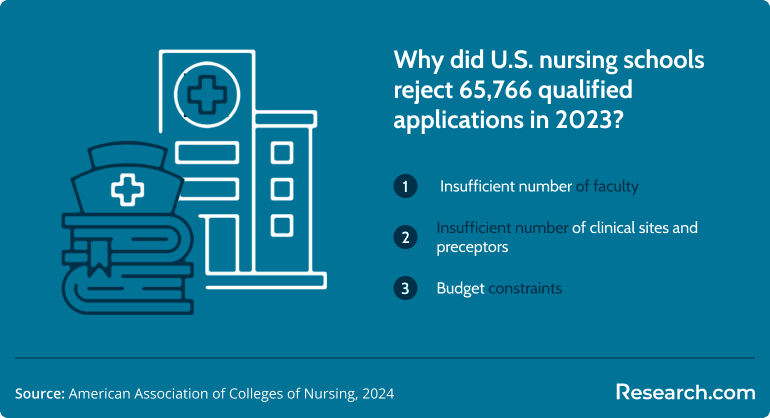
- Clinical placement access is a major practical issue: in 2023, the shortage of clinical training sites contributed to nursing schools turning away more than 60,000 qualified applicants.
How long does it take to complete an online RN to FNP degree program?
Most online RN to FNP degree programs take about two to four years, depending on prior education, transfer credits, enrollment pace, bridge requirements, and clinical placement timing. Accelerated options may move faster, while part-time plans are often more realistic for nurses working full-time shifts.
- Program structure: Some schools offer accelerated ADN-to-MSN-FNP pathways, while others require students to complete BSN-equivalent coursework before graduate FNP classes. Students comparing faster routes can also review accelerated FNP programs.
- Full-time or part-time enrollment: Full-time study shortens the calendar but may be difficult for nurses with demanding work schedules. Part-time study adds time but may reduce burnout.
- Prerequisite gaps: Applicants who need statistics, health assessment, research, or other bridge courses may need extra semesters.
- Clinical placement availability: Delays in finding approved sites or preceptors can extend the timeline. The shortage of clinical training sites in 2023 contributed to more than 60,000 qualified applicants being rejected by nursing schools.
- Residency and campus requirements: Programs with intensives may require travel planning, employer approval, and time away from work.
| Student situation | Likely timeline impact | Best fit |
| ADN-prepared RN with all prerequisites complete | May finish closer to the shorter end of the two-to-four-year range | Bridge programs with clear credit transfer policies |
| RN with a non-nursing bachelor’s degree | May qualify for second-degree or MSN bridge options | Programs designed specifically for non-nursing bachelor’s holders |
| Full-time working nurse | May need part-time enrollment or fewer courses per term | Asynchronous online programs with local clinicals |
| Student in a difficult clinical market | May face delays if preceptors are limited | Schools with strong clinical placement support |
How does an online RN to FNP compare to an on-campus program?
Online RN to FNP programs are usually better for nurses who need flexibility, cannot relocate, or want to keep working while studying. Campus programs may be better for students who prefer fixed schedules, face-to-face instruction, immediate access to faculty, and structured peer interaction.
Cost can also differ. Online students may save on commuting, parking, housing, and relocation. However, online programs can still include technology fees, clinical placement fees, travel for intensives, background checks, immunizations, malpractice insurance, testing fees, and certification exam costs. Students focused on minimizing tuition can compare broader lists of affordable online FNP programs.
| Factor | Online RN to FNP | On-campus RN to FNP |
| Course delivery | Online classes, often asynchronous or hybrid | Scheduled in-person classes |
| Clinical training | Completed in approved healthcare settings, often local to the student | Completed through school-approved sites, often near campus |
| Flexibility | Usually stronger for working nurses | More structured but less flexible |
| Peer and faculty access | Virtual interaction through discussion boards, meetings, and messaging | More immediate face-to-face contact |
| Cost considerations | May reduce commuting and relocation costs but still includes fees and clinical expenses | May include commuting, housing, parking, and campus-based costs |
| Best for | Self-directed learners with strong time-management skills | Students who learn best through in-person structure |
What is the average cost of an online RN to FNP degree program?
The average cost of an online RN to FNP program typically falls between $30,000 and $60,000. The final amount can be higher or lower depending on tuition rate, credit requirements, residency status, institutional fees, clinical requirements, and how many bridge courses a student must complete.
- Tuition rate: Per-credit tuition is the largest cost driver, and rates vary widely by school.
- Residency rules: Public universities may charge different rates for in-state and out-of-state students.
- Total credits: A lower per-credit rate does not always mean a cheaper program if the curriculum requires more credits.
- Fees: Online students may pay technology, distance learning, clinical placement, background check, assessment, and administrative fees.
- Books and materials: Digital resources can reduce some textbook costs, but students should still budget for required materials.
- Institution type: Public institutions often have lower in-state rates. According to NCES data, average tuition for full-time graduate students at public institutions was $11,554 in 2022-23. A 2023 survey also found that 45% of online college students prefer public not-for-profit schools.
- Financial aid: Grants, scholarships, employer reimbursement, and loan forgiveness programs can lower out-of-pocket cost.
| Cost factor | Why it matters | Question to ask the school |
| Per-credit tuition | Determines the baseline cost of each course | Is tuition locked in, or can it increase during enrollment? |
| Credit total | More credits can offset a lower tuition rate | How many total credits will I need based on my transcript? |
| Clinical placement costs | Some programs charge placement or practicum-related fees | Are clinical placement services included in tuition? |
| Residency requirements | Travel can add lodging, transportation, and missed-work costs | Are campus visits required, and how often? |
| State authorization | Students may not be eligible to enroll or complete clinicals in every state | Is the program authorized for my state and licensure goal? |
What are the financial aid options for students enrolling in an online RN to FNP degree program?
Students in online RN to FNP programs may qualify for federal aid, scholarships, employer benefits, military education benefits, private loans, and loan forgiveness programs. Even students comparing the cheapest online FNP programs should build a full funding plan before enrolling.
Federal financial aid
- Pell Grants: Need-based grants that do not require repayment, though graduate-level eligibility depends on federal rules and student circumstances.
- Direct Subsidized Loans: Need-based loans where the government pays interest while the student is in school.
- Direct Unsubsidized Loans: Loans that are not based on financial need and accrue interest during school.
- Direct PLUS Loans: Loans available to graduate students and parents of dependent undergraduate students.
Non-federal financial aid
- Institutional scholarships: Awards from the school based on need, merit, specialty area, service, or other criteria.
- Private scholarships: Funding from associations, foundations, healthcare organizations, and employers.
- Loan forgiveness programs: Public Service Loan Forgiveness (PSLF) may help borrowers in qualifying public service jobs after meeting program requirements.
- Military benefits: Veterans and active-duty service members may be able to use benefits such as the GI Bill.
- Private loans: Bank or credit-union loans may fill funding gaps but can have different interest rates and protections than federal loans.
- Work-study: Eligible students may earn income through part-time work connected to their financial aid package.
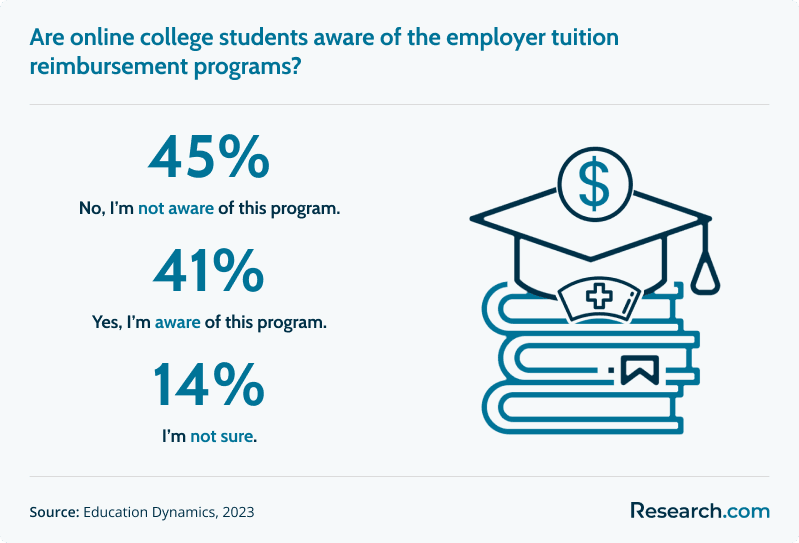
- Employer tuition reimbursement: Many healthcare employers help employees pay for additional education, although many students are unsure whether this benefit is available to them.
How to reduce the total cost
- Ask for a transcript evaluation before applying so you know how many credits you must complete.
- Compare total program cost, not only per-credit tuition.
- Confirm whether clinical placement help is included or billed separately.
- Ask your employer about tuition reimbursement, scheduling flexibility, and service commitments.
- Apply for nursing-specific scholarships early because deadlines may fall months before the term starts.
- Use federal aid first when appropriate, then compare private borrowing carefully.
What are the prerequisites for enrolling in an online RN to FNP degree program?
Admission rules vary by school, but online RN to FNP programs generally require active RN licensure, prior nursing education, academic readiness for graduate study, and documentation showing clinical and professional preparation. Nationwide, 656 nursing schools offer master’s programs, including standard online NP programs and bridge options such as RN to FNP pathways.
- Active RN license: Applicants usually need an unencumbered registered nurse license in the state where they will complete clinicals.
- Prior nursing education: Many programs accept an ADN or nursing diploma. Some bridge pathways also require a bachelor’s degree in a non-nursing field.
- Minimum GPA: A cumulative GPA around 3.0 on a 4.0 scale is commonly required.
- Recommendations: Schools may request professional or academic references who can speak to the applicant’s clinical ability and readiness for graduate work.
- Personal statement: Applicants often explain why they want to become an FNP, how the degree fits their career plans, and why the program is a good match.
- Resume or CV: A current resume typically lists nursing experience, certifications, education, leadership, and professional involvement.
- Interview: Some programs use interviews to assess fit, communication skills, and readiness for advanced practice education.
Readers who are not yet nurses should not start with an RN to FNP program. A nonnurse typically needs an entry nursing pathway first, such as one of the best online ADN programs for non nurses, before becoming eligible for RN bridge programs.
What courses are typically in an online RN to FNP degree program?
Online RN to FNP curricula combine bridge-level nursing foundations, MSN core courses, and family nurse practitioner specialty classes. The exact sequence differs by school, but most programs cover advanced assessment, disease processes, pharmacology, evidence-based practice, and family primary care across the lifespan.
- Advanced Health Assessment: Builds skills in patient history, physical examination, clinical reasoning, and assessment techniques for primary care.
- Pathophysiology: Examines how disease processes affect body systems and informs diagnostic thinking.
- Pharmacology for Advanced Practice Nurses: Covers medication selection, pharmacokinetics, pharmacodynamics, therapeutic use, and patient safety.
- Primary Care of Families: Focuses on prevention, diagnosis, and management of common acute and chronic conditions across age groups.
- Research for Evidence-Based Practice: Trains students to evaluate nursing research and apply evidence to patient care decisions.
| Course area | Why it matters for FNP practice |
| Assessment | FNPs need strong examination and history-taking skills to evaluate patients across the lifespan. |
| Pathophysiology | Understanding disease mechanisms supports accurate differential diagnosis and care planning. |
| Pharmacology | Medication knowledge is essential for prescribing decisions where state law permits. |
| Family primary care | FNPs commonly manage preventive care, chronic disease, acute concerns, and health education. |
| Evidence-based practice | Clinical decisions should be grounded in research, quality improvement, and patient outcomes. |
What types of specializations are available in an RN to FNP degree program?
Family nurse practitioner is itself a nurse practitioner specialization, so an RN to FNP degree does not usually contain additional FNP sub-specializations. However, students comparing advanced practice paths may also encounter other nurse practitioner specialties.
- Adult-Gerontology Primary Care Nurse Practitioner (AGPCNP): Prepares nurses to care for adolescents, adults, and older adults in primary care, with attention to chronic conditions, prevention, and healthy aging.
- Pediatric Nurse Practitioner (PNP): Focuses on infants, children, and adolescents through services such as immunizations, developmental screening, and acute illness care.
- Psychiatric-Mental Health Nurse Practitioner (PMHNP): Prepares nurses to assess, diagnose, and treat mental health conditions across the lifespan, including psychotherapy and medication management where allowed.
- Women’s Health Nurse Practitioner (WHNP): Concentrates on reproductive, gynecologic, prenatal, postpartum, and women’s health care needs.
- Neonatal Nurse Practitioner (NNP): Specializes in caring for newborns, including premature infants and babies with complex medical needs.
- Acute Care Nurse Practitioner (ACNP): Serves patients with acute, complex, or critical conditions, often in hospitals, ICUs, or emergency care settings.
FNP remains the most widely held specialization, with 70% of nurse practitioners listing FNP as their primary certification.
How do you choose the best online RN to FNP degree program?
The best online RN to FNP program is not simply the cheapest one. It is the accredited program that fits your state, budget, schedule, clinical placement needs, certification goals, and learning style. A low tuition rate loses value if the program does not support clinical placement, lacks authorization in your state, or does not qualify you for the certification and licensure route you need.
- Accreditation: Look for nursing accreditation through CCNE or the Accreditation Commission for Education in Nursing (ACEN).
- State authorization: Confirm that the school can enroll students from your state and approve clinical experiences there.
- Clinical placement support: Ask whether the school finds preceptors, provides a placement team, or expects students to secure sites independently.
- Certification exam preparation: Review pass rates, board review resources, practice exams, and alignment with ANCC or AANP requirements.
- True total cost: Add tuition, fees, books, residencies, travel, clinical expenses, background checks, and certification exam costs.
- Schedule fit: Compare full-time, part-time, synchronous, asynchronous, and cohort-based formats.
- Faculty experience: Look for faculty with family practice, primary care, rural health, telehealth, or advanced practice backgrounds.
- Student support: Strong online programs should offer advising, tutoring, technical support, library access, clinical coordination, and career services.
- Reputation and outcomes: Consider student reviews, graduation data, certification preparation, employer recognition, and alumni feedback.
Questions to ask before applying
| Question | Why it matters |
| Is the program CCNE- or ACEN-accredited? | Accreditation can affect certification eligibility, licensure, employer acceptance, and financial aid. |
| Can I complete clinicals in my state? | Online programs may not be authorized for every state or clinical site. |
| Who is responsible for finding preceptors? | Clinical placement problems can delay graduation. |
| Are campus visits or residencies required? | Travel requirements affect cost, scheduling, and time away from work. |
| What is the total estimated cost after fees? | Tuition alone does not show the full financial commitment. |
| Which certification exams do graduates prepare for? | Most students need eligibility for ANCC or AANP family nurse practitioner certification. |
Common mistakes to avoid
- Choosing only by tuition: A cheaper program may cost more if it requires extra credits, travel, or unsupported clinical searches.
- Ignoring accreditation: Non-accredited programs can create problems for certification, licensure, employment, and transfer options.
- Assuming online means no campus visits: Some programs require residencies, skills labs, or intensive sessions.
- Failing to check state rules: Licensure, scope of practice, and clinical authorization differ by state.
- Underestimating clinical hours: Practicum scheduling can be difficult for nurses working full-time.
- Relying only on rankings: Rankings are useful starting points, but your best program depends on your state, budget, career goals, and support needs.
What career paths are available for graduates of online RN to FNP degree programs?
Online RN to FNP graduates may pursue family nurse practitioner roles in primary care and related settings. Within the healthcare industry, which employs 71% of FNPs, common employers include hospitals, private practices, outpatient clinics, specialty clinics, and community-based care settings. In addition, 11% of FNPs work in education, where they may teach, supervise clinical learning, or support nurse training.
In states with broader practice authority, FNPs may practice with significant independence and may be able to open or manage primary care practices. In states with more restrictive laws, FNPs may need physician collaboration or supervision. Government-related options can include public health departments, veterans’ health services, correctional healthcare, military healthcare, and local government clinics.
| Career path | Typical setting | Best for nurses who want |
| Family Nurse Practitioner | Primary care, family medicine, clinics, outpatient care | Long-term patient relationships and lifespan care |
| Urgent Care FNP | Urgent care centers and walk-in clinics | Fast-paced assessment and treatment of acute concerns |
| Community Health FNP | Public health clinics and underserved communities | Prevention, access to care, and population health impact |
| Rural Health FNP | Rural clinics and local health systems | Broad primary care responsibilities in high-need areas |
| Clinical Educator | Academic institutions and clinical training sites | Teaching, mentoring, and workforce development |
An RN to FNP degree is not the right fit for every learner. If you are still comparing fields or deciding whether a clinical advanced practice pathway aligns with your goals, you may want to review unrelated affordability-focused options such as an affordable information systems MBA online, the cheapest online BSN to DNP programs, the cheapest online creative writing degrees, or the cheapest online master's in higher education.
How do online RN to FNP programs utilize technology for enhanced learning outcomes?
Online RN to FNP programs use learning management systems, virtual classrooms, discussion boards, digital libraries, telehealth modules, video demonstrations, and simulation tools to connect classroom theory with clinical decision-making. These tools are especially useful for practicing patient interviews, clinical reasoning, documentation, and evidence-based care before students apply skills in live clinical environments.
Technology can improve access, but it does not replace clinical training. Students should ask how simulations are evaluated, how faculty provide feedback, what telehealth competencies are included, and whether online tools are aligned with certification exam preparation. Students looking for faster FNP options can also compare FNP programs with accelerated structures.
How do RN to FNP programs compare with direct entry MSN programs?
RN to FNP programs are built for licensed registered nurses who already have nursing experience and want to advance into family nurse practitioner practice. Direct entry MSN programs are intended for people with non-nursing bachelor’s degrees who want to enter nursing and progress into graduate-level preparation through a different route.
| Pathway | Who it is for | Main advantage | Main caution |
| RN to FNP | Licensed RNs with an ADN, diploma, or qualifying prior degree | Builds on existing RN licensure and clinical experience | Requires careful review of bridge credits and clinical placement rules |
| Direct entry MSN | Non-nurses with a bachelor’s degree in another field | Creates a path into nursing without first earning a traditional BSN | Admissions, clinical intensity, and licensure sequencing can be demanding |
Prospective students deciding between the two should compare prerequisites, licensure steps, clinical hours, program intensity, cost, and career goals. Those exploring nontraditional MSN routes may find it useful to review the easiest direct entry MSN programs to get into.
How do online RN to FNP programs ensure effective clinical training?
Strong online RN to FNP programs use structured clinical placement processes, approved preceptors, defined practicum objectives, faculty oversight, skills assessments, and feedback from clinical mentors. Programs may also use simulation before or alongside practicum work so students can practice assessment and clinical reasoning in a controlled environment.
Students should not assume every online program provides the same level of placement support. Ask whether the school has placement agreements, how preceptors are approved, what happens if a site falls through, and how clinical performance is evaluated. Students comparing bridge routes can review an RN to NP online program pathway to better understand how ADN-to-MSN structures may work.
What is the job market for graduates of online RN to FNP degree programs?
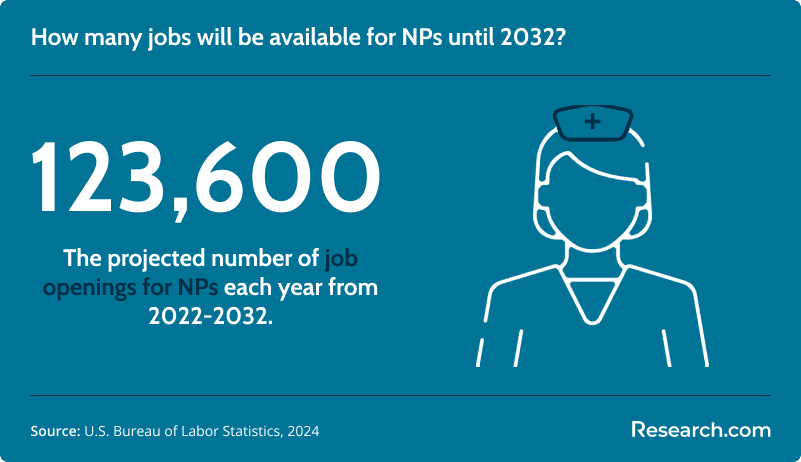
The labor market outlook for nurse practitioners is strong. Employment for nurse practitioners is projected to grow by 38% from 2022 to 2032, which is far faster than the average growth rate for all occupations. Demand is supported by primary care needs, aging populations, chronic disease management, and expanded use of nurse practitioners in many healthcare settings.
Graduates of online RN to FNP programs may find opportunities in private practices, hospitals, outpatient care, academic institutions, government facilities, community health, and rural care settings. Still, job prospects are not identical everywhere. State scope-of-practice laws, local employer demand, payer rules, experience level, and certification status all influence hiring and compensation.
What are the accreditation requirements for online RN to FNP programs?
Accreditation is one of the most important checks before enrolling in an online RN to FNP program. It signals that the nursing program has been reviewed for curriculum quality, faculty qualifications, clinical preparation, student support, and alignment with professional standards.
The two primary nursing accreditors for these programs are the Commission on Collegiate Nursing Education (CCNE) and the Accreditation Commission for Education in Nursing (ACEN). Attending an accredited program can affect eligibility for national certification exams, state licensure, employer acceptance, financial aid, and future academic progression.
Graduates from non-accredited programs may face serious barriers, including ineligibility for family nurse practitioner certification exams through the American Nurses Credentialing Center (ANCC) or the American Association of Nurse Practitioners (AANP). Some employers also require graduation from an accredited program.
If you are still mapping the full nursing pathway before FNP study, review the steps involved in how to be a nurse. Understanding the RN foundation can help you make better decisions about advanced practice education.
How do online RN to FNP programs prepare you for certification exams?
Accredited online RN to FNP programs typically prepare students for certification through curriculum alignment, board-style practice questions, faculty review, clinical case analysis, simulation assessments, and preparation for national standards. The strongest programs connect advanced assessment, pharmacology, pathophysiology, and family primary care content directly to the competencies tested on FNP certification exams.
When comparing schools, ask for current certification pass-rate information, the type of exam review support offered, whether practice exams are included, and how the program helps students identify weak areas before graduation. Students still comparing nursing school accessibility can also review What's the easiest nursing program to get into?.
How can online RN to FNP programs bolster professional networking and mentorship?
Online students need intentional networking because they may not see classmates and faculty on campus every week. Strong programs create professional connection points through virtual office hours, peer cohorts, alumni panels, clinical preceptor relationships, webinars, faculty mentoring, specialty-interest groups, and collaborative projects.
Mentorship matters for clinical placement, certification planning, first FNP job searches, and long-term advancement. Students who still need an intermediate nursing bridge before MSN-level work may also compare easy online RN-to-BSN programs to get into.
How can online RN to FNP programs support rural healthcare?
Online RN to FNP programs can help rural communities by allowing nurses who already live and work in underserved areas to continue their education without relocating. When students complete clinical practicums locally, they can build advanced practice skills while remaining connected to the communities that need primary care access.
- Addressing provider shortages: Rural communities often have limited access to primary care physicians, and FNPs can help provide examinations, chronic disease management, medication management, preventive care, and patient education.
- Training within the community: Local clinical placements can help students understand the specific health needs, resource limitations, and referral networks in their region.
- Telehealth readiness: Many online programs include telehealth exposure, which can support care delivery when patients live far from clinics or specialists.
- Prevention-focused care: FNPs often emphasize health education, screening, and chronic disease management, which can reduce avoidable complications for rural patients.
How can I balance work and study in an online RN to FNP program?
Balancing nursing shifts with graduate coursework is difficult but manageable with planning. The most successful students treat school as a second professional commitment, not as extra work to fit in randomly after long shifts.
- Build a weekly study calendar: Reserve specific blocks for readings, assignments, clinical documentation, exam review, and discussion posts.
- Use the program format strategically: If your program is asynchronous, schedule coursework around your most predictable off-hours rather than waiting until deadlines approach.
- Talk with your employer early: Ask about flexible scheduling, tuition reimbursement, education leave, or reduced hours during clinical-heavy terms.
- Plan clinical semesters carefully: Practicum requirements can be harder to manage than online classes, especially if you work rotating shifts.
- Protect recovery time: Burnout can affect academic performance, patient safety, and personal health. Schedule rest the same way you schedule study time.
- Use support services: Online advising, tutoring, writing help, technical support, and peer study groups can prevent small problems from becoming major delays.
If affordability and flexibility are both priorities, compare the cheapest FNP programs online and ask each school how it supports working nurses during clinical terms.
How can I maximize the return on investment of my online RN to FNP degree?
To improve ROI, compare the full cost of the degree with realistic career outcomes, not idealized salary claims. Start with tuition and fees, then add books, travel, residencies, clinical costs, reduced work hours, certification exams, licensing expenses, and loan interest. Next, compare those costs with likely salary growth, local job demand, employer reimbursement, and long-term advancement opportunities.
- Choose accredited programs only: Accreditation protects certification and licensure options.
- Minimize unnecessary credits: Request transcript reviews and transfer-credit evaluations before applying.
- Use employer benefits: Tuition reimbursement can substantially reduce personal cost if available.
- Prioritize clinical placement support: Delays can increase cost and postpone earnings from advanced practice employment.
- Compare related education investments: Looking at other healthcare training costs, such as How much is the LPN program?, can help place FNP costs in a broader nursing education context.
- Evaluate career services: Resume help, interview support, alumni networks, and preceptor connections can improve the transition from student to practicing FNP.
Is pursuing an MBA alongside an RN to FNP degree a strategic career move?
An MBA may make sense for FNPs who want leadership, administration, practice management, healthcare operations, consulting, or executive roles. It is less necessary for nurses whose main goal is direct primary care practice. Combining clinical expertise with business training can be useful for budgeting, staffing, strategy, quality improvement, and service-line management.
The trade-off is time and cost. A dual-degree or additional MBA can increase tuition and workload, so students should first decide whether they want clinical advancement, administrative leadership, or both. Those exploring this route can compare an MBA MSN dual degree online.
Further Academic Progression After an FNP Degree
An RN to FNP degree can qualify nurses for advanced family practice roles, but it is not always the final academic step. Some FNPs later pursue post-master’s certificates, doctoral study, leadership credentials, or another specialty area depending on their clinical interests and career goals.
Post-master’s certificate programs
Post-master’s certificates are useful for FNPs who want to add another population focus or move into a different advanced practice specialty without completing a second full graduate degree. Common options include:
- Psychiatric-Mental Health Nurse Practitioner: Prepares FNPs to expand into psychiatric assessment, diagnosis, mental health treatment, and lifespan behavioral health care.
- Acute Care Nurse Practitioner: Builds preparation for managing complex acute and chronic conditions in settings such as ICUs and emergency departments.
- Pediatric Nurse Practitioner: Focuses on care for children from infancy through young adulthood, including acute and chronic care needs.
Why additional credentials may help
Additional certificates can help FNPs respond to workforce needs, serve specific patient populations, or shift into specialized practice settings. The value depends on local demand, state rules, employer expectations, certification requirements, and the nurse’s long-term career plan.
Online options after FNP preparation
Many post-master’s certificates are available online with clinical requirements completed in person. Practicing FNPs should compare schedules, clinical placement support, certification eligibility, and whether the program fits their current work commitments.
For FNPs seeking a fast route to another credential, Research.com’s list of shortest online nurse practitioner programs can help identify options that emphasize speed, flexibility, and advanced practice progression.
References
- AACN. (2024, April 15). New AACN data points to enrollment challenges facing U.S. schools of nursing. American Association of Colleges of Nursing. Retrieved July 5, 2024.
- AANP. (2024, February). NP fact sheet. American Association of Nurse Practitioners. Retrieved July 5, 2024.
- Education Dynamics. (2023). Online college students report 2023. EducationDynamics.com. Retrieved July 15, 2024.
- Salary.com. (2024, June 27). Family nurse practitioner (NP) salary. Salary.com. Retrieved July 5, 2024.
- U.S. BLS. (2023, November 14). The economics daily: A look at nurse practitioners for national nurse practitioner week. U.S. Bureau of Labor Statistics. Retrieved July 5, 2024.
- Zippia. (2024, April 5). Family nurse practitioner demographics and statistics [2024]: N1umber of family nurse practitioners in the U.S. Zippia.com. Retrieved July 5, 2024.
Key Insights
- An online RN to FNP degree is best for licensed RNs who want family primary care preparation without leaving the workforce or relocating for a campus program.
- Affordability should be measured by total cost, not just tuition. Credits, fees, residencies, clinical placement expenses, and lost work hours can change the real price.
- Accreditation is nonnegotiable. Look for CCNE or ACEN accreditation before considering cost, speed, or convenience.
- Clinical placement is the biggest operational risk in many online FNP programs. Ask who secures preceptors, what support is provided, and whether your state is approved.
- Family practice is a high-demand NP specialty, with over 70% of nurse practitioners holding it as their primary certification and nurse practitioner employment projected to grow by 38% from 2022 to 2032.
- The strongest program choice is the one that fits your state licensure path, certification goals, schedule, budget, and clinical training needs—not necessarily the one with the lowest advertised tuition.
Other Things You Should Know About the Most Affordable Online RN to FNP Degree Programs
Yes. Most RN to FNP programs require about 500 to 1,000 supervised clinical hours, and placements are often arranged in the student’s home state. Programs must still meet the clinical and practice requirements of the state board of nursing and the national certification body.
Yes, many online RN to FNP programs in 2027 offer scholarships or financial aid options. Eligibility may depend on academic performance or financial need. Prospective students should check with each program for specific scholarship opportunities and application deadlines.
Admission requirements typically include a current RN license, a Bachelor of Science in Nursing, and a minimum GPA, often around 3.0. Some programs may also require clinical experience and letters of recommendation. Specific criteria vary, so check each program's website for details.


