
2027 Best Online Graduate Certificate Nurse Midwifery Programs

Co-Founder and Chief Data Scientist
Midwives play a crucial role in modern healthcare, offering personalized, evidence-based care to women before, during, and after childbirth. As maternal healthcare needs continue to rise in the U.S., there is a growing demand for highly trained nurse-midwives to fill critical gaps—especially in underserved areas.
An online graduate certificate in nurse midwifery is designed for working registered nurses or advanced practice nurses who want to specialize in women's reproductive health and prenatal care. This pathway is ideal for professionals looking to advance their careers, expand their scope of practice, or transition into midwifery.
This article highlights the best online graduate certificate nurse midwifery programs available, helping you compare options, understand admission requirements, and choose a program that aligns with your career goals.
What are the benefits of pursuing an online nurse midwifery graduate certificate program?
For registered nurses (RNs) and advanced practice registered nurses (APRNs) looking to specialize in midwifery, online graduate certificate programs offer a convenient and efficient way to advance their careers. These programs combine academic excellence with the flexibility needed by working professionals. Below are some key benefits of pursuing this path:
- Flexible Scheduling: Online programs allow students to complete coursework on their own time, making it easier to manage work, family, and clinical requirements.
- Study Anywhere: With remote access to lectures and assignments, students can learn from anywhere, often completing clinical hours at approved sites near their location.
- Cost Savings: Online programs often reduce expenses related to commuting, campus housing, and sometimes even tuition, making them more budget-friendly.
- Faster Career Advancement: A graduate certificate can be completed more quickly than a full degree, allowing students to enter or transition into midwifery roles sooner.
- Professional Networking: Students connect with faculty and peers from across the country, expanding their professional network and exposure to diverse healthcare practices.
- Accredited, High-Quality Education: Many online programs are offered by respected institutions and meet the same accreditation standards as on-campus options.
These benefits make online nurse midwifery certificate programs an ideal option for motivated nurses ready to take the next step in their careers.
What can I expect from these online nurse midwifery programs?
Online graduate certificate nurse midwifery programs are designed to provide advanced training in women’s reproductive health, pregnancy, childbirth, and postpartum care. While delivered primarily online, these programs maintain rigorous academic standards and include both theoretical and hands-on clinical components. Here’s what students can typically expect:
- Core Curriculum: Coursework covers topics such as advanced pathophysiology, pharmacology, prenatal and postpartum care, labor and delivery management, and newborn assessment. Evidence-based practice and cultural competence are often emphasized.
- Clinical Training: Despite being online, these programs require in-person clinical hours. Students complete supervised practicum experiences in settings such as hospitals, birthing centers, or OB/GYN clinics, often arranged near their home location.
- Part-Time or Full-Time Options: Many programs offer flexible pacing to accommodate working nurses. Completion timelines may range from 12 to 24 months depending on the program and the student’s schedule.
- Faculty Support and Online Resources: Students engage with experienced nurse-midwifery faculty through virtual lectures, discussion boards, and one-on-one advising. Access to digital libraries, simulation tools, and academic support services is commonly included.
- Certification Preparation: These programs are structured to meet the requirements for graduates to sit for the Certified Nurse-Midwife (CNM) exam offered by the American Midwifery Certification Board (AMCB), provided they meet eligibility criteria.
Overall, students can expect a rigorous, supportive, and career-focused experience that equips them with the skills and knowledge needed to enter the nurse-midwifery field confidently.
Where can I work with a graduate certificate in nurse midwifery?
Earning a graduate certificate in nurse midwifery opens up a variety of rewarding career paths in both clinical and community-based settings. Certified nurse-midwives (CNMs) are in high demand across the U.S., especially in areas where access to maternal care is limited. With this credential, you can work in diverse healthcare environments that focus on women’s reproductive and maternal health.
Common employment settings include:
- Hospitals and Medical Centers: CNMs often work in labor and delivery units, providing prenatal care, assisting with childbirth, and managing postpartum recovery.
- Birthing Centers: These facilities focus on natural childbirth and often employ midwives to lead care in a more personalized, low-intervention setting.
- OB/GYN and Women’s Health Clinics: Midwives in these settings provide routine gynecological care, family planning services, and reproductive health education.
- Community Health Organizations: Some midwives work with underserved populations, offering care in rural areas, public health departments, or nonprofit organizations.
- Private Practice or Collaborative Groups: CNMs may also practice independently or as part of a multidisciplinary healthcare team, working alongside physicians and other specialists.
A graduate certificate equips you with the specialized training and qualifications to provide high-quality, holistic care throughout a woman's reproductive lifespan, positioning you for meaningful roles in today’s evolving healthcare landscape.
How much can I make with a graduate certificate in nurse midwifery?
A graduate certificate in nurse midwifery can significantly boost your earning potential, especially if you pursue certification and licensure as a certified nurse-midwife. According to the U.S. Bureau of Labor Statistics, CNMs earned a median annual salary of $125,900 as of May 2023. Salaries can vary depending on your location, years of experience, and the type of healthcare setting in which you work.
Here’s a general breakdown of potential earnings:
- Entry-Level CNMs: Typically earn between $90,000 to $110,000 annually.
- Experienced CNMs: Often make $130,000 or more, especially in high-demand urban or underserved rural areas.
- Top Earners: Those in leadership, private practice, or specialized roles can earn over $150,000 annually.
In addition to competitive salaries, many midwives receive comprehensive benefits packages, including health insurance, retirement contributions, and paid time off. With growing demand for maternal and reproductive healthcare, nurse midwives with graduate-level training are well-positioned for both financial and professional growth.
- List of the Best Graduate Certificate in Online Nurse Midwifery Programs for 2027 List of Programs
- How long does it typically take to complete graduate certificate in online nurse midwifery programs? Completion Time
- What are the prerequisites for enrolling in an online nurse midwifery graduate certificate program? Requirements
- What is the average cost of graduate certificate in online nurse midwifery programs? Program Cost
- What are the financial aid options for students enrolling in graduate certificate in online nurse midwifery programs? Financial Aid
- What courses are typically included in graduate certificate online nurse midwifery programs? What courses are typically included in graduate certificate online nurse midwifery programs?
- How can I choose the best online nurse midwifery graduate certificate program? How can I choose the best online nurse midwifery graduate certificate program?
- What are the differences between graduate certificate on-campus and online nurse midwifery programs? What are the differences between graduate certificate on-campus and online nurse midwifery programs?
- What is the job outlook for graduates of online nurse midwifery programs? Job Outlook
- What career paths are available for graduates of online nurse midwifery programs? Career Paths
- How can accelerated BSN programs enhance my nurse midwifery career pathway? How can accelerated BSN programs enhance my nurse midwifery career pathway?
- What accreditation standards and licensure considerations apply to these programs? What accreditation standards and licensure considerations apply to these programs?
Best Online Graduate Certificate in Nurse Midwifery Programs for 2027
If you already have graduate nursing preparation and want to add nurse-midwifery to your scope of practice, an online post-graduate certificate can be a practical route. These programs are built for nurses who do not need another full nursing degree but do need the coursework, clinical training, and certification preparation required to pursue Certified Nurse-Midwife practice.
This guide is for RNs, APRNs, MSN-prepared nurses, DNP-prepared nurses, and career-changing nurses comparing online nurse-midwifery certificate options. It explains which programs stand out, how long they take, what they cost, what prerequisites matter, how clinical placements work, and how to avoid choosing a program that does not support certification or state practice requirements.
The stakes are high. Nurse-midwifery programs require significant clinical hours, tuition investment, and state-specific planning. Choosing well means looking beyond online convenience and checking accreditation, clinical placement support, certification eligibility, total cost, and whether the program fits your existing nursing background.
Quick answer: What is an online graduate certificate in nurse midwifery?
An online graduate certificate in nurse midwifery is a post-graduate nursing credential for nurses who already hold advanced nursing education and want to prepare for nurse-midwifery certification. Coursework is usually delivered online, but clinical training must be completed in person at approved sites. Most programs prepare graduates to pursue the Certified Nurse-Midwife credential through the American Midwifery Certification Board, provided the student meets program, certification, and state licensure requirements.
How to use this ranking
Use this list as a starting point, not as the only factor in your decision. A highly ranked program may not be the best fit if it cannot support clinical placement in your state, does not match your schedule, or costs more than your expected career benefit can justify.
Our ranking review draws from institutional and federal education data sources, including the IPEDS database, Peterson's database, the College Scorecard, and the National Center for Education Statistics. This ranking focuses on post-MSN certification programs with a nurse-midwifery concentration and online coursework delivery. For more detail on how Research.com evaluates schools and programs, review our methodology.
| Program | Location | Program length | Credits required | Published cost | Accreditation listed |
| Frontier Nursing University | Versailles, KY | 21-27 months | 42 | $705 per credit hour | Southern Association of Colleges and Schools Commission on Colleges (SACSCOC); Accreditation Commission for Midwifery Education (ACME) |
| Georgetown University | Washington, DC | 16-24 months | 27 minimum credits | $2,652 per credit hour | Commission on Collegiate Nursing Education (CCNE) |
| Texas Tech University Health Sciences Center | Lubbock, TX | 12-24 months | 39 semester hours | $1,013 per semester hour (TX resident) | $1,418 per semester hour (non-resident) | CCNE, SACSCOC |
| Stony Brook University | Stony Brook, NY | 3 years | 22 | $471 per credit | Accreditation Commission for Midwifery Education (ACME) |
| East Carolina University | Greenville, NC | 24 months | 23-41 | $300 per credit hour | CCNE |
| University of Colorado Denver Anschutz Medical Campus | Denver, CO | 1.5 years | 20 | $28,836 (CO residents) | $46,728 (non-residents) | CCNE |
1. Frontier Nursing University
Frontier Nursing University is known for distance-based midwifery education and is a strong option for nurses who want online coursework paired with local clinical training. Its post-graduate certificate nurse-midwife program is designed for nurses who already hold a master's or higher degree in an APRN specialty and want to add nurse-midwifery preparation.
The program emphasizes community-based care, including rural and underserved populations. Full-time students can complete the curriculum in 21 months or 7 terms, while part-time students can complete it in 27 months or 9 terms.
- Location: Versailles, KY
- Program Length: 21-27 months
- Credits Required: 42
- Cost: $705 per credit hour
- Accreditation: Southern Association of Colleges and Schools Commission on Colleges (SACSCOC); Accreditation Commission for Midwifery Education (ACME)
2. Georgetown University
The Berkley School of Nursing at Georgetown University offers a post-graduate certificate in nurse-midwifery for APRNs seeking preparation for nurse-midwife board certification. The program is open to students with a Master of Science degree in Nursing or a doctoral degree, including DNP, PhD, or DNAP preparation.
Students study primary care, sexual and reproductive healthcare, antepartum care, labor and birth, postpartum care, and newborn care. The curriculum requires 27 minimum credits and 1,000+ clinical hours. Faculty complete a gap analysis for each student, so some students may need more than the minimum number of credits.
- Location: Washington, DC
- Program Length: 16-24 months
- Credits Required: 27
- Cost: $2,652 per credit hour
- Accreditation: Commission on Collegiate Nursing Education (CCNE)
3. Texas Tech University Health Sciences Center
Texas Tech University Health Sciences Center offers a post-graduate nurse-midwifery track requiring 39 semester hours. The program uses distance education with web-enhanced courses, combining online learning activities with face-to-face classroom components.
This option may appeal to students who want regional clinical placements and a curriculum connected to diverse and underserved patient populations. Completion prepares students to take the American Midwifery Certification Board exam.
- Location: Lubbock, TX
- Program Length: 12-24 months
- Credits Required: 39
- Cost: $1,013 per semester hour (TX resident) | $1,418 per semester hour (non-resident)
- Accreditation: CCNE, SACSCOC
4. Stony Brook University
Stony Brook University offers an Advanced Certificate-Nurse Midwifery program for master's- and doctorate-prepared nurses who want focused graduate preparation in nurse midwifery. The specialization prepares students to care for women across the lifespan and to participate in care for mothers and healthy newborns, with attention to normal birth across multiple care settings.
Graduates of the post-MSN certificate are eligible for certification in New York State and may also pursue national certification in the specialty.
- Location: Stony Brook, NY
- Program Length: 3 years
- Credits Required: 22
- Cost: $471 per credit
- Accreditation: Accreditation Commission for Midwifery Education (ACME)
5. East Carolina University
East Carolina University provides a post-master's certificate with a nurse-midwifery concentration. Coursework is delivered online, and the university works with distance education students while attempting to accommodate clinical placement needs.
Students who complete the program are eligible to sit for the American Midwifery Certification Board exam. Passing that exam allows graduates to earn the Certified Nurse-Midwife title.
- Location: Greenville, NC
- Program Length: 24 months
- Credits Required: 23-41
- Cost: $300 per credit hour
- Accreditation: CCNE
6. University of Colorado Denver Anschutz Medical Campus
University of Colorado Denver Anschutz Medical Campus offers a post-graduate certificate in nurse-midwifery for MSN-prepared nurses who want to enter a new advanced practice area. The curriculum focuses on reproductive and primary care needs for females and uses a hybrid format, with most coursework online and some in-person requirements.
Denver- and Aurora-based students are guaranteed training spots at the university's midwifery clinics, where they can work with mentors. The certificate includes 20 credit hours and 700+ hours of clinical training. Graduates may sit for the CNM exam after completion.
- Location: Denver, CO
- Program Length: 1.5 years
- Credits Required: 20
- Estimated Total Tuition: $28,836 (CO residents) | $46,728 (non-residents)
- Accreditation: CCNE
How long does an online graduate certificate in nurse midwifery take?
Most online graduate certificate programs in nurse midwifery take 12 to 24 months, although some programs may run longer depending on part-time enrollment, individualized gap analysis, clinical placement availability, and whether in-person intensives are required. A program listed as online still requires hands-on clinical training, so completion time depends partly on how quickly you can secure and complete approved clinical hours.
Students comparing nurse-midwifery certificates with other APRN certificate routes, such as online AGACNP graduate certificate programs, should pay close attention to clinical hour expectations because clinical scheduling often determines the true pace of completion.
| Enrollment path | Typical timeline | Best for | Possible trade-off |
| Full-time study | About 12 to 16 months | Nurses who can reduce work hours or manage a heavy academic and clinical schedule | Faster completion but less flexibility |
| Part-time study | 18 to 24 months | Working nurses balancing employment, family, and clinical rotations | More manageable pace but longer time to certification eligibility |
| Programs with extensive clinical requirements | Varies based on placement and scheduling | Students who need stronger hands-on preparation or meet a program's certification standards | Clinical site availability may delay progress |
Most programs include 600–1,000+ hours of clinical practicum. Some also require limited campus visits, simulation work, or intensive sessions. Before enrolling, ask whether the school places students, assists with placements, or expects students to identify preceptors independently.
If you are an RN who has not yet earned an MSN, a post-graduate certificate may not be the most direct option. In that case, an MSN with a nurse-midwifery concentration may make more sense. Students who want a faster graduate route can compare accelerated nurse midwifery MSN degree online options before committing to a certificate path.
What are the admission requirements for online nurse-midwifery graduate certificates?
Online nurse-midwifery graduate certificates are not general healthcare certificates. They are advanced nursing programs tied to clinical practice, certification eligibility, and state licensure rules. Unlike nonclinical graduate credentials, such as an MBA in engineering management online, nurse-midwifery programs require applicants to show nursing licensure, graduate-level preparation, and readiness for supervised patient care.
Requirements differ by school, but applicants commonly need the following:
- Active RN license: Programs typically require an active, unencumbered RN license in the U.S. You may also need licensure in the state where you complete clinical hours.
- Graduate nursing degree: Most post-graduate certificate programs require an MSN or DNP from an accredited institution. Some routes may be designed differently for BSN-prepared students, but those are usually degree pathways rather than post-MSN certificates.
- Relevant clinical experience: Schools may prefer or require one to two years of nursing experience, especially in obstetrics, labor and delivery, women's health, or related practice areas.
- Graduate GPA: Many programs expect a minimum graduate GPA, often 3.0 or higher.
- Advanced practice prerequisites: Applicants may need graduate coursework in advanced pathophysiology, advanced pharmacology, and advanced health assessment before beginning midwifery-specific courses.
- Application materials: Common requirements include a resume or CV, statement of purpose, recommendation letters, transcripts, and sometimes an interview.
If you currently hold an associate degree in nursing and want to move toward an MSN-level pathway, you may not need to complete a traditional BSN first. Compare ADN to MSN bridge programs to see whether a bridge route better fits your timeline.
The need for maternity care clinicians remains an important context for this field. More than 35% of counties in the U.S. are considered maternity care deserts. That means 1,104 counties do not have a birthing facility or obstetric clinician. These counties include more than 2.3 million women of child-bearing age, and in 2022, more than 150,000 babies were born there.
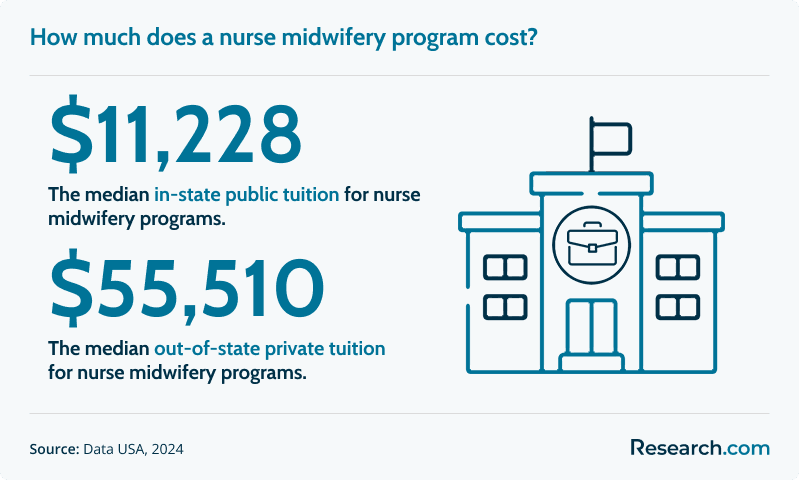
How much does an online graduate certificate in nurse midwifery cost?
The cost of an online graduate certificate in nurse midwifery varies widely because programs differ in credit load, tuition rate, residency classification, clinical fees, and whether students need additional prerequisite coursework. Most online graduate certificates in nurse midwifery cost between $10,000 and $35,000 overall. Some institutions, including Texas Tech and East Carolina, offer very affordable in-state options around $10K–$11K. Higher-cost programs, including Georgetown, can cost upwards of $80,000.
Do not compare programs using tuition alone. A lower per-credit rate can still become expensive if the program requires more credits, travel, technology fees, clinical placement expenses, background checks, immunizations, certification exam costs, or unpaid time away from work.
| Cost factor | Why it matters | Question to ask |
| Per-credit tuition | This is the most visible cost, but not always the full cost. | Is the rate different for in-state and out-of-state online students? |
| Required credits | A program with lower tuition may require more credits. | Will my prior graduate coursework reduce the number of credits I must complete? |
| Clinical placement costs | Students may face travel, documentation, insurance, or site onboarding expenses. | Does the school arrange clinical sites or only approve sites I find? |
| Residency or campus requirements | Hybrid or intensive requirements may add travel and lodging expenses. | How many in-person visits are required, and where are they held? |
| Lost income | Clinical hours may require schedule changes or reduced work hours. | Can I complete clinical hours while maintaining my current job? |
Students comparing nursing career pathways should also consider long-term goals. For example, those weighing leadership or administrative nursing routes may want to compare clinical nurse-midwifery preparation with other MSN outcomes, including information on MSN health systems management salary pathways.
If cost is your main concern and you still need a graduate nursing degree, review RN to MSN online programs before choosing a post-graduate certificate.
What financial aid options are available for online nurse-midwifery certificate students?
Graduate certificates can be harder to fund than full degrees, but students may still have several options. Eligibility depends on the school, enrollment status, program structure, employer policies, and whether the certificate is approved for federal aid.
- Federal financial aid: Some accredited certificate programs may qualify for federal loans, including Direct Unsubsidized Loans. Students should submit the Free Application for Federal Student Aid to learn what they may be eligible to receive.
- Employer tuition reimbursement: Hospitals, health systems, and clinics may help pay for graduate nursing education when the credential supports workforce needs.
- Scholarships and grants: Nursing schools and professional organizations may offer funding for midwifery, women's health, and maternal health students.
- Private student loans: Private loans may be available, but students should compare interest rates, repayment terms, borrower protections, and total repayment cost before borrowing.
- Loan repayment programs: Graduates who work in underserved or high-need areas may qualify for programs such as the National Health Service Corps or state-level repayment initiatives.
Apply early and ask each school whether certificate students are treated differently from degree-seeking students for aid, scholarships, assistantships, and payment plans.
What will you study in an online nurse-midwifery graduate certificate?
Nurse-midwifery graduate certificates combine advanced nursing theory with supervised clinical training in maternal, reproductive, primary, and newborn care. The exact curriculum depends on the school and the student's prior graduate coursework, but most programs are designed around preparation for national certification and safe advanced practice.
Students who are considering academic or research-heavy nursing pathways may also compare certificate study with longer routes such as BSN to PhD online programs. Nurse-midwifery certificates are usually more clinically focused than research doctorates.
| Course area | What students learn | Why it matters in practice |
| Advanced women's health and reproductive care | Care across the reproductive lifespan, including contraception, fertility, and menopause-related needs | Supports primary and reproductive healthcare beyond childbirth |
| Antepartum and intrapartum care | Prenatal assessment, fetal development, labor support, and birth management | Builds the core knowledge used during pregnancy, labor, and delivery |
| Postpartum and newborn care | Maternal recovery, lactation support, and early newborn monitoring | Prepares graduates to support patients and newborns after birth |
| Advanced pharmacology for midwifery | Medication use in pregnancy, women's health, pain management, and urgent situations | Helps clinicians prescribe and manage medications safely within their scope |
| Health promotion and disease prevention | Preventive care, screening, counseling, and patient education | Strengthens long-term care across life stages |
| Professional issues in midwifery | Ethics, legal responsibilities, collaboration, cultural competency, and scope of practice | Prepares students for real-world practice boundaries and team-based care |
| Clinical practicum | Supervised care in hospitals, birthing centers, OB/GYN clinics, and other approved settings | Provides hands-on experience required for competence and certification preparation |
Coursework alone is not enough. Clinical performance, documentation, preceptor availability, and faculty evaluation all affect whether a student can complete the certificate and move toward certification.
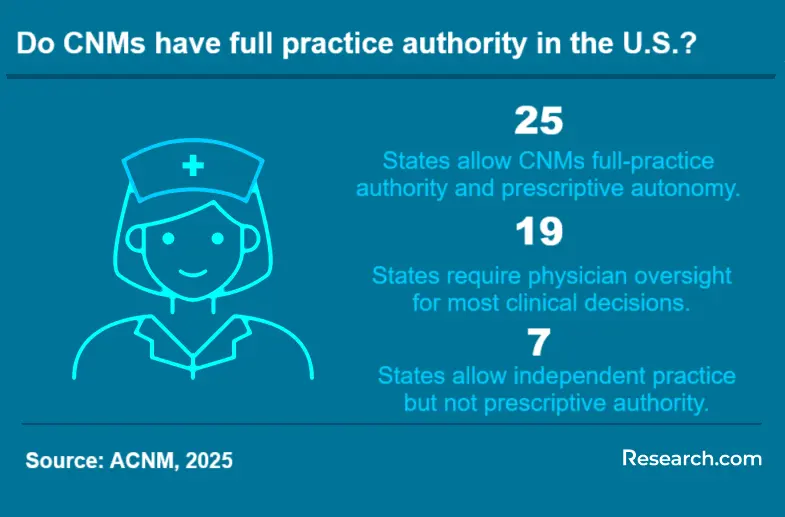
Practice authority also varies by state. Not all CNMs in the country have authority to practice independently or without physician supervision.
How to choose the best online nurse-midwifery graduate certificate program
The best online nurse-midwifery certificate is the one that supports your certification goal, fits your current licensure status, provides realistic clinical placement options, and does not create unnecessary financial risk. A convenient online format is helpful, but it should not outweigh accreditation or clinical access.
Decision checklist before applying
- Confirm midwifery accreditation: Check whether the program is accredited by the Accreditation Commission for Midwifery Education and whether the institution has recognized institutional accreditation.
- Verify certification eligibility: Ask directly whether graduates are eligible to sit for the CNM exam through the American Midwifery Certification Board.
- Check state authorization: Confirm the program accepts students from your state and supports clinical training where you live.
- Understand clinical placement responsibility: Find out whether the school secures placements, helps you identify preceptors, or expects you to arrange sites yourself.
- Compare total cost: Look at tuition, fees, travel, campus visits, clinical documentation costs, and possible lost wages.
- Ask about gap analysis: If you already have graduate nursing coursework, ask whether previous courses can reduce your required credits.
- Evaluate schedule fit: Make sure class deadlines, synchronous sessions, intensives, and clinical rotations work with your employment and family obligations.
- Review student support: Strong advising, clinical coordination, library access, technical support, and certification exam preparation can make a meaningful difference.
Students who want the shortest feasible route can also compare accelerated graduate certificate program in nurse midwifery online options. Speed can be useful, but only if clinical placement, workload, and certification preparation remain realistic.
Because becoming a Certified Nurse-Midwife requires advanced education and clinical training, many APRNs in this field are in the 40-and-up age group.
Common mistakes to avoid
| Mistake | Why it can hurt you | Better approach |
| Choosing a program because it is online | Online coursework does not remove in-person clinical requirements. | Ask how clinical sites are approved and whether placements are available in your area. |
| Ignoring accreditation | Accreditation can affect certification eligibility and employer acceptance. | Verify programmatic and institutional accreditation before applying. |
| Looking only at tuition per credit | Total cost depends on credits, fees, travel, and clinical expenses. | Request a full estimated cost of attendance for certificate students. |
| Assuming all programs work in every state | State authorization, licensure rules, and clinical approval vary. | Confirm state eligibility with both the school and your state board before enrolling. |
| Underestimating clinical scheduling | Clinical hours can conflict with work schedules and family responsibilities. | Plan for site availability, preceptor expectations, and possible schedule changes. |
| Assuming salary or job outcomes are guaranteed | Employment and pay vary by location, employer, experience, and scope of practice. | Research local hiring patterns and talk with practicing CNMs in your state. |
Online vs. on-campus nurse-midwifery certificates: Which format is better?
Both online and campus-based nurse-midwifery certificates can prepare students for advanced practice if they meet accreditation, clinical, and certification standards. The main difference is not the clinical requirement, because both formats require in-person supervised training. The real differences are schedule flexibility, learning style, campus access, and how clinical placements are coordinated.
| Factor | Online certificate | On-campus certificate | Best choice if... |
| Course delivery | Classes are delivered through virtual platforms and may include asynchronous work. | Classes meet in person on a set campus schedule. | Choose online if you need location flexibility; choose campus if you prefer face-to-face structure. |
| Schedule flexibility | Often better for working nurses, though deadlines and clinical hours still apply. | Usually less flexible because of scheduled class meetings. | Choose online if you must balance work and family obligations. |
| Faculty and peer interaction | Occurs through video meetings, discussion boards, group work, and messaging. | Occurs through classroom discussions, labs, and campus activities. | Choose campus if in-person networking is a priority. |
| Clinical training | Completed in person at approved sites, often near the student's location when possible. | Completed in person, often through local or affiliated clinical partners. | Choose the program with stronger placement support in your state. |
| Campus resources | Digital libraries, virtual advising, online simulations, and remote support may be available. | Campus labs, libraries, simulation centers, and in-person services are easier to access. | Choose campus if you want regular access to physical facilities. |
Students comparing advanced nursing routes should remember that shorter does not always mean easier. Even the shortest online MSN programs require careful planning around clinical training, workload, and licensure goals.
What is the job outlook for online nurse-midwifery certificate graduates?
The job outlook for nurse midwives is supported by demand for maternity, reproductive, and primary care services, especially in communities with limited access to obstetric clinicians. However, job opportunities still vary by state practice authority, employer needs, local birth volume, and the availability of collaborative practice models.
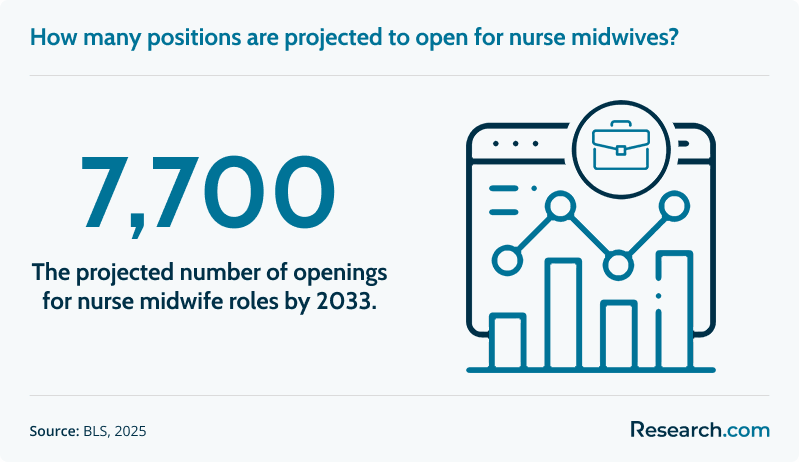
- According to the U.S. Bureau of Labor Statistics, employment for nurse midwives is projected to grow by 7.1% between 2023 and 2033, with about 500 new jobs expected during the decade, increasing from 7,200 in 2023 to 7,700 in 2033.
- More than 60% of counties lack any CNM or certified midwife, and 47% have no OB-GYN.
- The U.S. averages 4 midwives per 1,000 births, compared with a target of 25 per 1,000. Reaching that target would require adding approximately 93,000 midwives nationwide.
- Hospitals, birthing centers, community clinics, and other maternity care settings may hire CNMs to expand patient access and support maternity services.
An online nurse-midwifery certificate can position qualified nurses for a meaningful clinical role, but it is not an automatic employment guarantee. Before enrolling, research CNM hiring in your region and confirm whether your state allows the level of practice autonomy you want.
What careers can you pursue after an online nurse-midwifery certificate?
Most students pursue this certificate to become Certified Nurse-Midwives, but the credential can also support related roles in maternal health, women's health, education, public health, and care coordination. Your exact options depend on your existing nursing license, graduate preparation, certification status, state scope of practice, and employer requirements.
| Career path | Typical focus | Where the role may be found |
| Certified Nurse Midwife | Prenatal care, labor and birth support, postpartum care, reproductive health, and newborn-related care within scope | Hospitals, birthing centers, clinics, and approved birth settings |
| Women's Health Nurse Practitioner | Gynecologic care, family planning, reproductive health, menopause-related care, and preventive services | Women's health clinics, OB/GYN practices, community health centers |
| Labor and Delivery Nurse Educator | Training nurses and clinical teams in maternity care, newborn care, lactation support, and patient safety practices | Hospitals, nursing education departments, health systems |
| Public Health Midwife | Maternal and infant health access, education, outreach, and community-based prevention | Public health agencies, community organizations, underserved care programs |
| Maternal Health Program Coordinator | Program oversight for prenatal care, postpartum support, birth safety, and maternal wellness initiatives | Health systems, nonprofit organizations, public health programs |
| Telehealth Midwife | Virtual prenatal education, postpartum follow-up, reproductive health counseling, and care navigation | Telehealth platforms, clinics, rural health programs |
| Policy or advocacy role | Work on maternal health access, midwifery policy, and reproductive health legislation or advocacy | Advocacy organizations, government agencies, professional associations |
If your long-term goal includes advanced leadership, teaching, systems improvement, or expanded doctoral-level practice, compare certificate training with accelerated DNP programs.
Can accelerated BSN programs help you move toward nurse midwifery?
Accelerated BSN programs can help students who already hold a non-nursing bachelor's degree enter nursing more quickly than a traditional undergraduate route. They do not replace graduate nurse-midwifery preparation, but they can provide the RN foundation needed before pursuing advanced nursing education.
This pathway is most relevant for career changers. After earning a BSN and RN licensure, students typically need clinical nursing experience and graduate nursing preparation before they can move into nurse-midwifery certification pathways. If you are still at the entry point of nursing education, reviewing accelerated BSN programs can help you understand how to begin the broader pathway toward midwifery.
What practicing CNMs say about moving into nurse midwifery
- : "I spent years working as a family nurse practitioner before realizing that women's health was where I wanted to focus my career. An online post-MSN nurse-midwifery certificate let me keep working while building the specialized preparation I needed for CNM practice. Moving into birth work and family-centered care has been the most meaningful professional change I have made. — Angie"
- : "As a hospital nurse leader, I wanted deeper expertise in maternal and reproductive care. The online certificate helped me strengthen our women's health initiatives, support better care processes, and mentor newer nurses without stepping away from my job or family responsibilities. — Mel"
- : "The certificate experience gave me more than online classes. I gained engaged faculty support, practical clinical exposure, and a peer network with nurses from different care environments. By the end, I felt more prepared and more committed to improving maternal health. — Sheree"
What accreditation and licensure issues should you check before enrolling?
Accreditation and licensure should be checked before you apply, not after you are admitted. Nurse-midwifery education is connected to certification eligibility and state practice rules, so a program that looks convenient may not be appropriate if it does not meet the requirements where you plan to practice.
- Programmatic accreditation: Confirm whether the nurse-midwifery program holds recognized midwifery accreditation, especially if your goal is CNM certification.
- Institutional accreditation: The college or university should be properly accredited by a recognized accrediting body.
- Certification eligibility: Ask whether completing the certificate makes graduates eligible for the American Midwifery Certification Board exam.
- State authorization: Make sure the school can enroll students from your state and approve clinical placements there.
- Clinical requirements: Verify required hours, preceptor rules, site approval procedures, and documentation expectations.
- Scope of practice: Review whether your state allows independent CNM practice or requires physician collaboration or supervision.
Students who are still building their nursing education pathway may also compare entry and bridge options, including the easiest online RN to BSN degree, before moving toward graduate-level midwifery preparation.
Questions to ask schools before you apply
- Is the nurse-midwifery certificate accredited by the appropriate midwifery accreditor?
- Will I be eligible to sit for the CNM certification exam after graduation?
- Does the program accept students from my state?
- Can I complete clinical hours in my local area?
- Who is responsible for finding preceptors and clinical sites?
- How many campus visits, simulations, or intensives are required?
- Will my previous graduate nursing coursework reduce my credit requirements?
- What is the full estimated cost, including fees and clinical expenses?
- What happens if I cannot secure a clinical placement on time?
- How does the program support certification exam preparation?
References
- A Midwife Nation. (2024, March 19). 2024 State of Midwifery: The 10,000 Foot View of the Profession. A Midwife Nation.
- American Midwifery Certification Board. (2025, January 23). 2024 Demographic Report. American Midwifery Certification Board.
- Bargeron, G. (2025, May 15). Certified nurse midwives are shaping America’s maternity and primary care: here's why it matters. LocumTenens.
- Hoyert, D. (2024). Health E-Stat 100: Maternal Mortality Rates in the United States, 2023. National Center for Health Statistics.
- March of Dimes. (2024). Nowhere to Go: Maternity Care Deserts Across the US | 2024 Report. March of Dimes.
- United States Bureau of Labor Statistics. (2025, July 24). Occupational Employment and Wage Statistics Query System. U.S. Bureau of Labor Statistics.
- United States Bureau of Labor Statistics. (2025, April 18). Occupational Outlook Handbook | Nurse Anesthetists, Nurse Midwives, and Nurse Practitioners. U.S. Bureau of Labor Statistics.
- Wallace, J. et al. (2023, September 10). An alternative model of maternity care for low‐risk birth: Maternal and neonatal outcomes utilizing the midwifery‐based birth center model. PubMed Central | National Library of Medicine.
Key Insights
- An online nurse-midwifery graduate certificate is best for nurses who already have graduate nursing preparation and need focused midwifery coursework and clinical training.
- Online does not mean fully remote. Every credible nurse-midwifery pathway requires in-person clinical training at approved sites.
- Program length commonly falls between 12 to 24 months, but clinical placement timing can extend the real completion timeline.
- Costs vary widely. Published totals can range from affordable in-state options around $10K–$11K to high-cost programs upwards of $80,000.
- Accreditation, certification eligibility, and state authorization are nonnegotiable. Check them before applying.
- The strongest program for you is not always the fastest or cheapest one. The right choice is the program that fits your state, schedule, clinical placement needs, certification goal, and budget.
- Demand for maternity care access is an important reason to consider this field, but employment and autonomy depend heavily on state rules and local healthcare markets.
Other Things You Should Know About the Best Graduate Certificate in Online Nurse Midwifery Programs
While most online nurse midwifery graduate certificate programs in 2027 offer part-time study options, allowing students to work full-time, it's essential to check individual program details. Schools may have different course loads and requirements that can influence schedule flexibility.
Many students do continue working while enrolled, especially in part-time tracks. However, the clinical components can be time-intensive, so balancing both requires strong time management. Employers may also offer flexible scheduling or tuition assistance to support your studies.
Eligibility for online nurse midwifery graduate certificate programs typically requires a master's degree in nursing (MSN) with a clinical focus. Specific prerequisites can vary by institution, but some may accept applicants from non-clinical MSN backgrounds, provided they complete additional coursework. International students should verify their eligibility based on their credentials.


