
2027 Best Nurse Practitioner Programs in Rhode Island – Accredited Schools Online & Campus

Co-Founder and Chief Data Scientist
Choosing a nurse practitioner program in Rhode Island is not just a school decision. It affects your certification options, clinical training access, licensure pathway, schedule, cost, and long-term career direction. Rhode Island’s healthcare market can be attractive for registered nurses who want more autonomy, stronger earning potential, and advanced clinical responsibilities, especially in primary care, adult gerontology, family practice, women’s health, pediatrics, and psychiatric mental health.
This guide is designed for registered nurses, BSN students, LPNs planning a longer bridge pathway, and working healthcare professionals comparing nurse practitioner programs in RI. You will learn how NP programs work, what they cost, how online and campus formats differ, which Rhode Island-related options are available, what licensure steps to expect, and how to avoid expensive mistakes before enrolling.
Nationally, nurse practitioners are a large and growing part of the healthcare workforce. The American Association of Nurse Practitioners reports that there are more than 355,000 nurse practitioners in the US (AANP, n.d.). Many NPs practice in primary care, and adult gerontology remains an important area as the population ages.
Quick Answer: What Should You Know About Nurse Practitioner Programs in Rhode Island?
Nurse practitioner programs in Rhode Island generally require applicants to hold an RN license and complete graduate-level nursing education, most often through an MSN or advanced practice pathway. Students should prioritize accredited programs, confirm that the curriculum matches their intended specialty certification, compare clinical placement support, and understand total tuition before applying. Online programs can offer more scheduling flexibility, while campus-based options may provide stronger face-to-face support and local networking.
Based on Research.com’s review, online NP program tuition in Rhode Island commonly ranges from $500 to $700 per credit hour for in-state students and $700 to $1,000 per credit hour for out-of-state students. Campus-based options are often higher, ranging from $700 to $1,200 per credit hour for in-state students and $1,000 to $1,500 per credit hour for out-of-state students.
Best Nurse Practitioner Programs in Rhode Island Table of Contents
- What is it like to work as a nurse practitioner in Rhode Island?
- How do you become a nurse practitioner in Rhode Island?
- How much do nurse practitioner programs in Rhode Island cost?
- Should you choose an online or campus-based NP program in RI?
- What should you compare when researching nursing schools in Rhode Island?
- When do accelerated NP programs make sense?
- Best Nurse Practitioner Programs in RI for 2027
- How is a nurse practitioner different from a registered nurse in Rhode Island?
- Can RN to BSN Programs with No Clinicals Accelerate My NP Career?
- How Can Nurse Practitioners Leverage Telehealth and Technology in Rhode Island?
- Can LPN Experience Accelerate Your Path to Becoming a Nurse Practitioner in Rhode Island?
- What are the latest regulatory updates impacting NP practice in Rhode Island?
- What are the nurse midwife qualifications in Rhode Island?
- How can nurse practitioners benefit from exploring pharmacy licensure in Rhode Island?
- What career advancement options can Rhode Island NPs pursue?
- What mistakes and challenges should NP students avoid?
- Exploring Nurse Practitioner Licensure and Continuing Education in Rhode Island
- How can I finance my nurse practitioner education in Rhode Island?
Working as a Nurse Practitioner in Rhode Island
A nursing career can offer stability, mobility, and multiple advancement routes, and nurse practitioner roles represent one of the most common next steps for experienced RNs. In Rhode Island, demand is influenced by the need for accessible primary care, chronic disease management, and services for older adults.
Rhode Island NPs earned an average salary of $125,250 (US BLS, 2025). The highest-paying industry listed for NPs is home health care services, with an annual mean wage of $148,960 (US BLS, 2025). These figures are useful benchmarks, but individual earnings can vary by specialty, employer, experience, schedule, location, and whether the role is clinical, administrative, or telehealth-based.
| NP Work Setting | Typical Focus | Why It May Appeal to Rhode Island NPs |
| Primary care clinics | Preventive care, chronic condition management, family health | Strong fit for family nurse practitioner training and ongoing community health needs |
| Hospitals and acute care settings | Complex adult or geriatric care, inpatient management, specialty services | Relevant for adult/gerontology acute care tracks |
| Home health care services | Care coordination, post-acute care, chronic illness support | Associated with the highest annual mean wage listed for NPs at $148,960 |
| Behavioral health settings | Mental health assessment, medication management, patient follow-up | Useful for NPs interested in psychiatric mental health pathways |
| Telehealth and hybrid care | Virtual visits, remote monitoring, care access support | Can expand reach for patients who face transportation, mobility, or scheduling barriers |
How to Become a Nurse Practitioner in Rhode Island
The path to becoming an NP in Rhode Island usually starts with registered nursing preparation, followed by graduate education, national certification, and state advanced practice licensure. A BSN is the common foundation. Nurses who need a flexible bachelor’s pathway may compare the best online BSN programs, while licensed practical nurses can research online LPN to BSN programs available if they want a bridge route into professional nursing.
After completing the undergraduate nursing requirement and earning RN licensure, candidates apply to accredited nurse practitioner programs in RI or online programs that can support Rhode Island clinical and licensure requirements. Program length depends on specialty, enrollment pace, transfer credits, and whether the student studies full time or part time.
The licensing sequence matters. Students typically complete nursing education, pass the National Council Licensure Examination (NCLEX-RN) to become registered nurses if they have not already done so, complete an accredited NP program, pass the Nurse Practitioner Examination (NPE) or applicable national specialty certification exam, and then apply for the Rhode Island credential needed for NP practice.
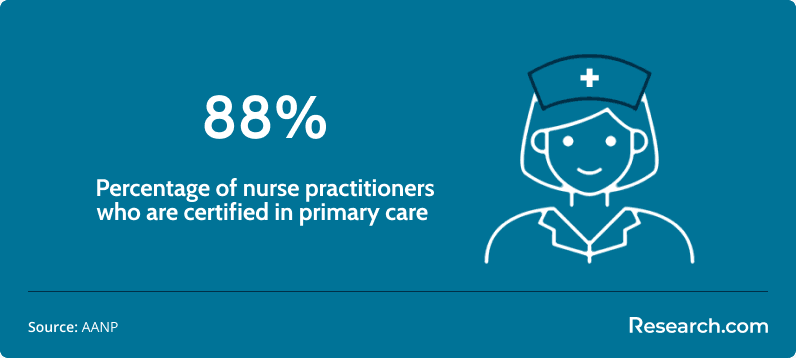
Specialty choice should be made early. According to the recent AANP National Nurse Practitioner Workforce Survey, 88% of NPs were reported to have primary care certification (AANP, n.d.). If your goal is family practice, adult gerontology, psychiatric mental health, pediatrics, or women’s health, confirm that the program’s track, clinical hours, and certification preparation align with that goal before enrolling.
Typical NP Pathway in Rhode Island
| Step | What You Need to Do | Decision Point |
| 1. Build nursing eligibility | Complete a nursing pathway that leads to RN licensure, commonly through a BSN route | Decide whether a traditional BSN, online BSN, or LPN-to-BSN bridge is the best fit |
| 2. Become or remain licensed as an RN | Meet RN licensing requirements and pass the NCLEX-RN if not already licensed | Confirm your license status before applying to graduate NP programs |
| 3. Choose an NP specialty | Select a population focus such as FNP, adult/gerontology, psychiatric mental health, pediatrics, or women’s health | Match the specialty to the patients and work settings you want |
| 4. Complete an accredited NP program | Finish graduate coursework and required clinical experiences | Verify accreditation, clinical placement support, and certification exam alignment |
| 5. Pass certification and apply for state authority | Complete the appropriate national exam and Rhode Island licensure process | Check state requirements before graduation so paperwork does not delay employment |
Cost of Taking Up a Nurse Practitioner Program in Rhode Island
The cost of an NP program in Rhode Island depends on tuition structure, residency status, delivery format, required credits, clinical fees, technology fees, books, travel, and whether students can keep working while enrolled. Tuition per credit is only one part of the total price.
Based on Research.com’s review, in-state tuition for an online nurse practitioner program in Rhode Island typically ranges from $500 to $700 per credit hour. Out-of-state online tuition can be higher, often ranging from $700 to $1,000 per credit hour.
Campus-based programs are typically more expensive. In-state tuition for an on-campus nurse practitioner program in Rhode Island can range from $700 to $1,200 per credit hour, while out-of-state tuition can range from $1,000 to $1,500 per credit hour.
| School Type | In-State Cost Per Credit Hour | Out-of-State Cost Per Credit Hour |
| Online | $500 - $700 | $700 - $1,000 |
| On-Campus | $700 - $1,200 | $1,000 - $1,500 |
Costs to Check Beyond Tuition
- Clinical expenses: Ask whether background checks, immunizations, drug screening, malpractice coverage, and clinical onboarding fees are included or billed separately.
- Travel and residency costs: Online programs may still require campus visits, skills intensives, or travel to clinical sites.
- Technology and course materials: Simulation software, exam proctoring, textbooks, and database access can increase total cost.
- Lost income: A full-time program may shorten the timeline but reduce your work hours.
- Certification and licensure fees: Budget for national certification, state applications, renewals, and continuing education after graduation.
Difference Between Online and In-Campus Nurse Practitioner Programs in RI
Online and campus-based NP programs can both lead to advanced practice preparation, but the student experience is different. The right choice depends on your work schedule, learning style, clinical placement needs, commute, and ability to stay organized without frequent in-person structure.
| Factor | Online NP Programs | On-Campus NP Programs |
| Schedule flexibility | Often better for working nurses who need asynchronous or limited live class time | May require set class times and regular travel to campus |
| Learning environment | Works well for self-directed students comfortable with digital platforms | Better for students who prefer face-to-face discussion and structured routines |
| Clinical experience | Clinical hours are still required, and students may need to help identify approved sites | May offer stronger local clinical networks, depending on the school |
| Support and networking | Can include virtual advising, online faculty access, and remote peer groups | Often provides easier in-person access to faculty, labs, classmates, and events |
| Best fit | Working RNs, rural or commuting students, and those needing flexibility across nursing majors and pathways | Students who want more direct support, campus resources, and local professional connections |
Clinical preparation is the area students should examine most closely. Both online and campus programs require supervised practice, and clinical experience is central to NP readiness. Before enrolling in an online program, ask whether the school assigns clinical placements, helps locate preceptors, or expects students to secure sites independently.
What are the key factors to consider when researching nursing schools in Rhode Island?
When comparing nursing schools in Rhode Island, start with accreditation, program type, cost, clinical placement support, faculty expertise, graduate outcomes, and whether the curriculum fits your intended specialty. Reputation can matter, but it should not outweigh licensure alignment, affordability, and access to high-quality clinical training.
Students who want a broader view of state options can review Research.com’s list of the best nursing schools in Rhode Island. Use rankings as a starting point, not the final decision. A highly rated school may still be the wrong fit if it does not offer your specialty, lacks flexible scheduling, or provides limited help with clinical placements.
Questions to Ask Before Choosing a Rhode Island NP Program
- Is the program accredited by a recognized nursing accreditor?
- Does the specialty track prepare students for the certification exam they plan to take?
- Who is responsible for finding clinical sites and preceptors?
- Are Rhode Island students eligible for admission and clinical placement if the program is online and based outside the state?
- What is the full estimated cost, including fees, travel, books, clinical onboarding, and certification expenses?
- Can working nurses enroll part time?
- What student support is available for online learners?
- How often are students required to attend campus intensives or synchronous sessions?
What are the benefits of accelerated NP programs in Rhode Island?
Accelerated NP programs can be useful for registered nurses who already have strong clinical experience, clear specialty goals, and the time to manage a compressed academic schedule. These programs shorten the route to advanced practice by condensing coursework and clinical preparation, but they are not the easiest option for every student.
The main advantage is speed. A shorter format may help motivated nurses move toward certification and NP employment more quickly. Many accelerated formats also include online components, which can help working professionals avoid relocating or pausing their careers completely. Students comparing fast-track options can review 1 year nurse practitioner programs to understand how condensed NP pathways are structured.
| Accelerated NP Programs May Work Well If... | Consider a Slower Pace If... |
| You have strong RN experience and confidence with advanced coursework | You are still building core nursing confidence or returning to school after a long break |
| Your work schedule is flexible enough for intensive study and clinical hours | You need to maintain full-time work without schedule changes |
| You already know your specialty focus | You are undecided between FNP, adult/gerontology, psychiatric mental health, or another track |
| You have support at home and work during demanding terms | You are managing major caregiving, employment, or financial constraints |
Best Nurse Practitioner Programs in RI for 2027
Research.com reviewed reliable public information to identify nurse practitioner programs connected to Rhode Island students and Rhode Island career goals. The list below emphasizes accreditation, format, cost information, accessibility, program structure, and specialty preparation. Use it as a shortlist, then confirm current admissions requirements, tuition, clinical placement rules, and certification eligibility directly with each school.
1. The University of Rhode Island
The University of Rhode Island offers a Master of Science degree through its College of Nursing with a Family Nurse Practitioner focus. The program is built for nurses preparing to provide primary care for individuals and families in multiple healthcare settings. Graduates may be eligible to pursue FNP certification through the American Nurses Credentialing Center (ANCC) or the American Academy of Nurse Practitioners Credentialing Board (AANPCB). The curriculum includes 42 semester credit hours and clinical practice experiences, with part-time and full-time study options for qualified students.
- Mode of Learning: On-Campus
- Program Length: Two and a half to five years
- Tracks/concentrations: Exploring Global Health, Comprehensive Health Assessment, Pathophysiology
- Cost per year: $17,450 (in-state), $31,952 (out-of-state)
- Required credits to graduate: 42 credit hours
- Accreditation: New England Commission of Higher Education (NECHE)
2. Rhode Island College
Rhode Island College offers an MSN pathway through the Zvart Onanian School of Nursing with an Adult/Gerontology Acute Care focus. The track is designed for nurses who want advanced preparation for caring for adult and older adult patients in acute care environments. Graduates may pursue certification examinations such as the American Association of Critical Care Nurses Adult-Gerontology Acute Care NP exam. The program is accredited by the Commission on Collegiate Nursing Education and provides details on admissions, course requirements, and health prerequisites.
- Mode of Learning: On-campus
- Program Length: Two to three years
- Tracks/concentrations: Health Assessment, Physical Assessment of the Adult and Child, Health and Aging
- Cost per credit: $495 (in-state), $964 (out-of-state)
- Required credits to graduate: 42 credit hours
- Accreditation: Commission on Collegiate Nursing Education (CCNE)
3. Franklin University
Franklin University provides a Family Nurse Practitioner option within its Master of Science in Nursing offerings. Founded in 1902 in Columbus, Ohio, the university serves many adult learners and designs programs for working professionals. The FNP program is delivered 100% online, and the university reports that GMAT/GRE scores are not required for admission. Franklin University is accredited by the Higher Learning Commission, and the FNP track also carries CCNE accreditation.
- Mode of Learning: Online
- Program Length: 27 months
- Tracks/concentrations: Health Policy, Diagnostic Methods for the Nurse Practitioner, Advanced Physical Assessment
- Cost per credit hour: $670
- Required credits to graduate: 41 credit hours
- Accreditation: Higher Learning Commission (HLC) and CCNE
4. Rivier University
Rivier University offers an online MSN with a Family Nurse Practitioner specialization. The program prepares nurses for advanced primary care roles and includes a low-residency structure that combines online coursework with nine days of campus sessions across the program. Students take coursework in areas such as pathophysiology, health assessment, pharmacology, healthcare improvement, and evidence-based practice. Graduates may pursue roles such as adult nurse practitioner, family nurse practitioner, and adult-gerontology nurse practitioner, depending on credentials and employer requirements.
- Mode of Learning: Online
- Program Length: Three to five years
- Tracks/concentrations: Advanced Pathophysiology, Advanced Role of the Nurse, Quality Healthcare Improvement
- Cost per credit: $680 (nursing courses), $1,061 (clinical courses)
- Required credits to graduate: 36 to 49 credit hours
- Accreditation: Accreditation Commission for Education in Nursing (ACEN)
5. Salve Regina University
Salve Regina University offers a Master of Science in Nursing with a Family Nurse Practitioner concentration. The program can be completed in as little as 28 months and includes six start dates per year. Applicants are expected to have graduated from an accredited program, hold a minimum cumulative GPA of 3.0, and possess an RN license. The program is accredited by the Commission on Collegiate Nursing Education and incorporates leadership and social justice themes into advanced nursing preparation.
- Mode of Learning: Online
- Program Length: At least 28 months
- Tracks/concentrations: Advanced Physiology and Pathophysiology, Global Influences in the Advanced Management of Care, Advanced Care for the Pediatric Patient
- Total cost: $34,992 (nurses from partner institutions), $37,104 (nurses from non-partner institutions)
- Required credits to graduate: 39 credits
- Accreditation: CCNE
What distinguishes a nurse practitioner from a registered nurse in Rhode Island?
Registered nurses and nurse practitioners both provide essential patient care, but their preparation and responsibilities differ. RNs commonly assess patients, administer treatments, coordinate care, educate patients, and support provider-directed plans. NPs complete advanced graduate preparation that can include diagnosis, treatment planning, medication management, and specialty-focused patient care, depending on state rules and practice setting.
If you are still at the beginning of the nursing pathway, review how to become a registered nurse in Rhode Island before comparing graduate NP programs. RN licensure is the foundation for most NP routes.
| Role | Education Level | Typical Responsibilities | Career Purpose |
| Registered Nurse | Undergraduate nursing preparation and RN licensure | Patient assessment, care coordination, medication administration, education, and care plan support | Direct nursing care and patient support across healthcare settings |
| Nurse Practitioner | Graduate-level NP education, certification, and advanced practice authorization | Advanced assessment, diagnosis, treatment planning, prescribing where authorized, and specialty care | Advanced clinical practice with greater responsibility and autonomy |
Can RN to BSN Programs with No Clinicals Accelerate My NP Career?
RN to BSN programs without additional clinical requirements may help working registered nurses complete the bachelor’s credential more efficiently, especially if they already have substantial patient care experience. These programs generally focus on leadership, evidence-based practice, population health, communication, and systems-level thinking rather than repeating bedside clinical rotations.
This pathway can support a future NP application by helping RNs meet the BSN expectation for graduate study while continuing to work. However, students should confirm that the BSN program is accredited and accepted by the NP programs they plan to apply to. To compare this route, review Research.com’s guide to RN to BSN no clinicals.
How Can Nurse Practitioners Leverage Telehealth and Technology in Rhode Island?
Telehealth, remote monitoring, electronic documentation, and digital communication tools are now part of many NP practice settings. Rhode Island NPs who understand virtual care workflows can improve access for patients who face transportation issues, scheduling barriers, mobility limitations, or distance from specialty services.
Technology skills are especially useful in primary care, behavioral health, home health, chronic disease management, and follow-up visits. NPs should be comfortable with secure documentation, patient portals, remote patient education, interdisciplinary messaging, and privacy expectations. Professionals who want additional exposure to clinical office systems and patient-facing technology may also find context in medical assistant training in Rhode Island, although NP preparation itself requires advanced nursing education.
Can LPN Experience Accelerate Your Path to Becoming a Nurse Practitioner in Rhode Island?
LPN experience can strengthen your practical understanding of patient care, medication workflows, communication, and healthcare team dynamics. It does not replace the RN, BSN, or graduate NP requirements, but it can make later nursing coursework and clinical decision-making more familiar.
For LPNs, the route to NP practice is usually a staged pathway: LPN experience, RN preparation, BSN completion, graduate NP education, certification, and Rhode Island advanced practice authorization. If you are starting from practical nursing, use this guide on how to get a LPN license in Rhode Island to understand the first credential before mapping the full NP timeline.
What are the latest regulatory updates impacting NP practice in Rhode Island?
NP practice is shaped by state licensure rules, renewal requirements, continuing education expectations, prescribing regulations, and telehealth standards. Because these rules can change, students and practicing NPs should verify requirements directly with the Rhode Island Board of Nurse Registration and Nursing Education before applying, renewing, relocating, or changing specialty areas.
Regulatory awareness is not optional. A program may prepare you academically, but you are responsible for meeting the state’s licensing, renewal, and practice requirements. For a broader licensing overview, see how to get a nursing license in Rhode Island.
What are the nurse midwife qualifications in Rhode Island?
Nurse midwives in Rhode Island generally need graduate-level midwifery education after completing nursing preparation, along with supervised clinical training in women’s health, prenatal care, labor and birth, postpartum care, and gynecological services. Candidates must also pass the required national certification exam and meet state licensure standards.
This route overlaps with advanced nursing practice but is distinct from many NP specialties. If your career goal is maternity, reproductive, and women’s health care, compare NP women’s health tracks with certified nurse-midwife preparation. Research.com’s guide to nurse midwife qualifications in Rhode Island explains the pathway in more detail.
How can nurse practitioners benefit from exploring pharmacy licensure in Rhode Island?
Nurse practitioners do not need to become pharmacists to provide advanced patient care, but understanding pharmacy regulation, medication safety, drug interactions, and patient counseling can strengthen clinical judgment. This is particularly important for NPs who manage chronic conditions, prescribe medications where authorized, or work closely with pharmacists in primary care, geriatrics, psychiatry, and acute care.
Reviewing how to become a licensed pharmacist in Rhode Island can help NPs better understand the training and regulatory perspective of pharmacy colleagues. That knowledge can support safer prescribing conversations and stronger interdisciplinary collaboration.
What are the potential career advancement opportunities for nurse practitioners in Rhode Island?
NP career growth in Rhode Island can extend beyond traditional patient appointments. Advancement may come through specialty expertise, leadership, education, research, telehealth, consulting, or practice development. The best path depends on your clinical strengths, preferred patient population, business interests, and willingness to pursue additional credentials.
- Specialty certification: NPs can deepen expertise in areas such as palliative care, oncology, cardiovascular care, psychiatric-mental health, women’s health, or telehealth-related practice. Specialty credentials may support movement into more complex roles.
- Clinical leadership: Experienced NPs may become clinic managers, department leaders, quality improvement leads, or healthcare administrators. These roles often involve staffing, budgets, workflow design, and performance improvement.
- Teaching and academic work: NPs with strong clinical backgrounds may teach nursing students, supervise clinical learning, or serve as adjunct faculty.
- Research and policy: Some NPs contribute to clinical trials, evidence-based practice projects, health policy work, or advocacy efforts that influence care delivery.
- Telehealth specialization: Remote care roles can include primary care follow-up, behavioral health, chronic care management, and home health coordination.
- Entrepreneurial practice: Experienced NPs may explore consulting, care coordination services, or practice ownership where permitted and properly structured under Rhode Island regulations.
How to Choose the Best Nurse Practitioner Program in Rhode Island
The best NP program is the one that prepares you for the license, certification, specialty, and work setting you actually want. Accreditation should be non-negotiable. Nursing accreditation through organizations such as the Commission on Collegiate Nursing Education (CCNE) helps indicate that a program meets recognized academic and professional standards and may be required for certification eligibility.
Next, compare cost and flexibility. Online programs can be valuable for nurses who need to keep working, but affordability should be evaluated by total program price, not tuition alone. If budget is a major factor, Research.com’s guide to the cheapest online nurse practitioner programs can help you compare lower-cost FNP options.
Finally, investigate clinical placement support. A program with attractive tuition can become stressful if students must find preceptors without meaningful assistance. Ask the school how placements are approved, how far students may need to travel, what happens if a site falls through, and whether Rhode Island-based students have been successfully placed before.
| Selection Factor | Why It Matters | What to Ask |
| Accreditation | Impacts certification, licensure, employer recognition, and academic quality | Which accreditor reviews the nursing program? |
| Specialty fit | Your track determines patient population and exam preparation | Does this track lead to the certification I need? |
| Clinical placement | Clinical delays can slow graduation and licensure | Does the school place students or only approve sites students find? |
| Total cost | Fees, travel, books, and lost income can change affordability | What is the full estimated cost through graduation? |
| Format | Online, hybrid, and campus formats require different levels of self-management | How often must I attend live sessions or campus activities? |
| Student support | Graduate nursing programs are demanding | What advising, tutoring, exam preparation, and faculty access are available? |
What are the challenges and common pitfalls in NP programs?
NP programs can be rewarding, but they are academically and logistically demanding. Many students underestimate the clinical placement process, total cost, study time, and administrative steps required for certification and licensure.
- Underestimating workload: Graduate pharmacology, pathophysiology, assessment, diagnostics, and clinical courses require consistent study time. Working full time while enrolled can be possible, but it requires careful planning.
- Waiting too long on clinical placements: Preceptors and sites can be competitive. Ask about placement support before enrolling and begin planning early.
- Choosing based only on tuition: A low per-credit price may not include fees, travel, campus visits, certification costs, or clinical onboarding expenses.
- Ignoring accreditation: Enrolling in a non-accredited or poorly aligned program can create problems with certification, licensure, and employer acceptance.
- Assuming online means easier: Online NP programs still require advanced coursework, clinical hours, deadlines, exams, and professional discipline. Some students may compare easiest nurse practitioner degree programs, but “easier” should never mean weak preparation.
- Overlooking state authorization: If an online school is located outside Rhode Island, confirm that it can enroll Rhode Island students and support clinical requirements in the state.
- Delaying exam and licensure planning: Students should know certification requirements, application timelines, and state paperwork before the final term.
- Choosing the wrong specialty: Switching from FNP to psychiatric mental health, adult/gerontology, or another track may add time and cost.
Exploring Nurse Practitioner Licensure and Continuing Education in Rhode Island
Becoming licensed and staying licensed as an NP in Rhode Island requires more than graduating from a program. Candidates must meet state nursing board requirements, maintain appropriate credentials, and complete ongoing professional development throughout their careers.
Licensure Requirements:
To practice as an NP in Rhode Island, candidates must hold an RN license and obtain advanced practice registered nurse authorization from the Rhode Island Board of Nurse Registration and Nursing Education. The process includes completing an accredited nurse practitioner program, passing a national certification exam in the chosen specialty, such as through ANCC or AANPCB where applicable, and satisfying application and background check requirements. NPs must also maintain malpractice insurance as required by state law.
Continuing Education (CE) Requirements:
Rhode Island requires NPs to complete continuing education during each licensure renewal cycle. Requirements may vary by specialty and practice area, and they commonly include education connected to pharmacology and clinical practice. Continuing education is not just a compliance task; it helps NPs stay current with new evidence, clinical tools, medications, regulations, and care models.
Specialty Certifications:
Rhode Island NPs may pursue additional credentials in areas such as palliative care, women’s health, telehealth nursing, and other specialty fields. Organizations including the American Association of Nurse Practitioners (AANP) and the American Nurses Credentialing Center (ANCC) provide certification-related resources.
Professional Development Opportunities:
Professional organizations, including the Rhode Island State Nurses Association (RISNA), can offer networking, workshops, conferences, and regulatory updates for advanced practice nurses. These opportunities may be especially useful for NPs moving into leadership, teaching, telehealth, or specialty practice.
Students who want a complete state-specific roadmap can review how to become a nurse practitioner in Rhode Island and use it alongside program admissions information and state board guidance.
How can I finance my nurse practitioner education in Rhode Island?
Funding an NP program usually requires a mix of strategies. Start with the school’s financial aid office, then compare federal aid, scholarships, grants, employer tuition assistance, payment plans, and professional nursing organization awards. If you already work for a hospital, clinic, long-term care provider, or health system, ask whether tuition reimbursement is available for advanced nursing education.
Students should also compare program formats. A flexible online option may make it easier to continue earning income, while a campus program may provide local networking and stronger in-person support. Nurses focused on affordability can explore FNP online programs and compare total costs, not just advertised tuition.
Practical Ways to Reduce NP Program Costs
- Apply for scholarships before taking additional loans.
- Ask employers about tuition reimbursement or service agreements.
- Compare in-state, out-of-state, online, and campus tuition carefully.
- Confirm whether transfer credits are accepted.
- Choose a realistic enrollment pace so you can avoid course withdrawals or repeated classes.
- Budget for certification, licensure, travel, books, and clinical placement expenses.
Advance Your Career as an NP in Rhode Island
Nurse practitioner education can help Rhode Island nurses move into more advanced roles in family practice, adult/gerontology acute care, population and public health, psychiatric mental health, women’s health, and other specialty areas. For nurses who want greater clinical responsibility and long-term career mobility, NP preparation can be a strong next step in one of the best places to work live as a registered nurse.
The strongest applicants do not choose a program based on name recognition alone. They compare accreditation, specialty fit, clinical support, total cost, licensure alignment, and schedule demands. Programs such as the URI nurse practitioner program may support advanced practice goals, but earning potential will still depend on specialty, employer, industry, experience, and location.
Key Insights
- Rhode Island can be a strong NP market: NPs in the state earned an average salary of $125,250, and home health care services reported an annual mean wage of $148,960 (US BLS, 2025).
- Accreditation should come first: Before comparing price or convenience, confirm that the NP program is properly accredited and aligned with certification and Rhode Island licensure requirements.
- Specialty choice drives your career path: FNP, adult/gerontology, psychiatric mental health, pediatrics, women’s health, and other tracks prepare students for different patient populations and exams.
- Online programs are flexible, not effortless: They can help working nurses continue their education, but clinical hours, deadlines, exams, and self-discipline are still required.
- Clinical placement support is critical: Ask whether the school finds preceptors, approves student-found sites, or provides limited assistance. This can affect stress, timeline, and graduation.
- Cost varies widely: Online tuition often ranges from $500 to $700 per credit hour for in-state students, while campus-based in-state tuition can range from $700 to $1,200 per credit hour.
- Do not rely only on rankings: Use rankings to build a shortlist, then verify accreditation, specialty fit, total cost, clinical policies, and state eligibility directly with each program.
Related Articles for Nearby States
- 2027 Best Nurse Practitioner Programs in Massachusetts – Accredited Schools Online & Campus
- 2027 Best Nurse Practitioner Programs in Connecticut – Accredited Schools Online & Campus
- 2027 Best Nurse Practitioner Programs in New York – Accredited Schools Online & Campus
- 2027 Best Nurse Practitioner Programs in New Jersey – Accredited Schools Online & Campus
- 2027 Best Nurse Practitioner Programs in Vermont – Accredited Schools Online & Campus
- 2027 Best Nurse Practitioner Programs in New Hampshire – Accredited Schools Online & Campus
- 2027 Best Nurse Practitioner Programs in Pennsylvania – Accredited Schools Online & Campus
- 2027 Best Nurse Practitioner Programs in Delaware – Accredited Schools Online & Campus
- 2027 Best Nurse Practitioner Programs in Maine – Accredited Schools Online & Campus
- 2027 Best Nurse Practitioner Programs in Maryland – Accredited Schools Online & Campus
References:
- AANP. (n.d.). NP Fact sheet. American Association of Nurse Practitioners. https://www.aanp.org/about/all-about-nps/np-fact-sheet
- Langegård, U., Kiani, K., Nielsen, S., & Svensson, P. (n.d.). Nursing students’ experiences of a pedagogical transition from campus learning to distance learning using digital tools. BMC Nursing, 20(1). https://doi.org/10.1186/s12912-021-00542-1
- United Health Foundation (n.d.). America’s Health Rankings. https://www.americashealthrankings.org/
- US BLS. (2025). Nurse practitioners. https://www.bls.gov/oes/current/oes291171.htm
- US BLS. (2025). Rhode Island May 2025 OEWS State occupational employment and wage estimates. https://www.bls.gov/oes/current/oes_ri.htm
Other Things You Should Know About Nurse Practitioner Programs in Rhode Island
Online NP programs in Rhode Island offer flexibility for working professionals, allowing coursework completion from anywhere. On-campus programs provide face-to-face interactions and access to on-campus facilities. Both program types require in-person clinical hours, ensuring comprehensive hands-on experience.
To become a nurse practitioner in Rhode Island, you need to earn a bachelor’s degree in nursing (BSN), complete an accredited nurse practitioner program, pass the NCLEX-RN and the Nurse Practitioner Examination (NPE), and obtain a license to practice as an NP in the state.
The cost of a nurse practitioner program in Rhode Island varies. Online in-state tuition ranges from $500 to $700 per credit hour, while out-of-state tuition ranges from $700 to $1,000 per credit hour. On-campus in-state tuition ranges from $700 to $1,200 per credit hour, and out-of-state tuition ranges from $1,000 to $1,500 per credit hour.
Yes, Rhode Island offers several accredited nurse practitioner programs. Accreditation bodies such as the Commission on Collegiate Nursing Education (CCNE) and the New England Commission of Higher Education (NECHE) ensure that these programs meet high academic standards.
Specializations available in Rhode Island’s nurse practitioner programs include family practice, pediatrics, adult gerontology, women’s health, and psychiatric mental health. These specializations allow NPs to focus on their areas of interest and expertise.
Yes, both online and on-campus NP programs require students to complete clinical hours. Online programs often provide guidance on arranging clinical placements in locations convenient for the student.
Admission requirements typically include a bachelor’s degree in nursing (BSN), a current RN license, completion of prerequisite courses, and meeting GPA criteria. Some programs may also require work experience in nursing and letters of recommendation.


