2027 Online Electrical Engineering Degrees for Students Who Want Controls Engineer Careers

Co-Founder and Chief Data Scientist
Choosing an online electrical engineering degree for a controls engineer career means balancing flexibility, lab rigor, accreditation, and return on investment. The decision matters because the U. S. Bureau of Labor Statistics reports a 2024 median pay of $118,780 for electrical and electronics engineers, while automation, robotics, and smart manufacturing continue to raise employer expectations.
This guide is for students, working technicians, veterans, and career changers comparing online options. You'll learn how programs work, what they cost, which credentials matter, and how to choose a path that fits your career goal.
Key Things You Should Know
- An online electrical engineering bachelor's degree can prepare students for controls work, but ABET accreditation is especially important if you may pursue Professional Engineer licensure or employers screen for accredited engineering programs.
- Controls-focused students should look for coursework in circuits, signals and systems, control systems, embedded systems, power electronics, PLCs, instrumentation, robotics, and industrial networking.
- College Board's 2024 pricing data shows average 2024-25 tuition and fees of $11,610 for in-state public four-year colleges and $43,350 for private nonprofit four-year colleges, so total cost can vary sharply by residency, transfer credits, and fees.
What is an online electrical engineering degree for controls engineer careers?
An online electrical engineering degree is a college program that teaches the math, physics, computing, and engineering design skills used to build and improve electrical systems. For controls engineer careers, the most relevant version is usually a Bachelor of Science in Electrical Engineering, electrical and computer engineering, or a closely related engineering program with electives in control systems, automation, robotics, embedded systems, and industrial instrumentation.
A controls engineer designs, programs, tests, and maintains systems that make machines, processes, and equipment behave predictably. In manufacturing, that might mean tuning a conveyor, programming a programmable logic controller, improving a robotic workcell, or troubleshooting a sensor network. In energy, aerospace, building automation, or process industries, it may involve feedback control, motor drives, SCADA systems, safety interlocks, or data acquisition.
Online electrical engineering programs usually combine asynchronous lectures, live problem-solving sessions, simulation software, remote labs, mailed lab kits, and occasional proctored exams. Some programs are fully online, while others require short campus visits for labs, design projects, or exams. Before enrolling, students should confirm whether the "online" format matches their schedule and whether required lab or residency sessions are realistic.
This degree path tends to fit students who want engineering-level design responsibility rather than only installation or maintenance work. It can be a strong fit for people who like applied math, troubleshooting, programming, machinery, and systems thinking. It may not be the best fit for students who want a quick credential with minimal calculus, because controls engineering is built on differential equations, signals, modeling, and feedback theory.
Use the comparison below to understand how common education paths differ. The right option depends on whether you want to become an engineer, a technologist, a technician, or a specialist adding automation skills to an existing role.
| Path | Best fit | Typical controls relevance | Main limitation |
| Online BS in Electrical Engineering | Students seeking engineering design roles and long-term advancement | Strong foundation in circuits, systems, controls, power, and embedded design | Requires advanced math, labs, and a longer time commitment |
| Electrical Engineering Technology degree | Hands-on learners aiming for applied engineering, testing, or automation roles | Often practical for PLCs, instrumentation, troubleshooting, and implementation | May not meet all engineering licensure or employer requirements |
| Associate degree in automation or mechatronics | Students wanting faster entry into technician roles | Useful for PLC programming, maintenance, and industrial systems support | May limit access to engineer-titled roles without further education |
| Graduate certificate in controls or automation | Engineers who already have a bachelor's degree | Targeted way to add control theory, robotics, or automation expertise | Usually not a substitute for an engineering bachelor's degree |
The main mistake to avoid is choosing a program based only on the word "electrical." A strong controls pathway should show clear evidence of laboratory work, programming, systems modeling, and capstone projects tied to automation or mechatronics.
How do online and campus electrical engineering programs compare?
Online and campus electrical engineering programs can teach the same core engineering concepts, but they differ in how students complete labs, interact with faculty, build peer networks, and access equipment. For controls-focused students, the biggest question is not whether lectures are online; it is whether the program gives you enough practice with measurement, feedback, controllers, sensors, motors, embedded hardware, and system debugging.
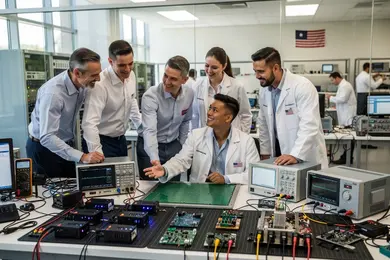
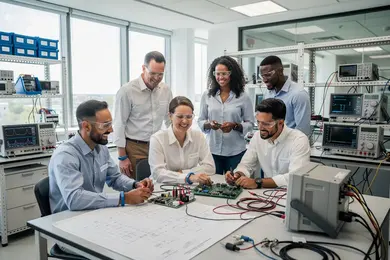
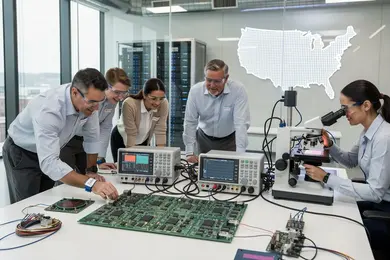
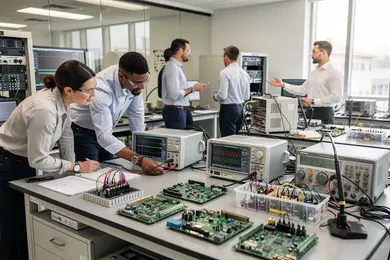
Campus programs usually provide direct access to oscilloscopes, benches, robotics labs, machine tools, faculty office hours, and student engineering clubs.
Online programs offer schedule flexibility, which can be valuable for working adults, military-affiliated students, and students who cannot relocate. Students with service backgrounds comparing flexible programs may also want to review best military-friendly online electrical engineering degrees to understand support services such as transfer credit, deployment flexibility, and veteran benefits.
The table below summarizes the trade-offs that matter most for controls engineering preparation. Use it to identify which format fits your learning style, work schedule, and need for hands-on access.
| Decision factor | Online electrical engineering | Campus electrical engineering | What controls students should check |
| Labs | May use home kits, remote instruments, simulations, or brief residencies | Usually offers direct lab access throughout the term | Ask how students complete circuits, controls, embedded, and instrumentation labs |
| Schedule | Often better for working adults and students outside commuting range | More structured and location-dependent | Confirm whether synchronous sessions, proctored exams, or residencies conflict with work |
| Networking | Requires more intentional effort through virtual teams, faculty outreach, and internships | More spontaneous access to clubs, labs, and local recruiters | Look for online project teams, career fairs, and employer partnerships |
| Equipment exposure | Can be strong if the school ships hardware or requires lab residencies | Usually stronger for repeated access to physical systems | Prioritize programs with real hardware, not only simulation |
| Self-management | Requires strong independent study habits | Provides more routine structure | Be honest about your ability to keep up with calculus-heavy courses online |
Online programs make the most sense if you already have discipline, a stable study schedule, and access to the required technology. Campus programs may be better if you learn best by being physically present in labs, need more structured support, or want extensive involvement in robotics clubs and research groups.
A good way to compare formats is to ask each program the same practical questions before applying. These questions help reveal whether the online experience is truly engineering-focused or simply lecture-based.
- How are control systems, embedded systems, and circuits labs completed by distance students?
- Are any campus visits required, and how far in advance are they scheduled?
- Which software and hardware platforms do students use for PLCs, simulation, data acquisition, or microcontrollers?
- Can online students join capstone teams, undergraduate research, career fairs, and engineering clubs?
- What technical support is available when a remote lab kit or software installation fails?
Is ABET accreditation required for controls engineer jobs?
ABET accreditation is not legally required for every controls engineer job, but it can be very important. ABET is the main programmatic accreditor for engineering programs in the United States, and many employers use it as a quality signal when evaluating entry-level engineering applicants. It also matters if you may later pursue Fundamentals of Engineering, Professional Engineer, or certain government and regulated-industry roles.
For controls engineering, the need for ABET varies by employer and industry. A factory automation integrator may care more about PLC skills, commissioning experience, and troubleshooting ability. A utility, aerospace contractor, public agency, or engineering consulting firm may place more weight on an ABET-accredited engineering degree, especially if projects involve public safety, stamped engineering work, or formal engineering career ladders.
The table below shows how to think about accreditation based on your target outcome. It is not a substitute for checking job postings, state licensing board rules, or employer requirements, but it can help you avoid choosing a degree that narrows your options too early.
| Goal | How important ABET usually is | Why it matters |
| Entry-level controls engineer in manufacturing | Often helpful, sometimes not mandatory | Employers may prioritize automation projects, internships, and PLC experience |
| Engineering consulting or public infrastructure | Highly important | Licensure pathways and client requirements often favor ABET-accredited engineering degrees |
| Professional Engineer licensure | Very important | State boards commonly make the process more straightforward for ABET graduates |
| Controls technician or automation specialist | Less central | Hands-on credentials, associate degrees, and vendor training may carry more weight |
| Graduate engineering study | Often important | Graduate programs may require prerequisites if the bachelor's program lacks standard engineering coverage |
The safest approach is to verify both institutional accreditation and programmatic accreditation. Institutional accreditation applies to the college or university as a whole. ABET accreditation applies to a specific engineering program, so a university can be accredited while a particular online electrical engineering program is not ABET-accredited.
Before enrolling, follow this sequence to reduce risk:
- Search the school's program page for the exact degree name, not just the department name.
- Confirm whether the online version and campus version have the same accreditation status.
- Check whether the accreditation applies to electrical engineering, electrical and computer engineering, or engineering technology.
- Review job postings for your target employers and note whether they require an ABET-accredited engineering degree.
- If licensure may matter, contact your state engineering board before committing to the program.
A common red flag is vague language such as "ABET-aligned" or "based on ABET standards." That may indicate a rigorous curriculum, but it is not the same as ABET accreditation.
What courses are in an electrical engineering controls curriculum?
A controls-focused electrical engineering curriculum starts with the same foundation as other engineering degrees: calculus, physics, circuits, electronics, programming, and engineering design. The controls specialization then adds modeling, feedback, instrumentation, motors, embedded hardware, communications, and automation. These subjects matter because controls engineers must understand both the physical system and the controller that changes its behavior.
The table below groups common courses by the type of skill they build. Course names vary by university, but a strong program should cover most of these areas through required classes, electives, labs, or capstone work.
| Curriculum area | Common courses | Why it matters for controls careers |
| Math and science foundation | Calculus, differential equations, linear algebra, physics | Supports modeling, stability analysis, signal behavior, and dynamic systems |
| Electrical engineering core | Circuits, electronics, digital logic, signals and systems | Builds the ability to analyze sensors, actuators, filters, and control hardware |
| Controls and automation | Control systems, process control, mechatronics, robotics | Directly connects feedback theory to industrial and robotic applications |
| Computing and embedded systems | Programming, microcontrollers, embedded design, real-time systems | Prepares students to work with controllers, firmware, and connected devices |
| Power and motion | Electric machines, power electronics, motor drives | Important for conveyors, pumps, robotics, HVAC, renewable energy, and factory equipment |
| Instrumentation and communication | Sensors, data acquisition, industrial networks, SCADA concepts | Helps engineers collect reliable data and connect equipment safely |
| Design and professional practice | Engineering ethics, technical writing, senior capstone | Develops documentation, teamwork, safety awareness, and project delivery skills |
Course lists alone do not prove career preparation. Controls work is practical, so students should look for assignments that produce evidence of skill. A portfolio can help online students show employers that they have applied theory to working systems, not just passed exams.
Useful portfolio projects for controls-focused students include the following:
- A feedback controller designed in MATLAB, Simulink, Python, or a similar modeling tool and explained with stability and performance results
- A microcontroller project using sensors, actuators, data logging, and a clear wiring diagram
- A PLC or ladder logic simulation with documented inputs, outputs, interlocks, and fault handling
- A motor control or power electronics project showing safe measurement practices and performance testing
- A capstone project that integrates hardware, software, controls logic, documentation, and teamwork
AI and automation tools are changing how engineers work, but they are not replacing the need for fundamentals. Controls engineers increasingly use simulation, digital twins, predictive maintenance platforms, and AI-assisted diagnostics. Students who understand modeling, data quality, safety constraints, and physical system limits will be better prepared to use these tools responsibly.
What admission requirements do online electrical engineering programs require?
Online electrical engineering programs commonly require a high school diploma or equivalent for first-year admission, plus strong preparation in algebra, trigonometry, precalculus, chemistry, and physics. Transfer applicants usually need college transcripts, a minimum GPA, and completed prerequisite courses such as calculus, physics, and introductory programming.
Selective engineering programs may review math readiness more closely than general online degree programs because early engineering courses move quickly.
Admission standards differ by school and level. Bachelor's programs focus on college readiness and prerequisite math, while master's programs usually require a bachelor's degree in electrical engineering, computer engineering, or a related technical field. Career changers with non-engineering degrees may need bridge courses before taking graduate-level controls, power, or embedded systems classes.
Students comparing professional online degrees should remember that engineering has unusually strict prerequisite sequencing. Programs such as MLIS programs may emphasize different undergraduate preparation, while electrical engineering admissions often depend on math, lab science, and prior technical coursework.
The table below summarizes common requirements by applicant type. Always confirm details with the school because online engineering programs can have course-by-course prerequisite rules that affect your start date.
| Applicant type | Common requirements | What to verify |
| First-year bachelor's applicant | High school diploma or equivalent, transcripts, math preparation, possible test scores | Whether calculus readiness is required before engineering courses |
| Community college transfer | College transcripts, minimum GPA, calculus, physics, chemistry, programming, general education credits | How many credits transfer directly into the engineering major |
| Working technician | Prior college credit, military or industry training review, possible placement testing | Whether technical courses count as engineering credit or only elective credit |
| Graduate applicant | Bachelor's degree, technical prerequisites, transcripts, references, statement of purpose | Whether a non-ABET or non-engineering degree requires leveling courses |
Before applying, take these steps to reduce delays and avoid paying for credits that do not move you toward graduation:
- Request an unofficial transfer evaluation before committing if you have prior credits.
- Ask whether online students enter the engineering major immediately or start in a pre-engineering track.
- Confirm the exact math course you should take first based on placement rules.
- Check whether lab science courses must be calculus-based to count toward the degree.
- Ask how often required upper-division engineering courses are offered online.
A common mistake is assuming an associate degree automatically covers the first two years of an engineering bachelor's program. Engineering curricula are tightly sequenced, and missing one calculus or physics course can delay circuits, signals, and controls coursework by a term or more.
How long does an online electrical engineering degree take?
A full online bachelor's degree in electrical engineering typically takes about four years of full-time study for first-time students. Transfer students may finish faster if prior credits match the engineering curriculum, but the timeline depends less on total credits and more on prerequisite sequencing. Calculus, physics, circuits, signals, electronics, and controls often must be taken in order.
Part-time students commonly need longer because engineering courses are demanding and lab-based. A working adult taking one or two courses per term may need several additional years, especially if they begin below calculus. Accelerated schedules can work for students with strong math preparation and fewer outside obligations, but rushing through prerequisite-heavy engineering courses can weaken retention.
Electrical engineering can take longer than some online degrees because of labs, math sequences, and technical prerequisites. If you are comparing timelines across fields, an exercise science online degree may have a different mix of science labs, clinical preparation, and career outcomes, so program length should be evaluated in context rather than by credit count alone.
The table below shows common timeline scenarios. It can help you estimate how your starting point affects completion time.
| Student situation | Typical timeline | Main factor that affects speed |
| First-time full-time student | About four years | Ability to follow the standard calculus-to-controls sequence |
| Transfer student with engineering prerequisites completed | About two to three years | How many math, physics, and engineering credits apply to the major |
| Working adult studying part time | Often five or more years | Course load, work schedule, and availability of upper-level online courses |
| Student starting below precalculus | Longer than the standard plan | Additional math preparation before calculus-based engineering courses |
| Graduate certificate student | Often less than a full degree | Prior engineering background and course scheduling |
To keep your timeline realistic, map prerequisites before choosing a start term. Controls-related courses are usually upper-division, so delays in calculus, physics, circuits, or signals can delay the courses most relevant to your career goal.
Students can improve their chances of finishing on time by following a clear sequence:
- Complete math placement early and review algebra, trigonometry, and precalculus before the first term.
- Prioritize calculus, physics, and programming because they unlock later engineering courses.
- Avoid skipping lab courses that are prerequisites for upper-division electronics or controls labs.
- Plan around courses offered only once per year, especially senior electives and capstone projects.
- Use summer terms strategically for general education or prerequisite courses when available.
How much do online electrical engineering degrees cost?
The cost of an online electrical engineering degree depends on tuition, residency status, transfer credits, technology fees, lab kits, software, books, and how long you remain enrolled. Public universities may offer lower in-state rates, but some online programs charge a separate distance-learning rate. Private nonprofit universities may have higher published tuition but can also offer institutional aid, so net price matters more than sticker price.
College Board's 2024 Trends in College Pricing and Student Aid reported average 2024-25 tuition and fees of $11,610 at public four-year colleges for in-state students, $30,780 for out-of-state students at public four-year colleges, and $43,350 at private nonprofit four-year colleges. These averages are not engineering-specific, but they show why residency, institution type, and financial aid can change the total investment substantially.
Because online engineering programs may require lab kits, proctoring, specialized software, or short campus residencies, students should compare total cost rather than tuition alone. The table below highlights cost categories that commonly affect the final bill.
| Cost factor | Why it matters | Question to ask |
| Tuition rate | Usually the largest cost and may vary by residency or online status | Is the online rate different from the campus rate? |
| Transfer credits | Accepted credits can reduce both time and total tuition | Which prior courses apply to engineering major requirements? |
| Lab kits and equipment | Controls-related courses may require hardware, tools, or measurement devices | Are lab kits included in tuition or billed separately? |
| Software and computing | Engineering courses may use simulation, CAD, programming, and analysis tools | Does the school provide licenses and remote access? |
| Residency or travel | Some online programs require short in-person labs or exams | How many campus visits are required and what costs are not included? |
| Course availability | Delayed courses can add terms and fees | Are required upper-division courses offered every term or only annually? |
To evaluate affordability, estimate the cost to complete, not just the annual price. This is especially important for transfer students because an inexpensive tuition rate may not save money if many credits do not count toward the engineering major.
Use this process before enrolling:
- Ask for a degree plan showing remaining courses after transfer evaluation.
- Calculate tuition for the remaining credits, not the full catalog program.
- Add engineering fees, lab kits, software, proctoring, books, and required travel.
- Compare grants, scholarships, employer tuition assistance, military education benefits, and payment plans.
- Estimate opportunity cost by considering whether full-time study would reduce your current income.
Students comparing fields should also remember that affordability looks different by career goal. Researching lower-cost options such as jobs for environmental science majors may be useful if your broader interest is sustainability, energy, or compliance rather than control system design itself.
The biggest red flag is a school that cannot clearly explain total program cost, transfer credit applicability, accreditation status, and lab requirements before you enroll. If the answers are vague, keep comparing programs.
What jobs can electrical engineering graduates get in controls?
Electrical engineering graduates can pursue several controls-related roles across manufacturing, utilities, energy, aerospace, automotive, robotics, building automation, water treatment, pharmaceuticals, and systems integration. Job titles vary because employers may use "controls," "automation," "instrumentation," "systems," or "electrical" to describe overlapping work.
The U.S. labor market is favorable for engineering roles tied to automation and electrification. The Bureau of Labor Statistics projects employment for electrical and electronics engineers to grow 9% from 2024 to 2034, which is faster than the average for all occupations. For students, this means the degree can support a broad engineering search, but the strongest controls candidates still need practical evidence of automation, programming, and troubleshooting skills.
The table below shows common roles and how they differ. Use it to match your coursework, internships, and projects to the job titles you are most likely to target.
| Job title | Typical responsibilities | Helpful preparation |
| Controls engineer | Designs, tunes, tests, and improves feedback and automation systems | Control systems, signals, PLCs, instrumentation, embedded systems |
| Automation engineer | Implements automated equipment, production lines, robotics, and data collection | PLCs, robotics, industrial networks, safety systems, manufacturing processes |
| PLC programmer | Develops and debugs ladder logic, function block logic, HMI screens, and machine sequences | PLC platforms, electrical schematics, commissioning, field troubleshooting |
| Instrumentation and controls engineer | Specifies sensors, transmitters, control valves, loops, and process control systems | Process control, measurement, calibration, SCADA, documentation |
| Embedded controls engineer | Develops controller software for devices, vehicles, robotics, or equipment | C or C++, microcontrollers, real-time systems, sensors, control algorithms |
| Robotics engineer | Works on robot motion, integration, safety, perception, and production cells | Robotics, kinematics, controls, machine vision, automation safety |
| SCADA engineer | Builds and maintains supervisory control, monitoring, alarming, and data systems | Industrial communications, cybersecurity awareness, databases, HMI design |
Entry-level graduates often start as electrical engineers, controls engineers, automation engineers, test engineers, field engineers, or applications engineers. Advancement may lead to senior controls engineer, lead automation engineer, project engineer, controls manager, systems architect, or engineering consultant roles.
To become more competitive while still in school, focus on evidence employers can evaluate. Controls employers often value projects and internships because the work involves real equipment, downtime risk, and cross-functional communication.
- Complete at least one internship, co-op, field service role, or lab assistant role connected to automation, manufacturing, energy, robotics, or testing.
- Build a portfolio with schematics, code samples, test plans, simulation results, and concise explanations of design decisions.
- Learn to read electrical drawings, P&IDs, control narratives, I/O lists, and equipment manuals.
- Practice troubleshooting systematically instead of only showing final project results.
- Develop communication skills for explaining technical issues to operators, technicians, managers, and customers.
A common mistake is focusing only on theory or only on PLC programming. Strong controls engineers connect both: they understand dynamic systems and can also make hardware, software, and operators work together safely.
How much do controls engineers earn in the United States?
Controls engineer salaries vary by job title, industry, region, education, experience, overtime expectations, travel, and whether the role is design-focused, field-focused, or management-track. Because the Bureau of Labor Statistics does not publish a single "controls engineer" occupation, the closest national benchmark is often electrical and electronics engineers.
The Bureau of Labor Statistics reported a 2024 median annual wage of $118,780 for electrical and electronics engineers. This figure should be used as a benchmark, not a promise, because controls roles can fall under electrical engineering, industrial engineering, software, instrumentation, maintenance, or systems integration job families depending on the employer.
The table below shows how pay context can differ by controls-related role type. It is designed to help students interpret salary postings more carefully instead of assuming every controls title has the same compensation structure.
| Role type | Salary context | What can affect compensation |
| Plant controls engineer | Often tied to manufacturing operations and equipment uptime | Shift support, on-call expectations, plant location, production environment |
| Systems integrator controls engineer | May involve project delivery for external clients | Travel, commissioning, overtime, customer deadlines, platform expertise |
| Embedded controls engineer | Often overlaps with software and product development | Programming depth, real-time systems experience, industry specialization |
| Instrumentation and controls engineer | Common in process industries, utilities, and infrastructure | Safety standards, documentation, field conditions, regulatory environment |
| Senior or lead controls engineer | Usually requires project ownership and mentorship | Years of experience, leadership, architecture decisions, budget responsibility |
When evaluating return on investment, compare likely earnings against total cost to complete, not just the school's published tuition. Also consider whether the program helps you access internships, employer networks, capstone projects, and technical tools that support your first controls role.
Students should be cautious with salary claims on school pages, job ads, and social media. A high salary may reflect a senior engineer, heavy travel, high-cost metro area, overtime, or a specialized industry. A lower starting salary may still be reasonable if the role provides strong training, exposure to real systems, and a path into higher-responsibility engineering work.
What certifications help controls engineer career advancement?
Certifications are not a replacement for an engineering degree, but they can help controls engineers demonstrate practical skills, safety awareness, platform knowledge, or management readiness. The best certification depends on whether you work with industrial automation, process control, robotics, cybersecurity, project delivery, or licensed engineering services.
Students should treat certifications as career accelerators, not shortcuts. Entry-level candidates usually benefit more from internships, capstone projects, and hands-on labs first. Certifications become more valuable when they align with actual tools or responsibilities in your target industry.
The table below summarizes credentials and credential areas that may support advancement. Requirements can change, so confirm current eligibility, exam rules, and renewal requirements with the issuing organization before investing time or money.
| Credential or credential area | Best for | How it may help |
| Fundamentals of Engineering exam | ABET engineering students or graduates considering licensure | Begins the path toward Engineer in Training status and possible Professional Engineer licensure |
| Professional Engineer license | Engineers in consulting, public infrastructure, utilities, or regulated work | Can support legal responsibility for certain engineering services depending on state rules |
| ISA Certified Automation Professional | Experienced automation and controls professionals | Signals broader automation knowledge across systems, design, and operations |
| Vendor PLC or automation certifications | Engineers working with specific industrial platforms | Shows practical familiarity with commonly used hardware and software ecosystems |
| Functional safety training | Engineers involved in machine safety or process safety | Supports work involving safety instrumented systems, risk reduction, and safety standards |
| Industrial cybersecurity training | SCADA, IIoT, and connected operations roles | Helps engineers understand risks in networked control environments |
| Project management credentials | Engineers moving into lead, project, or management roles | Supports budgeting, scheduling, stakeholder communication, and delivery discipline |
A practical certification plan should follow your career stage. This avoids spending money on credentials that employers do not value for your current level.
- As a student, prioritize ABET-aligned coursework, labs, internships, and portfolio projects.
- Near graduation, consider the Fundamentals of Engineering exam if licensure may matter in your state or industry.
- In your first controls role, learn the platforms your employer actually uses before paying for vendor certifications.
- After gaining experience, add automation, safety, cybersecurity, or project credentials that match your responsibilities.
- Reassess every few years as your work shifts from implementation to design, leadership, consulting, or management.
The main red flag is collecting certifications without a clear job target. Employers usually want to see that a credential connects to real systems, documented projects, safer designs, or better project outcomes.
Other Things You Should Know About Electrical Engineering
For an online electrical engineering degree in 2027, a computer with a capable processor, at least 16GB RAM, and a stable internet connection is essential. This setup helps efficiently run simulation software and webinars, crucial for controls engineering studies.
It is possible, but the course load must be realistic. Calculus-based engineering courses can require substantial weekly study time, especially when labs and projects are included. Many working students choose part-time enrollment to protect grades and avoid rushing through prerequisite-heavy material.
Yes. Most online electrical engineering programs require virtual labs, remote lab kits, or short in-person residencies to satisfy ABET-style hands-on learning. For controls-focused students, expect coursework in signals, feedback systems, and simulation tools such as MATLAB/Simulink, plus documented lab assignments and proctored assessments.
Either can lead to controls work, but the emphasis differs. Electrical engineering is usually stronger for circuits, embedded systems, instrumentation, signals, and electronics. Mechanical engineering may be stronger for dynamics, machines, fluids, thermal systems, and mechanical design. Choose based on the systems you want to control and the courses offered by the program.
References
- Best Online Electrical Engineering Degrees 2025 https://www.onlineu.com/degrees/electrical-engineering
- Bachelor Degree in Electrical and Control Engineering (160) https://aast.edu/en/colleges/coe/alex/dept/programtemp.php
- Planit : Job Profiles https://www.planitplus.net/JobProfiles/View/229/52
- Criteria for Accrediting Engineering Programs, 2025 - 2026 - ABET https://www.abet.org/accreditation/accreditation-criteria/criteria-for-accrediting-engineering-programs-2025-2026/
- Online Electrical Engineering Degrees https://www.affordablecollegesonline.org/degrees/engineering-programs/electrical-engineering/
- What does an Electrical Controls Engineer do? Career Overview, Roles, Jobs | IES https://careercenter.ies.org/career/electrical-controls-engineer
- Control Systems Engineering Course for Electrical Engineers https://www.pertecnica.in/control-systems-engineering-course-for-electrical-engineers/
- How important is abet accreditation? | Professional Engineer & PE Exam Forum https://engineerboards.com/threads/how-important-is-abet-accreditation.31098/