2027 Online Electrical Engineering Degrees With Strong Professional Identity Development

Co-Founder and Chief Data Scientist
Choosing an online electrical engineering degree is not just about convenience; it is about becoming credible, employable, and prepared to solve real engineering problems. The U. S. Bureau of Labor Statistics reported a 2024 median pay of $118,780 for electrical and electronics engineers, making program quality and career fit especially important.
This guide is for prospective students, transfer students, and working adults comparing online options. You will learn how accreditation, coursework, labs, cost, career outcomes, and professional identity development affect whether a program is worth your investment.
Key Things You Should Know
- ABET accreditation is the strongest quality signal for an online electrical engineering bachelor's degree because it shows the program meets recognized engineering education standards used by employers, graduate schools, and licensing boards.
- The BLS reported 2024 median pay of $118,780 for electrical and electronics engineers, but outcomes vary by industry, location, experience, clearance requirements, and whether the degree includes substantial design, lab, and communication work.
- Strong professional identity development comes from more than online lectures; look for mentored design projects, ethics training, engineering communication, teamwork, portfolio evidence, internships or co-ops, and clear preparation for the FE exam.
What is an online electrical engineering degree with a focus on professional identity development?
An online electrical engineering degree is a bachelor's or graduate program that teaches students to analyze, design, test, and improve electrical systems while completing much of the coursework through a digital learning platform. Core subjects usually include circuits, electronics, signals and systems, electromagnetics, digital logic, control systems, power systems, embedded systems, and engineering mathematics.
A focus on professional identity development means the program intentionally helps students think, act, communicate, and make decisions like engineers. This matters because electrical engineering is not only a technical field. Engineers must define problems, work with constraints, explain trade-offs, follow ethical standards, document decisions, collaborate with non-engineers, and accept responsibility for designs that may affect safety, reliability, and public welfare.
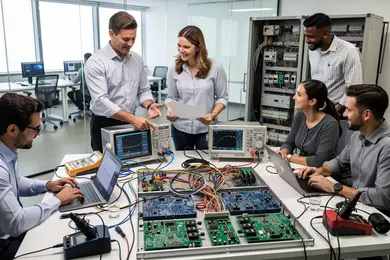
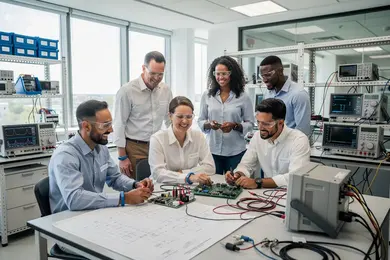
The best online programs make identity development visible through authentic work. Students may build a design portfolio, participate in team projects, receive feedback from faculty or industry mentors, present technical findings, analyze engineering failures, and reflect on how their choices align with professional standards. For online learners, these experiences are especially important because they replace some of the informal peer learning and lab culture that campus students often get automatically.
This type of degree is usually a strong fit for students who want engineering roles in power, electronics, automation, communications, aerospace, robotics, semiconductors, renewable energy, or embedded systems. It may be a poor fit for students who dislike advanced math, need a mostly self-paced program with little collaboration, or want a credential that avoids lab work entirely. Electrical engineering requires persistence, structured practice, and comfort with ambiguity.
How do online electrical engineering programs compare to campus-based degrees for career preparation?
Online and campus-based electrical engineering degrees can both prepare students for engineering careers, but they create different learning conditions. The right choice depends on your schedule, access to labs, learning style, transfer background, and need for employer-facing experiences such as internships, research, or capstone projects.
The table below compares the main career-preparation differences. Use it to identify which format gives you the strongest path to the skills and evidence employers will actually review.
| Factor | Online electrical engineering degree | Campus-based electrical engineering degree | Decision point |
| Flexibility | Often better for working adults, military students, caregivers, and transfer students | Usually better for students who can attend scheduled labs and daytime classes | Choose online if schedule control is essential and the program still includes rigorous labs |
| Lab access | May use mailed lab kits, simulation software, remote instrumentation, short residencies, or local proctoring | Typically uses on-campus labs and direct equipment access | Ask how each required lab is delivered before enrolling |
| Professional networking | Requires intentional participation in virtual teams, faculty office hours, IEEE chapters, and employer events | Networking may happen more naturally through campus labs, clubs, and research groups | Online students should verify mentoring and career services, not just course availability |
| Career evidence | Strong when the program requires design portfolios, capstones, documented labs, and teamwork | Strong when students use labs, internships, research, and faculty references effectively | Employers care less about format than proof of engineering competence |
For students comparing engineering disciplines, an online electrical engineering degree is usually more circuit-, signal-, and systems-focused than a mechanical engineering online degree, which often emphasizes mechanics, materials, thermodynamics, and machine design. The better choice depends on whether you want to work with electrical systems and electronics or physical systems and mechanical design.
Online study makes sense when the program is accredited, technically rigorous, and built around active problem-solving rather than passive video watching. Campus study may be better if you want frequent in-person labs, undergraduate research, residential learning communities, or a highly structured daily environment.
Which accreditation and ABET standards should online electrical engineering degrees meet?
Accreditation is one of the most important checks in this field. At the institutional level, the college or university should be accredited by an agency recognized by the U.S. Department of Education or the Council for Higher Education Accreditation. At the program level, many engineering employers and licensing boards place special value on ABET accreditation.
ABET accreditation matters because it evaluates whether an engineering program has appropriate faculty, curriculum, facilities, student outcomes, continuous improvement processes, and institutional support. For an online electrical engineering degree, ABET recognition can help reduce uncertainty about whether the digital format still meets accepted engineering standards.
Students should understand the difference between accreditation types before comparing schools. These categories affect transferability, licensure preparation, and employer confidence.
| Accreditation or approval type | What it means | Why it matters |
| Institutional accreditation | The whole college or university meets broad academic and administrative standards | Usually required for federal financial aid and commonly considered in transfer credit decisions |
| ABET Engineering Accreditation Commission | The specific engineering program meets recognized engineering education criteria | Often important for engineering licensure pathways, employer screening, and graduate study |
| State authorization | The school is approved to offer distance education to students in specific states | Online students may be unable to enroll if the institution is not authorized in their state |
| Licensure alignment | The curriculum supports prerequisites for exams such as the FE and later PE pathway where applicable | Requirements vary by state, so students should confirm rules with their state engineering board |
ABET's student outcomes emphasize abilities such as solving complex engineering problems, applying engineering design, communicating effectively, recognizing ethical responsibilities, functioning on teams, conducting experimentation, and acquiring new knowledge. Those outcomes align closely with professional identity development because they define what engineers are expected to do in practice.
A common mistake is assuming that every online engineering technology, electronics, or applied engineering program is equivalent to an ABET-accredited electrical engineering degree. Some programs are excellent for technician, technologist, or applied roles, but they may not support the same licensure or graduate-school pathways. Always verify the exact program name and accreditation status, not just the university brand.
What coursework and learning experiences build a strong professional identity in electrical engineering?
Professional identity grows when students repeatedly connect theory to engineering practice. In electrical engineering, that means learning the math and science behind systems, then applying those tools to design choices, constraints, testing, documentation, and public responsibility.
The table below shows common coursework and the professional behaviors each area can develop. This helps you look beyond course titles and ask whether the curriculum builds usable engineering judgment.
| Learning area | Typical topics | Professional identity contribution |
| Circuits and electronics | DC and AC circuits, semiconductor devices, amplifiers, power electronics | Builds confidence in diagnosing, modeling, and testing real electrical behavior |
| Signals, systems, and controls | Signal processing, feedback, stability, sensors, dynamic systems | Develops systems thinking and the ability to explain trade-offs in performance and reliability |
| Digital and embedded systems | Logic design, microcontrollers, firmware, hardware-software interfaces | Supports identity as a builder of integrated intelligent devices and connected products |
| Power and energy systems | Electric machines, grids, renewable integration, protection, distribution | Connects engineering decisions to infrastructure, safety, resilience, and public need |
| Engineering design and capstone | Requirements, prototyping, testing, documentation, presentations | Creates portfolio evidence and helps students see themselves as practicing engineers |
Because online students may have fewer spontaneous lab interactions, the strongest programs deliberately create professional practice moments. Look for experiences that require you to produce, defend, revise, and document engineering work.
- Team-based design projects: These help students practice collaboration, conflict resolution, requirements analysis, and shared technical accountability.
- Remote or hands-on labs: Mailed kits, local lab arrangements, simulation tools, and remote instrumentation can be effective when students collect data and write formal reports.
- Ethics and safety assignments: Case studies help students understand how engineering decisions affect users, employers, communities, and legal responsibility.
- Portfolio-building activities: Schematics, code repositories, test reports, design reviews, and capstone presentations help students show employers what they can do.
- Mentoring and reflection: Faculty, alumni, or industry mentors can help students connect coursework to professional standards and career direction.
AI-assisted design tools, digital twins, circuit simulation, and automated testing are changing the way engineers work. A current online electrical engineering program should teach students to use software productively while still understanding the underlying physics, assumptions, and failure modes. Employers do not need graduates who only click through tools; they need engineers who can interpret results and make defensible decisions.
What admission requirements and prior academic preparation do online electrical engineering programs expect?
Online electrical engineering programs are academically demanding, so admissions teams usually look for evidence that students can handle calculus-based engineering coursework. Requirements vary by school and degree level, but preparation in mathematics, physics, and computing is especially important.
The most common admissions expectations fall into several categories. Review them early so you can close gaps before applying rather than discovering missing prerequisites after enrollment.
- High school or college math: Competitive applicants often need strong preparation through precalculus, and many programs expect readiness for calculus I or higher.
- Science background: Calculus-based physics is commonly required or strongly recommended for transfer into upper-division engineering courses.
- Prior college credit: Some online bachelor's programs are degree-completion pathways that expect students to finish lower-division math, science, and general education first.
- Programming or computing exposure: Coursework in C, Python, MATLAB, or similar tools can help with embedded systems, controls, data acquisition, and simulations.
- Application materials: Schools may request transcripts, a minimum GPA, personal statements, recommendation letters, placement exams, or proof of English proficiency when applicable.
Students coming from community colleges should pay close attention to transfer articulation. Electrical engineering sequences are tightly ordered, and one missing course can delay progress by a term or more. Before applying, ask whether the school has evaluated your exact courses for calculus, physics, circuits, and programming equivalency.
If you are not ready for calculus, consider starting with prerequisite courses at a community college or through the university's pre-engineering pathway. Rushing into an engineering major without the math foundation is one of the most expensive mistakes students make because it can lead to repeated courses, delayed graduation, and lower confidence.
How long do online electrical engineering degrees take, and what do they cost?
Most online bachelor's degrees in electrical engineering require about 120 to 130 credits. Full-time first-year students commonly need around four years, while transfer students may finish faster depending on accepted credits. Part-time students often take longer, especially if they work full time or need to complete labs and sequential math courses at a manageable pace.
Cost depends on tuition rate, residency status, transfer credit, lab fees, software, books, equipment kits, and the number of terms required to finish. Federal Student Aid set the 2024-25 undergraduate Direct Loan interest rate at 6.53%, which means borrowing cost should be part of your ROI calculation, not an afterthought.
The table below summarizes common cost and timeline variables. It is meant to help you compare total cost of completion rather than focusing only on advertised tuition per credit.
| Cost or timeline factor | How it affects online electrical engineering students | What to verify |
| Transfer credits | Accepted calculus, physics, general education, and introductory engineering credits can reduce both time and cost | Request an official or preliminary transfer evaluation before committing |
| Residency tuition | Public universities may charge different rates for in-state and out-of-state online students | Ask whether online engineering students receive a separate distance-learning rate |
| Lab and equipment fees | Engineering programs may require kits, instruments, software licenses, or short residencies | Get a written list of required technology and lab expenses |
| Course sequencing | Prerequisite chains can extend graduation if courses are offered only once per year | Review a term-by-term degree plan before enrolling |
| Work schedule | Part-time study may protect income but can extend borrowing and delay career transition | Compare full-time, part-time, and summer enrollment plans |
Engineering degrees often cost more to deliver than less lab-intensive online programs because they require technical software, lab infrastructure, faculty oversight, and design assessment. If you are comparing online education options broadly, a library science masters, for example, may have a very different cost structure because it typically does not require the same engineering labs or equipment.
To manage cost, start with transferable prerequisites when appropriate, avoid schools that will not evaluate transfer credits clearly, use employer tuition assistance if available, and compare completion cost rather than annual tuition alone. A cheaper program can become more expensive if limited course availability delays graduation.
What electrical engineering career paths and job roles can these online degrees support?
An online electrical engineering degree can support many roles, but the best path depends on the program's technical emphasis and the student's project evidence. Employers hiring electrical engineering graduates commonly look for proof of design ability, software fluency, lab judgment, and communication skills.
The table below connects common career directions with typical responsibilities. Use it to match program electives and capstone options to the work you want after graduation.
| Career path | Typical responsibilities | Useful program emphasis |
| Power systems engineer | Analyze generation, transmission, distribution, protection, grid reliability, or renewable integration | Power systems, machines, energy conversion, protection, controls |
| Electronics design engineer | Design, test, and troubleshoot analog or digital circuits for products and devices | Electronics, PCB design, instrumentation, embedded systems |
| Controls engineer | Develop and tune systems for automation, robotics, manufacturing, aerospace, or process control | Signals and systems, feedback control, sensors, programming |
| Embedded systems engineer | Build hardware-software systems used in smart devices, vehicles, medical equipment, or industrial products | Microcontrollers, C programming, digital logic, real-time systems |
| Test or validation engineer | Create test plans, collect data, verify performance, investigate failures, and document compliance | Lab methods, statistics, instrumentation, technical writing |
Students interested in sustainability should distinguish engineering design roles from broader environmental careers. If your goal is policy, conservation, outreach, or education rather than electrical systems, comparing jobs with elementary education and environmental science degree may clarify whether engineering is the right route or whether an environmental science pathway fits better.
Entry-level electrical engineering roles often involve testing, documentation, modeling, design support, troubleshooting, or field work. Advancement may lead to senior engineer, systems engineer, project engineer, technical lead, engineering manager, consultant, or specialist roles in areas such as power electronics, RF systems, microelectronics, grid modernization, or controls.
Some roles may require U.S. citizenship, security clearance eligibility, professional licensure, or industry-specific certifications. These requirements vary by employer and sector, so students should review job postings in their target region before choosing electives.
What salary ranges and earning potential do electrical engineers have across different industries?
Electrical engineering salaries vary widely because the field spans utilities, aerospace, semiconductors, defense, manufacturing, telecommunications, consulting, and technology. The BLS reported a 2024 median annual wage of $118,780 for electrical and electronics engineers, which is a useful national benchmark but not a prediction for any individual graduate.
The table below summarizes how compensation context can differ by work setting. Use it to evaluate whether a program's electives, labs, and employer relationships align with higher-fit industries rather than chasing salary alone.
| Industry or work setting | Salary context | What may influence pay |
| Semiconductors and electronics | Often competitive for graduates with strong circuit, device, verification, or embedded systems skills | Specialized technical depth, internship experience, design tools, location |
| Utilities and power | Can offer stable engineering pathways tied to infrastructure, grid reliability, and energy transition work | Power systems coursework, FE exam progress, field readiness, regional utility demand |
| Aerospace and defense | May pay well for engineers working on avionics, sensors, communications, controls, or test systems | Clearance eligibility, systems engineering ability, documentation discipline |
| Manufacturing and automation | Compensation depends on plant complexity, controls expertise, and production responsibility | PLC exposure, controls labs, troubleshooting skill, willingness to work on-site |
| Consulting and engineering services | Pay can increase with licensure, client responsibility, and project leadership | PE pathway, communication, project documentation, code knowledge |
Salary should be weighed against program cost, time to completion, debt, and opportunity cost. A degree with strong transfer-credit acceptance, ABET accreditation, and relevant capstone work may create better value than a more expensive option with unclear outcomes, even if both lead to the same credential name.
Students should also avoid assuming that online graduates are automatically paid less. Employers typically evaluate accreditation, technical skills, work samples, internships, communication ability, and job fit. The online format becomes a disadvantage mainly when the program lacks credible labs, design experience, or career support.
What is the job outlook for electrical engineers and demand for online-educated graduates?
The job outlook for electrical engineers is supported by several U.S. trends: grid modernization, electric vehicles, renewable energy integration, semiconductor investment, automation, defense systems, robotics, telecommunications infrastructure, and connected devices. The BLS projected 9% growth for electrical and electronics engineers from 2023 to 2033, which is faster than the average for all occupations.
Demand does not mean every graduate will have the same opportunity. Hiring depends on specialization, geography, internships, citizenship or clearance requirements, and how well the student can demonstrate engineering ability. Online-educated graduates are generally most competitive when their programs are accredited and their resumes show hands-on or simulation-based design work.
Current technology trends are also changing skill expectations. AI may automate parts of design exploration, documentation, code generation, and testing, but it increases the need for engineers who can validate outputs, identify unsafe assumptions, and understand physical systems. Electrical engineers who combine fundamentals with modern tools are better positioned than students who rely only on software shortcuts.
Students should watch job postings before selecting electives. If local employers ask for power systems, PLCs, RF testing, embedded C, MATLAB, Python, SPICE, FPGA experience, or PCB tools, choose courses and projects that let you build evidence in those areas. The labor market rewards demonstrated fit, not just completed credits.
How can students evaluate and choose a reputable online electrical engineering program?
Choosing a reputable online electrical engineering program requires more than comparing rankings. The safest approach is to verify accreditation, delivery quality, support services, career alignment, and total cost before you apply.
Use the following steps to evaluate programs systematically. They are ordered to help you eliminate high-risk options early and spend more time comparing serious contenders.
- Confirm the exact degree title and accreditation: Verify institutional accreditation and, for engineering licensure-oriented pathways, whether the specific electrical engineering program is ABET-accredited.
- Map the curriculum to your career goal: Check whether electives, labs, and capstones support power, electronics, controls, embedded systems, communications, or another target area.
- Ask how labs work: Get details on mailed kits, simulations, remote labs, local arrangements, residencies, lab reports, and faculty feedback.
- Request a transfer-credit review: Do this before enrolling if you have prior calculus, physics, programming, general education, or engineering coursework.
- Compare total completion cost: Include tuition, fees, equipment, software, books, travel, repeated courses, loan interest, and time away from higher-paying work.
- Review career support: Look for employer partnerships, internship support, virtual career fairs, alumni access, resume help, mock interviews, and engineering-specific advising.
- Check student outcomes carefully: Ask about retention, graduation, FE exam preparation, graduate-school placement, and employer connections, while remembering that schools may report outcomes differently.
Common red flags include vague accreditation language, no clear lab plan, limited faculty access, unclear course rotation, high-pressure enrollment tactics, weak transfer policies, and promises about salary or job placement. A reputable school should answer technical questions directly and provide documentation rather than relying on broad marketing claims.
If you are still comparing online degree fields, remember that accreditation and career fit differ by discipline. For example, a nutrition degree online may involve different professional pathways, science prerequisites, and credentialing expectations than electrical engineering, so do not compare programs by tuition alone.
The best choice is the program that fits your target role, academic readiness, schedule, budget, and need for professional formation. For many students, that means choosing the most credible program they can complete successfully, not the fastest or cheapest option on the list.
Other Things You Should Know About Electrical Engineering
It can, especially if the program is ABET-accredited and covers calculus, physics, circuits, engineering science, ethics, and design. Students should still use dedicated FE review materials because exam preparation is separate from earning course credit.
Online electrical engineering students should have access to a reliable computer and internet connection, along with basic software for simulations and circuit design. Some programs may also recommend or require access to specific tools or kits to complete hands-on projects effectively.
Many 2027 online electrical engineering programs require a supervised internship or co-op of 120 to 300 hours, often completed with an approved employer. Programs may also require a reflection portfolio, faculty check-ins, and a final employer evaluation to document professional skills and engineering identity development.
References
- Despite a sluggish job market, studying electrical engineering offers good prospects https://www.vde.com/en/press/press-releases/electrical-engineering-job-market-studies
- Online Electrical Engineering Degrees - BSEE, MSEE https://www.onlineengineeringprograms.com/electrical
- From Student to Professional: How to Establish a Career as an Electrical https://study-in-hungary.com/blog/from-student-to-professional-how-to-establish-a-career-as-an-electrical-engineer/
- Accreditation - ABET https://www.abet.org/accreditation/