2027 Online Electrical Engineering Degrees That Prepare Students for Engineering Roles in Energy and Technology

Co-Founder and Chief Data Scientist
Choosing an online electrical engineering degree is a high-stakes decision because the field sits at the center of power grids, renewable energy, semiconductors, automation, robotics, and connected devices. The U.S. Bureau of Labor Statistics projects electrical and electronics engineering employment to grow 9% from 2023 to 2033, making program quality and accreditation more important than convenience alone.
This guide is for prospective bachelor's and master's students comparing online options, costs, labs, career outcomes, and employer expectations so they can choose a program that fits their engineering goals.
Key Things You Should Know
- For U.S. electrical engineers, the BLS reported a median annual wage of $111,910 in May 2024, but pay varies by industry, degree level, experience, location, and security clearance requirements.
- ABET accreditation is especially important for online bachelor's programs because it can affect employer screening, eligibility for the Fundamentals of Engineering exam, and long-term professional engineer licensure pathways.
- College Board's 2024 pricing data shows average published tuition and fees of $11,610 at public four-year in-state institutions and $43,350 at private nonprofit four-year institutions, so total cost should be compared before assuming online is automatically cheaper.
What is an online electrical engineering degree and how does it prepare graduates for energy and technology roles?
An online electrical engineering degree is a bachelor's or master's program that teaches students how electrical systems are designed, modeled, tested, controlled, and improved. The "online" part usually refers to lecture delivery, advising, exams, software-based simulations, and some collaboration. It does not mean the program should skip engineering labs, design work, or applied problem-solving.
Electrical engineering differs from electrical technology or electrician training. Engineering programs emphasize calculus-based analysis, physics, circuit theory, electronics, signals, electromagnetics, power systems, control systems, embedded systems, and engineering design. Technology or technician programs are often more applied and may prepare students for installation, maintenance, testing, or support roles rather than licensed engineering design roles.
Students asking can you get an engineering degree online should focus less on the delivery format and more on whether the curriculum, labs, faculty qualifications, accreditation, and outcomes match the engineering roles they want. A strong online program can prepare students for energy and technology roles by combining theory with software tools, team projects, technical communication, and hands-on measurement or design activities.
This comparison summarizes the main online electrical engineering degree paths and when each one tends to make sense.
| Degree option | Best fit | Typical academic focus | Decision factor |
| Bachelor of Science in Electrical Engineering | Students seeking entry-level engineering roles or future PE licensure eligibility | Circuits, electronics, power, controls, signals, electromagnetics, design labs | Check ABET accreditation carefully |
| Bachelor of Science in Electrical Engineering Technology | Students interested in applied testing, manufacturing, field support, or technical operations | Applied electronics, instrumentation, troubleshooting, systems support | May not be treated the same as an engineering degree for all roles |
| Master of Science in Electrical Engineering | Engineers or STEM graduates pursuing specialization or advancement | Power systems, communications, microelectronics, AI hardware, robotics, controls | Often more flexible online because advanced labs may be simulation- or project-based |
| Graduate certificate | Working professionals who need targeted skills without a full degree | Power electronics, renewable energy, embedded systems, signal processing | Useful for upskilling but not a substitute for a required engineering degree |
Are online electrical engineering programs respected by employers and equivalent to campus-based degrees?
Online electrical engineering programs can be respected by employers when they come from accredited institutions, include rigorous engineering coursework, and provide evidence of hands-on design competence. Many employers care more about the school, accreditation, projects, internships, technical skills, and interview performance than whether lectures were watched online or attended in a classroom.
The strongest comparison is not "online versus campus" in isolation. It is whether the program produces the same transcripted degree, uses qualified engineering faculty, supports lab work, and aligns with the roles the student wants. Some online programs award the same diploma as the campus version, while others may clearly label the online modality or use a different program name.
This table shows where online and campus-based electrical engineering programs are often equivalent and where students should look more closely.
| Comparison point | Online program | Campus program | What to verify |
| Academic rigor | Can be equivalent when the curriculum and assessments match campus standards | Typically follows established engineering department requirements | Course catalog, syllabi, grading policies, and prerequisites |
| Labs | May use remote labs, mailed kits, simulation tools, short residencies, or local proctors | Usually uses campus lab facilities | How students complete measurement, instrumentation, and design requirements |
| Employer perception | Strongest when the institution is reputable and accredited | Often familiar to regional employers | Career outcomes, employer partners, and alumni roles |
| Networking | Requires more intentional effort through virtual teams, internships, and faculty contact | Often easier through physical labs, clubs, and career fairs | Access to advising, career services, and engineering organizations |
Online study may be the better fit for working adults, military students, caregivers, and students far from a campus with the right specialization. Campus study may be better for students who need daily structure, extensive in-person lab access, or local research opportunities. The right choice depends on discipline, support, and program design rather than format alone.

How can students verify that an online electrical engineering program is properly accredited in the United States?
Accreditation is one of the most important quality checks for an online electrical engineering degree in the United States. Institutional accreditation confirms that the college or university meets broad academic and administrative standards, while programmatic accreditation evaluates the engineering program itself. For undergraduate electrical engineering, ABET accreditation is the key programmatic standard students should understand.
Students should verify accreditation before applying, not after enrolling. The following steps help reduce the risk of choosing a program that does not meet employer, graduate school, or licensure expectations:
- Confirm that the college or university holds recognized institutional accreditation from an accreditor listed by the U.S. Department of Education or the Council for Higher Education Accreditation.
- Search the ABET accredited program database for the exact program name, degree level, institution, campus or delivery location, and accreditation dates.
- Check whether the online version is covered under the same ABET-accredited program entry or whether only a campus version is accredited.
- Ask the program director in writing whether graduates meet educational requirements commonly used for the Fundamentals of Engineering exam in the state where you plan to work.
- Review state engineering board rules if your long-term goal includes becoming a licensed professional engineer because requirements vary by state.
A common mistake is assuming that a university's overall accreditation automatically means the electrical engineering program is ABET-accredited. Another mistake is enrolling in an engineering technology program without realizing that some employers and licensing boards distinguish it from an electrical engineering program.
What are the typical admission requirements for online electrical engineering bachelor's and master's programs?
Admission requirements vary by school, but electrical engineering programs are usually more math- and science-intensive than many other online degrees. Bachelor's programs often screen for readiness in calculus, physics, and college-level writing, while master's programs typically evaluate prior engineering coursework, GPA, technical background, and professional goals.
The table below summarizes typical admission expectations so students can identify gaps before applying.
| Requirement | Online bachelor's programs | Online master's programs | Why it matters |
| Prior education | High school diploma, GED, or transfer credits | Bachelor's degree, usually in electrical engineering or a closely related field | Determines whether the applicant can start directly or needs prerequisites |
| Math readiness | Precalculus or calculus placement; some programs require prior calculus | Calculus, differential equations, linear algebra, and engineering math may be expected | Engineering coursework builds quickly on advanced math |
| Science background | Physics with lab is commonly expected or required early in the degree | Prior physics and engineering science coursework may be reviewed | Supports circuits, electromagnetics, and power systems courses |
| GPA | Minimum GPA varies; transfer pathways may have separate thresholds | Many programs prefer a solid undergraduate GPA in technical courses | Technical GPA can matter more than overall GPA for rigorous programs |
| Application materials | Transcripts, placement records, personal statement, and sometimes test scores | Transcripts, resume, statement of purpose, recommendations, and sometimes GRE scores | Helps schools judge readiness and specialization fit |
Students who are missing prerequisites should not automatically rule themselves out. Community college calculus, physics, programming, and circuit courses can sometimes transfer into an online bachelor's program, and master's applicants from related STEM fields may be admitted conditionally after completing bridge courses.
Before applying, students should complete a practical readiness check. This is especially useful for adult learners returning after several years away from math-heavy coursework.
Follow these steps:
- Request an unofficial transfer evaluation before committing to a program.
- Ask whether calculus, physics, and programming prerequisites can be completed online through approved partner institutions.
- Review whether the program has a minimum grade requirement for transferred engineering, math, and science courses.
- Confirm whether lab science courses taken online will be accepted by the engineering department.
- Compare application deadlines with prerequisite completion dates so admission is not delayed by one missing course.
How do online electrical engineering programs structure coursework, labs, and projects for energy and technology careers?
Online electrical engineering programs usually combine asynchronous lectures, live problem-solving sessions, simulation software, remote lab equipment, mailed hardware kits, proctored exams, and team-based design projects. The best programs do not treat online learning as passive video watching; they require students to build, test, calculate, troubleshoot, document, and defend engineering decisions.
Coursework typically starts with mathematical and physical foundations before moving into systems-level applications. Energy-focused students may take power systems, power electronics, renewable energy integration, smart grids, and electric machines. Technology-focused students may choose embedded systems, digital signal processing, communications, robotics, semiconductor devices, microelectronics, or control systems.
Students interested in energy, sustainability, and infrastructure may also compare adjacent paths such as what can you do with an environmental science degree, especially if their interests lean more toward policy, environmental assessment, or climate planning than circuit design and power engineering.
The structure below shows how online coursework often maps to career preparation.
| Program component | Examples | Career value |
| Core theory | Circuits, signals, electronics, electromagnetics, controls | Builds the analytical foundation needed for engineering design and troubleshooting |
| Software and simulation | MATLAB, SPICE tools, Python, CAD tools, power system modeling platforms | Reflects how many engineering teams prototype and validate designs before hardware testing |
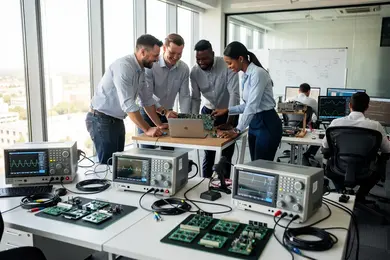
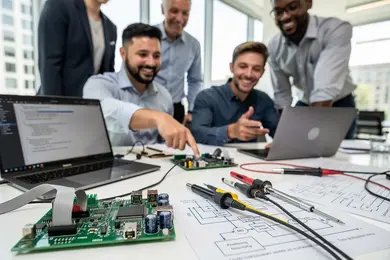
| Lab work | Oscilloscope use, circuit boards, sensors, motors, measurement systems | Develops hands-on judgment and familiarity with real-world tolerances and failures |
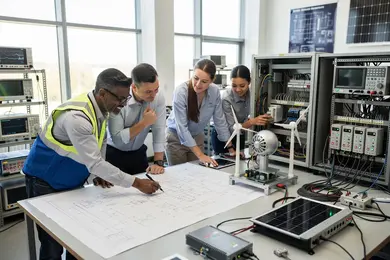
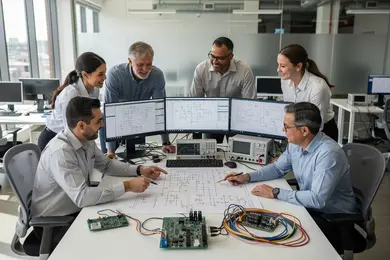
| Design projects | Capstone systems, smart devices, renewable energy models, control systems | Creates portfolio evidence for interviews and graduate applications |
| Professional practice | Technical writing, ethics, safety, engineering economics, teamwork | Prepares students for regulated, collaborative, and client-facing engineering environments |
Because AI and automation are changing engineering workflows, students should look for programs that teach both fundamentals and modern tools. AI can help with modeling, anomaly detection, optimization, and code generation, but engineers still need to validate results, understand safety constraints, and make accountable design decisions.
How long do online electrical engineering degrees take to complete, and what study formats are available?
Completion time depends on the degree level, transfer credits, course load, prerequisites, and whether the program uses traditional semesters or accelerated terms. Online does not always mean faster; electrical engineering has course sequences that must be taken in order, especially calculus, physics, circuits, electronics, and controls.
This table gives realistic timeline expectations for common student profiles.
| Student pathway | Typical time frame | Best for | Main trade-off |
| First-time bachelor's student | About 4 years full time | Students starting with few or no college credits | Requires sustained math and science sequencing |
| Transfer bachelor's student | About 2 to 3 years depending on accepted credits | Students with completed general education, calculus, physics, or engineering courses | Not all engineering credits transfer cleanly |
| Part-time bachelor's student | Often 5 to 6 years or more | Working adults and caregivers | Lower term cost but longer time to career transition |
| Online master's student | About 1.5 to 3 years | Engineers seeking specialization or advancement | Requires balancing graduate rigor with work demands |
| Graduate certificate student | Often less than 1 year to 18 months | Professionals targeting a narrow skill area | May not provide the same career mobility as a full degree |
Students should choose a format based on workload realism, not just speed. A full-time engineering schedule can be difficult while working full time because weekly problem sets, labs, group projects, and exam preparation often demand consistent blocks of focused time.
When comparing formats, ask admissions and academic advisors these questions before enrolling:
- Are courses asynchronous, live, or a combination of both?
- Are labs completed at home, remotely through university equipment, locally through approved sites, or during campus residencies?
- How often are required courses offered, and what happens if a student fails or withdraws from a prerequisite course?
- Can working students take one technical course at a time without losing financial aid eligibility?
- Are internships, co-ops, or industry projects available to online students?
What does an online electrical engineering degree cost, and what financial aid options can students access?
The cost of an online electrical engineering degree depends on residency status, public versus private tuition, transfer credits, technology fees, lab kits, textbooks, software, travel for residencies, and the number of credits required. Online students should compare total program cost rather than per-credit tuition alone.
College Board's 2024 Trends in College Pricing and Student Aid reported the following average published tuition and fees for U.S. four-year institutions. These figures are useful benchmarks, but individual online engineering programs can be higher or lower depending on the school and fee structure.
- Public four-year in-state average published tuition and fees: $11,610
- Public four-year out-of-state average published tuition and fees: $30,780
- Private nonprofit four-year average published tuition and fees: $43,350
Engineering students should also budget for costs that may not appear in headline tuition. These extra expenses can affect affordability even when the program is advertised as online.
| Cost factor | Why it matters | How to evaluate it |
| Transfer credit policy | Accepted credits can reduce total cost and time | Request a written degree audit before enrolling |
| Lab kits and hardware | Electrical engineering may require measurement tools, boards, or components | Ask for required equipment lists by course |
| Software access | Engineering tools can be expensive without student licenses | Confirm which tools are included in tuition or fees |
| Residency requirements | Short campus visits can add travel and lodging costs | Ask whether residencies are required, optional, or replaceable |
| Course repetition | Repeating prerequisite-heavy courses can raise total cost | Review tutoring, withdrawal, and repeat policies |
Financial aid options may include federal grants, federal student loans, state grants, employer tuition assistance, military education benefits, scholarships, payment plans, and paid internships or co-ops. To access federal aid, students generally need to attend an eligible institution and complete the FAFSA. Graduate students should pay special attention to loan limits and employer support because scholarships may be less common than at the undergraduate level.
A practical affordability strategy is to reduce risk before borrowing. Students should compare net price, not sticker price; confirm transfer credits; avoid unnecessary prerequisites; and ask whether online students qualify for the same engineering scholarships, assistantships, or employer-sponsored projects as campus students.
What entry-level and advanced engineering roles in energy and technology can graduates pursue?
Online electrical engineering graduates can pursue roles across energy, utilities, electronics, aerospace, defense, manufacturing, telecommunications, automation, transportation, semiconductors, and computing infrastructure. The best role depends on degree level, specialization, internship experience, project portfolio, location, and whether the employer requires ABET accreditation or eventual professional licensure.
Students drawn to software-heavy engineering may also compare electrical engineering with the best online computer science degree options. Electrical engineering is usually the stronger fit for hardware, circuits, embedded systems, power, controls, and physical systems, while computer science is usually stronger for software engineering, algorithms, cloud systems, and application development.
The table below connects common roles with the type of work graduates may perform.
| Role | Typical responsibilities | Common sectors | Career stage |
| Electrical design engineer | Designs circuits, components, power distribution systems, or electronic assemblies | Manufacturing, aerospace, consumer electronics, industrial systems | Entry-level to advanced |
| Power systems engineer | Analyzes grid reliability, substations, power flow, protection, and renewable integration | Utilities, energy developers, consulting firms, government agencies | Entry-level to advanced |
| Controls engineer | Develops control logic and automation for machines, processes, robotics, or vehicles | Manufacturing, automotive, robotics, process industries | Entry-level to advanced |
| Embedded systems engineer | Works on hardware-software interfaces, sensors, microcontrollers, and device firmware | IoT, medical devices, automotive, defense, consumer technology | Entry-level to advanced |
| Test engineer | Builds test plans, validates designs, analyzes failures, and improves reliability | Electronics, semiconductors, aerospace, energy systems | Entry-level |
| Electronics engineer | Designs or improves electronic systems, communication devices, and signal-processing hardware | Telecommunications, defense, computing, instrumentation | Entry-level to advanced |
Advanced roles often require a master's degree, specialized experience, security clearance, professional licensure, or deep software and modeling skills. Examples include senior power engineer, principal hardware engineer, protection and control engineer, semiconductor design engineer, research engineer, systems architect, engineering manager, and technical program manager.
To improve career readiness, students should build evidence while enrolled. Employers often respond well to project portfolios that show the problem, design constraints, tools used, test results, and trade-offs-not just course titles on a transcript.
What salary ranges and job outlook can electrical engineers expect in energy and technology sectors?
Salary expectations for electrical engineering vary widely by industry, geography, degree level, experience, clearance requirements, and specialization. According to the BLS, the median annual wage for electrical engineers was $111,910 in May 2024. This figure is a national midpoint, not a starting salary promise, but it gives students a useful benchmark for evaluating tuition, debt, and opportunity cost.
The BLS also projects employment for electrical and electronics engineers to grow 9% from 2023 to 2033. For students, that outlook suggests steady demand, especially where electrification, grid modernization, automation, semiconductors, communications infrastructure, and advanced manufacturing require engineering talent.
This table gives a practical view of salary and outlook context without implying guaranteed outcomes.
| Career area | Salary context | Demand drivers | Important caveat |
| Power and energy systems | Often aligned with electrical engineering wage benchmarks | Grid upgrades, renewable integration, electric vehicles, reliability needs | Licensure and regional utility experience may matter |
| Electronics and hardware | Can vary significantly by industry and product complexity | Devices, sensors, defense systems, communications, computing hardware | Portfolio and lab experience are important for new graduates |
| Controls and automation | Pay depends on manufacturing sector, travel demands, and programming depth | Industrial automation, robotics, smart factories, process optimization | Employers may value PLC, robotics, and field commissioning experience |
| Embedded systems | May overlap with software and hardware compensation structures | IoT devices, automotive systems, aerospace, medical technology | Strong C, Python, debugging, and hardware-interface skills can be decisive |
Students should evaluate ROI by comparing total program cost with realistic role targets. A low-cost program that lacks accreditation, labs, or employer recognition may be a poor investment, while a more expensive program may still be risky if it requires excessive debt without a clear career plan. The safest approach is to connect program choice to specific roles, local labor markets, internship access, and portfolio-building opportunities.
How should students compare and choose reputable online electrical engineering programs aligned with their career goals?
Choosing a reputable online electrical engineering program requires more than scanning rankings or picking the lowest tuition. The strongest choice is the program that matches your career target, academic background, budget, learning style, and licensure needs.
Students comparing technical online degrees should also be honest about whether they want to design electrical systems or work with information, records, data access, and digital knowledge systems. For example, a masters in library science is a very different path, but it may fit students who are more interested in technical information management than engineering design.
Use the following sequence to compare programs in a decision-oriented way:
- Start with the job target, such as power systems engineer, embedded systems engineer, controls engineer, or electronics design engineer.
- Confirm whether the role commonly expects an ABET-accredited bachelor's degree, a master's specialization, licensure eligibility, or specific software skills.
- Verify institutional accreditation and, for bachelor's programs, ABET accreditation for the exact degree and delivery format.
- Request a written transfer evaluation and total cost estimate that includes fees, lab kits, software, and any travel.
- Review how labs are completed and ask to see examples of capstone or design projects from online students.
- Compare faculty expertise with your intended concentration, especially for energy, semiconductors, controls, communications, or embedded systems.
- Ask career services how online students access internships, co-ops, employer events, alumni networks, and resume support.
- Check course rotation plans so required classes are available often enough for your intended timeline.
Red flags include unclear accreditation language, no transparent lab plan, vague total cost estimates, weak transfer policies, limited faculty interaction, and pressure to enroll before receiving written answers. Students should also be cautious of programs that promise specific salaries or imply that an online degree automatically leads to an engineering title without discussing accreditation, experience, and employer requirements.
A good final test is whether the program can answer three questions clearly: what engineering skills will you build, what evidence will you graduate with, and what roles have similar students pursued? If the answers are specific and verifiable, the program is easier to evaluate as a career investment.
Other Things You Should Know About Electrical Engineering Degrees
In 2027, many online electrical engineering programs may offer credit for relevant work or military experience. Policies vary by institution, so students should consult academic advisors to assess their particular experience and determine how it might apply toward their degree requirements.
Power systems, power electronics, electric machines, controls, and renewable energy integration are especially relevant. Students interested in grid modernization should also look for coursework in protection, smart grids, and energy storage.
Yes. Most 2027 online electrical engineering degrees require a capstone in the final year, often 3 to 6 credit hours. Students complete a design project using circuit analysis, controls, power systems, or embedded hardware, and many programs require faculty review or a final presentation.
References
- BS in Electrical Engineering Outcomes | University of Bridgeport https://www.bridgeport.edu/news/what-can-you-do-with-bs-in-electrical-engineering/
- Campus vs Online Engineering Degrees - What Employers Think https://www.itcareerfinder.com/brain-food/blog/entry/what-employers-think-about-online-engineering-degrees.html
- Verification Required https://www.energyjobline.com/news-article/engineering/what-jobs-can-you-get-engineering-degree
- New energy https://www.careerpilot.org.uk/job-sectors/new-energy/job-profile/electrical-engineer
- Is Your Online Degree Legitimate? How to Verify Private University Approval https://matchtocollege.com/blog/verify-private-university-online-degree-approval
- Online Electrical Engineering Degrees - BSEE, MSEE https://www.onlineengineeringprograms.com/electrical
- Fastest Online Engineering Degree Programs - Educating Engineers https://educatingengineers.com/degrees/fastest-online-engineering-degree-programs/