2027 Online Electrical Engineering Degrees That Help Build Control Systems Skills

Co-Founder and Chief Data Scientist
Choosing an online electrical engineering degree is a high-stakes decision if your goal is to design, automate, or improve control systems. The field matters because modern factories, power grids, robotics, vehicles, and smart buildings all depend on reliable feedback and automation.
The U. S. Bureau of Labor Statistics reports a May 2024 median annual wage of $111,910 for electrical engineers, making program quality and specialization especially important. This guide helps prospective students, working technicians, and career changers compare programs, costs, accreditation, labs, and career outcomes before enrolling.
Key Things You Should Know
- An online electrical engineering degree can support control systems careers when it includes ABET-aligned engineering fundamentals, calculus-based physics, signals, circuits, embedded systems, and hands-on or remote labs.
- For U.S. students comparing cost, College Board's 2024-25 averages show tuition and fees of $11,610 for in-state public four-year colleges, $30,780 for out-of-state public colleges, and $43,350 for private nonprofit colleges.
- The labor market is favorable but not automatic: BLS data places electrical engineers' May 2024 median wage at $111,910, while outcomes still vary by industry, region, clearance requirements, internships, software skills, and controls experience.
What is an online electrical engineering degree with a focus on control systems?
An online electrical engineering degree with a control systems focus is a bachelor's or master's program that teaches students how to model, measure, automate, and regulate physical systems. In practice, control systems engineering is about making machines and processes behave predictably: keeping a robot arm stable, regulating voltage on a grid, managing temperature in a manufacturing line, or tuning a motor drive so it responds safely and efficiently.
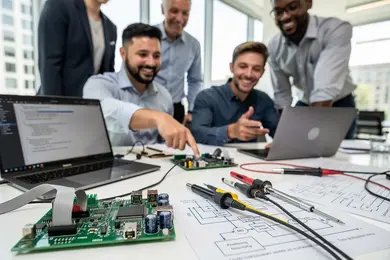
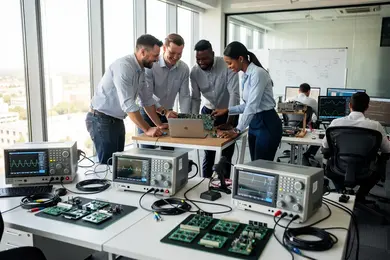
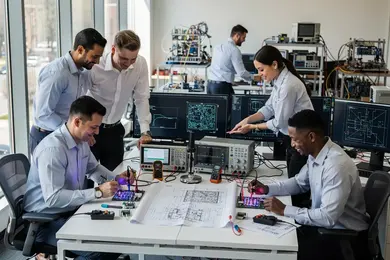
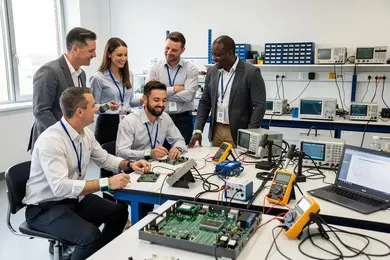
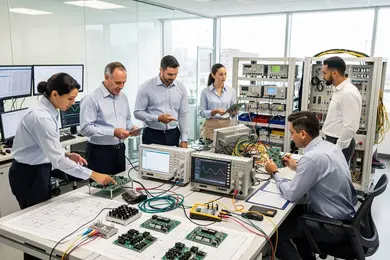
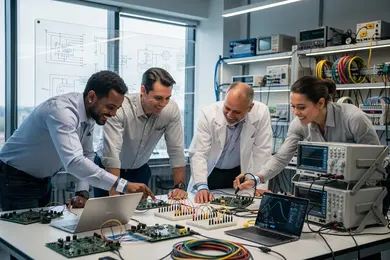
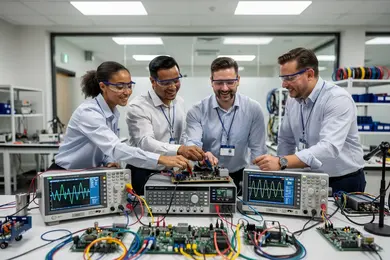
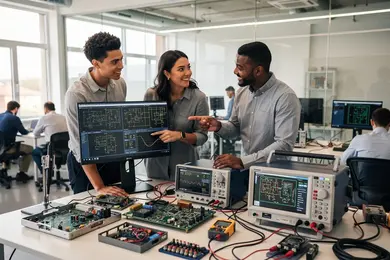
The "online" format usually means lectures, assignments, simulations, advising, and exams are delivered through a learning platform. The engineering work itself is still technical and math-heavy. Strong programs use remote laboratories, simulation environments, mailed lab kits, local lab options, or short campus residencies to help students practice with circuits, sensors, microcontrollers, data acquisition, and feedback control.
This degree path is usually a good fit for students who want engineering roles in automation, robotics, power systems, aerospace, manufacturing, semiconductor equipment, transportation, or energy systems.
It may not be the best fit for students who want a low-math technology credential, a quick coding bootcamp, or a program with no lab expectations. If your interests are closer to earth materials, environmental fieldwork, or natural resource systems than circuits and automation, comparing geology degrees online may be a better starting point.
Students will see different labels for this pathway. Some schools offer a general online electrical engineering degree with electives in control systems, while others offer mechatronics, robotics, systems engineering, power systems, or embedded systems tracks. The best label depends on your target role, but the core question is the same: does the curriculum build the math, lab, software, and design skills employers expect in control-related engineering work?
The following comparison shows how common degree options differ for students focused on control systems.
| Program type | Typical student profile | Control systems value | Best fit |
| Online B.S. in Electrical Engineering | First-time engineering students or transfer students | Builds the full engineering foundation needed for entry-level controls roles | Students seeking broad eligibility for electrical engineering jobs |
| Online B.S. in Engineering Technology | Technicians, military students, or applied learners | Often emphasizes implementation, instrumentation, PLCs, and applied labs | Students targeting automation support, test, or field roles |
| Online M.S. in Electrical Engineering | Engineers with a bachelor's degree | Supports advanced work in optimal control, robotics, estimation, and signal processing | Professionals seeking specialization or advancement |
| Graduate certificate in control systems | Working engineers needing targeted upskilling | Provides focused coursework without a full degree commitment | Engineers who already meet degree requirements for their roles |
How do online electrical engineering programs compare with campus-based options for control systems?
Online and campus-based electrical engineering programs can lead to similar academic outcomes when the online program is rigorous, accredited, and transparent about labs. The biggest differences are not usually the equations or topics; they are access to equipment, scheduling, peer collaboration, faculty interaction, internships, and how quickly students can get help when a project fails.
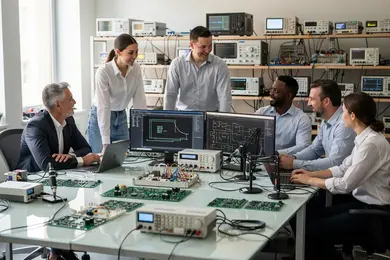
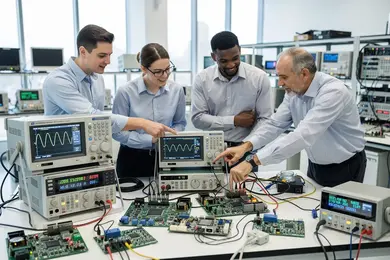
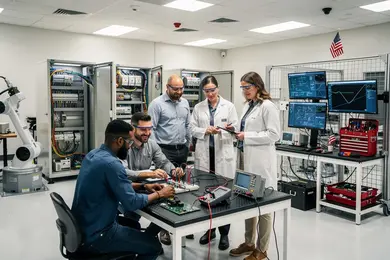
For control systems, lab design matters more than the delivery format. A campus student may work directly with motors, oscilloscopes, process-control rigs, and robotics hardware. An online student may use remote lab benches, simulation software, at-home electronics kits, virtual instruments, or scheduled residencies. Each can work, but students should verify the format before enrolling rather than assuming "online" means purely theoretical.
This table summarizes the practical trade-offs students should weigh when deciding between online and campus study.
| Factor | Online program | Campus-based program | Decision point |
| Schedule flexibility | Often stronger for working adults and military students | Usually tied to fixed class and lab times | Choose online if employment or location limits attendance |
| Hands-on labs | Can use remote labs, kits, simulations, or residencies | Usually provides direct access to campus equipment | Choose the format with documented controls and electronics labs |
| Peer networking | Depends on project structure, cohorts, and live sessions | Often easier through clubs, labs, and study groups | Ask how online teams complete design projects |
| Internships and co-ops | May require more self-direction if the school is far away | May benefit from local employer pipelines | Review employer partnerships and career services for online students |
| Cost control | May reduce relocation and commuting costs | May include campus fees, housing, or commuting expenses | Compare total cost, not only tuition |
Online study is usually strongest for motivated students who can manage deadlines, troubleshoot independently, and communicate clearly with instructors. Campus study may be better for students who need frequent in-person support, want access to specialized robotics or power labs every week, or plan to join research groups that require physical presence.
Neither format is automatically better for control systems. The better option is the one that gives you enough lab exposure, design feedback, software practice, and employer access to build a portfolio of real engineering work.
Which accreditation and ABET standards should online electrical engineering programs meet?
For a U.S. electrical engineering degree, accreditation is one of the most important quality checks. Students should first confirm institutional accreditation from an agency recognized by the U.S. Department of Education or the Council for Higher Education Accreditation. For engineering programs, they should also look for programmatic accreditation from ABET's Engineering Accreditation Commission when the goal is to work as an engineer or keep licensure options open.
ABET accreditation is especially important for students who may later pursue the Fundamentals of Engineering exam, Professional Engineer licensure, government engineering jobs, or employers that screen for accredited engineering degrees. Not every control systems job requires PE licensure, especially in manufacturing or software-heavy automation roles, but power, infrastructure, consulting, and public-safety-related roles may value or require it.
Students comparing accredited online electrical engineering programs should check the exact program name in the ABET database, not just the school's general reputation. Accreditation is program-specific, so an institution may have an accredited campus program while a newer online version is still seeking review.
ABET-aligned electrical engineering programs typically require evidence that students can solve engineering problems, design systems within constraints, communicate effectively, conduct experiments, work on teams, and apply engineering judgment. For control systems, that means the program should go beyond lectures and include analysis, modeling, testing, design, and validation.
Before applying, students should verify these items directly with the program or accreditor because requirements can change by catalog year.
- Confirm the institution has recognized institutional accreditation.
- Search the ABET database for the exact degree title, delivery location, and accreditation commission.
- Ask whether online students graduate from the same accredited program as campus students or a separate program.
- Check whether the curriculum includes calculus, differential equations, physics, circuits, electronics, signals, control systems, and a capstone design experience.
- If licensure matters, contact the relevant state engineering board before enrolling.
A common mistake is assuming that "regionally accredited" and "ABET-accredited" mean the same thing. Institutional accreditation supports financial aid eligibility and overall school quality review, while ABET evaluates whether an engineering program meets discipline-specific standards.
What control systems courses and labs are typically included in online electrical engineering curricula?
Control systems skills are built gradually. Students first learn the math and circuit foundations, then move into signals, dynamic systems, feedback, embedded devices, sensors, and design projects. A strong online curriculum should make these connections explicit so students understand not only how to solve equations but also how those equations affect physical systems.
Most bachelor's programs include a sequence similar to the one below, though course names vary by school. The table helps students recognize whether a curriculum is deep enough for control-related roles.
| Curriculum area | Common courses | Why it matters for control systems |
| Mathematics | Calculus, linear algebra, differential equations, probability | Supports modeling, stability analysis, estimation, and signal behavior |
| Electrical engineering core | Circuits, electronics, electromagnetics, digital logic | Builds the hardware foundation for sensors, actuators, and controllers |
| Signals and systems | Signals, transforms, digital signal processing | Helps students analyze inputs, outputs, noise, and frequency response |
| Control systems | Feedback control, state-space methods, classical control, modern control | Develops skills in stability, controller design, tuning, and system response |
| Embedded and computing | Microcontrollers, programming, real-time systems, data acquisition | Connects control theory to deployable hardware and software |
| Design and integration | Mechatronics, robotics, capstone design, instrumentation | Shows whether students can integrate sensors, software, electronics, and mechanical behavior |
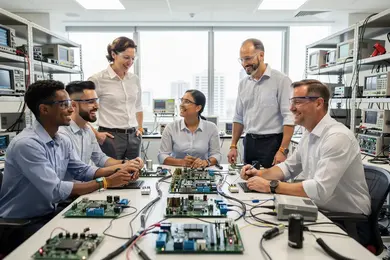
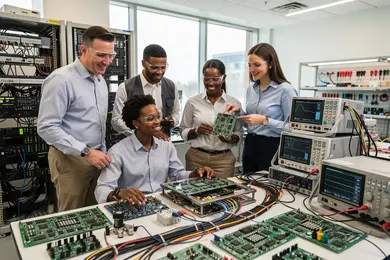
Labs are the most important place to look for evidence of practical preparation. Online electrical engineering programs may deliver labs in several ways, and each format has strengths and limitations.
- Remote labs: Students control real equipment through a web interface, which can be useful for circuits, motors, and instrumentation if scheduling is reliable.
- At-home lab kits: Students use microcontrollers, sensors, breadboards, and measurement tools at home, which builds practical troubleshooting skills.
- Simulation labs: Students use tools such as MATLAB, Simulink, SPICE, Python, or similar environments to model and test systems before hardware deployment.
- Short residencies: Students travel to campus or a partner site for intensive hands-on sessions, which can strengthen exposure to equipment that cannot be shipped easily.
- Industry projects: Students solve workplace or sponsor-defined problems, which can be especially valuable for working technicians moving toward engineering roles.
Students should be cautious if a program describes control systems only as an elective with no lab, simulation, or project component. Control engineering is applied work; employers often want evidence that graduates can translate models into reliable systems.
What are the admission requirements and prerequisites for online electrical engineering degrees?
Admission requirements depend on whether the student is applying to a bachelor's, transfer-completion, master's, or certificate program. Electrical engineering is more prerequisite-heavy than many online degrees because students need a strong math and science foundation before they can succeed in circuits, signals, and controls.
For bachelor's programs, applicants commonly need a high school diploma or equivalent, transcripts, and evidence of readiness for calculus. Transfer students may need completed courses in calculus, physics, chemistry, programming, or introductory engineering. Graduate applicants usually need a bachelor's degree in electrical engineering or a closely related field, along with prior coursework in circuits, signals, mathematics, and sometimes control theory.
Career changers should be especially careful. Students coming from business, liberal arts, healthcare, or information fields may need bridge coursework before they can enter upper-division engineering classes. If your long-term interests are more aligned with organizing information systems, archives, digital collections, or public information access, an online degree for library science may be a more relevant alternative than starting the electrical engineering prerequisite sequence.
The following table outlines common admissions expectations by program level.
| Program level | Common requirements | What to verify before applying |
| Online bachelor's in electrical engineering | High school diploma or equivalent, transcripts, math placement, possible test scores | Whether students can start in calculus and how labs are completed online |
| Transfer-completion bachelor's | Prior college credits, calculus, physics, chemistry, programming, general education | How many engineering credits transfer and whether courses must match ABET sequences |
| Online master's in electrical engineering | Engineering or related bachelor's degree, transcripts, prerequisite technical courses | Whether control systems electives are offered regularly online |
| Graduate certificate | Bachelor's degree, mathematical readiness, possible work experience | Whether credits can later apply to a master's degree |
Applicants can improve their chances of success by preparing before they submit an application. These steps are especially useful for working adults and transfer students.
- Request an unofficial transcript review before paying multiple application fees.
- Ask which math course you will start with and whether remedial coursework adds time or cost.
- Confirm whether transfer credits satisfy engineering requirements or only general education requirements.
- Prepare for programming expectations by reviewing Python, C, MATLAB, or another technical computing language.
- Ask whether prior military, technical, or industry experience can support admission, credit, or placement.
A major red flag is a program that minimizes the difficulty of engineering prerequisites. Flexibility is helpful, but a credible electrical engineering pathway should be honest about calculus, physics, laboratory work, and the time required to build design competence.
How long do online electrical engineering programs take, and what do they cost?
Program length depends on degree level, transfer credits, course load, prerequisites, and lab scheduling. A full bachelor's degree commonly takes about four years of full-time study, while transfer students with completed lower-division credits may finish faster. Master's programs often take about two years part time, though accelerated options may be available for students who can handle heavier technical course loads.
Cost varies widely by institution type, residency status, credit requirements, technology fees, lab kits, books, and travel for residencies. For a current benchmark, College Board's 2024-25 published averages list tuition and fees as follows:
- Public four-year, in-state: $11,610
- Public four-year, out-of-state: $30,780
- Private nonprofit four-year: $43,350
These figures are not online-program quotes, but they help students understand the scale of U.S. tuition differences. Online students should also compare whether they pay in-state rates, a separate online tuition rate, or standard out-of-state tuition. A lower per-credit price can still become expensive if the school accepts few transfer credits or requires extra prerequisites.
The table below summarizes common timeline and cost drivers so students can compare programs beyond advertised tuition.
| Factor | Why it affects time or cost | Question to ask |
| Transfer credit policy | Accepted credits can shorten the degree, but engineering sequences may be strict | How many credits apply to the major, not just electives? |
| Math placement | Starting below calculus can add semesters | What math course will I take first? |
| Lab delivery | Kits, software, travel, or residencies may add expenses | What are all required lab and technology costs? |
| Course availability | Controls electives may not run every term | When are key control systems courses offered online? |
| Part-time pacing | Working students may need fewer courses per term | What is the realistic completion time for employed students? |
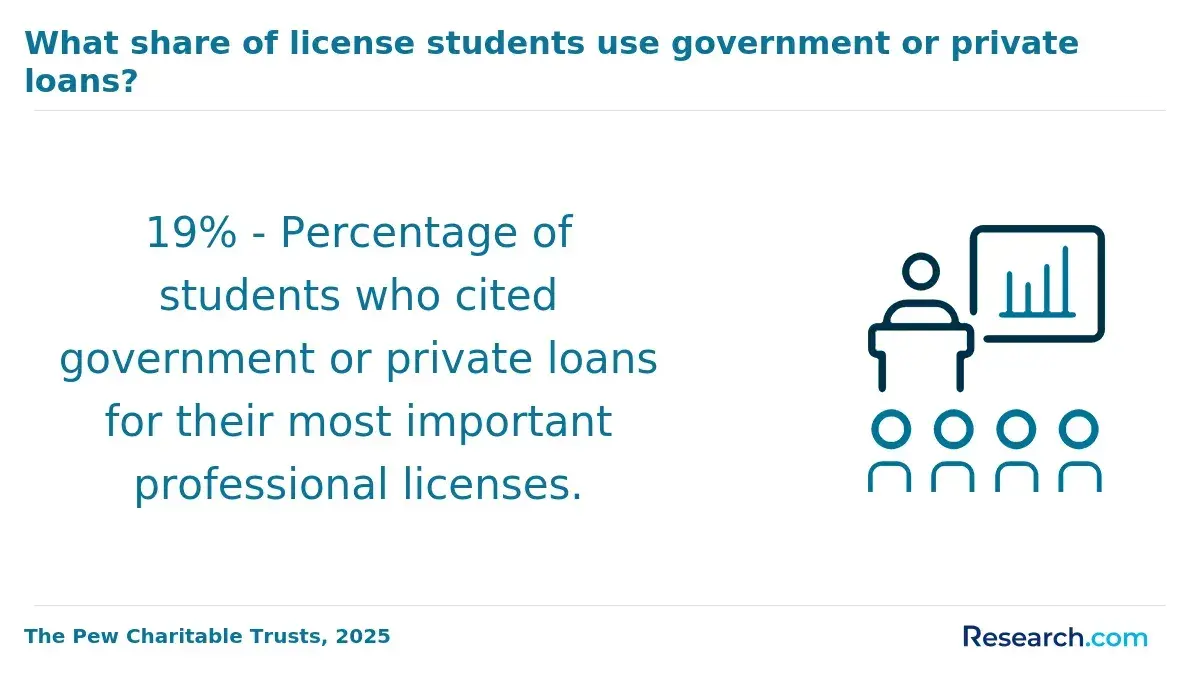
Federal student loan costs also deserve attention. For the 2024-25 award year, the fixed interest rate for federal Direct Subsidized and Unsubsidized Loans for undergraduate students was 6.53%, while graduate unsubsidized loans carried a higher rate. That means borrowing decisions should be tied to a realistic academic plan, not only a hoped-for salary.
To reduce total cost, students should complete prerequisite math and general education courses at accredited lower-cost institutions when transfer rules allow, apply for employer tuition assistance, compare public online options, and avoid retaking courses because of poor advising. The cheapest program is not always the best value, but unnecessary credits are almost always avoidable expenses.
What control systems careers can graduates pursue with an online electrical engineering degree?
Graduates with strong control systems preparation can pursue roles that combine electrical engineering, software, instrumentation, and systems thinking. Job titles vary by industry, and some employers use "controls engineer," "automation engineer," "test engineer," or "systems engineer" for overlapping responsibilities.
The table below outlines common career paths and what each role typically involves. It is intended as a practical map, not a guarantee that every employer uses the same title or requirements.
| Role | Typical responsibilities | Helpful preparation |
| Control systems engineer | Designs, models, tunes, and validates feedback systems for machines or processes | Control theory, sensors, actuators, MATLAB or Python, lab testing |
| Automation engineer | Implements automated manufacturing or industrial systems | PLCs, instrumentation, industrial networks, troubleshooting |
| Robotics engineer | Works on motion control, perception integration, and robotic system behavior | Dynamics, embedded systems, control algorithms, programming |
| Power systems engineer | Supports generation, transmission, distribution, protection, or grid automation | Power systems, protection, control, simulation tools |
| Embedded systems engineer | Develops hardware-software systems that sense, decide, and act in real time | C or C++, microcontrollers, real-time systems, electronics |
| Test and validation engineer | Builds test plans, collects data, verifies performance, and identifies failures | Measurement, data acquisition, statistics, scripting |
Day-to-day work often includes building models, reading schematics, writing scripts, tuning controllers, selecting sensors, reviewing data, testing prototypes, documenting results, and coordinating with mechanical, software, safety, and operations teams. In regulated industries, engineers may also support compliance, hazard analysis, change control, and formal verification.
Students can improve employability by building evidence of applied skills before graduation. Employers often respond well to portfolios that show how a student approached an engineering problem, not just the final answer.
- Create projects that connect sensors, actuators, microcontrollers, and feedback logic.
- Document simulations and compare predicted behavior with measured results.
- Learn at least one technical computing environment used in controls work.
- Seek internships, co-ops, undergraduate research, or employer-sponsored projects.
- Practice explaining trade-offs involving stability, cost, safety, response time, and reliability.
Students should also distinguish engineering roles from technician roles. Technician and technologist positions can be excellent careers, but professional engineering roles usually require deeper theory, design responsibility, and sometimes ABET-accredited education depending on the employer or state requirements.
What are salary expectations and earning potential for control systems engineers?
Salary expectations for control systems careers depend on role, industry, location, experience, security clearance, travel requirements, and whether the job is closer to design engineering, plant automation, test, or field service. The most useful national benchmark is the broader electrical engineering occupation, since "control systems engineer" is not always reported as a separate federal category.
The U.S. Bureau of Labor Statistics reported a May 2024 median annual wage of $111,910 for electrical engineers. This figure is a midpoint for the occupation, not a starting salary and not a promise for graduates. New engineers, technicians moving into engineering, and graduates in lower-cost regions may see lower offers, while experienced engineers in high-demand industries can exceed the median.
The table below explains how common factors can influence earning potential without implying a guaranteed salary outcome.
| Salary factor | How it can affect pay | What students can do |
| Industry | Aerospace, energy, semiconductors, defense, and advanced manufacturing may pay differently | Compare job postings in target industries before choosing electives |
| Location | High-cost engineering markets may offer higher wages but also higher living costs | Evaluate take-home value, not only the posted salary |
| Software depth | Controls roles often reward ability to model, automate testing, and work with data | Build skills in technical computing, scripting, and version control |
| Hands-on experience | Internships and project work can make candidates more competitive | Prioritize programs with labs, capstones, and employer connections |
| Licensure or clearance | Some infrastructure, utility, defense, or consulting roles may value additional credentials | Check requirements early if targeting regulated or government-related work |
When evaluating return on investment, students should avoid comparing total tuition with a single national wage figure. A better approach is to estimate the full cost of attendance, likely time to completion, wages in the student's target region, and the probability of finishing the program while working or managing family obligations.
A common mistake is assuming that a master's degree automatically produces a higher salary. Graduate study can help when it adds scarce technical depth, supports promotion, or opens specialized roles, but it may not be necessary for every entry-level controls job.
What is the job outlook and industry demand for control systems engineering roles?
Demand for control systems skills is tied to several durable U.S. trends: factory automation, electrification, grid modernization, robotics, aerospace systems, semiconductor manufacturing, and the use of AI-enabled monitoring in industrial environments. These trends increase the need for engineers who can connect physical equipment, data, software, and safety requirements.
The BLS projects employment for electrical and electronics engineers to grow faster than the average for all occupations over the 2024-34 period. For students, the important takeaway is not that every controls graduate will find the same opportunity, but that electrical engineering remains tied to sectors investing in complex hardware-software systems.
AI and automation are changing the work rather than eliminating the need for controls expertise. Engineers increasingly use simulation, model-based design, predictive maintenance tools, and automated test systems. However, someone still has to define requirements, validate sensor data, understand failure modes, and make safe design decisions when the model does not match the machine.
Industries that commonly hire control systems talent include the following. Students should use this list to focus internships, electives, and projects toward the sectors they want to enter.
- Advanced manufacturing: Automation, robotics, process control, test systems, and production optimization.
- Energy and utilities: Grid control, protection systems, power electronics, renewable integration, and monitoring.
- Aerospace and defense: Flight control, guidance systems, embedded control, simulation, and verification.
- Automotive and transportation: Motor control, battery systems, vehicle automation, and test engineering.
- Semiconductors and electronics: Equipment control, precision motion, instrumentation, and reliability testing.
- Building systems and infrastructure: HVAC controls, smart buildings, energy management, and facility automation.
Students should also pay attention to regional employer clusters. A program with strong employer relationships in utilities may be excellent for power automation but less connected to robotics startups. Likewise, a program with semiconductor partnerships may be valuable for students targeting equipment control or test engineering.
How can students evaluate and choose a reputable online electrical engineering program?
The best online electrical engineering program is not simply the cheapest, fastest, or highest-ranked option. It is the program that matches your academic starting point, career target, schedule, budget, and need for accredited engineering preparation. A student targeting PE licensure, for example, should evaluate programs differently from a working automation technician seeking promotion within a manufacturing plant.
Use a structured process before enrolling. These steps help students compare programs on quality and fit rather than marketing language.
- Define the target role first, such as controls engineer, automation engineer, embedded systems engineer, or power systems engineer.
- Check institutional accreditation and ABET status for the exact program.
- Map required courses against control systems skills, including circuits, signals, embedded systems, labs, and capstone work.
- Ask for a written transfer credit evaluation before committing.
- Compare total cost, including tuition, fees, lab kits, software, travel, books, and extra prerequisite courses.
- Review how online students access faculty, tutoring, career services, internships, and engineering clubs or project teams.
- Ask for examples of recent capstone projects, lab formats, and employer partnerships.
- Speak with current students or alumni if possible, especially those who studied online while working.
Students comparing alternatives outside engineering should be equally specific about outcomes. For example, a library science degree serves a very different labor market and skill set than electrical engineering, so cost and flexibility should be evaluated in relation to the actual profession, not only the convenience of online study.
The following table highlights common red flags and better alternatives when evaluating online electrical engineering programs.
| Red flag | Why it matters | Better approach |
| No clear lab plan | Control systems require applied measurement, modeling, and testing | Choose a program that explains remote labs, kits, residencies, or project work |
| Unclear ABET status | Programmatic accreditation may affect licensure and employer screening | Verify the exact program in the ABET database |
| Overpromised completion time | Engineering sequences and prerequisites can limit acceleration | Request a term-by-term plan based on your transcripts |
| Low tuition but poor transfer fit | Retaking credits can increase total cost | Compare total degree cost after transfer evaluation |
| Few controls electives | A general EE degree may not build enough automation depth | Confirm course rotation for controls, embedded systems, robotics, or power automation |
| Weak career support for online students | Distance learners may need extra help finding internships and projects | Ask whether online students receive the same employer access as campus students |
The smartest choice is usually the program that can show evidence: accreditation, course sequences, lab descriptions, faculty access, student project examples, and transparent cost. If a school cannot answer detailed questions before you enroll, that is a warning sign.
Other Things You Should Know About Electrical Engineering
Yes, a degree in electrical engineering can lead to graduate study in robotics or AI. These fields often require skills in control systems, programming, and signal processing, which are commonly covered in electrical engineering programs, thus providing a strong foundation for advanced study.
The program should be accredited by ABET, specifically through the Engineering Accreditation Commission. ABET accreditation is the main standard employers and state licensure boards use for electrical engineering degrees, and it helps confirm the curriculum includes mathematics, circuits, systems, and control-related coursework.
They are difficult in different ways. Electrical engineering usually requires more physics, circuits, signals, and lab work, while computer science often goes deeper into algorithms, software systems, and computation theory. The better choice depends on whether you prefer physical systems, software systems, or the intersection of both.
References
- Pay scale for starting controls/automation engineers | Automation & Control Engineering Forum https://control.com/forums/threads/pay-scale-for-starting-controls-automation-engineers.28673/
- Inside the Best Online Bachelor's in Electrical Engineering Degrees https://www.onlinecolleges.me/engineering-degrees/bachelors/electrical-engineering/
- Comparing Undergrad Electrical Engineering Programs at Different Schools https://zacharyzdravkovic.com/comparing-undergrad-electrical-engineering-programs-at-different-schools/
- Control Systems Job Market - Control Systems https://automationexperts.co.uk/control-systems-engineering-job-market/
- Bachelor of Science in Electrical Engineering - Automation and Control Systems Engineering (B.Sc. EE-ACSE) https://www.udst.edu.qa/academic/our-colleges/college-engineering-and-technology/bachelor-science-electrical-0
- Explore UM | University of Manitoba - Electrical Engineering (BSc) https://umanitoba.ca/explore/programs-of-study/electrical-engineering-bsc
- Criteria for Accrediting Engineering Programs, 2025 - 2026 - ABET https://www.abet.org/accreditation/accreditation-criteria/criteria-for-accrediting-engineering-programs-2025-2026/
- How to Evaluate If an Engineering Program Is a Good Fit - Your College-Bound Kid https://yourcollegeboundkid.com/2023/03/10/how-to-evaluate-if-an-engineering-program-is-a-good-fit/
- How important is ABET accreditation for Electrical Engineering? https://talk.collegeconfidential.com/t/how-important-is-abet-accreditation-for-electrical-engineering/1941391