2027 Electrical Engineering Skills Employers Want More

Co-Founder and Chief Data Scientist
Electrical engineering students face a practical question: which skills will make them employable, not just degree-qualified? The answer matters because the U.S. Bureau of Labor Statistics projects employment for electrical and electronics engineers to grow 9% from 2023 to 2033, faster than the average for all occupations.
This guide is for students, career changers, and early-career engineers comparing programs, specializations, tools, and credentials. You will learn which competencies employers prioritize and how to choose training that supports stronger career outcomes.
Key Things You Should Know
- Employers increasingly want electrical engineers who combine circuit theory, embedded systems, power electronics, controls, software, testing, documentation, and cross-functional communication rather than narrow classroom knowledge alone.
- The BLS reported a May 2024 median annual wage of $111,910 for electrical engineers, but salary potential varies widely by industry, location, clearance requirements, software depth, and project responsibility.
- ABET accreditation, hands-on labs, internships or co-ops, and a portfolio of verified design projects are among the strongest signals that an applicant can apply EE concepts in real engineering environments.
What core electrical engineering skills are employers prioritizing in hiring today?
Employers are looking for electrical engineers who can move from theory to implementation. That means being able to model a system, build or simulate a design, test it against requirements, troubleshoot failures, and explain trade-offs to both technical and nontechnical teammates.
The strongest candidates usually show a balanced mix of foundational engineering knowledge and practical execution skills. These are the skill groups that matter most in current hiring conversations:
- Circuit analysis and electronics: Understanding analog and digital circuits, signal behavior, component selection, noise, grounding, thermal constraints, and failure modes.
- Embedded systems and firmware: Working with microcontrollers, sensors, communication protocols, real-time constraints, and low-level code that connects hardware to software.
- Power systems and power electronics: Designing or analyzing energy conversion, motor drives, grid-connected systems, renewable integration, protection, and reliability.
- Control systems and automation: Modeling dynamic systems, tuning controllers, working with feedback loops, and applying automation in robotics, manufacturing, aerospace, and energy systems.
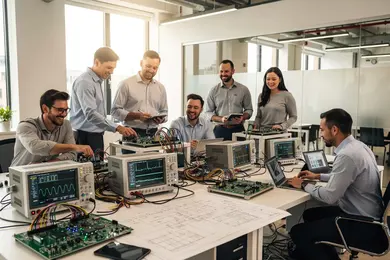
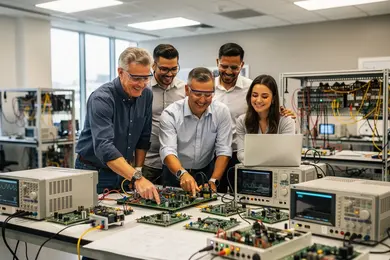
- Testing, validation, and troubleshooting: Using oscilloscopes, logic analyzers, power supplies, spectrum analyzers, test plans, root-cause analysis, and engineering documentation.
- Programming and data skills: Using languages such as Python, C, C++, MATLAB, or HDL to automate analysis, develop firmware, process signals, and support design verification.
- Systems thinking: Understanding how electrical design choices affect mechanical layout, software behavior, safety, manufacturability, cost, and compliance.
- Communication and teamwork: Writing clear reports, presenting design reviews, managing requirements, and collaborating with mechanical, software, quality, and manufacturing teams.
AI and automation are changing the work, but they are not replacing engineering judgment. Employers may use AI-assisted coding, simulation, design review, and documentation tools, yet they still need engineers who can verify outputs, identify unsafe assumptions, and make defensible technical decisions.
| Skill area | Why employers value it | Common evidence on a resume |
| Embedded systems | Many products now combine hardware, sensors, firmware, and connectivity. | Microcontroller projects, firmware repositories, lab work, capstone prototypes |
| Power electronics | Electrification, renewable energy, electric vehicles, and industrial automation depend on efficient energy conversion. | Converter design, motor control labs, SPICE simulation, hardware testing |
| Testing and validation | Employers need engineers who can prove designs meet requirements before production or deployment. | Test plans, lab reports, oscilloscope experience, design verification projects |
| Programming | Software is now part of design, analysis, automation, and validation in most EE roles. | Python scripts, C or C++ firmware, MATLAB models, HDL simulations |
| Documentation | Regulated and high-reliability industries require traceable design decisions. | Design reports, requirements matrices, version-controlled project files |
For students, the practical takeaway is simple: do not rely on course titles alone. Build proof that you can design, simulate, test, debug, and communicate an electrical system from requirements to results.
Which electrical engineering degrees and specializations best align with in-demand skills?
A bachelor's degree in electrical engineering is the standard entry point for most design engineering roles. Associate degrees and certificates can support technician, test, or electronics roles, while master's degrees are more useful for specialized work in semiconductors, power systems, signal processing, controls, robotics, RF, or research-heavy positions.
The best specialization depends on the systems you want to build and the industries you want to enter. The table below compares common EE education paths by fit, not by prestige, so you can match a degree choice to a realistic career target:
| Path | Best fit | Typical strengths | Trade-offs |
| Associate degree in electronics or electrical engineering technology | Technician, test, field service, manufacturing support | Hands-on labs, instrumentation, repair, applied troubleshooting | May not qualify for many engineer titles or future PE licensure pathways |
| Bachelor's in electrical engineering | Entry-level design, systems, power, controls, electronics, and test engineering | Math, physics, circuits, signals, embedded systems, design projects | Rigorous workload; program quality depends heavily on labs and accreditation |
| Bachelor's in electrical engineering technology | Applied engineering, operations, manufacturing, testing, product support | Practical implementation and lab-intensive training | Some employers prefer traditional EE degrees for design-heavy roles |
| Master's in electrical engineering | Advanced roles in power, semiconductors, communications, robotics, controls, or research | Specialized technical depth and advanced project work | Best ROI when tied to a clear specialization or employer requirement |
| Graduate certificate | Working professionals updating a specific skill area | Shorter, focused training in topics such as power systems or embedded systems | Usually not a substitute for an engineering degree |
Specializations with strong labor-market relevance include embedded systems, power and energy systems, semiconductor devices, RF and communications, signal processing, robotics, automation, and control systems. Students interested in adjacent hardware-intensive fields may also compare EE with an online degree in mechanical engineering, especially if they prefer thermal systems, robotics mechanisms, manufacturing design, or electromechanical products.
Choose a specialization by reviewing the upper-division electives, labs, faculty research areas, employer partners, and capstone options. A concentration sounds marketable only if the program actually gives you hands-on work with the tools and systems used in that field.
How do electrical engineering careers differ by industry, role, and salary potential?
Electrical engineering is not one job. A power engineer, semiconductor design engineer, embedded firmware engineer, RF engineer, controls engineer, and test engineer may all hold EE degrees, but their daily tasks, software tools, hiring requirements, and compensation patterns differ.
The BLS reported a May 2024 median annual wage of $111,910 for electrical engineers. Use this as a national reference point, not a salary promise, because compensation can change significantly by industry, region, security clearance, overtime structure, graduate education, and software or systems responsibility:
| Role or industry track | Typical responsibilities | Skills employers often emphasize | Salary context |
| Power systems engineer | Grid studies, protection, substations, renewable integration, load analysis | Power flow, relays, short-circuit analysis, standards, safety | Often stable demand; PE licensure can be valuable in utility and consulting work |
| Embedded systems engineer | Developing firmware for connected devices, sensors, controls, and hardware interfaces | C, C++, microcontrollers, debugging, communication protocols | Salary potential may rise when hardware knowledge is paired with strong software skill |
| Semiconductor or electronics engineer | Device, circuit, PCB, validation, or manufacturing support work | Analog or digital design, SPICE, lab testing, signal integrity | Can be competitive in regions with semiconductor, defense, or electronics clusters |
| Controls and automation engineer | Designing automated systems for manufacturing, robotics, aerospace, or energy | Control theory, PLCs, sensors, motors, system modeling | Often values practical troubleshooting and plant or field experience |
| Test and validation engineer | Creating test procedures, validating products, investigating failures | Instrumentation, statistics, documentation, requirements traceability | Strong entry point for engineers who want broad product knowledge |
| RF or communications engineer | Working on antennas, wireless systems, radar, satellite, or high-frequency electronics | Electromagnetics, spectrum analysis, RF simulation, lab measurement | Advanced coursework or graduate study may improve competitiveness |
Industry choice affects day-to-day work. Utilities and public infrastructure roles may involve reliability, regulations, and long asset lifecycles. Consumer electronics and startups may move faster and reward rapid prototyping.
Defense and aerospace often emphasize documentation, testing, security, and compliance. Manufacturing roles may involve more time on-site, while design or modeling roles may offer more hybrid flexibility.
Students comparing engineering with broader sustainability, field science, or education-connected pathways should look carefully at role requirements rather than degree names alone; for example, jobs with elementary education and environmental science degree illustrate how career outcomes can shift when a program is interdisciplinary rather than engineering-focused.
What technical courses and lab experiences build the most marketable EE competencies?
The most marketable EE programs do not just teach formulas. They sequence theory, simulation, laboratory measurement, and design projects so students repeatedly practice turning requirements into working systems.
Students should look for courses and labs that produce visible evidence of competence. The following experiences are especially useful because they map directly to common entry-level job responsibilities:
- Circuits and electronics labs: Build confidence with breadboarding, soldering, component tolerances, op-amps, filters, oscilloscopes, and power supplies.
- Digital logic and computer architecture: Support embedded systems, FPGA work, hardware verification, and low-level computing concepts.
- Signals and systems: Prepare students for communications, controls, signal processing, audio, imaging, radar, and sensor applications.
- Electromagnetics: Support RF, antennas, power transmission, high-speed electronics, and electromagnetic compatibility work.
- Control systems: Develop modeling, feedback, stability, and tuning skills used in robotics, aerospace, automotive, and automation.
- Power systems and machines: Build understanding of grid equipment, motors, transformers, protection, and energy conversion.
- Embedded systems: Connect hardware, firmware, sensors, communication protocols, and real-time debugging.
- Capstone design: Gives students a complete project story, including requirements, budget, design trade-offs, testing, failures, and final presentation.
A common mistake is choosing electives only because they seem easier or fit a convenient schedule. A better approach is to select courses that build a coherent skill cluster, such as embedded systems plus digital design, or power systems plus power electronics and controls.
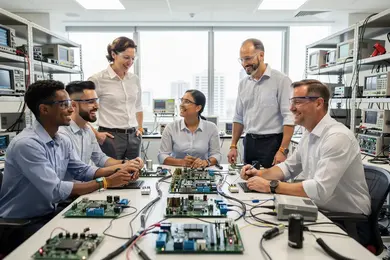
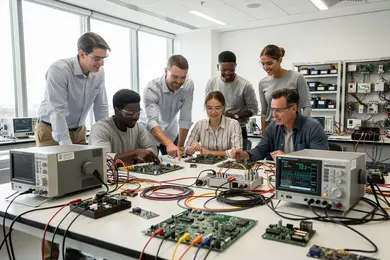
When comparing programs, ask whether students get individual access to lab equipment or only observe demonstrations. Employers tend to value applicants who have personally debugged circuits, written test scripts, handled unexpected failures, and defended design choices during reviews.
How do online electrical engineering programs compare to campus-based options for skill development?
Online electrical engineering programs can work well for disciplined students, working adults, transfer students, and learners who already have access to equipment or employer-based technical experience. Campus programs may be stronger for students who need frequent lab access, face-to-face project teams, undergraduate research, or a structured peer environment.
Cost is one reason online options attract attention. The College Board reported average published tuition and fees for 2024-25 of $11,610 for in-state students at public four-year institutions and $43,350 at private nonprofit four-year institutions.
These are sticker-price benchmarks rather than final net prices, but they show why students should compare tuition, aid, commuting, housing, lab fees, and time-to-completion together.
| Format | Best fit | Strengths | Risks to check |
| Fully online EE program | Working adults, military students, transfer students, self-directed learners | Flexibility, lower relocation cost, easier part-time pacing | May have limited hands-on labs, fewer local employer connections, or strict proctoring requirements |
| Hybrid EE program | Students who need flexibility but still want scheduled labs | Balances online lectures with in-person experimentation | Campus visits may create travel or scheduling challenges |
| Campus-based EE program | Traditional students, research-focused students, lab-intensive learners | More direct access to equipment, clubs, faculty, and recruiting events | Higher relocation or housing cost; less flexibility for full-time workers |
Online engineering study differs from online study in less equipment-dependent fields. Someone comparing formats across disciplines, such as an MLIS degree online, should recognize that EE programs usually require stronger lab verification, specialized software access, and sometimes shipped lab kits or short campus residencies.
Before enrolling online, students should ask how labs are completed, whether equipment is included, how group projects are managed, whether exams are proctored, and whether the program's accreditation applies to the online modality. Flexibility is valuable only if the program still develops the competencies employers expect.

What accreditation should electrical engineering programs have to meet employer expectations?
For U.S. electrical engineering programs, ABET accreditation is the most important program-level accreditation to verify. ABET accreditation indicates that an engineering program has been reviewed against standards for curriculum, faculty, facilities, continuous improvement, and student outcomes.
Accreditation matters most when a student wants a traditional engineering role, graduate engineering admission, eligibility for certain federal or defense employers, or a future Professional Engineer license. Some employers will still consider candidates from non-ABET programs, but the student may need stronger project evidence, work experience, or graduate credentials to offset that concern.
Students should verify accreditation directly rather than relying only on marketing language. The safest evaluation process is:
- Confirm that the institution is institutionally accredited by a recognized accreditor.
- Check whether the specific electrical engineering program, not just the university, has ABET accreditation.
- Verify whether the accreditation applies to the exact degree level and delivery format you plan to complete.
- Ask whether graduates meet educational requirements for the Fundamentals of Engineering exam in the state where you may seek licensure.
- Save documentation from the school catalog in case licensing boards or employers request proof later.
A major red flag is a school that says it is "following ABET standards" or "seeking accreditation" without already holding accreditation for the program you will enter. That may be acceptable for some students, but it creates risk if your target employers, graduate schools, or licensing boards expect an ABET-accredited degree.
Which software, tools, and programming languages are essential for modern electrical engineers?
Modern electrical engineers use software throughout the design cycle: modeling, circuit simulation, firmware development, printed circuit board design, data analysis, control tuning, signal processing, and documentation. The exact tools vary by industry, but the ability to learn technical software quickly is now a core employability skill.
Programming matters because many EE roles now sit at the boundary of hardware and software. Students who want stronger software depth can compare EE coursework with an online CS degree, but they should remember that computer science programs may not replace the circuit, lab, and hardware design preparation needed for engineering roles.
The following tool categories are especially useful for building a job-ready EE skill set:
- Programming languages: Python for automation and data analysis, C and C++ for embedded systems, MATLAB for modeling, and HDL such as Verilog or VHDL for digital hardware design.
- Circuit simulation: SPICE-based tools such as LTspice, PSpice, or similar software for analog, power, and mixed-signal analysis.
- PCB design: tools such as Altium Designer, KiCad, Cadence, or OrCAD for schematic capture, layout, and design rule checking.
- Controls and modeling: MATLAB, Simulink, Python control libraries, and system modeling environments used for feedback systems and dynamic analysis.
- Embedded development: microcontroller IDEs, debuggers, compilers, real-time operating systems, serial communication tools, and version control.
- Test and measurement: oscilloscopes, digital multimeters, function generators, logic analyzers, power analyzers, spectrum analyzers, and automated test scripts.
- Collaboration tools: Git, requirements management tools, issue tracking, documentation platforms, and formal design review workflows.
Do not try to learn every tool superficially. A stronger strategy is to master one toolchain deeply in your target area, then show that you can transfer those concepts to employer-specific software.
How can internships, co-ops, and projects strengthen employability in electrical engineering?
Internships, co-ops, research assistantships, competition teams, and capstone projects are powerful because they turn coursework into evidence. Employers can teach a new hire internal processes, but they prefer applicants who have already worked with constraints, deadlines, documentation, hardware failures, and team communication.
The BLS projects about 19,000 openings per year for electrical and electronics engineers from 2023 to 2033. That does not mean every applicant will have equal access to those roles; students with applied experience are usually better positioned to compete for entry-level interviews.
To make experience count, students should document outcomes rather than simply listing participation. A useful project or internship record should include:
- The problem or requirement the project addressed.
- The electrical concepts, software tools, and lab equipment used.
- The design alternatives considered and why one approach was chosen.
- The testing method, performance results, and failures discovered.
- The role you personally played on the team.
- The final deliverable, such as a prototype, test report, PCB, firmware module, simulation, or presentation.
Co-ops can be especially valuable because they often last longer than summer internships and give students repeated exposure to engineering workflows. The trade-off is that they may extend graduation timelines, so students should ask how the school handles academic credit, financial aid, and course sequencing during work terms.
A common mistake is waiting until senior year to look for experience. A smarter sequence is to join a project club early, build a small portfolio by sophomore year, apply for internships before junior year, and use senior capstone work to target a specific industry.
What professional certifications or licenses enhance an electrical engineer's job prospects?
Certifications and licenses are not equally valuable for every electrical engineering career. A power engineer in consulting may benefit from licensure, while an embedded systems engineer may gain more from a strong project portfolio, firmware experience, or employer-specific technical certifications.
The most important credentialing options fall into a few categories. Students should choose them based on target role requirements rather than collecting credentials without a plan:
| Credential | Who it helps most | Why it matters | Important limitation |
| Fundamentals of Engineering exam | Students and recent graduates considering licensure | First major step toward the Professional Engineer pathway | Eligibility rules vary by state licensing board |
| Professional Engineer license | Power, utilities, consulting, public infrastructure, building systems | Can authorize responsible charge over engineering work where licensure is required | Usually requires education, exam completion, and supervised experience |
| Engineer-in-Training or Engineer Intern designation | Early-career engineers on the PE path | Signals progress after passing the FE exam | Title and recognition vary by state |
| Vendor or platform certifications | Automation, networking, controls, cloud-connected devices, industrial systems | Shows familiarity with tools used in specific workplaces | May become outdated if not paired with broader engineering knowledge |
| Safety and compliance training | Power, manufacturing, field service, labs, utilities | Supports safe work around equipment, facilities, and regulated systems | Employer and site requirements differ |
For students aiming at PE licensure, the safest path is to choose an ABET-accredited engineering program, take the FE exam near graduation, work under licensed engineers when possible, and confirm requirements with the state board where you plan to practice.
For students targeting electronics, firmware, semiconductors, or product design, a credential may help, but a well-documented portfolio often carries more weight. Employers in these areas typically want proof that you can design, debug, and validate working systems.
How can students evaluate and choose an electrical engineering program for career outcomes?
Choosing an electrical engineering program should start with career fit, not rankings alone. A highly ranked program may be a poor choice if it lacks your desired specialization, offers limited lab access, has weak transfer support, or costs more than your likely career path can reasonably justify.
Students should compare total cost carefully. Published prices rarely equal what students actually pay after grants, scholarships, transfer credit, employer aid, or housing decisions, but the 2024-25 College Board figures show why the gap between in-state public and private nonprofit sticker prices can be large enough to affect ROI planning.
Use the following checklist to compare programs before applying or enrolling:
- Accreditation: Confirm ABET accreditation for the specific electrical engineering program and delivery format.
- Specialization fit: Review electives, labs, capstone themes, research groups, and faculty expertise in your target area.
- Lab quality: Ask how often students use equipment directly and whether online students receive equivalent lab experiences.
- Career outcomes: Request placement information, internship partners, co-op participation, employer recruiting lists, and graduate school pathways.
- Transfer and pacing: Verify how previous credits apply and whether prerequisite sequencing could delay graduation.
- Total cost: Compare tuition, fees, books, software, lab kits, housing, commuting, lost wages, and time-to-degree.
- Student support: Look for tutoring in calculus and physics, engineering advising, project clubs, undergraduate research, and career coaching.
- Licensure alignment: Confirm whether the program supports FE exam preparation and PE eligibility in your intended state.
Red flags include unclear accreditation claims, limited lab access, no recent capstone examples, vague career data, poor advising for transfer students, and programs that promise specific salaries. Strong programs are usually transparent about requirements, workload, costs, and outcomes.
The best choice is the program that helps you build verifiable skills at a cost and pace that match your goals. For many students, that means choosing a program with ABET accreditation, strong labs, industry-connected projects, and a specialization aligned with a real hiring market.
Other Things You Should Know About Electrical Engineering
Employers in 2027 are prioritizing skills such as proficiency in AI integration, expertise in renewable energy systems, adeptness in using advanced simulation software, and strong interdisciplinary collaboration abilities. Demonstrating knowledge in emerging technologies and cybersecurity will also be highly valued.
Yes, but the transition usually requires an engineering degree, especially for design engineering roles. Electricians may bring valuable field knowledge, but engineering jobs typically require advanced math, physics, circuit theory, design analysis, and often an ABET-accredited bachelor's degree.
Some can, especially in simulation, design documentation, firmware, modeling, or systems analysis roles. Jobs involving laboratories, manufacturing floors, utilities, field testing, classified work, or equipment commissioning are more likely to require on-site work.
Employers often expect entry-level electrical engineers to know MATLAB, Simulink, AutoCAD Electrical, and at least one PCB design tool such as Altium Designer or KiCad. Many also want basic Python for data analysis and test automation, because these tools support design, simulation, documentation, and troubleshooting.
References
- The Significance of Electrical Engineering Certification for Professional Advancement - CertLibrary Blog https://www.certlibrary.com/blog/the-significance-of-electrical-engineering-certification-for-professional-advancement/
- Most Useful Programming Language for Electrical Engineers: Boost Your Career https://www.onlinecomponents.com/en/blogpost/most-useful-programming-language-for-electrical-engineers-boost-your-career-564/
- Which software is essential for electrical engineering students? https://blogs.sw.siemens.com/academic/which-software-is-essential-for-electrical-engineering-students/
- The Ultimate Guide to Electrical Engineering Recruitment: From Screening to Hiring - Talent Business Partners https://talentbusinesspartners.com/en-us/article/the-ultimate-guide-to-electrical-engineering-recruitment-from-screening-to-hiring
- Essential Skills for Success in Electrical Engineering https://mailamengg.ac.in/essential-skills-for-electrical-engineering/
- Essential Skills You Learn in an Electrical Engineering Course – Discover Training https://discovertraining.net/essential-skills-you-learn-in-an-electrical-engineering-course/
- Scope of coding for electrical and electronics engineers: Five types of programming languages you must know https://news.pcim.mesago.com/scope-of-coding-for-electrical-and-electronics-engineers-five-types-of-programming-languages-you-must-know-a-d19b94cfe63ddbb14bbff55cba41b548/
- 10 skills you'll need in electrical engineering jobs at AtkinsRéalis https://careers.atkinsrealis.com/en/life-at-atkinsrealis/blogs/2025/10-skills-you-need-in-electrical-engineering-jobs
- Criteria for Accrediting Engineering Programs, 2025 - 2026 - ABET https://www.abet.org/accreditation/accreditation-criteria/criteria-for-accrediting-engineering-programs-2025-2026/
- News: The Role of Internships in Building a Successful Engineering Career https://www.automate.org/news/the-role-of-internships-in-building-a-successful-engineering-career