2027 Questions to Ask Before Enrolling in an Online Electrical Engineering Degree

Co-Founder and Chief Data Scientist
Choosing an online electrical engineering degree is a high-stakes decision because the program must teach advanced math, circuits, design, and lab skills in a format you can actually complete. The payoff can be meaningful: the U. S. Bureau of Labor Statistics reported a May 2024 median annual wage of $111,910 for electrical engineers.
This guide is for prospective bachelor's, transfer, and graduate students comparing online options. You'll learn what to ask about accreditation, labs, cost, timelines, career outcomes, and fit so you can avoid expensive mistakes before enrolling.
Key Things You Should Know
- For U.S. engineering licensure and many employer screens, the most important question is whether the program is institutionally accredited and, for bachelor's engineering programs, whether it has ABET Engineering Accreditation Commission accreditation when your target career requires it.
- Online electrical engineering degrees can match campus programs academically, but you should verify how labs, proctored exams, senior design, group projects, and hardware access work before assuming the format is flexible enough for your schedule.
- Use salary and job outlook data as context, not a promise: BLS data shows a May 2024 median annual wage of $111,910 for electrical engineers and projected 9% growth for electrical and electronics engineers from 2023 to 2033.
What is an online electrical engineering degree and how does it compare to on-campus programs?
An online electrical engineering degree is a college program that teaches the theory and design of electrical, electronic, power, communications, control, and embedded systems using a mostly digital delivery format. Courses may be asynchronous, live online, hybrid, or occasionally campus-based for labs or exams. The key question is not whether the diploma says "online"; it is whether the curriculum, faculty, labs, accreditation, and outcomes match the career you want.
Online and on-campus programs can cover the same technical foundation, but they differ in how you experience labs, collaboration, advising, and recruiting. This comparison can help you decide whether online learning is a practical fit rather than just a convenient one.
| Decision point | Online electrical engineering degree | On-campus electrical engineering degree |
| Best fit | Working adults, transfer students, military learners, and students who need location flexibility | Students who want daily access to labs, campus clubs, faculty offices, and in-person recruiting |
| Technical depth | Can be equivalent when the program has strong lab design, qualified faculty, and rigorous assessment | Often easier to verify through physical labs, research groups, and established engineering facilities |
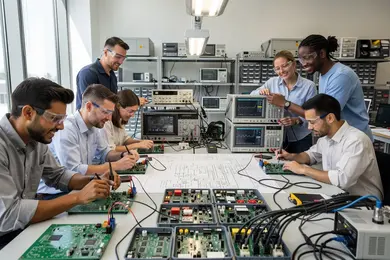
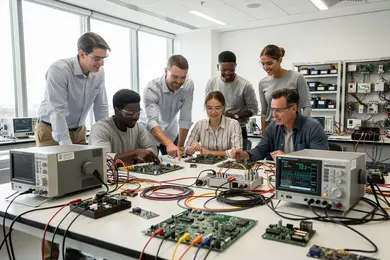
| Lab experience | May use mailed lab kits, simulation tools, remote instrumentation, local lab arrangements, or short residencies | Usually uses campus labs, lab partners, faculty supervision, and dedicated equipment |
| Schedule flexibility | Often stronger, especially in asynchronous or part-time formats | Usually tied to campus timetables and semester schedules |
| Networking | Depends heavily on virtual events, project teams, career services, and employer partnerships | Often more organic through student organizations, labs, internships, and campus recruiting |
| Risk to check | Weak lab support, unclear accreditation, limited faculty access, or too few engineering electives | Higher relocation costs, less schedule flexibility, and possible delays if courses are offered only once per year |
Online may be the better choice if you already have work experience, can study independently, and need to keep earning while completing the degree. Campus may be better if you are new to engineering, want extensive hands-on lab access, or plan to pursue undergraduate research in areas such as microelectronics, photonics, robotics, or power systems.
Before enrolling, ask the school how the word "online" applies to the full program. Some programs are fully online, while others require in-person orientation, exams, summer labs, or a senior design presentation. A program that is "mostly online" can still be a strong option, but only if the in-person requirements are realistic for your budget and location.
How can I tell if an online electrical engineering program is properly accredited?
Accreditation is one of the first things to verify because it affects credit transfer, financial aid eligibility, graduate school options, employer recognition, and engineering licensure pathways. In the United States, you should look at two levels: institutional accreditation for the college or university and programmatic accreditation for the engineering program.
For electrical engineering bachelor's programs, ABET Engineering Accreditation Commission accreditation is the most recognized program-level standard. Some employers and many professional engineering licensure boards use ABET-accredited education as a cleaner path toward the Fundamentals of Engineering exam, Engineer in Training status, and later Professional Engineer licensure. Requirements vary by state, so do not assume that a non-ABET program will meet your licensing goals.
Use this sequence to check accreditation before you submit an application or deposit. It protects you from relying only on marketing language, which may be incomplete or outdated.
- Confirm that the institution is accredited by a U.S. Department of Education-recognized institutional accreditor.
- Search the ABET database for the exact program name, degree level, campus or online designation, and accreditation dates.
- Ask admissions whether the online version is covered by the same accreditation status as the campus version.
- For transfer or degree-completion programs, ask whether upper-division engineering courses are taught by the degree-granting institution or outsourced.
- If licensure matters to you, contact your state engineering board and ask whether the program meets education requirements for the FE and PE pathway.
Be careful with vague phrases such as "aligned with ABET standards," "preparing for accreditation," or "based on an accredited curriculum." Those statements are not the same as current ABET accreditation. A newer program may still be worthwhile for some students, especially at the graduate level, but you should understand the trade-off before enrolling.
A common mistake is checking only the university's general accreditation and assuming that is enough for electrical engineering. Institutional accreditation matters, but it does not automatically mean the engineering program has discipline-specific review. If your goal is licensure, defense contracting, utilities, public infrastructure, or a tightly regulated technical role, program-level accreditation can be a deciding factor.
What admission requirements and prior coursework do online electrical engineering programs expect?
Admission requirements vary by degree level, but electrical engineering programs are usually more prerequisite-heavy than many online majors. The program is math-intensive and sequential, meaning calculus, physics, circuits, and programming often build on one another. If you enter with gaps, you may be admitted conditionally or need extra terms before starting upper-division engineering courses.
Most online bachelor's and degree-completion programs want evidence that you are ready for advanced quantitative work. Graduate programs usually expect a completed bachelor's degree in electrical engineering or a closely related field, though some accept applicants from physics, computer engineering, mechanical engineering, or computer science with bridge coursework.
Here is a practical overview of what schools commonly evaluate. Use it to identify missing requirements before you spend money on applications.
| Applicant type | Common requirements | What to ask before applying |
| First-year bachelor's applicant | High school diploma or equivalent, strong math preparation, science coursework, transcripts, and sometimes standardized test scores | Can I start directly in calculus, or will placement add extra semesters? |
| Transfer or degree-completion student | College transcripts, calculus sequence, calculus-based physics, chemistry or lab science, programming, and general education credits | Which credits apply to the major, not just to electives? |
| Master's applicant with engineering background | Bachelor's degree, transcripts, GPA threshold, statement of purpose, recommendations, and sometimes GRE scores | Are thesis, project, and coursework-only tracks available online? |
| Master's applicant from another STEM field | STEM bachelor's degree plus prerequisite review in circuits, signals, electronics, math, or programming | Will bridge courses delay graduation or increase total cost? |
| International or multilingual applicant studying in the U.S. | Transcript evaluation, English proficiency evidence, and visa-related review if applicable | Are there any in-person requirements that affect residency or travel? |
If you are still comparing STEM fields, pay attention to the type of problems you want to solve. Students drawn to circuits, power, signal processing, chips, and embedded devices are usually closer to electrical engineering, while those more interested in agriculture, food systems, animal health, or biotech-adjacent production may want to compare online animal science programs before committing to an engineering curriculum.
Before enrolling, ask for a written degree plan that shows exactly which prerequisites you have completed, which remain, and when each required engineering course is offered. This is especially important for online students because a missing prerequisite can push a key course back by a full year if it is offered only in one term.
What core courses and specializations are typically offered in online electrical engineering degrees?
Electrical engineering curriculum usually begins with math, physics, programming, and circuit theory, then moves into design, analysis, lab work, and electives. At the bachelor's level, the degree should develop broad engineering competence. At the master's level, the program usually narrows into a technical concentration or advanced professional track.
When reviewing a curriculum, look beyond course titles. Ask whether assignments involve design, simulation, measurement, teamwork, troubleshooting, and communication because these are the skills employers often expect engineers to demonstrate in interviews and early projects.
Most online electrical engineering programs include several of the following areas. The exact mix matters because it should align with your intended industry.
- Core math and science: Calculus, differential equations, linear algebra, probability, calculus-based physics, and sometimes chemistry or materials science.
- Electrical engineering foundation: Circuit analysis, digital logic, electronics, electromagnetics, signals and systems, microprocessors, and control systems.
- Software and computation: Programming, embedded systems, numerical methods, data acquisition, simulation tools, and hardware description languages in some programs.
- Laboratory and design work: Measurement, instrumentation, circuit prototyping, simulation validation, technical reports, and a capstone or senior design project.
- Advanced electives: Power systems, communications, semiconductor devices, robotics, renewable energy, signal processing, machine learning for engineering, photonics, or cybersecurity for hardware systems.
Specialization is where online programs can differ sharply. Some are broad and designed for working engineers, while others have clear strengths in power systems, microelectronics, wireless communications, or embedded systems. If you want to work in utilities, ask about power systems and protection courses. If you want aerospace or defense electronics, ask about controls, communications, signal processing, and secure embedded systems. If you want semiconductor work, ask whether the program includes device physics, fabrication concepts, VLSI, and access to relevant design tools.
Students interested in energy, natural hazards, geophysics, or subsurface sensing should compare the engineering curriculum with an online geology degree. Electrical engineering can support instrumentation, remote sensing, and power systems, but geology or geoscience may be a better fit if your primary interest is Earth systems rather than electrical design.
A major red flag is a program that lists exciting specialization names but offers only one or two electives in that area. Ask for the last two years of course schedules, not just the catalog. A concentration is more useful when courses are offered frequently enough for online students to graduate on time.
How long does an online electrical engineering degree take and what study formats are available?
The timeline depends on whether you are starting from scratch, transferring credits, or pursuing a graduate degree. Electrical engineering can be difficult to accelerate because many courses have strict prerequisites. Even if an online program advertises flexibility, calculus, physics, circuits, signals, and electronics often must be taken in sequence.
Use the timeline below as a planning reference, not a guarantee. Your actual completion time will depend on transfer credits, course availability, placement results, workload, and whether you need summer terms.
| Program format | Typical completion pattern | Who it fits best | Main trade-off |
| Full bachelor's degree | Often about four years of full-time study | Students beginning college or changing fields early | Largest time commitment and broadest foundation |
| Transfer or degree-completion bachelor's | Often about two to three years after prerequisites | Students with lower-division math, science, and general education credits | Transfer rules can make or break the timeline |
| Part-time bachelor's route | Often extends beyond four years | Working adults and caregivers | Lower term-by-term workload but longer time to degree |
| Online master's degree | Often one to three years depending on course load | Engineers seeking advancement, specialization, or technical depth | May require prerequisites if your bachelor's degree is outside electrical engineering |
| Graduate certificate | Often shorter than a degree | Professionals testing a specialty or updating skills | May not replace a degree for engineering roles that require one |
Online study formats also matter. Asynchronous courses let you watch lectures and complete work within weekly deadlines, which is useful if you work irregular hours. Synchronous courses require live attendance and may create stronger interaction. Hybrid programs include some in-person labs or residencies. Competency-based engineering formats are less common because engineering courses require sequenced theory, assessed design work, and lab validation.
Before choosing an accelerated path, ask whether speed will reduce your ability to learn the fundamentals. Electrical engineering is not just a credential; it is a skill-based field where weak foundations in math, circuits, or signals can make later courses much harder. A slower part-time plan may produce better results if it allows enough time for problem sets, labs, and design projects.

What does an online learning experience in electrical engineering look like day to day?
Day-to-day online electrical engineering study usually combines recorded or live lectures, problem sets, simulations, discussion boards, quizzes, lab assignments, coding tasks, design reviews, and proctored exams. The workload can be heavier than students expect because engineering courses often require repeated practice, not just reading and memorization.
A strong online program should make the technical experience concrete. Ask how students get access to tools such as SPICE circuit simulation, MATLAB or Python, digital logic platforms, oscilloscopes, microcontroller kits, FPGA boards, or remote lab equipment. Also ask whether software licenses are included in tuition and whether hardware kits carry extra fees.
These are the daily learning features that deserve close attention because they affect whether you can succeed without being on campus.
- Lab delivery: Mailed kits, local proctors, remote instruments, campus intensives, or simulation-based labs should be clearly explained before enrollment.
- Faculty access: Office hours, response times, tutoring, and escalation processes matter when you are stuck on circuit analysis or design errors.
- Assessment security: Proctored exams, identity verification, and project reviews help protect the credibility of the online degree.
- Team projects: Engineering work is collaborative, so the program should teach remote teamwork, version control, technical documentation, and design presentation skills.
- Career support: Internship help, resume review, employer events, and alumni networking should be available to online students, not just campus students.
AI tools are changing the student experience, but they do not remove the need to understand engineering fundamentals. Generative AI can help explain concepts, draft code, or summarize documentation, while simulation and automation tools can speed up design iteration. However, employers still need engineers who can validate results, identify unsafe assumptions, interpret measurements, and take responsibility for design decisions.
One common mistake is assuming that online learning means self-paced learning. Many courses still have weekly deadlines, group meetings, lab windows, and exam dates. Before enrolling, ask for a sample syllabus from a recent course. It will reveal far more about the real workload than a program brochure.
How much does an online electrical engineering degree cost and what financial aid can I access?
The cost of an online electrical engineering degree includes more than tuition. You may also pay technology fees, distance learning fees, lab kit charges, software costs, textbooks, proctoring fees, graduation fees, and travel for any required campus sessions. Because engineering courses often require specialized tools, ask for a full cost sheet by term.
For context, College Board's 2024 Trends in College Pricing reported average published tuition and fees for full-time undergraduates at four-year institutions. These figures are not specific to electrical engineering, but they help you benchmark whether a program is unusually low or high before scholarships, grants, or institutional aid are applied.
- Public four-year in-state average published tuition and fees for 2024-25: $11,610
- Public four-year out-of-state average published tuition and fees for 2024-25: $30,780
- Private nonprofit four-year average published tuition and fees for 2024-25: $43,350
Online tuition can be lower, similar, or higher than campus tuition depending on the school. Some public universities charge the same online rate to all distance learners, while others charge different rates by residency. Institution type alone does not determine value; total cost, accreditation, transfer credits, completion time, and career fit all matter.
Financial aid may include federal grants, federal student loans, state grants, institutional scholarships, employer tuition assistance, military education benefits, and private scholarships. To access federal aid, the institution must be eligible and you typically need to complete the FAFSA. Graduate students may have fewer grant options than undergraduates, so employer sponsorship and tuition reimbursement can be especially important for master's programs.
If affordability is your main constraint, compare total program cost and transfer policies rather than tuition per credit alone. A lower per-credit price can become expensive if few of your credits transfer or required courses are not offered regularly. You can also start by reviewing options for the cheapest online engineering degree, then narrow the list to programs that specifically support electrical engineering goals.
Before enrolling, ask these cost questions in writing. They can help you avoid surprises after you are already committed.
- What is the total estimated cost from my current credit level through graduation?
- Are online engineering students charged different tuition or fees than campus students?
- Which lab kits, software licenses, proctoring services, or travel costs are not included in tuition?
- How many of my transfer credits apply to the major requirements rather than only to electives?
- What happens financially if a required course is unavailable and my graduation is delayed?
- What scholarships, employer partnerships, or tuition reimbursement options are available to online engineering students?
What entry-level and advanced careers can an online electrical engineering degree lead to?
An online electrical engineering degree can lead to roles in power, electronics, aerospace, defense, telecommunications, manufacturing, automation, medical devices, semiconductors, transportation, and renewable energy. The strongest outcomes usually come when students combine the degree with internships, projects, lab evidence, software skills, and a clear technical focus.
At the entry level, employers may look for proof that you can solve problems, document work, use engineering tools, and collaborate. At advanced levels, they may expect system design experience, project leadership, domain expertise, licensure, graduate coursework, or experience with regulated products.
This table summarizes common career directions and what they typically involve. Use it to match your program's electives and projects to the roles you want.
| Career path | Typical responsibilities | Helpful preparation |
| Electrical engineer | Design, test, and improve electrical systems, components, and products | Circuits, electronics, labs, design projects, technical documentation |
| Power systems engineer | Work on generation, transmission, distribution, protection, grid reliability, or renewable integration | Power systems, machines, protection, energy systems, internships with utilities or energy firms |
| Electronics engineer | Develop electronic circuits, devices, controls, or communication hardware | Analog and digital electronics, PCB design, embedded systems, signal integrity basics |
| Embedded systems engineer | Build hardware-software systems for devices, sensors, vehicles, robotics, or industrial equipment | Microcontrollers, C or C++, real-time systems, digital logic, testing and debugging |
| Controls or automation engineer | Design control systems for manufacturing, robotics, aerospace, energy, or process industries | Control theory, sensors, PLCs, robotics, modeling, industrial safety basics |
| Communications or signal processing engineer | Analyze and design systems that transmit, receive, filter, or interpret signals | Signals and systems, probability, DSP, RF basics, Python or MATLAB |
| Engineering manager or technical lead | Lead engineering teams, budgets, schedules, architecture decisions, or product development | Experience, communication, project management, advanced technical depth, sometimes a master's degree |
If your main interest is software engineering, machine learning, cloud systems, or app development, an electrical engineering degree may not be the most direct route. It can still be valuable for embedded software, robotics, hardware acceleration, and semiconductor work, but a computer science online degree may better match purely software-focused goals.
To improve career readiness while enrolled, build a portfolio of design work. Save lab reports, simulation screenshots, code repositories, schematics, test results, and capstone documentation when allowed by course policy. Employers often respond well to candidates who can explain a real engineering problem, the constraints, the trade-offs, the testing process, and what they changed after failure.
What salary ranges and earning potential do electrical engineers typically have over time?
Electrical engineering earning potential varies by role, industry, region, education level, clearance requirements, licensure, and experience. Salary data is best used as a planning benchmark, not a prediction of what any individual student will earn after graduation.
The clearest national benchmark comes from the U.S. Bureau of Labor Statistics. BLS reported a May 2024 median annual wage of $111,910 for electrical engineers. This suggests the field can support strong earnings over time, but entry-level offers may be lower and specialized roles in high-cost regions or high-demand industries may differ.
Several factors can influence where you fall within the salary range. These are worth considering before you choose electives or decide whether to pursue a master's degree.
- Industry: Semiconductor, aerospace, defense, energy, telecommunications, and advanced manufacturing roles may value different technical skills.
- Location: Salaries often reflect regional labor markets and cost of living, especially in technology and defense hubs.
- Experience: Engineers who can move from assigned tasks to independent design, system ownership, and technical leadership often become more competitive.
- Specialization: Power systems, embedded systems, RF, signal processing, controls, and microelectronics can lead to different salary paths.
- Credentials: A master's degree, Professional Engineer license, security clearance, or vendor-specific technical experience may matter in some sectors but not all.
When evaluating return on investment, compare total education cost with realistic career scenarios. Avoid assuming that the median wage applies immediately after graduation. A better approach is to ask programs for recent graduate job titles, internship placement patterns, employer relationships, and whether online students receive the same career support as campus students.
Also ask whether the program supports paid internships or cooperative education. For online adult learners, internships may be harder to schedule, but project-based experience, employer-sponsored work, undergraduate research, or applied capstones can still strengthen the transition into engineering roles.
How is the job market and long-term demand for electrical engineers in the United States?
The long-term U.S. job market for electrical engineers is supported by several durable trends: grid modernization, electrification, renewable energy integration, electric vehicles, automation, semiconductor investment, telecommunications infrastructure, aerospace systems, and defense electronics. These trends do not mean every graduate will have the same opportunity, but they help explain why electrical engineering remains a broad and resilient technical field.
BLS projects employment for electrical and electronics engineers to grow 9% from 2023 to 2033, which is faster than the average for all occupations. For readers, the practical takeaway is that demand is not limited to one industry; electrical engineering skills can transfer across energy, manufacturing, computing hardware, transportation, and communications.
The strongest candidates are likely to be those who pair engineering fundamentals with modern tools. Employers increasingly value engineers who can work with simulation, data, automation, embedded software, sensors, AI-assisted design workflows, cybersecurity constraints, and cross-functional teams. However, the core skill remains engineering judgment: knowing whether a design is safe, efficient, testable, manufacturable, and reliable.
Before enrolling, ask schools how they keep the curriculum current. Strong answers may include industry advisory boards, updated lab tools, partnerships with employers, senior design sponsorships, faculty with active engineering experience, or elective updates in areas such as power electronics, semiconductors, robotics, and embedded systems.
It is also smart to ask where graduates work geographically and by industry. A program may have excellent outcomes in one region or sector but limited reach in another. If you are planning to stay in a specific state, look for employer connections, licensing alignment, and internship access in that market.
Other Things You Should Know About Electrical Engineering
Yes, if the program provides the right academic preparation, lab experience, and recognized credentials for your target employers. For licensure-focused paths, verify ABET status and state board requirements before enrolling.
Yes. Many online electrical engineering programs require short on-campus residencies or local lab arrangements for circuits, electronics, and measurements. Before enrolling, ask how many lab hours are required, whether a partner lab is approved, and when those sessions are scheduled in 2027.
Yes, online electrical engineering students in 2027 may need to buy specific equipment, such as circuit kits and software programs, to complete hands-on assignments and projects. Check with your prospective program for a detailed list of required tools to support your studies, as these can vary by institution and course.
References
- Demand for electrical engineers is surging https://www.latitudemedia.com/news/demand-for-electrical-engineers-is-surging/
- Inside the Best Online Bachelor's in Electrical Engineering Degrees https://www.onlinecolleges.me/engineering-degrees/bachelors/electrical-engineering/
- Despite a sluggish job market, studying electrical engineering offers good prospects https://www.vde.com/en/press/press-releases/electrical-engineering-job-market-studies
- A Day in the Life of Electrical Engineer Sowmya Nagesh - All Together https://alltogether.swe.org/2021/12/a-day-in-the-life-of-electrical-engineer-sowmya-nagesh/
- Find Programs - ABET https://www.abet.org/accreditation/find-programs/