
2027 Teacher Certification Requirements by State

Co-Founder and Chief Data Scientist
Becoming a public school teacher in the United States usually requires more than earning a degree. You must meet your state’s teacher certification or licensure rules before you can be legally hired for many classroom roles. Those rules affect what degree you need, which exams you must pass, whether online preparation counts, how reciprocity works if you move, and how often you must renew your credential.
This guide is for aspiring teachers, career changers, paraprofessionals, substitute teachers, and current educators comparing certification pathways. You will learn what teacher certification means, how it differs from licensure, what most programs require, how requirements vary by state, whether online or alternative pathways can work, and how certification connects to salary, job outlook, graduate degrees, and long-term career options.
Quick answer: What do you need to become a certified teacher?
In most states, teacher certification requires a bachelor’s degree, completion of an approved educator preparation program, supervised classroom experience, passing scores on state-required exams, and a background check. Requirements differ by state, grade level, and subject area, so the safest first step is to check the rules of the state where you want to teach before enrolling in any program.
What are the benefits of getting a teacher certification?
- Legal eligibility for many public school jobs: State certification or licensure is commonly required for full-time teaching positions in public schools.
- Clearer proof of classroom readiness: Certification shows that you have completed required preparation in pedagogy, subject knowledge, student assessment, and supervised teaching practice.
- More hiring flexibility: A recognized credential can make it easier to apply for roles across grade levels, districts, and in some cases, other states through reciprocity.
- Potential salary and advancement benefits: Certified teachers may qualify for district salary schedules, endorsements, leadership roles, or graduate-level pathways that are not available to non-certified educators.
Contents
- What teacher certification means
- Certification vs. licensure
- Common prerequisites for teacher certification programs
- Teacher certification requirements by state for 2027
- Teaching in another state after certification
- Certification options with a non-education degree
- Online teacher certification recognition
- Online master’s degrees for teachers
- Major differences in state certification rules
- Fast-track advanced degrees after certification
- How advanced degrees can support teaching careers
- Maintaining and renewing teacher certification
- Deciding whether to pursue an advanced degree
- Using endorsements and additional certifications Advanced degree planning Renewal planning Doctoral pathways Accelerated options State differences Master’s degree options Online program recognition
- Teacher certification program types and specializations
- Interdisciplinary studies and teaching credentials Program specialization options
- Teacher certification salary expectations
- Teacher job outlook
- Alternative careers for certified teachers Employment outlook Related career planning Additional teaching career options
What is a teacher certification?
Teacher certification is an official credential showing that a prospective educator has met required preparation standards for a specific teaching role, subject, grade band, or school setting. For someone going to school to be a teacher, certification is the bridge between academic preparation and eligibility for many classroom positions.
The process is designed to confirm that a teacher understands both what they teach and how students learn. A certification pathway commonly includes coursework in instructional methods, classroom management, child or adolescent development, assessment, educational law, and subject-specific content. It also typically includes student teaching or another supervised field placement.
Teacher certification is not one single national credential. States control their own rules. That means an elementary education candidate, a high school math candidate, a special education candidate, and a physical education candidate may all face different test, fieldwork, and endorsement requirements even within the same state.
| Certification decision | Why it matters | What to verify before enrolling |
| Grade level | Certification is often tied to early childhood, elementary, middle, secondary, or K-12 teaching. | Confirm the grade span your program prepares you to teach. |
| Subject area | Secondary and specialized roles usually require subject-specific testing or endorsements. | Check whether the program aligns with your intended subject license. |
| State approval | States may only recognize educator preparation programs approved for certification. | Ask whether the program is approved for the state where you plan to work. |
| Field experience | Student teaching is a major requirement in many certification pathways. | Confirm placement support, required hours, and whether placements are available near you. |
What is the difference between certification and licensure?
Certification and licensure are closely related, but they are not always the same thing. In education, certification usually refers to proof that a person has met professional preparation standards. Licensure is the state’s legal permission to work as a teacher within a defined subject, grade level, or instructional area.
For example, a student who completes a physical education online degree may graduate with academic preparation in the field. To teach physical education in a public school, however, that person usually needs the appropriate state-issued license or teaching credential. The license confirms that the candidate has met state rules, not just college graduation requirements.
The practical difference is simple: certification can show qualification, but licensure is often what gives you legal authority to teach in public schools. Some states use the word “certificate,” some use “license,” and others use “credential,” so always focus on the state’s actual eligibility requirements rather than the label alone.
| Term | What it usually means | Who grants it | Why it matters |
| Certification | Recognition that a candidate has completed required preparation or demonstrated competence. | A state agency, institution, or professional body, depending on context. | It may support hiring eligibility and show professional readiness. |
| Licensure | Legal authorization to teach in a state-regulated role. | State education agency or licensing authority. | It is commonly required for public school classroom employment. |
| Endorsement | An added teaching area, subject, grade band, or specialization. | Usually the state licensing authority. | It can expand what you are allowed to teach. |
What are the prerequisites for teacher certification programs?
Teacher certification programs usually require evidence that you are academically prepared, eligible to work with students, and ready to complete supervised classroom training. Requirements vary, but the same core elements appear in both campus-based and online teacher preparation pathways. Candidates interested in younger learners, for example, may compare certification routes with advanced options such as a master's in early childhood education online.
Common prerequisites include the following:
- Bachelor’s degree: Most states require a bachelor’s degree. The degree may be in education, the subject you plan to teach, or another approved field depending on the certification route.
- Minimum GPA: Many programs set a minimum GPA, often between 2.5 and 3.0, to show academic readiness for teacher preparation coursework.
- State-required exams: Candidates may need to pass basic skills, pedagogy, and subject-area assessments before or during the certification process.
- Student teaching or field experience: Supervised classroom experience helps demonstrate that candidates can plan lessons, manage classrooms, assess learning, and work with real students.
- Background check: A criminal background review is generally required because teachers work with minors and other protected student populations.
Some programs may also require prerequisite education courses, recommendation letters, an interview, proof of subject coursework, or a passing score on an entrance assessment. Career changers should pay special attention to whether their prior degree satisfies subject-matter requirements or whether they must complete additional coursework.
| If your background is... | Likely pathway | Key question to ask |
| Education bachelor’s degree | Traditional certification through a state-approved educator preparation program. | Does the program lead directly to the license and grade level I want? |
| Non-education bachelor’s degree | Alternative certification, post-baccalaureate preparation, or a master’s with licensure track. | Will I need extra subject coursework, pedagogy courses, or supervised teaching? |
| Current paraprofessional or substitute teacher experience | Alternative or grow-your-own pathway, depending on state and district options. | Can my experience count toward fieldwork or admissions requirements? |
| Out-of-state teacher credential | Reciprocity review or out-of-state license application. | Which tests, coursework, or documents does the new state require? |
Teacher Certification Requirements by State for 2027
The United States has an estimated five million teachers, and every state sets its own rules for who can enter the classroom. Most certification systems require a bachelor’s degree, an approved educator preparation program, required exams, classroom practice, and a background review. The exact names of licenses, tests, and progression levels differ widely.
Use the state summaries below as a starting point, not as a substitute for checking your state education agency. Requirements can depend on whether you are pursuing elementary, secondary, special education, substitute, emergency, alternative, or out-of-state certification.
Alabama
- Prerequisite Coursework: Bachelor’s degree and completion of a teacher education program.
- Certification Levels: Class B, A, AA, and AAA depending on education level (Bachelor’s, Master’s, Education Specialist, or Doctoral).
- Tests Required: Praxis II (specific to the subject area and teaching level).
Alaska
- Prerequisite Coursework: Bachelor’s degree and a teacher preparation program including student teaching.
- Certification Levels: Initial, Professional, Master.
- Tests Required: Praxis Core and Praxis II in specific endorsement areas.
Arizona
- Prerequisite Coursework: Bachelor’s degree and completion of a teacher preparation program.
- Certification Levels: Provisional and Standard Teaching Certificates.
- Tests Required: NES (National Evaluation Series) tests for basic skills and subject knowledge.
Arkansas
- Prerequisite Coursework: Bachelor’s degree with a state-approved teacher education program.
- Certification Levels: Initial, Standard, and Life licenses.
- Tests Required: Praxis Core and Praxis II subject assessments.
California
- Prerequisite Coursework: Bachelor’s degree and completion of a teacher preparation program.
- Certification Levels: Preliminary and Clear credentials.
- Tests Required: CBEST for basic skills, CSET for subject matter competence.
Colorado
- Prerequisite Coursework: Bachelor’s degree and completion of an approved teacher preparation program.
- Certification Levels: Initial and Professional.
- Tests Required: PLACE or Praxis II, depending on the subject area.
Connecticut
- Prerequisite Coursework: Bachelor’s degree and completion of a state-approved teacher preparation program.
- Certification Levels: Initial Educator, Provisional Educator, and Professional Educator Certificates.
- Tests Required: Praxis Core and Praxis II for subject area endorsements.
Delaware
- Prerequisite Coursework: Bachelor’s degree and completion of a state-approved teacher preparation program.
- Certification Levels: Initial, Continuing, and Advanced Licenses.
- Tests Required: Praxis Core and Praxis II for specific subject areas.
Florida
- Prerequisite Coursework: Bachelor’s degree and completion of a teacher preparation program.
- Certification Levels: Temporary and Professional Certificates.
- Tests Required: FTCE including General Knowledge, Professional Education, and Subject Area Examinations.
Georgia
- Prerequisite Coursework: Bachelor’s degree and completion of a state-approved teacher preparation program.
- Certification Levels: Induction, Professional, Advanced Professional, and Lead Professional.
- Tests Required: GACE Program Admission and Content Assessments.
Hawaii
- Prerequisite Coursework: Bachelor’s degree and completion of a state-approved teacher education program.
- Certification Levels: Provisional, Standard, Advanced, and Career.
- Tests Required: Praxis Core and Praxis II for specific subject and grade certifications.
Idaho
- Prerequisite Coursework: Bachelor’s degree and completion of a teacher preparation program.
- Certification Levels: Interim, Initial, Standard, and Advanced Professional.
- Tests Required: Praxis Core and Praxis II for specific subject endorsements.
Illinois
- Prerequisite Coursework: Bachelor’s degree and completion of an educator preparation program.
- Certification Levels: Provisional Educator, Initial Educator, Standard Educator, and Master Teacher.
- Tests Required: TAP (Test of Academic Proficiency) or ACT/SAT with writing, and Content Area Tests.
Indiana
- Prerequisite Coursework: Bachelor’s degree and completion of a teacher preparation program.
- Certification Levels: Initial Practitioner, Proficient Practitioner, and Accomplished Practitioner.
- Tests Required: CORE Assessments for Educator Licensure and Development.
Iowa
- Prerequisite Coursework: Bachelor’s degree and a state-approved teacher preparation program.
- Certification Levels: Initial, Standard, and Master Educator.
- Tests Required: Praxis Core and subject-specific Praxis II tests.
Kansas
- Prerequisite Coursework: Bachelor’s degree and completion of a teacher preparation program.
- Certification Levels: Initial, Professional, and Accomplished.
- Tests Required: Praxis Core for basic skills and Praxis II for specific licensure areas.
Kentucky
- Prerequisite Coursework: Bachelor’s degree and completion of a teacher education program.
- Certification Levels: Provisional, Professional, and National Board Certification.
- Tests Required: Praxis Core and Praxis II subject assessments.
Louisiana
- Prerequisite Coursework: Bachelor’s degree and completion of an approved teacher preparation program.
- Certification Levels: Level 1 Professional, Level 2 Professional, and Level 3 Professional.
- Tests Required: Praxis Core and Praxis II for specific subject areas.
Maine
- Prerequisite Coursework: Bachelor’s degree and completion of a state-approved teacher education program.
- Certification Levels: Conditional, Professional, and Master.
- Tests Required: Praxis Core and Praxis II in the subject area endorsements.
Maryland
- Prerequisite Coursework: Bachelor’s degree and completion of a state-approved program for teacher education.
- Certification Levels: Professional Eligibility Certificate, Standard Professional Certificate I, and II.
- Tests Required: Praxis Core and Praxis II content assessments.
Massachusetts
- Prerequisite Coursework: Bachelor’s degree and completion of a teacher preparation program.
- Certification Levels: Preliminary, Initial, and Professional.
- Tests Required: MTEL (Massachusetts Tests for Educator Licensure) including Communications and Literacy Skills and subject matter tests.
Michigan
- Prerequisite Coursework: Bachelor’s degree and a state-approved teacher preparation program.
- Certification Levels: Provisional, Professional Education, and Advanced Professional Education.
- Tests Required: MTTC (Michigan Test for Teacher Certification).
Minnesota
- Prerequisite Coursework: Bachelor’s degree and completion of a state-approved teacher preparation program.
- Certification Levels: First-time, Five-year Short-call Substitute, Limited, and Career.
- Tests Required: MTLE (Minnesota Teacher Licensure Examinations).
Mississippi
- Prerequisite Coursework: Bachelor’s degree and completion of a teacher education program.
- Certification Levels: Class A, Class AA, Class AAA, and Class AAAA are based on education level from bachelor’s to doctorate.
- Tests Required: Praxis Core and Praxis II subject area assessments.
The chart below shows teaching positions by educational level and illustrates the size of the educator workforce in the United States as of 2023.
Missouri
- Prerequisite Coursework: Bachelor’s degree and completion of a state-approved teacher preparation program.
- Certification Levels: Initial Professional Certificate and Career Continuous Professional Certificate.
- Tests Required: Missouri Content Assessments and Performance Assessments.
Montana
- Prerequisite Coursework: Bachelor’s degree and completion of an accredited teacher education program.
- Certification Levels: Class 2 Standard, Class 1 Professional, and Class 7 Specialist.
- Tests Required: Praxis Core (optional based on GPA) and Praxis II for content area.
Nebraska
- Prerequisite Coursework: Bachelor’s degree and completion of a teacher preparation program.
- Certification Levels: Initial, Standard, and Professional.
- Tests Required: Praxis Core and subject-specific Praxis II.
Nevada
- Prerequisite Coursework: Bachelor’s degree and completion of a teacher education program.
- Certification Levels: Provisional and Standard.
- Tests Required: Praxis Core and subject-specific Praxis II tests.
New Hampshire
- Prerequisite Coursework: Bachelor’s degree and completion of a state-approved teacher education program.
- Certification Levels: Beginning Educator Certificate, Experienced Educator Certificate.
- Tests Required: Praxis Core and Praxis II subject assessments.
New Jersey
- Prerequisite Coursework: Bachelor’s degree and completion of a formal teacher preparation program.
- Certification Levels: Certificate of Eligibility, Provisional Certificate, and Standard Certificate.
- Tests Required: Praxis Core and Praxis II content tests.
New Mexico
- Prerequisite Coursework: Bachelor’s degree and completion of an accredited teacher preparation program.
- Certification Levels: Level 1, Level 2, and Level 3 Licenses based on years of service and professional development.
- Tests Required: NES Assessments for teacher competency.
New York
- Prerequisite Coursework: Bachelor’s degree and completion of a state-approved teacher preparation program.
- Certification Levels: Initial and Professional.
- Tests Required: NYSTCE including Educating All Students Test, Content Specialty Tests, and Teacher Performance Assessment.
North Carolina
- Prerequisite Coursework: Bachelor’s degree and completion of a state-approved teacher preparation program.
- Certification Levels: Initial Professional License and Continued License.
- Tests Required: Praxis II for subject area competence, Pearson tests for specific licenses.
North Dakota
- Prerequisite Coursework: Bachelor’s degree and accredited teacher education program.
- Certification Levels: Initial In-State, Out-of-State Reciprocal, and Renewed License.
- Tests Required: Praxis Core (if required by the program) and Praxis II for content knowledge.
Ohio
- Prerequisite Coursework: Bachelor’s degree and completion of an accredited teacher preparation program.
- Certification Levels: Resident Educator License, Professional Educator License.
- Tests Required: OAE (Ohio Assessments for Educators).
Oklahoma
- Prerequisite Coursework: Bachelor’s degree and completion of a teacher preparation program.
- Certification Levels: Initial, Standard, and Advanced.
- Tests Required: OGET, OSAT, and OPTE.
Oregon
- Prerequisite Coursework: Bachelor’s degree and completion of a teacher preparation program.
- Certification Levels: Preliminary Teaching License, Professional Teaching License.
- Tests Required: ORELA or Praxis II, depending on the subject area.
Pennsylvania
- Prerequisite Coursework: Bachelor’s degree and state-approved certification program.
- Certification Levels: Instructional I and Instructional II.
- Tests Required: PECT (Pennsylvania Educator Certification Tests) and Praxis tests for some areas.
Rhode Island
- Prerequisite Coursework: Bachelor’s degree and completion of an approved teacher preparation program.
- Certification Levels: Initial Educator Certificate, Professional Educator Certificate.
- Tests Required: Praxis Core and Praxis II subject assessments.
South Carolina
- Prerequisite Coursework: Bachelor’s degree and teacher education program.
- Certification Levels: Initial, Professional.
- Tests Required: Praxis Core and Praxis II depending on the certification area.
South Dakota
- Prerequisite Coursework: Bachelor’s degree and accredited teacher preparation program.
- Certification Levels: Initial, Standard, and Professional.
- Tests Required: Praxis Core and Praxis II subject-specific tests.
Tennessee
- Prerequisite Coursework: Bachelor’s degree and completion of a teacher preparation program.
- Certification Levels: Practitioner License, Professional License.
- Tests Required: Praxis Core (if required) and Praxis II for specific subject areas.
Texas
- Prerequisite Coursework: Bachelor’s degree and completion of a state-approved teacher preparation program.
- Certification Levels: Initial Certification, Standard Certification.
- Tests Required: TExES examinations for basic skills and specific content areas.
Utah
- Prerequisite Coursework: Bachelor’s degree and a teacher preparation program.
- Certification Levels: Associate Educator License, Professional Educator License.
- Tests Required: Praxis II subject tests, depending on certification area.
Vermont
- Prerequisite Coursework: Bachelor’s degree and completion of a teacher preparation program.
- Certification Levels: Level I License, Level II License.
- Tests Required: Praxis Core, Praxis II for specific subjects.
Virginia
- Prerequisite Coursework: Bachelor’s degree and completion of a state-approved educator preparation program.
- Certification Levels: Provisional License, Collegiate Professional License, Postgraduate Professional License.
- Tests Required: VCLA (Virginia Communication and Literacy Assessment), Praxis II for subject area competence.
Washington
- Prerequisite Coursework: Bachelor’s degree and completion of a teacher preparation program.
- Certification Levels: Residency Certificate, Professional Certificate.
- Tests Required: WEST-B (basic skills) and WEST-E or NES (subject tests).
West Virginia
- Prerequisite Coursework: Bachelor’s degree and completion of a teacher preparation program.
- Certification Levels: Initial Professional Certificate, Professional Certificate.
- Tests Required: Praxis Core, Praxis II for specific endorsement areas.
Wisconsin
- Prerequisite Coursework: Bachelor’s degree and completion of an educator preparation program.
- Certification Levels: Provisional License, Lifetime License.
- Tests Required: Praxis CORE (if GPA is below 3.0), subject-specific Praxis II, and Foundations of Reading Test.
Wyoming
- Prerequisite Coursework: Bachelor’s degree and completion of a teacher education program.
- Certification Levels: Initial Educator License, Professional Educator License.
- Tests Required: Praxis Core (for basic skills) and Praxis II for content areas.
Washington D.C.
- Prerequisite Coursework: Bachelor’s degree and completion of a teacher preparation program.
- Certification Levels: Initial Teaching License, Regular II License.
- Tests Required: Praxis Core, Praxis II for subject-specific certifications.
Can I teach in states other than where I got my teacher certification?
Yes, many teachers can move from one state to another through interstate reciprocity agreements, but reciprocity does not always mean automatic approval. A new state may still require additional tests, coursework, fingerprinting, experience documentation, or a temporary license before issuing a standard credential.
Most states participate in the National Association of State Directors of Teacher Education and Certification (NASDTEC) Interstate Agreement. This agreement helps states evaluate out-of-state teachers, but each state keeps control over its own requirements. If you expect to relocate, compare certification rules before choosing a program, especially if your preparation is online, alternative, or tied to a specific state.
It also helps to understand the types of teaching certifications available because reciprocity can depend on whether your credential matches the grade level, endorsement, and professional status required by the new state.
| Before moving states, check... | Why it matters |
| Whether your current credential is initial, provisional, standard, or professional | Some states treat temporary credentials differently from full professional licenses. |
| Subject and grade-level alignment | A high school biology license may not transfer cleanly into a broader science credential. |
| Testing rules | The new state may require its own pedagogy, content, literacy, or basic skills exam. |
| Experience requirements | Years of successful teaching may affect whether you receive a temporary or standard license. |
| Application deadlines | Processing delays can affect your hiring timeline. |
Can I pursue teacher certification with a non-education degree?
Yes. Many states offer alternative certification routes for people who already hold a bachelor’s degree outside education. These pathways are common among career changers, industry professionals, military veterans, paraprofessionals, and subject-matter experts who want to enter teaching without earning a second bachelor’s degree in education.
An alternative route may allow you to begin teaching while completing pedagogy coursework, mentoring, performance assessments, or supervised classroom requirements. The process differs by state, so it is useful to review what a teaching credential is and how to get one before committing to a pathway.
This option can be especially practical if your undergraduate major aligns with a shortage area or high-need subject, such as math, science, special education, bilingual education, or career and technical education. However, alternative certification is not a shortcut around state standards. You may still need to pass exams, complete teaching practice, and meet the same background check requirements as traditional candidates.
| Traditional certification | Alternative certification |
| Often built into an undergraduate education degree. | Designed for candidates who already have a bachelor’s degree. |
| Usually includes education coursework before student teaching. | May combine teaching employment with coursework and mentoring. |
| Best for students planning teaching careers from the start. | Best for career changers and subject-matter specialists. |
| May take longer if you already completed a non-education degree. | May be faster, but can be demanding while working in a classroom. |
Are online teacher certification programs recognized by all states?
Online teacher certification programs can be recognized, but recognition depends on accreditation, state approval, field placement quality, and whether the program matches the licensing rules of the state where you want to teach. The delivery format is less important than whether the program is properly authorized and designed for certification.
According to a Drexel University survey, 76% of academic leaders equate the value of online degrees to traditional on-campus degrees. That perception rises to 89% when the online program is connected with an established traditional campus. For teaching candidates, the practical lesson is to choose online programs carefully rather than assuming every online option leads to licensure.
Whether you are considering an online certification pathway or an online elementary education degree, verify regional accreditation, state educator preparation approval, student teaching placement support, and exam alignment. A reputable online program should be able to clearly state which state licenses it prepares students to pursue.
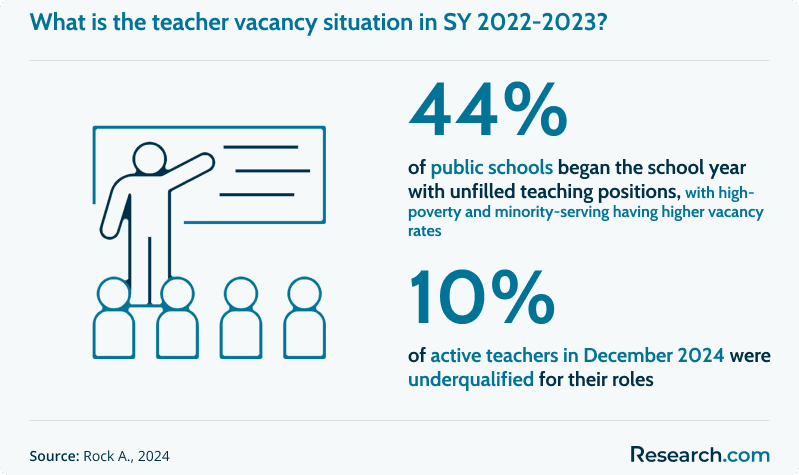
Online access also matters because of ongoing staffing challenges. 44% of public schools started the 2022-2023 school year with unfilled positions, making flexible preparation routes important for working adults and career changers. Still, candidates should not confuse workforce demand with guaranteed licensure or employment.
| Question to ask an online program | Why the answer matters |
| Is the institution regionally accredited? | Accreditation affects credit transfer, employer recognition, and financial aid eligibility. |
| Is the teacher preparation program approved by my target state? | State approval is central to licensure eligibility. |
| How are student teaching placements arranged? | Online coursework still usually requires in-person classroom experience. |
| Which exams does the program prepare students to take? | Testing requirements vary by state and endorsement. |
| Does the program disclose licensure outcomes by state? | Clear disclosures reduce the risk of choosing a program that does not meet your state’s rules. |
Is an online master's degree a smart investment for my teaching career?
An online master’s degree can be a strong investment when it matches your career goal, your state or district salary schedule, and your budget. It may help teachers deepen instructional expertise, add an endorsement, move into leadership, or qualify for roles in curriculum, literacy, special education, educational technology, or administration.
The return on investment is not automatic. Before enrolling, compare tuition, fees, transfer credit policies, employer tuition assistance, program length, and whether the degree leads to licensure, endorsement, or salary-lane movement in your district. Educators comparing cost-conscious options may start with programs such as the cheapest online master's of education, but affordability should be evaluated alongside accreditation and career fit.
What are the key differences in state-specific requirements for teaching certification?
State rules differ in several important ways: required tests, GPA thresholds, student teaching expectations, grade-band definitions, renewal cycles, alternative pathway rules, and reciprocity policies. Some states rely heavily on Praxis exams, while others use state-specific assessments such as MTEL, FTCE, GACE, TExES, OAE, NYSTCE, or other testing systems.
If you are comparing where to teach, review official state guidance and detailed teaching certification requirements before enrolling in a program. This is especially important for online students, military families, career changers, and anyone planning to move shortly after graduation.
Can I fast-track my advanced degree after teacher certification?
Yes, some certified teachers pursue accelerated graduate pathways after completing initial certification. These options can help experienced educators build advanced skills in leadership, research, curriculum design, school improvement, or policy. A fast-track program may make sense if you already know your long-term goal and can manage intensive coursework while teaching.
When comparing advanced options, look beyond speed. Confirm accreditation, faculty expertise, dissertation or capstone expectations, scheduling format, total cost, and whether the program supports your intended career outcome. Some educators explore accelerated doctoral pathways such as the fastest EdD program, but faster is only better when the program remains credible, manageable, and aligned with your goals.
How can advanced degrees elevate a teaching career?
Advanced degrees can help teachers move beyond initial classroom certification into specialized, leadership, or research-informed roles. A master’s degree may support instructional advancement, endorsement areas, or district salary progression. A doctoral degree, including an Ed.D., can prepare educators for senior roles in administration, curriculum leadership, higher education, organizational training, or education policy.
For teachers who want doctoral preparation without unnecessary cost, comparing options such as the cheapest Ed.D online program can be a practical starting point. The best choice depends on whether you want to remain in classroom teaching, become an instructional leader, move into administration, or work in education systems outside K-12 schools.
How do I maintain and renew my teacher certification?
Teacher certification is not always permanent. Many states require educators to renew credentials by completing continuing education, professional development units, graduate coursework, mentoring, teaching experience, or other state-approved activities. Renewal rules and timelines vary, so teachers should track deadlines early instead of waiting until a credential is close to expiration.
Renewal can also be a strategic planning opportunity. If you want to move into leadership or system-level roles, advanced study such as an online doctorate organizational leadership degree may support broader career goals while contributing to professional growth. Always verify whether specific coursework counts for renewal in your state or district before enrolling.
| Renewal task | Best practice |
| Track expiration date | Create reminders well before the renewal deadline. |
| Document professional development | Keep certificates, transcripts, attendance records, and district approvals. |
| Check state rules annually | Renewal requirements can change, and local district rules may add expectations. |
| Plan coursework strategically | Choose courses that support both renewal and career advancement. |
| Update endorsements carefully | Confirm whether added credentials expand your teaching eligibility. |
Should I pursue an advanced degree to enhance my teaching career?
You should consider an advanced degree if it supports a clear career outcome: higher-level instructional expertise, a new endorsement, leadership eligibility, administrative preparation, or a move into curriculum, policy, or higher education. It may not be worth the cost if you are unsure of your goal, your district does not reward graduate credits, or the program does not align with your state’s credentialing rules.
For educators interested in school leadership, an educational leadership degree online can provide training in supervision, school operations, instructional leadership, and organizational change. Before applying, ask whether the degree leads to principal or administrator licensure in your state if that is your goal.
Can additional certifications enhance my teaching career?
Additional certifications, endorsements, and specialized credentials can make a teacher more versatile. Common options include special education, bilingual education, English language learning, literacy, gifted education, educational technology, library media, career and technical education, and leadership credentials.
Choose add-ons based on actual demand in your district or state, not only personal interest. A teacher who wants to work with school libraries, information literacy, or educational resources may find it useful to explore what you can do with a library science degree and how that background can complement teaching experience.
What are the best teacher certification programs?
The best teacher certification program is the one that is state-approved, accredited, affordable for your situation, aligned with your target grade level or subject, and able to place you in appropriate classroom experiences. “Best” does not mean the same thing for every candidate. A recent high school graduate, a working paraprofessional, and a mid-career engineer switching to math teaching may need very different pathways.
Common certification program types and specializations include the following:
- Early Childhood Education: Focuses on learning and development from birth to age eight and prepares educators for preschool and early-grade settings. Candidates can review early childhood teaching certification requirements for this pathway.
- Elementary Education: Prepares teachers for kindergarten through fifth grade, with broad training across reading, math, science, social studies, classroom management, and child development.
- Secondary Education: Trains teachers for middle and high school roles, usually with a strong emphasis on one subject area.
- Special Education: Prepares educators to support students with disabilities through individualized instruction, accommodations, collaboration, and legal compliance.
- Teaching English as a Second Language: Focuses on English language development for multilingual learners in diverse classroom settings.
- Bilingual Education: Prepares teachers to support instruction in English and another language for dual-language or bilingual programs.
- Instructional Design and Technology: Builds skills in digital learning tools, online instruction, assessment design, and technology-supported teaching.
- Online Teaching: Focuses on student engagement, assessment, communication, and instructional design in virtual learning environments.
- Career and Technical Education: Prepares teachers to deliver career-connected instruction in fields such as business, health sciences, trades, technology, and other workforce areas.
- Alternative Teaching Certification: Offers a route for candidates with non-education bachelor’s degrees who want to enter teaching through a state-approved pathway.
- Literacy Education: Emphasizes reading, writing, language development, assessment, and intervention across grade levels.
| Program type | Best for | Watch out for |
| Undergraduate education degree with certification | Students beginning college with a clear teaching goal. | Changing states may require extra steps after graduation. |
| Post-baccalaureate certification | Degree holders who want licensure without a full second bachelor’s degree. | May require prerequisite coursework or unpaid student teaching. |
| Alternative certification | Career changers and subject-matter experts. | Balancing teaching, coursework, exams, and mentoring can be demanding. |
| Master’s with licensure | Graduates who want both advanced study and initial certification. | Cost and time commitment can be higher than certificate-only options. |
| Endorsement-only program | Licensed teachers adding a new specialization. | May not qualify candidates for initial licensure. |
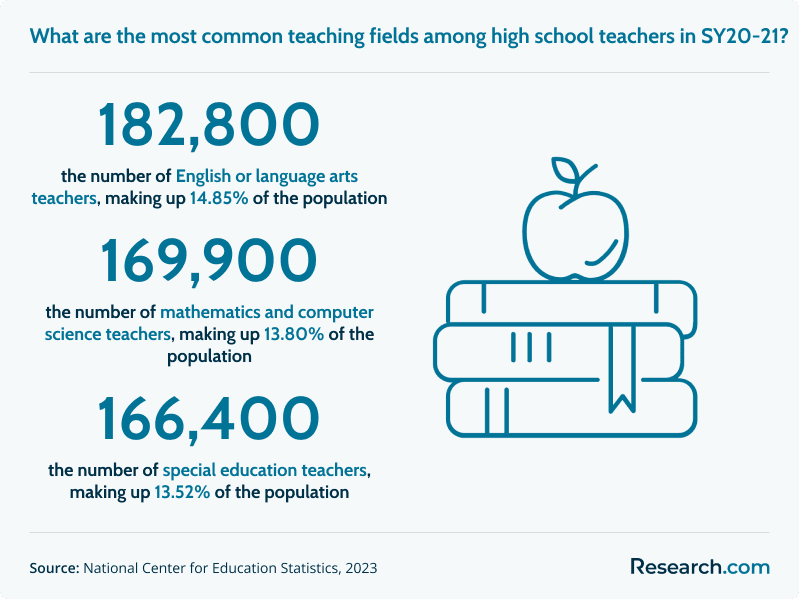
Specialization can improve a teacher’s fit for specific roles and student populations. High school teachers, for instance, often teach subjects connected to their academic strengths. The chart below highlights popular teaching fields, including English, mathematics, and computer science.
Can an interdisciplinary studies background boost my teaching credentials?
An interdisciplinary studies background can be useful for teaching when it strengthens your subject knowledge, communication skills, and ability to connect ideas across disciplines. It may be especially relevant for elementary education, social studies, humanities, project-based learning, curriculum development, or roles that value broad academic preparation.
However, an interdisciplinary degree does not automatically qualify you for certification. You still need to meet state educator preparation, testing, and field experience rules. If you are considering this route, compare how an interdisciplinary studies bachelors degree aligns with your intended teaching endorsement before enrolling.
How much can I make with a teacher certification?
Teacher salaries vary by role, grade level, district, education level, location, years of experience, and collective bargaining or salary schedule rules where applicable. Based on the figures provided, salaries range from about $37,130 to $84,380 per year across selected teaching roles.
Preschool teachers have a median annual wage of $37,130. Kindergarten and elementary school teachers earn a median salary of $63,670. Middle school teachers earn a median annual wage of $64,290, while high school teachers earn $65,220. Special education teachers earn about $65,910, reflecting the specialized skills required to support diverse learners. Postsecondary teachers have a median salary of $84,380, but these roles often require advanced degrees and specialized expertise.
Teachers considering graduate study should evaluate whether advanced credentials affect their local salary schedule. A useful starting point is comparing how much teachers make with a master's degree and then checking district-specific compensation policies.
| Teaching role | Median annual wage stated | Important context |
| Preschool teachers | $37,130 | Requirements may differ from K-12 public school licensure depending on setting. |
| Kindergarten and elementary school teachers | $63,670 | Often require broad preparation across multiple subjects. |
| Middle school teachers | $64,290 | May require grade-level and subject-area certification. |
| High school teachers | $65,220 | Typically tied to a specific subject endorsement. |
| Special education teachers | $65,910 | Requires specialized preparation for individualized supports and services. |
| Postsecondary teachers | $84,380 | Often requires graduate education and subject expertise. |
What is the job outlook for teachers?
The job outlook for teachers differs by education level and specialization. Preschool teachers are projected to see 4% job growth from 2023 to 2033, which is about as fast as the average for all occupations. Elementary, middle, and high school teachers are projected to see a slight decline of about 1% over the next decade, although openings will still occur as teachers retire, transfer, or leave the profession.
Special education teachers are expected to see little to no change, but specialized skills in inclusive education, individualized education plans, and student support remain important in many schools. Postsecondary teachers are projected to grow by 8%, supported by demand for higher education and continuing education roles.
Teachers who complete advanced degrees may qualify for roles beyond traditional classroom teaching. If you are weighing doctoral study, compare what jobs you can do with a doctorate in education, including positions in academic policy, higher education, administration, research, or educational leadership.
The chart below summarizes projected employment changes across teaching roles over the next decade.
What alternative career opportunities exist for certified teachers?
Teacher certification builds transferable skills in instruction, assessment, communication, curriculum planning, student support, data use, and leadership. Those skills can apply to roles outside a traditional classroom, especially for educators who add graduate study, technology training, leadership preparation, or subject specialization.
Common alternatives include instructional coach, curriculum specialist, education consultant, corporate trainer, academic advisor, education program manager, school administrator, test developer, education policy analyst, museum educator, and learning designer. Teachers interested in information access, school libraries, or educational resource management may also explore jobs you can get with a library science degree.
How to choose the right teacher certification pathway
The right pathway depends on where you want to teach, what you want to teach, your current degree, your budget, and how quickly you need to enter the workforce. Do not start with the cheapest or fastest program alone. Start with licensure fit.
- Choose your target state first. Certification is state-specific, so identify where you plan to work before comparing programs.
- Select your grade level and subject. Elementary, secondary, special education, early childhood, and CTE pathways can have different rules.
- Confirm program approval. Ask whether the program is approved for educator preparation in your target state.
- Review testing requirements. Find out which exams are required and when you must pass them.
- Calculate full cost. Include tuition, fees, exams, background checks, transportation, lost wages during student teaching, and renewal costs.
- Check field placement support. Online students should confirm how local student teaching placements are arranged.
- Ask about outcomes. Request licensure pass rates, employment support, and graduate placement information when available.
- Plan for renewal and advancement. Understand how long your first credential lasts and what you need to maintain it.
Common mistakes to avoid when pursuing teacher certification
| Mistake | Why it can hurt you | Better approach |
| Choosing a program before checking state approval | You may complete coursework that does not qualify you for licensure where you want to teach. | Verify state educator preparation approval before applying. |
| Assuming online automatically means accepted | Some online programs may not meet every state’s fieldwork or testing requirements. | Ask for written licensure disclosure for your state. |
| Looking only at tuition | Fees, exams, student teaching costs, and lost work time can change the real cost. | Compare total program cost and expected timeline. |
| Ignoring reciprocity details | Moving states may require extra exams or coursework. | Review reciprocity rules before relocating or choosing an out-of-state program. |
| Choosing a specialization without checking demand | A credential may be less useful if local districts are not hiring in that field. | Review district job postings and shortage areas before specializing. |
| Assuming salary increases are guaranteed | Pay depends on district salary schedules, contracts, role, and location. | Check actual salary schedules and graduate credit policies. |
Questions to ask before enrolling in a teacher certification program
- Is this program approved for teacher certification in the state where I plan to teach?
- Which license, grade band, and subject endorsement will I be eligible to pursue?
- Does the program include student teaching, and who arranges placements?
- What exams do I need to pass, and are exam preparation resources included?
- Can I complete the program while working full time?
- What is the full cost, including fees, testing, background checks, and materials?
- Does the program support alternative certification candidates or only traditional students?
- Will credits transfer into a master’s degree if I continue later?
- How does the program support out-of-state students?
- What documentation will I need for licensure applications and reciprocity?
Key Insights
- Teacher certification is state-controlled, so your first decision should be where you want to teach, not which school looks most convenient.
- Most pathways require a bachelor’s degree, approved educator preparation, required exams, supervised classroom experience, and a background check.
- Certification and licensure are related but not identical; licensure is the state’s legal authorization to teach in many public school roles.
- Online teacher certification can be valid when the institution is accredited, the program is state-approved, and field placements meet licensure requirements.
- Career changers with non-education degrees can often use alternative certification, but they still need to satisfy state testing, coursework, and classroom practice rules.
- Reciprocity can help teachers move across states, but it may still involve additional exams, coursework, or temporary credential steps.
- Teacher salaries cited here range from $37,130 for preschool teachers to $84,380 for postsecondary teachers, with pay varying by role, location, education level, and district policy.
- Job outlook depends on teaching level: preschool teachers are projected at 4% growth, postsecondary teachers at 8%, and elementary, middle, and high school teachers at about a 1% decline over the stated period.
- Advanced degrees and added endorsements can strengthen a teaching career, but they are most valuable when tied to a clear goal, licensure requirement, or salary schedule benefit.
- The biggest mistake is enrolling before verifying state approval, licensure alignment, field placement support, and total cost.
References:
- Bureau of Labor Statistics. High School Teachers.
- Bureau of Labor Statistics. Kindergarten and Elementary School Teachers.
- Bureau of Labor Statistics. Middle School Teachers.
- Bureau of Labor Statistics. Postsecondary Teachers.
- Bureau of Labor Statistics. Preschool Teachers.
- Bureau of Labor Statistics. Special Education Teachers.
- Campus Safety Magazine. Teacher Shortages by State: How Can We Fix the Problem?
- Education Commission of the States. Teacher License Reciprocity State Profiles.
Other Things You Should Know About Teacher Certification Requirements
Teacher certification is issued by each state’s department of education or professional standards board. For example, California uses the Commission on Teacher Credentialing, Texas uses the State Board for Educator Certification, and New York uses the State Education Department Office of Teaching Initiatives.
In 2027, many states offer alternative certification pathways for experienced educators. These include endorsement additions, performance-based assessments, and reciprocity agreements. Each state varies in its specific requirements, so it is important for educators to consult individual state education departments to understand available alternatives.
In 2027, states like California and New York require specific exams for teacher certification. California mandates the CBEST and CSET exams, while New York requires the Educating All Students (EAS) test and Content Specialty Tests (CSTs) for initial certification.


