
2027 How to Become an Accountant in New Jersey

Co-Founder and Chief Data Scientist
Choosing an accounting career in New Jersey means weighing more than salary. You need to understand the state’s CPA education rules, licensing process, work experience requirement, continuing education obligations, and the types of employers that hire accounting talent. The decision is especially important now because New Jersey continues to face accounting workforce gaps as experienced professionals retire, change roles, or leave the field.
This guide explains how to become an accountant in New Jersey in 2026, including the education path, CPA licensing steps, in-demand skills, job options, salary expectations, industry choices, ethical rules, and ways to build long-term career mobility. It is written for students, career changers, bookkeepers considering advancement, and finance professionals deciding whether the CPA path is worth the additional time and cost.
Quick Answer: How Do You Become an Accountant in New Jersey?
To work as an accountant in New Jersey, you generally need accounting education, technical finance skills, and relevant work experience. To become a licensed Certified Public Accountant (CPA), New Jersey requires 150 semester hours of college credit, successful completion of the Uniform CPA Exam, and one year or 2,000 hours of supervised experience under a licensed CPA. Licensed CPAs must also complete 120 hours of continuing professional education every three years, including ethics training.
Key Takeaways Before You Start
- New Jersey projects 2% growth for accountants, which points to steady hiring needs in finance, healthcare, professional services, government, and related sectors.
- Accountants in New Jersey earn an average annual salary of about $69,367, with pay influenced by experience, CPA status, specialization, employer size, and location.
- Students can prepare through accredited colleges and universities in New Jersey that offer accounting coursework, CPA exam preparation, internships, applied projects, and technical training.
- What education do you need to become an accountant in New Jersey?
- What are the CPA licensing requirements in New Jersey?
- Which accounting skills are most valuable in New Jersey?
- What accounting jobs can you pursue in New Jersey?
- How much do accountants earn in New Jersey?
- What is the employment outlook for accountants in New Jersey?
- Which New Jersey industries hire accountants?
- What accounting regulations and ethics rules apply in New Jersey?
- What continuing education do New Jersey CPAs need?
- Can legal knowledge help an accounting career in New Jersey?
- How can accountants advance their careers in New Jersey?
- Can forensic accounting improve career options in New Jersey?
- Which accounting programs can prepare you for New Jersey careers?
- Can New Jersey business schools strengthen an accounting career?
- Can urban planning knowledge support accounting work in New Jersey?
What education do you need to become an accountant in New Jersey?
The minimum education you need depends on the accounting role you want. Entry-level bookkeeping or accounting clerk roles may require less education than CPA-track positions, while staff accountant, auditor, tax, and financial reporting jobs typically favor candidates with a bachelor’s degree in accounting or a closely related field.
If your goal is CPA licensure in New Jersey, the education requirement is more specific: you must complete at least 150 semester hours of college coursework. That is 30 credits beyond the standard 120-credit bachelor’s degree. Many candidates reach the requirement by earning a master’s degree in accounting, adding a graduate certificate, or taking extra upper-division accounting and business courses.
New Jersey expects CPA candidates to build knowledge in core accounting and business areas, including:
- Financial accounting and external reporting
- Auditing, attestation, and assurance work
- Taxation for individuals, businesses, or organizations
- Business law, professional responsibility, and ethics
- Economics, finance, and business decision-making
Education alone is not enough for CPA licensure. Candidates must also pass the Uniform CPA Exam and complete one year or 2,000 hours of supervised work experience under a licensed CPA.
| Accounting goal | Typical education path | When this path makes sense |
| Bookkeeping or accounting support role | Accounting coursework, certificate, associate-level study, or related experience | Best for entering the field quickly and building practical transaction, payroll, and recordkeeping skills. |
| Staff accountant or corporate accounting role | Bachelor’s degree in accounting, finance, or business with accounting coursework | Best for candidates who want a professional accounting role but may not be ready to pursue CPA licensure immediately. |
| CPA-track accountant | 150 semester hours, often through a bachelor’s plus a master’s degree or additional credits | Best for candidates who want audit, public accounting, higher-level tax, controller, or advisory opportunities. |
| Specialized accounting career | Accounting degree plus focused study in tax, audit, forensic accounting, analytics, or finance | Best for candidates aiming for higher-responsibility roles or niche work requiring deeper technical expertise. |
If you need flexibility while meeting credit requirements, an online accounting degree program can be useful, especially if you are working, changing careers, or trying to control education costs. Before enrolling, confirm accreditation, transfer credit rules, CPA-aligned coursework, internship options, and whether the program helps you reach the 150 semester hours required for New Jersey CPA licensure.
What are the CPA licensing requirements in New Jersey?
New Jersey CPA licensure follows a sequence: complete the required education, pass the CPA exam, document supervised experience, and maintain the license through continuing education. Each step matters because CPA status allows professionals to perform regulated services and signals a higher level of accounting competence to employers and clients.
Step 1: Complete 150 semester hours of approved education
CPA candidates in New Jersey need 150 semester hours of college credit, including a concentration in accounting and required business-related subject areas. You can reach the 150-hour threshold through several routes:
- Extended undergraduate study: Some bachelor’s programs allow students to add enough credits to reach the 150-hour requirement before graduation.
- Graduate education: A master’s degree in accounting or a related field is a common option because it can deepen technical knowledge while helping satisfy the credit requirement.
- Post-baccalaureate or graduate certificate coursework: Certificate programs can help candidates close credit gaps without committing to a full degree, depending on prior coursework and career goals.
Step 2: Pass the Uniform CPA Exam
The Uniform CPA Exam tests whether candidates can apply accounting, auditing, reporting, taxation, regulatory, and business concepts at a professional level. The exam sections listed in the referenced guidance include:
- Auditing and Attestation (AUD): Audit procedures, assurance work, professional duties, and related responsibilities.
- Business Environment and Concepts (BEC): Business concepts, economics, information technology, and related management knowledge.
- Financial Accounting and Reporting (FAR): Financial statements, reporting frameworks, and accounting standards.
- Regulation (REG): Federal taxation, ethics, business law, and regulatory responsibilities.
Because the exam is demanding, many candidates use structured review courses, practice exams, study schedules, and professional resources from organizations such as the New Jersey Society of CPAs.
Step 3: Complete supervised work experience
New Jersey requires one year or 2,000 hours of qualifying experience under a licensed CPA. The experience should involve real accounting work, such as financial reporting, tax, audit, accounting systems, corporate finance, government accounting, or related professional services.
Step 4: Keep the license active
After licensure, New Jersey CPAs must complete 120 hours of continuing professional education every three years. They must earn at least 20 hours each year and complete 4 hours of ethics during each reporting cycle. CPAs should also keep CPE documentation for at least five years in case of review or audit.
| Requirement | New Jersey CPA rule stated in this guide | Decision point for candidates |
| Education | 150 semester hours | Choose a program that clearly maps coursework to CPA eligibility. |
| Exam | Pass the Uniform CPA Exam | Budget time and money for review materials and repeated practice. |
| Experience | One year or 2,000 hours under a licensed CPA | Seek roles where a licensed CPA can verify qualifying work. |
| Continuing education | 120 hours every three years, at least 20 hours per year, and 4 ethics hours per cycle | Track credits carefully and keep documentation for at least five years. |
Which accounting skills are most valuable in New Jersey?
Accounting employers in New Jersey still expect strong technical fundamentals, but the role is becoming more analytical, technology-driven, and advisory. Candidates who combine accounting knowledge with data, communication, and risk awareness are better positioned for public accounting, corporate finance, government, and specialized roles.
- Technical accounting knowledge: Employers need professionals who understand GAAP, tax rules, financial reporting, reconciliations, audit support, and compliance documentation.
- Data analysis and accounting technology: Accountants who can work with Excel, SQL, Tableau, SAP, QuickBooks, and large datasets can move beyond recordkeeping into forecasting, reporting, controls, and decision support.
- Clear communication: Accountants often explain financial results to managers, clients, auditors, executives, or nonfinancial stakeholders. The ability to translate numbers into business meaning is valuable.
- Adaptability and problem-solving: Regulation, technology, and business models change quickly. Employers favor accountants who can learn new systems, investigate discrepancies, and adjust processes.
- Cybersecurity and risk awareness: As financial data moves through digital systems, accountants benefit from understanding internal controls, secure workflows, fraud risks, and data protection practices.
How AI and automation are changing accounting work
Automation is reducing the value of purely repetitive accounting tasks, such as manual data entry and routine reconciliations. It is increasing demand for accountants who can review outputs, identify errors, interpret data, test controls, and advise decision-makers. In practical terms, New Jersey accounting candidates should learn both accounting rules and the systems used to apply them.
| Skill area | Why it matters | How to build it |
| Financial reporting | Supports compliance, audits, management reporting, and external statements. | Take advanced accounting courses and practice preparing statements and disclosures. |
| Tax knowledge | Useful in public accounting, small business services, corporate tax, and advisory work. | Complete tax coursework, internships, seasonal tax work, or CPA review modules. |
| Analytics | Helps accountants find trends, exceptions, risks, and operational insights. | Practice Excel modeling, dashboard tools, database basics, and data cleaning. |
| Professional judgment | Important when rules require interpretation or when ethical conflicts arise. | Study case examples, ethics scenarios, audit issues, and regulatory guidance. |
| Client and team communication | Accounting work often requires explaining findings and coordinating with others. | Build presentation, writing, documentation, and stakeholder-management skills. |
What accounting jobs can you pursue in New Jersey?
New Jersey offers accounting-related roles at several levels, from bookkeeping support to compliance and financial examination work. Some positions require a CPA license or advanced accounting education, while others can serve as entry points for candidates still building credentials.
Bookkeeping, accounting, and auditing clerks
- Annual job openings: 5,280
- Employment is projected to decline by 2.6% from 2018 to 2028, yet the large number of annual openings shows that employers still need workers to replace people who retire, transfer, or leave the occupation.
Loan interviewers and clerks
- Annual job openings: 580
- This role is projected to grow by 5.3% from 2018 to 2028, reflecting demand for workers who can collect, review, and analyze financial documentation.
Financial examiners
- Annual job openings: 210
- Employment is projected to grow by 9.3% from 2018 to 2028, driven by the need to evaluate compliance with laws governing financial institutions and transactions.
| Role | Best fit for | Typical work focus |
| Bookkeeping, accounting, and auditing clerk | Entry-level candidates or career changers building accounting experience | Posting transactions, reconciling accounts, maintaining records, and supporting reports. |
| Staff accountant | Bachelor’s-level accounting graduates | Month-end close, journal entries, account analysis, reporting, and compliance support. |
| Auditor | CPA-track candidates and detail-oriented professionals | Testing controls, reviewing records, documenting findings, and assessing financial accuracy. |
| Tax accountant | Candidates interested in tax planning, compliance, and client advisory work | Preparing returns, researching tax issues, and supporting individuals or businesses. |
| Financial examiner | Professionals interested in regulation, risk, and compliance | Reviewing institutions, transactions, and documentation for legal and financial compliance. |
If you are considering CPA licensure, review state-by-state compensation patterns and credential value through this guide to CPA salaries by state. It can help you compare the New Jersey market with broader national opportunities.
How much do accountants earn in New Jersey?
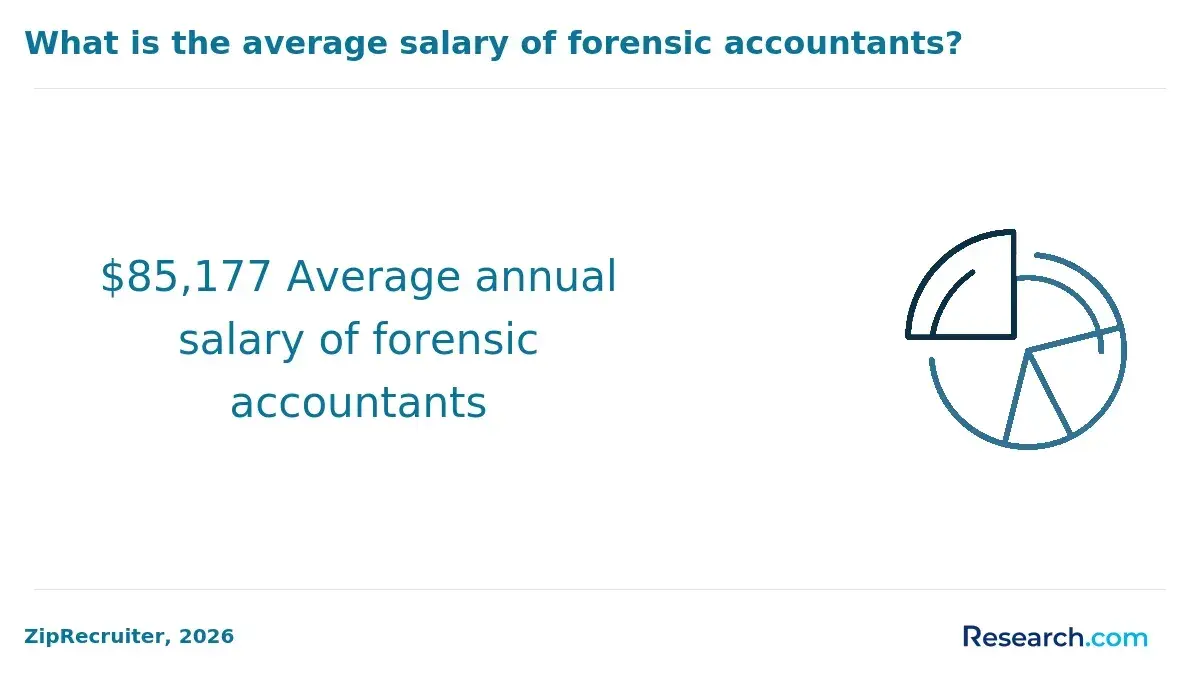
Accounting pay in New Jersey is competitive, but salary varies widely by role, CPA status, employer, industry, specialization, and experience. As of 2026, the estimates cited in this guide show the following:
- Average base salary: $69,367 per year
- Estimated total compensation: $96,180 per year
- Estimated additional pay: $17,400 per year
Total compensation may include base pay plus bonuses, commissions, tips, and profit sharing. These estimates should not be treated as guaranteed earnings. Actual pay can be higher or lower depending on whether you work in public accounting, corporate finance, government, nonprofit accounting, tax, audit, advisory services, or a specialized field.
| Factor | How it can affect pay |
| CPA license | Can improve access to audit, public accounting, leadership, and advisory roles. |
| Experience level | Senior accountants, managers, controllers, and finance leaders generally earn more than entry-level staff. |
| Industry | Public accounting, finance, pharmaceuticals, telecommunications, and manufacturing may offer different pay structures. |
| Specialization | Tax, audit, forensic accounting, risk, and financial analysis skills can support advancement. |
| Employer size | Larger firms or corporations may offer bonuses, profit sharing, or broader benefits. |
Specialized credentials can increase your marketability, but they also require time and money. If you are comparing shorter credential options before committing to a degree or CPA pathway, reviewing bookkeeping certificate programs can help you understand what entry-level training may involve.
What is the employment outlook for accountants in New Jersey?
The job outlook for accountants in New Jersey is stable rather than explosive. The state projects nearly 2% growth for accountants and auditors, suggesting continued need for professionals who can maintain records, prepare reports, support compliance, and advise organizations on financial decisions.
Bookkeeping, accounting, and auditing clerks are expected to see 2% employment growth. While that rate is modest, accounting support roles remain important for small and midsize businesses, nonprofits, public agencies, and organizations that need accurate financial records.
The strongest candidates will likely be those who can do more than routine transaction processing. Employers increasingly value accountants who understand accounting standards, tax rules, financial systems, analytics, internal controls, and risk management.
Before committing to the CPA path, compare education costs, time requirements, and likely career benefits. Reviewing CPA accountant salary information can help you connect licensing decisions with realistic compensation expectations.
Which New Jersey industries hire accountants?
Accounting skills transfer across sectors, but the best industry for you depends on your tolerance for busy seasons, interest in client service, desire for stability, and long-term advancement goals. New Jersey’s economy gives accountants options in public accounting, corporate finance, government, and nonprofit work.
Public accounting firms
- Typical salary range: $60,000 for entry-level roles to $120,000+ for senior roles
- Best for: Candidates who want strong early-career training, audit or tax exposure, and experience with multiple clients.
- Trade-off: Workload can be intense during tax season and audit periods, but the experience can accelerate advancement.
Corporate accounting and private industry
- Typical salary range: $75,000 to $100,000+ with advancement
- Common industries: Pharmaceuticals, telecommunications, finance, and manufacturing
- Best for: Accountants who want a defined internal role, a more predictable schedule, and opportunities in reporting, controls, budgeting, or financial planning.
Government agencies
- Typical salary range: $55,000 to $90,000
- Employers: Local, state, and federal agencies
- Best for: Professionals who value public service, job security, structured benefits, pension plans, and long-term stability.
Nonprofit organizations
- Typical salary range: $50,000 to $80,000
- Best for: Accountants who want mission-driven work, collaboration, and a closer connection to community impact.
- Trade-off: Compensation may be lower than in some corporate or public accounting roles, but the work can offer strong purpose and balance.
| Industry | Main advantage | Possible drawback | Good choice if you want... |
| Public accounting | Broad training and strong credential value | Heavy workload during peak periods | Fast skill development and CPA-aligned experience. |
| Corporate accounting | Clear internal career ladders | Less client variety than public accounting | Stability, specialization, and business partnership roles. |
| Government | Security and benefits | Advancement may be more structured and slower | Public service, compliance, and long-term employment. |
| Nonprofit | Mission-focused work | Lower salary ceiling in some organizations | Community impact and collaborative finance work. |
What accounting regulations and ethics rules apply in New Jersey?
Accountants who become CPAs in New Jersey must follow state licensing rules and professional ethics standards. The New Jersey State Board of Accountancy oversees CPA licensure, conduct, and continuing education. These rules protect the public by requiring CPAs to demonstrate competence, independence, confidentiality, and professional judgment.
Core regulatory requirements
- Pass the Uniform CPA Exam: Candidates must demonstrate knowledge across major accounting, auditing, business, tax, and regulatory areas.
- Complete 150 semester hours: CPA candidates need additional education beyond a standard bachelor’s degree.
- Document one year or 2,000 hours of supervised experience: Experience must be completed under a licensed CPA.
- Maintain licensure through CPE: New Jersey CPAs complete 120 CPE hours every three years, including ethics coursework.
Ethical responsibilities for CPAs
- Integrity and objectivity: CPAs must provide honest, unbiased work and avoid conflicts of interest.
- Independence: Independence is especially important for audits and assurance services, where CPAs must remain independent in fact and appearance.
- Confidentiality: Client and employer information must be protected unless disclosure is authorized or legally required.
- Due care: CPAs are expected to apply professional skill carefully, document work appropriately, and seek guidance when needed.
- Legal compliance: Fraud, falsified records, misleading reports, or serious violations can result in fines, suspension, license revocation, or criminal consequences.
Ethics is not limited to passing a class or satisfying a CPE rule. Accountants frequently handle sensitive information, estimates, judgments, and pressure from stakeholders. If a situation raises independence, confidentiality, fraud, or reporting concerns, document the facts, consult professional standards, and seek guidance before acting.
What continuing education do New Jersey CPAs need?
Licensed CPAs in New Jersey must continue learning throughout their careers. The New Jersey State Board of Accountancy requires 120 hours of continuing professional education every three years, with at least 20 hours completed each year.
CPE requirements at a glance
- Total requirement: 120 CPE hours during each three-year reporting period
- Annual minimum: At least 20 hours of CPE each year
- Ethics requirement: 4 hours of professional ethics during each three-year cycle
Common CPE subject areas
- Accounting and auditing standards
- Federal and state tax updates
- Financial reporting requirements
- Business law, management, and advisory topics
- Ethics, compliance, and professional conduct
CPE can often be completed through live classes, webinars, online courses, self-study programs, seminars, and approved professional training. CPAs must retain CPE records for at least five years because the Board may request proof during audits or license renewal reviews.
Common CPE mistakes to avoid
- Waiting until the end of the three-year period and missing the annual 20-hour minimum.
- Completing courses that do not meet Board standards.
- Forgetting the 4-hour ethics requirement.
- Failing to keep certificates, course descriptions, dates, and credit records for at least five years.
- Choosing only easy courses instead of training that supports real career goals, such as tax, audit, analytics, or advisory skills.
Can legal knowledge help an accounting career in New Jersey?
Legal literacy can make accountants more effective in areas such as compliance, contracts, governance, taxation, audits, business formation, and risk review. You do not need to become a lawyer to benefit from basic legal knowledge, but understanding how regulations and documentation affect financial decisions can improve your judgment.
This skill combination is especially relevant for accountants who work with regulated industries, litigation support, forensic accounting, nonprofit compliance, government finance, or corporate governance. If you want to understand how legal support roles are trained in the state, reviewing paralegal education requirements in New Jersey can give you useful context for how legal processes intersect with financial work.
How can accountants advance their careers in New Jersey?
New Jersey offers advancement routes for accountants who combine experience, credentials, technical skills, and professional relationships. The state employs more than 20,000 accountants and auditors, and the projected employment growth rate is slightly above the national average. That does not guarantee promotion, but it does show a sizable professional market for accounting talent.
Common advancement paths
- Senior accountant or accounting manager: A common next step after several years of staff-level work; CPA licensure is often helpful or preferred.
- Controller or director of finance: These roles oversee accounting operations, reporting, controls, budgeting, and financial processes.
- Chief Financial Officer (CFO): A senior executive role focused on financial strategy, capital planning, risk, and organizational performance.
- Specialized accountant: Options include forensic accountant, tax advisor, financial analyst, internal auditor, and risk-focused roles.
- Independent practice or consulting: Experienced CPAs may build their own firms, advise small businesses, or provide tax, audit, advisory, or outsourced finance services.
Professional organizations that can support growth
- New Jersey Society of Certified Public Accountants (NJCPA): With over 10,000 members, NJCPA offers seminars, exam preparation resources, mentorship, networking, and continuing education.
- American Institute of Certified Public Accountants (AICPA): AICPA supports CPAs nationally through certifications, publications, professional learning, and industry guidance.
- New Jersey Business & Industry Association (NJBIA): NJBIA helps accounting professionals connect with broader business communities and stay aware of industry issues.
- Local chambers of commerce: These groups can help accountants meet small and midsize business owners, build referral networks, and find advisory opportunities.
When a graduate degree may be worth it
A graduate accounting degree can be useful if it helps you meet the 150 semester hours for CPA eligibility, build advanced expertise, or qualify for higher-responsibility roles. It may not be necessary for every accounting job, so compare tuition, employer tuition assistance, transfer credits, CPA exam preparation, internship access, and expected career benefits before enrolling.
If cost is a major concern, compare options such as an affordable online master’s in accounting. The best program is not always the cheapest one, but it should clearly support your licensing, career, scheduling, and return-on-investment goals.
| Career goal | Helpful credential or experience | Practical next step |
| Move from staff accountant to senior accountant | CPA progress, strong close experience, reporting skills | Ask for ownership of reconciliations, variance analysis, or reporting projects. |
| Enter public accounting | CPA eligibility, audit or tax coursework, internship experience | Target firms that provide CPA supervision and exam support. |
| Become a controller | CPA, management experience, internal controls, budgeting knowledge | Build experience across reporting, systems, compliance, and team leadership. |
| Specialize in forensic, tax, or audit | Focused coursework, certifications, case-based experience | Pursue roles and training aligned with the niche you want. |
| Start a practice | CPA license, client service experience, business development skills | Develop a niche, referral network, pricing model, and compliance process. |
Can forensic accounting improve career options in New Jersey?
Forensic accounting can be a strong specialization for accountants who enjoy investigation, documentation, fraud analysis, litigation support, and detailed financial review. It blends accounting knowledge with analytical thinking and an understanding of legal procedures.
This path may fit professionals who want to work on fraud detection, insurance claims, business disputes, internal investigations, government matters, or compliance reviews. If you are interested in the investigative side of professional work, you may also find it helpful to compare related training in forensic science education in New Jersey.
Which accounting programs can prepare you for New Jersey careers?
The right accounting program should do more than award credits. It should help you build technical competence, prepare for CPA eligibility if that is your goal, gain practical experience, and connect with employers. Look for programs with relevant accreditation, strong accounting faculty, internship access, CPA exam preparation, and coursework in tax, auditing, financial reporting, ethics, and accounting systems.
Before choosing a school, ask whether the program helps students reach the 150 semester hours required for New Jersey CPA licensure, how transfer credits are handled, whether online courses are accepted for CPA preparation, and what career support is available. To compare local options, start with this guide to the best accounting schools in New Jersey.
Can New Jersey business schools strengthen an accounting career?
A business school can be valuable for accounting students who want broader preparation in management, finance, analytics, strategy, and leadership. This broader training can help accountants move from technical roles into advisory, management, or executive positions.
When comparing business schools, look beyond reputation. Review accounting course depth, CPA preparation, employer relationships, internship placement, alumni networks, technology training, and flexibility for working students. If you want programs that combine accounting foundations with broader business training, explore the best business schools in New Jersey.
Can urban planning knowledge support accounting work in New Jersey?
Urban planning knowledge can help accountants who work in municipal finance, infrastructure funding, public-private partnerships, real estate development, grants, or public budgeting. These roles often require financial analysis tied to land use, capital projects, community development, regulatory constraints, and long-term public investment.
This combination is not necessary for most accounting roles, but it can be useful if you want to work with city agencies, development authorities, construction finance, or public sector planning budgets. To understand the planning side of this interdisciplinary work, review this guide on how to become an urban planner in New Jersey.
How should you choose an accounting path in New Jersey?
The best accounting path depends on your timeline, budget, target role, and willingness to pursue CPA licensure. A student who wants public accounting should plan early for the 150 semester hours and supervised experience requirement. A career changer may prefer an accounting certificate or online program first. A bookkeeper may decide to move gradually into staff accounting before committing to a full CPA pathway.
Questions to ask before choosing a program or credential
- Does this program help me reach the 150 semester hours required for New Jersey CPA licensure?
- Is the institution properly accredited and recognized by employers?
- Will my prior credits transfer, and how many additional credits will I need?
- Does the curriculum include auditing, taxation, financial reporting, ethics, business law, economics, and finance?
- Are internships, career services, employer partnerships, or CPA supervision opportunities available?
- Can I complete coursework online, on campus, part time, or while working?
- What is the total cost after tuition, fees, books, exam review, and lost work time?
- Does the program publish clear outcomes, such as exam support, placement help, or graduate career paths?
Common mistakes to avoid
- Choosing a program without checking CPA alignment: Not every accounting program automatically satisfies New Jersey CPA education requirements.
- Looking only at tuition: Fees, transfer policies, exam review costs, commuting, scheduling, and time away from work can change the real cost.
- Assuming online credits always work the same way: Confirm how online coursework applies to degree completion and CPA preparation.
- Waiting too long to plan supervised experience: CPA candidates need one year or 2,000 hours under a licensed CPA, so choose jobs with verification in mind.
- Ignoring technology skills: Accounting roles increasingly involve data tools, automation, ERP systems, and analytics.
- Relying only on rankings: A highly ranked school may not be the best fit if it lacks flexibility, affordability, transfer options, or CPA-focused advising.
- Assuming salary outcomes are guaranteed: The $69,367 average salary and $96,180 estimated total compensation are useful benchmarks, not promises.
What do accountants say about their careers in New Jersey?
- My accounting studies at the State University of New Jersey helped me build a strong academic foundation and connect with professionals in the field. In my first local company role, I had to apply classroom concepts to real reporting and compliance work in New Jersey’s regulatory environment. The state’s diverse economy keeps the job interesting because every client and employer brings different challenges. I value working in a profession that supports local businesses and contributes to financial stability across the region. Sophia
- New Jersey City University helped me enter the accounting profession with confidence. My first position at a mid-sized New Jersey company gave me practical experience in financial reporting and tax compliance. Over time, local workshops and certification programs helped me keep improving. I especially enjoy supporting startups because the work lets me contribute to the local economy while continuing to expand my own skills. Luigi
- The accounting program at Central Jersey College challenged me and pushed me to grow. When I began working for a New Jersey business, I quickly learned how fast-moving and varied the state’s economy can be. Accounting has strengthened my analytical thinking and given me a way to support community development through better financial practices. Helping local organizations improve while advancing my credentials has been one of the most rewarding parts of the career. Camren
Key Insights
- CPA candidates in New Jersey need 150 semester hours, the Uniform CPA Exam, and one year or 2,000 hours of supervised experience under a licensed CPA.
- The average base salary for accountants in New Jersey is $69,367, while estimated total compensation is $96,180, but actual earnings depend heavily on role, credential, industry, and experience.
- New Jersey’s outlook is stable, with projected 2% growth for accountants and continued demand across finance, healthcare, professional services, government, and related sectors.
- Public accounting is strong for early training and CPA experience, corporate accounting may offer more predictable advancement, government can provide stability, and nonprofit work may appeal to mission-driven professionals.
- Technology, analytics, cybersecurity awareness, and communication skills are increasingly important because employers need accountants who can interpret data, not just record transactions.
- Before enrolling in any accounting program, confirm accreditation, transfer credit rules, CPA alignment, internship access, total cost, and whether the program supports your target career path.
- Licensed New Jersey CPAs must complete 120 CPE hours every three years, including at least 20 hours per year and 4 hours of ethics per cycle.
References:
- Glassdoor. (2025, April 10). How much does an accountant make in New Jersey? Glassdoor.com. Retrieved May 5, 2025.
- Kaszerman, J. (2024, December 3). A multifaceted approach to address the accountant shortage. New Jersey Society of Certified Public Accountants. Retrieved May 5, 2025.
- NJ Department of Labor -. (n.d.). Career services | Demand occupations list. New Jersey Department of Labor. Retrieved May 5, 2025.
- New Jersey CPA. (n.d.). FAQs about becoming a CPA in New Jersey. New Jersey Society of Certified Public Accountants. Retrieved February 3, 2026, from https://www.njcpa.org/build-career/become-a-cpa/cpa-exam/faqs
- New Jersey CPA. (n.d.). Requirements to become a CPA in New Jersey. New Jersey Society of Certified Public Accountants. Retrieved February 3, 2026, from https://www.njcpa.org/build-career/become-a-cpa/requirements
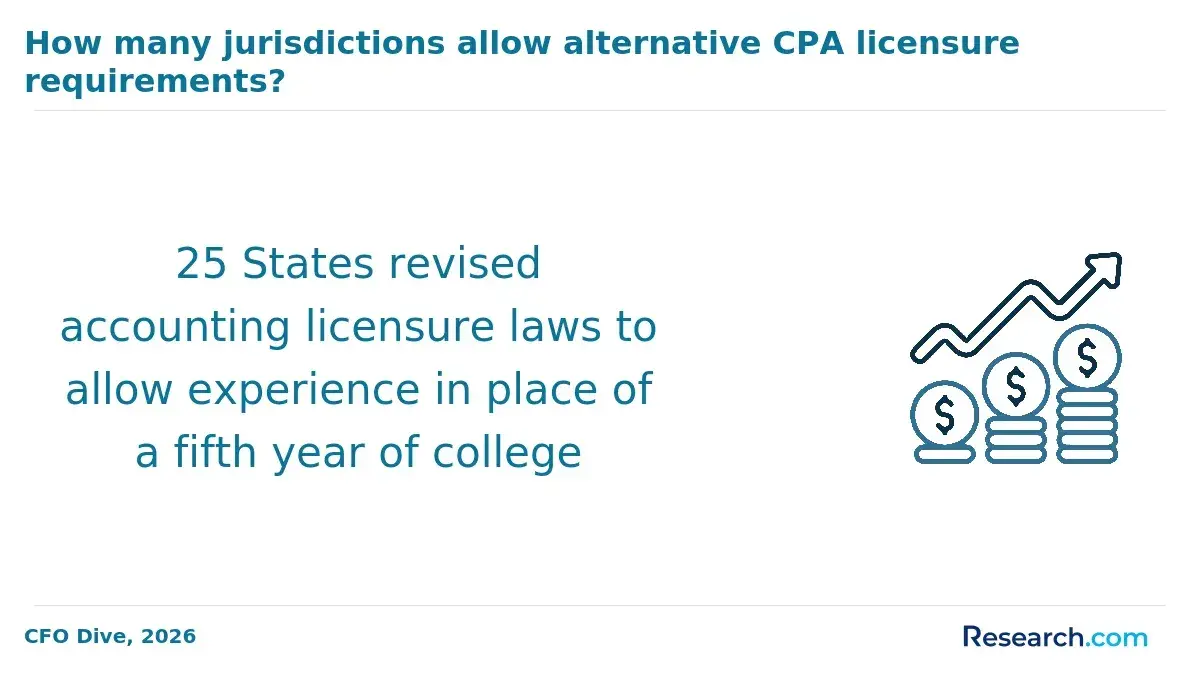
- NJBIA. (2026, January 13). NJCPA responds to new law expanding CPA licensure in NJ. New Jersey Business & Industry Association. Retrieved February 3, 2026, from https://njbia.org/njcpa-responds-to-new-law-expanding-cpa-licensure-in-nj/
- Robert Half. (2025). Finance and accounting: Strategic priorities for 2025. RobertHalf.com. Retrieved May 5, 2025.
- Robert Half. (2025, January 31). 2025 in-demand finance and accounting roles and hiring trends. RobertHalf.com. Retrieved May 5, 2025.
- U.S. BLS. (2025, April 18). How to become an accountant or auditor. U.S. Bureau of Labor Statistics. Retrieved May 5, 2025.
- Zippia. (2025, January 8). Best colleges and degrees for accountants. Zippia.com. Retrieved May 5, 2025.
Other Things You Should Know About Becoming an Accountant in New Jersey
Check that your school is regionally accredited and that your coursework meets the New Jersey State Board of Accountancy and CPA licensure rules. For CPA candidates, New Jersey requires 150 semester hours, with at least 24 accounting credits and 24 business credits, including specific upper-level accounting subjects.
Yes, to be licensed as an accountant in New Jersey, applicants must have residency within the state or maintain an office here. This requirement is part of ensuring that accountants conduct business within New Jersey's jurisdiction effectively by 2027.
To become an accountant in New Jersey in 2027, you typically need a bachelor's degree in accounting or a related field. A focus on courses in financial accounting, managerial accounting, auditing, and taxation is beneficial. Pursuing a Certified Public Accountant (CPA) license may enhance job prospects and credibility.


