2027 Accounting Schools in New Jersey – How to Become a CPA in NJ

Co-Founder and Chief Data Scientist
Planning an accounting career in New Jersey usually comes down to three decisions: which degree path to choose, whether you want to become a Certified Public Accountant (CPA), and how much time and money you are willing to invest before entering the field. Accounting can lead to work in public accounting firms, corporations, government agencies, healthcare organizations, banks, technology companies, and nonprofit organizations because every sector needs professionals who can interpret financial information accurately.
New Jersey is a strong market for accounting professionals. According to the Bureau of Labor Statistics (BLS, 2024), more than 48,000 accountants and auditors work in the state. BLS also projects approximately 6% employment growth for accountants and auditors from 2023 to 2033, which is faster than the average for all occupations. For students who are not ready to commit immediately to a four-year degree, an on-campus or online associate degree in accounting can be a lower-cost starting point before transferring into a bachelor’s program.
This guide explains how to become an accountant or CPA in New Jersey, what education and experience requirements apply, which accounting schools in New Jersey are worth comparing, how to think about costs and financial aid, and what career options may be available after graduation. It is designed for students, career changers, working adults, and accounting graduates who want a practical roadmap rather than a list of disconnected requirements.
Quick Answer: How Do You Become a CPA in New Jersey?
To become a CPA in New Jersey, you generally need a bachelor’s degree or higher, at least 120 semester hours to sit for the CPA exam, 150 semester hours for licensure, 24 semester hours in accounting, 24 semester hours in business, one year of qualifying experience, and passing scores on all required sections of the Uniform CPA Exam. A master’s degree is not required to take the CPA exam in New Jersey, but many candidates use a master’s in accounting or a second undergraduate major to reach the 150-hour licensing requirement.
If your goal is not public accounting or CPA licensure, you can still pursue accounting roles with an associate, bachelor’s, or master’s degree, depending on the employer and job level. However, CPA licensure can make a significant difference for roles involving audits, attest services, senior accounting leadership, or public accounting firm advancement.
How to Become a CPA in NJ Table of Contents
- How to Become a CPA in NJ
- Career Opportunities for Accountants in NJ
- 2027 Best Accounting Schools in New Jersey
- What continuing education is required to maintain a CPA license in New Jersey?
- How Can Additional Professional Certifications Enhance Your Accounting Career in New Jersey?
- How are emerging technologies reshaping accounting practices in New Jersey?
- What are the affordable pathways to an accounting degree in New Jersey?
- How Can Professional Networking Accelerate Your Accounting Career in New Jersey?
- Can integrating healthcare billing expertise boost your accounting career in New Jersey?
- How Can You Stay Updated on Regulatory Changes in New Jersey?
- Can integrating educational roles with accounting enhance career growth in New Jersey?
- Are there alternative pathways to becoming an accountant in New Jersey?
- Can blending accounting expertise with educational roles boost your career in New Jersey?
- How Can Understanding Legal Processes Benefit Accounting Professionals in New Jersey?
- Scholarships and Financial Aid for Accounting Students in New Jersey
- What Alternative Career Paths Are Available to Accounting Graduates in New Jersey?
- Can integrating forensic investigation skills enhance accounting careers in New Jersey?
- Can Urban Planning Expertise Enhance Accounting Career Strategies in New Jersey?
How to Become a CPA in NJ
New Jersey’s CPA path is built around three major requirements: education, examination, and experience. The sequence matters. You may qualify to sit for the CPA exam before you have completed all the credits needed for licensure, but you cannot receive the license until the full education and experience standards are met. If you are comparing state rules, Research.com’s CPA requirements Illinois guide can help you see how New Jersey differs from another large accounting market.
New Jersey CPA Requirements at a Glance
| Requirement Area | What New Jersey Candidates Need to Know |
| Education to sit for the exam | Bachelor’s degree or higher, 24 semester hours in accounting, 24 semester hours in business, and at least 120 total semester hours. |
| Education for licensure | 150 total semester hours are required before the CPA license can be issued. |
| Degree field | The degree can be in any field of study if the accounting, business, and credit-hour rules are satisfied. |
| Experience | One year of qualifying work experience is required, based on 1,750 hours for full-time employment. |
| Supervision | Experience must be completed under a CPA with an active New Jersey license or a license from a substantially equivalent state. |
| Exam | Candidates must pass all required CPA exam sections with a minimum score of 75 on each section. |
Step 1: Meet the Education Requirement
New Jersey candidates must hold a bachelor’s degree or higher from an accredited college or university before they can qualify for the CPA exam. The minimum academic preparation includes 24 semester hours in accounting, 24 semester hours in business, and a total of at least 120 semester hours. The major itself does not have to be accounting, which can help career changers, finance majors, business majors, and other graduates plan a route into the profession.
The 120-hour threshold is only the exam eligibility standard. CPA licensure requires 150 semester hours. Many students reach this requirement by adding a second major, taking extra undergraduate coursework, completing a graduate certificate, or enrolling in a master’s program. Working adults often prefer an online masters degree in accounting because it can make it easier to continue earning income while completing the credits needed for licensure.
Do You Need a Master’s in Accounting to Take the CPA Exam in New Jersey?
No. New Jersey does not require a master’s degree in accounting to sit for the CPA exam. A bachelor’s degree can be enough if the credit-hour and subject-area requirements are satisfied. However, a graduate accounting program may help students strengthen their preparation in auditing, taxation, financial reporting, analytics, and business law while also moving them closer to the 150-hour licensure requirement. If cost is a key concern, compare online accounting masters degree options carefully before enrolling.
Step 2: Complete Qualifying Accounting Experience
New Jersey requires one year of relevant experience after the bachelor’s degree is earned. Full-time experience must equal at least 1,750 hours per year. Part-time work can also count, but it must reach the same minimum number of hours and be completed within two consecutive years. Students comparing rules across states may also want to review Research.com’s Texas CPA requirements guide.
The experience must be supervised by a CPA who holds an active New Jersey license or an active license from a state considered substantially equivalent to New Jersey. The work must be in public accounting, auditing, or an equivalent accounting function. Candidates must document employment completed after earning the bachelor’s degree through Statements of Experience. Work performed before the bachelor’s degree is not counted toward New Jersey’s one-year experience requirement.
Step 3: Pass the Uniform CPA Exam
The Uniform CPA Exam is a computer-based licensing examination used to evaluate whether candidates have the knowledge and skills needed for public accountancy practice. New Jersey candidates must pass all required sections and earn at least 75 on each section. Because exam formats and blueprints can change, candidates should verify current rules with NASBA and the New Jersey State Board of Accountancy before scheduling an exam date.
The article source material identifies four exam areas and a total testing time of 16 hours, with each section taking four hours. Candidates cannot complete the entire exam in one day and must schedule sections separately. The cited rule also states that candidates have 18 months to pass all four sections. To build a realistic study plan, use Research.com’s guide to preparing for accounting exams and confirm the current CPA exam structure before buying review materials.
| Areas | Question Type |
| Auditing & Attestation (AUD) | 72 multiple choice questions (50%) 8 task-based simulations (50%) |
| Business Environment & Concepts (BEC) | 62 multiple choice questions (50%) 4 task-based simulations (35%) 3 written communications (15%) |
| Financial Accounting & Reporting (FAR) | 66 multiple choice questions (50%) 8 task-based simulations (50%) |
| Regulation (REG) | 76 multiple choice questions (50%) 8 task-based simulations (50%) |
Typical CPA Planning Timeline
| Stage | What to Do | Decision Point |
| Early college or transfer planning | Choose accounting and business courses that satisfy New Jersey’s subject-hour rules. | Confirm whether your credits will transfer and whether your school is properly accredited. |
| Bachelor’s degree completion | Reach at least 120 semester hours and complete the required accounting and business coursework. | Decide whether to sit for the CPA exam before or after completing the full 150 hours. |
| 150-hour completion | Add credits through a second major, graduate coursework, certificate, or master’s degree. | Compare total cost, schedule flexibility, and CPA preparation value. |
| Experience year | Work under a qualifying CPA and document experience after earning the bachelor’s degree. | Make sure your supervisor and job duties meet New Jersey rules before counting the hours. |
| Licensure and maintenance | Submit required documentation and complete continuing education after licensure. | Track CPE hours carefully to avoid compliance problems. |
Career Opportunities for Accountants in NJ
Accounting careers are not limited to tax preparation or public accounting firms. Graduates may work in finance, insurance, government, healthcare, pharmaceuticals, manufacturing, consumer products, technology, retail, and other sectors that need reliable financial reporting and internal controls. BLS projects approximately 131,500 job openings for accountants and auditors annually, on average, over the decade from 2024 to 2034. Many openings are expected to come from workers changing occupations or leaving the labor force, including retirements.
National salary data can help set expectations, but it should not be treated as a guarantee. In May 2024, the median yearly salary for accountants and auditors was approximately $81,680, according to the U.S. Bureau of Labor Statistics. The bottom 10% of earners made less than $50,440, while the top 10% earned more than $137,280. Pay varies by location, experience, education, licensure, employer size, and industry. For a broader look at degree outcomes, see Research.com’s guide answering what can I do with an accounting degree.
Accounting Roles to Consider in New Jersey
| Role | Typical Fit | What the Work Involves | Salary Range Listed |
| Financial analyst | Entry-level candidates with accounting, finance, or business training | Reviews financial information, analyzes investment or business performance, and helps individuals or organizations make money-related decisions. | $58,318 to $70,810 |
| Audit Manager | Experienced professionals, often with a master’s in accounting | Leads internal audit work, reviews accounting processes, supervises staff, checks compliance, and recommends process improvements. | $119,940 and $151,797 |
| Forensic Accountant | Experienced accountants and CPAs interested in investigations | Uses accounting, auditing, and investigative methods to identify fraud, prepare reports, support attorneys, and testify as an expert witness when needed. | $44,000 and $100,000 |
When comparing roles, look beyond salary. A tax role may have seasonal intensity. Audit roles may involve client travel or strict deadlines. Corporate accounting can provide a more predictable schedule but may require month-end and year-end close work. Forensic accounting can be intellectually engaging, but it may demand strong writing, documentation, and legal-process awareness.
2027 Best Accounting Schools in New Jersey
Choosing an accounting school in New Jersey should involve more than recognizing a school name. Students should compare accreditation, total cost, CPA-credit planning, internship access, faculty experience, career services, online availability, transfer policies, and whether the program can help them reach the 150-hour CPA licensure requirement. The Research.com team evaluated public and private universities using academic ratings, enrollment rate, affordability, and related metrics. The accounting programs included in this list are accredited by the New Jersey State Board of Accountancy.
How to Use This School List
Use the list below as a starting point, not a final answer. Before enrolling, ask each school to map your planned courses against New Jersey CPA requirements. If you already have college credits, request a transcript evaluation before committing. If you plan to work while studying, ask whether upper-level accounting courses are offered online, in the evening, or in a hybrid format.
| School and Program | Program Highlights | Program Length | Tracks/Concentrations | Tuition | Accreditation |
| Rider University Accounting, B.S.B.A. | Builds technical accounting knowledge, critical thinking, applied business skills, and includes an internship-based independent study. According to the university, 75% of accounting majors complete a paid internship or co-op. Rider also offers a Master of Accountancy (MAcc), Online Master of Accountancy (MAcc), Forensic Accounting Graduate Certificate, and Fraud and Business Forensics Continuing Education Certificate. | Four years | business and accounting principles | $37, 475 | AACSB |
| Seton Hall University Bachelor of Science in Accounting | Emphasizes technical accounting, analysis, communication, ethics, business foundations, and information technology exposure through a partnership with SAP. Sample coursework includes accounting theory, budgetary control, financial reporting requirements, and taxes. | Four years | accounting, auditing | $1,420 per additional credit | AACSB, CEHS |
| Rutgers University Bachelor of Science in Accounting | Offers preparation in areas such as tax accounting, budget accounting, and internal auditing. The curriculum includes two introductory finance courses that can satisfy a business core requirement. Rutgers also offers graduate-level study for students preparing for CPA careers. | Four years | public accounting, auditing, taxation | $15,648 (in-state); $29,991 (out-of-state) | MSCHE |
| Montclair State University undergraduate program in accounting | Provides accounting, business, finance, and analytical preparation. The school offers BS, MS, and MBA accounting options, including a combined BS/MS in Accounting designed to help students satisfy the 150-hour CPA requirement. | Four years | business, accounting, finance | $33,096 (average cost before any financial aid) | MSCHE |
| College of New Jersey Bachelor of Science in Accounting | Includes 10 accounting courses that combine accounting theory, research, and computer applications. Students may learn from full-time faculty in specialized accounting areas and access research collaboration or study abroad opportunities. | Four years | accounting and information systems | 17,287 (in-state), 29,594 (out-of-state) | MSCHE |
| Berkeley College Accounting | Offers B.B.A. and A.A.S. accounting options shaped with input from industry advisory boards. Coursework covers financial accounting, managerial accounting, taxation, auditing, accounting information systems, and major accounting software applications. | Four years | accounting, auditing, finance | $25,900 | MSCHE |
| Thomas Edison State University Business Accounting | Covers financial reporting, taxation, auditing, accounting information systems, managerial accounting, cost accounting, finance, business, and arts and sciences requirements. Students may connect the bachelor’s program with CPA and master’s pathways. | Four years | accounting, auditing | $7,182 (in-state), $9,342 (out-of-state) | MSCHE |
Questions to Ask Before Choosing an Accounting Program
- CPA alignment: Can the program show exactly how its courses satisfy New Jersey’s accounting, business, 120-hour, and 150-hour requirements?
- Accreditation: Is the institution regionally accredited, and does the business or accounting program hold additional accreditation that matters to your goals?
- Transfer credits: How many prior credits will count, and will any accounting credits be rejected because they are outdated or not equivalent?
- Internships: Does the school help students secure paid internships, co-ops, or accounting firm recruiting opportunities?
- Format: Are upper-level accounting classes offered online, on campus, in the evening, or only during the day?
- Total cost: What will you pay after fees, books, commuting, technology costs, and lost work hours are included?
- Career support: Does the school have employer relationships with New Jersey accounting firms, corporations, public agencies, or healthcare systems?
What continuing education is required to maintain a CPA license in New Jersey?
CPA licensure is not a one-time obligation. New Jersey CPAs must continue learning after they are licensed so they remain current on accounting standards, tax rules, ethics, technology, and regulatory expectations. Continuing Professional Education (CPE) also protects clients and employers by encouraging licensed professionals to keep their skills current.
- Minimum CPE Hours: New Jersey CPAs must complete 120 hours of CPE during a three-year reporting period, including at least 20 hours each year to keep an active license.
- Ethics Requirements: At least 4 hours of New Jersey-specific ethics training are required during each three-year period. These courses address professional conduct, state rules, and regulations that affect CPA practice.
- Specialized CPE: CPAs may need targeted CPE in areas such as auditing, taxation, or accounting standards depending on the services they provide.
- Qualified Courses and Providers: CPE credit generally must come from approved providers and qualified courses, including state CPA societies, professional organizations, and accredited institutions.
- Recordkeeping and Compliance: CPAs should retain completion records for the required period, typically five years, in case the New Jersey State Board of Accountancy audits their CPE compliance.
- Online and In-Person Options: Webinars, self-study programs, workshops, and conferences can help CPAs meet requirements while balancing work schedules.
How Can Additional Professional Certifications Enhance Your Accounting Career in New Jersey?
The CPA is the primary credential for public accounting, but it is not the only certification that can improve an accounting career. Specialized credentials can help accountants signal expertise in management accounting, internal auditing, fraud examination, risk, taxation, or analytics. Common examples include the Certified Management Accountant (CMA), Certified Internal Auditor (CIA), and Certified Fraud Examiner (CFE).
| Credential Direction | Best Fit | Why It May Help |
| CPA | Public accounting, audit, tax, attest services, controller paths | Often required or strongly preferred for licensed public accounting work and senior accounting leadership. |
| CMA | Corporate finance, budgeting, performance management | Useful for accountants who want to move into internal decision support and management reporting. |
| CIA | Internal audit, compliance, risk management | Supports careers focused on controls, governance, and operational review. |
| CFE | Fraud investigation, forensic accounting, litigation support | Can strengthen credibility in fraud detection and financial investigation roles. |
Accountants who work in regulated sectors may also benefit from understanding how adjacent professions handle compliance, documentation, and public accountability. For example, healthcare finance professionals may find it useful to understand clinical leadership and regulatory pressures by reviewing Research.com’s guide on how to become a nurse practitioner in New Jersey.
How are emerging technologies reshaping accounting practices in New Jersey?
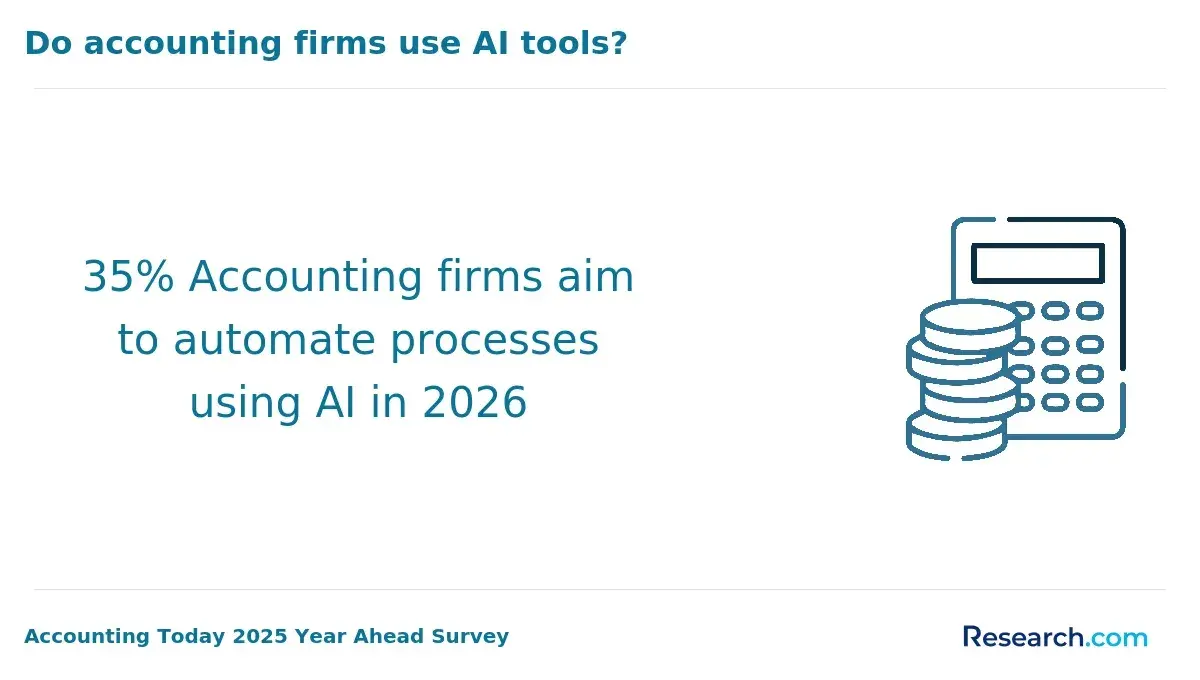
Technology is changing what employers expect from accountants. Automation can reduce repetitive data-entry work, cloud systems can speed up reporting, and analytics tools can help accounting teams identify patterns, anomalies, and risk. The most resilient accounting professionals are not simply replacing traditional skills with software skills; they are combining accounting judgment with better data interpretation.
Blockchain, AI, and big data are also influencing accounting roles. In the paper “The Impacts of Emerging Technologies on Accountants’ Role and Skills: Connecting to Open Innovation—A Systematic Literature Review,” published in Journal of Open Innovation: Technology, Market, and Complexity, the authors Kroon, N. et al. note that “accountants are already starting to work with data scientists and understand their business, so accountants are poised to contribute meaningfully to their firms as part of the big data revolution.”
Students preparing for tax-focused roles should pay particular attention to data systems, tax research tools, and digital compliance workflows. Those who want graduate-level tax preparation may compare an online masters in taxation with a broader master’s in accounting before deciding which credential better matches their goals.
What are the affordable pathways to an accounting degree in New Jersey?
An accounting degree can be expensive, but students have several ways to reduce the total cost. The best strategy depends on your current credits, schedule, income, transfer options, and CPA plans. Do not compare programs by tuition alone; include fees, books, commuting, technology, parking, exam preparation, and the cost of taking longer to finish.
| Pathway | How It Works | Best For | Potential Trade-Off |
| Community college transfer | Begin at a community college such as Brookdale Community College or Essex County College, complete lower-division courses, then transfer into a four-year institution. | Students seeking a lower-cost start and a gradual transition into a bachelor’s degree. | Credits must transfer cleanly, especially accounting and business prerequisites. |
| Online accounting degree | Complete coursework remotely through a college that offers accounting, auditing, taxation, and financial reporting courses. | Working adults, parents, commuters, and students outside major campus areas. | Requires self-discipline and careful verification of CPA-credit alignment. |
| Employer-sponsored education | Use tuition reimbursement or sponsorship from a New Jersey employer while gaining work experience. | Employees already working in business, finance, payroll, bookkeeping, or accounting support. | Employers may require continued employment after funding your education. |
| Scholarships and grants | Apply for institutional awards, NJCPA scholarships, federal aid, the Pell Grant, and New Jersey Tuition Aid Grant (TAG). | Students with financial need, academic merit, or accounting-specific qualifications. | Deadlines and eligibility rules vary, so late applications can cost students aid. |
| Accelerated bachelor’s-to-master’s program | Use a combined degree structure, such as the BS/MS in Accounting at Montclair State University, to reach 150 credit hours faster. | CPA-focused students who know early that they want graduate study. | Fast pacing can be demanding and may limit time for work or internships. |
Students who want flexible and lower-cost online options can also compare affordable online accounting degree programs. Before enrolling, ask the school whether online accounting courses satisfy the same CPA-credit rules as campus-based courses.
How Can Professional Networking Accelerate Your Accounting Career in New Jersey?
Networking matters in accounting because many internships, staff accountant roles, and public accounting opportunities are filled through campus recruiting, alumni connections, CPA society events, and referrals. In New Jersey, joining professional groups such as the New Jersey Society of CPAs can help students and early-career accountants learn about exam expectations, regulatory changes, firm hiring cycles, and specialty areas.
Networking is also a practical way to verify whether your career plan is realistic. Talk with public accountants, corporate controllers, tax professionals, auditors, and forensic accountants before choosing electives or graduate programs. If you are still learning the licensing process, Research.com’s overview of CPA exam requirements can help you ask better questions when speaking with advisors or mentors.
Can integrating healthcare billing expertise boost your accounting career in New Jersey?
Healthcare is a highly regulated field, and accounting professionals who understand billing, reimbursement, compliance, and revenue-cycle processes may be better prepared for finance roles in hospitals, clinics, insurers, and healthcare service organizations. This does not mean every accountant needs medical billing training. It may be most useful for professionals who already work with healthcare clients, revenue recognition, claims data, or compliance-heavy financial reporting.
If you are considering this niche, compare the duties of accounting roles with healthcare billing roles before adding another credential. Research.com’s guide on how to be a medical coder in New Jersey can help you understand how billing and coding knowledge may complement, rather than replace, accounting expertise.
How Can You Stay Updated on Regulatory Changes in New Jersey?
Accounting rules, tax guidance, audit standards, and licensing requirements can change. New Jersey accountants should monitor official state board communications, professional association updates, employer compliance bulletins, and continuing education providers. CPAs should also keep organized records of CPE credits, ethics coursework, and license renewal deadlines.
For New Jersey-specific licensing research, reviewing current CPA requirements in New Jersey can help students and professionals confirm whether their education, experience, and exam plans still align with state expectations.
Can integrating educational roles with accounting enhance career growth in New Jersey?
Some experienced accountants expand their influence by teaching, mentoring, leading training sessions, or presenting workshops. Educational work can sharpen communication skills, build credibility, and support advancement into management, consulting, or professional development roles. This path is most practical for accountants who enjoy explaining complex rules, coaching junior staff, or designing training materials for non-accountants.
Professionals interested in formal teaching should research the education and certification expectations for instructional roles. Research.com’s guide on what degree do you need to be a teacher in New Jersey can help accountants understand how education credentials differ from accounting credentials.
Are there alternative pathways to becoming an accountant in New Jersey?
The traditional route is a four-year accounting or business degree, followed by additional credits if CPA licensure is the goal. However, it is not the only route. Students and career changers may also consider associate-to-bachelor transfer pathways, online bachelor’s programs, graduate accounting certificates, second-degree options, employer-supported education, and accelerated accounting degree programs.
Accelerated programs can be useful for students who already have transfer credits, prior business coursework, or a bachelor’s degree in another field. These formats usually require strong time management because the coursework moves quickly. A faster program is only worthwhile if it still provides the accounting, business, and total-credit requirements needed for your target role or CPA plan.
When an Accelerated Accounting Program Makes Sense
- You already have college credits: Transferable coursework can shorten the time needed to finish a degree.
- You can handle intensive pacing: Condensed courses require steady weekly study time and fewer schedule disruptions.
- You need flexibility: Online accelerated formats may work better for students balancing employment, family, and commuting.
- You have a clear CPA plan: The program should help you reach the 120-hour exam threshold and, if needed, the 150-hour licensure requirement.
When a Slower Path May Be Better
- You need more time to build foundational accounting and quantitative skills.
- You plan to work many hours each week and cannot manage compressed deadlines.
- You want internships, networking, and campus recruiting opportunities that may be harder to access in some accelerated formats.
- You are unsure whether accounting or CPA licensure is the right long-term direction.
Before choosing graduate study, compare cost, credits, career outcomes, and licensure value. A master’s may be helpful, but it is not automatically the best option for every student. If you are weighing the return on investment, ask whether the program’s credits, recruiting support, and CPA preparation justify the total price.
Can blending accounting expertise with educational roles boost your career in New Jersey?
Accounting professionals who teach, train, or mentor can build a stronger leadership profile. Adjunct teaching, CPA exam tutoring, corporate training, and financial literacy workshops may help accountants demonstrate communication ability and subject-matter authority. This can be especially valuable for professionals moving into management, consulting, or client advisory services.
If you are interested in teaching quantitative subjects more formally, Research.com’s guide on how to become a high school math teacher in New Jersey can help you compare education requirements with accounting career requirements.
How Can Understanding Legal Processes Benefit Accounting Professionals in New Jersey?
Accounting often intersects with law, especially in taxation, audits, business disputes, fraud investigations, bankruptcy, contracts, and regulatory compliance. Accountants who understand legal processes may communicate more effectively with attorneys, document findings more carefully, and recognize when an issue requires legal review. This is particularly relevant for forensic accounting, litigation support, compliance, and advisory roles.
Accountants do not need to become legal professionals to benefit from legal literacy. However, those who want deeper exposure to legal research, documentation, and case procedures may find Research.com’s guide on how to become a paralegal in New Jersey useful for career comparison.
Scholarships and Financial Aid for Accounting Students in New Jersey
Financial aid can change the affordability of an accounting degree, especially for students planning to continue beyond the bachelor’s level to meet CPA credit requirements. Apply early, compare net price rather than published tuition, and ask each school whether accounting or business students have access to department-specific awards.
State-Funded Scholarships and Grants
New Jersey residents may qualify for state aid programs such as the Tuition Aid Grant (TAG) and Educational Opportunity Fund (EOF). These programs are generally designed to support students with financial need. New Jersey also offers specialized scholarship opportunities, including the Garden State Scholarship Program, which recognizes academic achievement.
University-Specific Scholarships
Schools such as Rutgers University and The College of New Jersey may offer institutional aid for business and accounting students. Eligibility may be based on academic achievement, financial need, major, enrollment status, or maintaining a required GPA during the program.
National Scholarships for Accounting Majors
Accounting students can also research national awards from organizations such as the American Institute of Certified Public Accountants (AICPA). AICPA Legacy Scholarships are available to aspiring CPAs and other accounting students who meet academic, leadership, or program-specific requirements.
Employer-Sponsored Tuition Reimbursement
Some New Jersey employers help pay for accounting, finance, or business education when the degree supports the employee’s current or future role. Before using employer reimbursement, read the policy carefully. Some employers require specific grades, approved schools, or a continued work commitment after tuition is paid.
Online Scholarship Resources
Students can use Research.com and school financial aid offices to identify funding opportunities. If you are comparing business schools more broadly, Research.com’s guide to the best business schools in New Jersey can help you evaluate institutions that may offer strong business, accounting, and financial assistance resources.
Common Financial Aid Mistakes to Avoid
- Assuming the lowest tuition always means the lowest total cost.
- Forgetting to include fees, books, software, CPA exam preparation, and commuting.
- Waiting too long to apply for scholarships with early deadlines.
- Choosing a program before confirming transfer-credit acceptance.
- Borrowing for graduate school without estimating how the degree supports CPA eligibility or career advancement.
What Alternative Career Paths Are Available to Accounting Graduates in New Jersey?
An accounting degree can support careers beyond staff accounting, audit, and tax. Graduates may move into finance, budgeting, compliance, business operations, government analysis, fraud investigation, payroll management, risk management, or financial systems work. The best alternative path depends on whether you prefer analysis, investigation, communication, operations, technology, or public service.
Some graduates eventually leave accounting for education, business administration, or other service-oriented careers. If you are comparing a teaching path with accounting work, Research.com’s guide on elementary school teacher requirements in New Jersey can help you understand how the education and licensing expectations differ.
Can integrating forensic investigation skills enhance accounting careers in New Jersey?
Forensic accounting is a strong option for professionals who enjoy investigation, documentation, and high-stakes analysis. These accountants examine financial records for irregularities, support fraud prevention, assist legal teams, and prepare findings that may be used in disputes or court settings. Strong writing, attention to evidence, professional skepticism, and ethical judgment are essential.
Accountants who want to deepen their investigative perspective may explore adjacent forensic training. Research.com’s guide to a forensic science degree in New Jersey can help students understand how evidence-based investigation skills may complement forensic accounting interests.
Can Urban Planning Expertise Enhance Accounting Career Strategies in New Jersey?
Urban planning may seem distant from accounting, but the overlap can matter in municipal finance, infrastructure funding, real estate development, public-private partnerships, and government budgeting. Accountants who understand planning concepts may be better prepared to evaluate project costs, public investments, development financing, and long-term fiscal impact.
This interdisciplinary direction is most relevant for accountants working with local governments, developers, engineering firms, infrastructure projects, or real estate portfolios. To compare the planning profession with accounting-focused roles, see Research.com’s guide on how to become an urban planner in New Jersey.
Common Mistakes When Planning an Accounting Career in New Jersey
| Mistake | Why It Can Hurt You | Better Approach |
| Choosing a school without checking accreditation | Credits may not satisfy licensure or transfer expectations. | Confirm institutional accreditation and CPA-board alignment before enrolling. |
| Assuming a bachelor’s degree automatically qualifies you for CPA licensure | New Jersey requires 150 semester hours for licensure, not just a bachelor’s degree. | Plan early for the extra credits through graduate study, a second major, or approved coursework. |
| Counting pre-bachelor’s work experience toward the CPA requirement | New Jersey only counts qualifying experience completed after the bachelor’s degree. | Verify experience timing and supervision before relying on it for licensure. |
| Focusing only on tuition | Fees, commuting, software, books, and lost wages can change the real cost. | Compare total net cost and time to completion. |
| Ignoring internship access | Graduating without experience can make the first accounting job harder to secure. | Ask schools about paid internships, co-ops, campus recruiting, and employer partnerships. |
| Buying CPA review materials before confirming current exam rules | Exam structure and requirements can change. | Check NASBA and New Jersey requirements before scheduling and studying. |
Starting Your Accounting Career in New Jersey
New Jersey offers multiple routes into accounting, from associate transfer pathways to bachelor’s degrees, online programs, master’s degrees, and CPA-focused combined programs. The right choice depends on your starting point. A first-time college student may benefit from a structured bachelor’s program with internship recruiting. A working adult may prefer an online or transfer-friendly option. A CPA-focused student should prioritize programs that make the 150-hour requirement easier to complete.
Becoming a CPA requires a longer commitment than entering accounting generally. You need the required education, passing exam scores, qualifying post-bachelor’s experience, and ongoing CPE after licensure. The process is demanding, but it can open doors to public accounting, audit leadership, forensic accounting, tax advisory, controllership, and other advanced roles.
If you are still comparing possible job titles, Research.com’s guide to different accounting careers explains accounting paths across education levels, skill sets, salary expectations, and advancement options. If you want to compare another state’s licensure path, continue with Research.com’s guide on how to become a CPA in Pennsylvania.
Key Insights
- New Jersey CPA licensure requires more than passing the exam: Candidates need the right coursework, 150 semester hours for licensure, one year of qualifying supervised experience, and passing scores on the CPA exam.
- A master’s degree is optional but often useful: New Jersey does not require a master’s in accounting to sit for the CPA exam, but graduate study can help students reach the 150-hour requirement and deepen technical preparation.
- Plan credits early: The 120-hour exam threshold and 150-hour licensure requirement are different. Students should ask schools to map their courses to New Jersey CPA rules before enrolling.
- Accounting salaries vary widely: BLS reported a May 2024 median yearly salary of approximately $81,680 for accountants and auditors, but actual earnings depend on role, location, industry, experience, education, and licensure.
- Technology skills are increasingly important: Accountants who can work with analytics, automation, cloud systems, AI-supported tools, and data teams may be better positioned for modern accounting roles.
- School choice should be practical: Compare accreditation, cost, transfer credits, internship access, online flexibility, CPA alignment, and career support instead of relying only on rankings or name recognition.
- Financial aid requires strategy: New Jersey students should investigate TAG, EOF, institutional scholarships, NJCPA opportunities, employer reimbursement, and national accounting scholarships before borrowing.
- Accounting offers multiple directions: Public accounting, corporate finance, audit, tax, forensic accounting, healthcare finance, government, compliance, and education-related roles can all build on accounting training.
References:
- U.S. Bureau of Labor Statistics. Accountants and auditors: occupational overview. https://www.bls.gov/ooh/business-and-financial/accountants-and-auditors.htm#tab-1
- U.S. Bureau of Labor Statistics. Accountants and auditors: job outlook. https://www.bls.gov/ooh/business-and-financial/accountants-and-auditors.htm#tab-6
- New Jersey Society of CPAs. CPA exam cost, requirements, sample questions, pass rate, and FAQs. https://www.njcpa.org/build-career/become-a-cpa/cpa-exam
- NASBA. What is the Uniform CPA Examination? https://nasba.org/exams/becomingacpa/whatistheuniformcpaexam
- U.S. Bureau of Labor Statistics. Accountants and auditors. https://www.bls.gov/ooh/business-and-financial/accountants-and-auditors.htm
Other Things You Should Know About Accounting Schools in New Jersey
Top accounting schools in New Jersey for 2027 include Rutgers University, Seton Hall University, and Montclair State University. These schools offer programs designed to meet the 150-credit-hour requirement necessary for CPA exam eligibility.
No, a master’s degree is not required to take the CPA exam in New Jersey. However, pursuing a master’s degree can help fulfill the 150 semester hours required for licensure and provide additional knowledge and skills relevant to the exam and professional practice.
To qualify for the CPA exam in New Jersey, you need to complete 150 semester hours of education. This typically requires a bachelor's degree in accounting or a related field, and may include additional coursework in finance, business, and ethics. Exact requirements can be confirmed through the NJ State Board of Accountancy.
To take the CPA exam in New Jersey, you must hold a bachelor's degree and complete at least 150 semester hours of education. This usually includes 24 semester hours in accounting subjects and 24 hours in business courses, which can be completed during undergraduate or additional post-graduate studies.
In May 2021, the median annual salary for accountants and auditors was $77,250, with the top 10% earning more than $128,970. Salaries can vary based on factors such as location, experience, education, and industry.
Yes, many schools in New Jersey offer online accounting degree programs, including options for associate, bachelor’s, and master’s degrees. Online programs provide flexibility for students who need to balance work and study.
An associate degree typically takes two years, a bachelor’s degree takes four years, and a master’s degree takes an additional one to two years. Accelerated programs and part-time study options may alter these time frames.