2027 Best Accounting Schools in Arizona – How to Become a CPA in AZ

Co-Founder and Chief Data Scientist
Choosing an accounting school in Arizona is not just a question of which campus is closest or which program appears first in a search result. The right program should help you build core accounting knowledge, qualify for internships, understand Arizona’s CPA pathway, manage tuition costs, and prepare for jobs in public accounting, corporate finance, government, nonprofits, or specialized areas such as forensic accounting.
Arizona has around 4,200 Certified Public Accountants (CPAs), and demand for accounting talent remains supported by the state’s business growth, public-sector hiring, and employer need for financial reporting, tax, audit, and compliance skills. Nationally, the Bureau of Labor Statistics (BLS) projects demand for skilled accountants in the U.S. to grow by 4.6% over the next ten years. This guide explains how to compare Arizona accounting programs, what CPA-focused students should watch for, how much programs may cost, and which schools offer accounting degrees that can support a career in accounting or a broader career in finance.
Arizona Accounting Schools: Guide Contents
- Is accounting a strong career choice in Arizona?
- How do you become an accountant in Arizona?
- How long do accounting programs take in Arizona?
- What do accounting programs cost in Arizona?
- Arizona colleges with accounting programs for 2027
- How to choose an accounting program in Arizona
- Ways to complete an accounting degree faster in Arizona
- Networking options for Arizona accounting students
- Why a business-focused school can help accounting students
- How forensic science thinking supports fraud investigation
- Is an accounting degree worth the cost in Arizona?
- Why continuing professional education matters in accounting
- Can accountants move into teaching careers?
- Can accounting skills support urban planning work?
- Can accounting graduates become high school math teachers?
- Can legal knowledge strengthen an accounting career?
- Other numbers-focused career paths in Arizona
- How interdisciplinary study can expand career options
- Should you specialize in forensic accounting?
- Can accountants move into medical billing and coding?
- Career options for accounting graduates in Arizona
Quick Answer: What Is the Best Accounting School in Arizona?
The best accounting school in Arizona depends on your goal. CPA-focused students should prioritize accredited programs with enough accounting and business coursework to support the 150-credit pathway. Working adults may prefer online or flexible programs. Students seeking a traditional campus experience, internships, and employer recruiting should compare public universities and business schools with strong accounting departments, career services, and faculty connections to Arizona employers.
| If your main goal is... | Look for this type of accounting program | Why it matters |
| CPA eligibility | A bachelor’s program plus a plan for 150 credit hours | Arizona CPA candidates generally need more than a standard 120-credit bachelor’s degree. |
| Fast workforce entry | A four-year accounting degree with internships and career placement support | Practical experience can help students compete for junior accountant, audit, and tax roles. |
| Career change while working | Online, evening, hybrid, or accelerated formats | Flexible formats make it easier to study while maintaining employment. |
| Specialization | Programs with electives in taxation, auditing, systems, or forensic accounting | Specialized coursework can align your degree with narrower career targets. |
| Lower total cost | Public in-state options, transfer-friendly programs, or accelerated tracks | Total cost includes tuition, fees, time out of work, commuting, and living expenses. |
Is Accounting a Good Job in Arizona?
Accounting can be a practical career choice in Arizona for students who want a business-oriented profession with applications across many industries. Arizona Office of Economic Opportunity data projects 1.3% annualized employment growth in Arizona by 2034, equal to a 13.6% employment increase over the decade. That broader employment outlook supports demand for professionals who can prepare reports, analyze financial data, support compliance, manage tax work, and help organizations make informed financial decisions.
Accountants in Arizona may work for public accounting firms, corporations, small businesses, government agencies, nonprofits, healthcare organizations, and consulting firms. The median annual salary of an accountant in Arizona is $63,672 (ZipRecruiter, 2026). Actual earnings depend on location, degree level, CPA status, experience, employer type, specialization, and whether the role involves audit, tax, advisory, internal controls, financial analysis, or bookkeeping supervision.
What Are the Steps to Becoming an Accountant in Arizona?
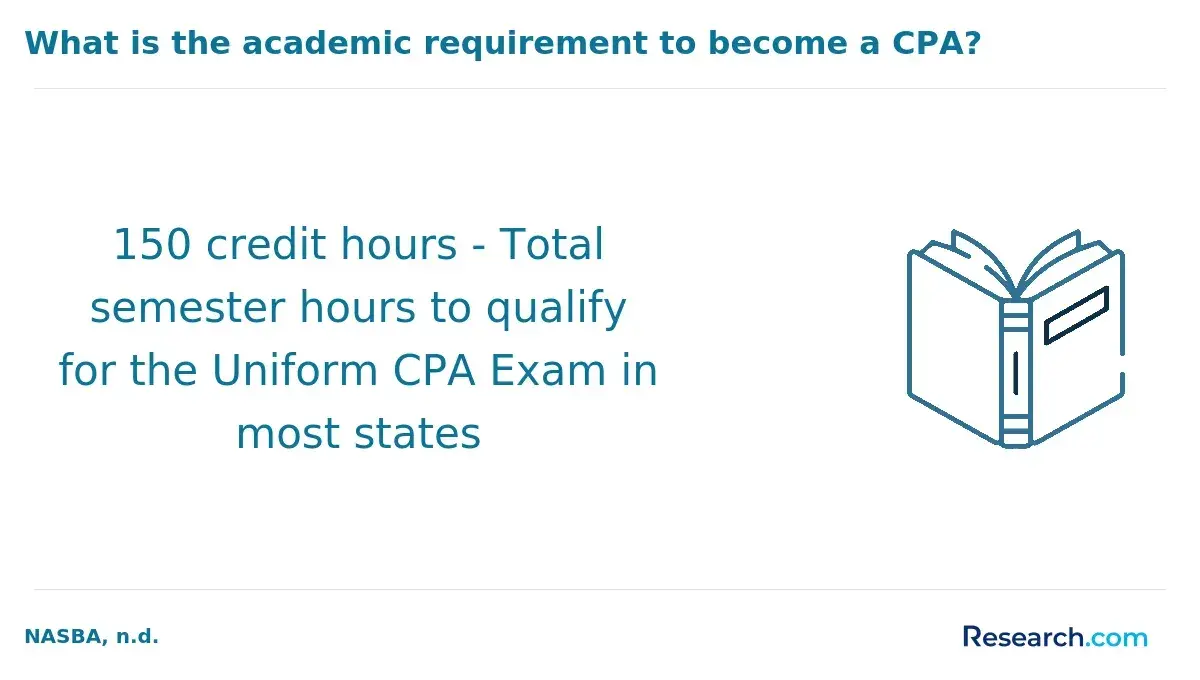
The usual starting point is a bachelor’s degree in accounting, accountancy, business administration with an accounting concentration, or a closely related field from an accredited school. Students who want to become CPAs should plan early because a standard bachelor’s degree may not be enough by itself. Arizona CPA candidates typically need around 150 credit hours of college education, including accounting and business coursework.
After completing the required education, CPA candidates must pass the CPA Exam, which includes four sections covering major areas of accounting practice. Candidates then need qualifying work experience, often under the supervision of a licensed CPA or in an approved accounting-related role. The final licensing step is applying through the Arizona State Board of Accountancy, which requires documentation such as transcripts, CPA Exam results, and proof of experience. Candidates also complete an ethics exam before licensure approval.
| Step | What to do | What to confirm before moving forward |
| 1. Choose the right degree | Enroll in an accredited accounting or related business program. | Confirm whether the curriculum includes enough accounting and business coursework for your goal. |
| 2. Plan for CPA education rules | Map your bachelor’s, graduate, certificate, or extra coursework toward around 150 credit hours. | Ask an advisor how credits apply to Arizona CPA eligibility. |
| 3. Prepare for the CPA Exam | Complete core coursework in financial accounting, auditing, taxation, and related areas. | Check when you can sit for the exam and what documentation is required. |
| 4. Gain experience | Work in an accounting role that meets state expectations. | Verify supervision and experience documentation requirements before accepting a role. |
| 5. Apply for licensure | Submit official records to the Arizona State Board of Accountancy. | Use the official Arizona CPA licensing resource for current rules. |
Accounting Program Length in Arizona
Most bachelor’s degrees in accounting are designed to take about four years of full-time study. These programs usually include general education, business foundations, accounting major courses, and electives. Students pursuing CPA licensure should pay close attention to credit totals because the CPA pathway commonly requires around 150 credit hours, which may extend study beyond a traditional 120-credit bachelor’s degree.
A master’s degree in accounting often takes one to two years, depending on whether the student enrolls full time or part time. Some students use graduate coursework to deepen expertise, satisfy CPA education requirements, or prepare for specialized work beyond a bookkeeping career. Your timeline will depend on transfer credits, course load, academic format, whether you work while studying, and whether you are building a CPA-focused plan.
| Accounting education path | Typical time commitment | Best for |
| Bachelor’s degree in accounting | About four years | Students entering accounting from high school or transferring from community college. |
| Bachelor’s plus additional credits | Longer than a standard bachelor’s plan | CPA-focused students who need around 150 credit hours. |
| Master’s degree in accounting | One to two years | Students seeking advanced coursework, CPA credit planning, or specialization. |
| Accelerated accounting degree | Often shorter than a traditional format | Motivated students who can handle compressed coursework and faster pacing. |
Tuition and Costs of Accounting Programs in Arizona
Accounting program costs vary by institution, degree level, residency status, delivery format, transfer credit policy, and fees. For in-state students attending a public university in Arizona, the average annual tuition for a bachelor’s degree might cost around $13,150 (Ma et al., 2025). Out-of-state students often pay much more, around $37,570 per year. At the University of Arizona, residents pay $13,906 while non-residents pay $43,068 for tuition and fees for the academic year 2025-26.
Tuition is only one part of the decision. Students should also calculate books, technology fees, transportation, housing, food, exam preparation, CPA application costs, and the income they may give up if they reduce work hours. A lower tuition rate does not always mean a lower total cost if credits do not transfer, required courses are limited, or the program takes longer than expected.
| Cost factor | Why it affects your budget | Question to ask the school |
| Tuition rate | Public, private, online, and out-of-state rates can differ sharply. | What is the total estimated tuition for the full degree? |
| Fees | Technology, course, campus, and student service fees can add to the bill. | Which fees are mandatory each term? |
| Transfer credits | Accepted credits can reduce time and cost. | How many of my prior credits will apply to the accounting major? |
| Course availability | Limited course scheduling can delay graduation. | Are upper-level accounting courses offered every term? |
| CPA preparation | Students may need exam review materials and extra credits. | Does the program help students plan for around 150 credit hours? |
Arizona Schools Offering Accounting Programs for 2027
The schools below offer accounting programs that may support different student goals, including CPA preparation, career advancement, flexible online study, and traditional business education. Always verify current tuition, curriculum, accreditation, transfer rules, and CPA alignment directly with the institution before enrolling.
The University of Phoenix-Arizona
The University of Phoenix-Arizona accounting program is structured for students who want accounting coursework with flexible delivery options. The curriculum emphasizes financial reporting, accounting principles, taxation, and analytical skills used in business settings. Because the school offers online learning options, it may appeal to working adults, parents, military-affiliated students, and others who need a format that can fit around existing responsibilities.
- Program Length: 4 years
- Tracks/concentrations: Accounting
- Cost per Credit: $398
- Required Credits to Graduate: 120
- Accreditation: Accreditation Council for Business Schools and Programs
Arizona State University
The BS in accountancy at Arizona State University combines accounting theory with communication, critical thinking, team-based work, and information technology. The program is designed for students preparing for public, corporate, government, consulting, personal financial planning, portfolio analysis, and related business roles. Public Accounting Report rankings have consistently recognized the program among the nation’s top programs.
- Program Length: 3 years
- Tracks/concentrations: Accounting
- Cost per Credit: $1,073
- Required Credits to Graduate: 120
- Accreditation: Higher Learning Commission
Grand Canyon University
The accounting major at Grand Canyon University introduces students to accounting processes used in organizations, including job order costing systems, budgeting, and financial statement preparation. Grand Canyon University also offers an online Accounting Bridge Program for students who already hold a bachelor’s degree in an approved business field and want a pathway toward a Master of Science in Accounting (MSA).
- Program Length: 4 years
- Tracks/concentrations: Accounting
- Cost per Credit: $485
- Required Credits to Graduate: 120
- Accreditation: Accreditation Council for Business Schools and Programs
Northern Arizona University
The accounting major at Northern Arizona University prepares students for accounting work in business, government, and organizational settings. Coursework includes financial accounting, managerial accounting, taxation, auditing, and accounting information systems. Students may also strengthen their academic plan with a related minor, such as finance or economics.
- Program Length: 4 years
- Tracks/concentrations: Accounting
- Cost per Credit: $810
- Required Credits to Graduate: 120
- Accreditation: Accreditation Council for Business Schools and Programs
The University of Arizona
The University of Arizona’s Eller College of Management offers a Bachelor of Science in Business Administration in Accounting through the University of Arizona accounting major. Students learn to collect, organize, interpret, and communicate financial information used in business decisions. Learning outcomes include critical thinking, technical accounting knowledge, technology use, ethical judgment, and career readiness. The college also offers master’s programs for students who want additional accounting specialization.
- Program Length: 4 years
- Tracks/concentrations: Accounting
- Cost per Credit: $510
- Required Credits to Graduate: 150
- Accreditation: WASC Senior College and University Commission
| School | Program Length | Cost per Credit | Required Credits to Graduate | Accreditation listed |
| The University of Phoenix-Arizona | 4 years | $398 | 120 | Accreditation Council for Business Schools and Programs |
| Arizona State University | 3 years | $1,073 | 120 | Higher Learning Commission |
| Grand Canyon University | 4 years | $485 | 120 | Accreditation Council for Business Schools and Programs |
| Northern Arizona University | 4 years | $810 | 120 | Accreditation Council for Business Schools and Programs |
| The University of Arizona | 4 years | $510 | 150 | WASC Senior College and University Commission |
What to Look for in an Accounting Program in Arizona
A strong accounting program should do more than list accounting courses. It should show how students progress from introductory business foundations to advanced accounting topics, internships, CPA planning, and employment preparation. Accreditation, curriculum depth, faculty qualifications, cost, flexibility, and student support should all factor into your decision.
- Accreditation. Accreditation helps verify that a school or program has been reviewed for academic quality. Students comparing business programs can look for recognition from bodies such as the Association to Advance Collegiate Schools of Business (AACSB) or the Accreditation Council for Business Schools and Programs (ACBSP).
- Curriculum. The program should cover financial accounting, managerial accounting, taxation, auditing, accounting systems, ethics, and business law or business foundations. Students interested in investigations, fraud, or litigation support may want electives or graduate options connected to a forensic accounting degree.
- Faculty. Review whether instructors have academic expertise, professional accounting experience, CPA credentials, research activity, or industry connections. Faculty background can affect mentoring, recommendation letters, and exposure to real accounting problems.
- Career support. Look for internship pipelines, accounting career fairs, employer visits, resume review, mock interviews, alumni connections, and job placement assistance. These services can be especially valuable for first-generation college students and career changers.
- Flexibility. Online, hybrid, evening, and part-time formats can help working students stay enrolled. Students planning to continue working while earning an advanced credential may also compare affordable online master’s in accounting programs.
- Cost of living. Tuition is not the only expense. Housing, transportation, food, and healthcare can change your real cost of attendance. The cost of living in Arizona is slightly above the national average, with an 110.7 index, according to World Population Review.
| Category by major type of product | Personal consumption expenditures in Arizona (millions of current dollars) |
| Housing and Utilities | 88,390.9 |
| Health Care | 64,878.3 |
| Food and Beverages (non-restaurant) | 29,759.9 |
| Gas and Energy Goods | 9,583.8 |
Source: Bureau of Economic Analysis
| Common mistake | Why it can hurt you | Better approach |
| Choosing only by tuition | A cheaper program may cost more if credits do not transfer or required courses delay graduation. | Compare total degree cost, graduation timeline, fees, and transfer policies. |
| Ignoring CPA credit planning | A 120-credit degree may not satisfy the education total needed for CPA licensure. | Ask how the program helps students reach around 150 credit hours. |
| Assuming online programs work for every goal | Online study may be convenient, but students still need proper accreditation, course sequence, and career support. | Check accreditation, internship access, faculty availability, and CPA alignment. |
| Relying only on rankings | Rankings may not reflect your budget, schedule, location, transfer credits, or career plan. | Use rankings as one input, not the full decision. |
| Waiting too long to seek internships | Accounting recruiting can begin before graduation. | Contact career services early and build a resume before upper-level coursework ends. |
How to Fast-track Your Accounting Degree in Arizona
Students who want to enter the workforce sooner or move more quickly toward CPA preparation may consider a fast track accounting degree. Accelerated programs compress coursework into shorter terms, use year-round scheduling, accept transfer credits, or combine undergraduate and graduate study. They can be useful, but they also require strong time management and careful advising.
When an Accelerated Accounting Program Makes Sense
- You already have transfer credits. Prior college coursework can shorten the path if the school accepts credits toward the accounting major.
- You can handle heavier course loads. Accelerated formats often move quickly and may leave less time for work, family obligations, or repeated practice.
- You have a clear CPA plan. Some accelerated programs help students combine bachelor’s and master’s coursework toward around 150 credit hours.
- You need flexibility. Online and hybrid formats may help working professionals complete courses without relocating.
How to Compare Fast-track Options
Do not choose an accelerated program based only on speed. Ask whether the program is accredited, how upper-level accounting courses are scheduled, how much faculty support is available, and whether the program’s credit structure fits Arizona CPA requirements. Also compare the total cost against the amount of time saved.
CPA Credit Planning in Accelerated Programs
Some fast-track programs combine bachelor’s and graduate coursework to help students reach the 150-credit target. If the program does not include enough credits, students may need graduate courses, approved electives, or certificates to close the gap. Always verify requirements before assuming that an accelerated bachelor’s degree alone is sufficient for CPA licensure.
Career Benefits and Trade-offs
A faster degree can help students apply sooner for roles such as junior accountant, tax associate, audit assistant, accounts payable analyst, or staff accountant. The trade-off is intensity. Students who rush without internships, networking, or CPA planning may graduate quickly but still feel underprepared for accounting recruitment.
What Unique Networking Opportunities Are Available for Accounting Students in Arizona?
Networking matters in accounting because many internships and entry-level roles are filled through campus recruiting, professional referrals, alumni relationships, and employer events. Arizona students should begin building connections before senior year, especially if they are interested in public accounting or competitive corporate finance roles.
- Professional accounting associations. Organizations such as the Arizona Society of Certified Public Accountants (ASCPA) offer events, seminars, and professional connections that can introduce students to CPAs, auditors, tax professionals, and financial analysts.
- University career fairs. Business schools at institutions such as Arizona State University and the University of Arizona often host career events where students can meet accounting firms, corporations, and public agencies.
- Guest speakers and panels. Faculty often invite professionals from accounting firms, companies, and government offices to discuss current practice, hiring expectations, and career paths.
- Internships and employer partnerships. Schools with active employer relationships can help students gain practical experience before graduation and build contacts that may lead to full-time offers.
- Mentorship programs. Some programs pair students with alumni or working accountants who can offer advice on CPA preparation, job applications, workplace expectations, and specialization choices.
Why Choosing a Business-Focused School in Arizona Can Help Accounting Students
Accounting is part of the broader business decision-making process. A business-focused school can help students understand how accounting connects to management, finance, operations, economics, analytics, information systems, and strategy. This matters because employers often want accounting graduates who can explain numbers, not just record them.
Arizona students comparing schools should look for business colleges that offer accounting clubs, case competitions, internship support, data or analytics coursework, communication training, and access to employers. A broader business environment can also help students explore related careers if they decide not to pursue public accounting.
Students who want to compare institutions with stronger business ecosystems can review Research.com’s guide to the best business schools in Arizona. Use that resource alongside accounting-specific factors such as CPA preparation, faculty expertise, and upper-level accounting electives.
How Can a Forensic Science Perspective Enhance Fraud Investigations in Arizona?
Fraud investigation requires more than knowledge of debits and credits. Accountants working in investigative roles may need evidence handling, interviewing awareness, pattern recognition, documentation skills, and the ability to explain findings in legal or regulatory settings. A forensic science degree in Arizona can help students understand investigative methods that complement accounting knowledge, especially for those interested in fraud, compliance, insurance investigations, or litigation support.
Is the Investment in an Accounting Degree Worth It in Arizona?
An accounting degree can be worth it in Arizona when the program is accredited, affordable enough for your financial situation, aligned with your career goal, and supported by internships or employer connections. The decision is weaker if you choose a high-cost program without understanding CPA requirements, expected debt, transfer credit limits, or realistic job outcomes.
To evaluate value, compare tuition against likely time to graduation, the median annual salary of an accountant in Arizona of $63,672, and the longer-term benefits of experience, CPA licensure, and specialization. Students considering an accounting major should also ask whether they enjoy detailed work, deadlines, rules, spreadsheets, financial analysis, and ethical responsibility. Accounting can be stable and portable, but it is not the right fit for every student.
| An accounting degree may be a good fit if... | You may want another path if... |
| You like structured problem-solving, financial records, and business rules. | You strongly dislike detail-heavy work or recurring deadlines. |
| You want a career that can apply across industries. | You want a profession with minimal continuing education or regulation. |
| You are willing to pursue internships and possibly CPA licensure. | You expect a degree alone to guarantee salary growth. |
| You can manage the total cost of the program. | The program requires debt that does not fit your career plan. |
Best Accounting Schools in Arizona
The strongest accounting schools in Arizona are those that combine rigorous accounting coursework, recognized accreditation, practical business training, access to faculty, and career preparation. A good program should help students understand financial statements, taxes, auditing, internal controls, accounting technology, ethics, and the role of accounting in organizational decisions.
Students comparing schools should look beyond name recognition. Ask whether the school has internship partners, accounting student organizations, CPA advising, alumni working in accounting, and support for your preferred format. These features can influence your accounting career path as much as the course catalog itself.
Is Continuing Professional Education Essential for Sustaining an Accounting Career in Arizona?
Continuing professional education is important for accountants because standards, tax rules, technology, analytics tools, and reporting expectations change over time. CPAs have formal license maintenance obligations, and even non-CPA accountants often need ongoing training to remain competitive.
Students planning for licensure should learn early how continuing education works after graduation. Understanding CPA requirements in Arizona can help future accountants prepare not only for the first license, but also for long-term professional expectations.
Can an Accounting Background Lead to a Successful Teaching Career in Arizona?
Accounting professionals who enjoy explaining financial concepts, mentoring students, or improving financial literacy may consider teaching. Their real-world experience can be useful in business, finance, mathematics, or career and technical education settings. However, teaching usually requires state-specific preparation and credentials, not just subject knowledge.
Anyone considering this transition should compare education requirements, certification rules, student teaching expectations, and grade-level options. Research.com’s guide on what degree do you need to be a teacher in Arizona can help accountants understand what additional preparation may be needed.
Can Accounting Expertise Facilitate Impactful Urban Planning in Arizona?
Accounting skills can support urban planning when projects require budgeting, cost analysis, grant tracking, financial reporting, and public accountability. In Arizona communities dealing with growth, infrastructure planning, and resource allocation, professionals who understand numbers can contribute to more transparent and disciplined planning decisions.
This is not a direct substitute for planning education, but it can be a useful foundation for hybrid roles in public finance, municipal budgeting, infrastructure analysis, or planning administration. Students exploring that direction can learn more about how to become an urban planner in Arizona.
Can Accounting Graduates Successfully Transition Into High School Math Teaching Careers in Arizona?
Accounting graduates often have strong quantitative skills, spreadsheet experience, and comfort with applied math. Those strengths may translate well into high school math teaching, especially when paired with teacher preparation, classroom management training, and state certification.
This pathway is best for accounting graduates who enjoy working with teenagers, explaining concepts patiently, and adapting instruction to different learning levels. Before changing careers, review the certification steps in how to become a high school math teacher in Arizona.
Can Legal Expertise Strengthen Your Accounting Career in Arizona?
Legal knowledge can be valuable for accountants working in tax, compliance, audit, fraud investigation, contracts, business advisory services, or regulatory reporting. Accountants do not need to become attorneys to benefit from understanding legal documents, evidence standards, privacy requirements, or compliance frameworks.
Students interested in the intersection of law and finance may explore roles in compliance, legal operations, litigation support, risk management, or forensic accounting. One way to understand legal support work is to review how to become a paralegal in Arizona.
What Other Career Paths Are Available to Individuals Interested in Numbers in Arizona?
Not every student who likes numbers should become an accountant. Some may prefer teaching, data analysis, financial advising, actuarial work, operations, logistics, healthcare administration, budgeting, or public-sector analysis. The right path depends on whether you prefer working with records, people, systems, policy, education, or business strategy.
For students drawn to education and early learning, reviewing elementary school teacher requirements in Arizona may help clarify whether a teaching pathway fits better than accounting. Compare day-to-day work carefully before changing majors or careers.
How Can Interdisciplinary Programs Enhance Career Versatility in Arizona?
Accounting pairs well with fields such as healthcare administration, information systems, data analytics, law, public administration, and operations management. Interdisciplinary study can make graduates more adaptable because many employers need professionals who understand both financial information and industry-specific rules.
Healthcare is one example. Accountants working in healthcare finance need to understand reimbursement, billing, compliance, staffing costs, and regulated operations. Students comparing healthcare and finance careers may also review how to become a nurse practitioner in Arizona to understand how different professional pathways require different education, licensure, and responsibilities.
Can Specializing in Forensic Accounting Boost Your Career in Arizona?
Forensic accounting can be a strong specialization for students who like investigative work, financial analysis, documentation, and problem-solving. These professionals may help identify fraud, trace transactions, support litigation, review internal controls, or assist organizations after financial irregularities are discovered.
This specialization is best for accountants who are comfortable with detailed evidence, written reports, and sometimes legal proceedings. Students comparing compensation and role expectations can review Research.com’s guide to forensic accounting salary and career paths.
Can Accounting Expertise Translate Into Success in Medical Billing and Coding in Arizona?
Accounting experience can transfer to medical billing and coding because both fields require accuracy, documentation, numerical reasoning, and comfort with systems. However, medical billing and coding also requires knowledge of healthcare codes, payer rules, claims workflows, privacy expectations, and industry-specific software.
This route may suit accountants or bookkeepers who want to work in healthcare without becoming clinicians. Targeted training and credentials can make the transition smoother. Students can review how to be a medical coder in Arizona for a more specific entry roadmap.
What Career Opportunities Are Available for Accounting Graduates in Arizona?
Accounting graduates in Arizona can pursue entry-level and advanced roles across many sectors. The best path depends on whether the graduate wants public accounting, corporate finance, government work, nonprofit accounting, advisory services, tax, audit, or entrepreneurship.
| Career path | Typical work | Who it may fit |
| Public accounting | Auditing, tax preparation, consulting, and client service at regional or national firms such as Deloitte and PwC. | Students who want structured training, CPA preparation, and exposure to multiple clients. |
| Corporate accounting | Financial reporting, internal controls, cost accounting, budgeting, and analysis for companies such as PetSmart or Freeport-McMoRan. | Graduates who want to support one organization’s financial operations. |
| Government accounting | Budgeting, compliance, audits, revenue work, and public reporting for agencies such as the Arizona Department of Revenue. | Students interested in public service, regulation, and accountability. |
| Nonprofit accounting | Grant tracking, donor reporting, budgeting, and compliance with funding rules. | Graduates who want mission-driven work with strong financial controls. |
| Entrepreneurial accounting services | Bookkeeping, payroll, tax preparation, or advisory services for small businesses. | Professionals who want independence and are willing to build clients carefully. |
Students debating whether to continue beyond the bachelor’s level should compare cost, CPA goals, employer expectations, and career timing. Research.com’s guide, Is getting a master's in accounting worth it?, can help students evaluate whether graduate study fits their plan.
Key Insights
- Arizona accounting can be a practical career path. The state has around 4,200 CPAs, Arizona employment is projected to grow by 1.3% annually or 13.6% by 2034, and the median annual salary for accountants in Arizona is $63,672.
- CPA planning should begin before enrollment. Students who want CPA licensure should ask how each program supports around 150 credit hours, accounting coursework requirements, exam preparation, experience documentation, and ethics requirements.
- Accreditation is nonnegotiable. Before comparing cost or convenience, confirm that the school and program meet recognized quality standards and align with your professional goals.
- Total cost matters more than sticker tuition. In-state public tuition may average around $13,150 annually, while out-of-state tuition may be around $37,570 per year, but fees, transfer credits, housing, course availability, and time to completion can change the real cost.
- The best school depends on your situation. A working adult may need online flexibility, a CPA candidate may need a 150-credit plan, and a traditional student may prioritize internships, recruiting, and campus accounting organizations.
- Accounting offers more than one career outcome. Graduates can work in public accounting, corporate finance, government, nonprofits, forensic accounting, tax, audit, compliance, or related numbers-focused fields.
- A degree alone is not a guarantee. Strong outcomes usually require internships, networking, CPA or certification planning, technical skills, communication ability, and careful program selection.
Related Articles for Nearby States
- 2027 Best Accounting Schools in New Mexico – How to Become a CPA in NM
- 2027 Best Accounting Schools in Nevada – How to Become a CPA in NV
- 2027 Best Accounting Schools in Utah – How to Become a CPA in UT
- 2027 Best Accounting Schools in Colorado – How to Become a CPA in CO
- 2027 Accounting Schools in Texas: How to Become a CPA in TX
- 2027 Best Accounting Schools in Oklahoma – How to Become a CPA in OK
- 2027 Best Accounting Schools in Kansas – How to Become a CPA in KS
- 2027 Best Accounting Schools in Wyoming – How to Become a CPA in WY
- 2027 Best Accounting Schools in Idaho – How to Become a CPA in ID
- 2027 Best Accounting Schools in Montana – How to Become a CPA in MT
References:
- Arizona Office of Economic Opportunity. (2024). Arizona 2024-2034 Occupation Projections. Retrieved February 2026, from https://oeo.az.gov/labor-market/employment-projections
- Becker. (n.d.). Arizona CPA requirements. Retrieved February 2026, from https://www.becker.com/cpa-review/arizona-cpa-requirements
- AICPA. (2025). AICPA 2025 Trends Report. https://www.aicpa-cima.com/professional-insights/download/2025-trends-report
- National Association of State Boards of Accountancy. (n.d.). How to get licensed. Retrieved January 2026, from https://nasba.org/licensure/gettingacpalicense/howtogetlicensed/
- Sadovi, M. (2026, January 20). Accounting student enrollment rises 7.3%, outpacing rate across majors. CFO Dive. https://www.cfodive.com/news/accounting-student-enrollment-rises-73-outpacing-rate-across-majors/810040/
- BLS. (2025, August 28). Occupational projections and worker characteristics. Employment Projections. https://www.bls.gov/emp/tables/occupational-projections-and-characteristics.htm
- Arizona Society of CPAs. (n.d.). Sponsorships & Advertising. Retrieved February 2026, from https://www.ascpa.com/advertise
- ZipRecruiter. (2026). Accountant Salary in Arizona. Retrieved February 2026, from http://ziprecruiter.com/Salaries/Accountant-Salary--in-Arizona
- World Population Review. (2026). Cost of Living Index by State 2026. Retrieved February 2026, from https://worldpopulationreview.com/state-rankings/cost-of-living-index-by-state
- Ma, J., Pender, M., & Hu, X. (2025). Trends in College Pricing and Student Aid 2025. College Board. https://research.collegeboard.org/trends/college-pricing
Other Things You Should Know About Becoming a CPA in AZ
The Arizona CPA exam consists of four sections: Auditing and Attestation (AUD), Business Environment and Concepts (BEC), Financial Accounting and Reporting (FAR), and Regulation (REG). Candidates must pass all sections with a score of 75 or higher to qualify for CPA licensure in Arizona.
To become a CPA in Arizona, candidates must complete 2,000 hours of paid or volunteer work experience over a period of one to three years in accounting, taxation, or auditing. This experience must be verified by a licensed CPA and submitted to the Arizona State Board of Accountancy.
Tuition costs for accounting programs in Arizona vary depending on the institution and residency status. For in-state students attending a public university, the average annual tuition is around $13,150. Out-of-state students can expect to pay higher tuition, often around $37,570 per year.
Yes, several institutions in Arizona offer online accounting programs. These programs provide flexibility for students to balance their studies with personal and professional commitments. Online programs can be beneficial for those who want to gain experience in the field while studying.
Arizona CPA candidates must complete a board-approved ethics course before licensure. The Arizona State Board of Accountancy requires the 4-hour AICPA professional ethics course for CPAs, which covers the Code of Professional Conduct and must be finished before a CPA certificate is issued.